Alerta: AI Disaster Response Platform
Problem Statement
Natural disasters such as floods, landslides, and extreme weather events continue to impact communities worldwide, especially in regions like Sri Lanka where communities frequently face climate-related emergencies. During these crises, people often struggle to receive timely warnings, communicate their situations, and access reliable information about safety measures and available support.
Through our research, we identified several key challenges in existing disaster response systems:
- Delayed access to critical information: Many people receive warnings too late or through fragmented communication channels.
- Limited community participation: Citizens often lack a simple way to report emergencies and share real-time updates from affected areas.
- Information overload during emergencies: People need clear, location-based guidance instead of overwhelming information.
- Coordination gaps: Communication between affected communities, volunteers, and emergency responders can be inefficient.
From a UX research perspective, the core challenge is not only predicting disasters but designing a system that supports human decision-making under stressful conditions.
Alerta was designed to address this gap by creating an AI-powered, community-centered disaster response platform that enables early alerts, citizen reporting, and coordinated emergency assistance.
Inspiration
The inspiration behind Alerta came from observing how communities experience disasters and the challenges people face when they need help the most.
In many emergency situations, individuals are uncertain about:
- "Is my area at risk?"
- "What should I do next?"
- "How can I report my situation?"
- "Where can I find available support?"
We wanted to design a solution that puts people at the center of disaster management by combining Artificial Intelligence, location-based technology, and community collaboration.
Our goal was to transform disaster response from a reactive process into a more proactive, accessible, and human-centered experience.
What it does
Alerta is an AI-powered disaster response platform that helps communities prepare, respond, and recover during emergency situations.
Key features include:
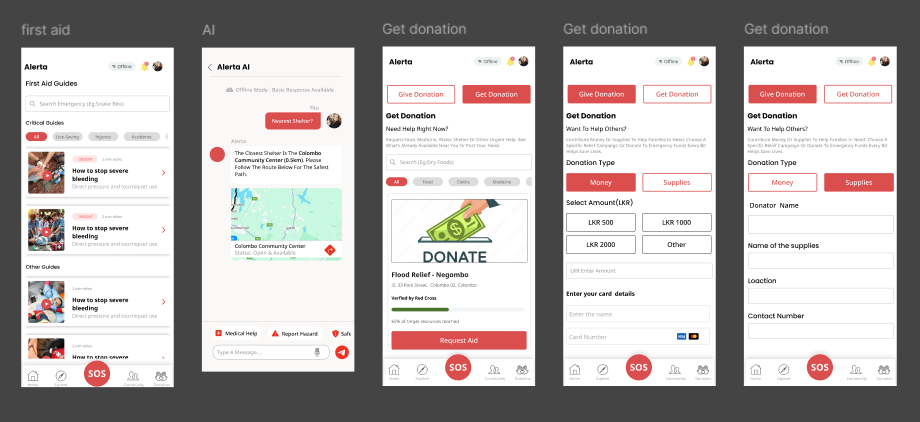
🚨 AI-Based Early Warning System
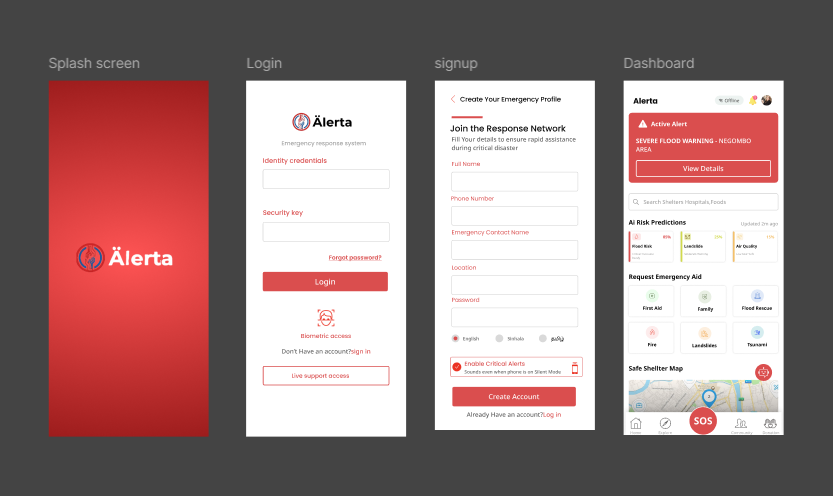
Provides intelligent risk notifications based on disaster-related data and location information.
📍 Location-Based Emergency Alerts
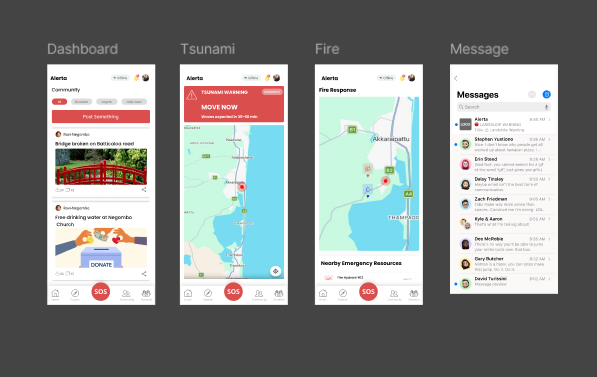
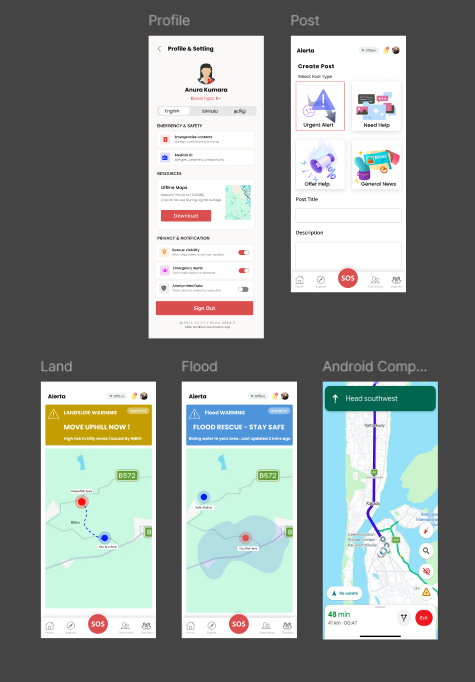
Delivers relevant alerts based on the user's area instead of generic warnings.
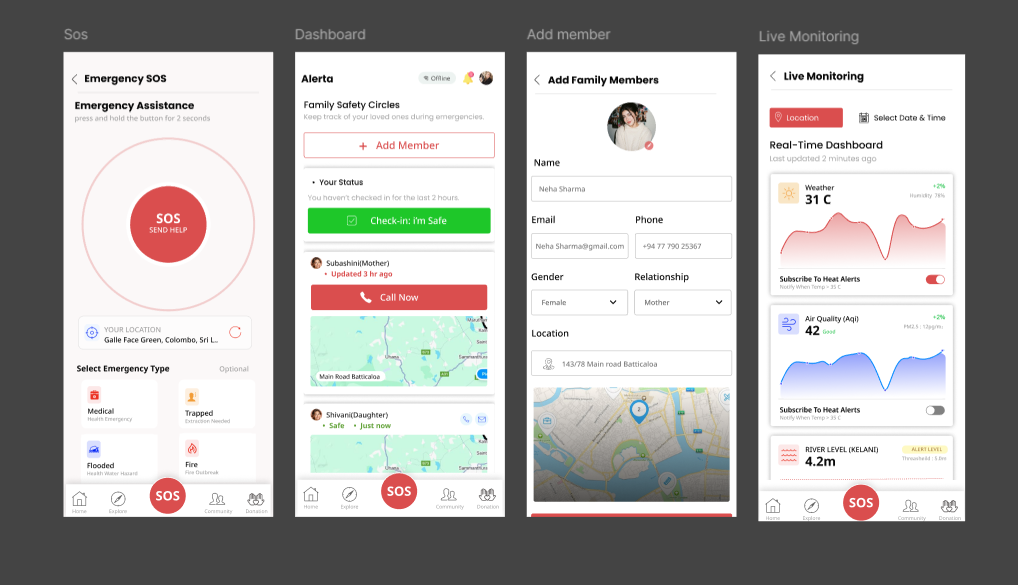
🆘 Citizen Emergency Reporting
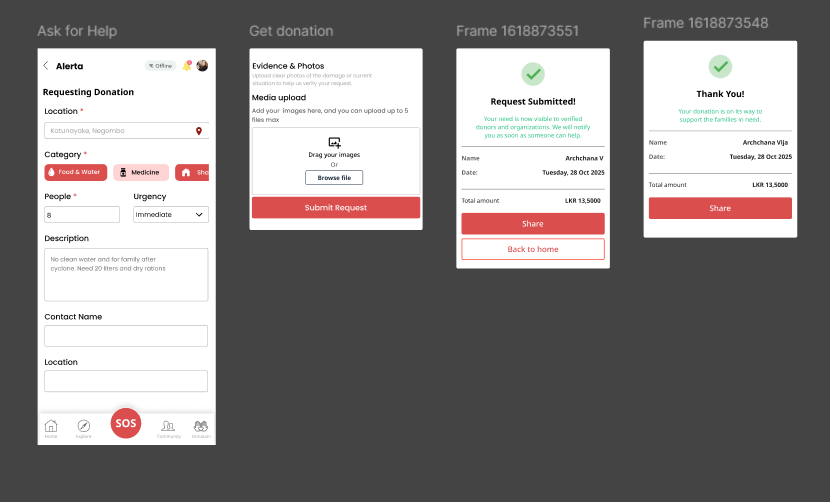
Allows people to report incidents, request assistance, and share important updates with responders and nearby communities.
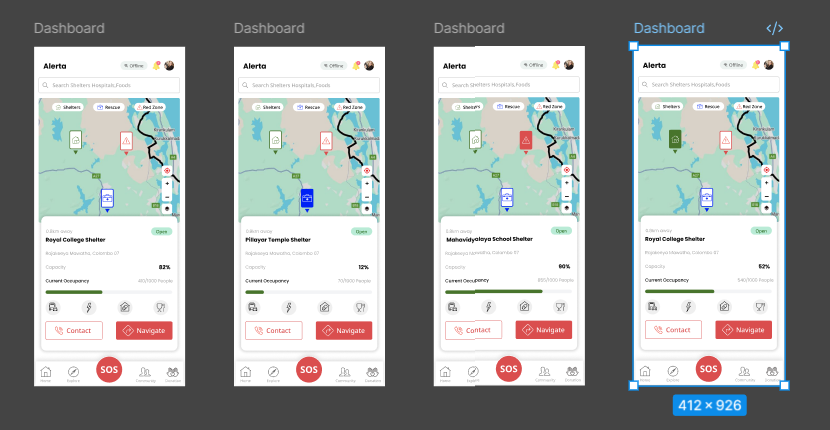
🗺️ Disaster Information Dashboard
Provides a clear overview of affected areas, emergency updates, and available resources.
🤝 Community Response Network
Connects citizens, volunteers, and emergency support teams to improve coordination.
The platform focuses on reducing confusion during emergencies by presenting the right information to the right people at the right time.
How we built it
We followed a human-centered design approach combining UX research, interface design, and technology concepts.
Research & Discovery
We analyzed existing disaster communication challenges and studied user needs during emergency scenarios.
We identified key user groups:
- Residents who need timely warnings and safety guidance
- Volunteers who support affected communities
- Emergency responders who require accurate information from the field
UX Design Process
Our design process included:
- User research and problem identification
- User journey mapping
- Information architecture design
- Wireframing
- High-fidelity UI design
- Interactive prototype development
- Usability-focused improvements
Technology Approach
The prototype was designed using:
- Figma for UX/UI design and prototyping
- AI concepts for risk prediction and intelligent alerts
- Location-based services for emergency mapping
- Data visualization techniques for disaster information
The focus was creating an intuitive experience that remains simple and understandable during high-pressure situations.
Challenges we ran into
Designing for Emergency Situations
One of the biggest challenges was designing an interface for users experiencing stress, fear, or limited time. We needed to prioritize:
- Simple navigation
- Clear visual hierarchy
- Minimal cognitive load
- Quick access to critical actions
Balancing Information and Simplicity
Disaster systems require displaying large amounts of information, but too much information can overwhelm users.
We focused on progressive disclosure by showing essential information first while keeping additional details accessible.
Creating Trust in AI-Based Systems
AI recommendations during emergencies require transparency and user confidence. We considered how to make AI suggestions understandable rather than presenting decisions as a "black box."
Accomplishments that we're proud of
- Designed a complete AI-driven disaster response concept focused on community needs.
- Created a user-centered emergency experience through UX research principles.
- Developed an interactive prototype demonstrating disaster reporting, alerts, and response workflows.
- Addressed a real-world social challenge using STEM and human-centered design.
- Created a scalable solution concept that can support vulnerable communities.
What we learned
Through developing Alerta, we learned that successful technology solutions are not only about advanced features but about understanding human behavior.
Key lessons:
- UX research is essential when designing for critical situations.
- Simplicity and accessibility are crucial during emergencies.
- AI solutions must be designed with transparency and trust.
- Community-driven technology can create stronger disaster resilience.
This project strengthened our understanding of designing technology that creates meaningful social impact.
What's next for Alerta
Our future plans include:
- Integrating real-time weather and disaster data sources.
- Improving AI-based risk prediction capabilities.
- Adding multilingual support for diverse communities.
- Expanding accessibility features for elderly users and people with disabilities.
- Collaborating with emergency organizations and local communities for real-world testing.
Our vision is to build a smarter, safer, and more connected disaster response ecosystem where technology empowers people before, during, and after emergencies.
Built With
- figma
- ui
- ux

Log in or sign up for Devpost to join the conversation.