-
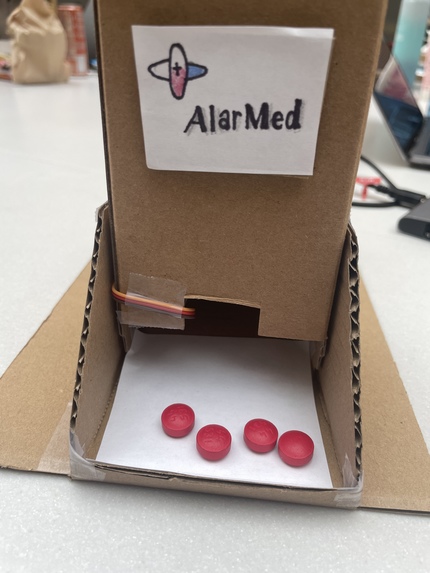
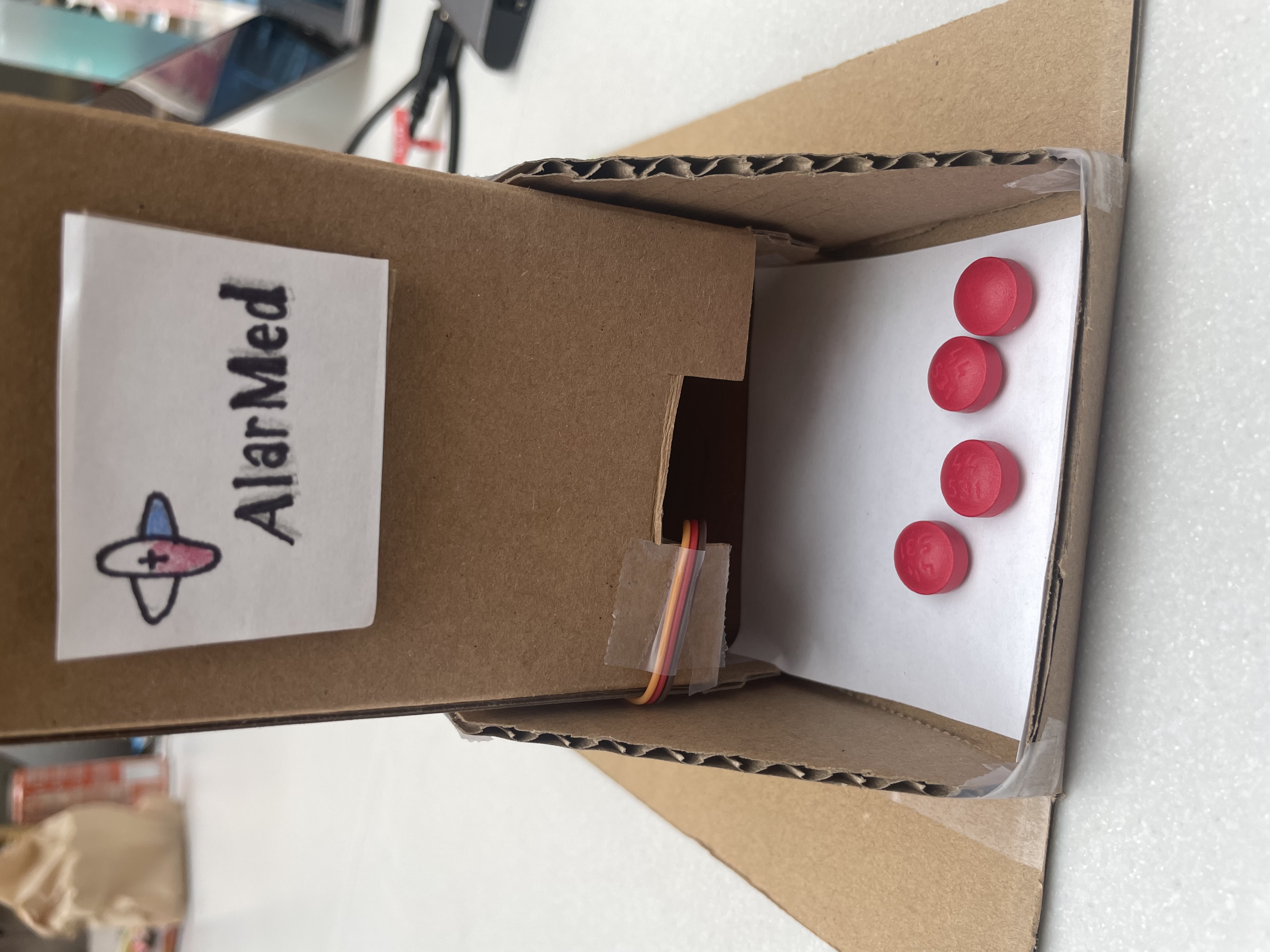
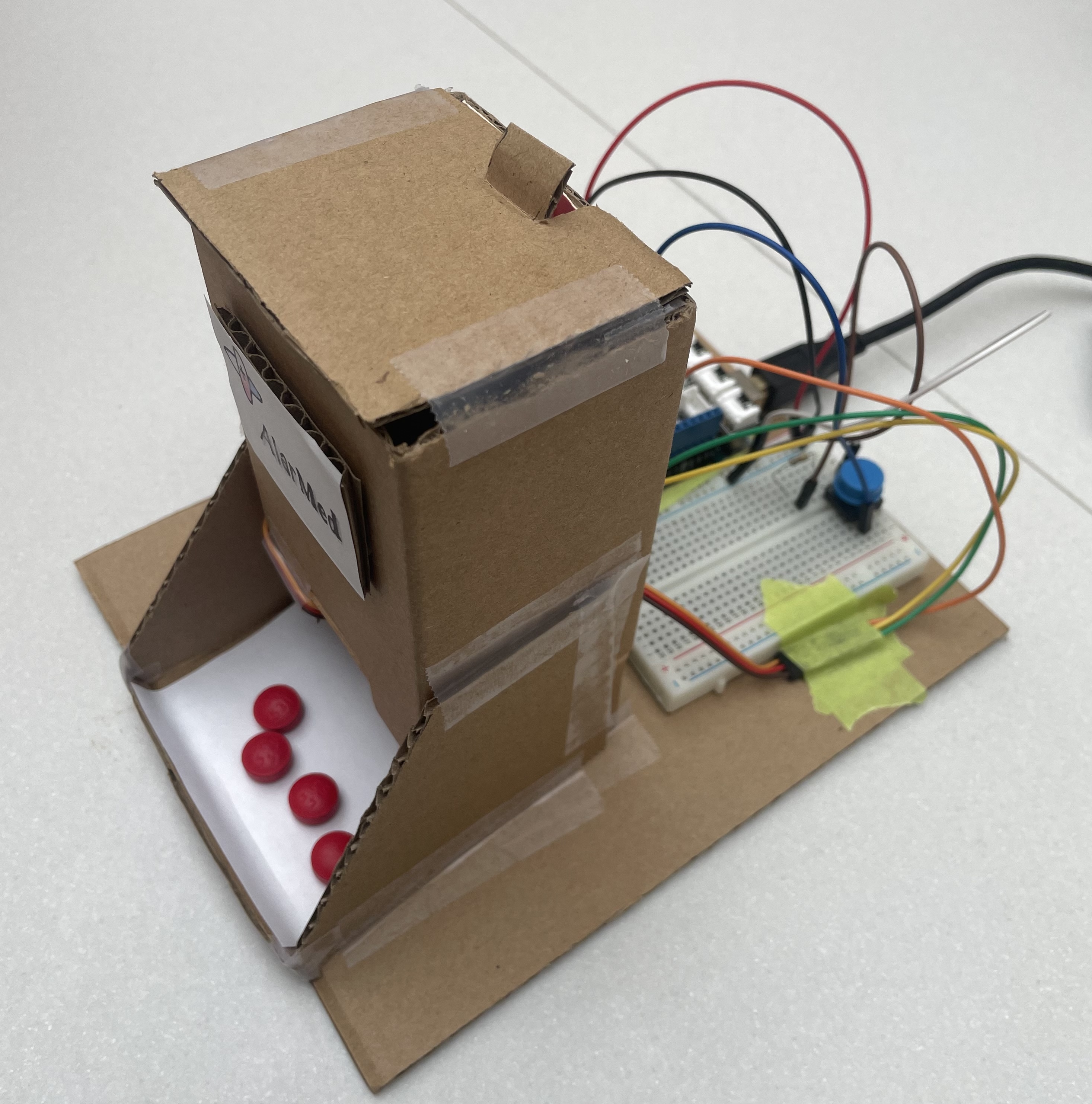
Dispenser
-
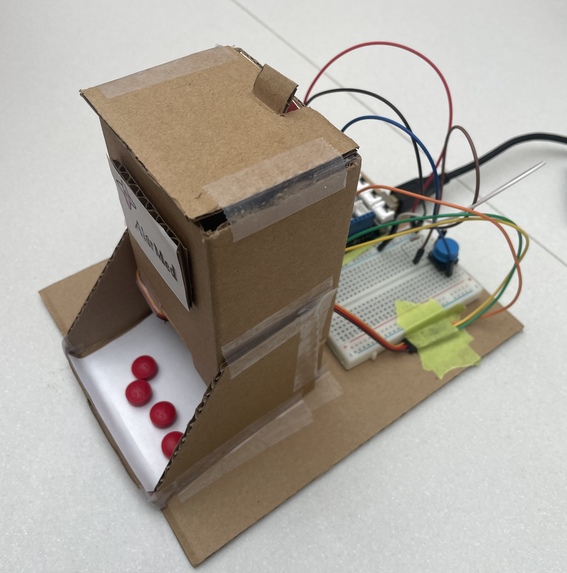
Dispenser
-
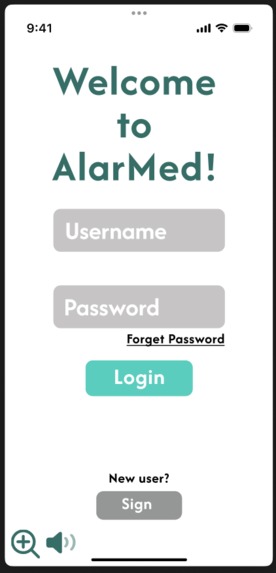
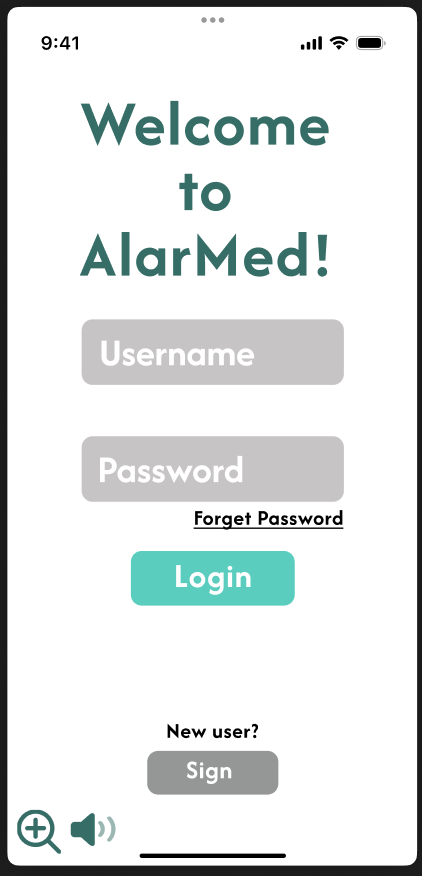
Figma Interface
-
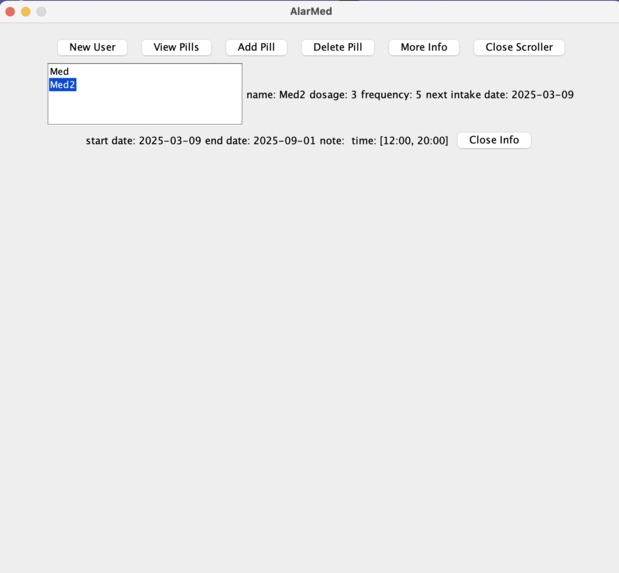
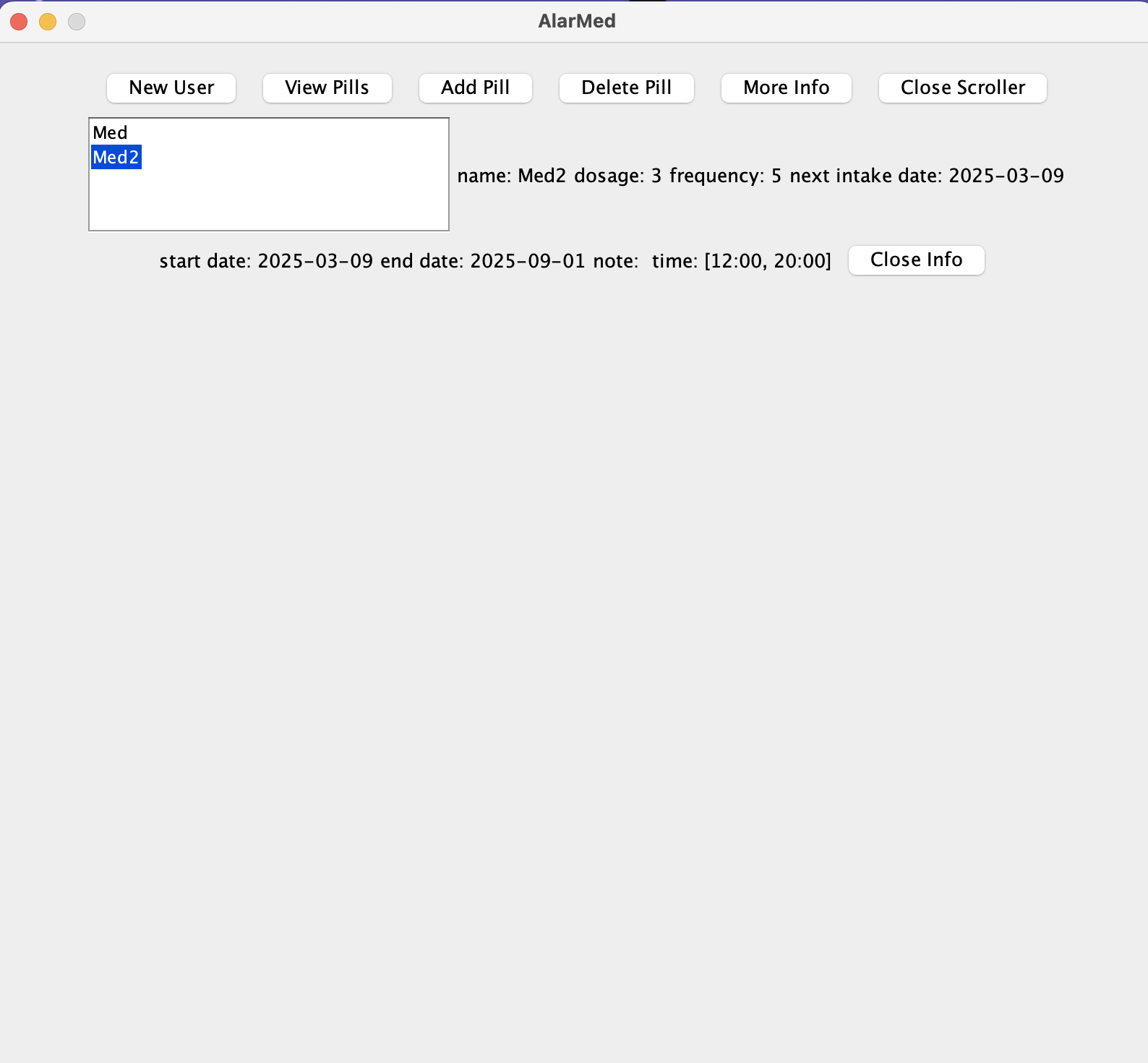
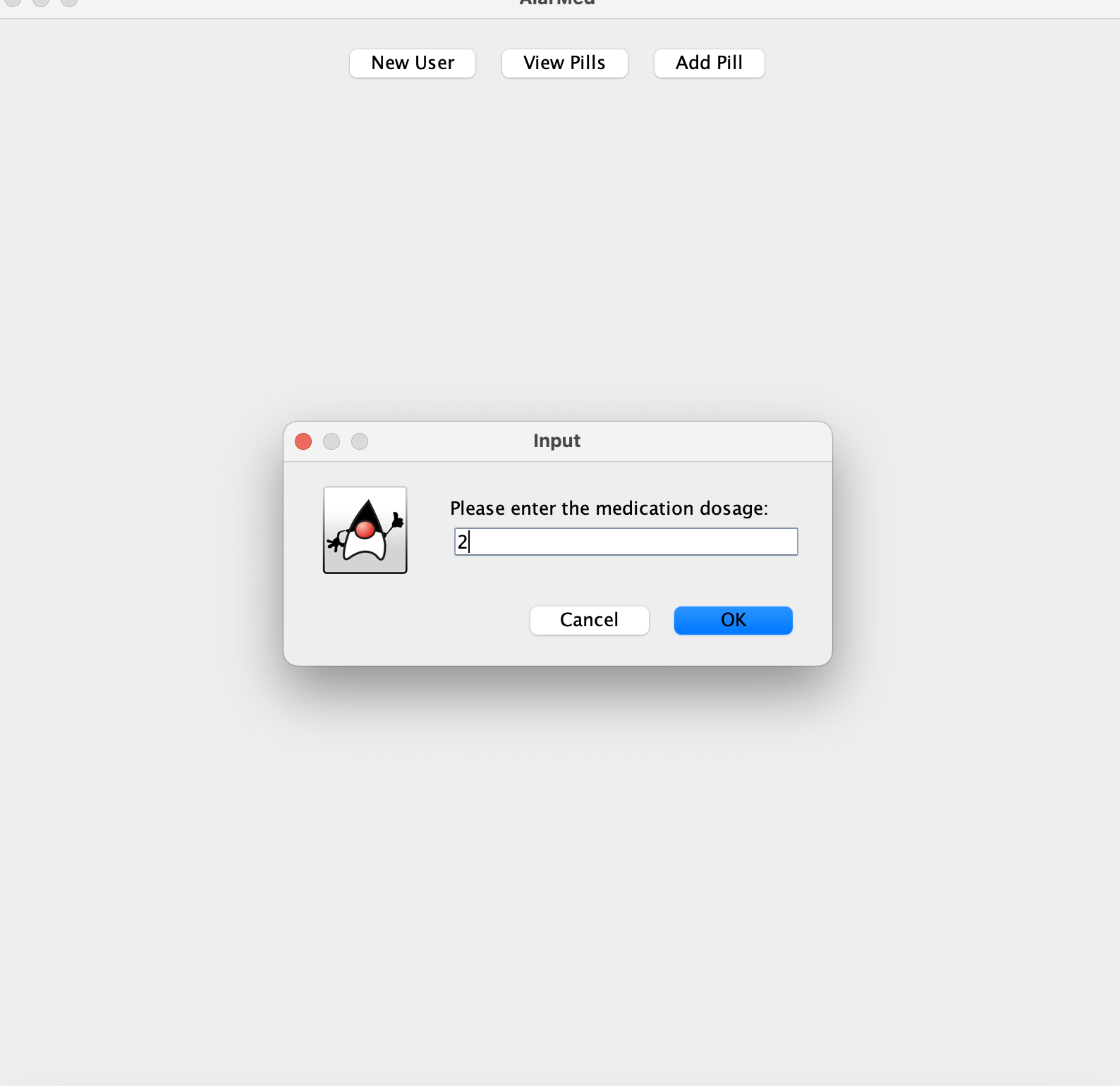
Demo of Adding 2 Pills + Viewing Details of the Selected Pill
-
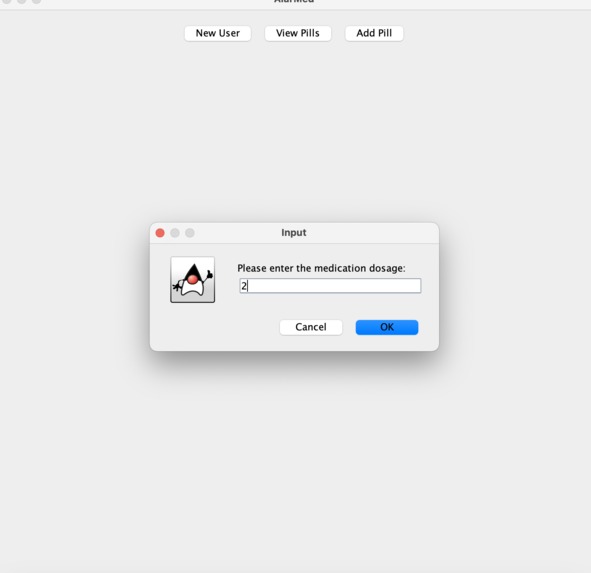
Logging Information For Pill
-
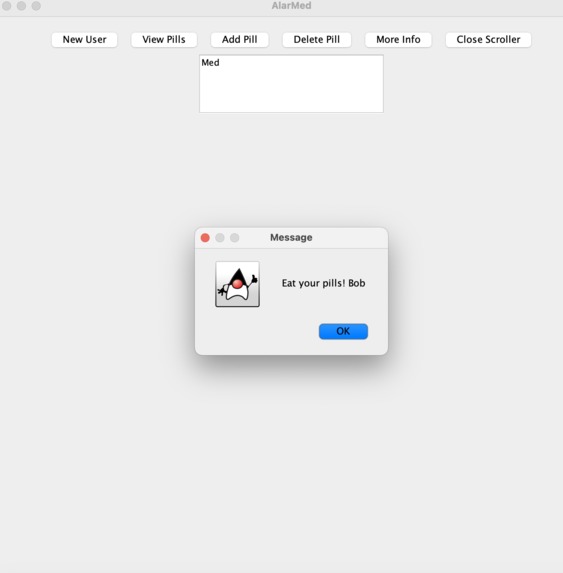
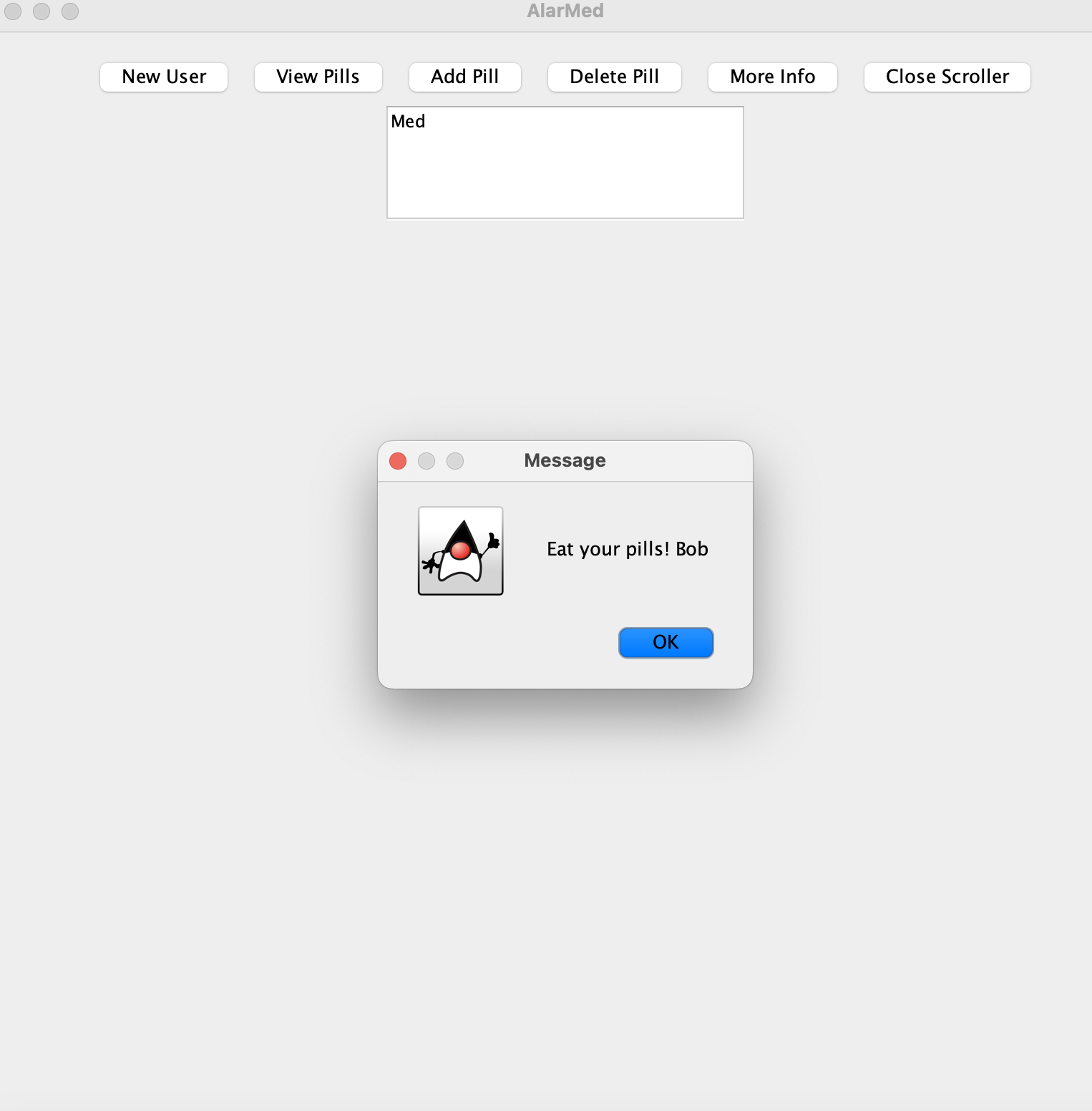
Pop-up for Alarm
-
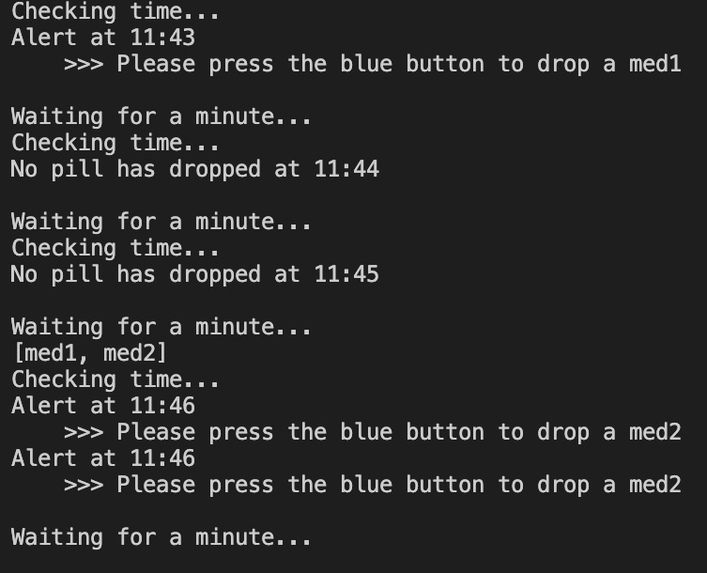
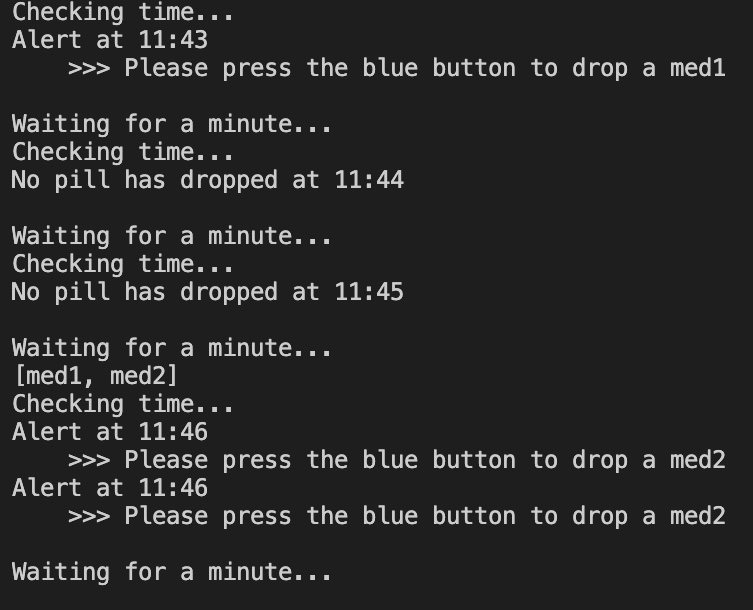
Terminal that Displays Status of the Pill Dispenser Every Minute
Inspiration
Many health issues especially in the elderly population are amplified through failure to take medication on time and in the right doses. Memory challenges and motor issues are common contributors. Our team researched online and found that there are not many options available for medication dispensing that do not rely on the individual personally sorting out the days, or provide an accessible interface and design. Other solutions act as dispensers but do not control the dosages, which was a major priority for our idea. We believe this is an important public health issue as it can prevent unwanted development of patients' conditions that could be reduced through taking medications properly.
What it does
The mechanism we designed is paired with an application that lets you enter some key details about the medication plan and frequency of doses. At the correct time intervals, a sound will be played and a reminder to take the pill is displayed. The dosage is then released from the dispenser.
How we built it
- Java Code: Basic GUI interface and object-oriented code made on Visual Studio code
- Hardware: Cardboard mechanism paired with Arduino parts and the Arduino IDE
- Interface: Prototype of accessible interface made using Figma
Challenges we ran into
Software:
- Learning how to have multiple members working together on the same code repository
- How to implement the GUI with limited experience
- Running two methods simultaneously
- Learning how to get sound to play when a reminder is set
Hardware:
- Learning the technology with no previous experience and getting past the initial learning curve
- Getting the right components and figuring out how they should be connected
- Getting the measurements exact with the resources available so jamming does not happen
- Troubleshooting the alignment of the pill storage section
Prototyping Interface:
- Working with setting up new software and getting used to the features
Accomplishments that we're proud of
This being many of our first hackathons, we are proud of being able to develop a tangible product to showcase. Disregarding the actual project, we are extremely satisfied with how this experience allowed us to challenge our skills in a new format, working through obstacles as a team. Initially, we were unsure of how we would be able to create something with our limited background knowledge and it felt very intimidating, however, producing a project felt very fulfilling as it represented an application of our skills.
What we learned
Exploring new technology such as hardware for our project, with none of us having prior experience, we learned a lot about the ways to interact and make use of these mechanisms. For instance, we learned about the difference between DC motors in comparison to servo motors, and which to choose for our project.
What's next for AlarMed
AlarmMed is optimized for scalability and growth, with an aim to integrate new features. With more development of the dispenser, it can be expanded to include additional shapes and sizes of medications, along with integrating the dispenser with our Java code. Additionally, our Java output would have an appearance that matches our prototype interface. In the future, we hope this develops into an accessible app and technology that can be seamlessly integrated into many individual's daily lives.


Log in or sign up for Devpost to join the conversation.