-
-
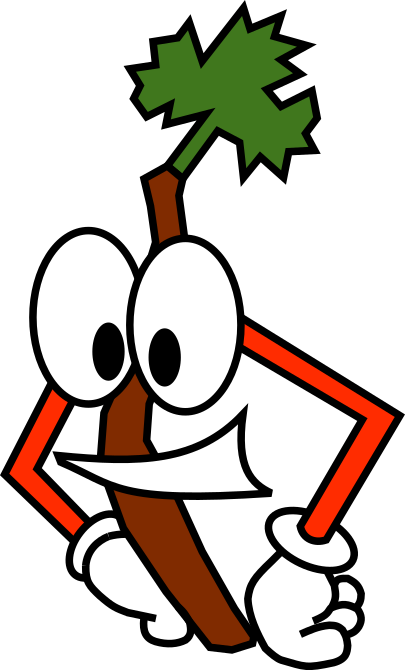
Sticky
-
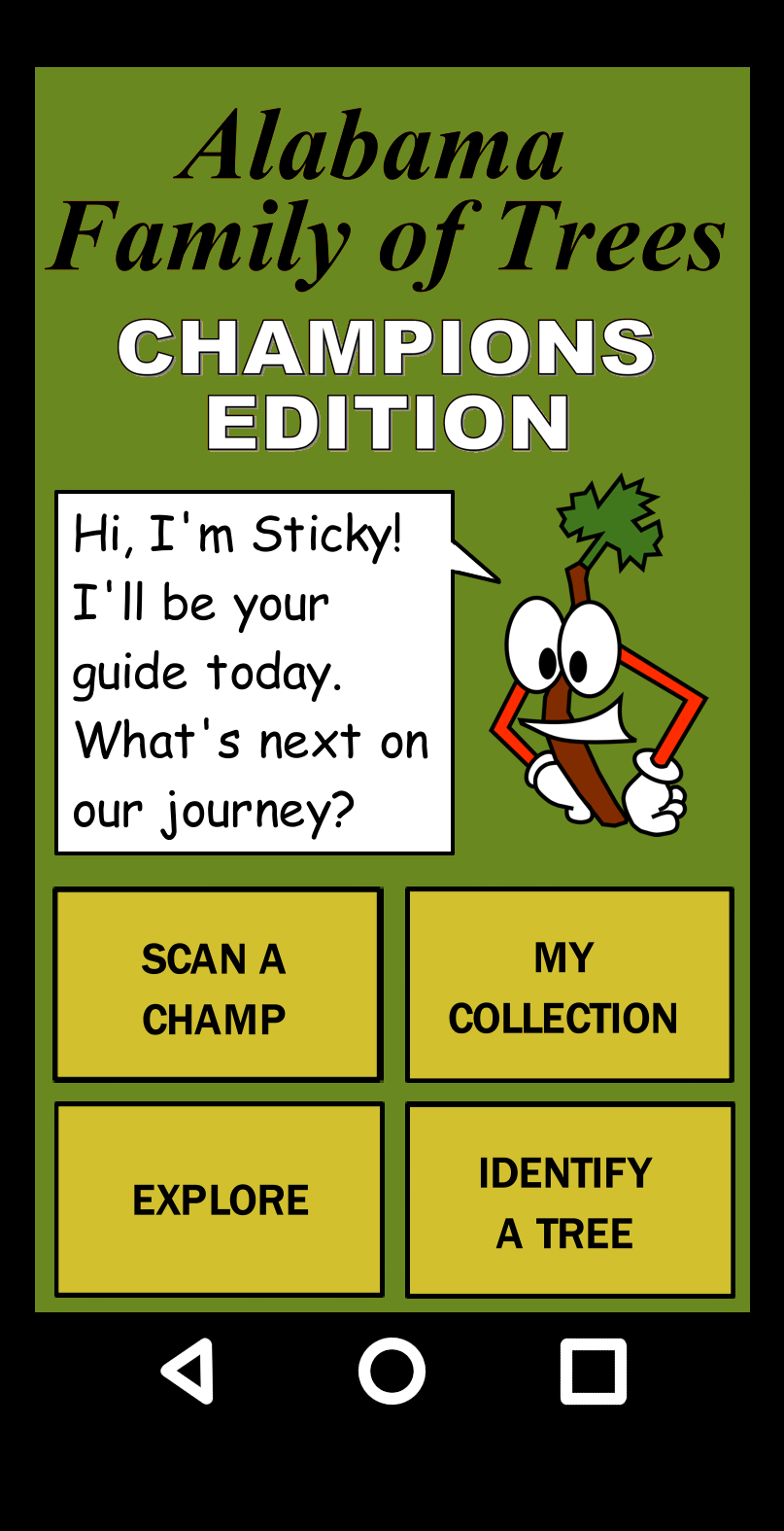
Home screen mockup
-
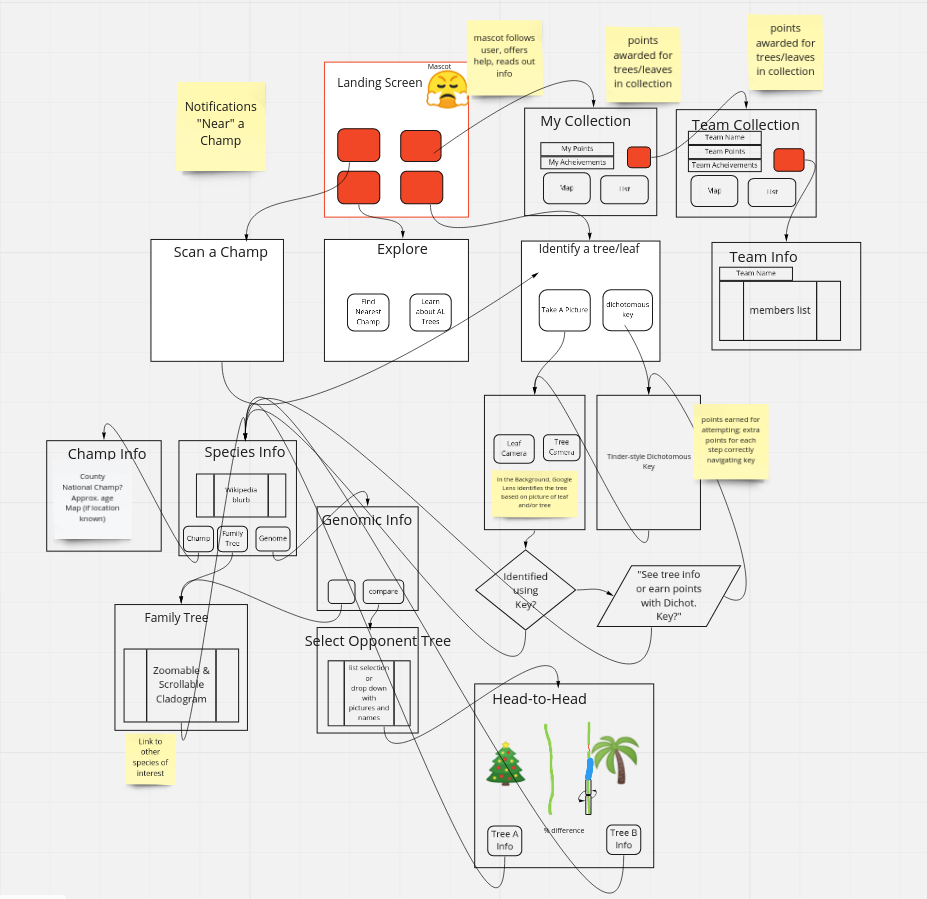
App Layout
-
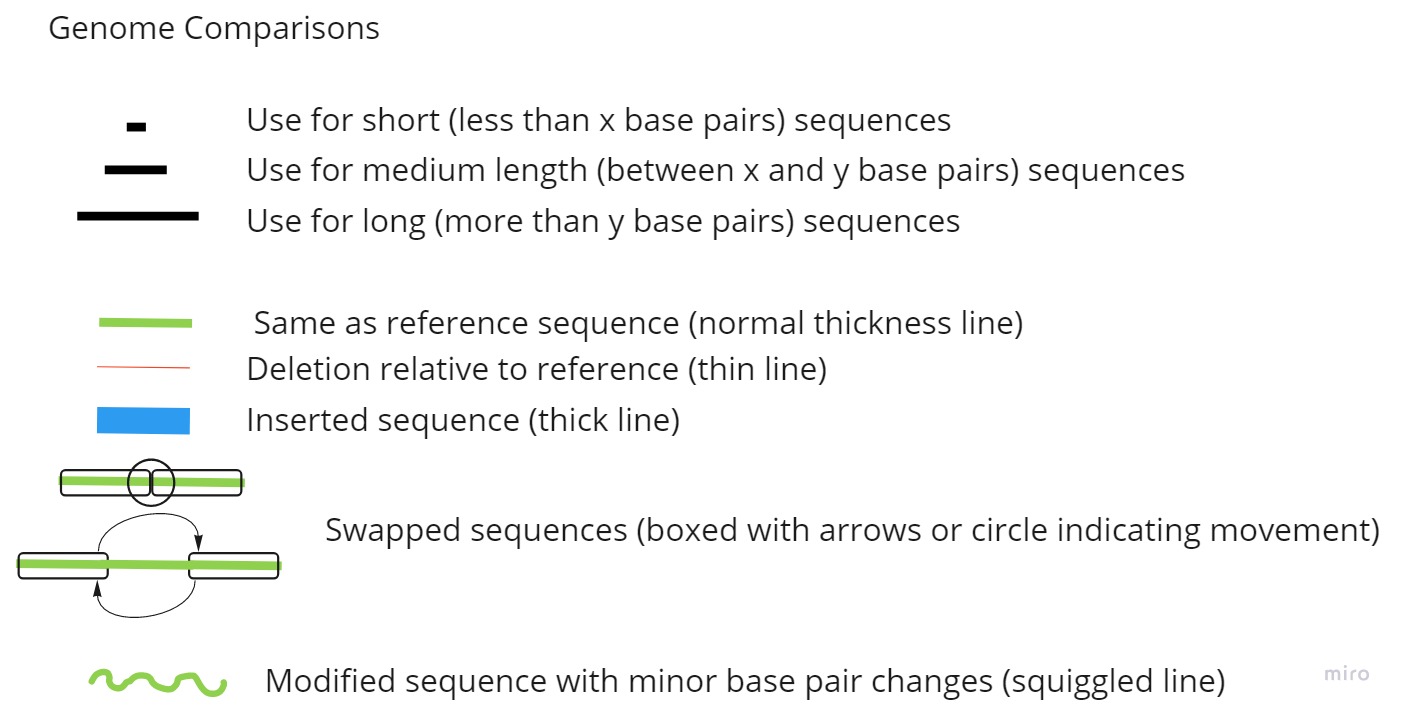
Genome Comparisons
Inspiration
As our team first got together, we reminisced about doing our "leaf" projects in school. It was one of the few assignments that gave us an excuse to go out into the "real" world and explore. We wanted to update that experience for today's students, regardless of age, and for families to share.
What it does
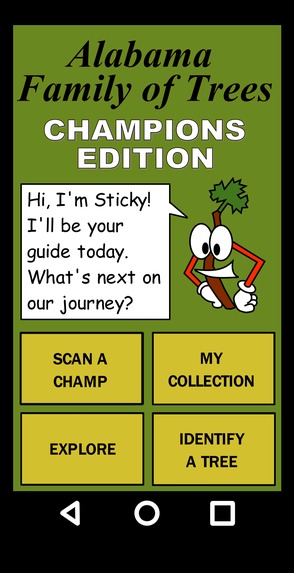
The app idea has several input and output opportunities. In its completion, users can identify a species and get additional information about the tree. They can pin their finds to collect, gain points, compare to other species, and share their finds with others. “Sticky” the mascot helps younger users work their way through a dichotomous key in order to provide them the challenge and success for identifying a species themselves. Alabama Champion Tree information and criteria are then linked as well as notification pop-ups if users are traveling near a champion.
How we built it
We focused first on the user's story. Since Kerri is a biology teacher, she was the perfect domain expert and we designed the app around the lessons she wants her kids to learn. She plans to start a hiking club at school and thought this would be the perfect app to engage students for practicing classification and genome comparison through hands-on experiences.
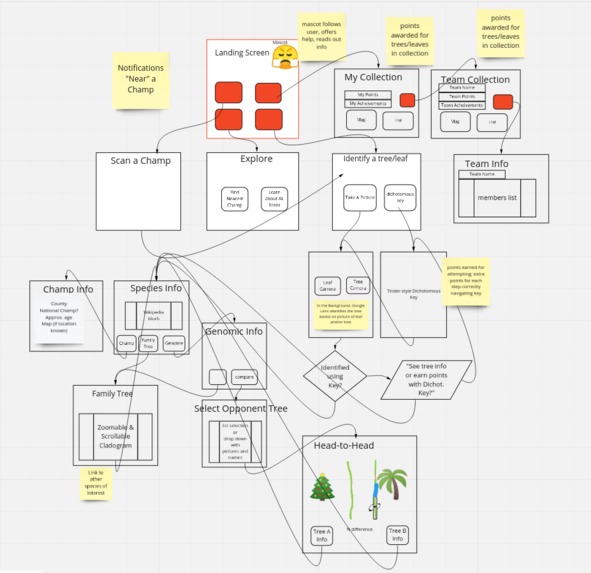
We pulled up an online whiteboard and started sketching out ideas. We tried miro.com for the first time and it was the perfect location to brainstorm and add notes. Someone mentioned that they could only draw stick figures - and that became the inspiration for our mascot, Sticky!
Doug started laying out wireframes while Daniel set up a web stack. Kerri started writing the script for the video submission, giving the team assignments to record in order to put the video together. By mid-week, we had a rough cut video, Sticky was done and in the app, the layouts were in good shape, and we had a web app running.
The app came together on Saturday and we launched the site. The video looked fantastic, and we were ready for the final submission.
Challenges we ran into
Javascript/Meteor/React change too fast for tutorials and examples to keep up, so figuring out lots of broken APIs.
Coordination/communication remotely, particularly with team members in other time zones.
Accomplishments that we're proud of
Daniel: None of us had met before this event. We teamed up after the kickoff and I am so proud of how well this team worked together. We had very complementary skills and everyone took ownership of a part of the work and pushed themselves to learn and grow and produce a great start to something.
Kerri: I’ve used iMovie but that was only once and a few years ago. Getting back to video making and editing was most fun for me during the project and I’m proud of how it turned out. Also, I must “ditto” what Daniel wrote above about the team working together. I’ve done many group projects in my years and this team was my best experience in listening to ideas, offering constructive feedback, and being mutually respectful of one another’s time and schedules. I’d like to work with them again on next year’s hack.
Doug: I, also, am very proud of the way our team worked together, particularly with the complications of working remotely. It is exciting to think that we came into HATCH not knowing each other and started from almost a blank slate regarding our project or approach. Very quickly, we came together around something that we were excited about, and we have arrived at the end of HATCH still excited.
What we learned
Kerri: I learned a lot about iMovie! And admittedly, I had not heard about Champion Trees in Alabama. I went to California on vacation a couple of years ago and General Sherman, the Sequoia, was one of the items on our list that we saw. I’m now very interested in seeing some of the champions here in my own beautiful state.
Doug: I had not heard of Champion Trees prior to HATCH, and in the course of this working on our app, I learned a bit more about trees and their diverse genomes. In the process of trying to organize everyone’s ideas about the app, I learned about common approaches to the early stages of app development and design particularly wireframing and visual prototyping. While making the app screen mockups, I had the opportunity to gain more experience and skill with Krita, an open-source Photoshop-like application, which I have been learning for my personal art.
Daniel: Not being a web developer, this challenge was last on my list coming into the event, but we chose it as a team and I'm really glad we did. This was a great excuse to finally get some web development experience under my belt!
What's next for AL Family of Trees: Champions Edition
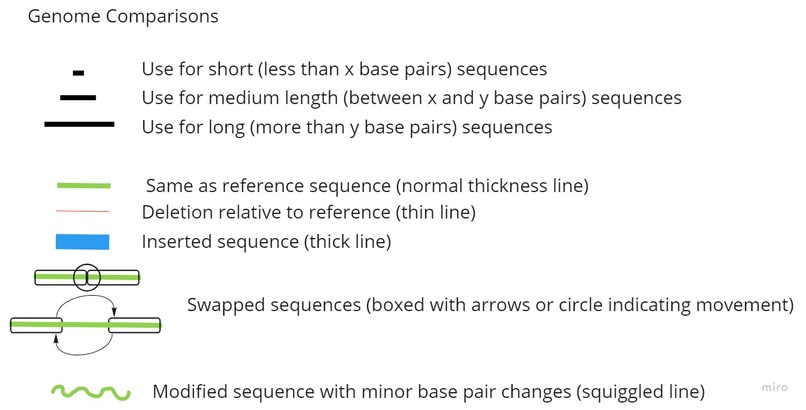
Kerri wants to use this app for her class and the hiking club she plans to sponsor. We've got the skeleton in place. The layout allows us to flesh out each part of the app and continue to grow it. Doug created some beautiful UI designs for an intuitive dichotomous key. The backend database of dichotomous key questions relevant to Alabama trees would need to be constructed. After that, we can choose to move on to virtual collections, or deeper exploration into a tree's properties. We even have concepts for genome comparison.
One reason for choosing the Meteor framework is that it has integration with Cordova, which allows this to be transformed to a native app, which we need to do to get access to the phone's camera and GPS.
The app could also offer genome comparison percentages between species or between trees beside one another with the “why” and “how” they’re similar and different. With point collecting, additional draws to engagement can be generated through having institute sponsored contests. A winner during a specified time frame could be awarded a lab visit to Hudson Alpha to conduct some DNA research or processing by electrophoresis and/or other methods of collecting data for a species.

Log in or sign up for Devpost to join the conversation.