-
-
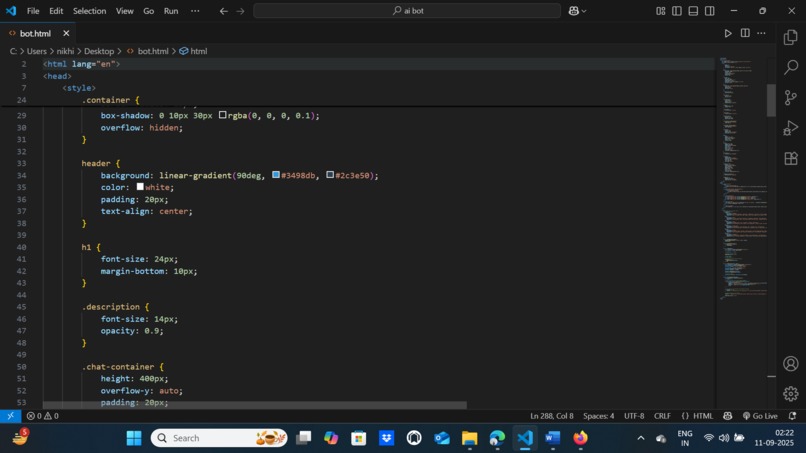
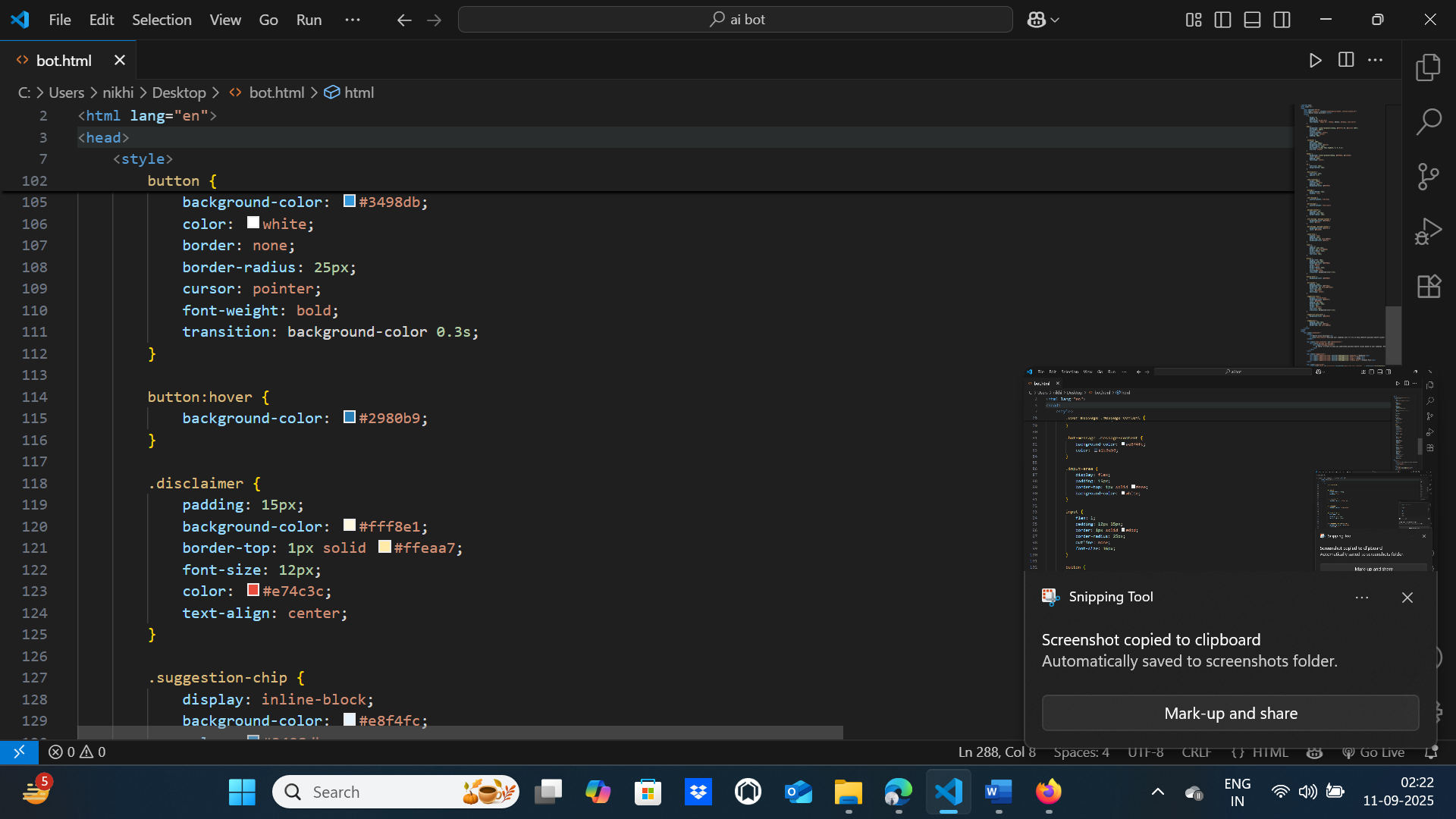
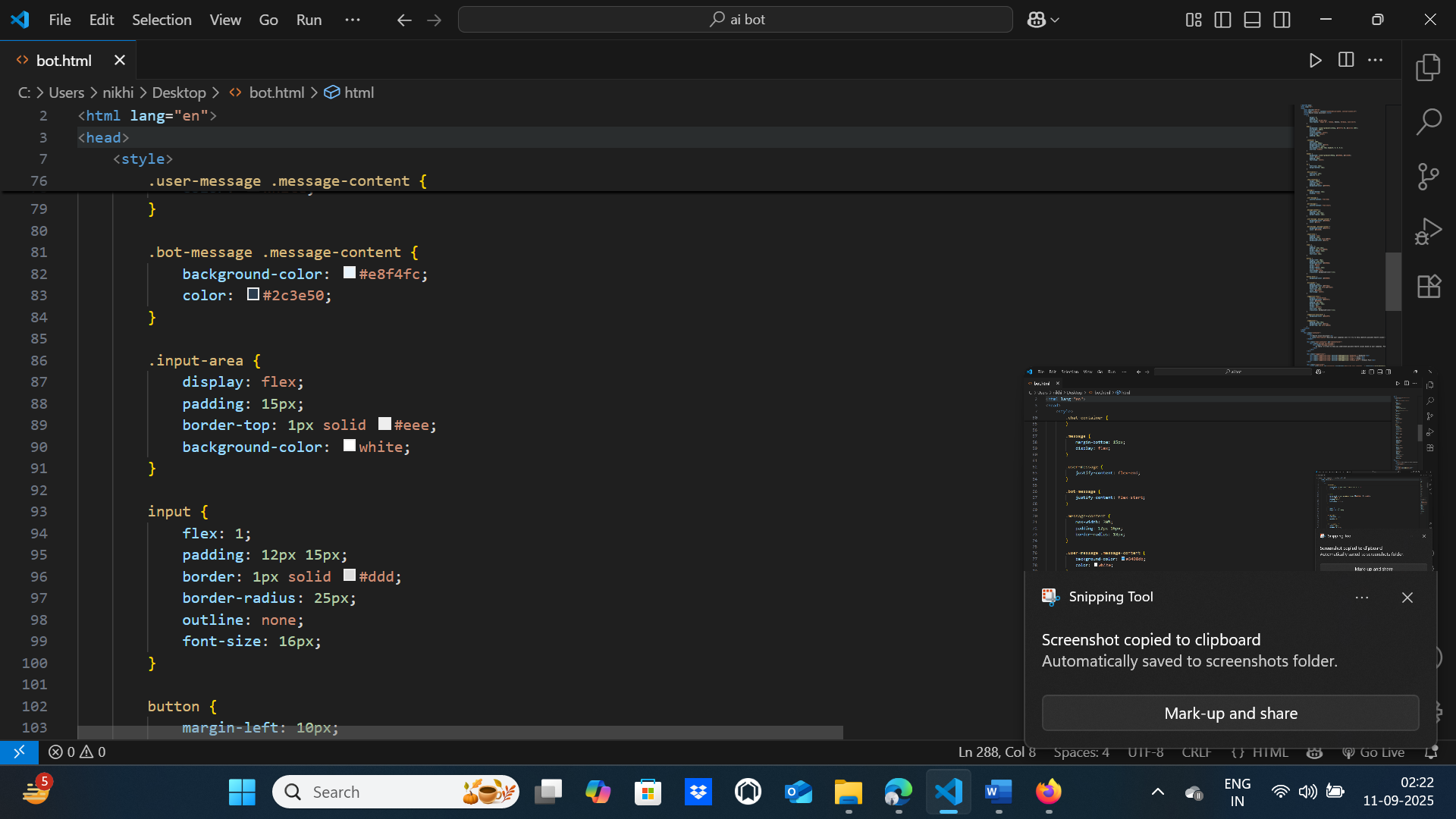
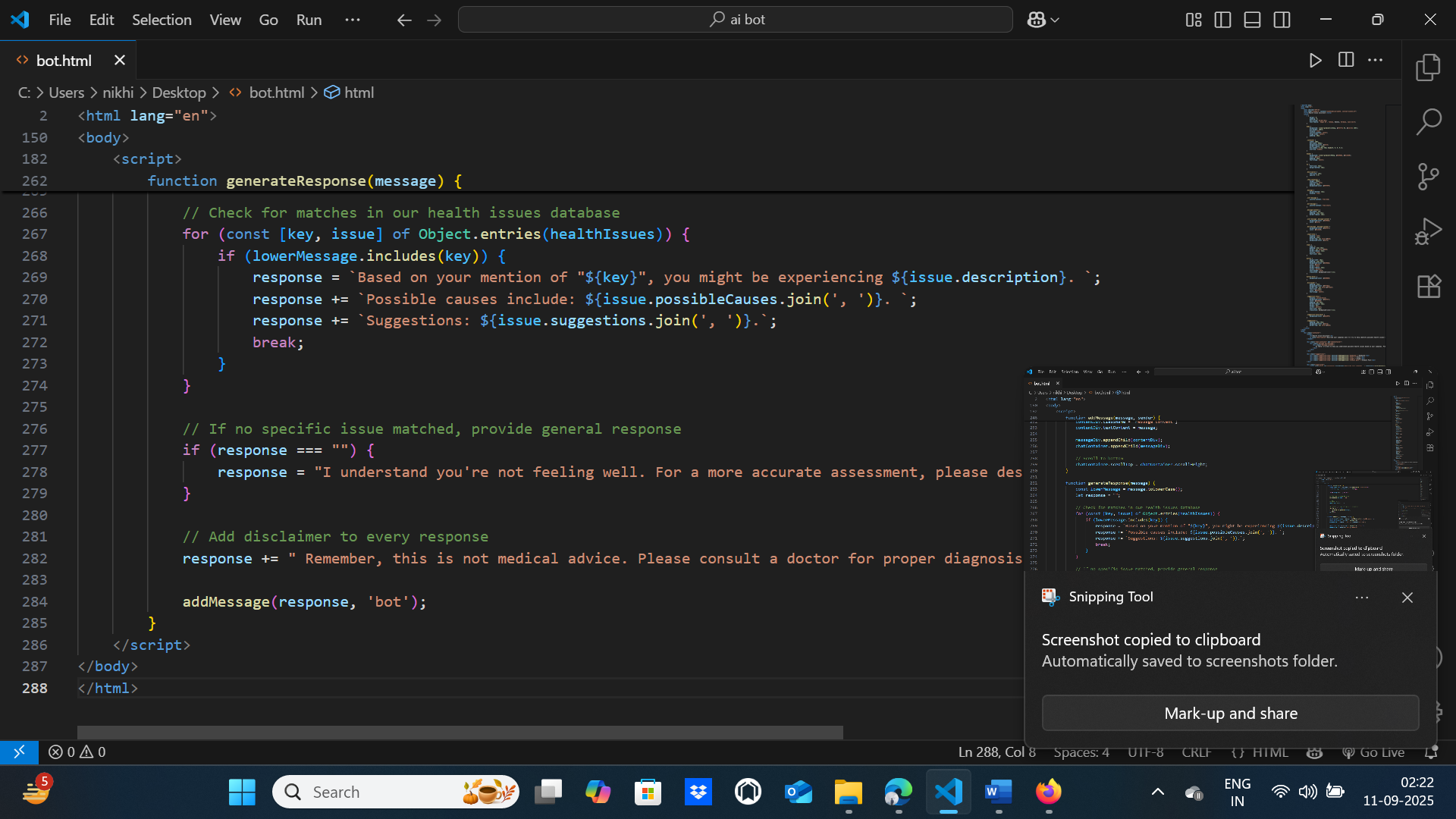
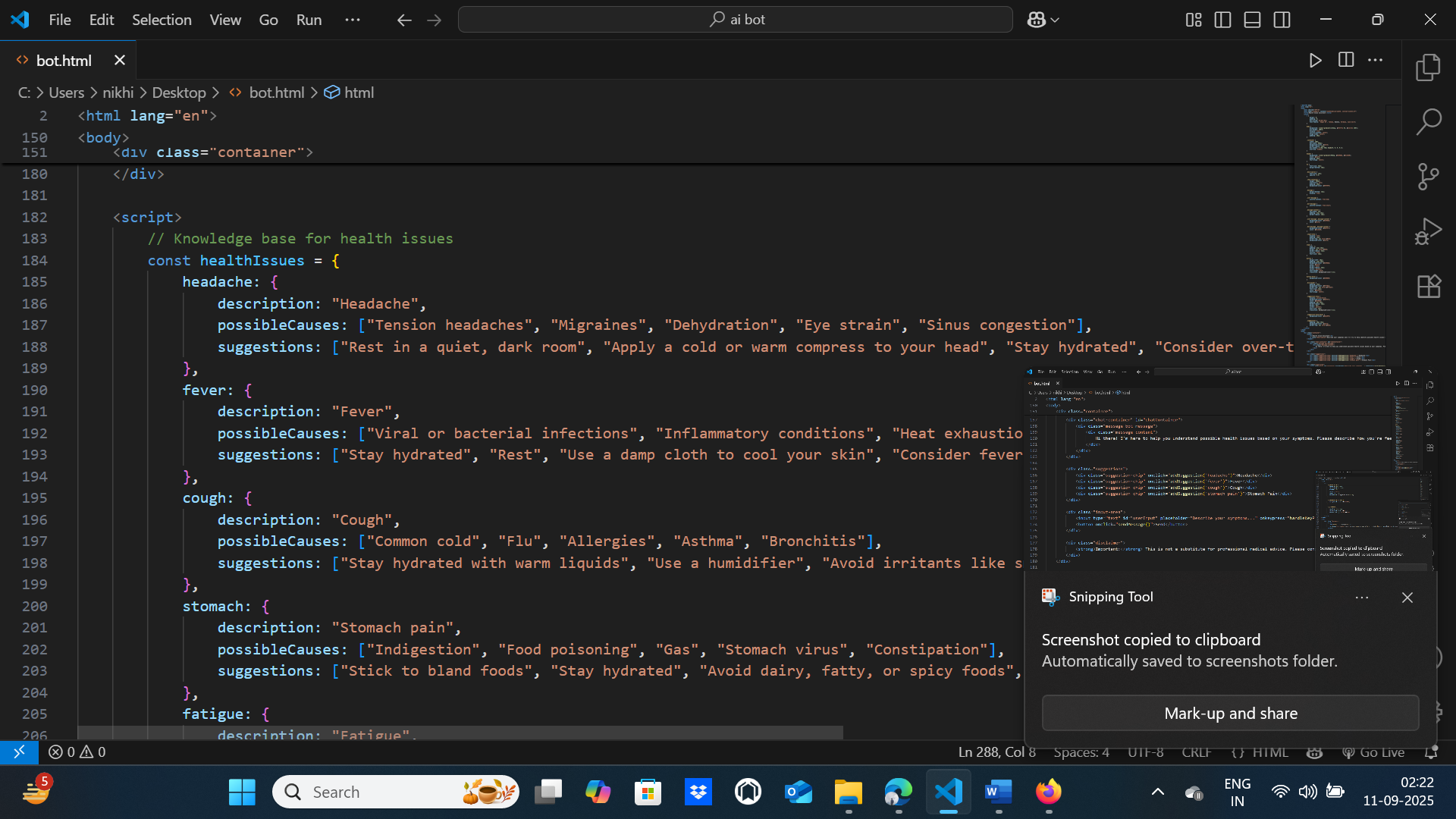
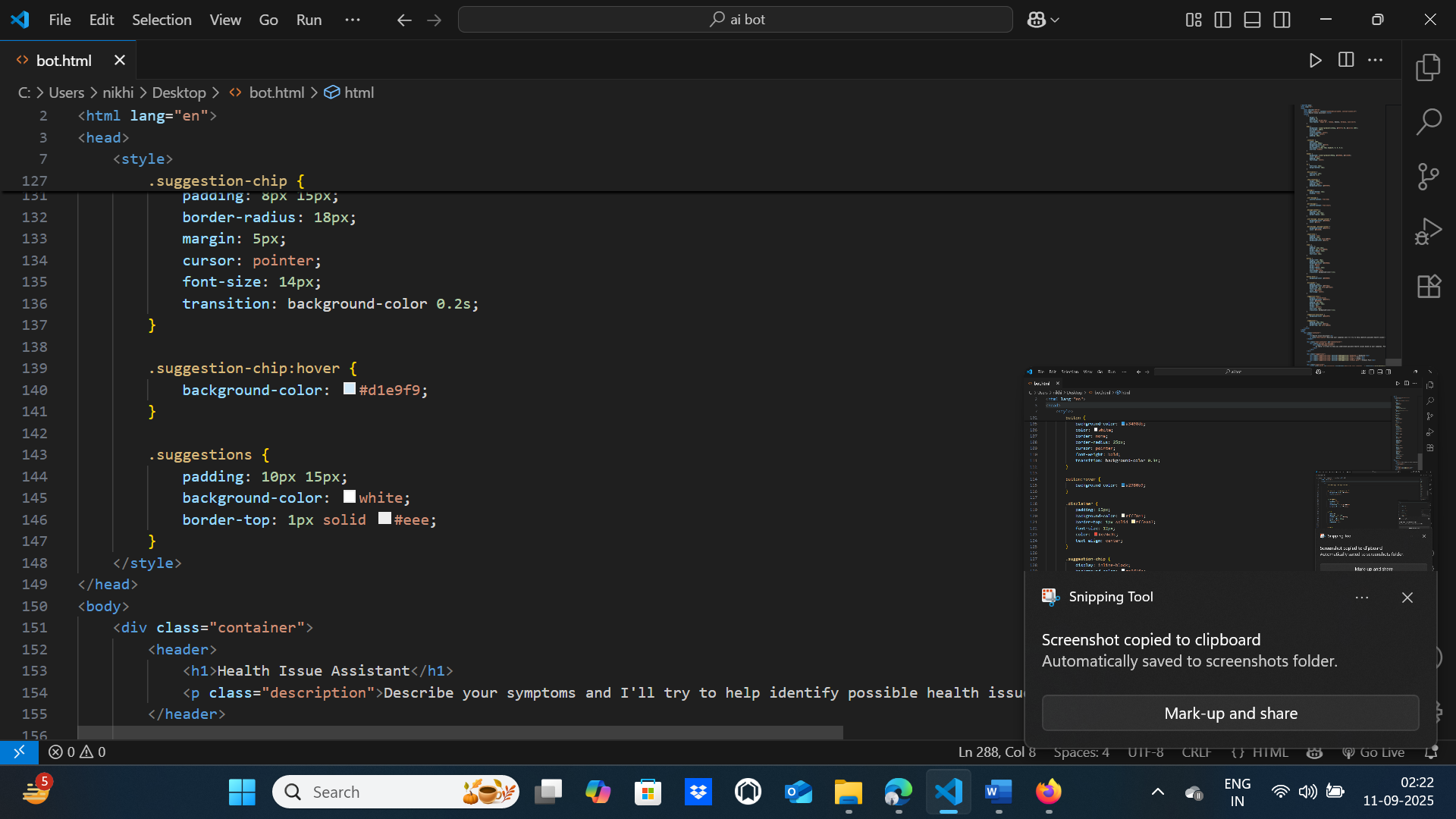
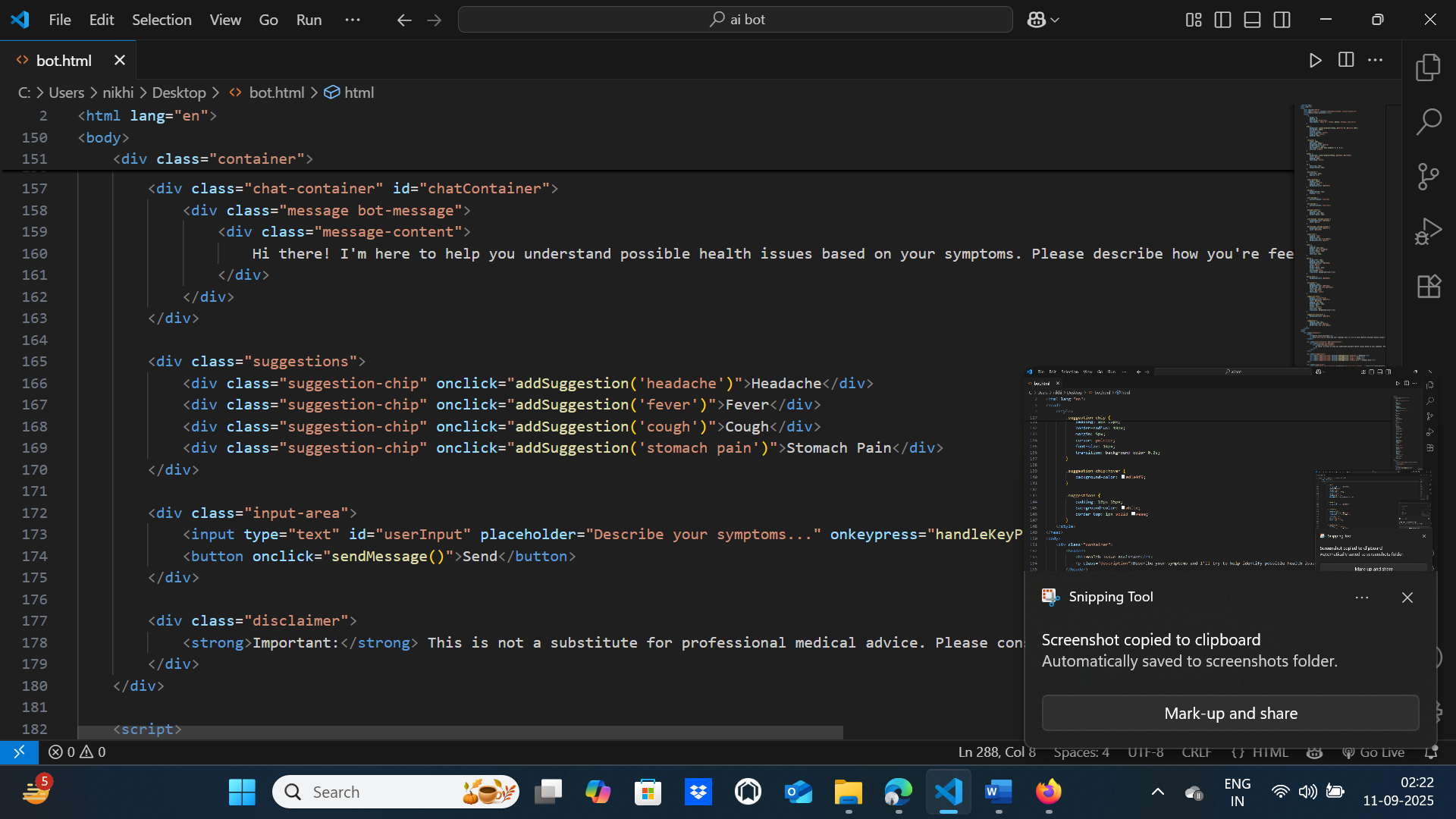
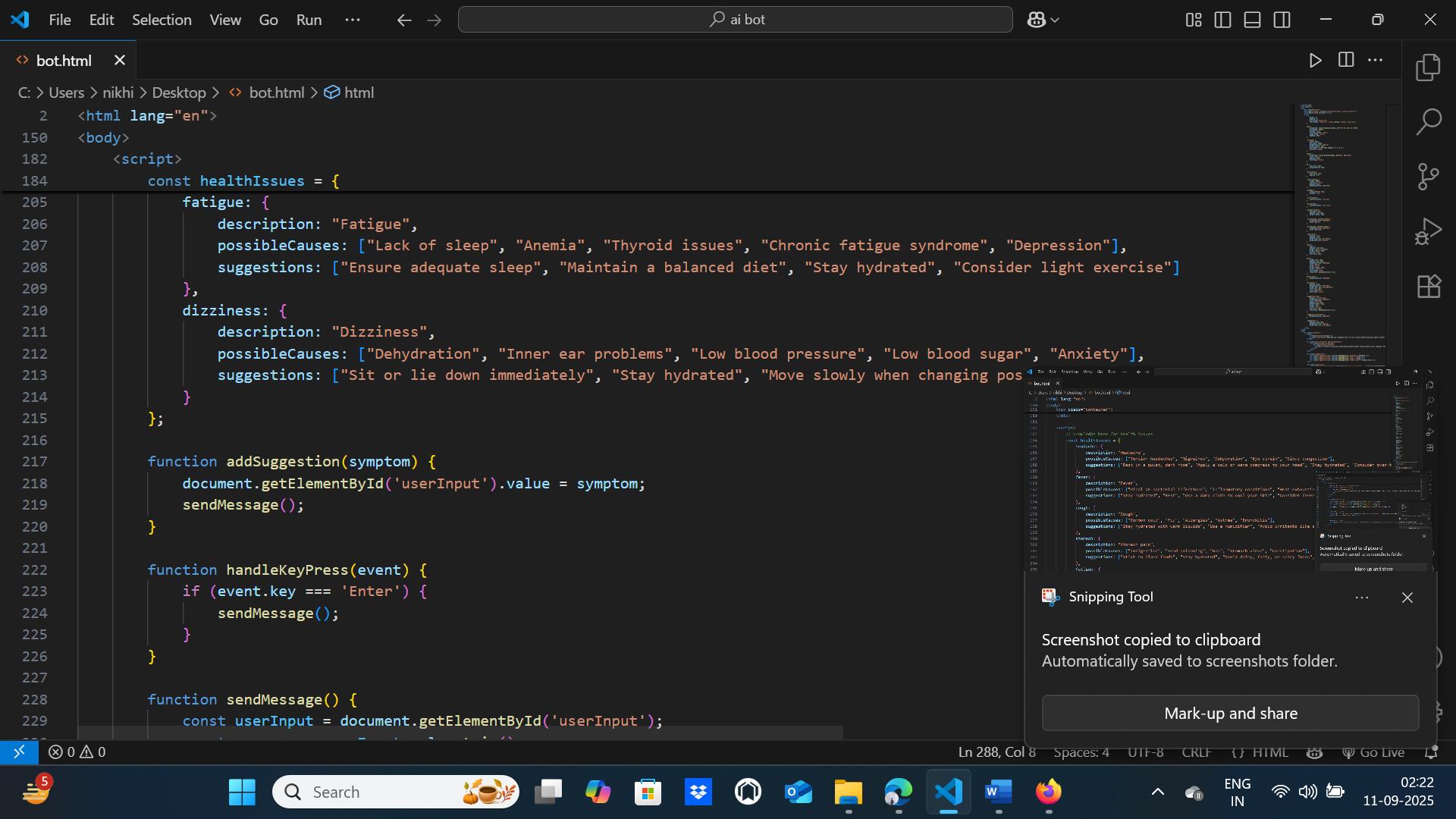
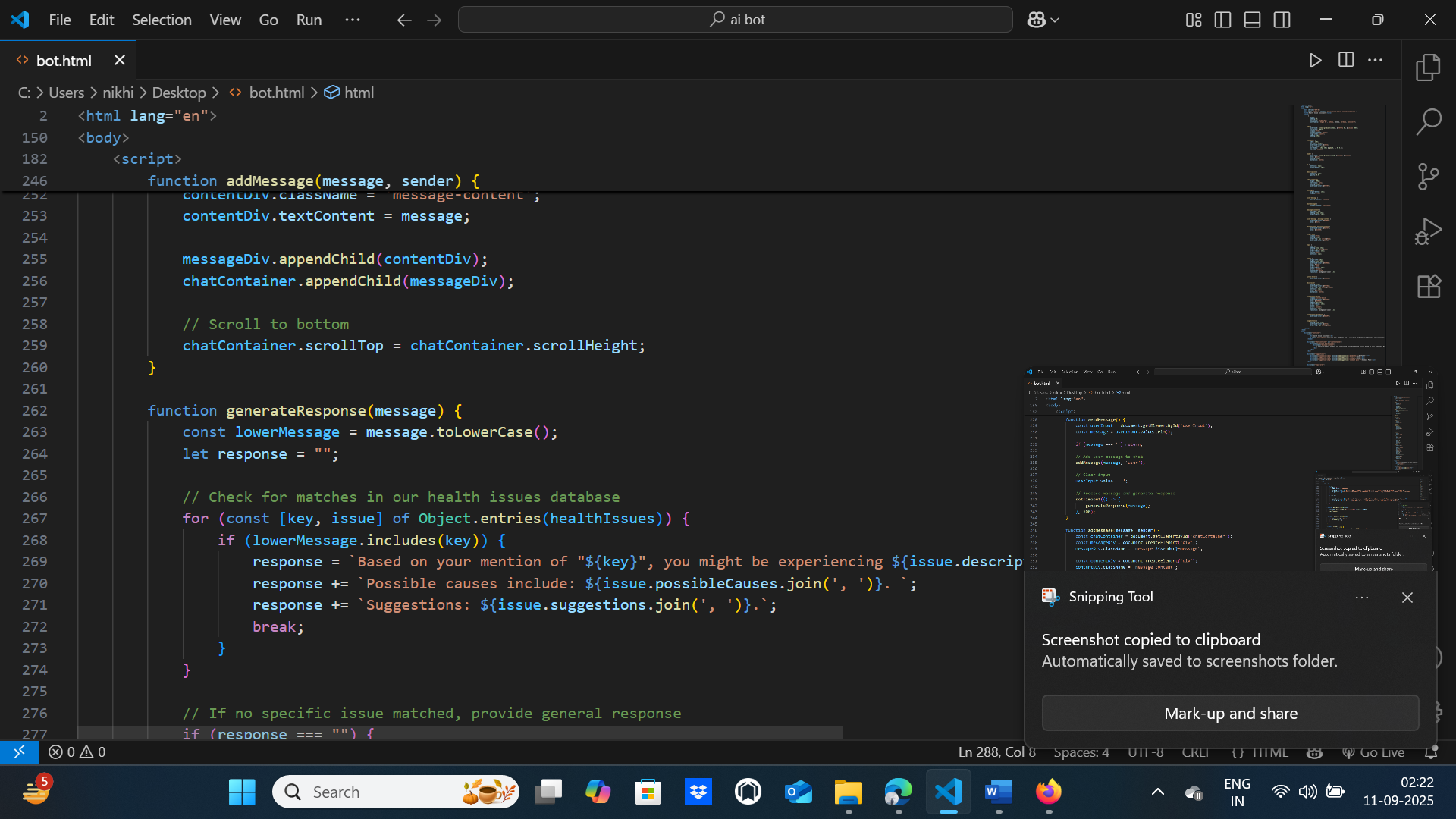
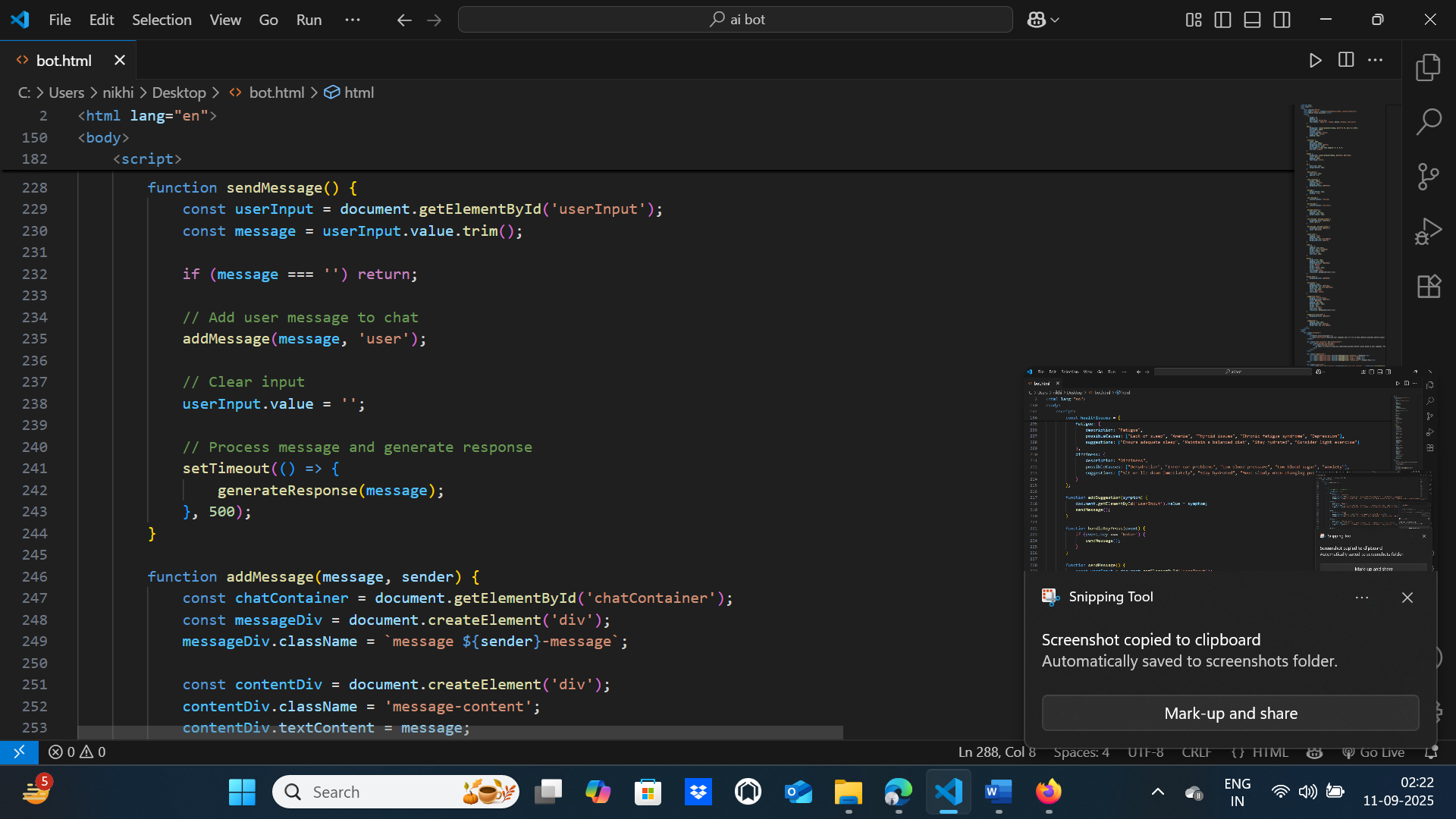
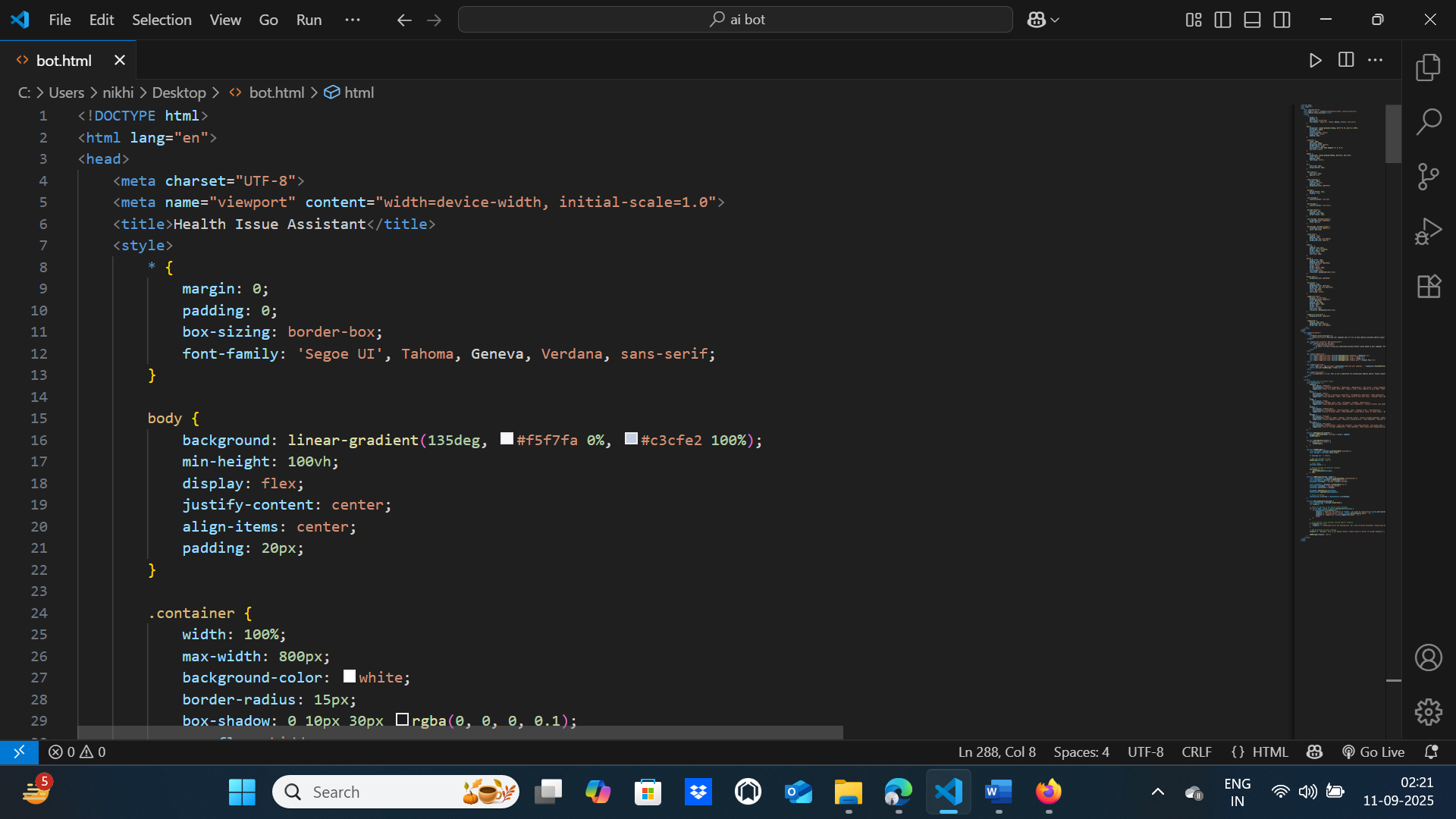
Image of HTML BOT code
-
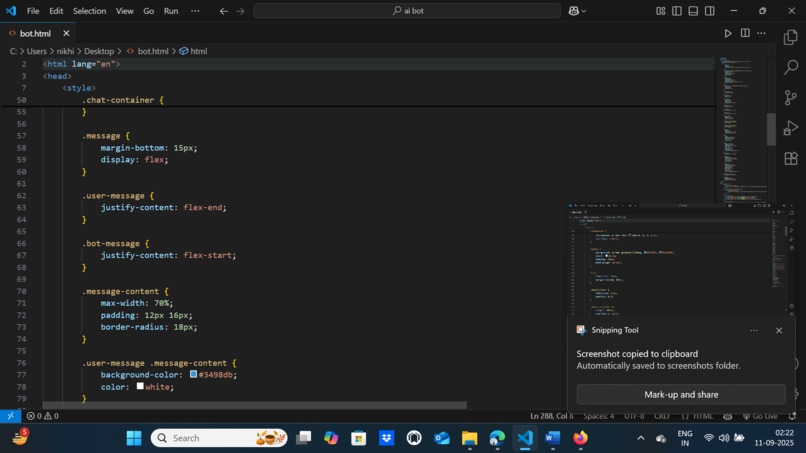
Image of HTML BOT code
-
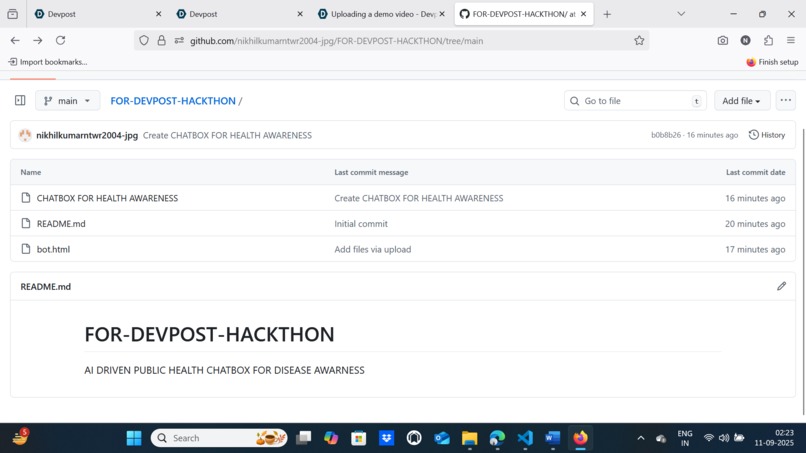
profile of GITHUB
-
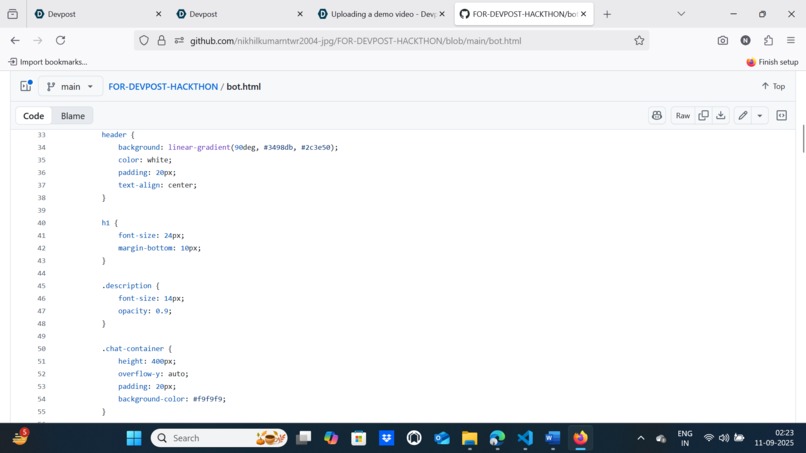
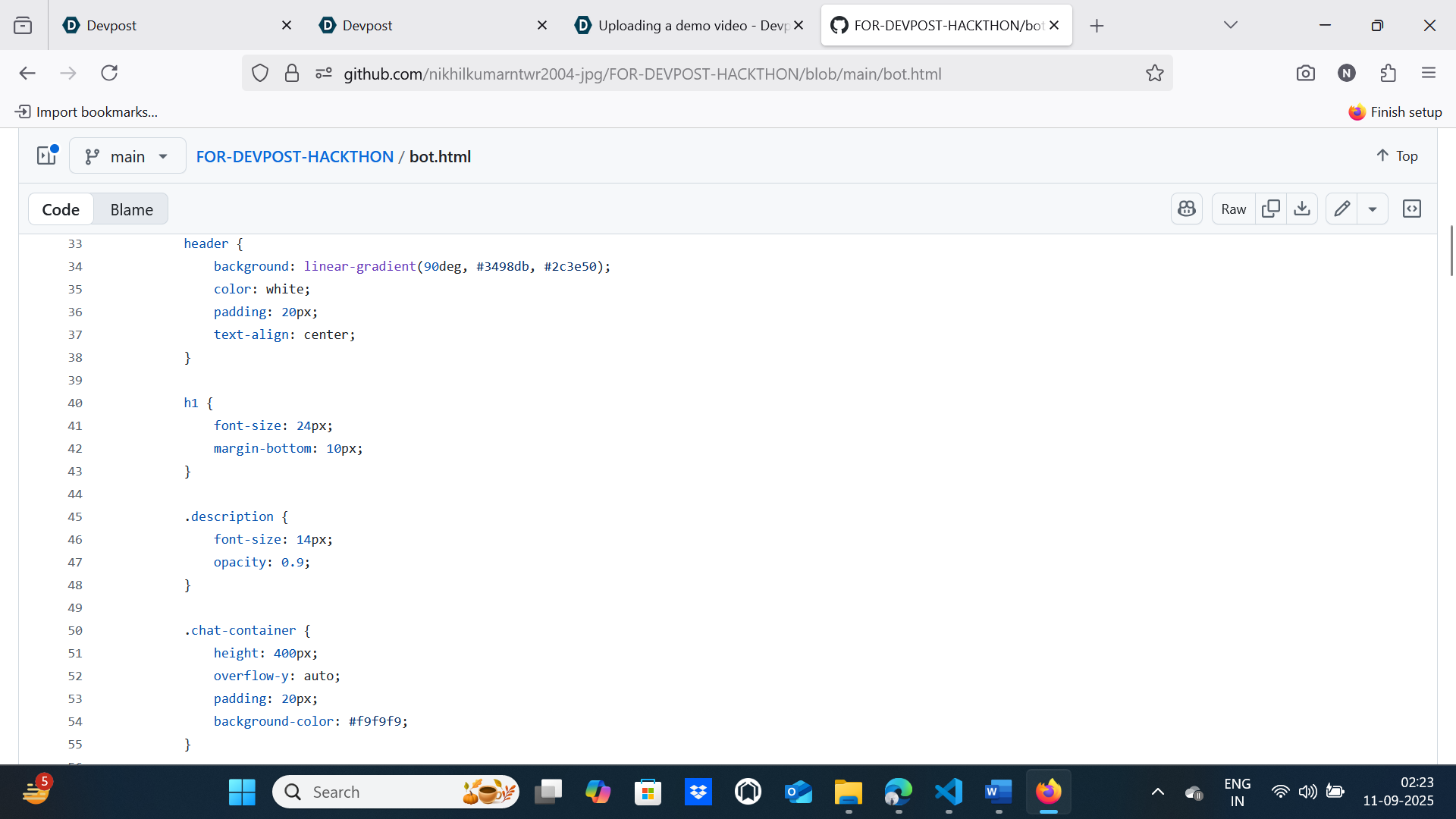
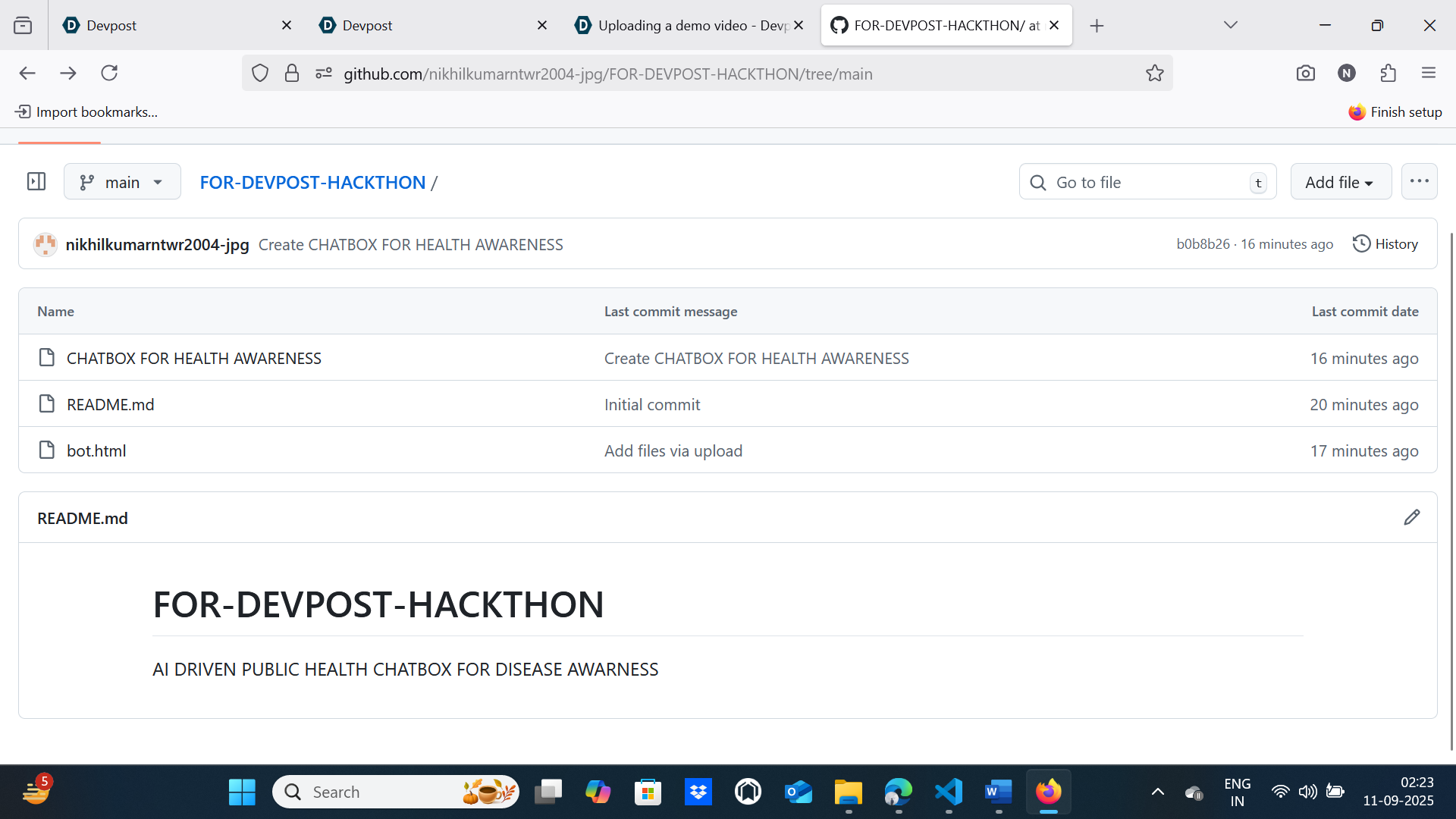
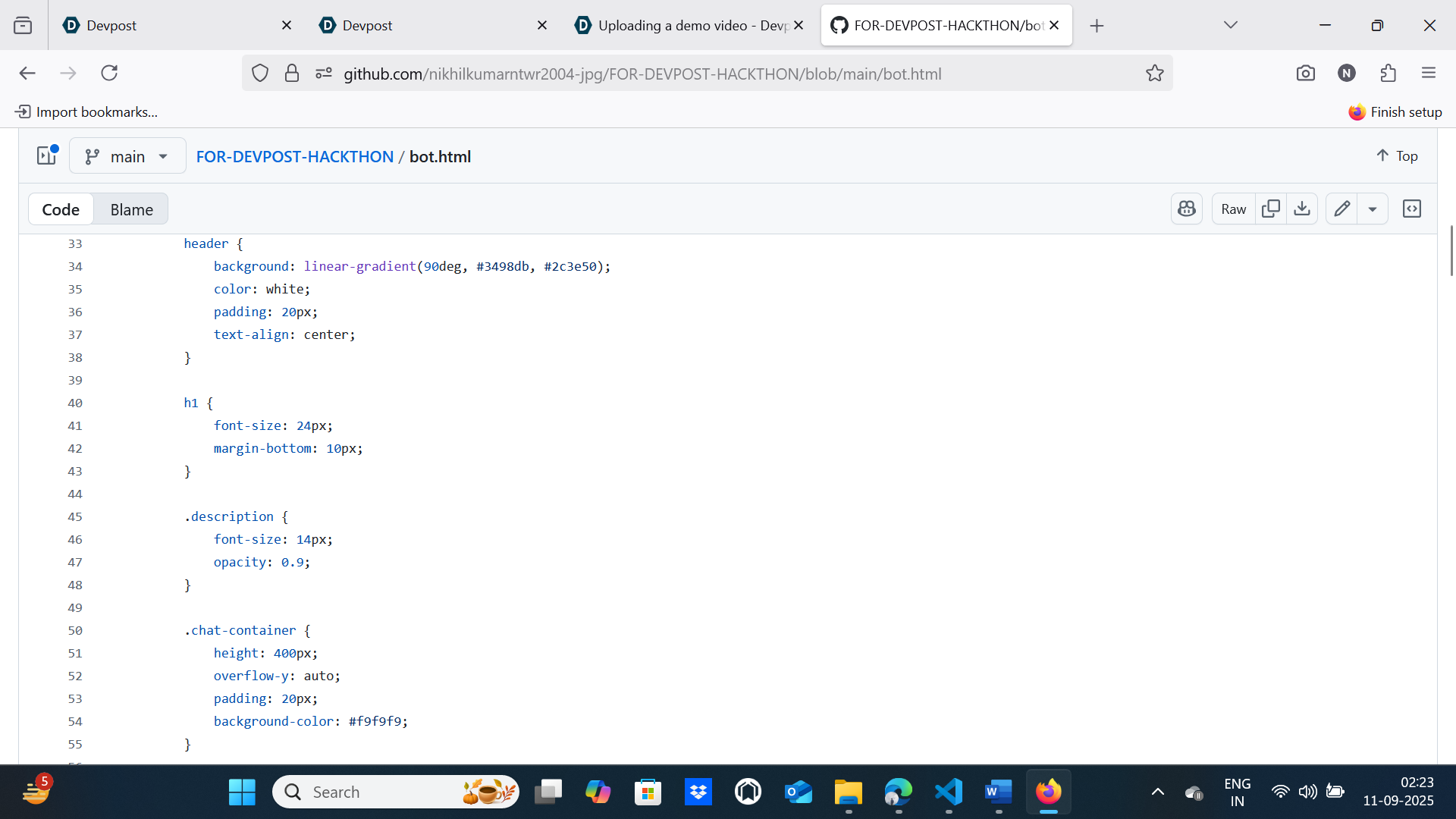
CODE of HTML in GITHUB
-
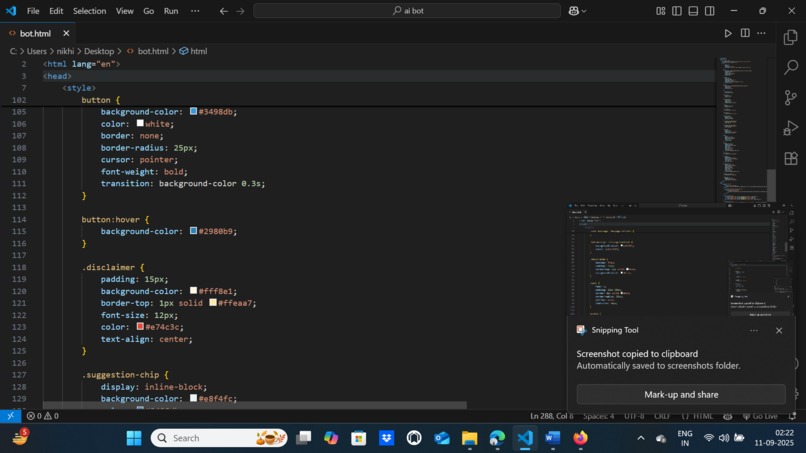
Image of HTML BOT code
-
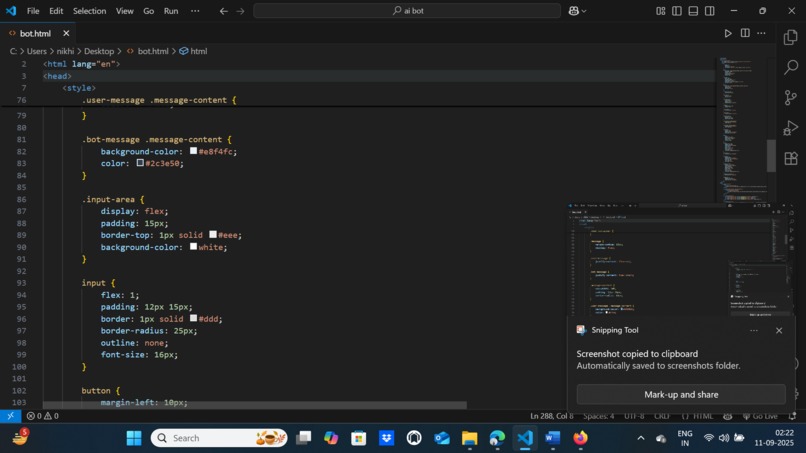
Image of HTML BOT code
-
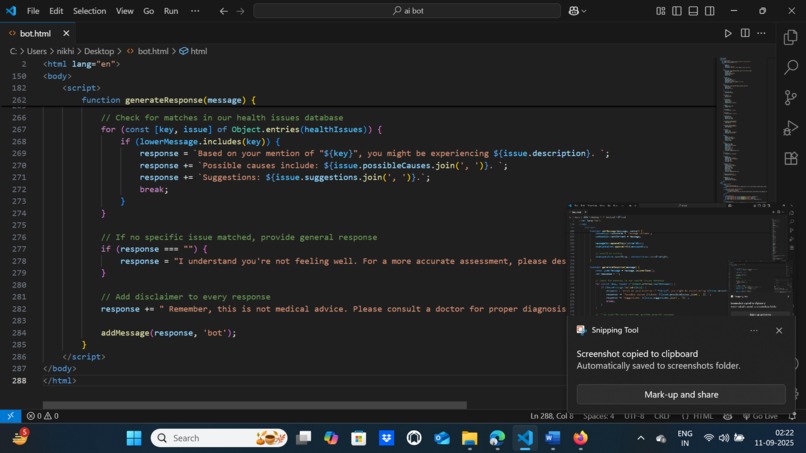
Image of HTML BOT code
-
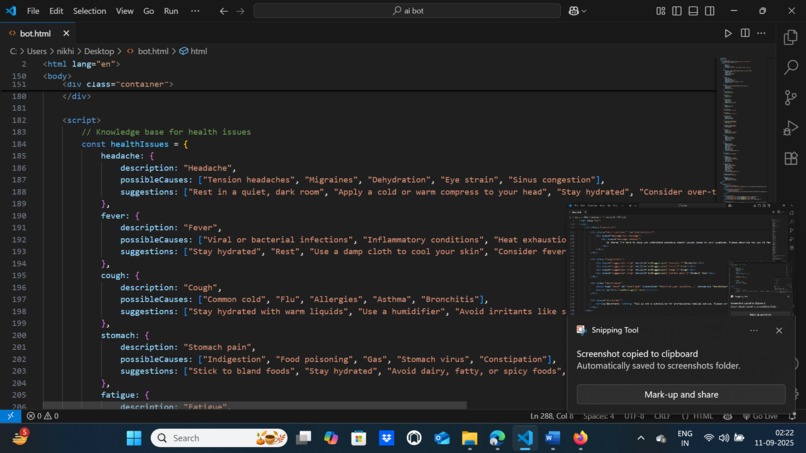
Image of HTML BOT code
-
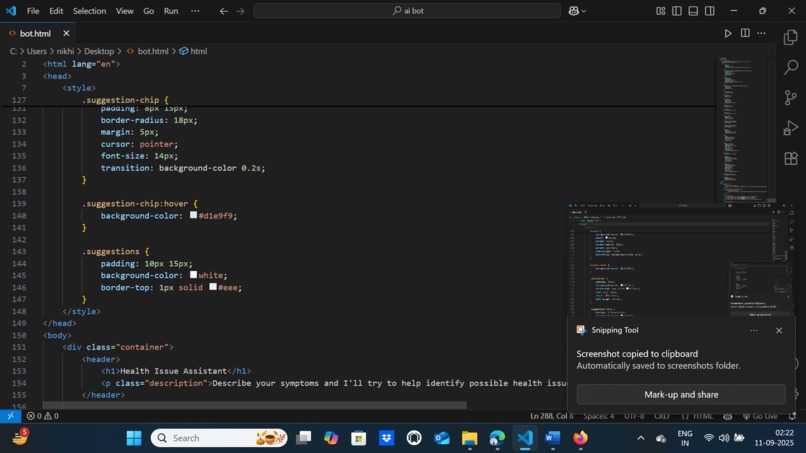
Image of HTML BOT code
-
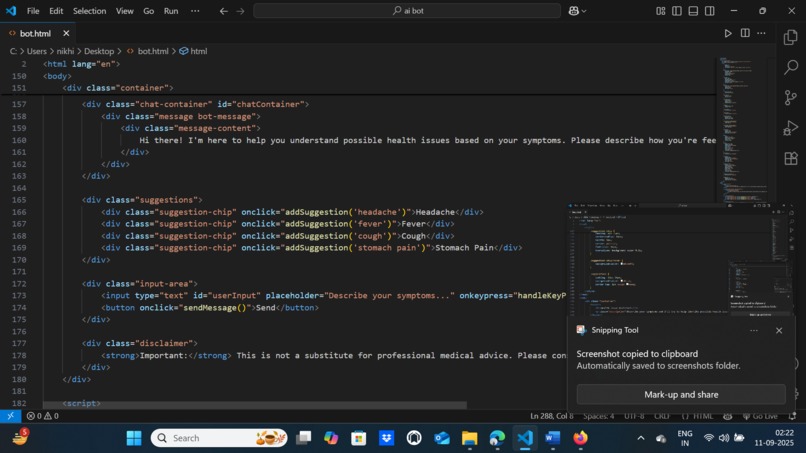
Image of HTML BOT code
-
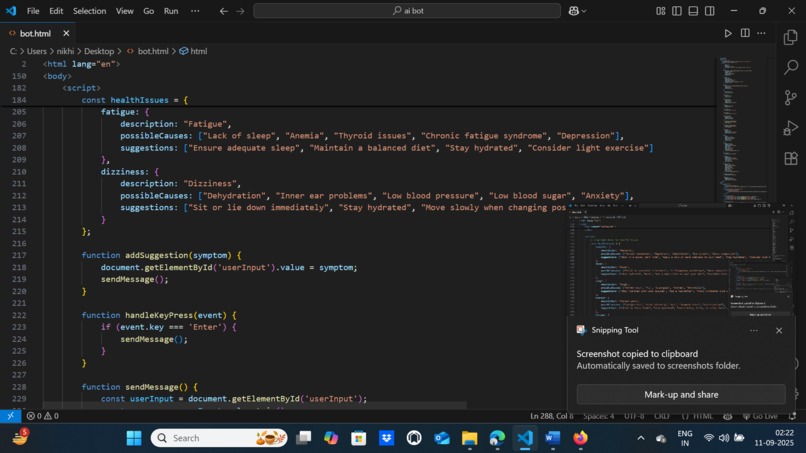
Image of HTML BOT code
-
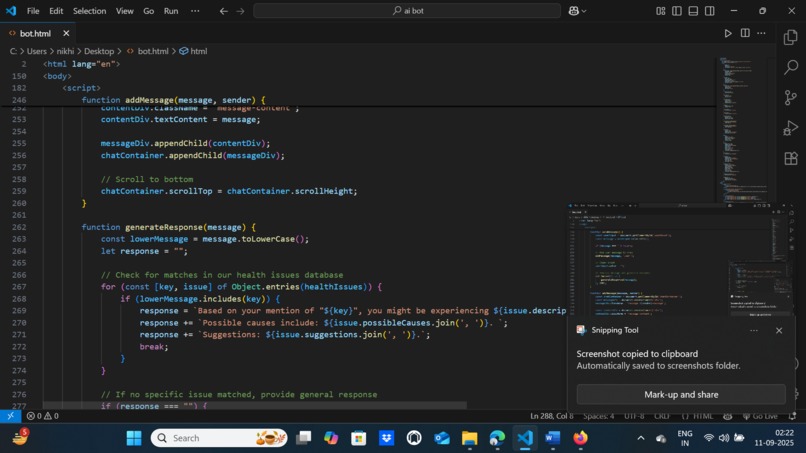
Image of HTML BOT code
-
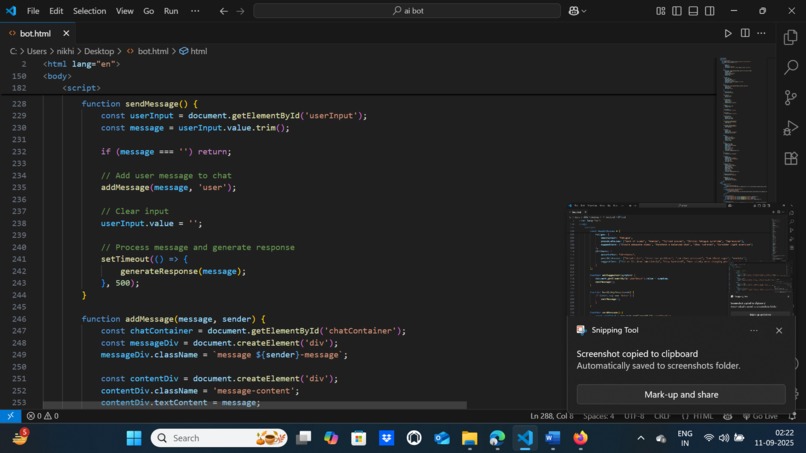
Image of HTML BOT code
-
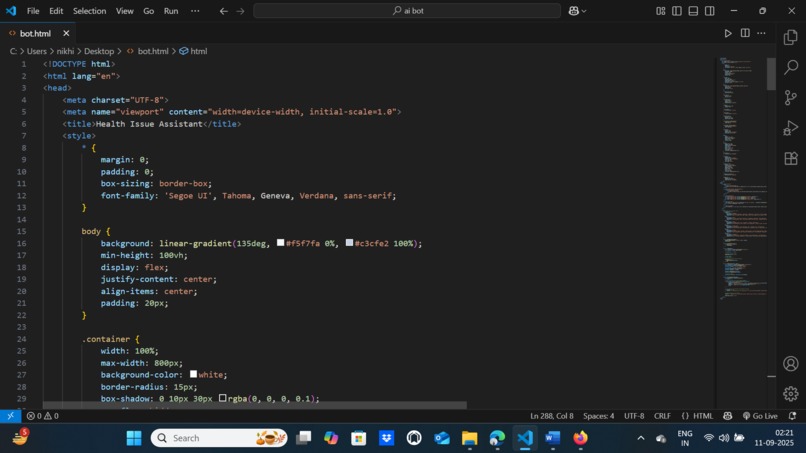
Image of HTML BOT code
-
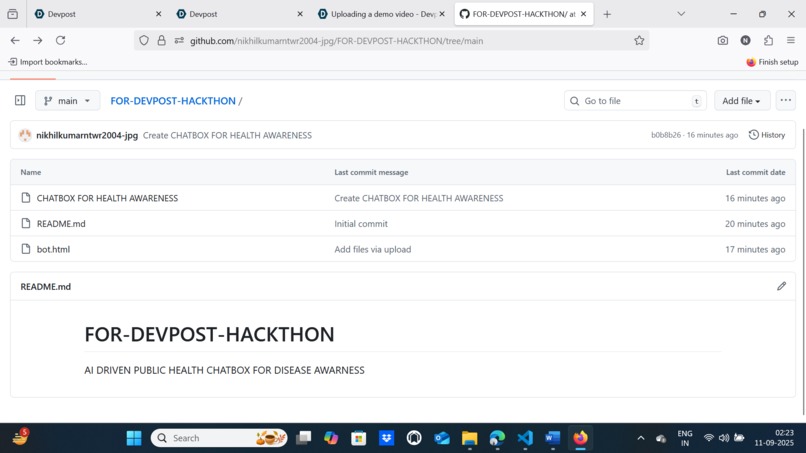
HTML CODE RUN
-
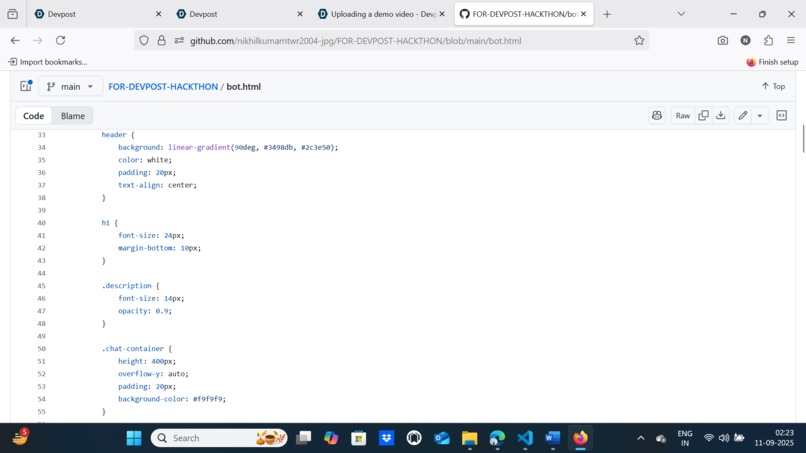
HTML CODE RUN
-
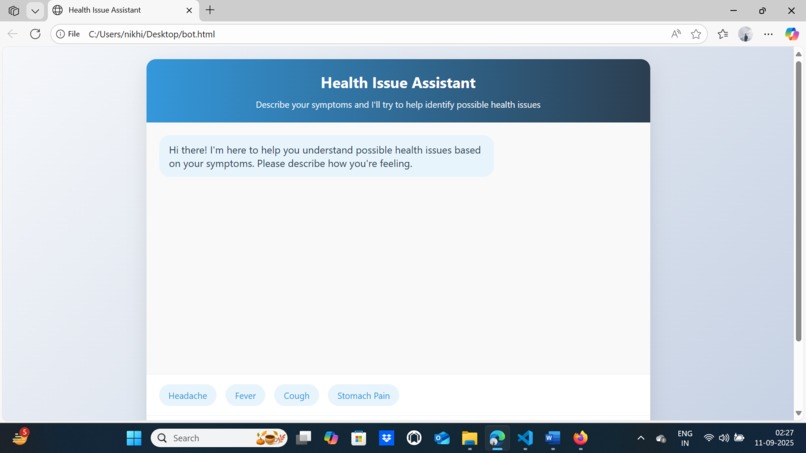
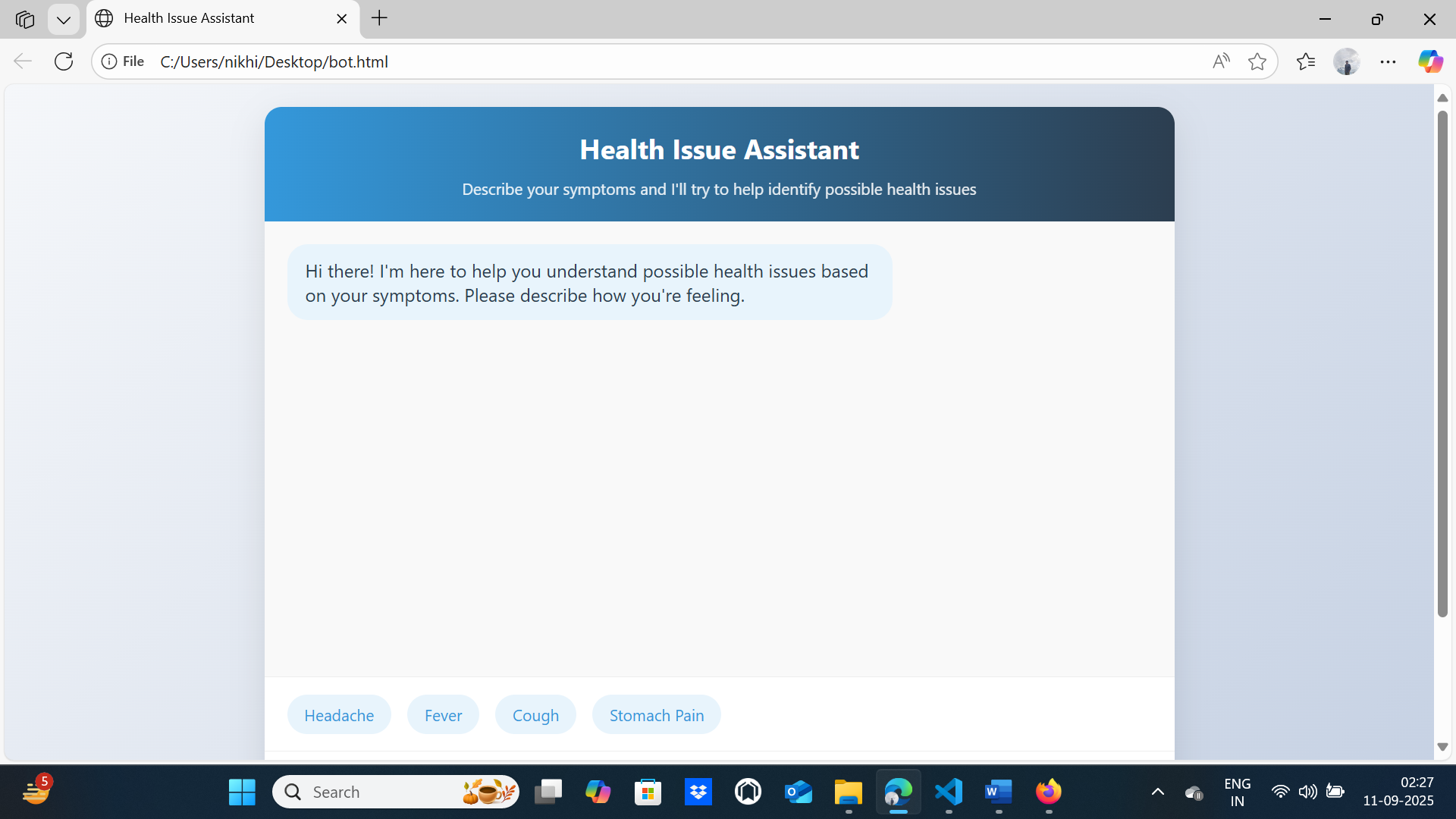
HTML CODE RUN
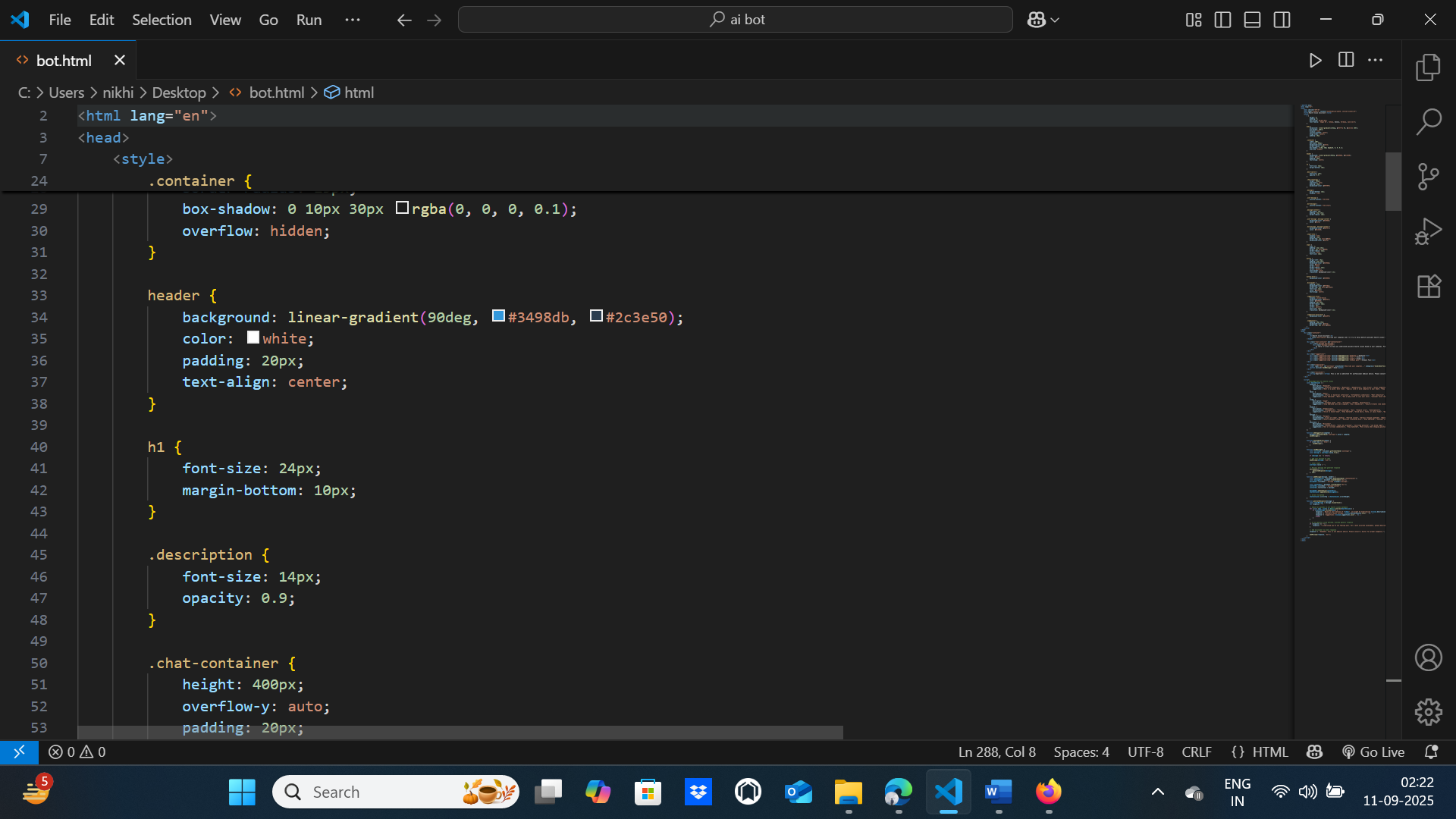
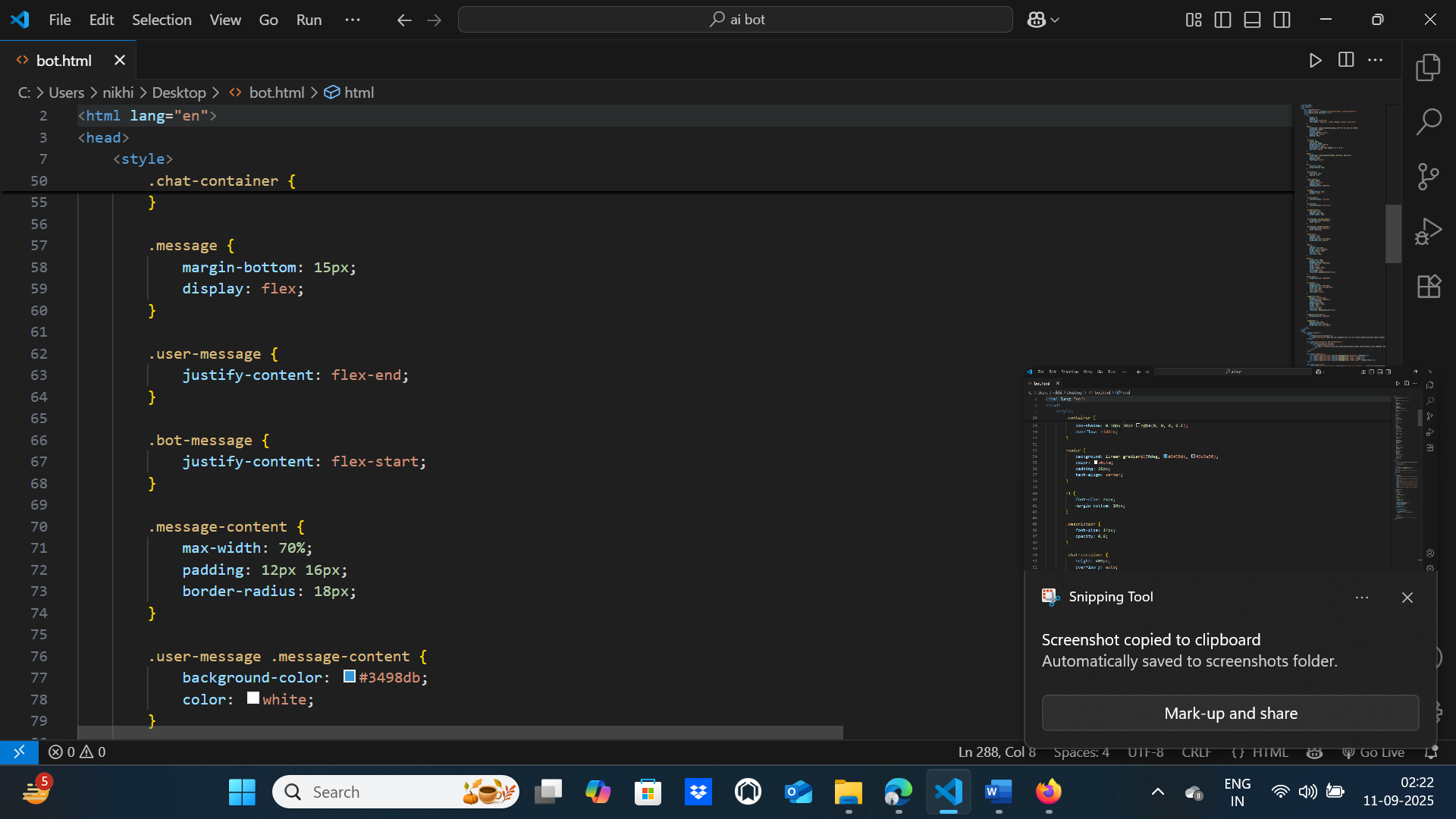
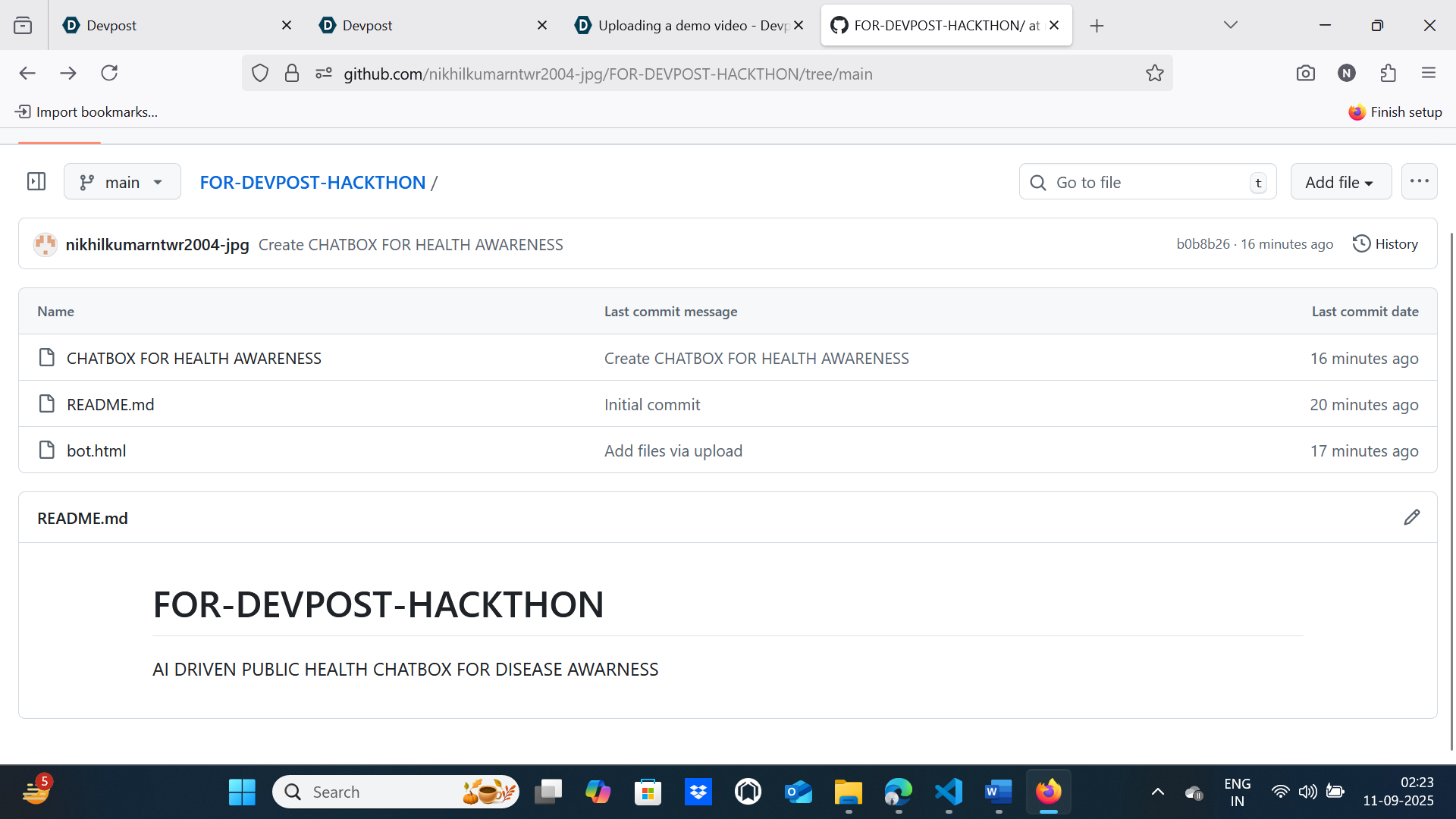
Inspiration
During the pandemic, misinformation spread almost as quickly as the virus. Many people struggled to find trustworthy health information. We wanted to build a simple, AI-driven chatbot that makes disease awareness more accessible to everyone
What it does
The chatbot answers basic health questions about common conditions like COVID-19, flu, and diabetes. Users can interact with it through a web interface and get instant responses with relevant health information.
How we built it
we can build it by many sources like js,python,html. but i like so it by fronted develment bt html,css and js
Challenges we ran into
Natural Language Understanding: Users don’t always type the exact disease name (e.g., “Tell me about corona” vs “What is COVID-19?”). Making the chatbot flexible enough to recognize variations was tricky.
Accuracy of Health Information: Since health is a sensitive domain, we had to make sure that the information provided was correct, up-to-date, and written in a simple way that anyone could understand.
Frontend–Backend Integration: Connecting the HTML/JS frontend with the Flask backend required handling CORS issues and ensuring smooth API calls.
User Experience: Designing a clean, friendly chat interface that feels natural but also remains simple to build was challenging with only HTML/CSS/JS.
Scalability: The initial version supports only COVID-19, flu, and diabetes. Expanding to more conditions while keeping the chatbot fast and lightweight required careful planning.
Error Handling: We had to make sure that if the server was down or a user asked something unrelated, the chatbot would still respond gracefully.
Accomplishments that we're proud of
Built a working chatbot in a short time.
Designed a clean, user-friendly interface.
Successfully connected the Flask backend with the web frontend.
What we learned
How to integrate Flask APIs with a web frontend.
Importance of CORS handling in full-stack applications.
How small, AI-like features (pattern recognition, keyword matching) can already provide real value
What's next for Al-Driven Public Health Chatbot for Disease Awareness
What’s Next
Expand Disease Coverage: Add more diseases and health conditions (e.g., hypertension, asthma, mental health topics) to make the chatbot more useful for a wider audience.
Smarter AI/NLP Integration: Move beyond simple keyword detection by integrating NLP models (like spaCy, GPT, or BERT) so the chatbot can understand natural language questions more flexibly.
Multilingual Support: Enable responses in multiple languages to reach non-English speakers and improve accessibility worldwide.
Voice Interaction: Add speech-to-text and text-to-speech features so users can interact with the chatbot by talking instead of typing.
Real-Time Data Integration: Connect with APIs from trusted health organizations (WHO, CDC, government portals) to provide up-to-date information and alerts.
Personalized Recommendations: Allow users to input basic health information and get tailored advice or educational resources (while keeping privacy in mind).
Mobile-Friendly & Deployable: Deploy the chatbot on cloud platforms, integrate with WhatsApp, Telegram, or a mobile app for broader reach.
Gamification for Awareness: Add quizzes or tips of the day to encourage people to learn about diseases in an engaging way.


Log in or sign up for Devpost to join the conversation.