-
-
-
-
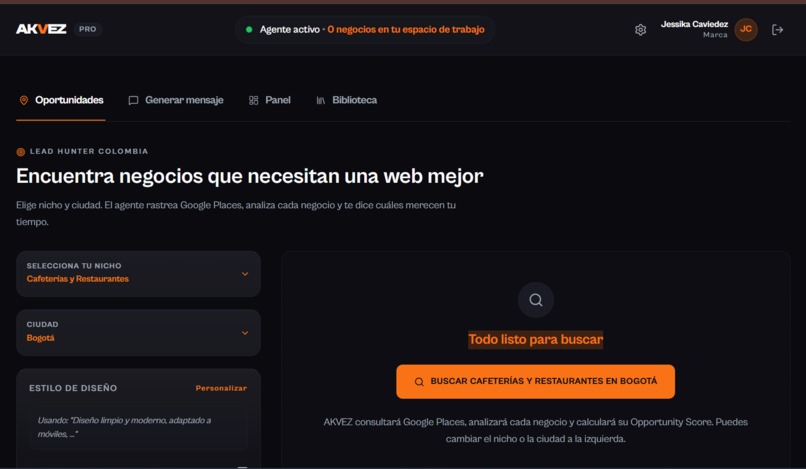
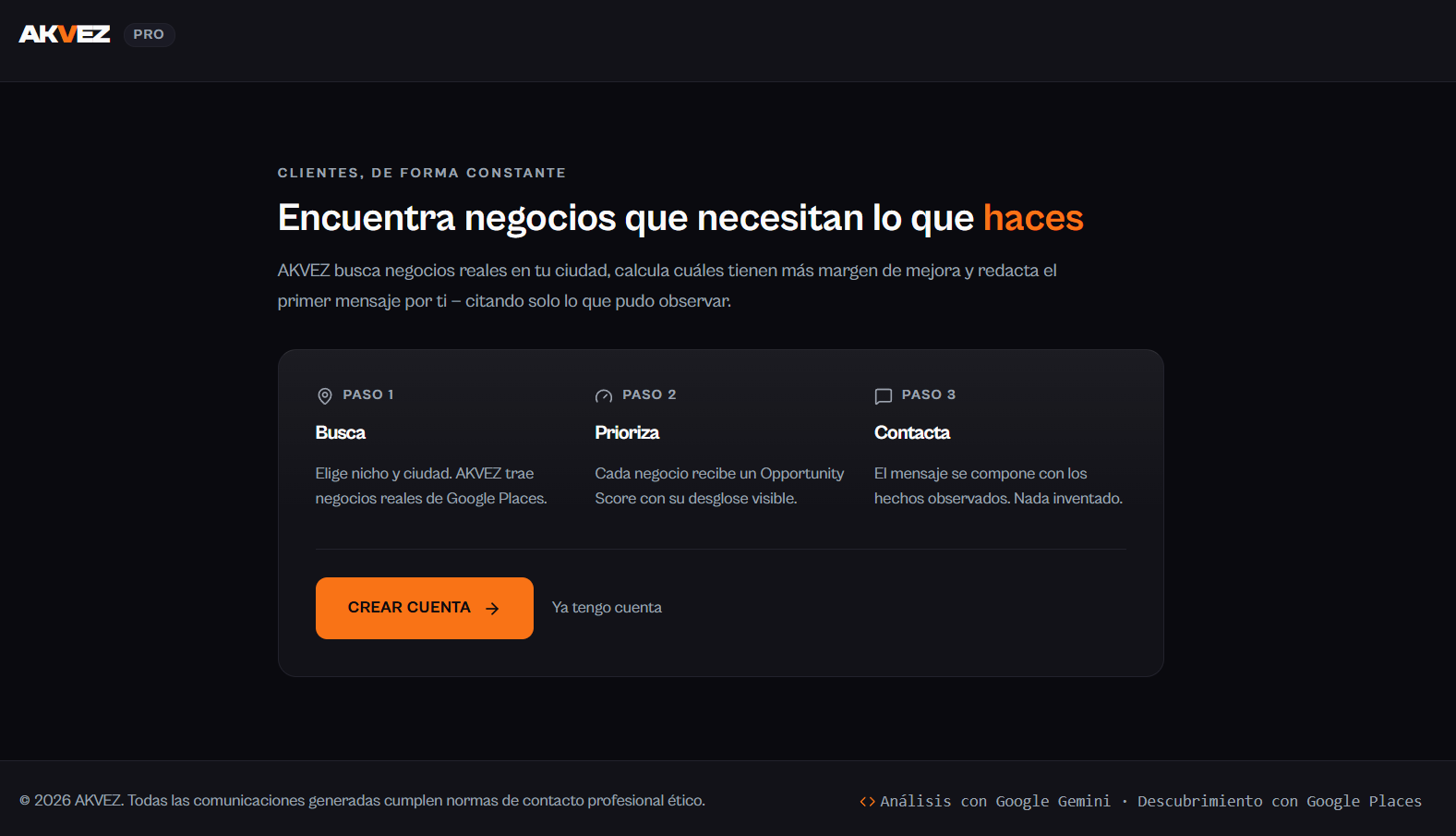
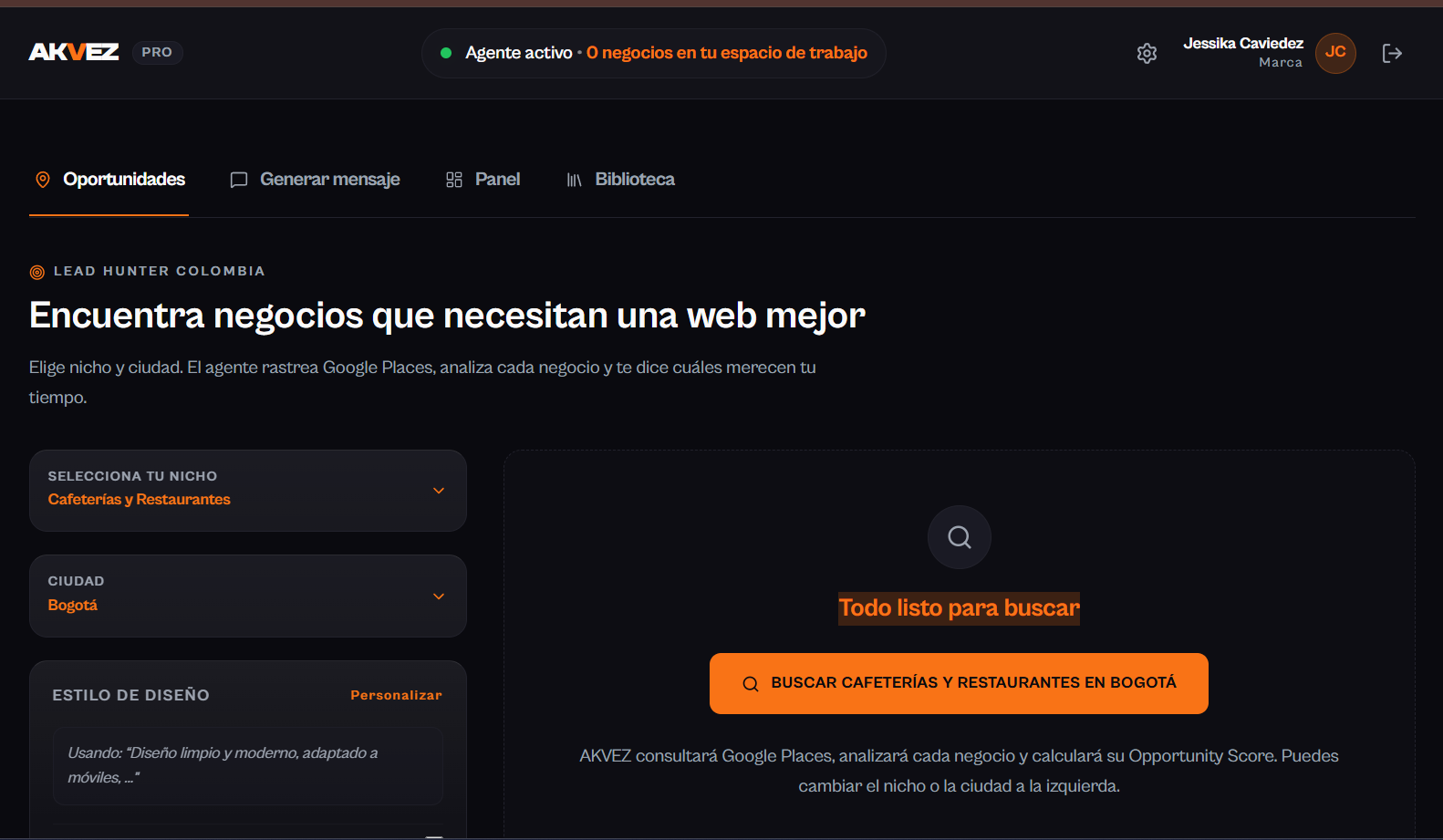
Start with a simple search. Set your target. Find the right businesses.
-
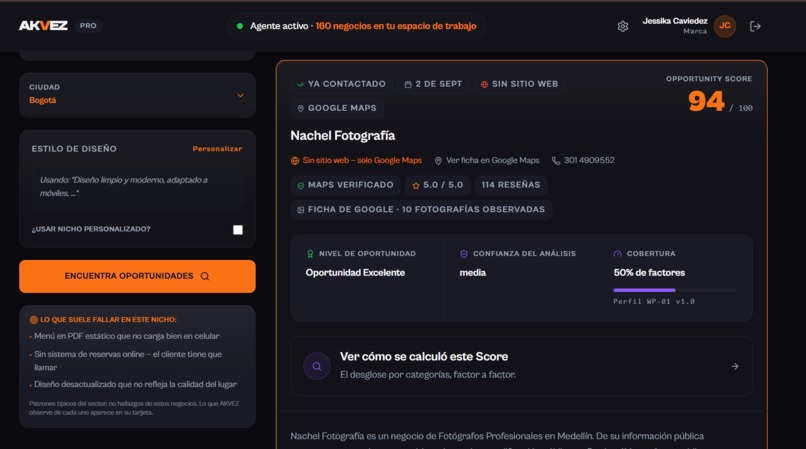
AKVEZ finds real business opportunities
-
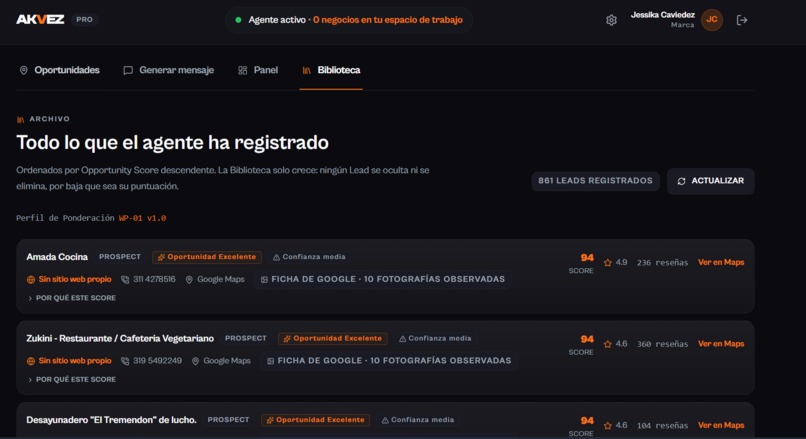
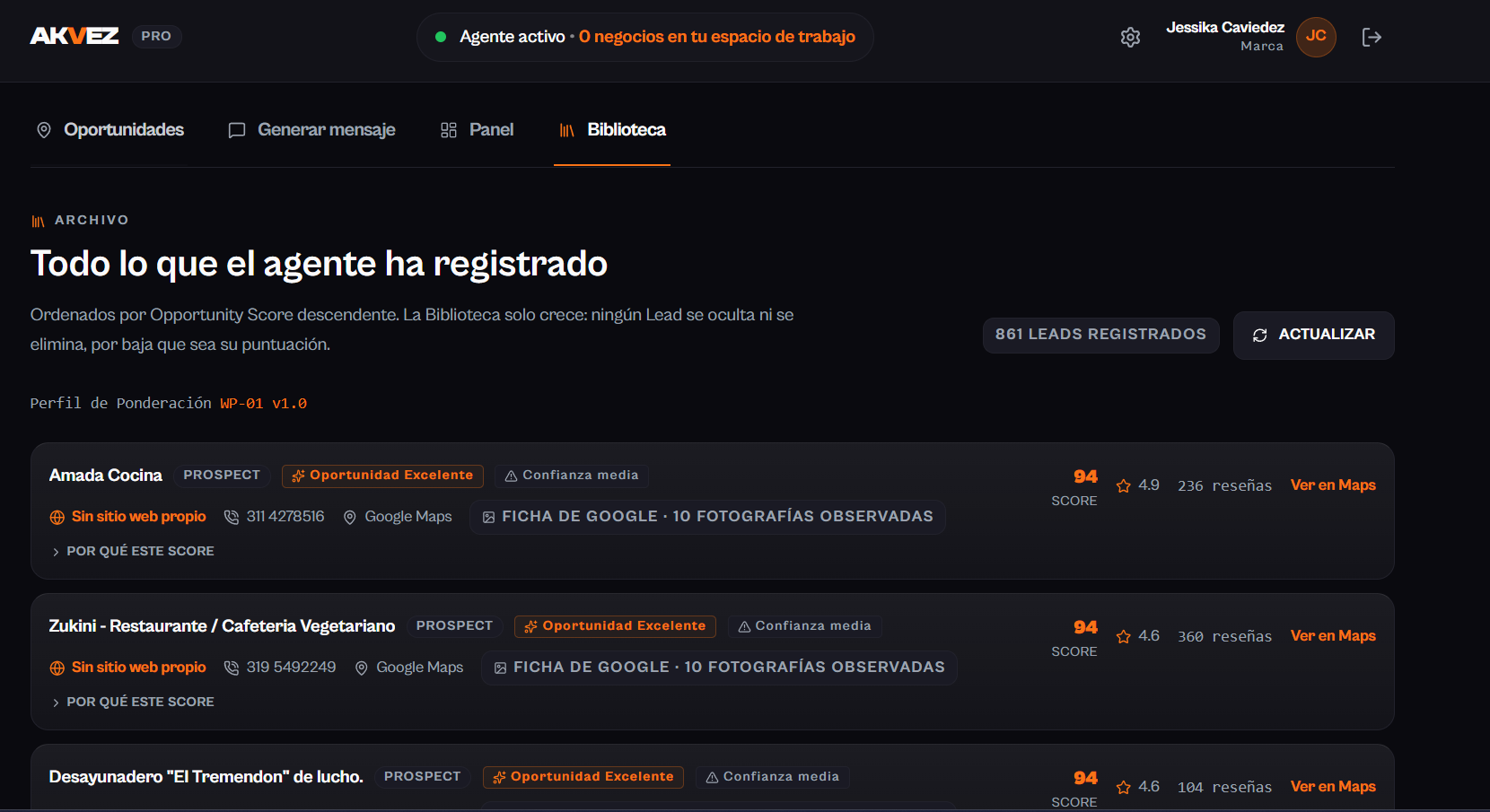
Library
-
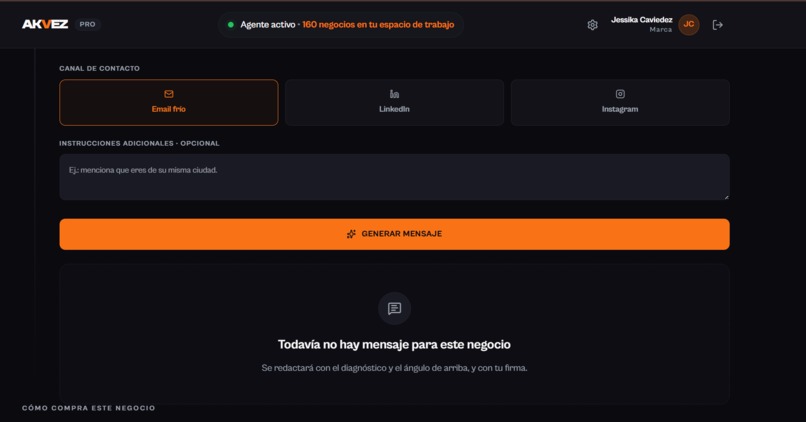
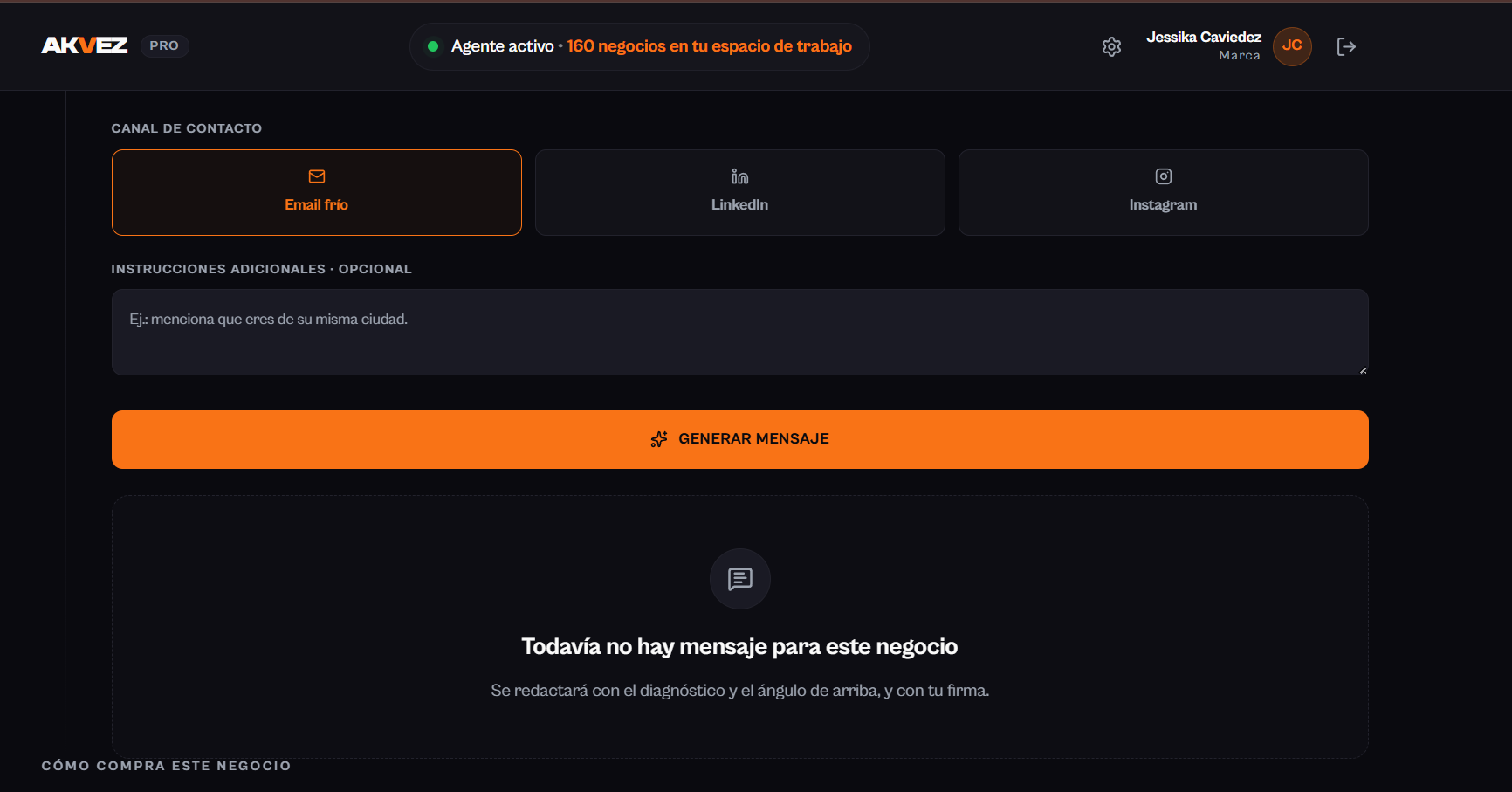
Then, it tells you what to say next.
About the Project
The inspiration
Finding clients is one of the biggest challenges I faced when thinking about the reality of independent web designers.
Being good at building websites is only half the job. The other half is constantly finding businesses that need your services, researching them, figuring out whether there is a real opportunity, and starting a conversation without sounding like spam.
That made me ask a simple question:
What if AI could help independent professionals spend less time searching for opportunities and more time acting on the right ones?
That question became AKVEZ.
I wanted to build more than another directory of businesses or a generic AI chatbot. I wanted to create a system that could turn raw business data into an actionable commercial opportunity.
That led me to a simple product philosophy:
Find. Understand. Act.
What I built
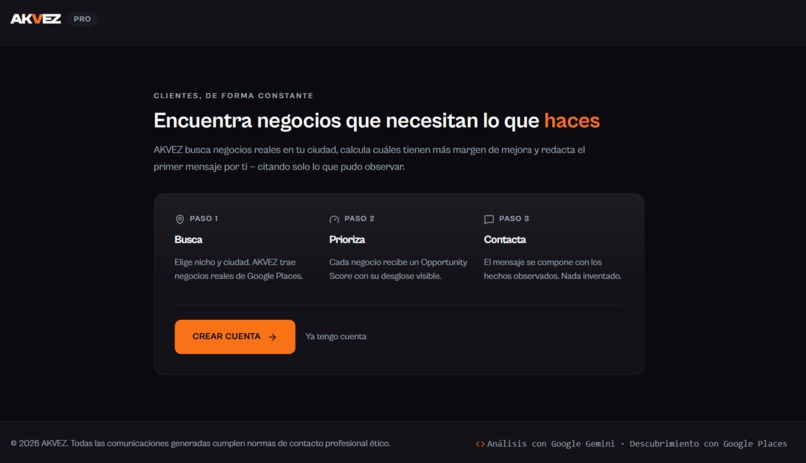
AKVEZ's first version focuses on the discovery and initial outreach stage of the sales process.
I designed the workflow around three specialized capabilities:
- Lead Hunter discovers real businesses based on the user's search criteria.
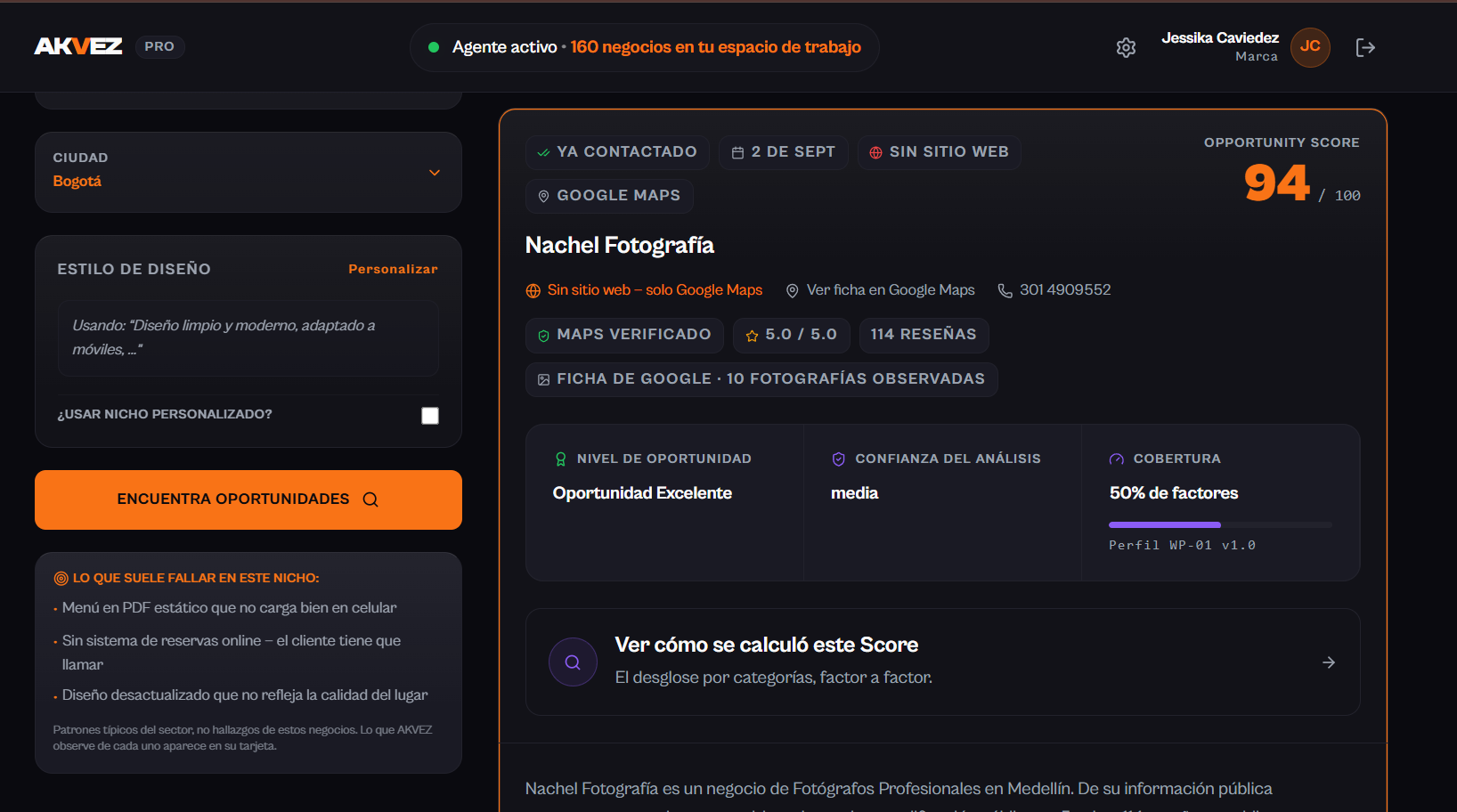
- Company Intelligence / Lead Analyzer evaluates available signals, identifies potential opportunities, and calculates an auditable Opportunity Score.
- Pitch Generator turns those findings into a personalized first outreach message.
One of the principles I wanted to establish early was that AI should not simply decide whether a lead is "good."
The Opportunity Score is calculated from defined rules and observed signals. AI then interprets that evidence to explain why the opportunity matters and how the professional could approach it.
This separation between evidence, scoring, and AI interpretation became an important design principle for AKVEZ.
What I learned
One of the biggest lessons I learned was that building an AI product is not just about getting a model to generate impressive responses.
The harder problem is designing the system around the AI.
I learned that:
- AI outputs need structured inputs and clear boundaries.
- Commercial recommendations become much more useful when they are grounded in observable evidence.
- Specialized agents are easier to reason about when each one has a clear responsibility.
- Product scope matters as much as technical capability.
- A good AI experience should help the user make a decision, not simply produce more text.
This also changed how I approached the MVP. Instead of trying to automate the entire sales process immediately, I focused on one measurable outcome:
helping a web designer find a qualified opportunity and understand why it is worth pursuing.
How I built it
I designed AKVEZ as a modular, sequential agent system.
The current workflow is:
User → Lead Hunter → Lead Analyzer → Pitch Generator → User
The system uses real business data from external sources to discover and analyze potential leads. The agents communicate through structured data, keeping their responsibilities separated and allowing individual components to evolve independently.
I intentionally kept the MVP focused. AKVEZ does not yet attempt to replace a full CRM, run autonomous campaigns, or automate follow-ups.
The product's responsibility ends with delivering an analyzed and prioritized opportunity together with an initial personalized pitch.
The challenges
One of the biggest challenges I faced was working with real-world business data.
Business information is often incomplete, inconsistent, or difficult to interpret automatically. A business may have reviews but no clearly observable website, incomplete contact information, or signals that do not directly translate into a commercial opportunity.
This forced me to think carefully about the difference between what the system knows and what the AI assumes.
Another challenge was balancing AI flexibility with product reliability. Generative models are powerful, but allowing them to make every decision would make the system difficult to audit and trust. I therefore separated deterministic scoring from AI-powered interpretation.
I also had to make difficult decisions about scope. It was tempting to build CRM features, automated campaigns, follow-ups, and other capabilities. Instead, I chose to validate the core hypothesis first:
Can AI help an independent web designer discover better commercial opportunities in less time?
That question continues to guide AKVEZ.
What's next
I am starting with web designers, but I believe the underlying problem is much broader.
My long-term vision is to build an intelligent growth system for independent professionals — one that helps them discover opportunities, understand their market, and take better commercial actions without requiring them to become sales or marketing experts.
For now, I'm focused on getting the first step right:
Find. Understand. Act.
Built With
- agents
- ai
- cloud
- gemini
- generative
- javascript
- llm
- maps
- multi-agent
- node.js
- places
- platform
- react
- rest
- system

Log in or sign up for Devpost to join the conversation.