Inspiration
I've been working in residential construction and bathroom remodeling for years. Every contractor knows the fear of city inspection day. The International Residential Code (IRC) book is over 1,000 pages of dense, complex safety regulations.
When a project fails an inspection due to a notched load-bearing stud or an incorrect shower curb height, it costs thousands of dollars in labor, material waste, and schedule delays. Small contractors, subcontractors, and home renovators rarely have the time or resources to cross-reference every jobsite detail against a massive code book.
When the Build with Gemini XPRIZE was announced, I realized Multimodal AI was the missing link. I set out to build AKODINC: a tool that acts as an expert digital inspector in your pocket, turning complex building code into instant, visual feedback on site.
What it does
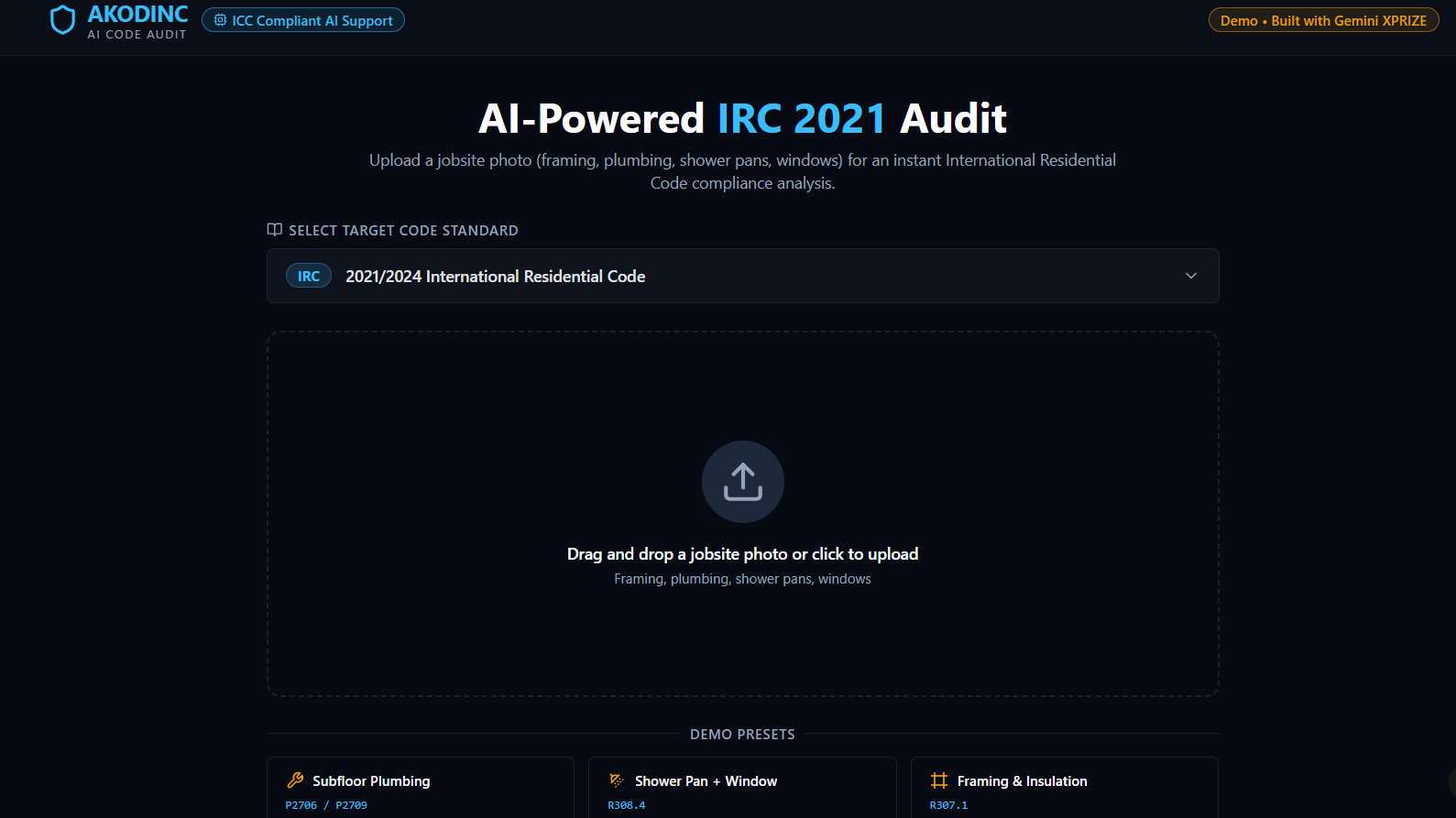
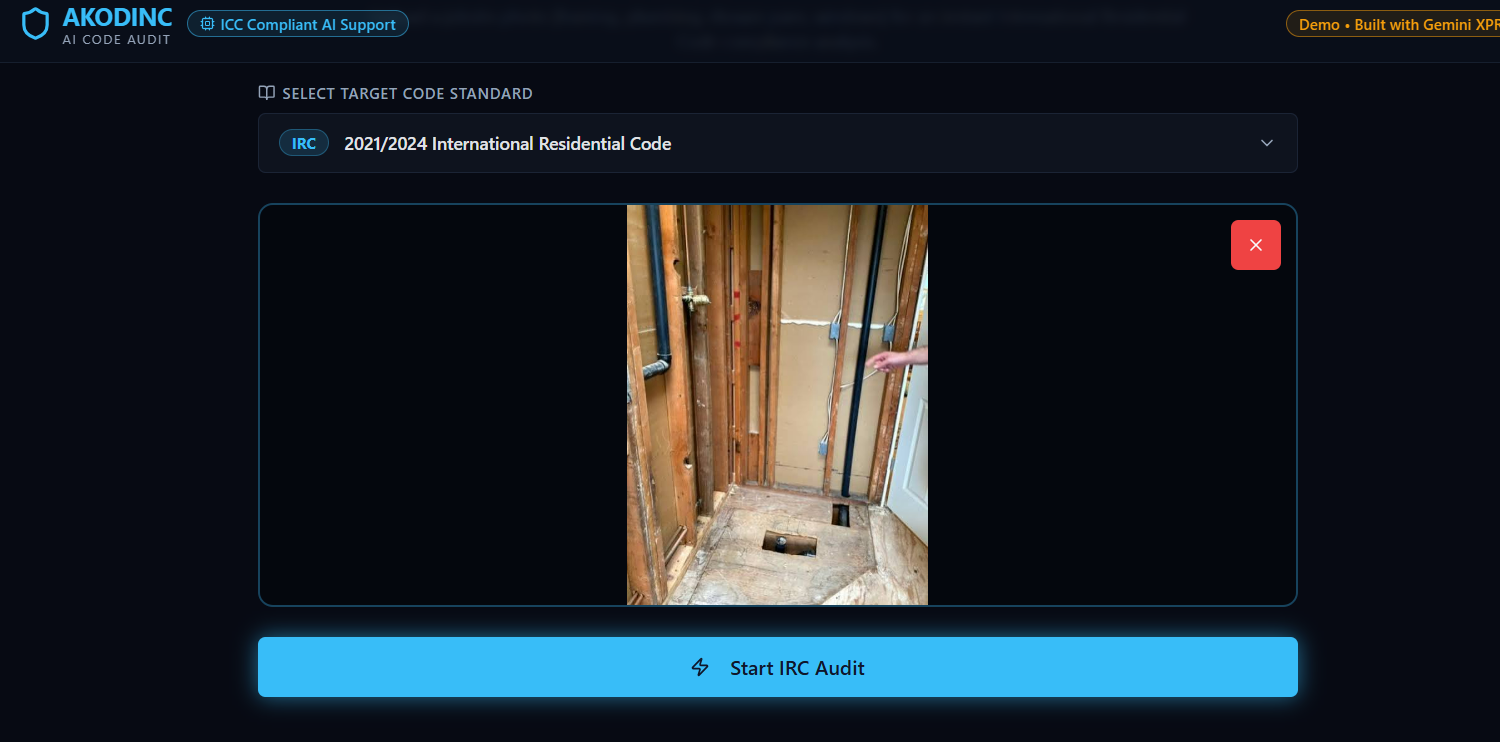
AKODINC is an AI-powered visual code audit platform designed for residential construction. A user simply uploads or captures a photo of an active jobsite—such as rough framing, plumbing rough-ins, shower pans, or window installations.
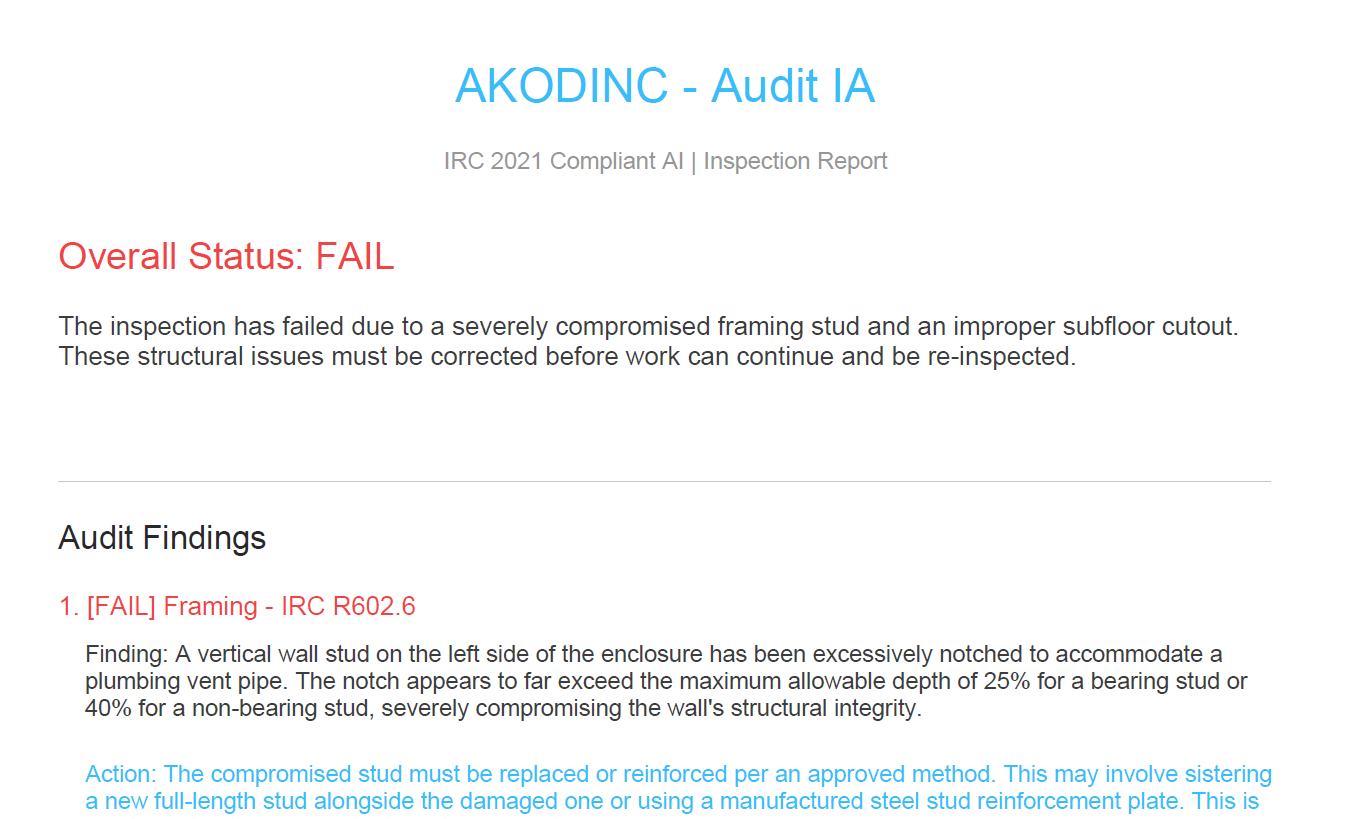
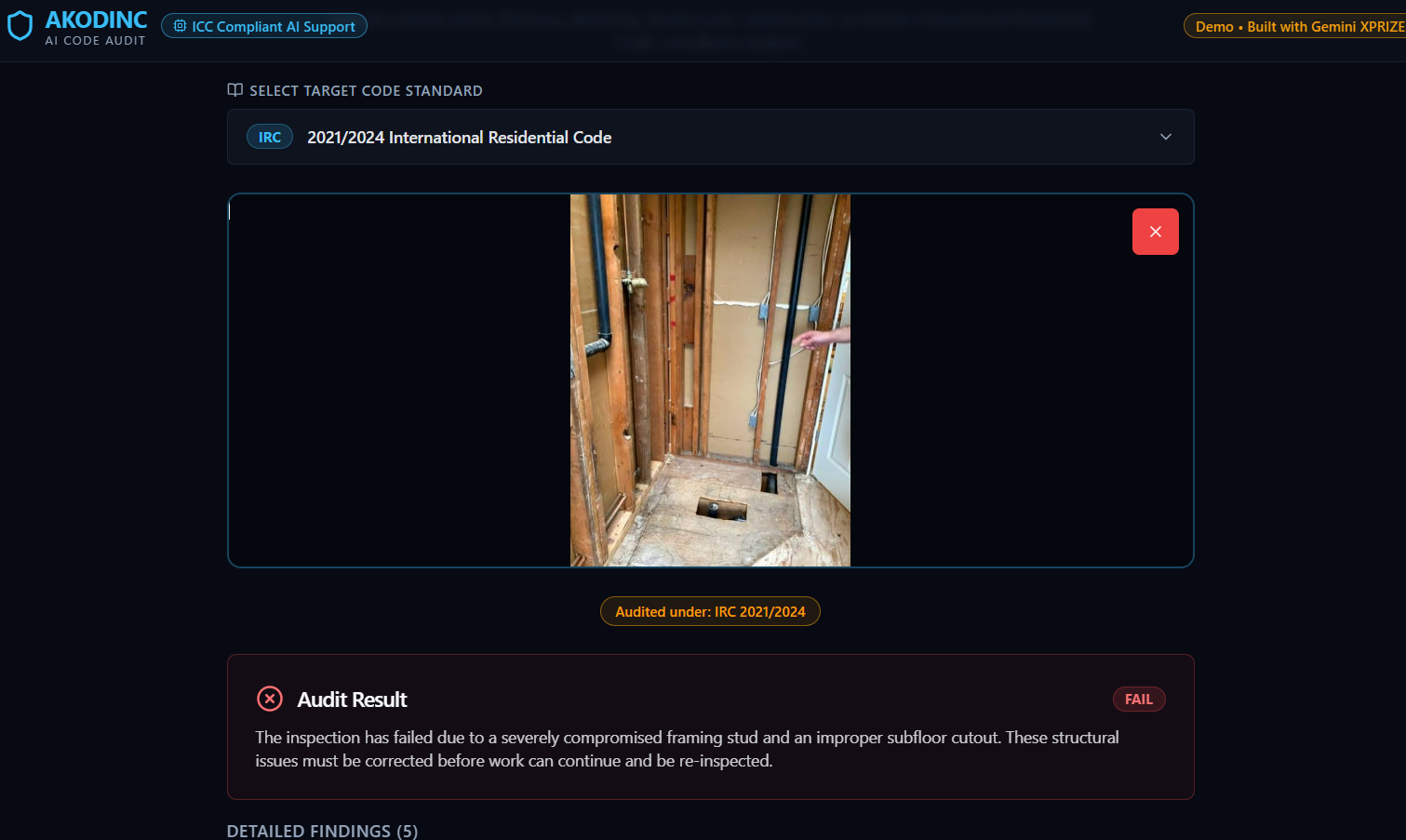
Using Gemini AI Vision, AKODINC automatically analyzes the photo against the 2021/2024 International Residential Code standards. It instantly generates a breakdown of categorized findings (FAIL / WARNING / PASS) with exact IRC code section citations, detailed explanations of non-compliant items, and step-by-step corrective actions. Contractors can then export a clean, professional PDF report with a single click before the city inspector steps foot on site.
How we built it
We designed AKODINC to be fast, intuitive, and practical for someone standing in the middle of an active jobsite:Frontend & Interface: Built a clean, responsive web UI where users can upload jobsite photos or select demo presets.Gemini Integration: Connected the application to the Gemini AI API, leveraging its vision capabilities to analyze structural layouts, wood framing notch dimensions, plumbing drain placements, and glazing locations simultaneously.IRC Code Engine: Prompt-engineered the model to evaluate visual elements directly against specific sections of the International Residential Code (e.g., Section R602.6 for stud notch limits where depth $d \le 0.25D$ for load-bearing studs, or Section P2708.1 for shower dimensions).Structured JSON Output: Formatted the AI response into structured data schemas to display clear, color-coded findings and step-by-step corrective instructions.PDF Export Engine: Implemented an instant report generator allowing builders to export documentation for their crews or project records.
Challenges we ran into
Visual Precision in Rough Construction: Jobsites are messy. Framing lumber has dark shadows, exposed plumbing, and varied lighting. Getting the AI to reliably distinguish between a non-structural stud notch and a compromised load-bearing stud required careful prompt structure and high-clarity visual cues.
Reducing False Positives: Construction regulations demand exactness. Citing the wrong IRC section could lead a builder to fix something that isn't broken. We had to tightly constrain Gemini's context window to specific target standards to ensure every finding was grounded in actual code text.
Structuring Unstructured Data: Translating a raw photo into a clean response with categorized sections (Framing, Plumbing, Glazing) and actionable corrective steps required significant iteration on data schemas.
Accomplishments that we're proud of
Bridging Physical Trades with Generative AI: Built a functional, real-world application that solves a major financial pain point for independent contractors and small tradespeople.Accurate Code Citations: Successfully trained the workflow to cite exact IRC code sections alongside visual detection (e.g., correctly flagging R602.6 framing violations).Quantifiable Economic Value: Demonstrating a direct return on investment for small builders. The value of catching an error early can be modeled as:$$\text{Cost Saved} = \text{Inspection Fee} + \text{Labor Delay Costs} + \text{Material Rework}$$ By identifying structural or plumbing issues prior to official reviews, AKODINC helps prevent costly rework and inspection delays.
What we learned
Building AKODINC proved that generative AI isn't just for text generation—it can be a practical tool for physical trade safety. Combining hands-on trade experience with Gemini's vision intelligence bridges the gap between field work and technical compliance. AI can democratize regulatory compliance for small independent builders who don't have corporate compliance departments.
What's next for AKODINC – AI-Powered Building Code Intelligence
Expanded Code Libraries: Expand the audit engine beyond the IRC to include the National Electrical Code (NEC), Commercial International Building Code (IBC), and localized city-specific code amendments.
Real-Time Video Auditing: Upgrade from static photo uploads to real-time video stream scanning so contractors can walk a jobsite with a smartphone camera and receive instant live audio/visual alerts.
Native Mobile App (iOS & Android): Develop offline-first mobile applications with local caching so field crews can run pre-inspections even in basements or jobsite areas without cellular service.
Subcontractor Workflow Integrations: Allow contractors to assign automatically flagged corrective action items directly to subcontractors via SMS or email management platforms.
Built With
- building-code
- construction-tech
- gemini-api
- gemini-vision
- generative-ai
- javascript
- json
- multimodal-ai
- pdf-generation
- react
- rest-api
- tailwind-css
- wordpress


Log in or sign up for Devpost to join the conversation.