-
-
-
-
-
-
-
-
-
-
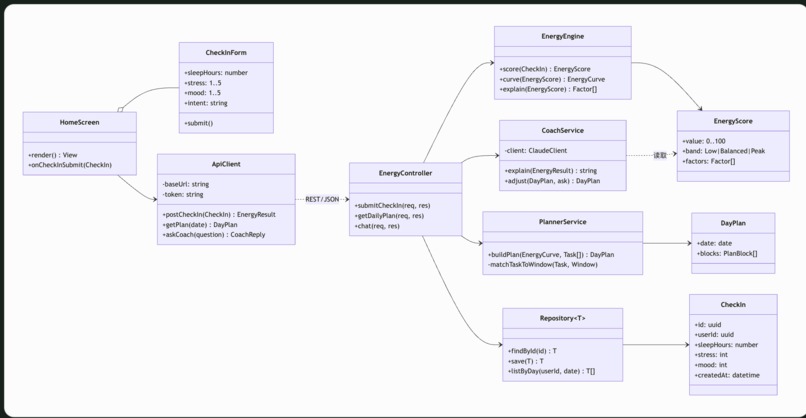
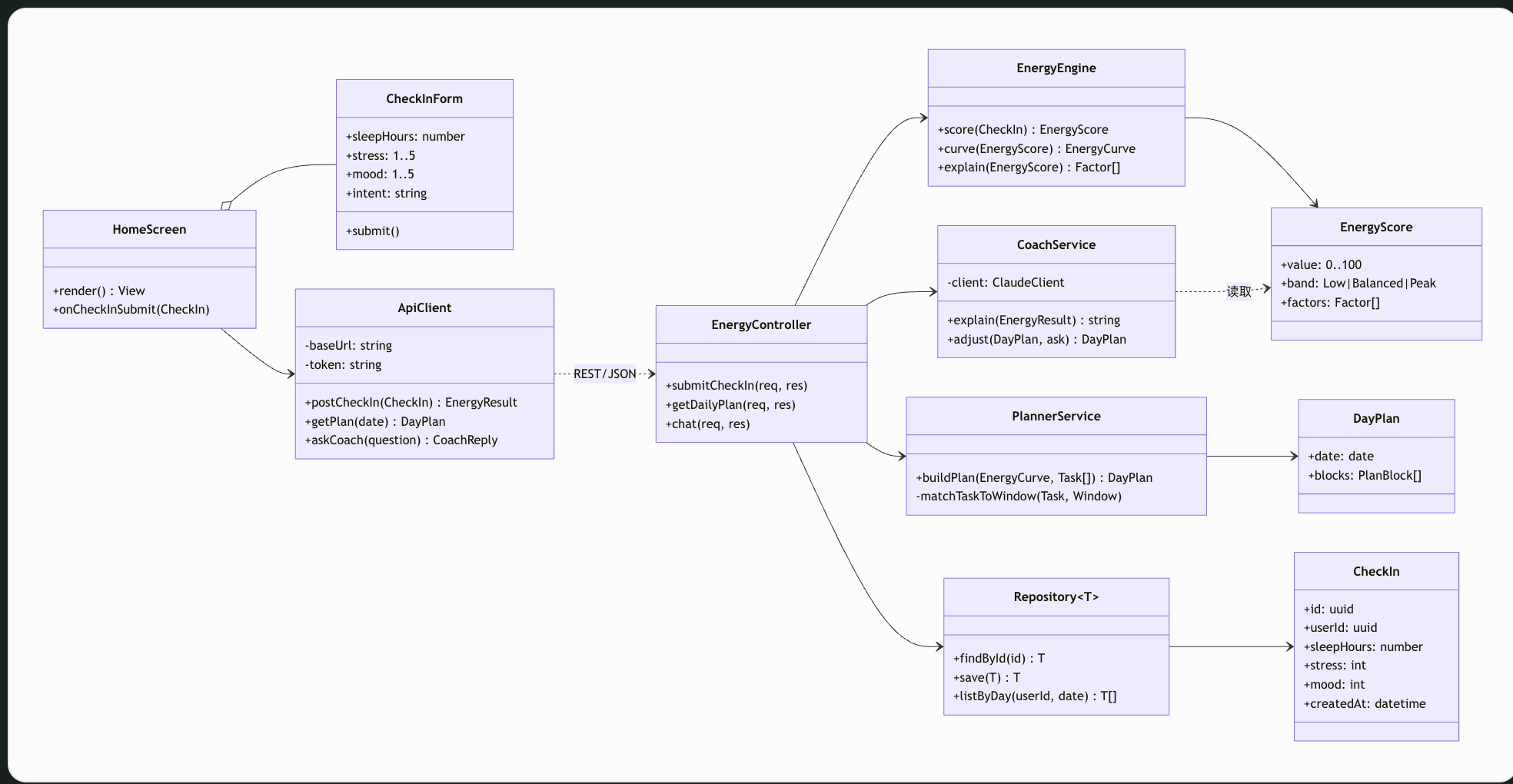
architecture uml
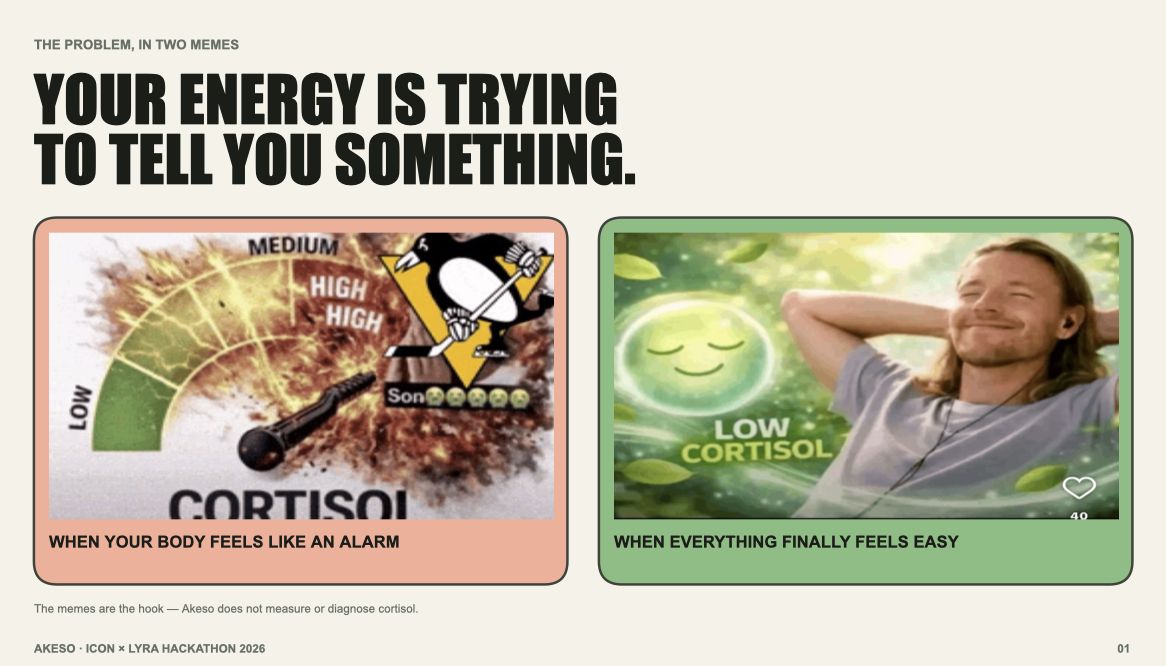
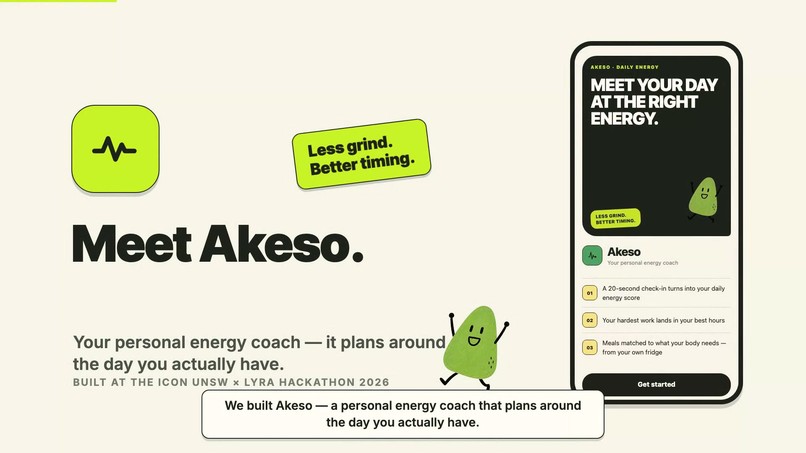
Akeso — Your Personal Energy Coach
Akeso cannot create more hours. It helps make more hours usable.
Inspiration
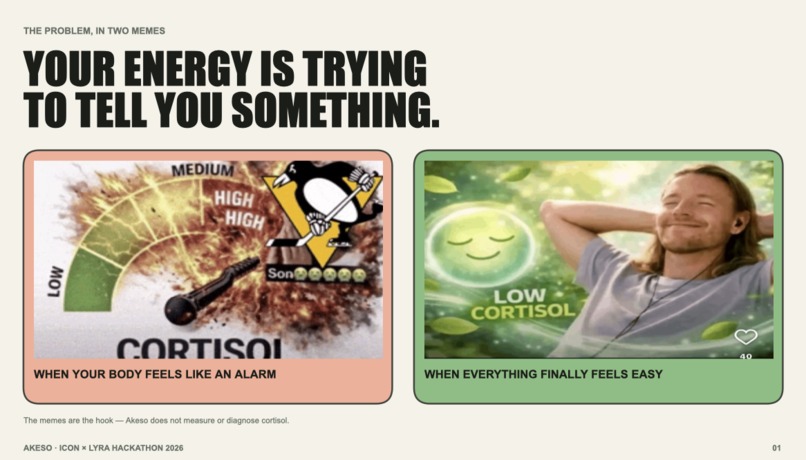
Time is not only measured by the number of hours in a day. When someone feels exhausted, unfocused or overwhelmed, those hours still exist on the calendar, but much less of that time feels truly usable.
Most people know when their energy is low, but they do not know what may be contributing to it. Nutrition, sleep, hydration, stress and mood are connected signals, yet most existing apps track them separately. A nutrition app records food, a mood app records emotions, and a productivity app manages tasks as if every hour feels the same.
As a result, people lose time twice. First, they spend time switching between apps and repeatedly deciding what to eat, what to prioritise and how to organise the day. Then, they lose more usable time trying to work through periods when they have very little energy.
Personal nutrition and lifestyle coaches can connect these signals and provide practical guidance, but that level of support is expensive and inaccessible to many students and everyday users.
We built Akeso around one idea:
We cannot add more hours to a person's day, but we can help them reclaim more usable time from the hours they already have.
What it does
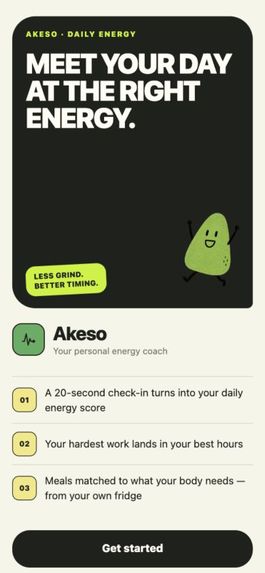
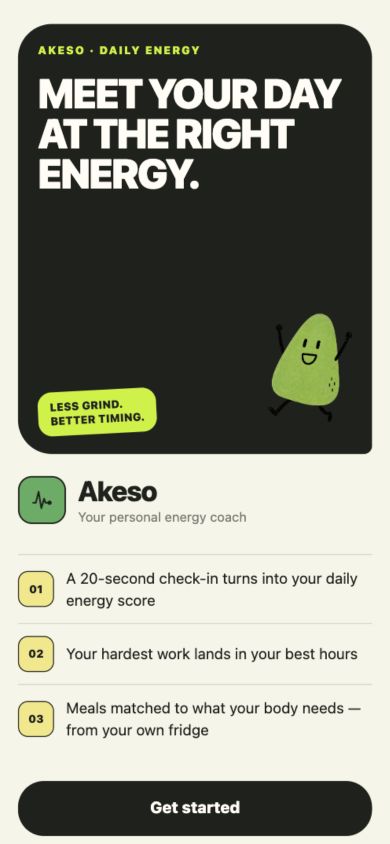
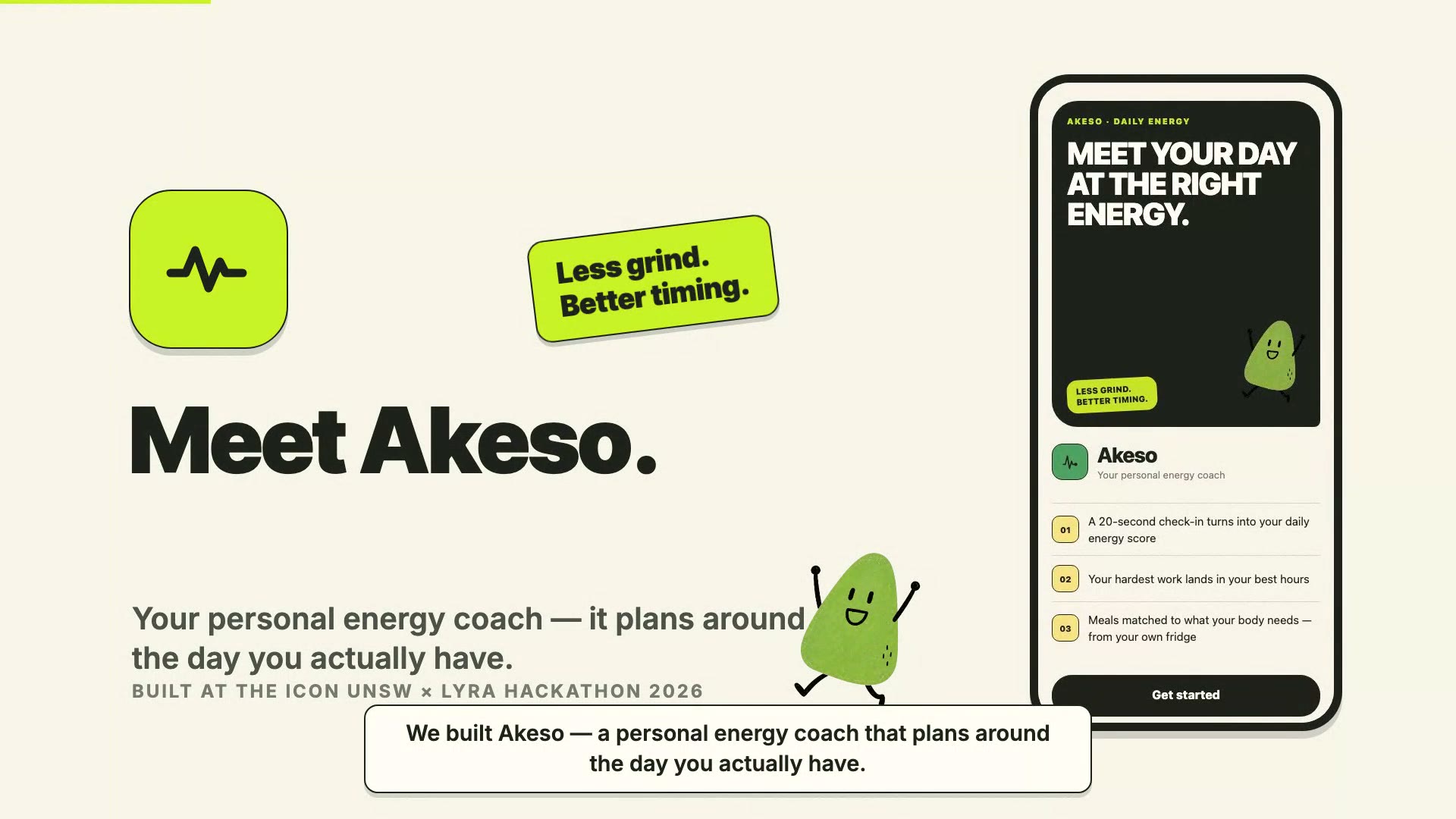
Akeso is a personal energy and nutrition coach that helps users understand what may be shaping their daily energy and turn those insights into practical actions.
Instead of treating nutrition, sleep, hydration, stress and mood as separate features, Akeso connects them into one daily energy picture. It then provides personalised food and routine guidance designed to help the user make better use of the day.
The current Akeso experience includes:
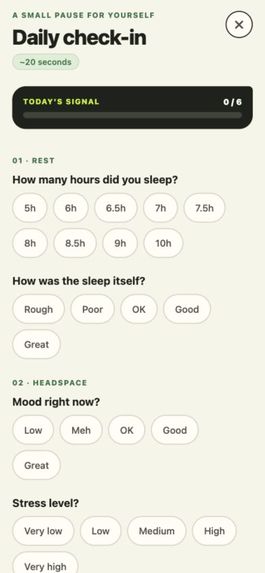
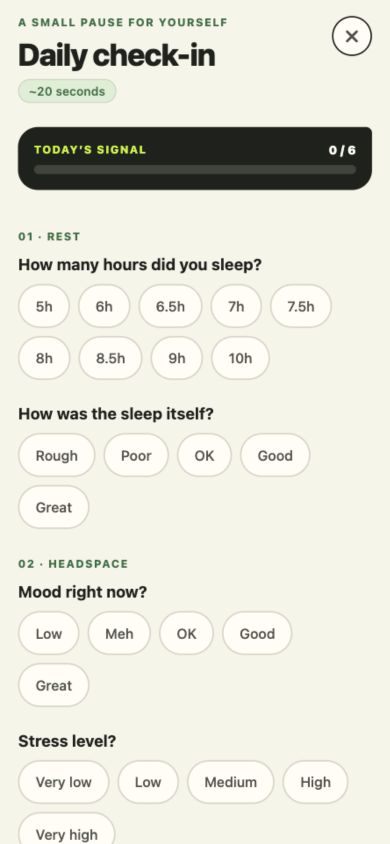
- A quick daily check-in covering signals that may affect today's energy
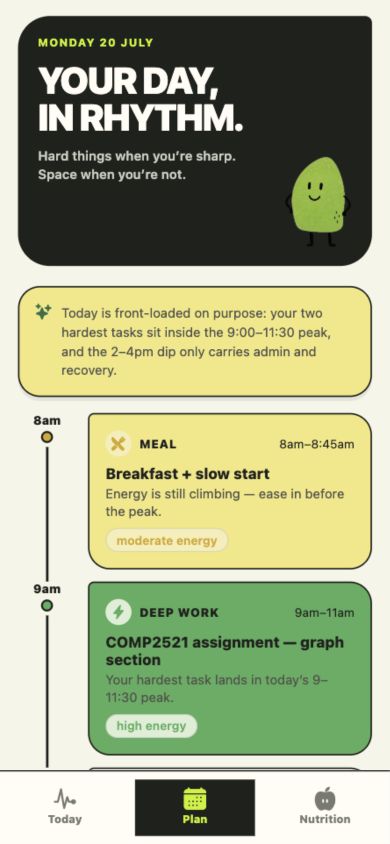
- An explainable energy score and daily energy curve
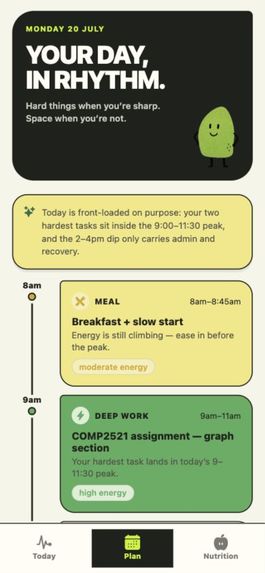
- Clear peak and recovery windows
- Context showing why different factors may be relevant
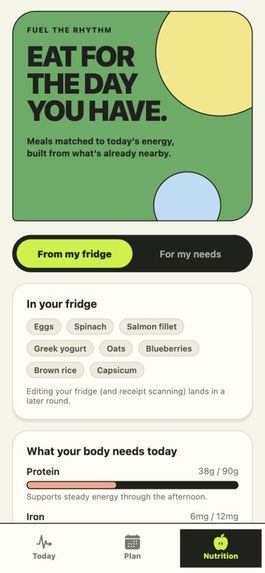
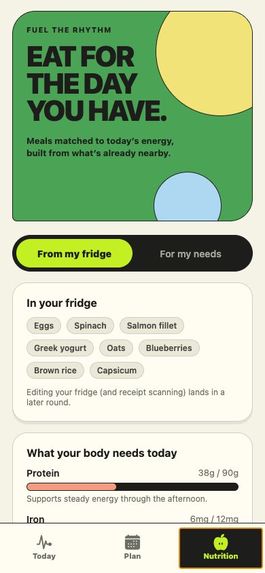
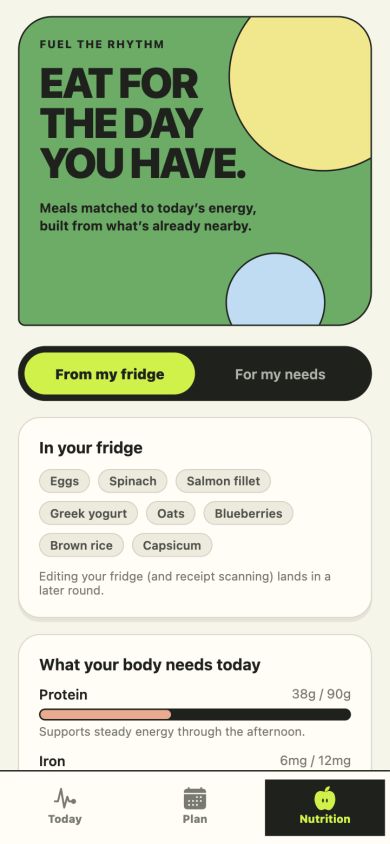
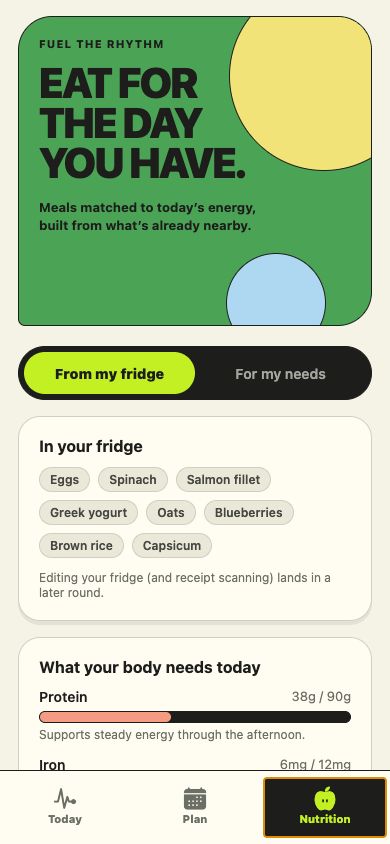
- An editable inventory of food available in the user's fridge
- Photo-assisted ingredient recognition
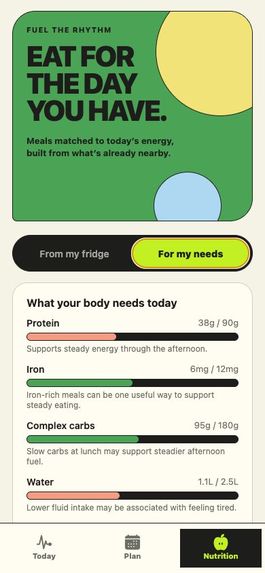
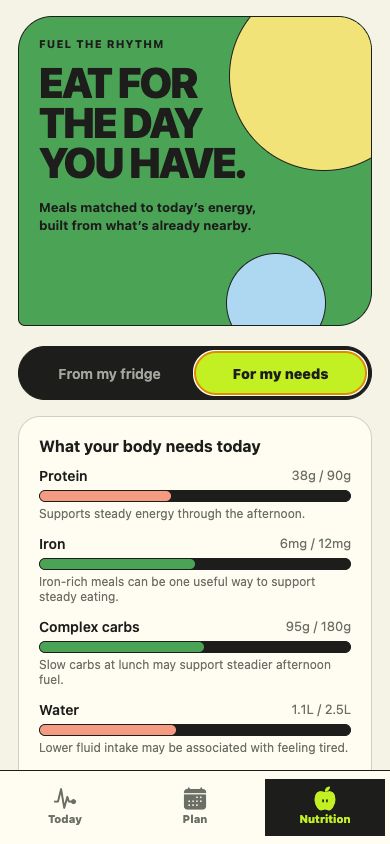
- Nutrition guidance based on the user's context and available food
- Personalised meal suggestions that respect dietary preferences
- Energy-aware daily suggestions that place demanding work into better hours
- Safe language that avoids presenting wellness guidance as a medical diagnosis
Akeso creates more usable time in two ways:
- It reduces decision time by replacing several disconnected food, tracking and planning workflows with one short daily check-in.
- It helps users make better use of existing time by identifying patterns that may be associated with low energy and suggesting practical actions before more of the day is lost.
For example, Akeso does not diagnose iron deficiency from a food log. Instead, it can notice that a user's recorded meals repeatedly contain very few iron-rich foods, explain that pattern and suggest realistic options such as spinach, eggs or salmon already available in their fridge.
If symptoms such as persistent dizziness or fatigue continue, Akeso encourages the user to seek advice from a qualified health professional.
The daily plan is only one output of the wider energy picture. Akeso's main purpose is not to make users work every minute of the day. It is to help them understand their energy, make better nutrition decisions and protect recovery when it is needed.
How it works
The user begins with a short daily check-in. Akeso combines these self-reported signals with the user's profile, dietary preferences and available ingredients.
A deterministic TypeScript engine produces the core energy result, ensuring that the same inputs generate a consistent and explainable output. Akeso distinguishes between information directly reported by the user, factors that may provide useful context and estimates produced by the system.
The nutrition engine compares the user's context and fridge inventory against a small, versioned subset of the Australian Food Composition Database. It identifies useful food categories and creates practical meal suggestions using ingredients the user already has.
For AI-assisted ingredient recognition and meal generation, we built a provider layer supporting Gemini and MiMo. AI responses are validated against shared schemas before they can enter the application. When an AI provider is unavailable or uncertain, Akeso uses a deterministic fallback instead of inventing an answer.
The result is one connected experience:
Check in → understand today's energy → identify useful patterns → take one realistic action.
Time saved
Akeso does not claim to add hours to the clock. It helps users reclaim time that might otherwise be spent making repetitive decisions or struggling through poorly matched routines.
Without Akeso, a user may need to check several separate apps, assess how they feel, review available food, decide what to eat, prioritise tasks and reorganise the day manually.
In our demo workflow, this process took approximately 12 minutes. With Akeso, the user completed one check-in and received their first personalised guidance in approximately 25 seconds.
That represents around 11 minutes of direct decision time saved each day, or almost one hour across five weekdays.
The larger opportunity is usable time. By helping users notice patterns and take earlier action around food, hydration, recovery and workload, Akeso aims to make more of the hours already in their day feel manageable and useful.
How we built it
Akeso is organised as a TypeScript monorepo with shared contracts across the mobile application, backend API and domain logic.
Our technology stack includes:
- React Native and Expo for iOS, Android and Web
- Expo Router for navigation
- Express for the backend API
- Supabase Auth and PostgreSQL for identity and persistence
- Shared Zod schemas for runtime validation
- A deterministic energy and planning engine written in TypeScript
- Australian food-composition data for nutrition guidance
- Gemini and MiMo integrations for AI-assisted features
- Expo Image Picker and Image Manipulator for ingredient photos
- Vitest, Jest and React Native Testing Library for automated testing
- Vercel for the Web experience
- EAS Build for installable mobile builds
Challenges we faced
Connecting different signals responsibly
Our biggest product challenge was connecting nutrition, sleep, hydration, stress and mood without claiming that Akeso could prove medical causation.
We addressed this by separating reported information, possible context and system estimates. Akeso uses language such as “may be related” and “consider trying” instead of presenting uncertain relationships as medical facts.
Making AI output dependable
Ingredient recognition and meal generation can produce uncertain or malformed results. We created a provider-independent AI interface, schema-validated responses, confidence handling and deterministic fallbacks.
Keeping every layer consistent
The mobile app, API, database and domain logic were developed in parallel. Shared TypeScript contracts and Zod schemas helped prevent the frontend and backend from drifting apart.
Working across platforms
Akeso needed to support mobile and Web while handling image input, notifications, authentication and responsive layouts. Expo allowed us to share most of the implementation while still accounting for platform-specific behaviour.
Building within a hackathon
We had to decide which ideas were essential to the product and which belonged in the future roadmap. We prioritised one complete, explainable experience over a collection of disconnected features.
Accomplishments that we are proud of
- Building a complete check-in-to-guidance experience
- Connecting energy, nutrition and daily routine in one product
- Producing explainable results instead of a black-box score
- Creating meal suggestions from ingredients the user already has
- Supporting photo-assisted fridge inventory
- Supporting both deterministic and AI-assisted workflows
- Building shared contracts across the app, API and database
- Maintaining a clear boundary between wellness guidance and medical advice
- Creating a distinctive and approachable visual identity for Akeso
- Demonstrating measurable decision time saved
What we learned
We learned that personalisation is not simply asking more questions or generating more text. Useful personalisation comes from connecting the right signals and explaining why a recommendation is relevant.
We also learned that responsible AI sometimes means limiting what the system is allowed to say. A careful, explainable recommendation is more valuable than an impressive-sounding medical claim that cannot be supported.
We learned that time saving is not limited to completing a task faster. Helping someone avoid repetitive decisions, recognise an energy pattern and take action earlier can make more of their existing day usable.
Finally, we learned how important shared contracts, automated tests and deterministic fallbacks are when several people are building an AI-enabled product under hackathon time constraints.
What's next for Akeso
Our current product connects daily energy signals with personalised nutrition and routine guidance.
Our next step is to help users understand their energy across weeks rather than only one day.
Planned improvements include:
- A dedicated emotion coach for stress and mood support
- Longitudinal energy and nutrition trends
- Faster food logging through photos and receipt scanning
- Wearable-device integrations
- A larger food-composition database
- Guidance reviewed with qualified nutrition professionals
- Smarter reminders based on the user's routine
- More transparent uncertainty and confidence indicators
Our long-term goal is not to make people work every minute of the day.
It is to reduce avoidable decisions, protect recovery when it is needed and help people get more value from the energy and time they already have.
Akeso cannot create more hours. It helps make more hours usable.
Akeso is an energy and nutrition coach, not a medical device.
Built With
- api
- eas
- expo.io
- express.js
- gemini
- image
- jest
- library
- mimo
- native
- node.js
- notifications
- picker
- postgresql
- react
- rest
- router
- supabase
- svg
- testing
- typescript
- vercel
- vitest
- zod

Log in or sign up for Devpost to join the conversation.