-
-
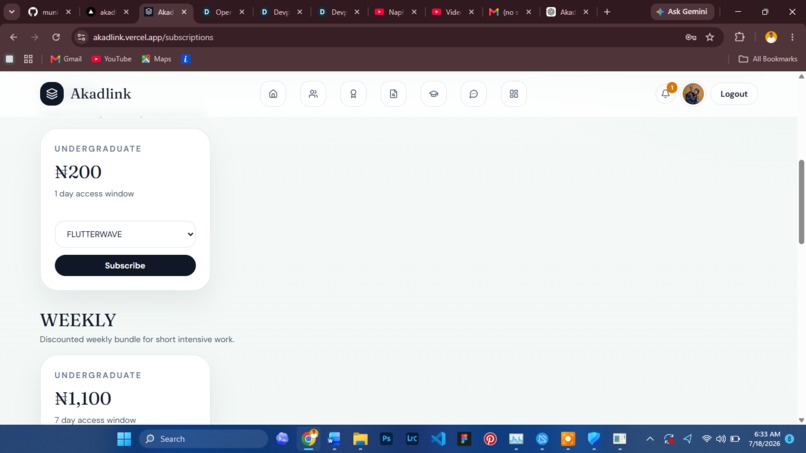
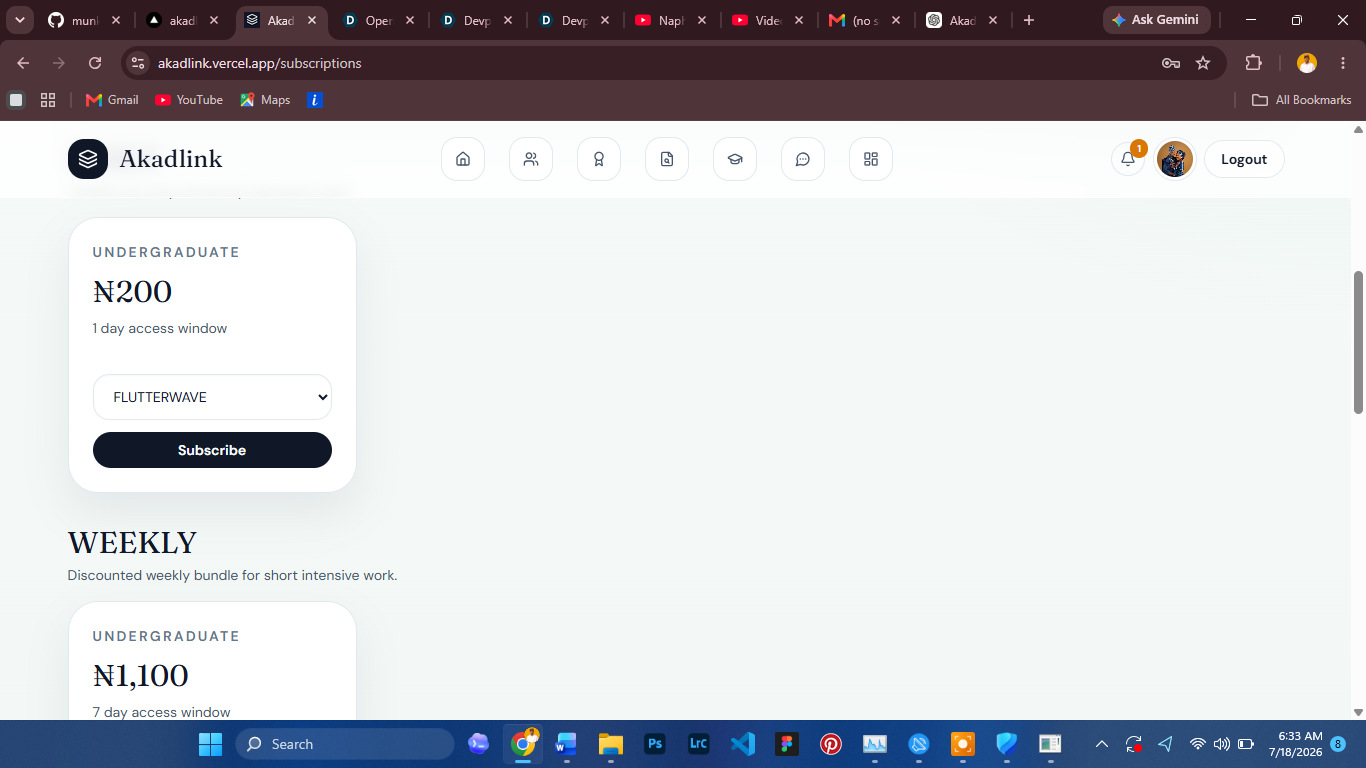
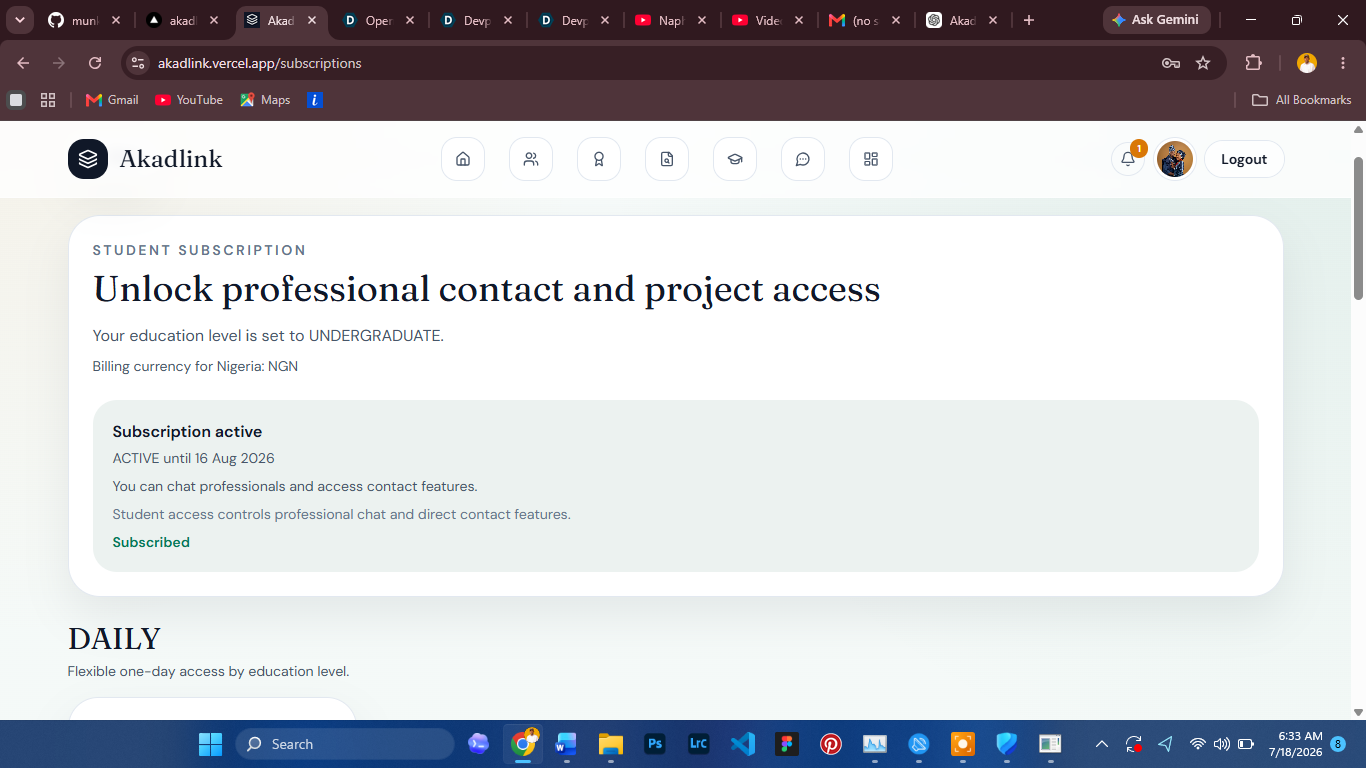
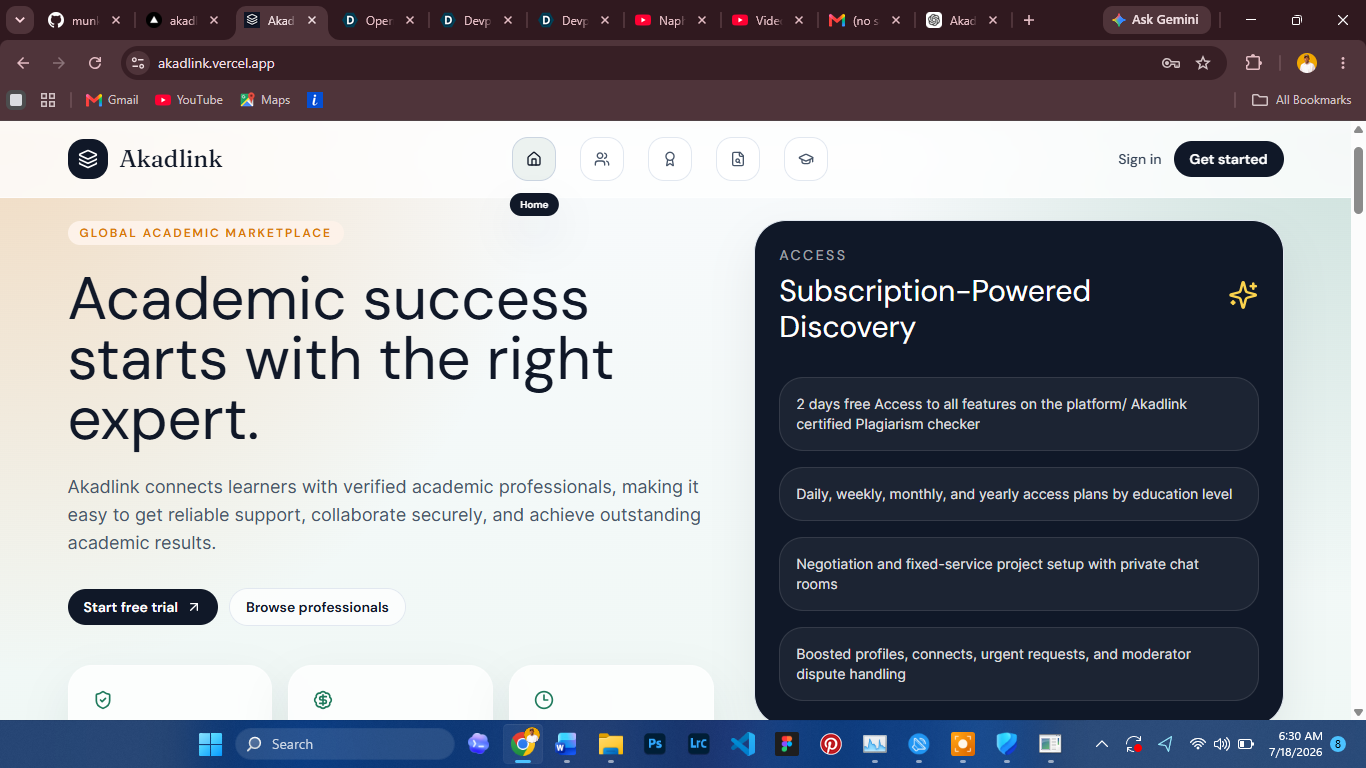
subscription amounts
-
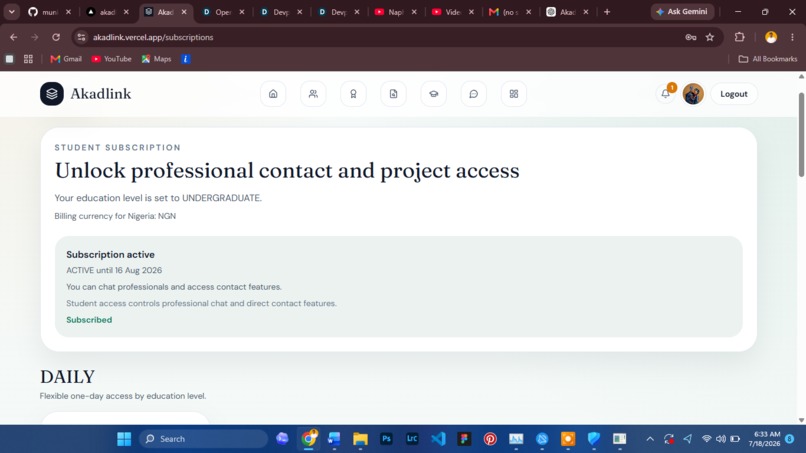
subscription
-
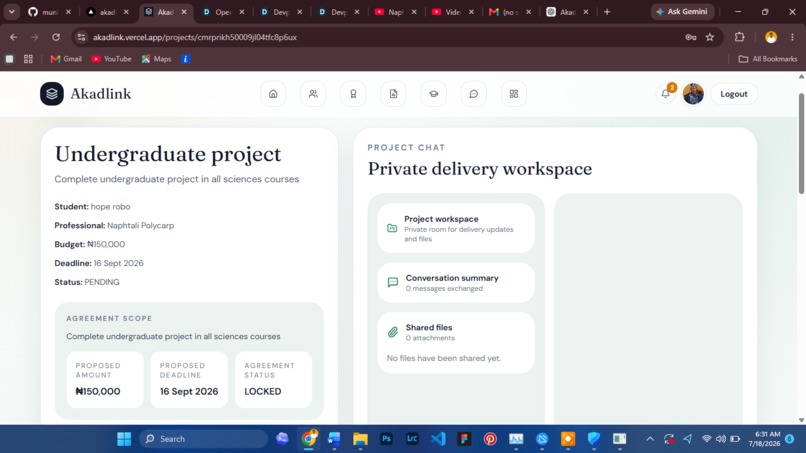
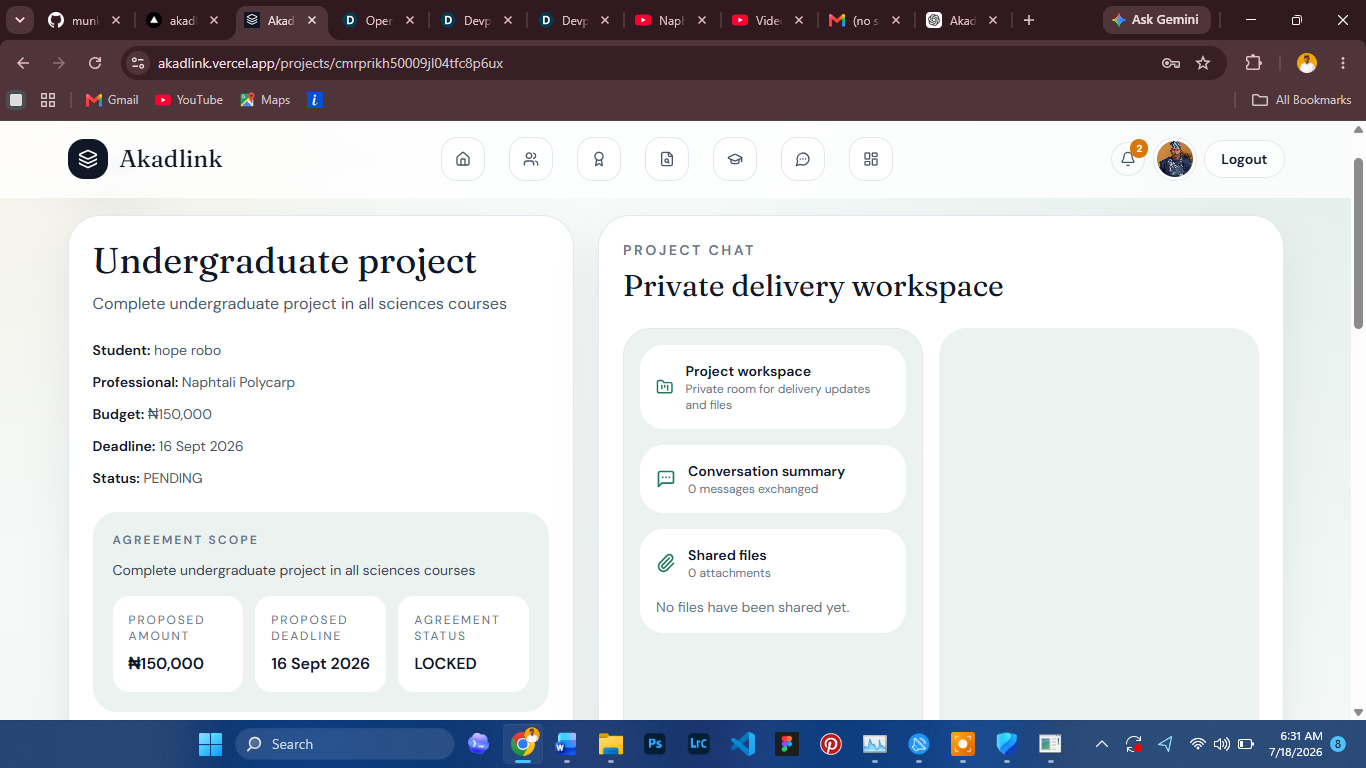
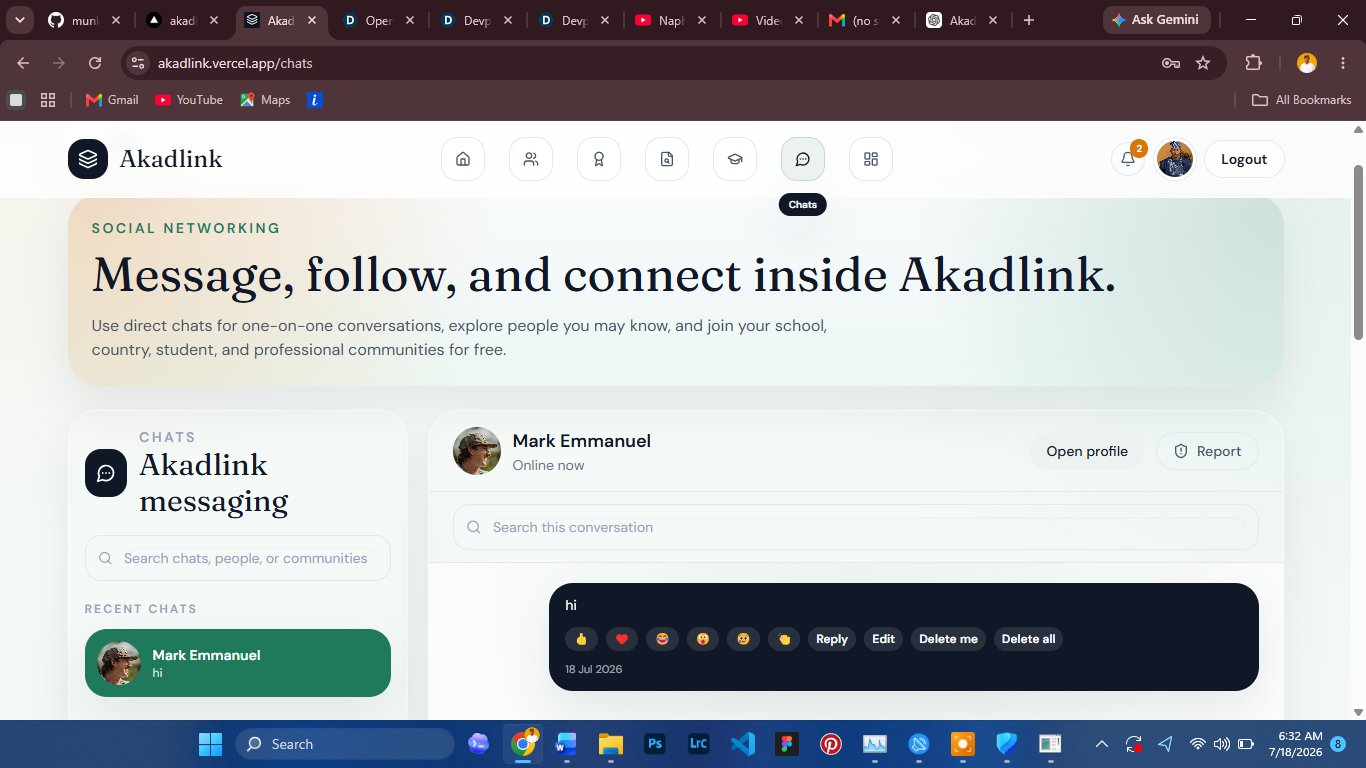
Private Chat space for student and Professional
-
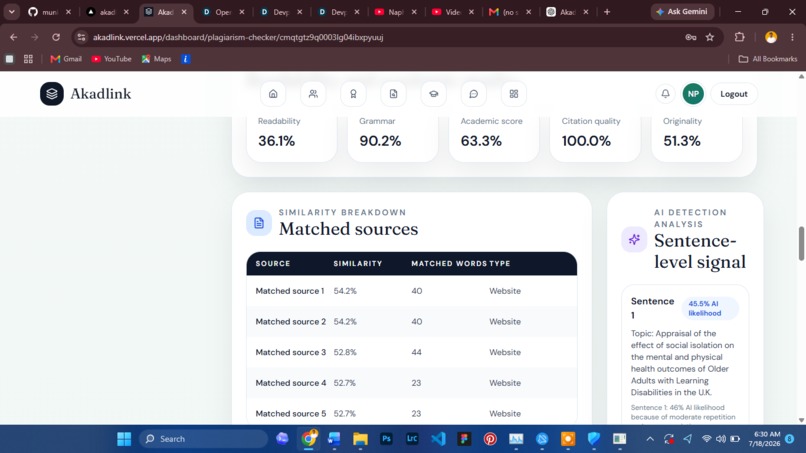
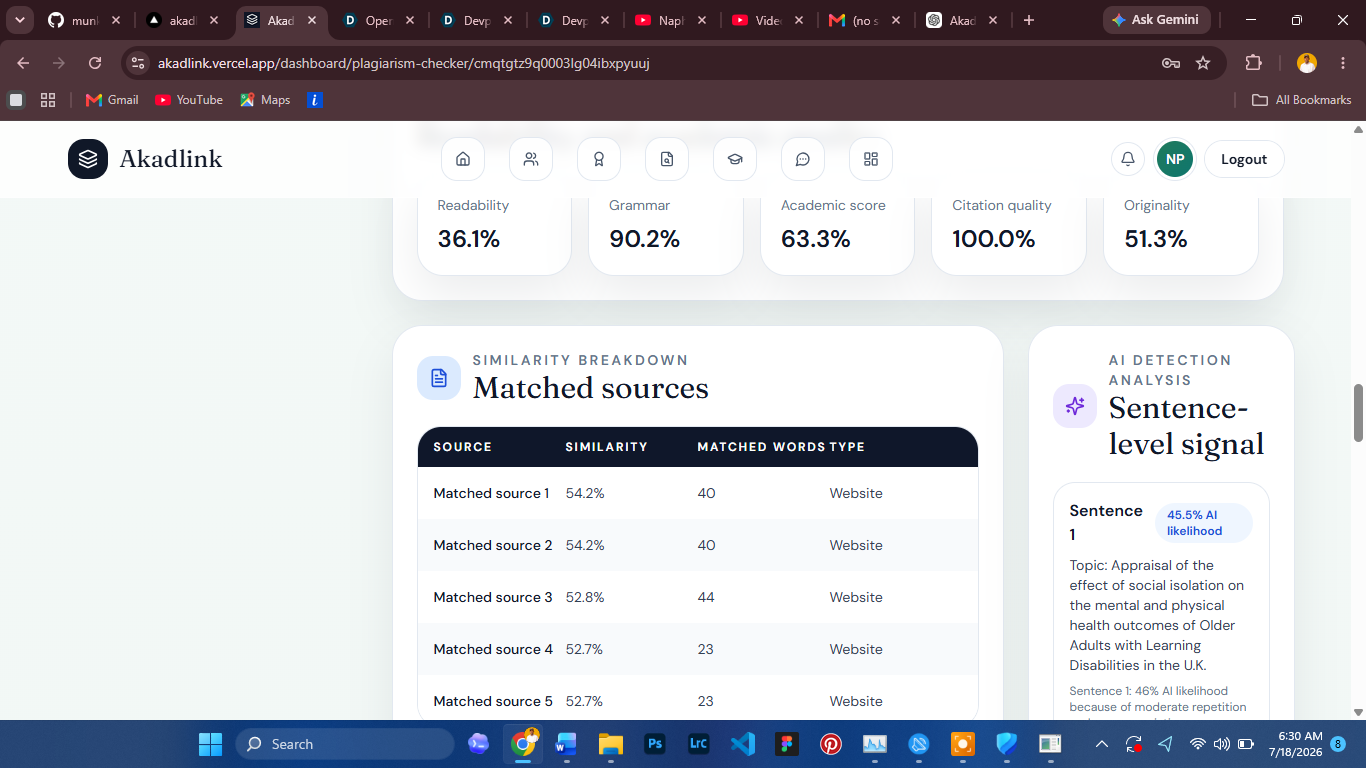
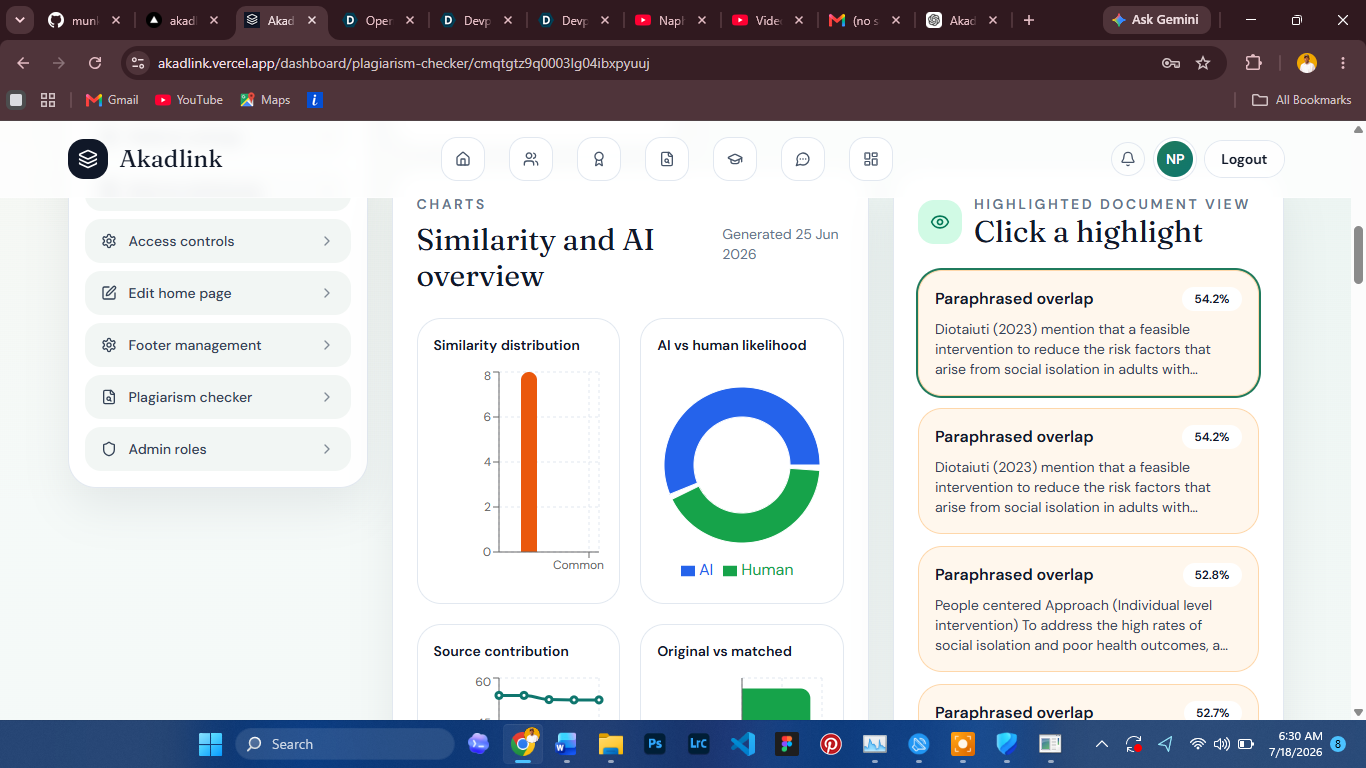
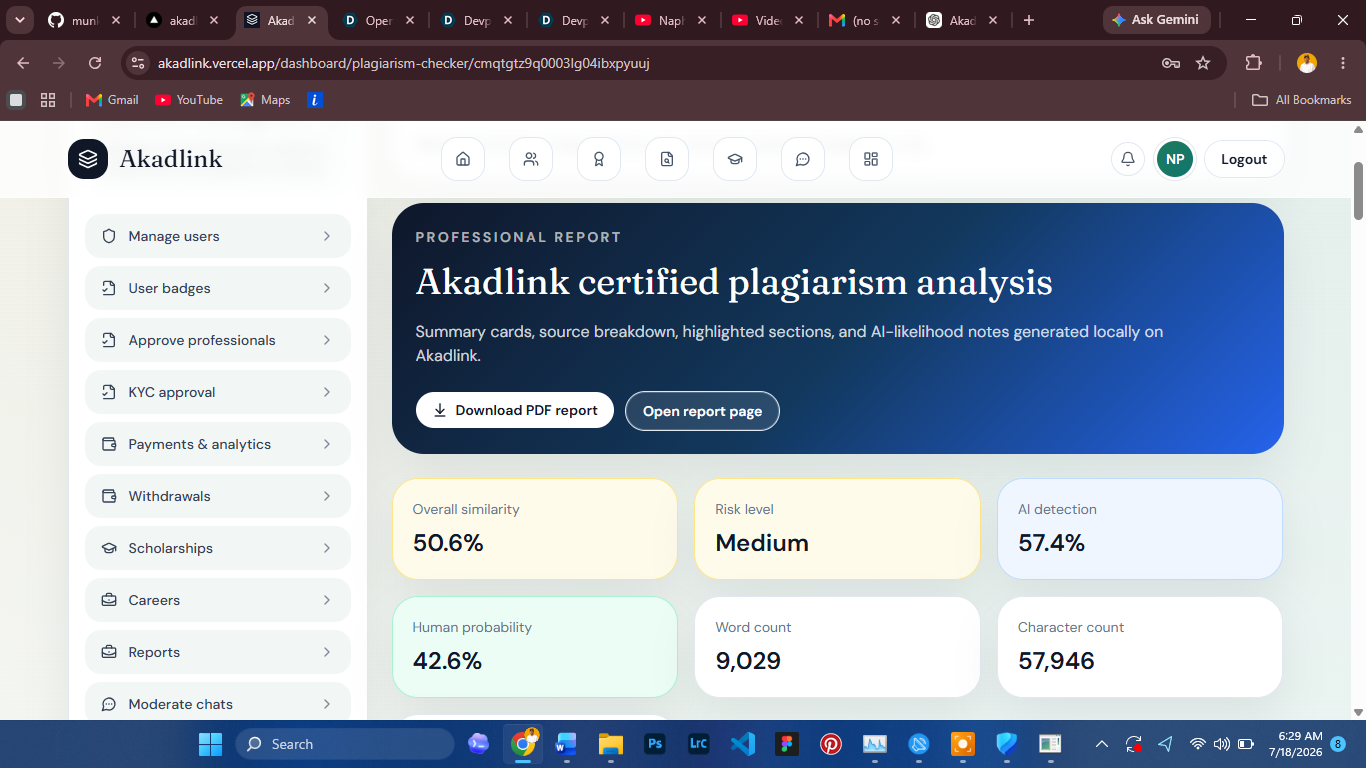
Plagiarism Analysis
-
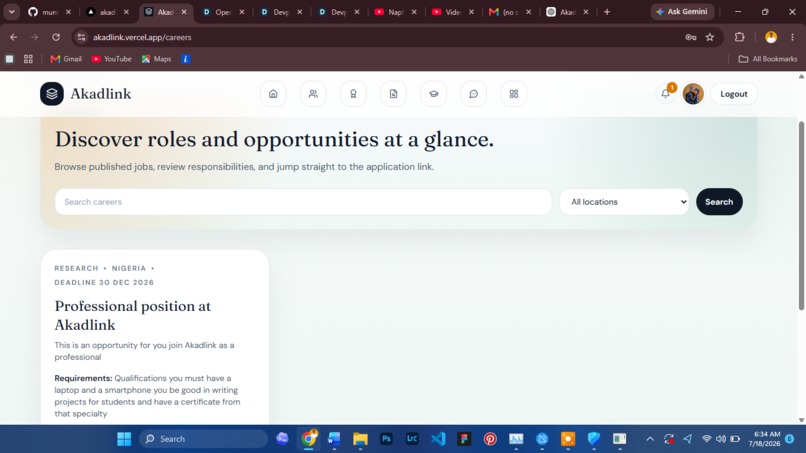
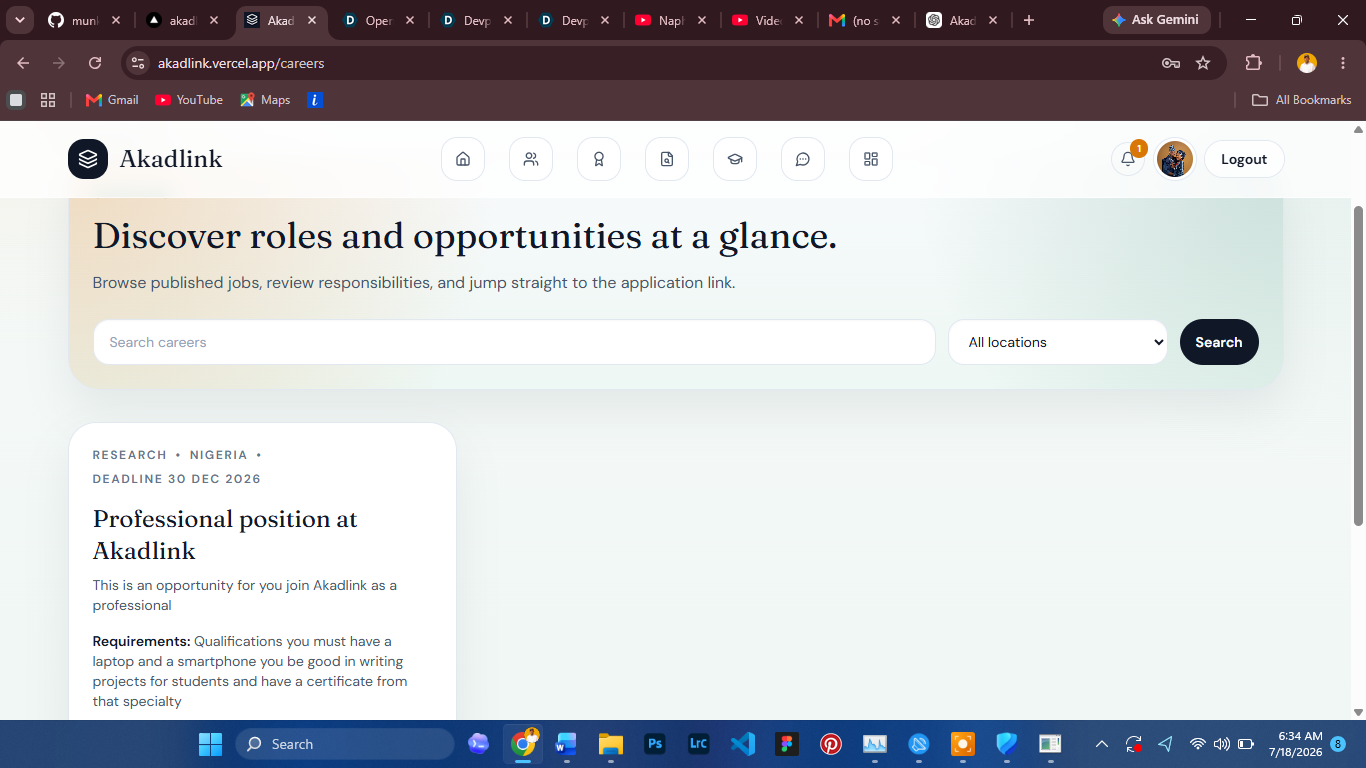
Career page
-
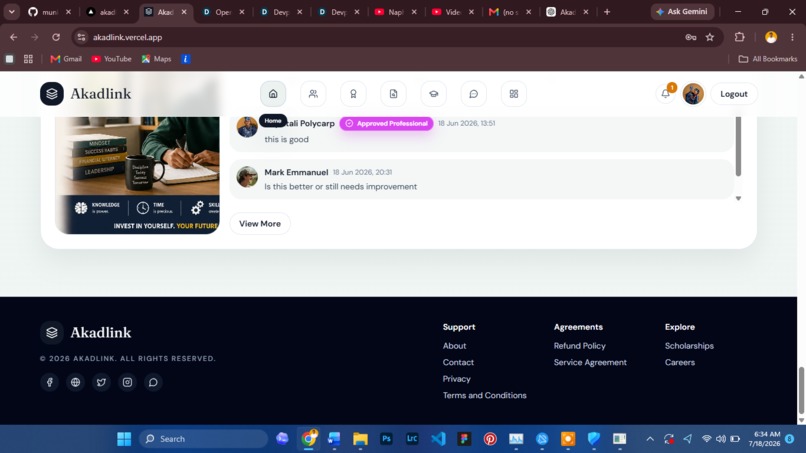
the footer
-
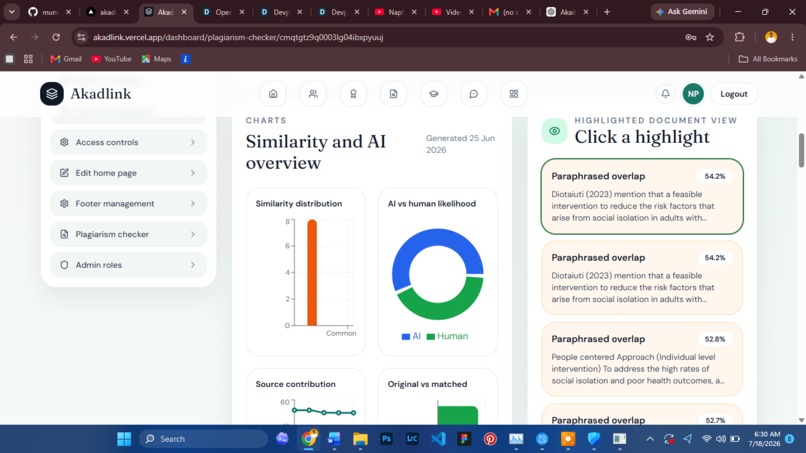
Plagiarism Analysis
-
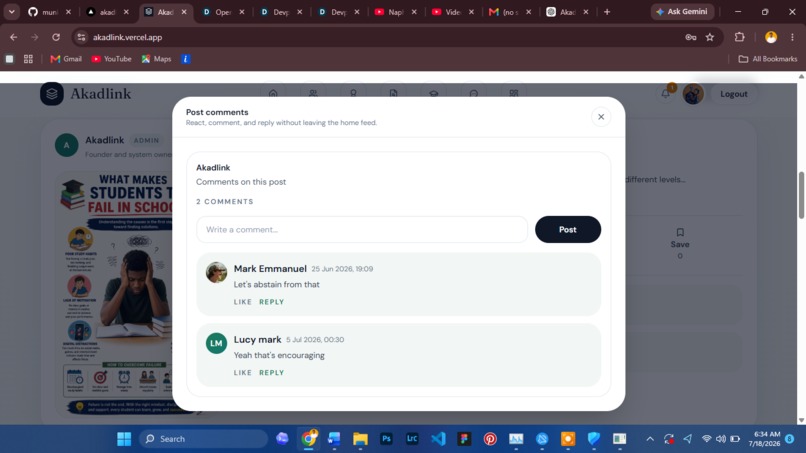
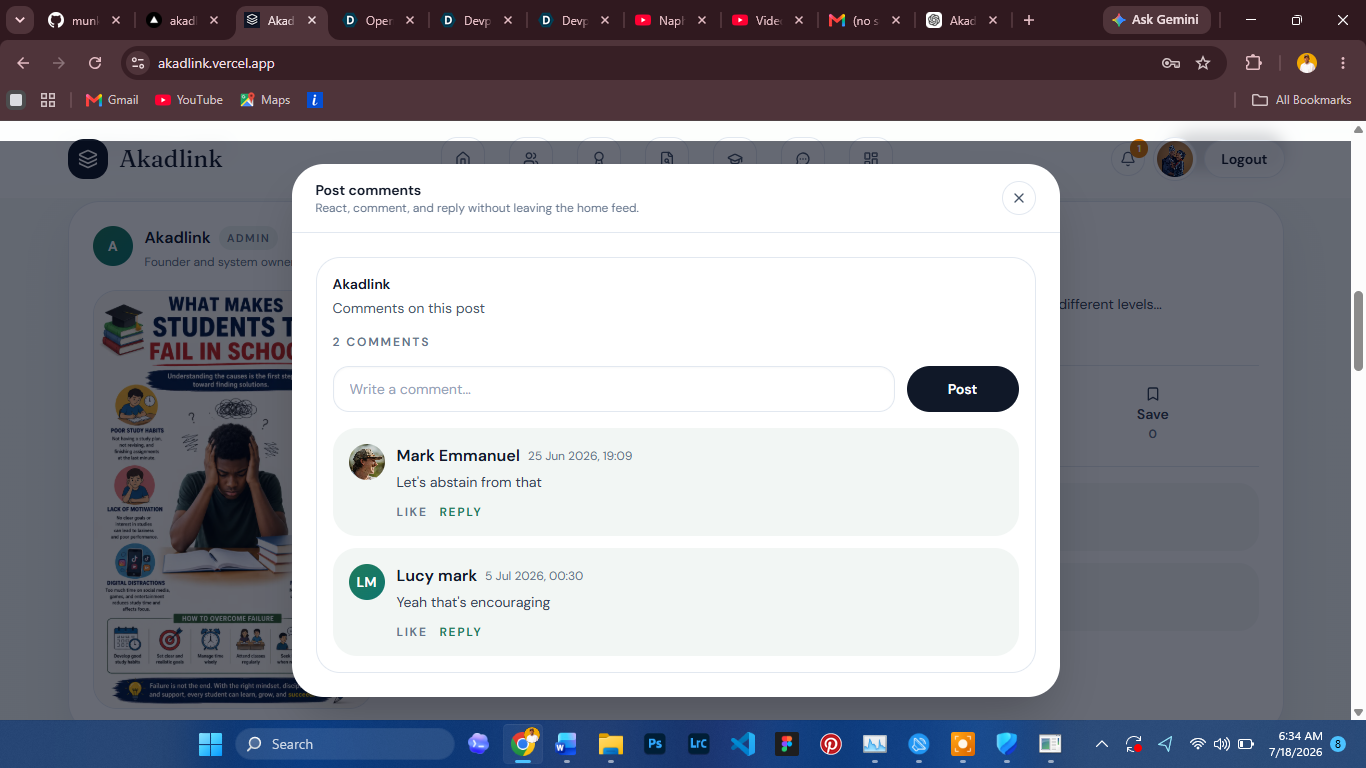
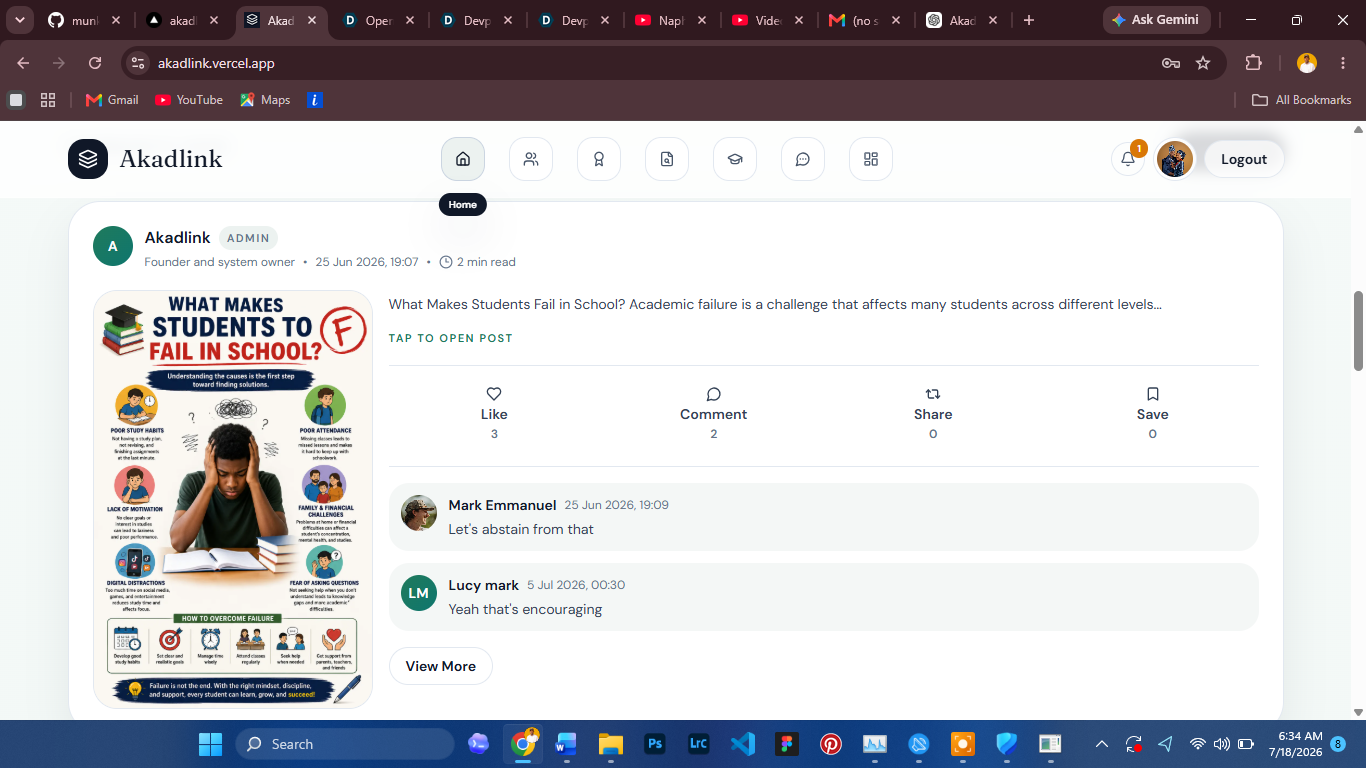
Comments section
-
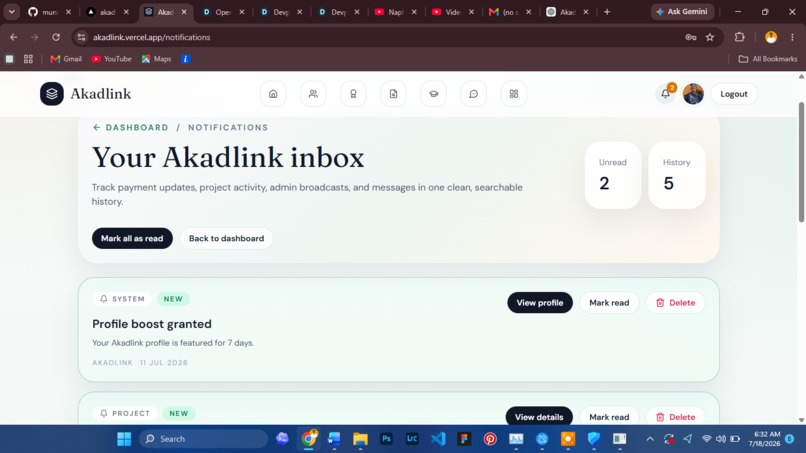
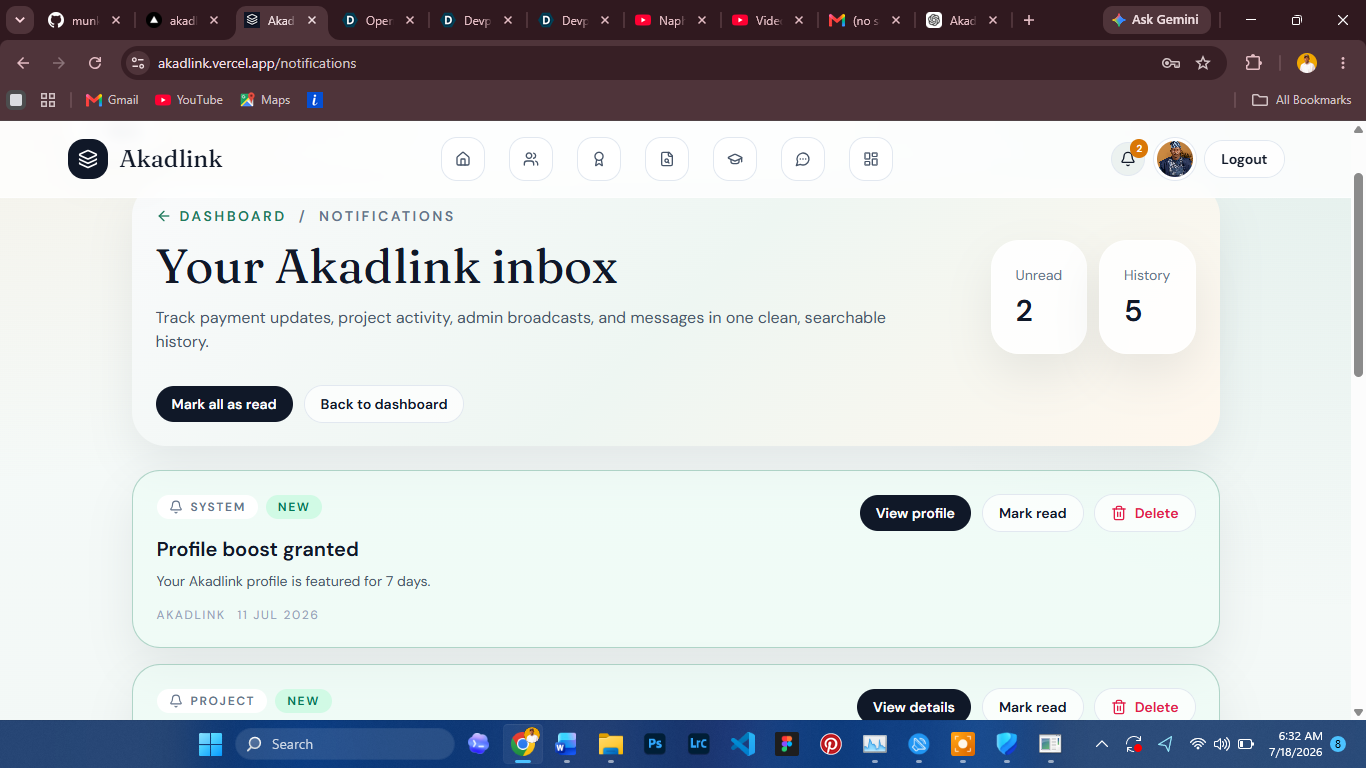
Notifications
-
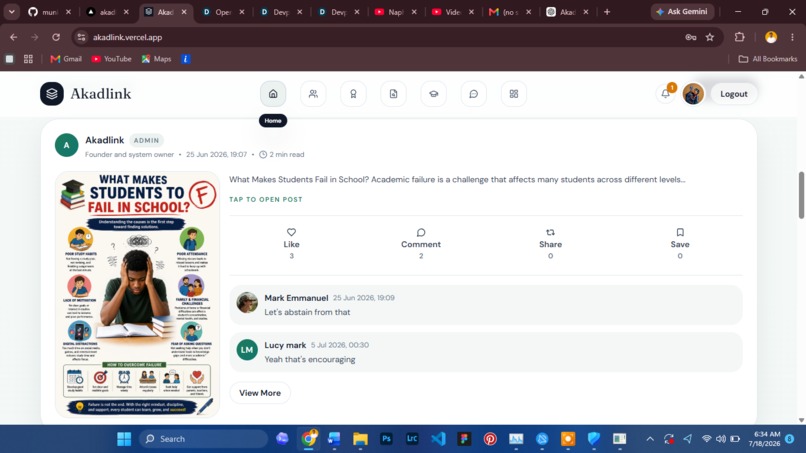
Posts
-
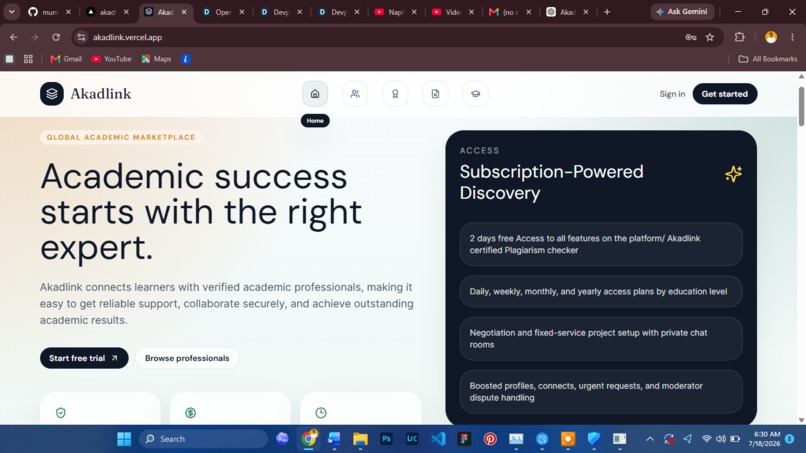
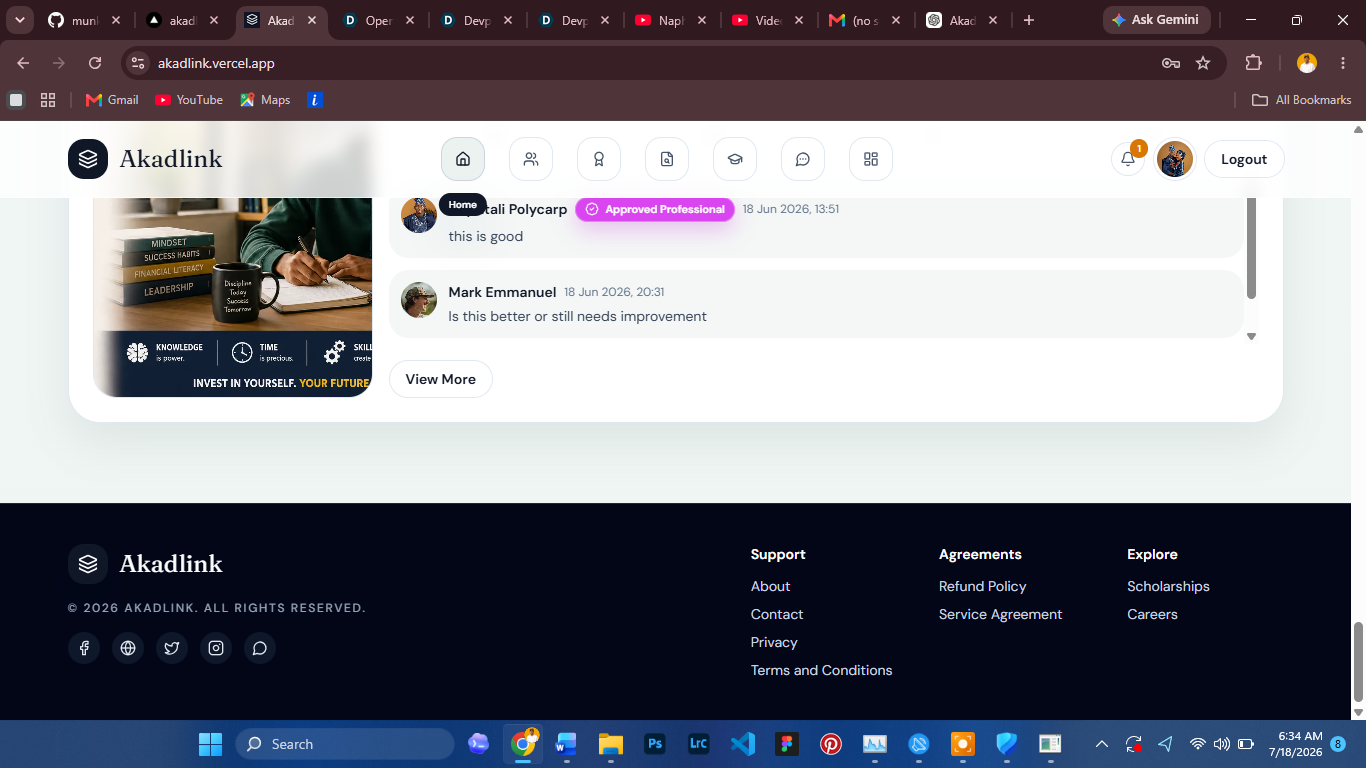
Home Page
-
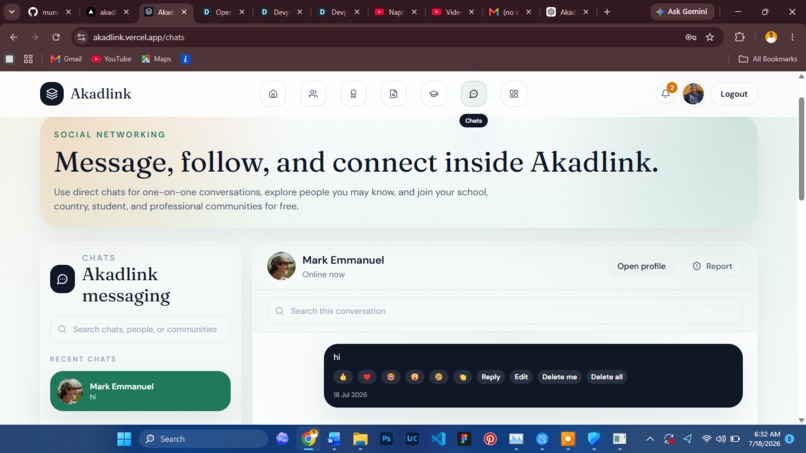
Akadlink chat system
-
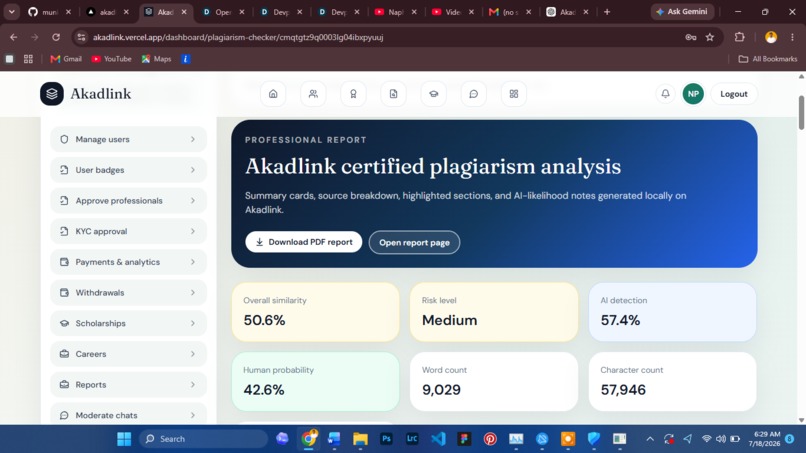
Plagiarism dashbord
-
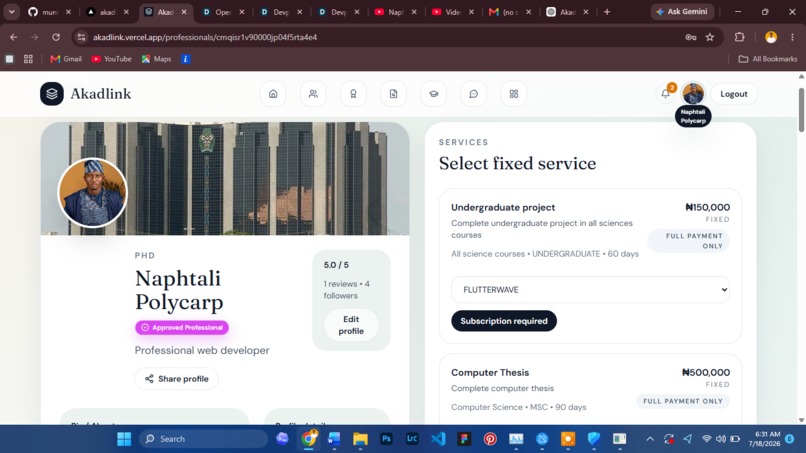
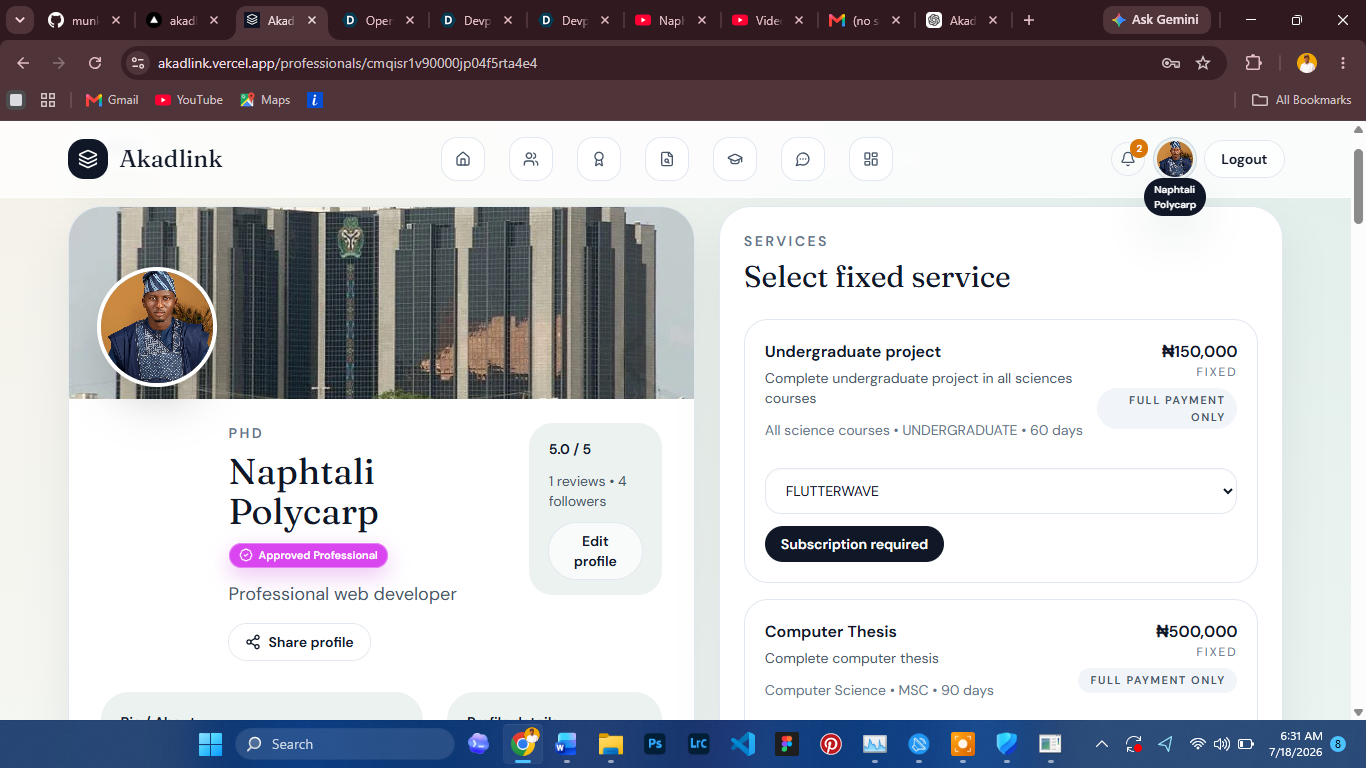
Professional Profile
-
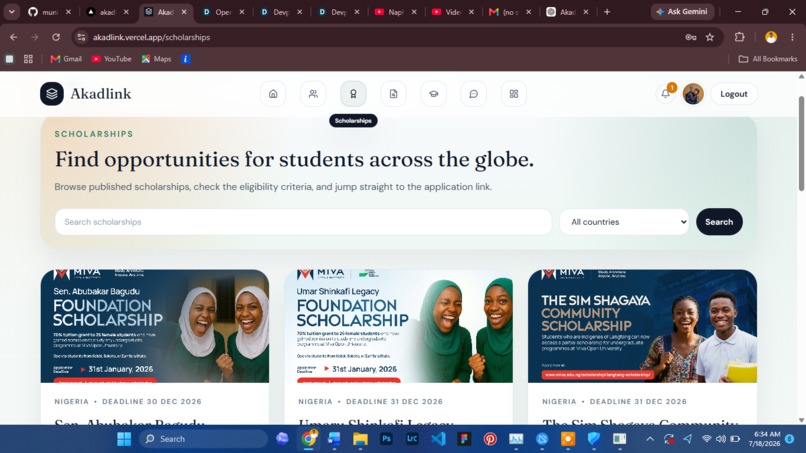
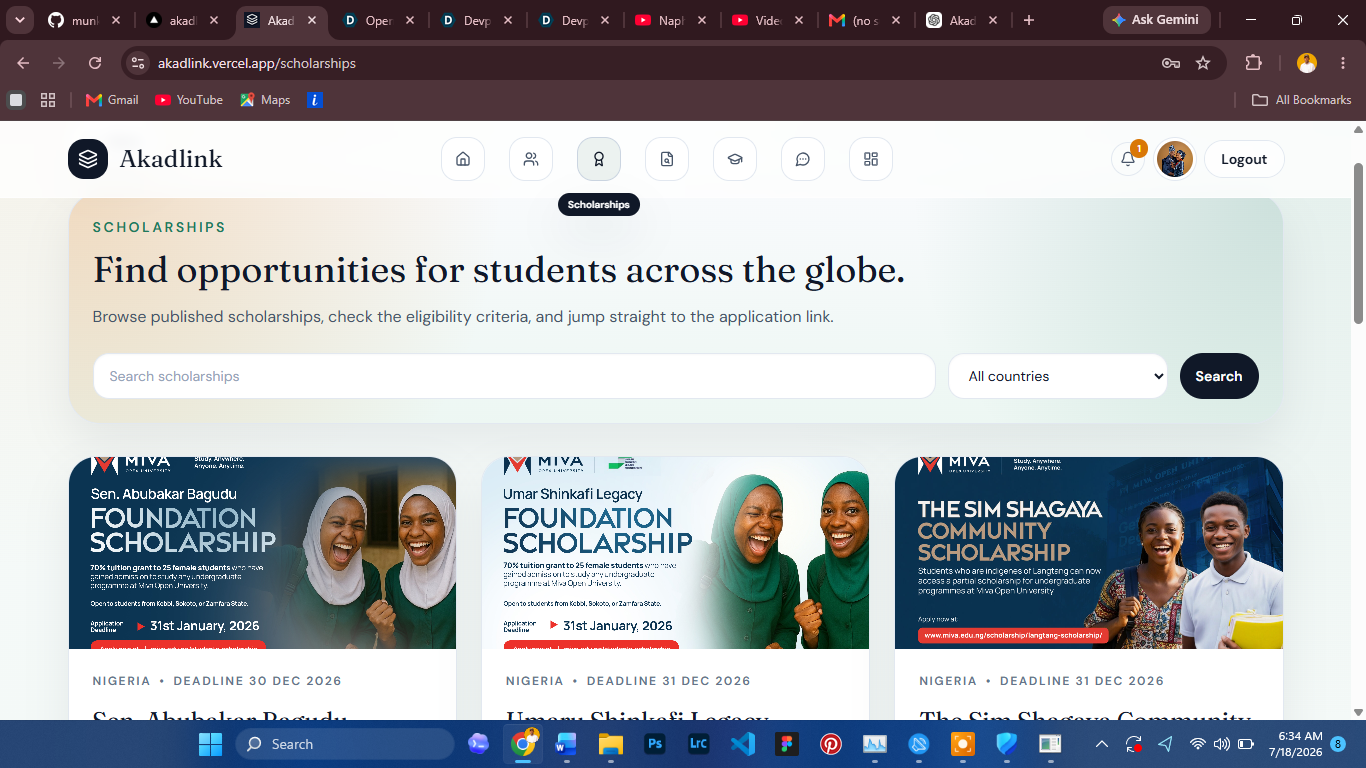
Scholarship page
Inspiration
Akadlink was born from two major problems I have witnessed across Africa, especially in Nigeria.
The first is the challenge within the educational system. Millions of students struggle to find trustworthy, qualified academic professionals who can guide them through research, tutoring, editing, data analysis, project supervision, and academic development. Students often rely on random social media posts, referrals, or luck to find someone who is actually qualified.
The second problem is unemployment among graduates. Every year, universities produce millions of talented graduates who possess valuable knowledge and expertise in their fields. Many of them have the ability to mentor students, teach specialized subjects, review research papers, and provide professional academic services, yet they have no dedicated platform where they can showcase their expertise, build credibility, and earn an income from their knowledge.
Instead, they are forced to depend on general purpose platforms such as Facebook, LinkedIn, WhatsApp, Telegram, or freelance marketplaces that were never designed specifically for academic collaboration.
I asked myself a simple question:
What if there was a global academic marketplace built specifically for education where students could confidently find verified professionals, and professionals could build careers by helping students achieve academic excellence?
That question became Akadlink.
What it does
Akadlink is a global academic marketplace and professional academic network that connects students with qualified academic professionals.
The platform is designed to become the dedicated ecosystem for academic services, bringing together:
Students Researchers Tutors Editors Data analysts Subject experts Academic consultants Supervisors Institutions
Instead of searching across multiple unrelated platforms, students can discover professionals in one trusted environment built specifically for education.
Akadlink also allows professionals to build their academic reputation, showcase their expertise, receive reviews, publish educational content, and earn income from the knowledge they have spent years acquiring.
How we built it
Although I am a web developer, I knew that building a system of this scale alone would normally take years.
This project includes numerous interconnected systems, including authentication, user roles, messaging, academic workspaces, payments, service listings, dashboards, verification flows, moderation tools, storage, security, and much more.
The biggest breakthrough came from combining Codex with GPT-5.6.
GPT-5.6 helped me transform ideas into a structured product by:
Designing the overall system architecture Breaking complex ideas into manageable milestones Explaining technical concepts Helping plan security first workflows Generating step by step prompts for Codex
Those prompts became the blueprint that Codex used to generate and refine large portions of the application.
Instead of spending months figuring out where to begin, I was able to iterate rapidly, validate ideas, and continuously improve the platform.
In many ways, GPT-5.6 became my technical strategist, while Codex became my implementation partner.
Challenges we ran into
Building Akadlink was far from easy.
At the beginning, the application only worked on my local computer.
I had no clear understanding of:
Which hosting providers to use How to deploy a production-grade application How to configure databases Storage architecture Email delivery Image optimization Scaling infrastructure Startup costs
Deployment became one of my biggest obstacles.
I encountered countless configuration issues, deployment failures, database migrations, authentication problems, storage integrations, and infrastructure decisions.
Every challenge became a learning opportunity.
With guidance from GPT-5.6, I learned how to choose startup-friendly technologies that balanced affordability and scalability. I also learned how to estimate infrastructure costs, optimize the architecture, and build a foundation capable of growing into a global platform.
What initially seemed overwhelming eventually became manageable because I had an AI partner helping me understand each step rather than simply providing answers.
Accomplishments that we're proud of
One of my goals was not just to create another marketplace.
I wanted Akadlink to actively improve the quality of academic work.
To achieve this, I integrated a self-hosted plagiarism checker that performs detailed analytical examination of:
Research papers Assignments Journals Thesis Dissertations Academic publications
Rather than returning only a similarity percentage, the system provides deeper analysis to help users understand originality and improve the quality of their work.
The long-term vision is to make academic integrity accessible without forcing students to depend on expensive third-party services. Education changes lives, but access to the right academic support is still a privilege for many students.
At the same time, millions of qualified graduates struggle to find meaningful opportunities to monetize the knowledge they have spent years acquiring.
Akadlink exists to bridge that gap.
If students can easily find trusted professionals, academic performance improves.
If professionals can earn from sharing their expertise, knowledge becomes more valuable.
If both sides come together on a platform designed specifically for education, everyone benefits.
What we learned
This project taught me much more than software engineering.
I learned how to:
Design large scale systems Think like a product architect Prioritize security from day one Build scalable infrastructure Plan for future growth Balance cost with performance Break impossible problems into smaller achievable milestones
Perhaps the biggest lesson was that modern AI is not just a coding assistant it is a collaborative engineering partner.
Codex accelerated development, while GPT-5.6 helped me think through difficult architectural and product decisions.
What's next for Akadlink
Akadlink is still at the beginning of its journey, but the vision is much bigger than the current product.
I want it to become the world's leading academic ecosystem a place where learning, teaching, research, mentorship, collaboration, and professional growth happen in one secure environment.
This project represents countless hours of learning, experimentation, setbacks, and persistence.
I could honestly talk about Akadlink for hours because every feature tells a story of a problem solved, every obstacle taught me something new, and every improvement brought the vision closer to reality.
Without Codex and GPT-5.6, this journey would have taken years longer. Together, they transformed an ambitious idea into a working platform and gave me the confidence to build something that can positively impact millions of students and academic professionals across Africa and eventually the world.
Built With
- cloudflare
- flutterwave
- github
- imagekit
- neon
- next.js
- paypal
- paystack
- postgresql
- prisma
- react
- resend
- socket.io
- stripe
- tailwind
- typescript
- vercel

Log in or sign up for Devpost to join the conversation.