What it does
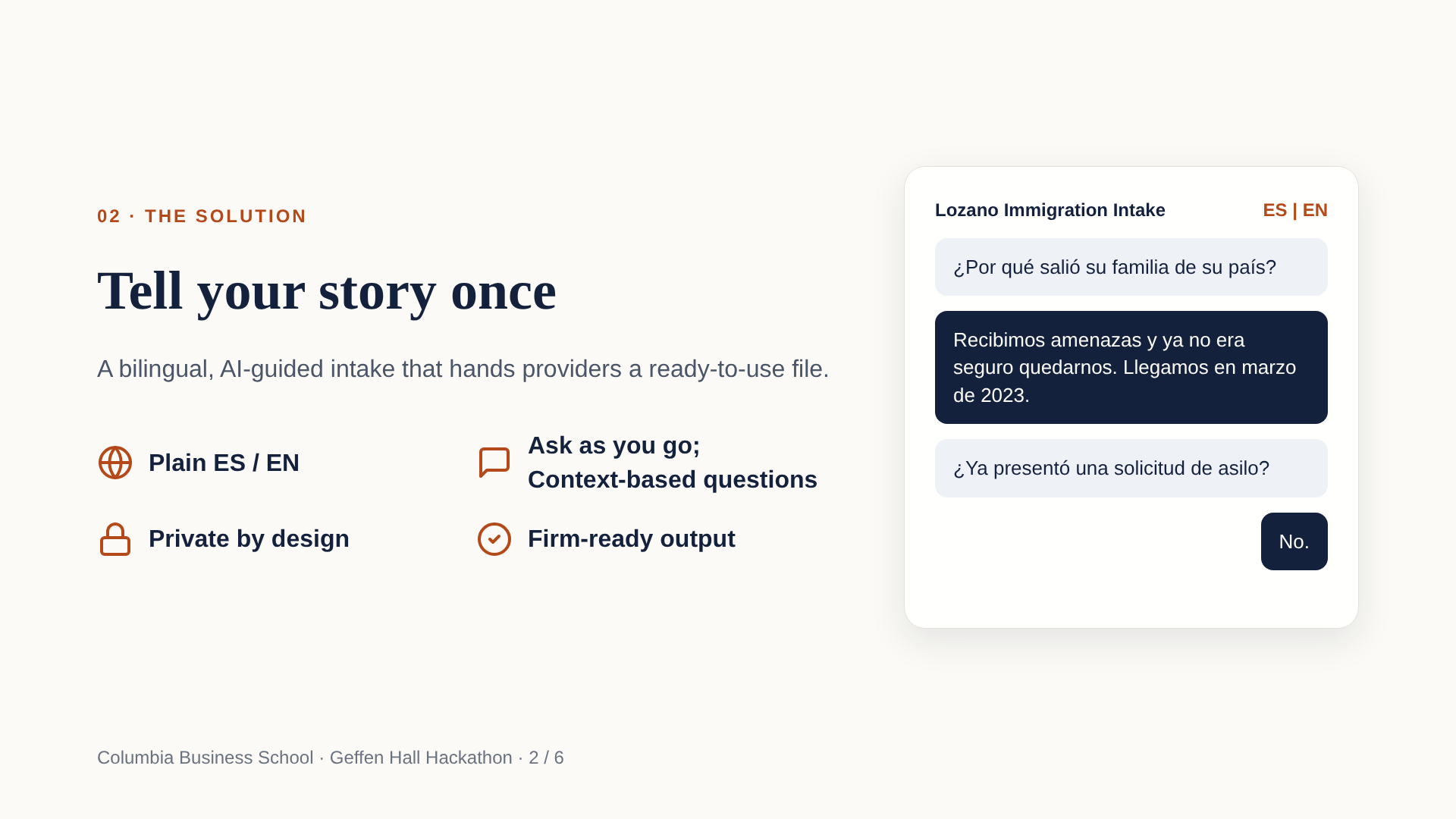
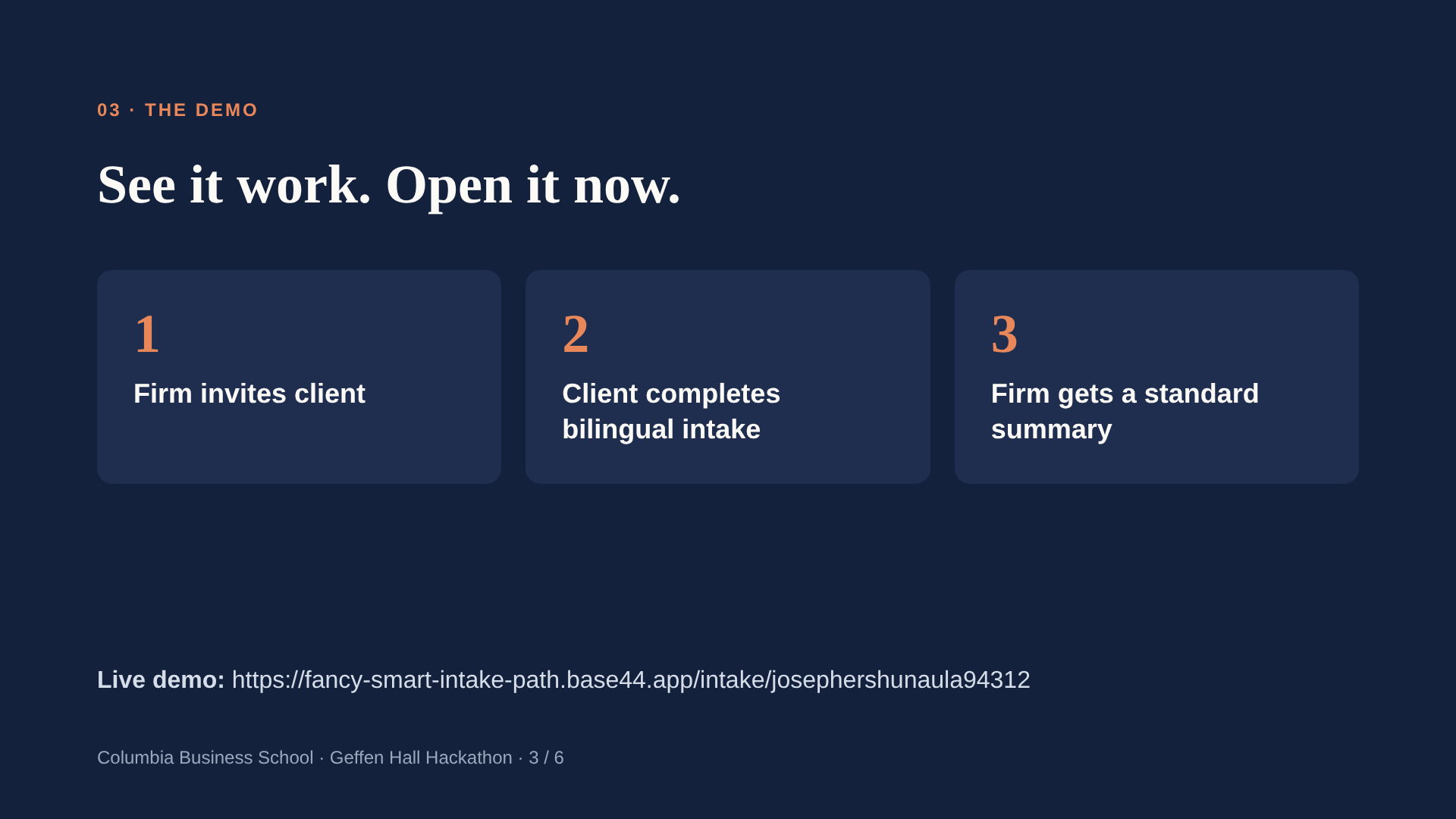
AIyuda guides clients through legal intake in a bilingual conversation, by voice or by text:
- Structured start: A short decision tree captures the essentials, such as who the client is, what kind of help they need, and key dates and status.
- Adaptive follow-up: AI asks tailored follow-up questions based on the client's answers, so each person's situation is captured without a one-size-fits-all form.
- Voice translation: Clients can speak in their own language. AIyuda translates in real time and answers back in natural-sounding speech, so literacy and typing are not barriers.
- Plain-language explanations: Legal terms are explained clearly in the client's language as they come up.
- Attorney-ready output: The firm receives a standardized summary in English, in a consistent format, ready to review before the first consultation.
How we built it
- Voice streaming: Twilio streams live audio between the client and our backend.
- Audio pipeline: Audio moves between services as base64-encoded chunks, which we decode, process, and re-encode for playback to the client.
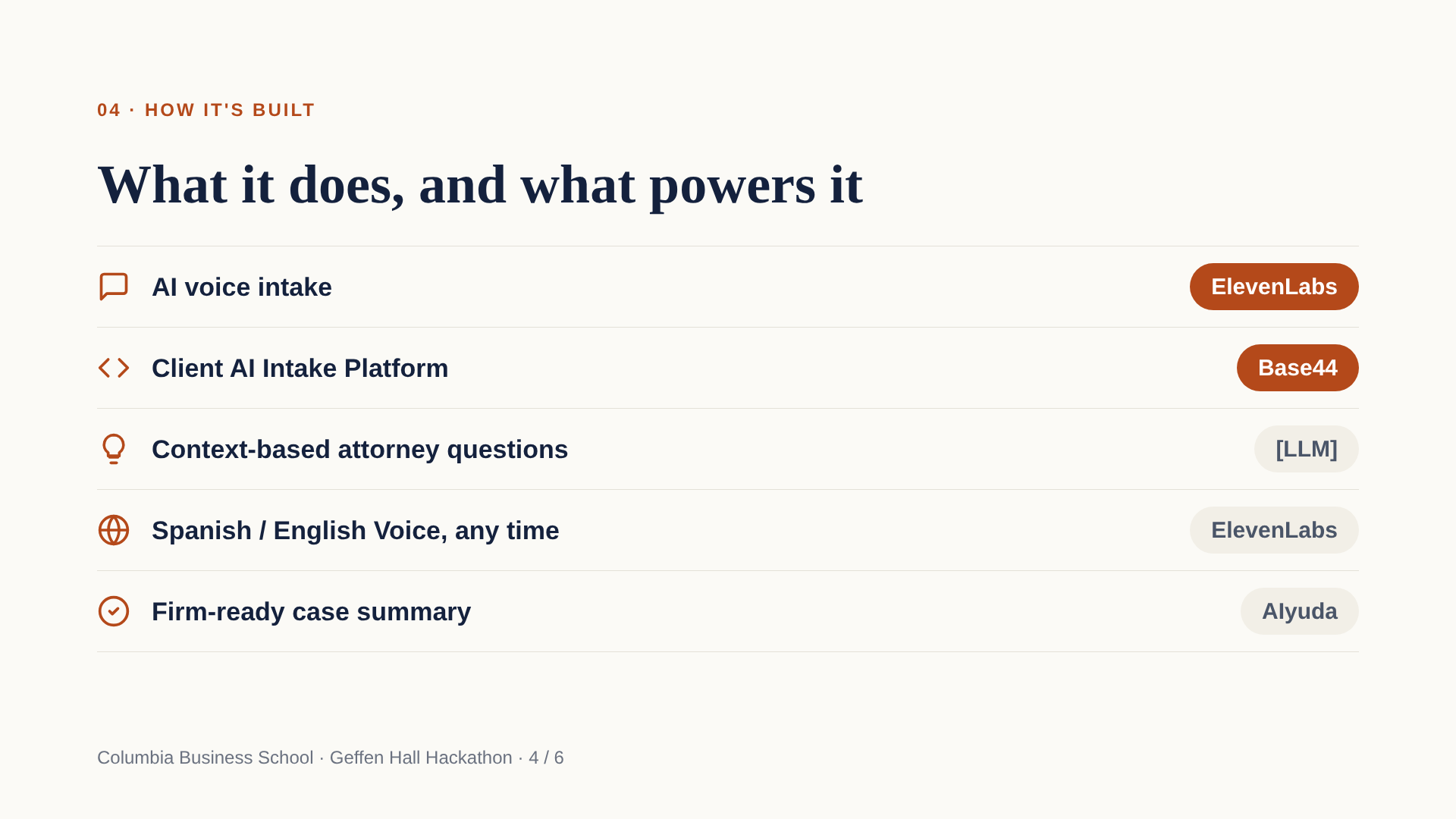
- Voice translation: ElevenLabs powers voice translation, turning the AI's replies into natural speech in the client's language.
- Conversation flow: A deterministic decision tree for the opening questions, followed by an LLM-driven follow-up stage [model/provider].
- Summary generation: Structured prompting maps the full conversation into a fixed attorney-facing template.
Challenges we ran into
- Real-time audio: Keeping the conversation natural meant minimizing delay across the full loop: receiving the client's audio, decoding base64 chunks, translating, generating a reply, and streaming speech back without awkward pauses.
- Audio format handling: Twilio and ElevenLabs expect different audio formats, so we had to convert reliably between them mid-conversation.
- Balancing structure and flexibility: The decision tree plus AI follow-up gave us both the reliability of a form and the adaptability of a conversation.
- Explaining without advising: Plain-language explanations had to stay informational and never become legal advice.
- Sensitivity and trust: Clients may share fearful or traumatic experiences, so tone, privacy, and data handling mattered from the start.
What's next for AIyuda
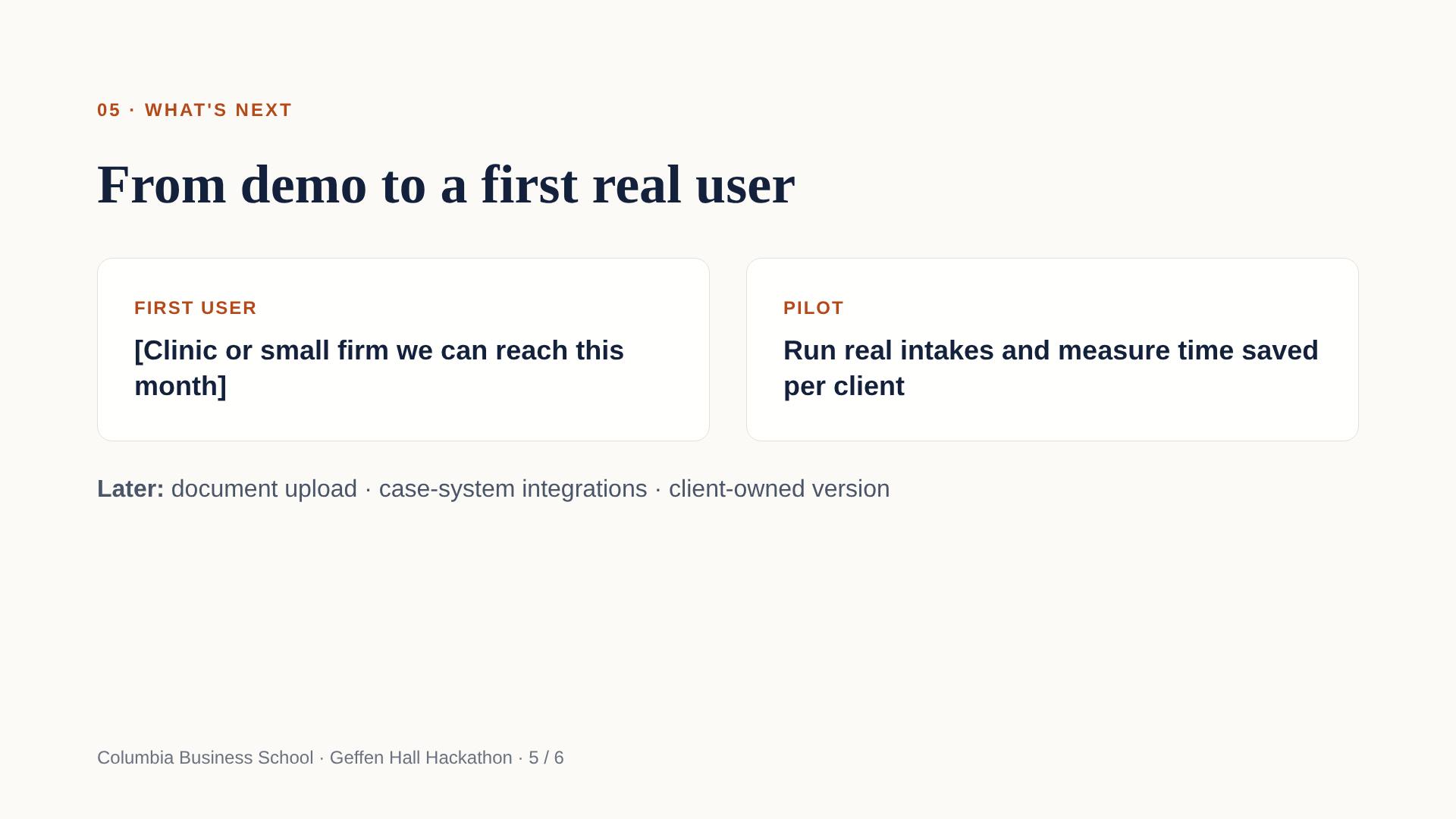
- Lower latency in the voice loop for more natural conversations.
- Attorney validation through pilots with legal aid organizations.
- Case-management integration to send summaries directly into firms' existing systems.
- Privacy and security hardening for audio and transcripts: encryption, retention controls, and compliance review.
Built With
- base44
- elevenlabs
- twilio


Log in or sign up for Devpost to join the conversation.