-
-
-
-
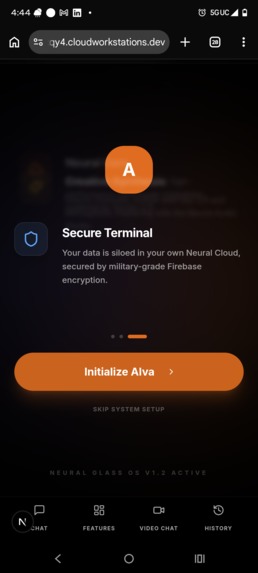
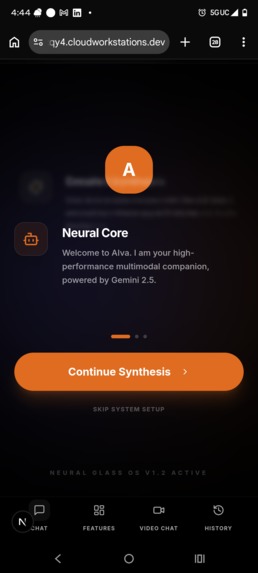
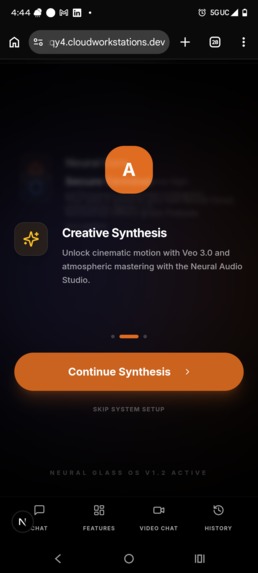
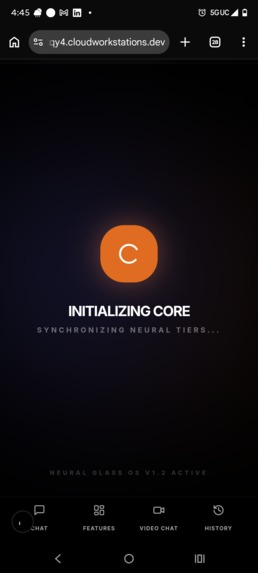
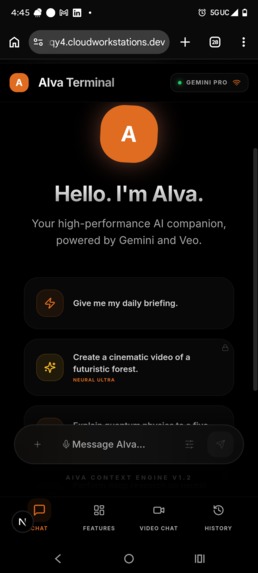
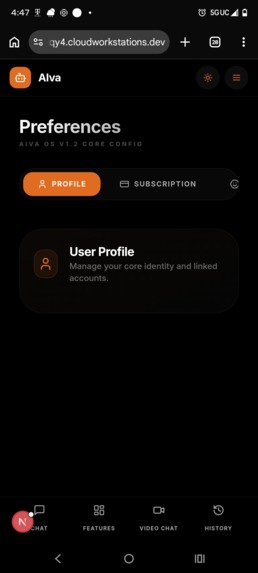
Onboarding page
-
-
-
-
-
-
-

-
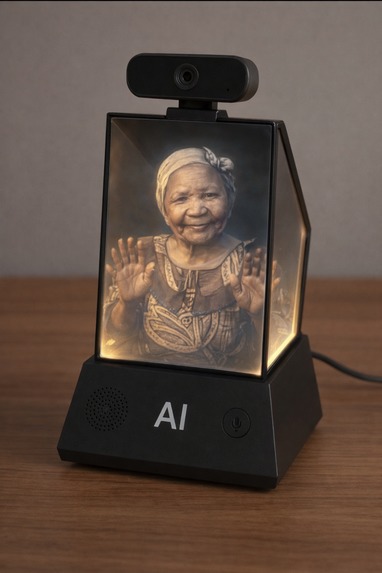
Holographic hardware prototype
-
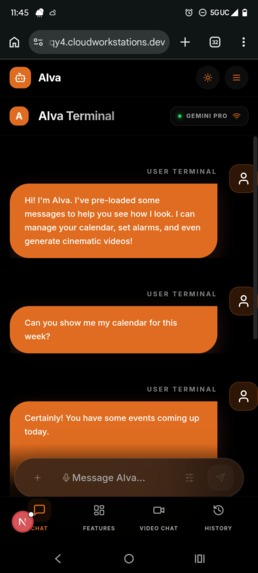
-
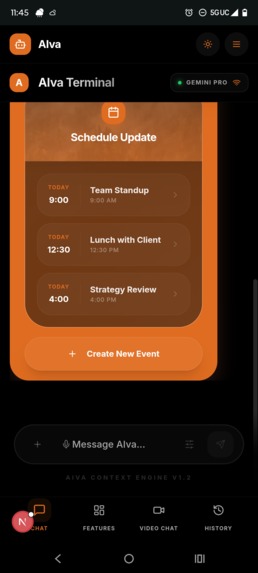
Result Screen


Inspiration
AI technology today is powerful, but it often feels impersonal. Most assistants like Siri, Alexa, or chatbots provide information, but they do not capture the human presence that makes interactions meaningful. AIva was inspired by the idea that artificial intelligence can become more personal — not just a tool, but a companion that reflects the voice, personality, and wisdom of people we care about. While working on AI systems and thinking about the future of AI assistants, I imagined a device where AI could represent someone meaningful in our lives. The concept of “Presence Configuration” allows users to configure AIva with a visual identity, voice signature, and personality tone so that the assistant can carry the warmth and guidance of a trusted person. The inspiration also came from exploring how AI should work everywhere, not only when the internet is available. Many people in different parts of the world experience unreliable connectivity. AIva addresses this by combining Gemini for powerful online intelligence and local AI models for offline continuity, ensuring the assistant remains helpful even without internet access. Ultimately, AIva explores a new category of technology: AI companions that preserve human presence, wisdom, and connection while remaining useful and accessible anywhere.
What it does
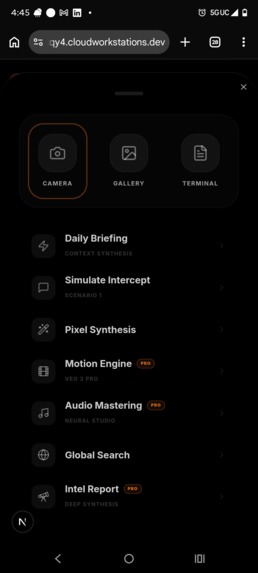
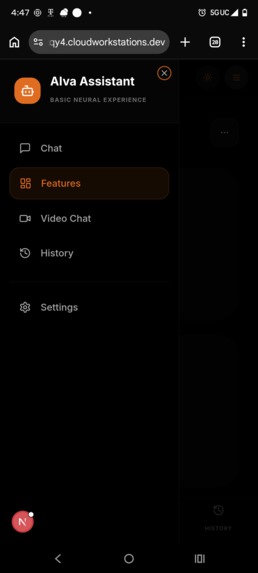
AIva is a hybrid AI assistant platform designed to be intelligent, personal, and accessible anywhere. It combines powerful cloud AI with local models to ensure users always have access to assistance, whether they are online or offline. When connected to the internet, AIva uses Google Gemini to provide advanced reasoning, conversational intelligence, and research capabilities. When the internet is unavailable, AIva automatically switches to a local AI model running through Ollama, allowing the assistant to continue responding without interruption. AIva also introduces a self-review system that evaluates its own responses before presenting them to the user. After generating an answer, a second AI flow analyzes the response for clarity, safety, and accuracy, and then labels it with a verdict such as “Use as-is” or “Revise.” This adds a layer of transparency and reliability that most assistants do not provide. Another unique feature is Presence Configuration, which allows users to personalize the assistant’s identity. Users can configure: Visual DNA – upload an image that defines the assistant’s avatar or holographic presence Voice Signature – adjust tone, warmth, and speech style Tone Synthesis – control the personality of the assistant (friendly, professional, calm, etc.) Assistant Alias – give the assistant a meaningful name These settings allow AIva to become more than a generic assistant—it can represent a personalized presence designed around the user’s needs or preferences. The platform also includes a modern interface with features such as: AI chat with conversation history Video interaction capabilities Configurable assistant personality settings A modular architecture ready for future AI hardware integration In the future, AIva is designed to extend beyond software into a physical AI companion device, capable of projecting a holographic avatar and interacting naturally with users in their environment. Overall, AIva explores a new type of AI experience: a reliable, hybrid, and deeply personalized AI companion.
How we built it
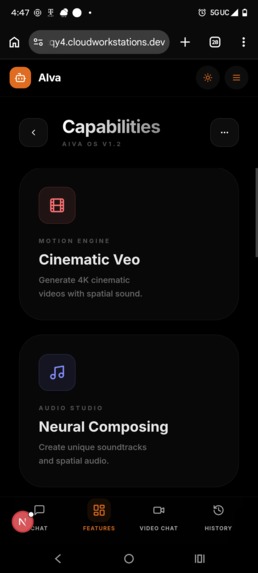
AIva was built as a multimodal AI platform that combines advanced generative AI with a futuristic interaction interface. The system uses Next.js 15 and React 18 to power the frontend experience, with Tailwind CSS for custom holographic visual effects and responsive UI components. The backend is powered by Firebase, which provides authentication, real-time data storage through Firestore, and scalable cloud infrastructure. AI capabilities are implemented using Google Genkit and Gemini 2.5 Flash, enabling multimodal interaction including chat, image analysis, and audio generation. AIva can process text, images, and voice input, then respond with text, speech, or dynamic visual “Intel Cards.” Creative AI features are powered by Veo 3.0 for cinematic video generation and Gemini’s audio synthesis for music and soundscape creation within the Neural Studio module. The interface is designed as an “Intelligence Terminal,” where users can manage tasks, interact with the assistant, and generate content from a unified dashboard. A unique feature called Soul Matrix allows users to configure the AI’s presence by adjusting personality tone, voice warmth, and visual identity. This creates a more personalized AI companion experience. The platform also integrates real-time visual feedback such as holographic gradients, pulsing synthesis indicators, and immersive UI transitions to maintain engagement during AI processing cycles. Overall, AIva combines modern web technologies, generative AI models, and emotional interface design to create a personalized AI companion platform.
Challenges we ran into
I don't have money to finish Alva hardware prototype
Accomplishments that we're proud of
One of our biggest accomplishments was successfully building a hybrid AI architecture that combines cloud intelligence with local resilience. AIva can operate with Gemini for powerful online reasoning while also switching to a local AI model through Ollama when internet connectivity is unavailable. This ensures the assistant remains useful even in environments with unreliable connectivity. We are also proud of creating a multimodal interaction system that allows users to communicate with AIva through text, voice, and images. By integrating Gemini’s capabilities with a responsive interface, the platform can generate conversational responses, analyze images, and produce audio feedback in real time. Another key accomplishment is the development of Soul Matrix, a personalization system that allows users to configure the AI assistant’s presence by adjusting personality tone, voice characteristics, and visual identity. This moves AIva beyond being a generic chatbot and toward a more personalized companion experience. Finally, we successfully designed the Intelligence Terminal interface, which organizes AI tools such as chat, creative generation, scheduling, and system insights into a single unified dashboard. This creates a cohesive environment where AI feels like an integrated operating system rather than a collection of separate tools.
What we learned
Emotional Design: We found that users connect more deeply with AI when its "Why" is stated upfront—moving from a utility to a companion. Holographic Shaders: Shifting from scanlines to iridescent gradients created a more "human" light-based projection effect. Managing Multimodal Latency: Pulsing holographic status indicators keep the user engaged during heavy synthesis cycles.
What's next for AIva Neural OS
The next phase of AIva focuses on expanding the platform into a fully interactive AI ecosystem. First, we plan to enhance real-time multimodal interaction, including improved voice conversations, live video analysis, and richer visual responses. This will allow AIva to function more naturally as a conversational assistant. Second, we aim to continue developing the presence configuration system, allowing users to further customize how AIva appears, speaks, and interacts. This could include richer avatars, emotional expression, and deeper personalization. Another major goal is exploring AIva hardware integration, where the software platform powers a physical AI companion device capable of projecting holographic visuals and interacting naturally within a user's environment. Finally, we plan to expand the system’s intelligence capabilities by integrating additional creative tools, automation features, and productivity modules so AIva can assist with everyday tasks, content creation, and decision-making. Our long-term vision is to evolve AIva into a personal AI operating system that combines intelligence, creativity, and human-centered interaction in one unified platform.
Built With
- firestore-real-time-database)-external-data:-unsplash-api-(visual-search)
- gemini-2.5-flash-(text/vision/image/tts)
- lucide-icons
- next.js-15-(app-router)
- react-18-styling:-tailwind-css
- recharts-(activity-visualization)-ui-components:-shadcn-ui-(radix-primitives)-ai-/-genai:-google-genkit
- translate
- veo-3.0-(video)-backend:-firebase-(authentication

Log in or sign up for Devpost to join the conversation.