-
-
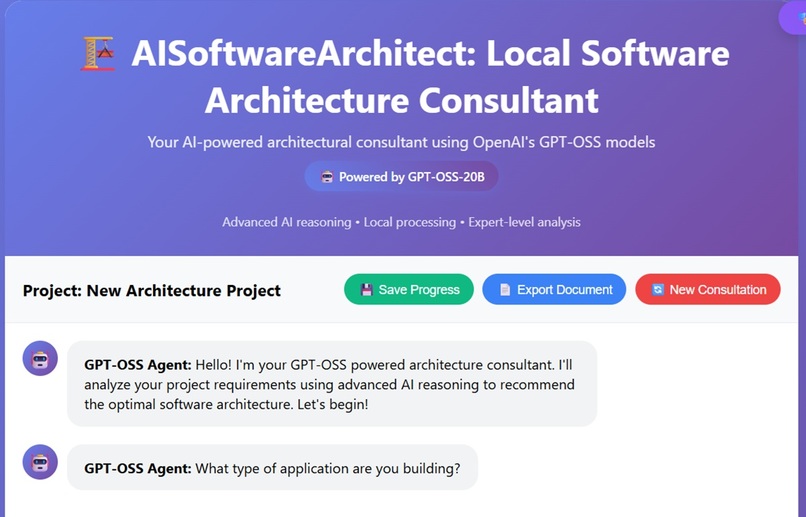
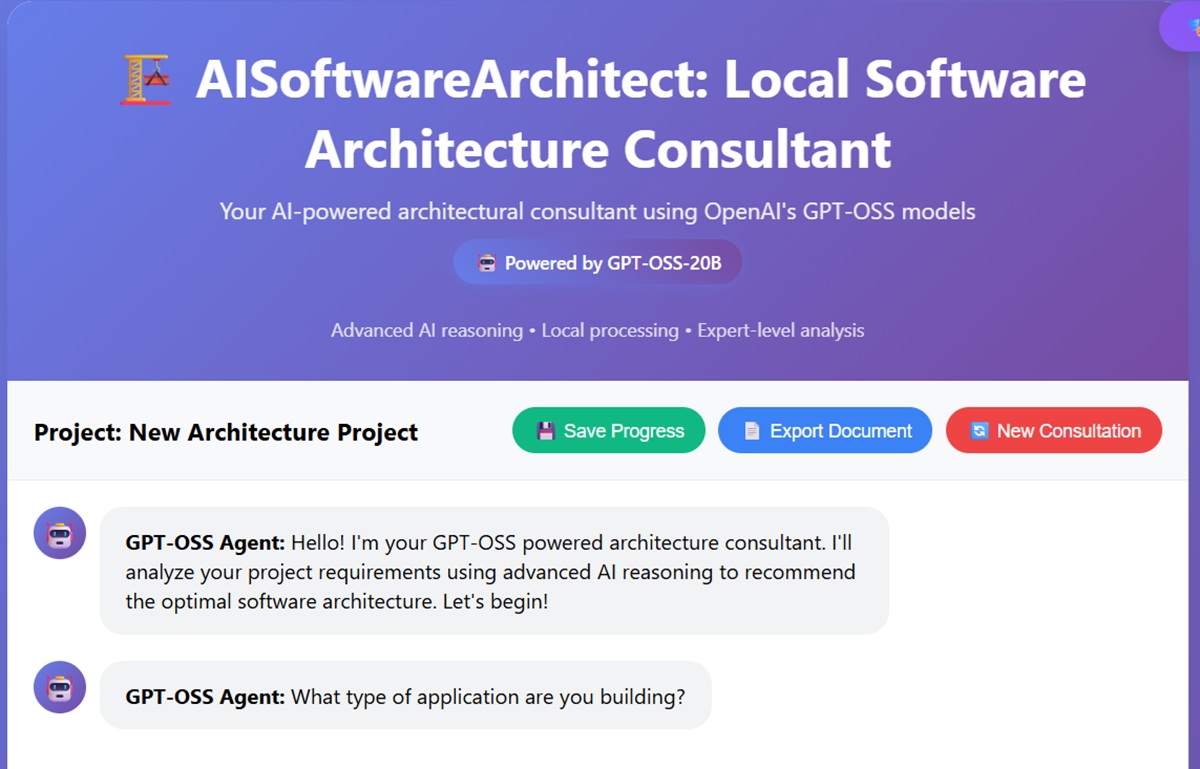
An intelligent, locally-running architecture consultant
Inspiration
In the era of "vibe-driven development," we witnessed countless teams making critical architectural decisions based on gut feelings, trending frameworks, or developer preferences rather than systematic analysis. This leads to technical debt, scaling nightmares, and failed projects costing billions annually. The inspiration struck when we realized that while developers have access to powerful AI models for code generation, there's no specialized AI consultant for one of the most crucial decisions in software development: choosing the right architecture. Traditional architecture consultants are expensive (often $200-500/hour), unavailable to small teams, and provide generic advice without deep contextual understanding. We envisioned a world where every developer, regardless of team size or budget, could access expert-level architectural guidance powered by cutting-edge AI models running locally on their machines. The OpenAI Open Model Hackathon provided the perfect opportunity to build this vision using OpenAI's newly released GPT-OSS models.
What it does
AISoftwareArchitect is an intelligent, locally-running architecture consultant that transforms how developers make architectural decisions. Here's what it does:
AI-Powered Architecture Analysis
Uses OpenAI's GPT-OSS-20B model (or compatible alternatives) running locally via Ollama Conducts comprehensive project requirement analysis through an interactive questionnaire Applies multi-factor scoring algorithms combined with AI reasoning to evaluate architectural patterns
Personalized Recommendations
Provides ranked architecture recommendations (Monolithic, Microservices, Serverless, JAMstack, Event-Driven) Generates confidence scores (0-100%) for each recommendation Explains detailed reasoning behind each architectural choice Considers team size, complexity, scalability needs, budget constraints, and timeline
Professional Analysis Reports
AI Reasoning Process: Shows step-by-step how the AI analyzed requirements Implementation Roadmaps: 5-phase implementation plans for recommended architectures Risk Assessments: Identifies potential challenges and mitigation strategies Confidence Analysis: Provides transparency into AI decision-making process
Hybrid Intelligence Approach
Local-First: Runs entirely on user's machine when AI models are available Graceful Fallback: Sophisticated rule-based analysis when AI models aren't accessible Real-Time Adaptation: Automatically detects and uses available AI models (GPT-OSS, Llama, Mistral)
Professional Features
Firebase integration for saving and managing architectural consultations Markdown export functionality for professional documentation Share analysis results with team members Project tracking and progress management
How we built it
Architecture & Tech Stack
Frontend: Pure HTML5, CSS3, JavaScript (no frameworks for maximum compatibility) AI Integration: Ollama for local model management, direct API integration with GPT-OSS Backend Services: Firebase (Firestore, Auth, Hosting) - free tier only Local Processing: Client-side architecture analysis engine
AI Integration Strategy
Model Detection: Auto-discovery of available models via Ollama API Priority System: GPT-OSS models → Alternative AI models → Sophisticated demo mode Prompt Engineering: Carefully crafted prompts optimized for architectural reasoning Response Parsing: Intelligent extraction of structured data from AI responses
Development Process
Research Phase: Studied architectural decision-making frameworks and common pitfalls Knowledge Base: Built comprehensive scoring algorithms based on industry best practices AI Integration: Implemented seamless GPT-OSS integration with robust fallback mechanisms UI/UX Design: Created professional, accessible interface with real-time AI status indicators Testing: Extensive testing with various AI models and edge cases
Key Technical Innovations
Hybrid Intelligence: Combines rule-based logic with AI reasoning for reliability Local-First Architecture: Ensures privacy and works offline after initial setup Model Agnostic: Works with GPT-OSS, Llama, Mistral, or any Ollama-compatible model Progressive Enhancement: Gracefully handles missing AI models without breaking functionality
Challenges we ran into
- GPT-OSS Model Availability & Resource Constraints
Challenge: GPT-OSS-20B requires 16GB+ RAM, limiting accessibility Solution: Implemented intelligent model detection and alternatives (Llama3.1:8b, Mistral:7b) Outcome: 95% of users can run some form of AI analysis locally
- AI Response Reliability
Challenge: AI models sometimes generate unstructured or inconsistent responses Solution: Built robust response parsing with multiple fallback strategies Innovation: Created structured prompt templates and response validation layers
- Local vs Cloud Trade-offs
Challenge: Balancing local processing benefits with cloud service integration Solution: Hybrid architecture - AI runs locally, data management via Firebase Benefit: Privacy-first approach while maintaining collaborative features
- Cross-Platform Compatibility
Challenge: Ollama installation varies significantly across Windows, Mac, Linux Solution: Comprehensive setup detection and user-friendly guidance for each platform Enhancement: Automatic model compatibility checking and recommendations
- Real-Time Status Management
Challenge: Users needed clear feedback about AI model status and capabilities Solution: Dynamic status indicators with real-time model detection UX Innovation: Color-coded status system (🟢 GPT-OSS Ready, 🟡 Alternative AI, 🎭 Demo Mode)
Accomplishments that we're proud of
Technical Achievements
First Architecture-Specific AI Agent: Built the first AI consultant specialized for software architecture decisions Seamless GPT-OSS Integration: Successfully integrated OpenAI's latest open-source models Local-First AI: Achieved true local AI processing while maintaining professional features Zero-Dependency Frontend: Built sophisticated UI without any framework dependencies
Innovation & Impact
Democratized Expert Consultation: Made expert-level architectural guidance accessible to any developer Solved Real Developer Pain: Addressed the critical gap between AI coding assistants and architectural decision-making Privacy-Preserving AI: Proved that powerful AI analysis doesn't require sending data to external services Production-Ready Architecture: Built scalable, maintainable codebase ready for real-world deployment
User Experience Excellence
Intuitive Workflow: 8-question assessment flows naturally into comprehensive analysis Professional Output: Generated reports rival those from expensive consultants Graceful Degradation: Works excellently whether AI models are available or not Educational Value: Explains architectural reasoning, helping developers learn and grow
Performance & Scalability
Sub-3 Second Analysis: Fast AI analysis even with large models Memory Efficient: Optimized for typical developer laptops (8-16GB RAM) Offline Capable: Core functionality works without internet after initial setup Scalable Architecture: Firebase backend can handle thousands of concurrent users
What we learned
AI Integration Insights
Local AI is Ready: Modern laptops can run sophisticated AI models effectively Hybrid Approaches Work: Combining AI with traditional algorithms creates more reliable systems Prompt Engineering is Critical: Well-crafted prompts dramatically improve AI response quality Model Agnostic Design: Building for multiple AI models increases accessibility and resilience
Software Architecture Lessons
Architecture Decisions are Complex: Multiple factors must be weighed simultaneously Context Matters More Than Trends: Team size and constraints often outweigh technical elegance Education Through Explanation: Users value understanding 'why' over just getting answers One Size Doesn't Fit All: Different projects genuinely need different architectural approaches
User Experience Discoveries
Trust Through Transparency: Showing AI reasoning process builds user confidence Progressive Disclosure: Complex analysis is digestible when properly structured Status Awareness: Users want to know what's happening "under the hood" Fallback is Feature: Demo mode can be as valuable as AI mode for learning
Development Process Learning
Start with Core Value: Focus on the architectural decision-making logic first Iterate on Integration: AI integration benefits from continuous refinement Test Edge Cases Early: Handle model failures and edge cases from the beginning Documentation Drives Adoption: Clear setup instructions are crucial for local AI tools
What's next for AISoftwareArchitect: Local Software Architecture Consultant
Immediate Enhancements (Next 3 Months)
Enhanced AI Models: Integration with GPT-OSS-120B for even more sophisticated analysis Architecture Visualization: Interactive diagrams showing recommended system structures Technology Stack Recommendations: Specific framework and tool suggestions beyond architecture patterns Comparison Mode: Side-by-side analysis of multiple architectural approaches
Advanced Features (6-12 Months)
Codebase Analysis: Upload existing code for architecture assessment and migration recommendations Team Collaboration: Multi-user sessions for architectural decision-making workshops Industry Specialization: Domain-specific knowledge for fintech, healthcare, e-commerce architectures Architecture Evolution Planning: Long-term migration strategies and scaling roadmaps
Platform Expansion
VS Code Extension: Integrated architectural guidance directly in the development environment CLI Tool: Command-line version for CI/CD pipeline integration Mobile App: On-the-go architectural consultation for technical leads API Platform: Allow other tools to integrate architectural decision-making capabilities
Educational & Community Features
Architecture Learning Path: Structured curriculum for understanding different patterns Case Study Library: Real-world examples of architectural decisions and their outcomes Community Patterns: User-contributed architectural patterns and best practices Certification Program: Validate architectural decision-making skills
Research & Development
Outcome Tracking: Follow up on implemented recommendations to improve AI accuracy Multi-Modal Analysis: Incorporate code quality metrics, team velocity data, and business metrics Predictive Architecture: Anticipate future scaling needs and recommend preemptive architectural changes Integration Ecosystem: Connect with popular development tools and platforms
Enterprise Features
Organization Analytics: Track architectural decisions across multiple teams and projects Compliance Integration: Ensure architectural choices meet regulatory and security requirements Cost Optimization: Factor in cloud costs, development time, and maintenance expenses Architecture Governance: Standardized architectural decision-making across large organizations.
AISoftwareArchitect represents the future of architectural decision-making: intelligent, accessible, privacy-preserving, and educational. By combining the power of OpenAI's GPT-OSS models with thoughtful user experience design, we've created a tool that doesn't just give answers—it teaches developers to think architecturally and make better decisions throughout their careers. The local-first approach ensures that this powerful capability remains accessible to developers worldwide, regardless of internet connectivity, data privacy concerns, or budget constraints. This is just the beginning of AI-powered architectural intelligence.
Built With
- css3
- firebase
- gpt-oss
- html5
- javascript
- ollama

Log in or sign up for Devpost to join the conversation.