-
-
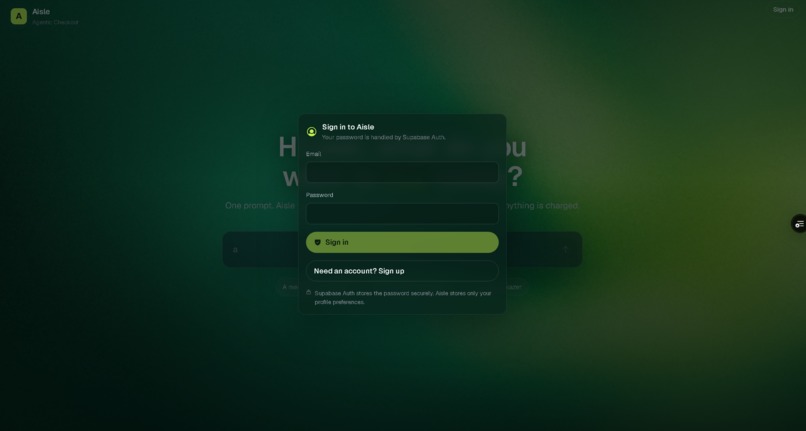
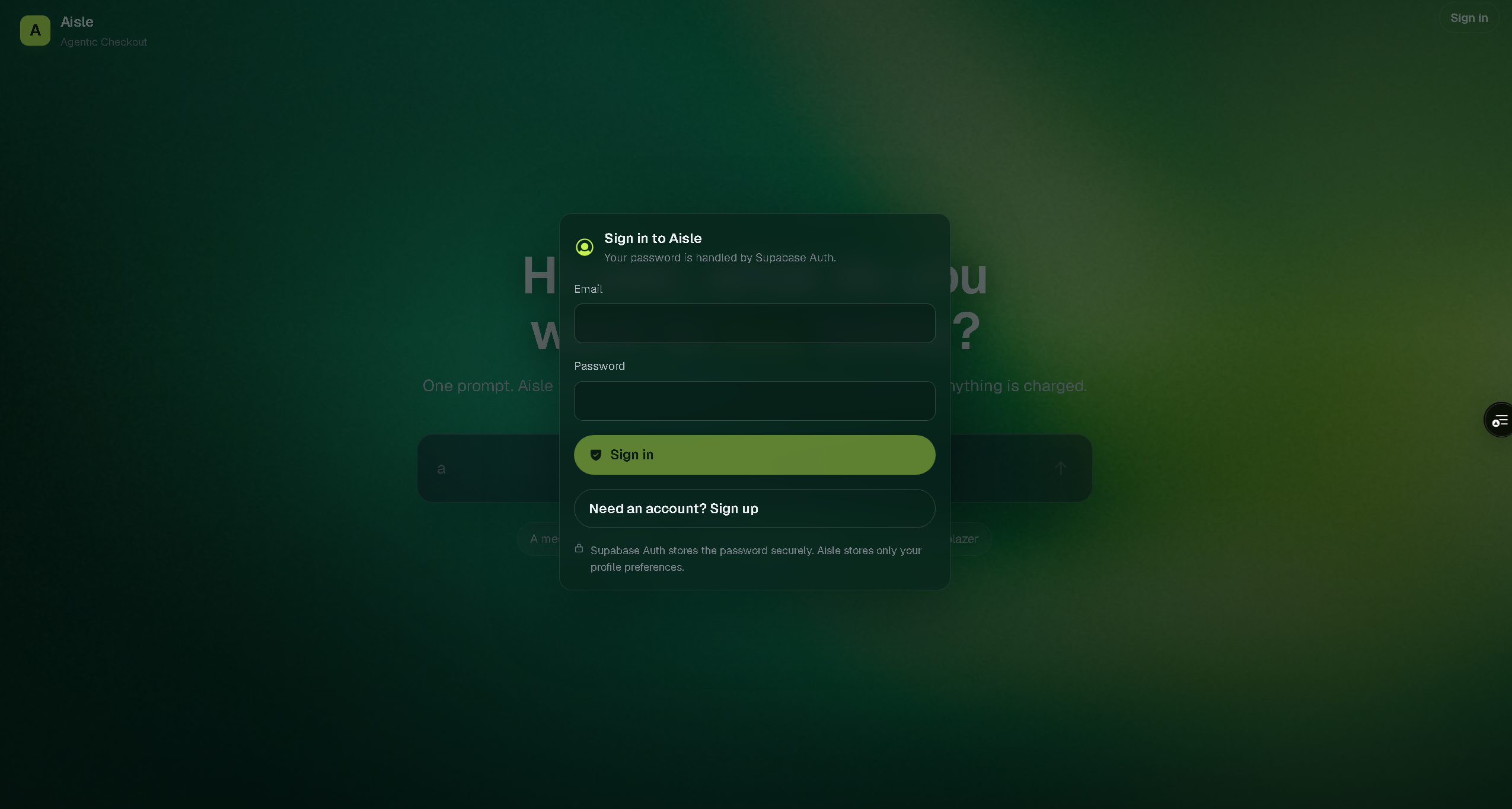
User logs into their own account with email and password.
-
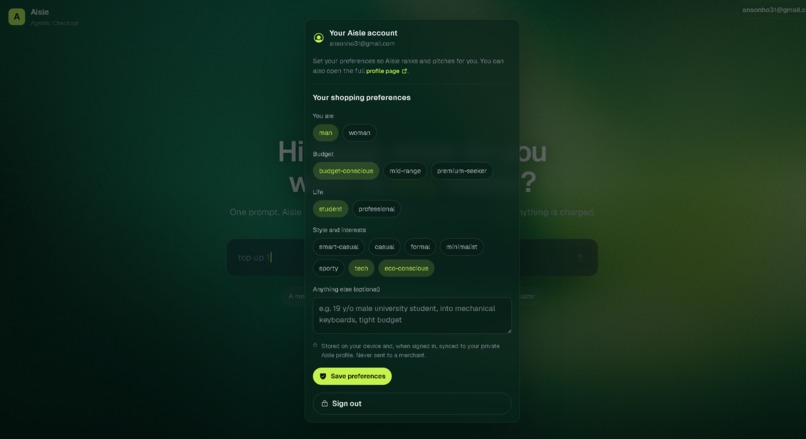
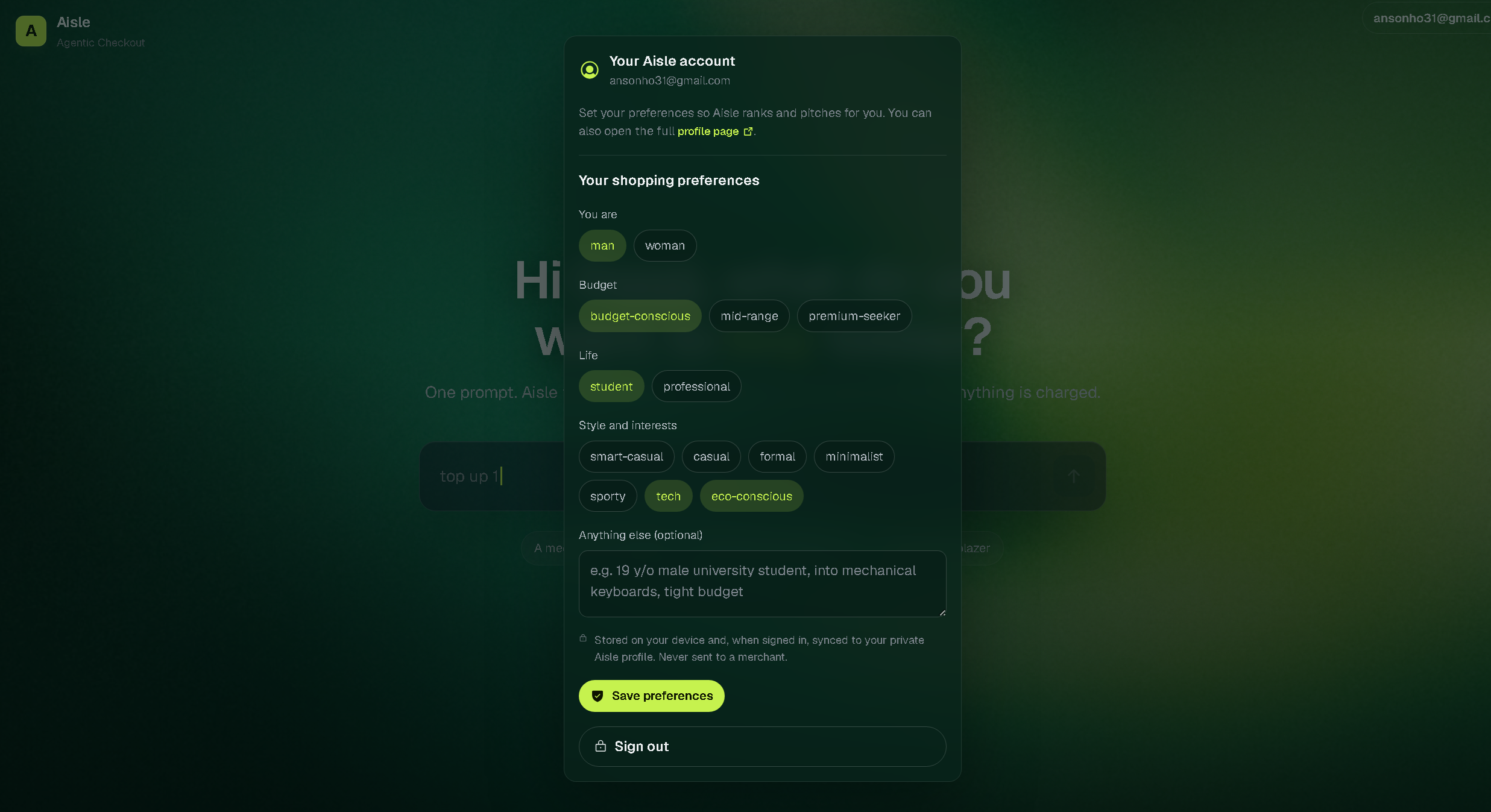
User can build their profile by choosing different attributes for personalization.
-
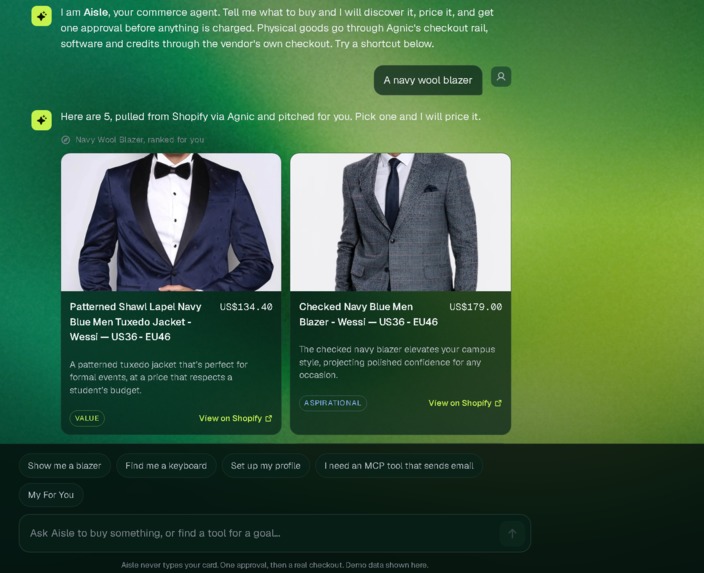
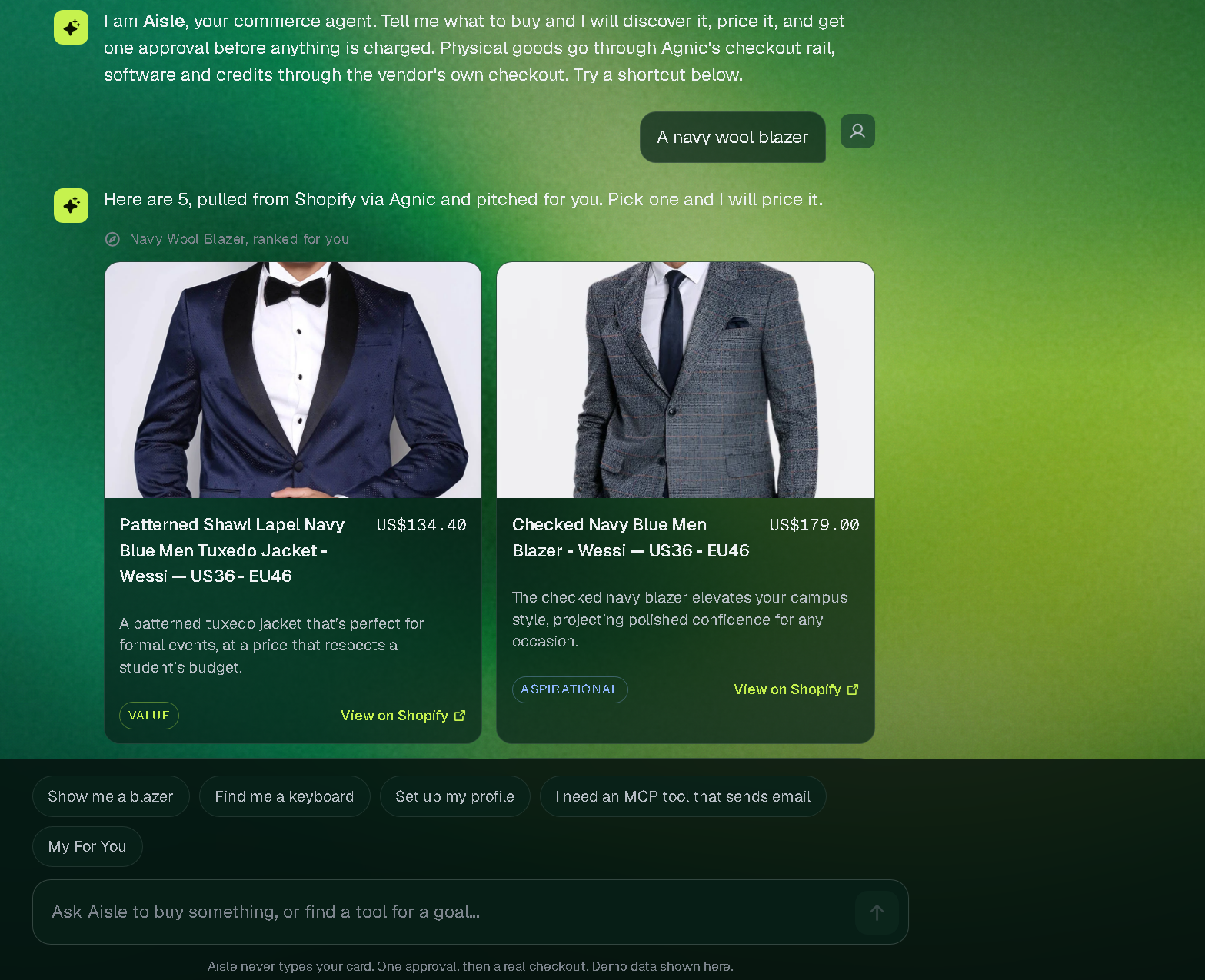
Users can type a prompt to buy a product and Aisle recommends top 5 most tailored options, taking into account the user's profile.
-
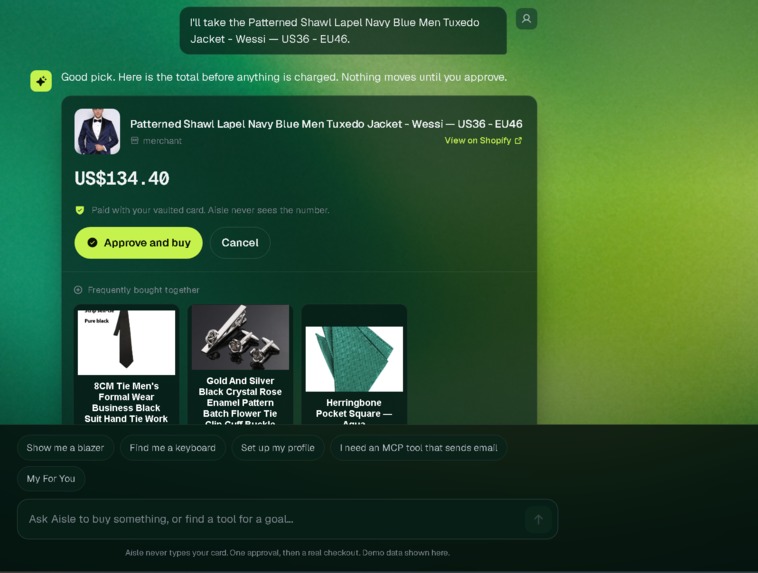
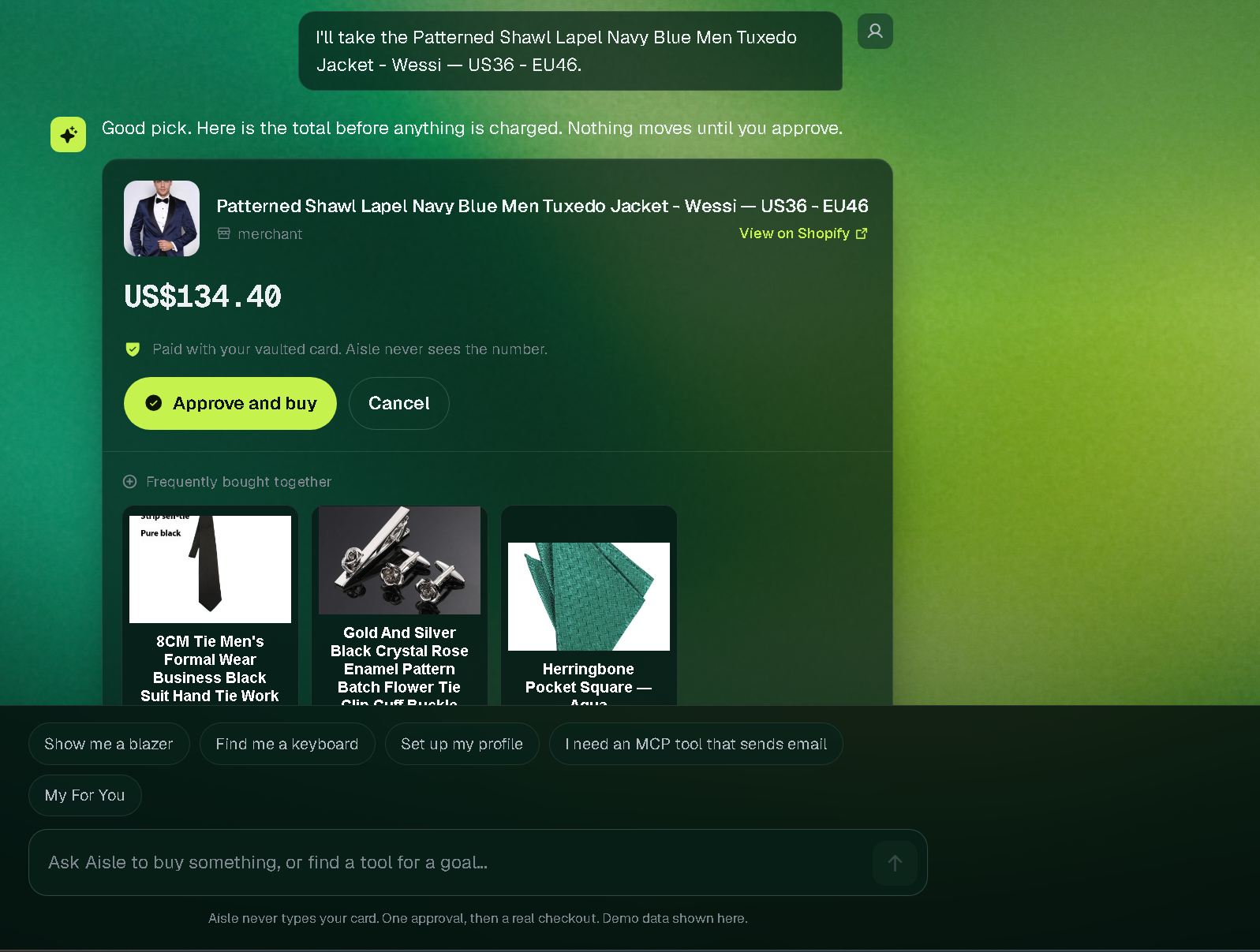
Every checkout requires approval by the user and contains several complementary products to increase transactions and improve GDP growth.
-
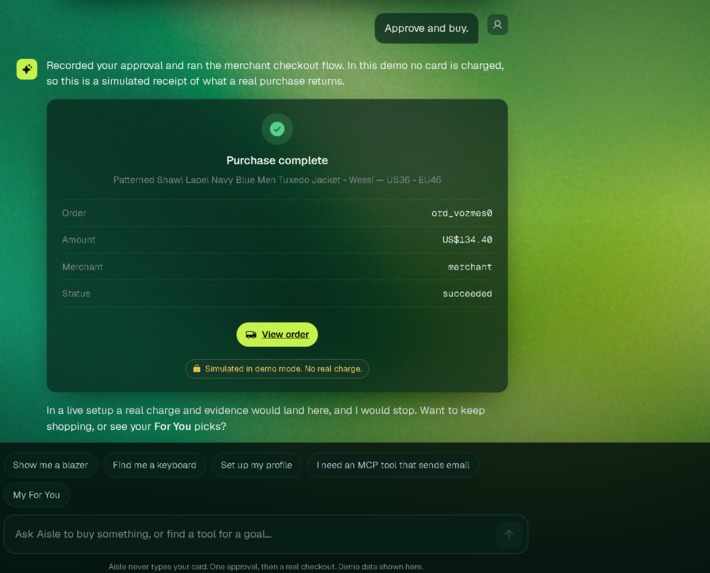
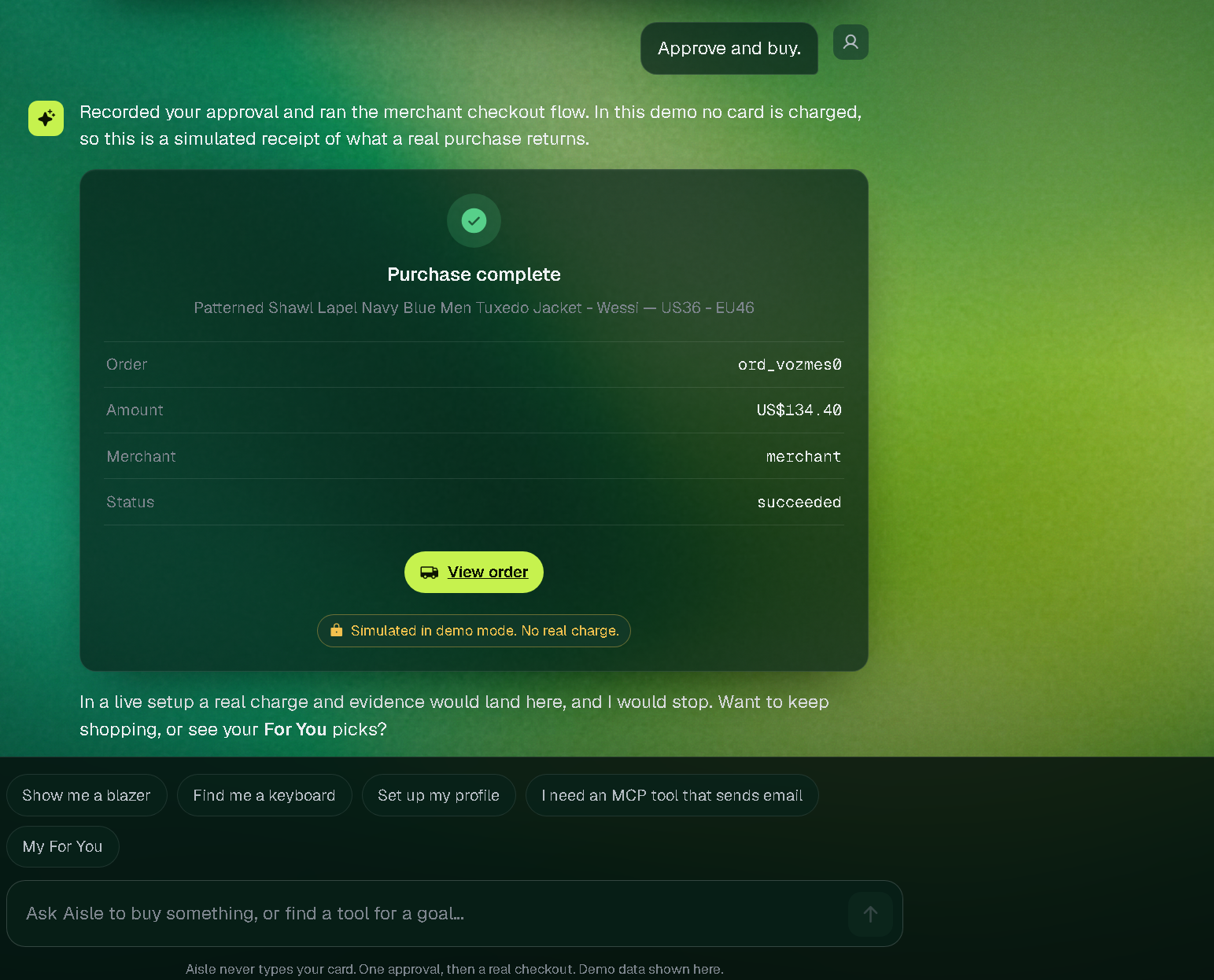
After checkout is complete, the Aisle agent shows a confirmation receipt of the purchase, and redirects to the order tracking page.
-
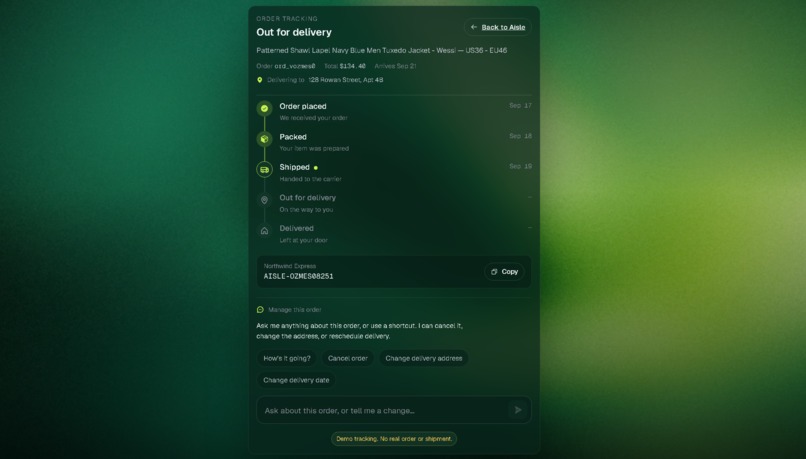
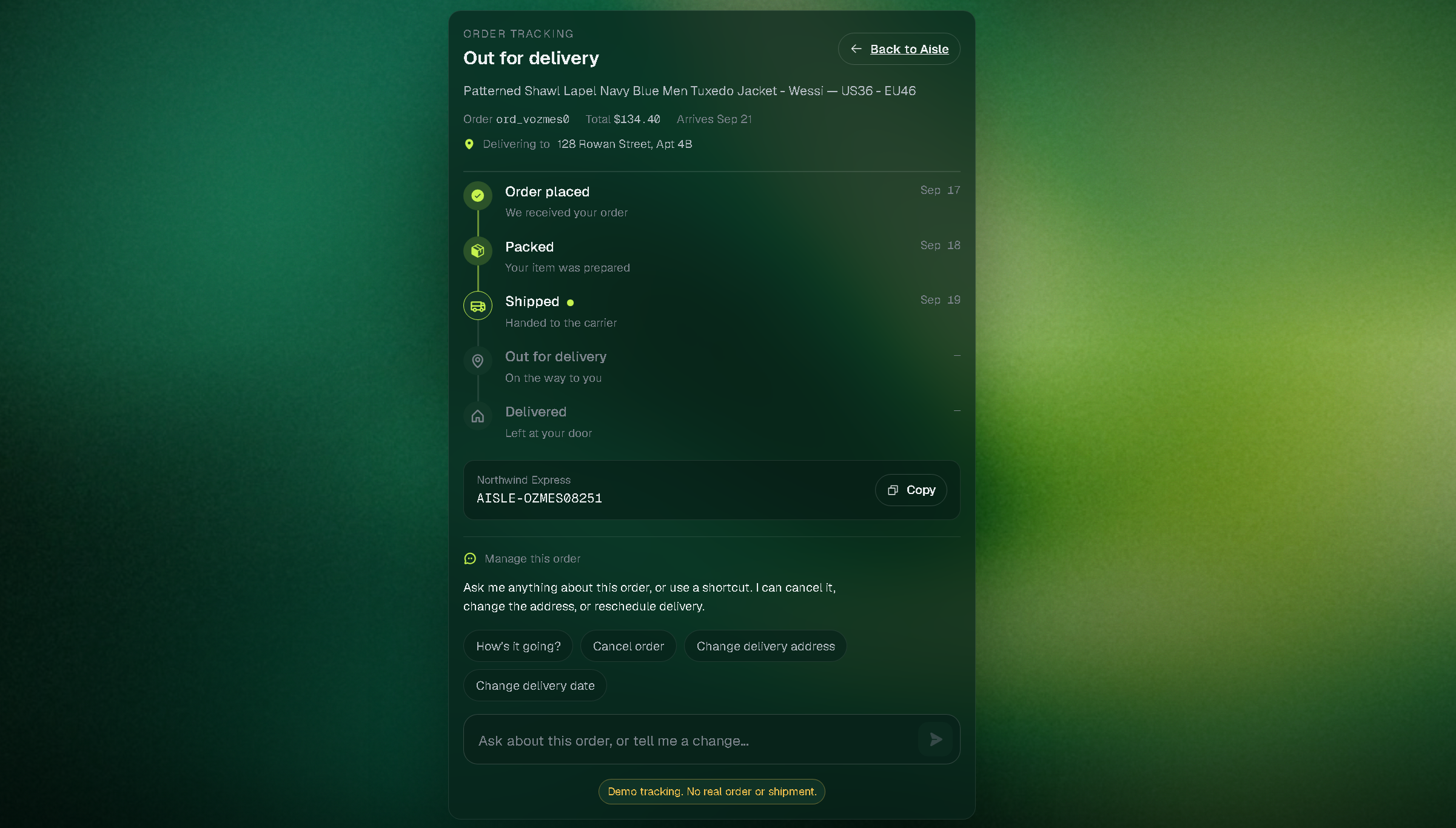
Users can audit their placed order's progress in the tracking page, and can make changes to delivery and order.
Inspiration
Shopping online shouldn't feel like a second job. We started with a simple problem: people like Jack—students balancing classes, work, and deadlines—don't have time to open 30 tabs, compare specs, and figure out which products actually fit their needs.
We wanted to build an AI shopping experience that doesn't just show another generic list of products. Instead, Aisle learns what matters to each shopper and uses that context to make increasingly personalized recommendations.
What it does
Aisle is an AI shopping agent built for people who don't have time to shop around.
Users can describe what they're looking for in natural language, and Aisle turns that into personalized product recommendations based on their preferences, budget, past purchases, and needs.
Every interaction helps improve the experience. A pick provides a preference signal, while a completed purchase provides a stronger signal. Aisle can also personalize how recommendations are presented, automatically surface complementary products, and take the user from discovery to checkout. In addition, after checkout, the user can click onto a separate page to track their order, including changing delivery address/date, cancelling order, etc.
The goal is simple: less time shopping, better things to buy.
How we built it
Aisle is built around an AI-powered preference model and an agentic commerce stack.
We use consented persona information to create coarse preference tags, while purchase behavior is stored locally and used to improve future recommendations. Our recommendation experience also uses an epsilon-greedy bandit to test different tones and learn which presentation works best for each shopper.
Under the hood, Aisle is built with a TypeScript/Node gateway, MCP, OpenRouter, and real browser automation using Playwright and Steel.
For transactions, we built safety mechanisms including signed mandates, spending constraints, balance verification, and deterministic purchase flows. The system has been tested extensively before allowing a real purchase flow.
Challenges we ran into
The hardest part was balancing personalization with privacy.
We wanted Aisle to understand shoppers without creating a creepy experience or sending unnecessary personal information to merchants or models. We therefore designed persona information around coarse, consented tags and keep purchase-learning data local.
We also had to think beyond simply getting an AI to recommend a product. Once an agent can actually act on a user's behalf, reliability and safety become critical. Handling authorization, price limits, payment uncertainty, and recovery required us to treat checkout as a controlled transaction rather than just another LLM action.
Accomplishments that we're proud of
We're proud that Aisle goes beyond a traditional shopping chatbot.
It combines personalized recommendations, learned preferences, adaptive presentation, complementary product discovery, and agentic checkout into one experience.
We're especially proud of the safety architecture behind the scenes: signed mandates, balance verification, spending controls, recovery logic, and a large automated test suite designed to prevent an agent from taking an unauthorized action.
Most importantly, we built around a real user problem: helping someone go from “I need something that works for me” to a confident purchase without spending hours researching.
What we learned
We learned that personalization isn't just about collecting more data. The most useful signals can come from simple interactions—what someone chooses, what they actually buys, and what they consistently prefers.
We also learned that agentic commerce changes the engineering problem. An AI that recommends something can be wrong and simply annoy the user. An AI that can purchase something needs much stronger guarantees around authorization, state, recovery, and trust.
What's next for Aisle
We're starting with time-strapped post-secondary students in Ontario and plan to expand through Shopify merchants and Agnic's checkout infrastructure.
Next, we want to pilot with real merchants, improve complementary-product recommendations, tune personalization across different catalogs, and expand the For You experience for returning shoppers.
Long term, we want Aisle to become the personalized shopping layer that remembers what you like, understands what you need, and safely helps you get from search to doorstep.
Built With
- agnic
- github
- next.js
- openrouter
- phosphor
- postgresql
- react
- supabase
- typescript
- vercel


Log in or sign up for Devpost to join the conversation.