-
-
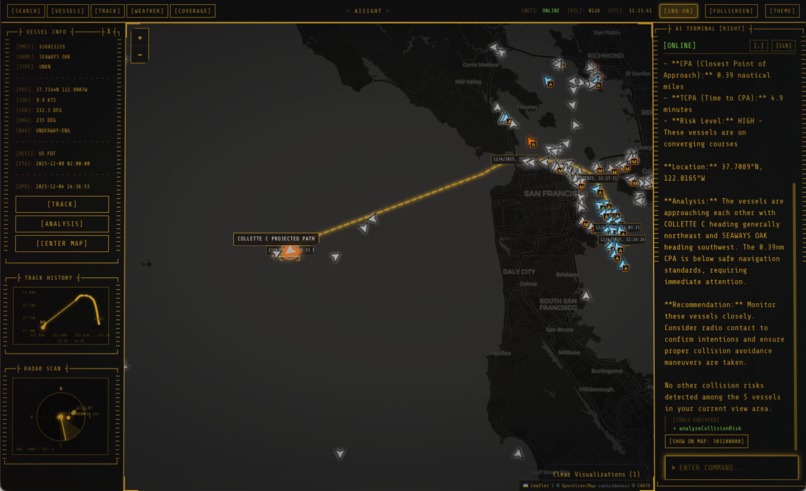
vessels collision analysis
-
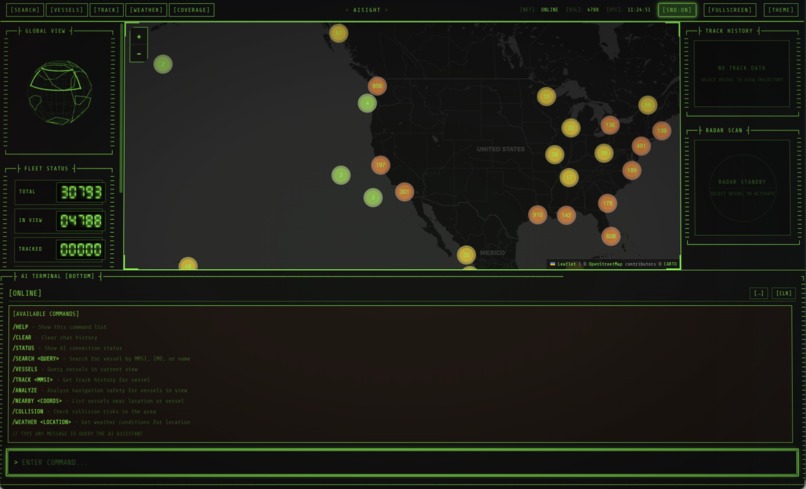
terminal commands
-
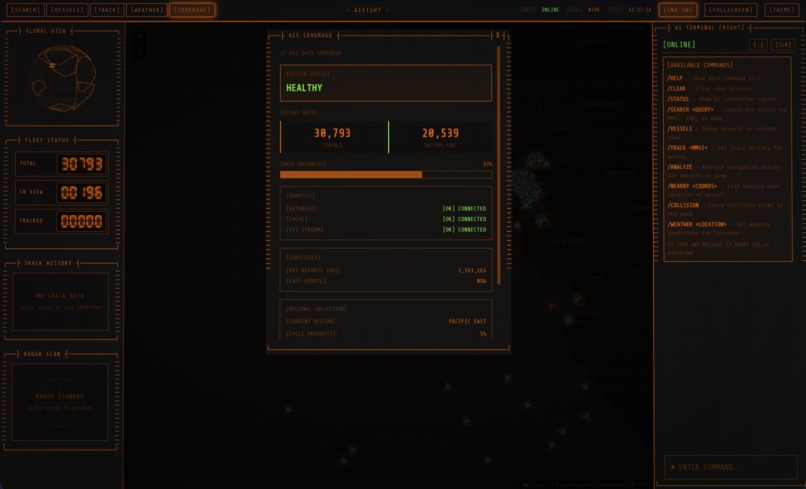
AIS data
-
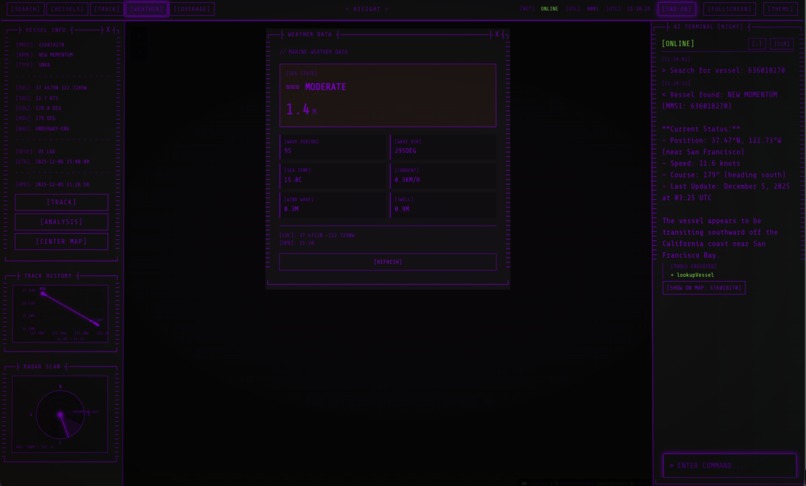
Weather and Command Search
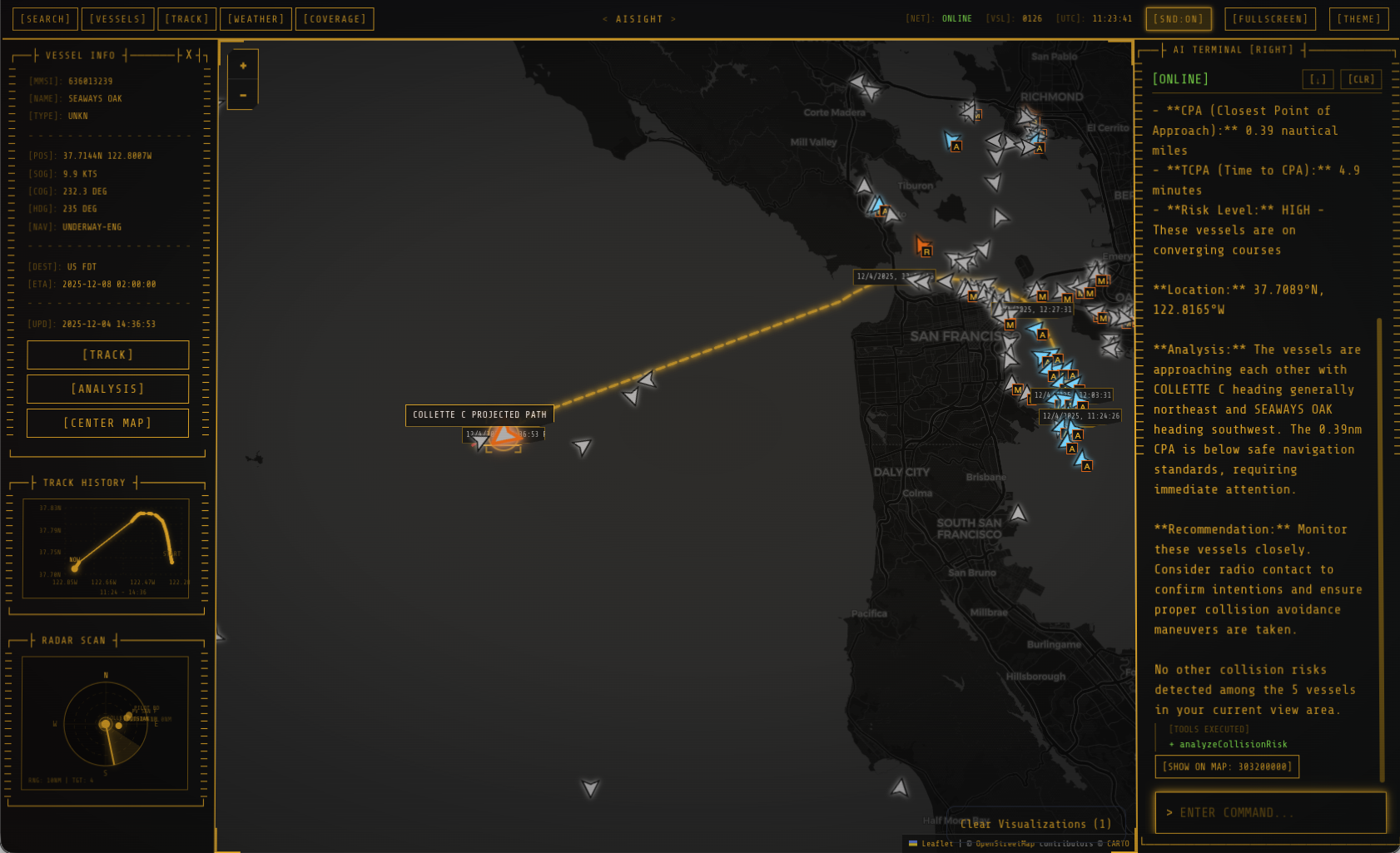
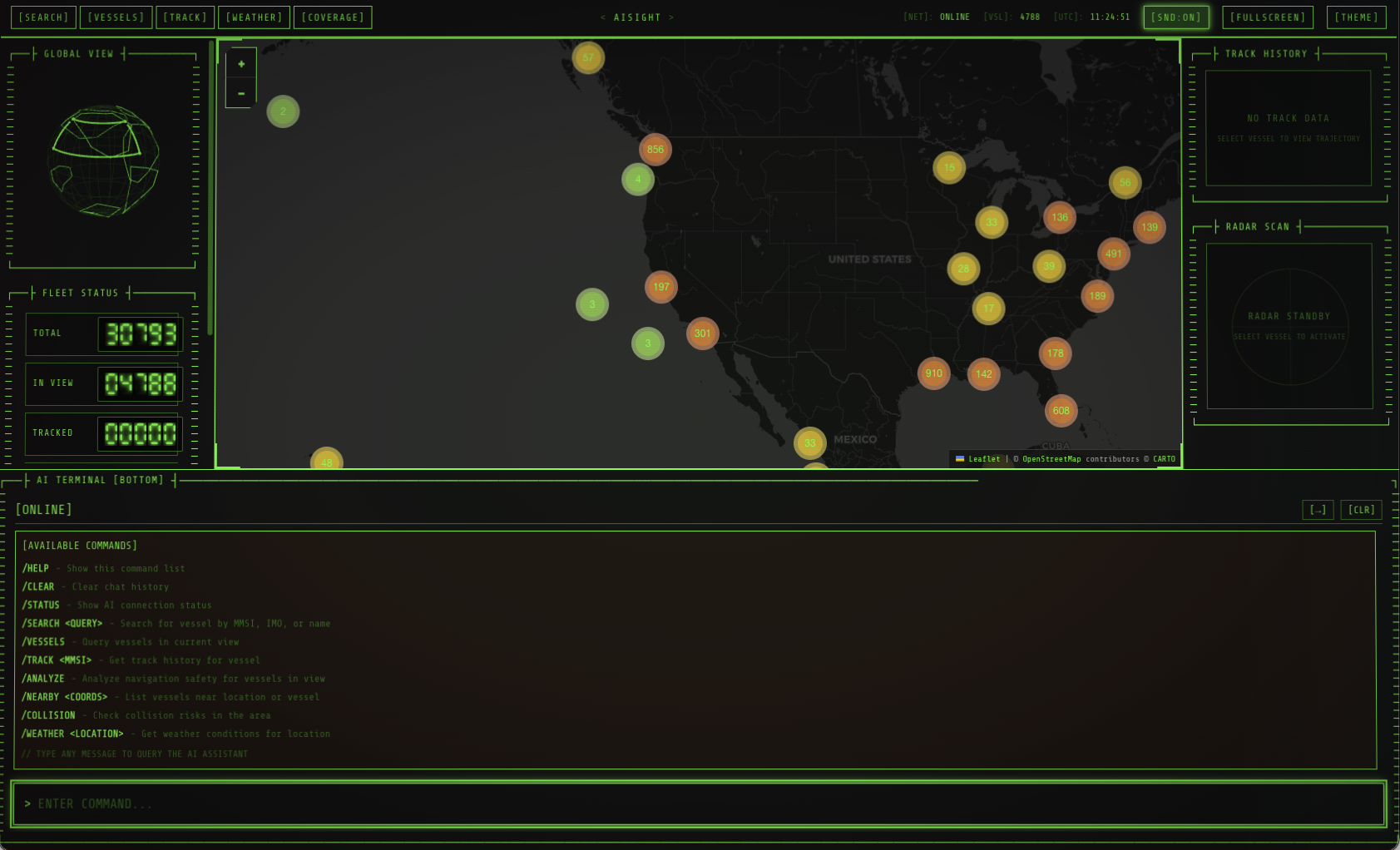
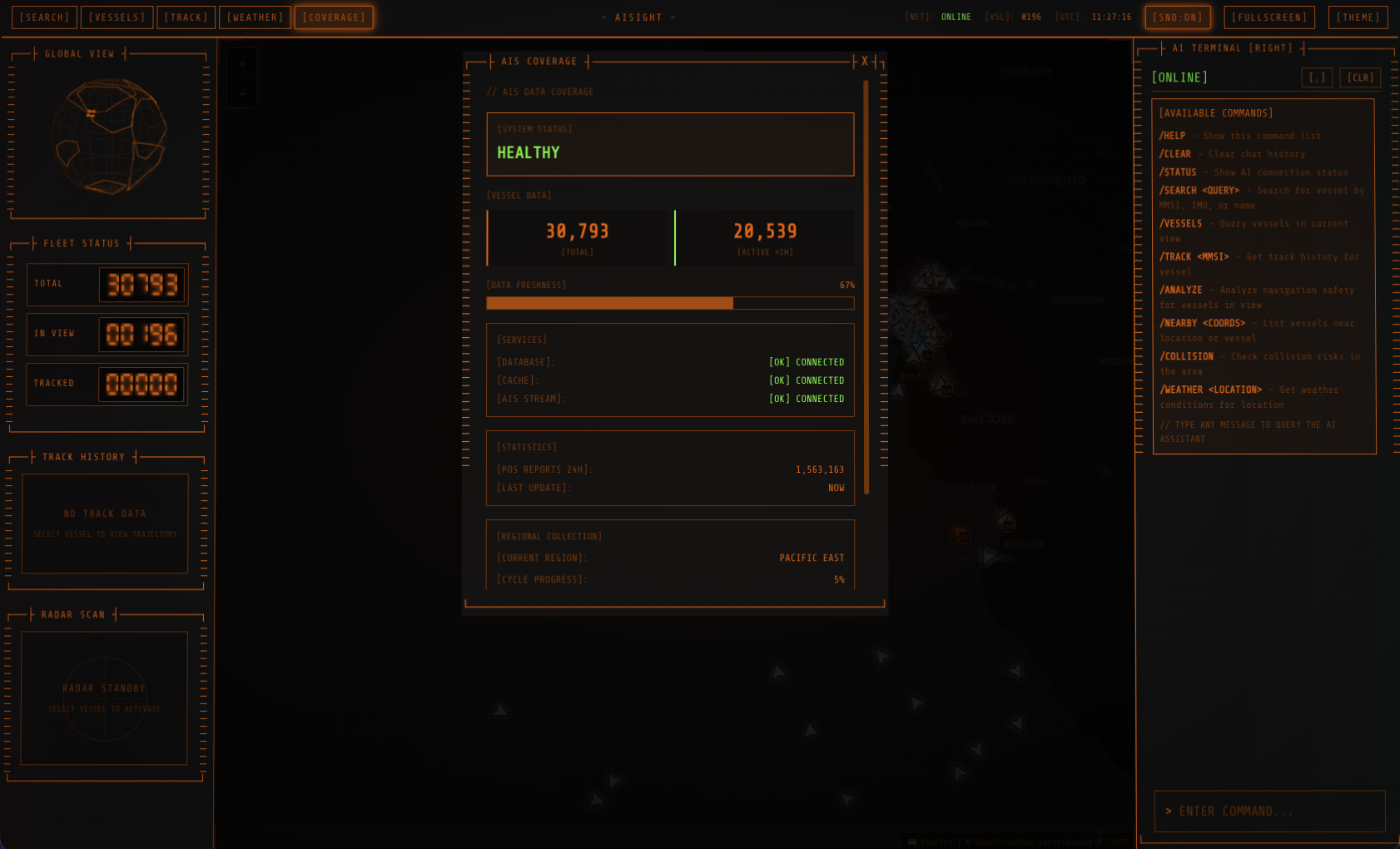
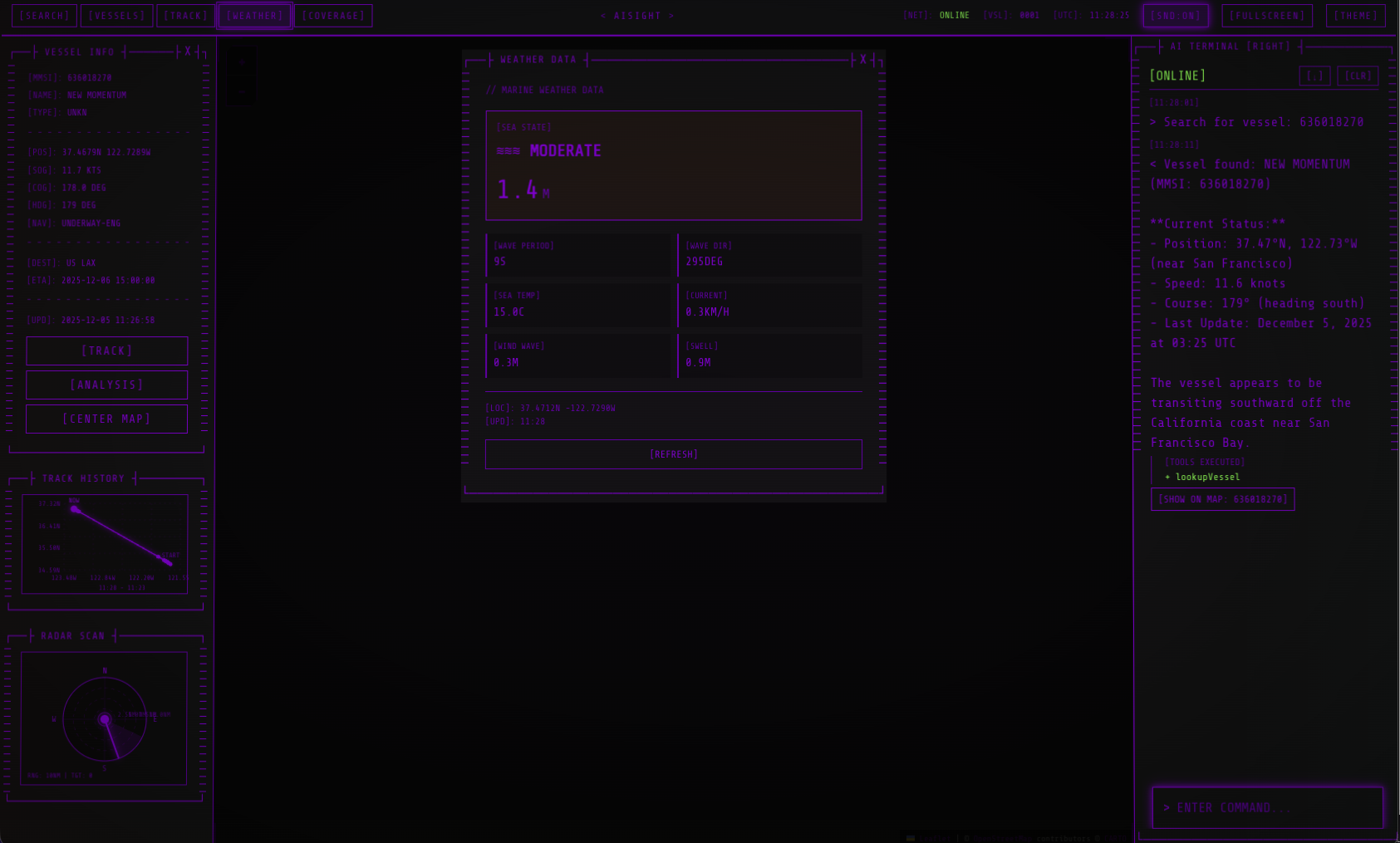
Inspiration
(These descriptions are first expressed by me and polished by AI—its English is indeed better than mine.) As a former worldwide seafarer, I used to be frustrated with traditional AIS systems. The dedicated hardware on the bridge was powerful but stuck in the past—clunky interface, isolated data silos, zero flexibility. You couldn’t check a ship’s position anywhere, let alone get intelligent insight. Every query meant walking to the bridge and wrestling with a system designed in the ’90s.
Shipping is finally catching up. With satellite internet and coastal base-stations blanketing oceans, vessels now have real connectivity. This raises a question: if we can access web-based systems anywhere, can the way we work change? More importantly, why not let AI analyze AIS data in real time, combining weather, port congestion and route optimization?
AISight was born from this vision—bringing maritime navigation into the modern era with AI-driven insights, accessible from any device, with an interface that no longer feels like punishment. As for the EVA-inspired terminal aesthetic, that’s just my taste; I miss that vibe—maybe it should enter the Costume Contest track?
Features
AISight reimagines ship tracking as an AI-first modern web app. It ingests real-time AIS data for thousands of vessels worldwide and actually makes it useful:
- Real-time tracking: WebSocket-fast updates
- AI analysis: understands maritime context, not just coordinates
- Weather integration: shows how conditions affect operations
- Smart search: quick queries via terminal or menus
- Historical playback: reveals patterns legacy systems miss
- Terminal-style UI: EVA-inspired—function can still be cool
- Access anywhere: any device with a browser, no special hardware
The AI assistant knows shipping. Ask “Which ships are heading into the storm?” or “Show congestion at Singapore anchorage” and it returns insight, not data dumps. It’s the bridge system I longed for during long night watches.
How We Built It
Frontend: React 18 + TypeScript with EVA-colored terminal aesthetics. Leaflet handles the map; the real magic is the AI chat—talking feels like chatting with a seasoned navigator, not querying a database.
Backend: Node.js/Express orchestrates multiple data streams:
- AISStream WebSocket client consumes live feeds
- Batch pipeline processes 100+ messages per second
- AI service calls an OpenAI-compatible endpoint for chat
- OpenMeteo weather API integrated
- Redis cache (85 % hit rate) keeps responses instant
- Socket.io broadcasts updates to every connected client
Data layer:
- TimescaleDB stores time-series positions, auto-partitioned
- Spatial indexes for geo queries
- Materialized views cache common patterns (latest positions, vessel metadata)
- Redis keeps hot data—recent positions, active vessels, search results
AI integration: LLM API provides maritime intelligence. The AI knows ship types, COLREGs, weather impact, port ops. It thinks like a navigator, not just answers questions.
Design philosophy: the terminal UI isn’t just aesthetic—it’s functional. Form follows function, but it can still have personality.
Challenges
Teaching AI maritime context: general LLMs don’t know 0.1 kn ≈ anchored or why CPA/TCPA matter for collision avoidance. I built a context system that feeds the AI nautical knowledge—ship types, rules of the road, weather effects—training it to think like a seafarer, not a coordinate parser.
Real-time data at scale: legacy AIS hardware updates differently than web systems. I implemented a batch pipeline that aggregates position updates per second, cutting DB writes 90 % while keeping the real-time feel mariners expect. Balancing latency vs. load—solved via Redis caching and TimescaleDB time-series optimizations.
Bridging two worlds: mariners and developers speak different languages. I had to translate domain concepts. The AI service became the bridge—fluent in both nautical jargon and modern web APIs.
Performance with thousands of vessels: traditional AIS struggles with large datasets—slow refreshes, stutters. Now ultra-smooth.
Usability: legacy AIS needs training. I wanted anyone (including hobbyists) to pick it up intuitively, yet let pros wield full power. The AI chat solves this—newbies ask naturally, pros craft precise queries. Everyone wins.
Accomplishments We’re Proud Of
Bringing AI to maritime navigation: this isn’t just tracking; it’s intelligence. The AI understands context and delivers insights that legacy systems would take hours to surface.
Low latency: from AIS message to screen faster than most dedicated hardware I’ve used at sea.
Terminal aesthetic that’s both cool and useful: the EVA-inspired UI isn’t just eye-candy—status colors follow maritime conventions, terminal layout maximizes info density, mariners feel at home.
Access anywhere: no more running to the bridge. Cabin, mess, shore—any networked device shows ship positions.
Production-grade architecture: this isn’t a demo—built for real ops. Full error handling, logging, health checks, rapid deploy. Ready to ship today.
Solving a real problem: I built the system I dreamed of during those long ocean nights. That trumps any tech metric.
What We Learned
Domain expertise is irreplaceable: maritime background shaped every decision. I knew which features matter (CPA calculations, weather overlays, vessel states) and which are noise. Without shipping knowledge you can’t build great maritime software.
AI changes everything: adding AI isn’t a feature—it reshapes the entire app. Complex queries become conversation, data becomes insight, the system turns into a knowledgeable crewmate.
Real-time systems need different thinking: request-response patterns don’t work at sea. I learned to embrace event-driven, eventual-consistency, optimistic updates. The ocean won’t wait for DB transactions.
Professional tools deserve design: decades of ugly maritime software assumed “pros don’t care about looks.” Wrong. The EVA terminal proves power and beauty can coexist. Loving your tool makes you better at your job.
Modern web tech can handle maritime loads: I doubted web performance could rival dedicated hardware. TimescaleDB, Redis, WebSockets proved me wrong. The web stack is ready for serious maritime apps.
Caching is everything: Redis transformed performance. 85 % cache hit rate means most queries never hit the DB. On patchy ocean networks that’s critical.
What’s Next for AISight
Collision-avoidance AI: smarter collision analysis and detailed trajectory predictions.
Route optimization: AI plans voyages factoring weather, currents, traffic, fuel.
Predictive analytics: forecast ETAs, port congestion, anomalous behavior. LSTM networks on historical tracks to predict next port and confidence.
Fleet dashboards: multi-vessel monitoring for ship managers, auto reports, geofence alerts, performance analytics.
Mobile apps: native iOS/Android with push notifications for vessel events, optimized for minimal bandwidth at sea.
Integration with shipboard systems: direct feeds to ECDIS, radar, other bridge gear. AISight becomes the intelligent layer tying all nav systems together.
Collaboration: crews share notes, mark hazards, chat about vessels—building a collective maritime intelligence network.
Regulatory compliance: auto-generate logs for PSC, VDR, compliance reports. Let AI handle the paperwork.
The goal isn’t just better tracking—it’s dragging the entire shipping industry into the modern (and maybe future) era, one vessel at a time.
Built With
- aisstream
- llm
- node.js
- openmeteo
- postgresql
- react
- vite


Log in or sign up for Devpost to join the conversation.