-
-
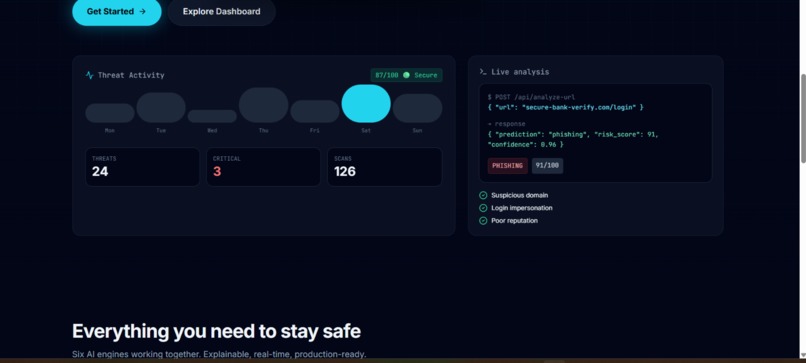
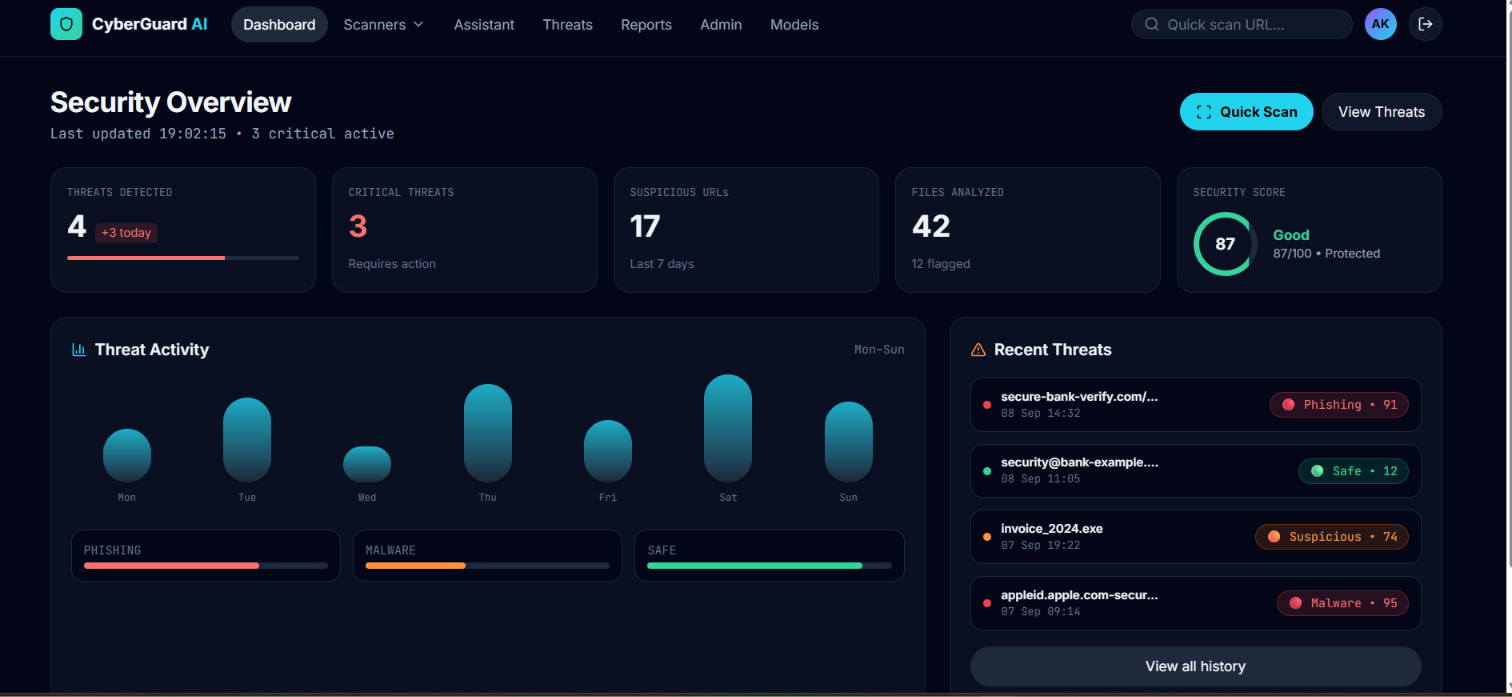
Dashboard
-
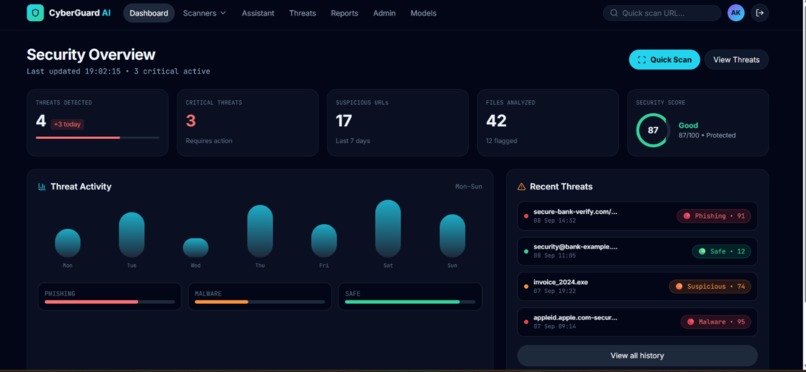
Security Overview
-
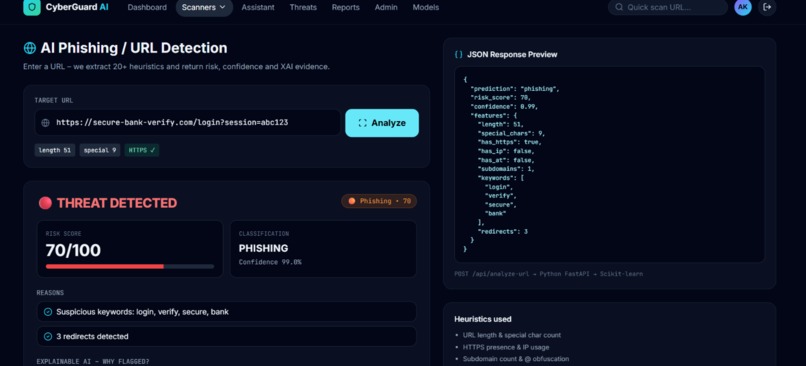
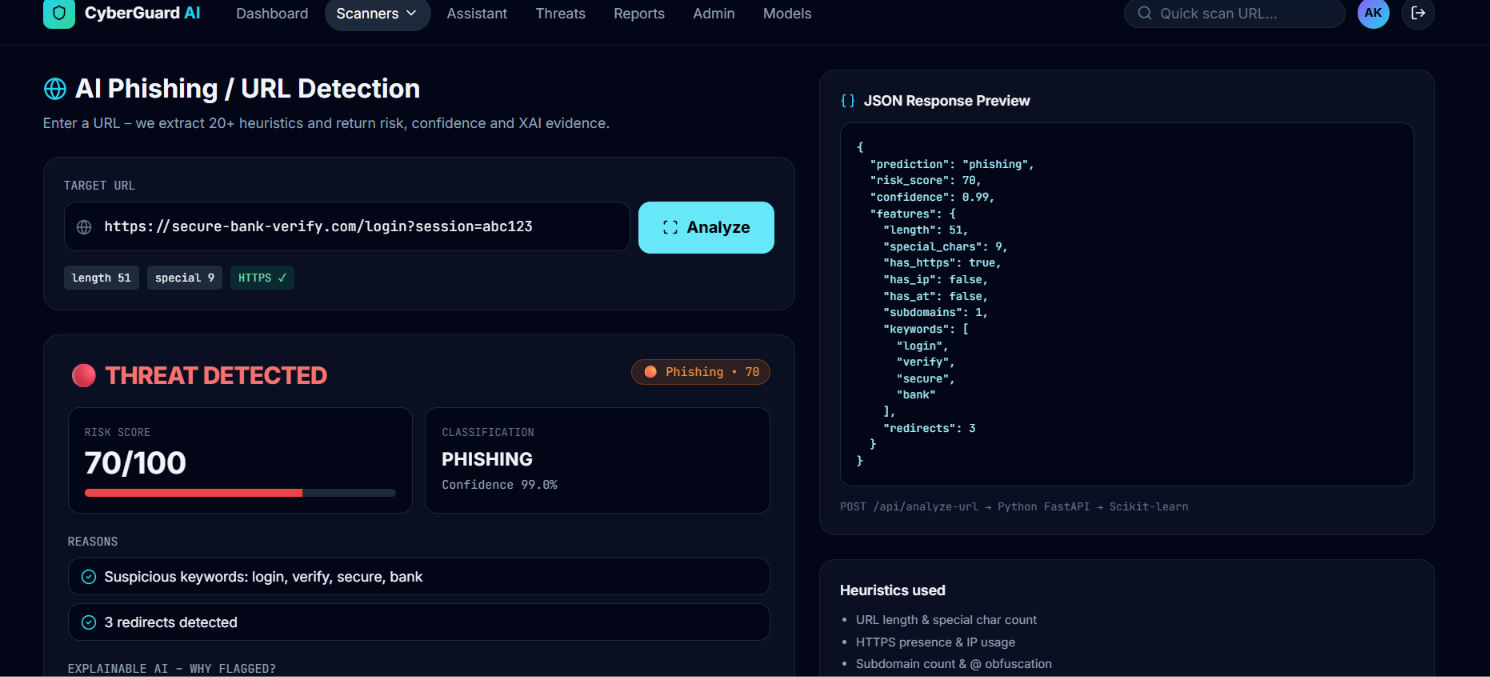
Threat Analysis
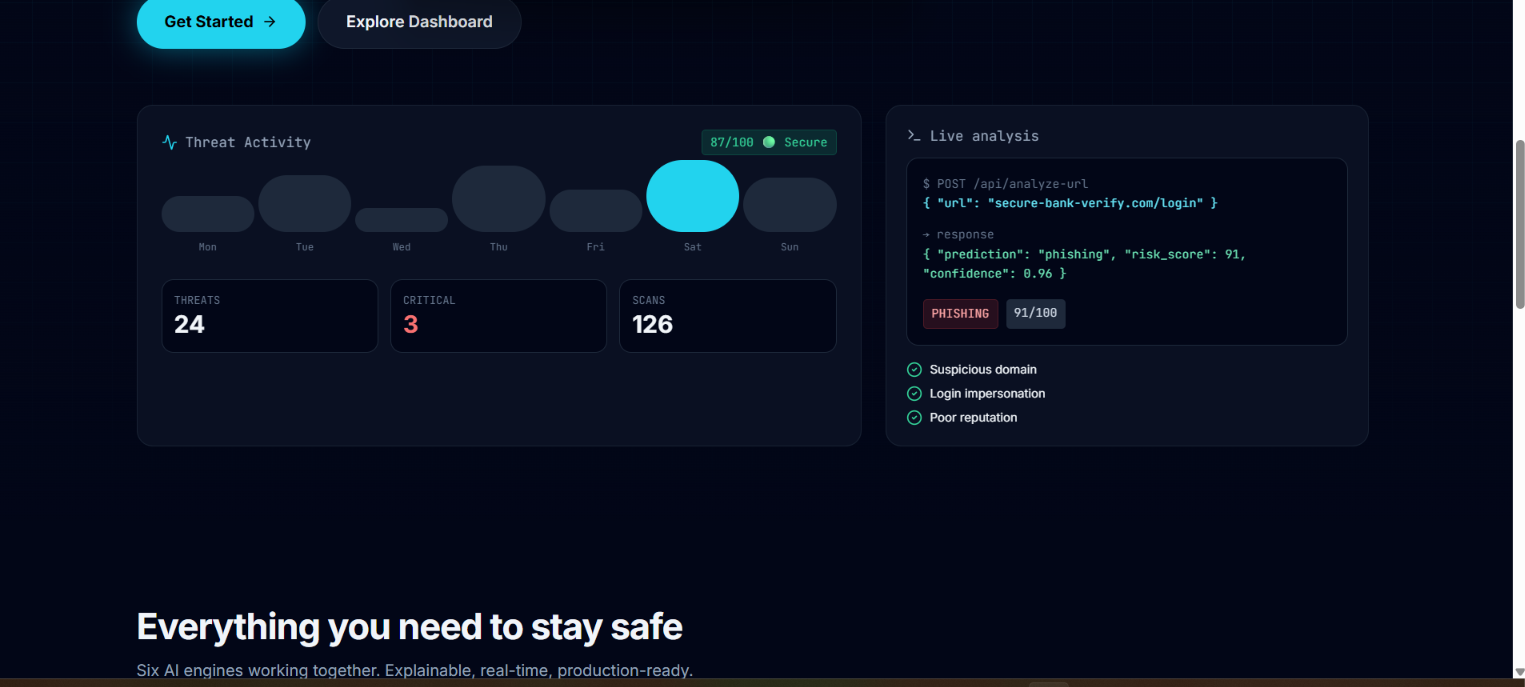
Inspiration
What it does## About the Project
💡 Inspiration
Cyber threats are becoming increasingly common in everyday digital communication. Phishing emails, fake messages, suspicious links, and scam-related content can look genuine and may trick users into sharing sensitive information.
We were inspired to build a solution that can help users identify potential cyber threats quickly and easily, without requiring advanced cybersecurity knowledge. This led us to develop AI Threat Detection System, a smart platform designed to analyze messages and identify suspicious content.
🚀 What Our Project Does
AI Threat Detection System analyzes user-provided messages, emails, OTP-related messages, and other text content to identify potential security threats.
The system provides a simple result such as:
- ✅ Safe – No major threat detected
- ⚠️ Suspicious – Potentially risky content detected
- 🚨 Threat Detected – Strong indicators of phishing or malicious activity
The system also provides a risk score and explanation, helping users understand why a message may be dangerous.
🛠️ How We Built It
We developed the project as a full-stack web application with a user-friendly dashboard.
The main workflow is:
- The user enters or submits a message.
- The system preprocesses the text.
- The detection logic analyzes suspicious patterns and threat indicators.
- A risk level is calculated.
- The dashboard displays the detection result and relevant security information.
- The result helps the user decide whether the message should be trusted or treated with caution.
The frontend provides an interactive dashboard where users can test messages and view threat statistics. The backend handles the detection process and communication between the user interface and the analysis system.
📚 What We Learned
During the hackathon, we learned how to transform a cybersecurity idea into a working full-stack application.
We gained experience in:
- Building and connecting a frontend and backend
- Designing a cybersecurity-focused dashboard
- Processing and analyzing text-based inputs
- Developing threat-detection logic
- Working with APIs and application architecture
- Testing the system with different types of messages
- Using GitHub for project development and collaboration
- Designing a simple interface for non-technical users
Most importantly, we learned that a cybersecurity solution should not only detect a threat but also communicate the risk clearly to the user.
⚡ Challenges We Faced
One of our biggest challenges was designing a detection system that could handle different types of messages while keeping the results simple and understandable.
We also faced challenges in:
- Connecting the frontend and backend
- Designing an effective threat-detection workflow
- Handling different message formats
- Reducing false alerts
- Creating meaningful risk scores
- Testing suspicious and safe examples
- Building the complete application within the limited hackathon time
Through continuous testing and improvement, we were able to overcome these challenges and build a functional prototype.
🎯 Future Scope
The project can be further enhanced by integrating more advanced machine-learning models and larger cybersecurity datasets. Future versions could support real-time email analysis, URL reputation checking, multilingual threat detection, browser integration, and continuous learning from newly identified threats.
Our goal is to make cybersecurity more accessible, understandable, and proactive, helping everyday users recognize potential threats before they become victims.
How we built it
Challenges we ran into
Accomplishments that we're proud of
What we learned
What's next for Cyber Guard Ai
Built With
- api
- artificial
- cybersecurity
- detection
- express.js
- full
- intelligence
- javascript
- language
- learning
- machine
- natural
- node.js
- phishing
- processing
- python
- react
- rest

Log in or sign up for Devpost to join the conversation.