-
-
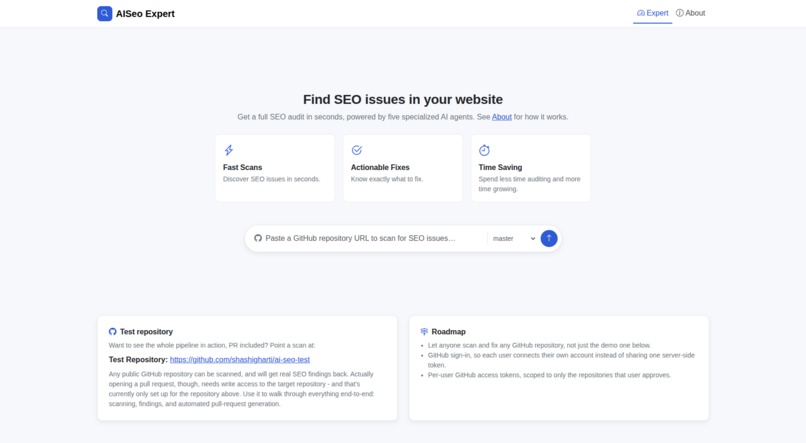
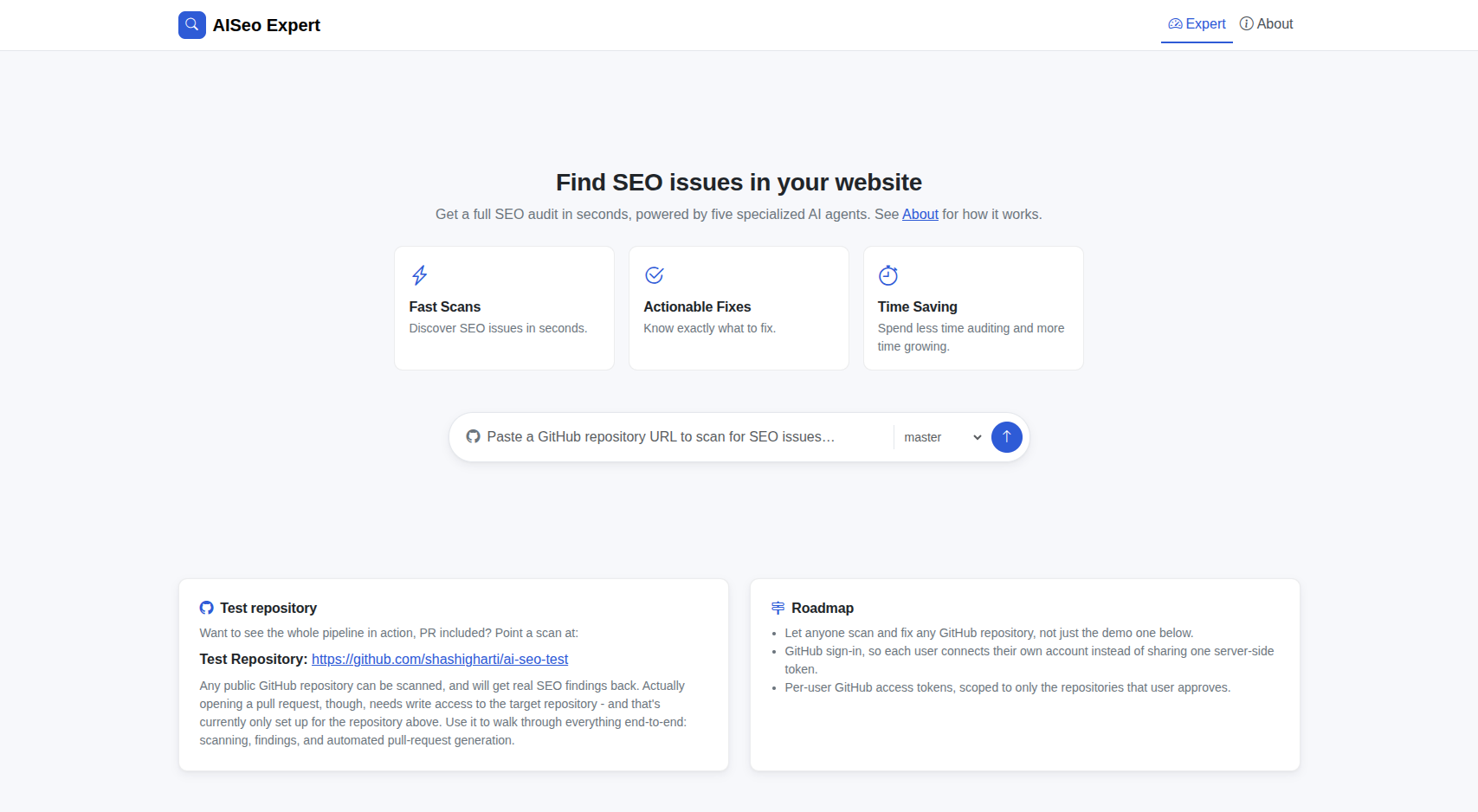
Front Page
-
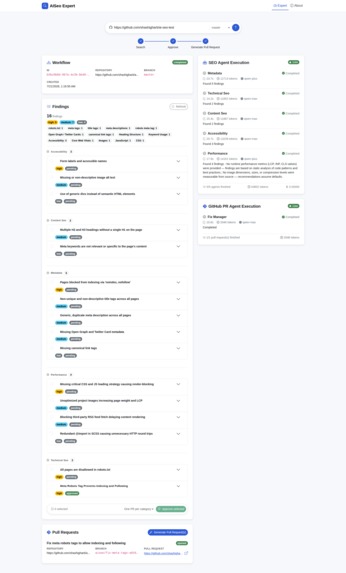
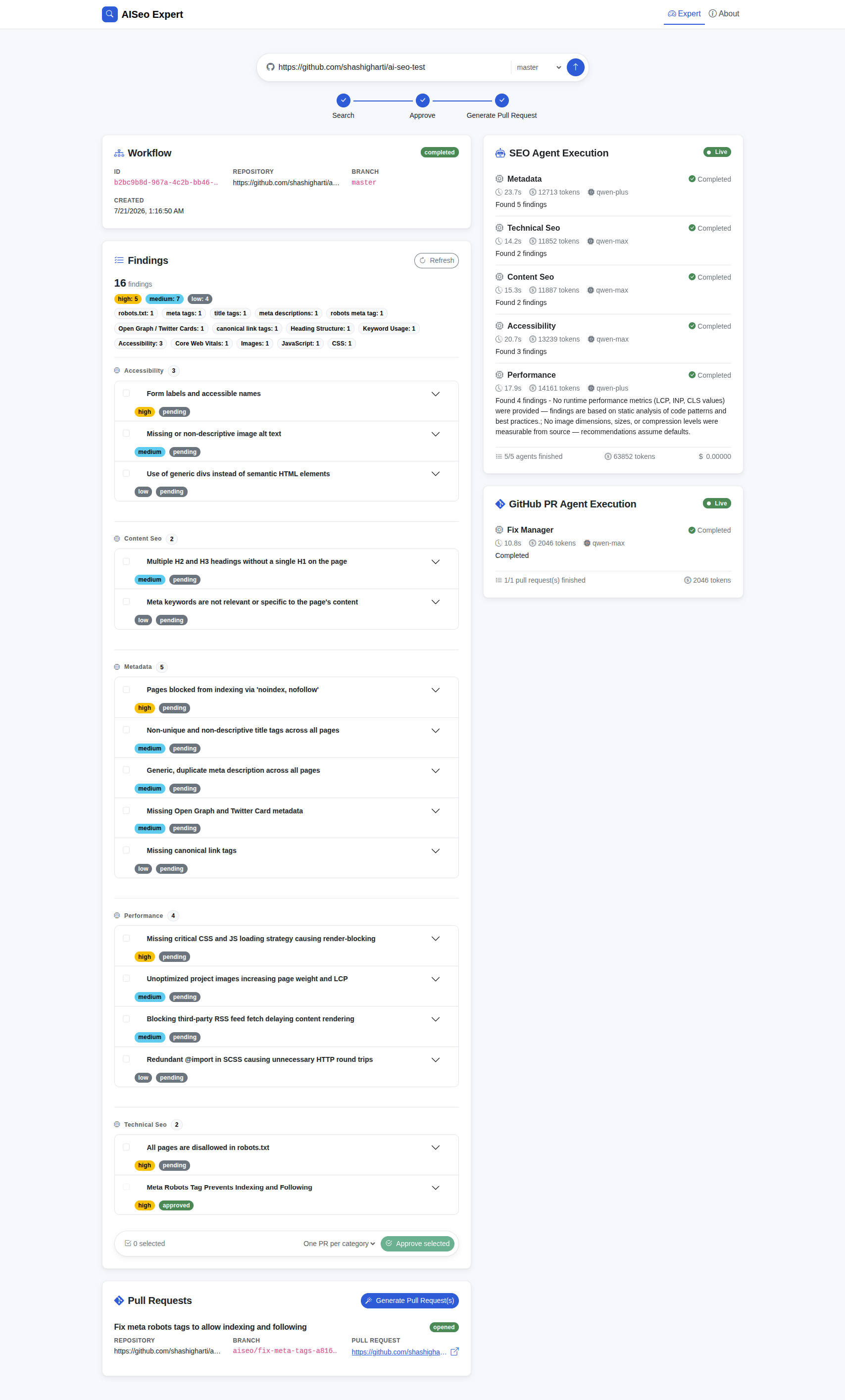
SEO Results page
Inspiration
My inspiration was to build an agent that can automatically identify SEO issues. The interesting part wasn't the SEO domain itself, it was architecting an agentic application: a system where multiple specialized agents collaborate, each responsible for one clear action in the pipeline, rather than one monolithic model trying to do everything. Since this was my first time building an agentic application, I deliberately kept the scope simple rather than ambitious.
What it does
AISeo Expert is an AI SEO agent that searches a GitHub repository's source and identifies the SEO issues affecting the website it builds - crawlability problems, missing metadata, thin or poorly structured content, accessibility gaps, and performance bottlenecks. For every issue it finds, it suggests a fix; for the ones you approve, it generates a pull request on that same repository with the fix already written.
How we built it
I started by writing the architecture, implementation plan, API contracts, deployment plan, and frontend/backend specs before writing any application code - packaged as a set of structured skill documents meant to guide an AI coding agent through the build. Once those docs/skills were in place, I used AI to implement against them.
Deliberately, I did not use Qwen for the coding work itself. Qwen Cloud was reserved specifically for the SEO agent's own runtime calls (planning, analysis, findings) - using it for general coding assistance too would have meant competing with the actual product for the same token budget.
Challenges we ran into
- Writing skill instructions that were clear
- Choosing right and optimal architecture
- Token burn while testing the SEO agent.
- Deploying to Alibaba Cloud.
Accomplishments that we're proud of
- Explored the agent based architecture
- Able to develop an application with modular architecture using previous experience which has increased my confidence to next level.
- I learnt a lot of terminologies in agent based applcation: guard rails, harness, token burn, context dilution
What we learned
I gained a strong understanding of the core concepts of agent-based system architecture. Although many architectural principles overlap with conventional application development, my previous experience helped me design the system in a modular, scalable, and well-organized way. At the same time, I expanded my knowledge of the agentic development domain by learning many new concepts and terminologies, such as guardrails, harnesses, token consumption (token burn), and context dilution.
What's next for AISeoExpert
I plan to enhance this application by adding user authentication, allowing users to create accounts, log in securely, and use the platform for their businesses. I also plan to introduce a subscription-based pricing model that includes both a free tier with core features and a premium plan with advanced capabilities.
Built With
- alibabacloud
- qwen-max
- qwen-plus
- qwencloud


Log in or sign up for Devpost to join the conversation.