-
-
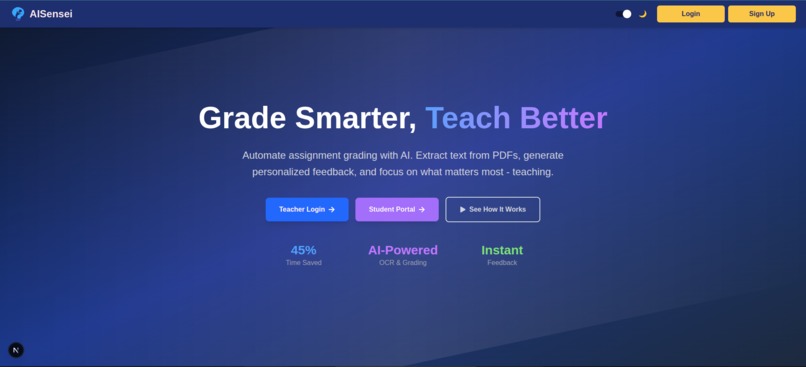
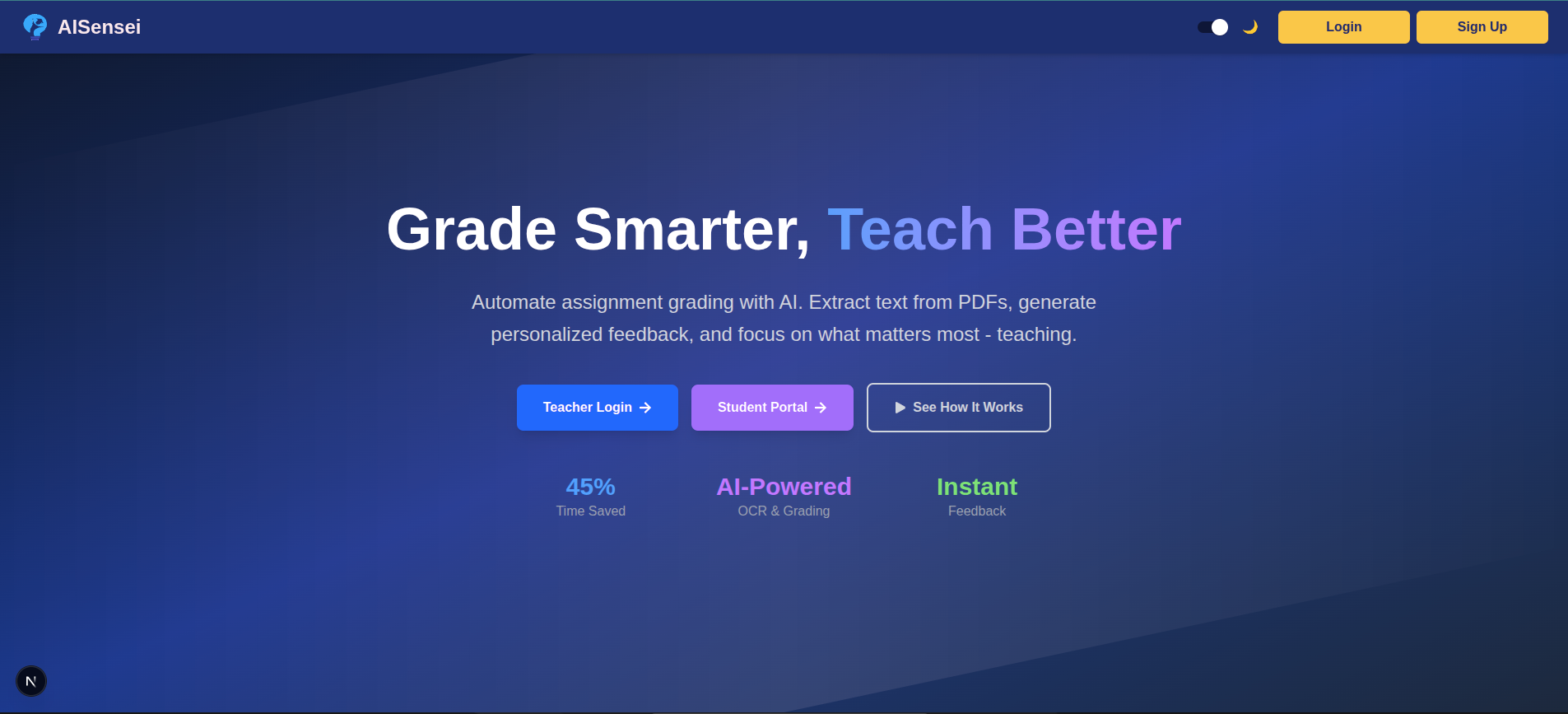
Landing Page
-
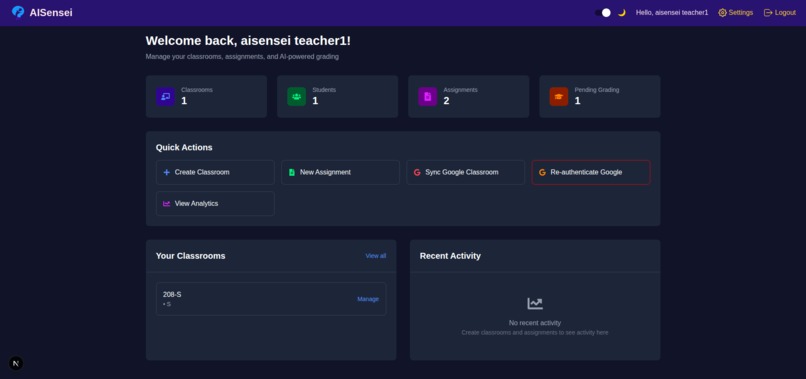
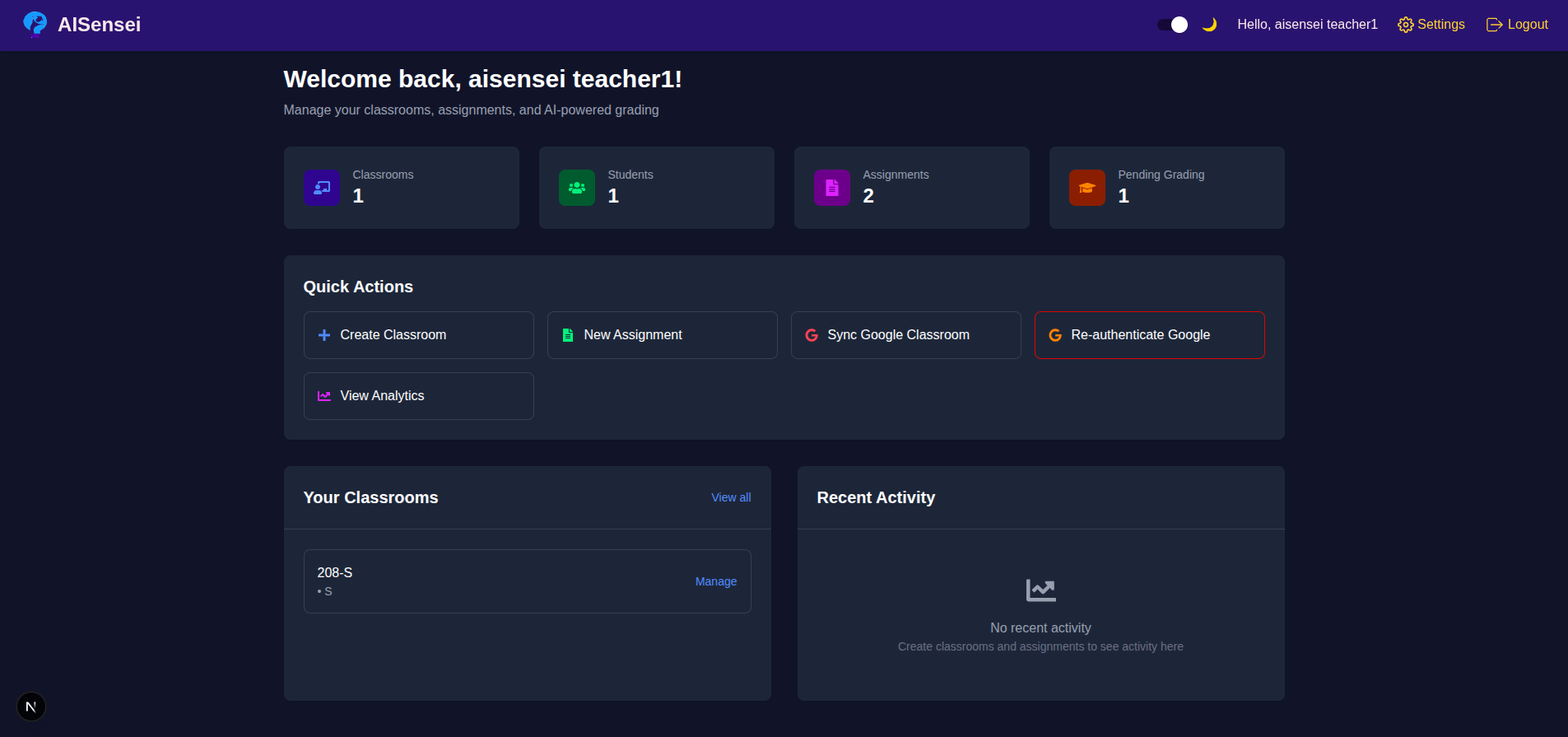
Teacher's Dashboard
-
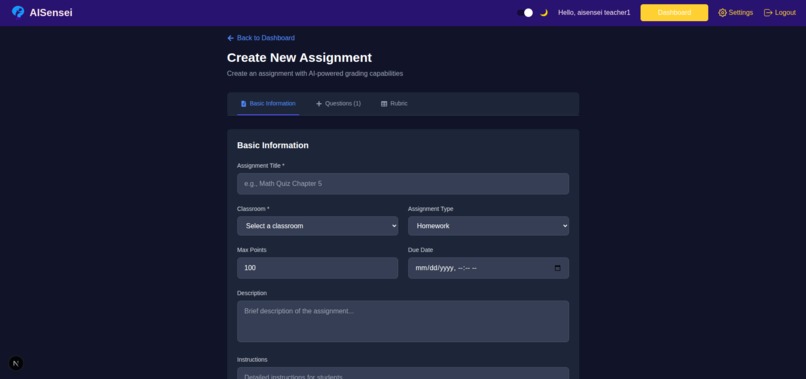
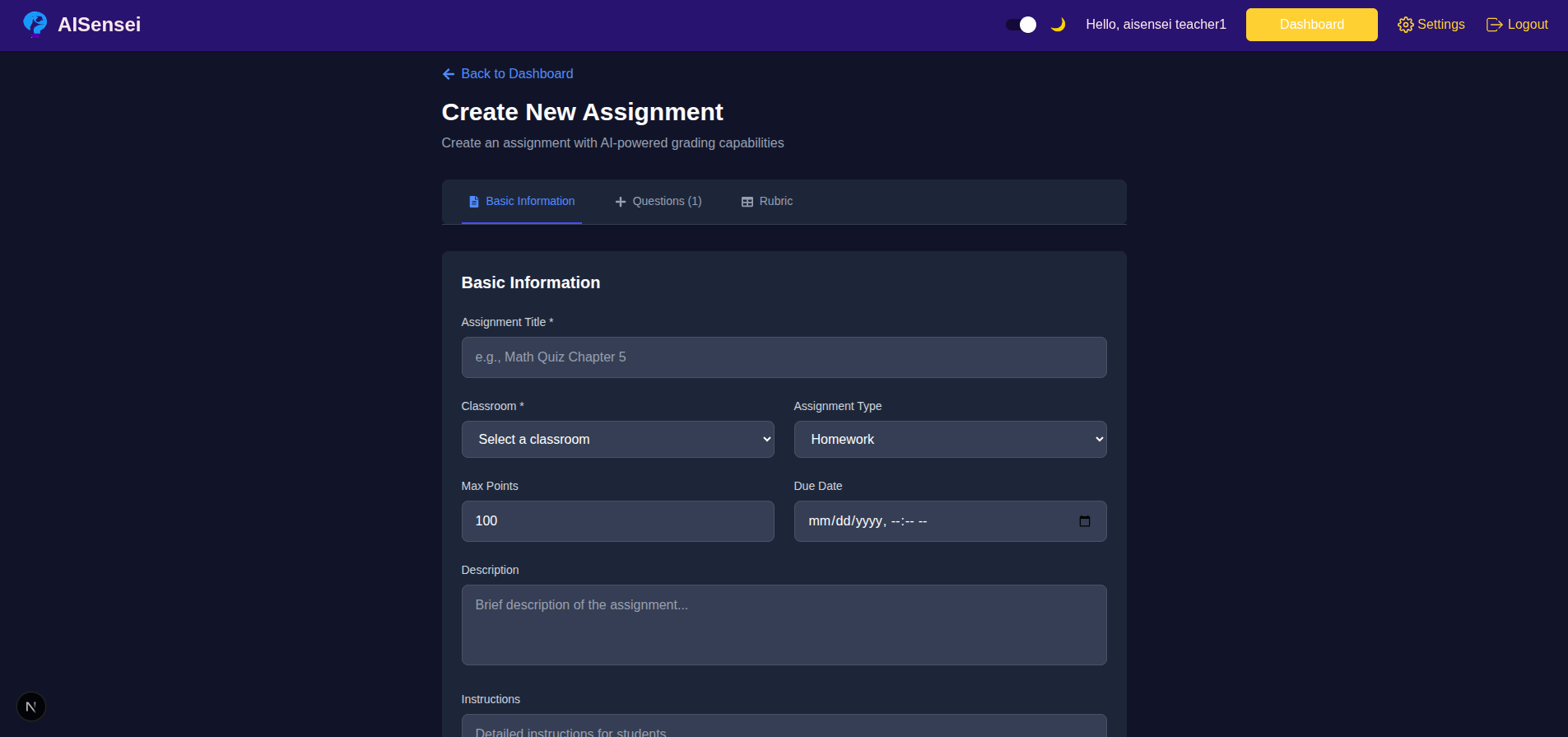
Create Assignment with Rubrics
-
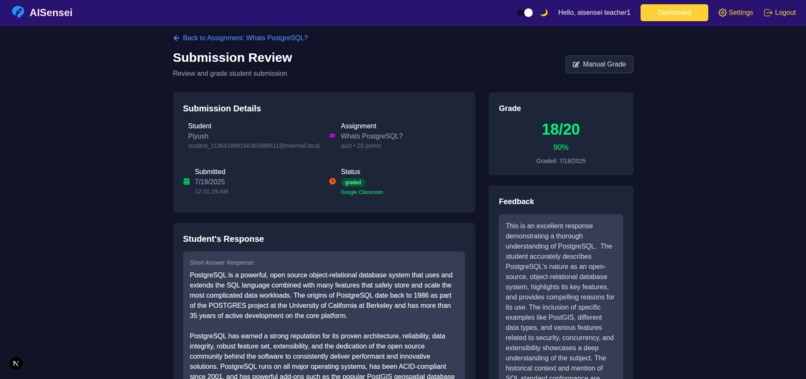
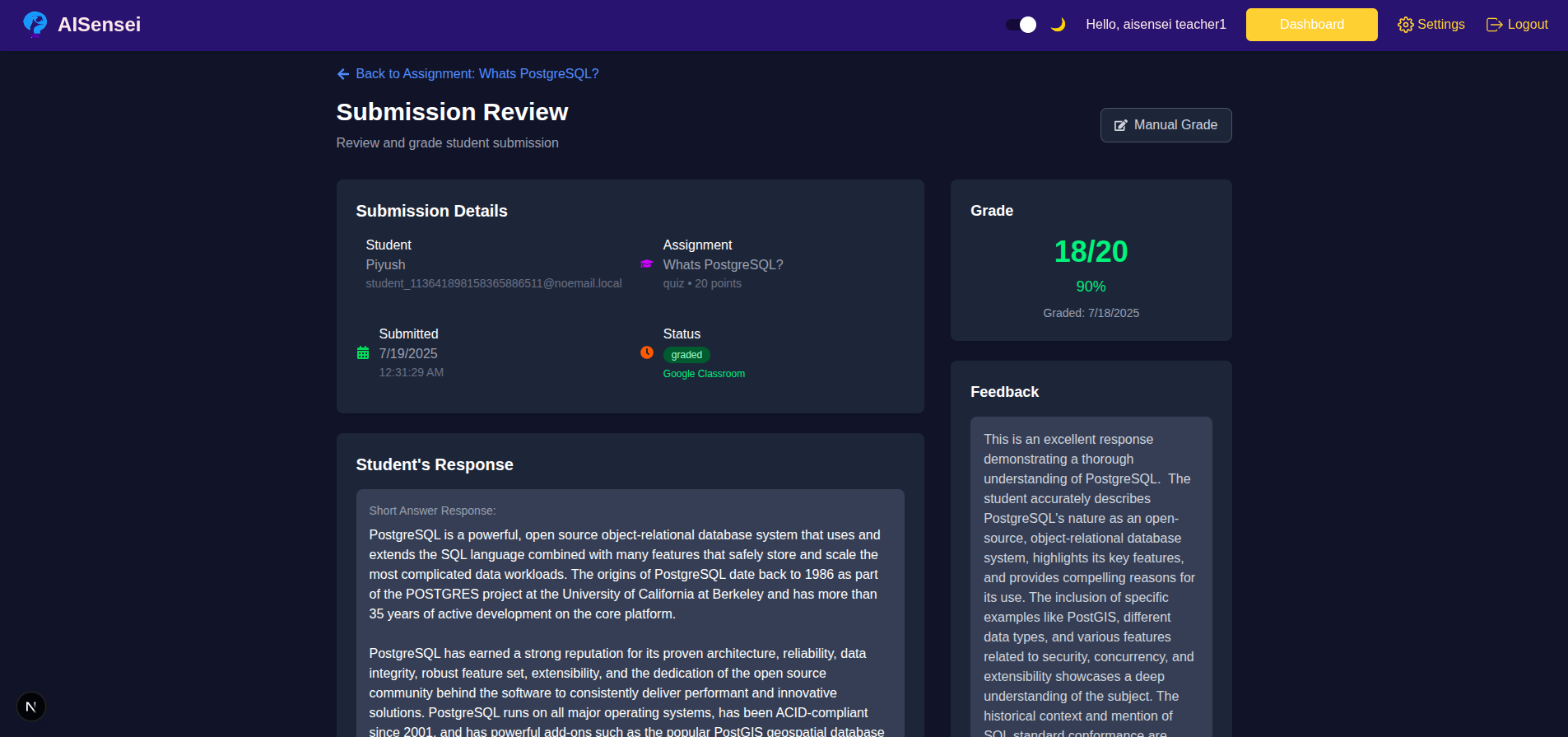
One Click Automatic AI Grading
-
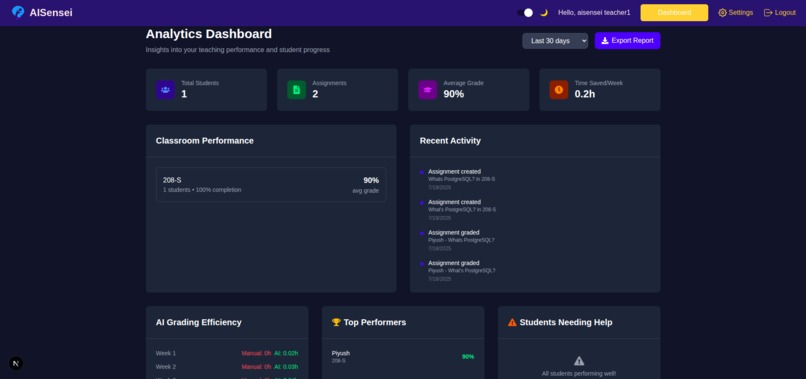
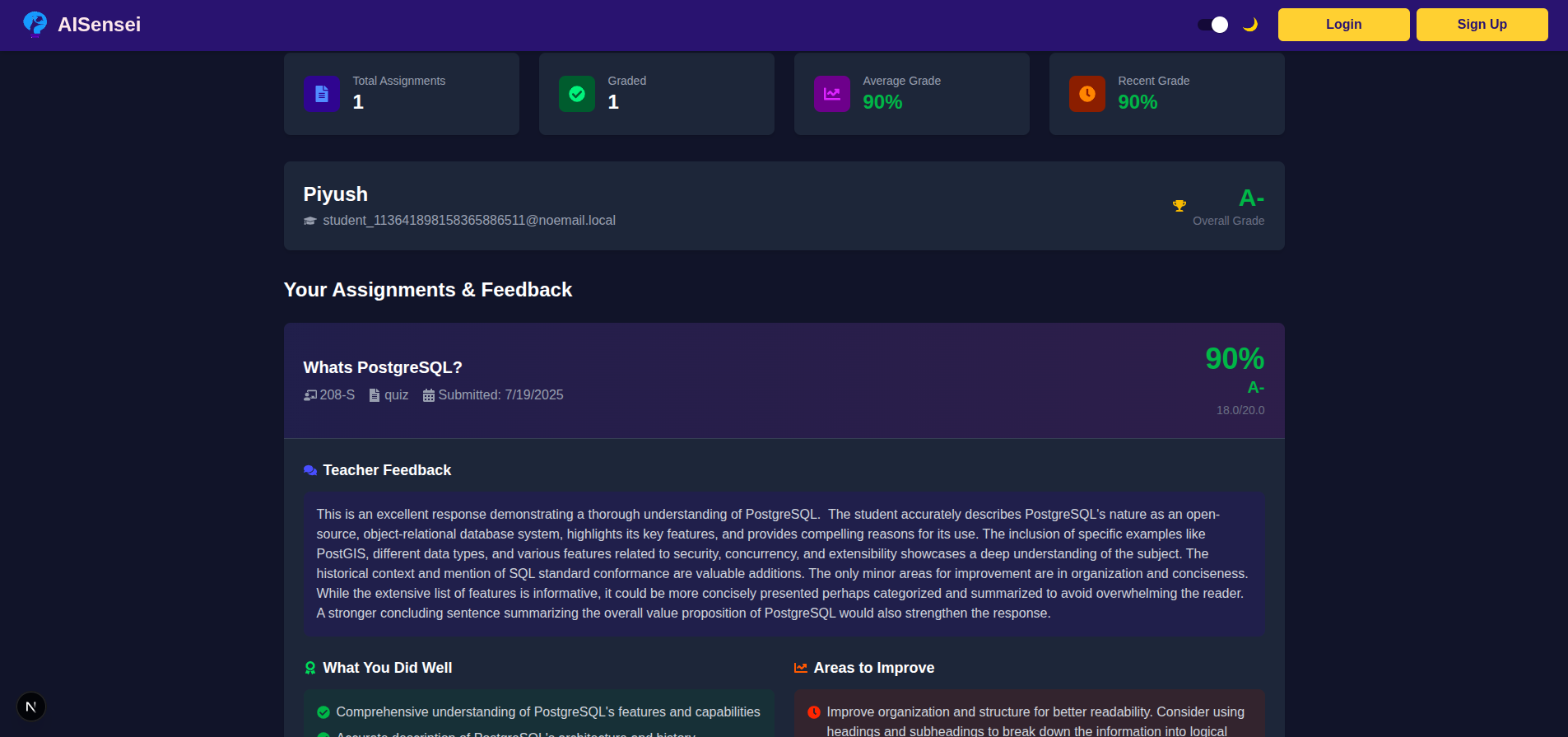
Student's Dashboard
-
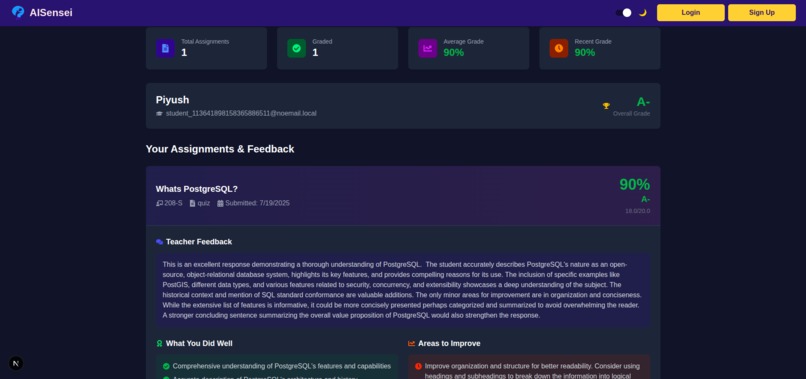
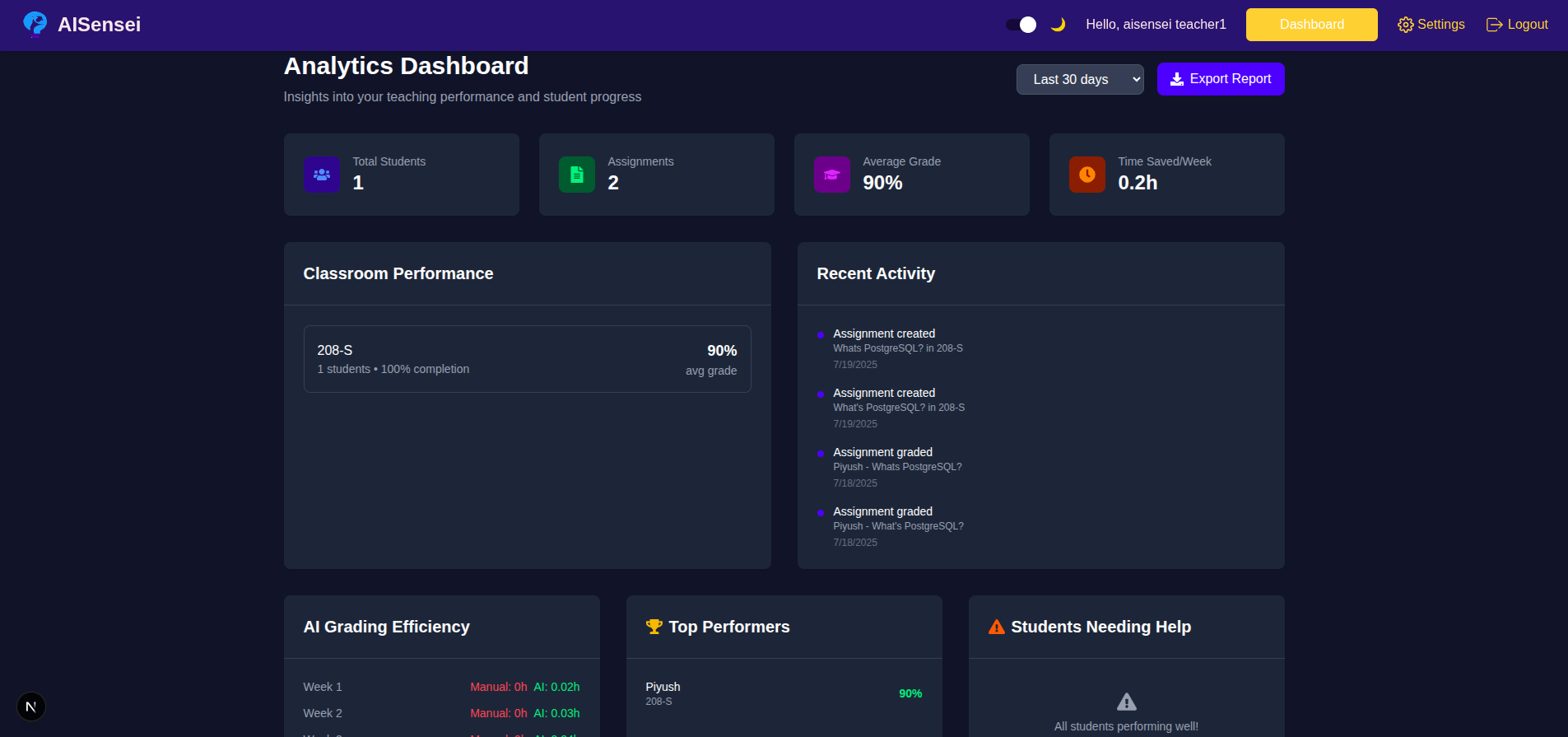
Analytics Dashboard for Teachers to Track Students Falling Behind
Inspiration
We were inspired by the heavy administrative and grading burden educators face, especially in large classes and resource-constrained schools. With widening "social and economic divides", teachers spend disproportionate time on repetitive tasks instead of teaching. The rise of large language models (LLMs) gave us a chance to harness technology to uplift communities and expand access to quality education by making feedback faster, fairer, and more personalized.
What it does
AISensei automates assignment creation, submission tracking, and AI-based grading, and generates personalized feedback for each student. It integrates with Google Classroom so teachers keep existing workflows, while students receive clear, actionable feedback that helps them improve. The system also flags students who are falling behind so teachers can intervene early — helping make learning more fair, connected, and hopeful.
How we built it
- Backend: FastAPI, SQLAlchemy, PostgreSQL
- Async jobs: Celery + Redis for scalable background grading
- Frontend: Next.js + Tailwind CSS (responsive dashboard)
- Auth & Integrations: Google OAuth + Google Classroom API, JWT
- AI: LLM evaluation pipeline using Google Gemini / OpenAI APIs
- DevOps: Docker / Docker Compose for reproducible builds
Challenges we ran into
- Prompt engineering to ensure consistent, fair grading across question types.
- Reliable async processing (avoid duplicates or missed jobs).
- Respectful handling of student data and Google Classroom privacy flows.
- CORS and cross-origin issues during development.
Accomplishments that we're proud of
- Working LLM-driven grading loop with WebSocket updates for near-real-time feedback.
- Modular architecture that can be extended to new languages and subjects.
- Built-in monitoring and retry logic for background grading tasks.
What we learned
- Practical orchestration of background queues at scale (Celery patterns).
- How to combine LLM outputs with deterministic rubric rules for trustworthy grading.
- Best practices for OAuth + Classroom integration and secure token handling.
What's next for AISensei
- Multilingual grading (regional languages) to increase inclusion.
- Adaptive learning paths that use feedback to create personalized study plans.
- Coaching Institute & Corporate Editions for scaled deployments.
- Offline grading fallback for low-connectivity regions to ensure continuity.
- Pilot programs in underserved districts to directly uplift communities and measure learning improvements.
Built With
- alembic
- celery
- docker
- google-classroom-api
- google-cloud
- google-gemini-api
- next.js
- postgresql
- python-fastapi
- redis
- sqlalchemy
- tailwind-css

Log in or sign up for Devpost to join the conversation.