-
-
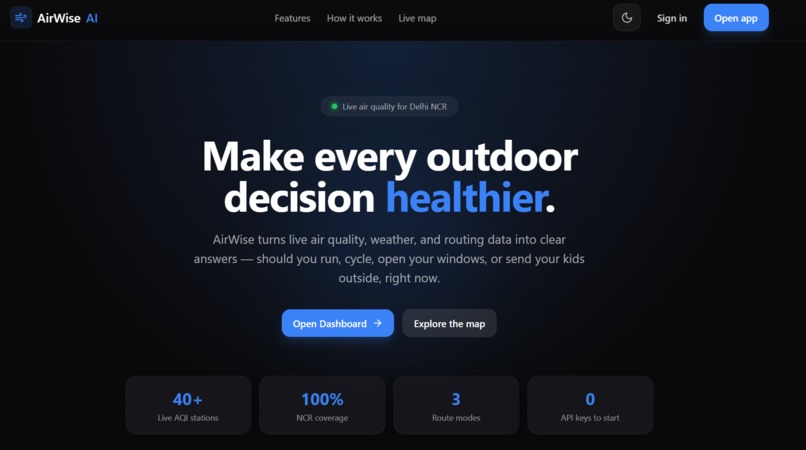
Home Page
-
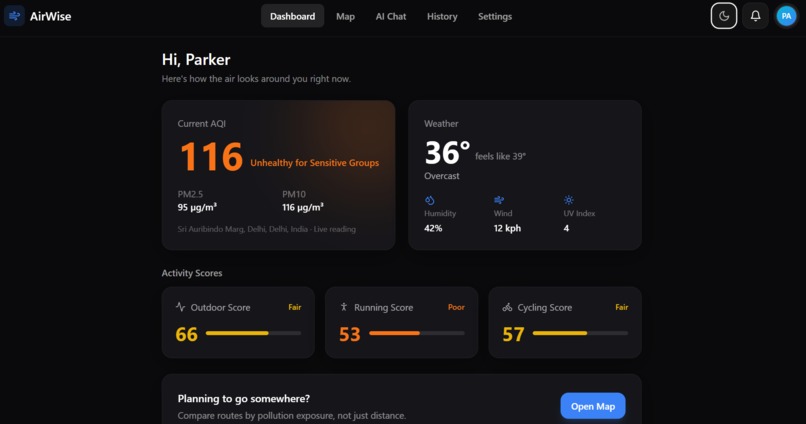
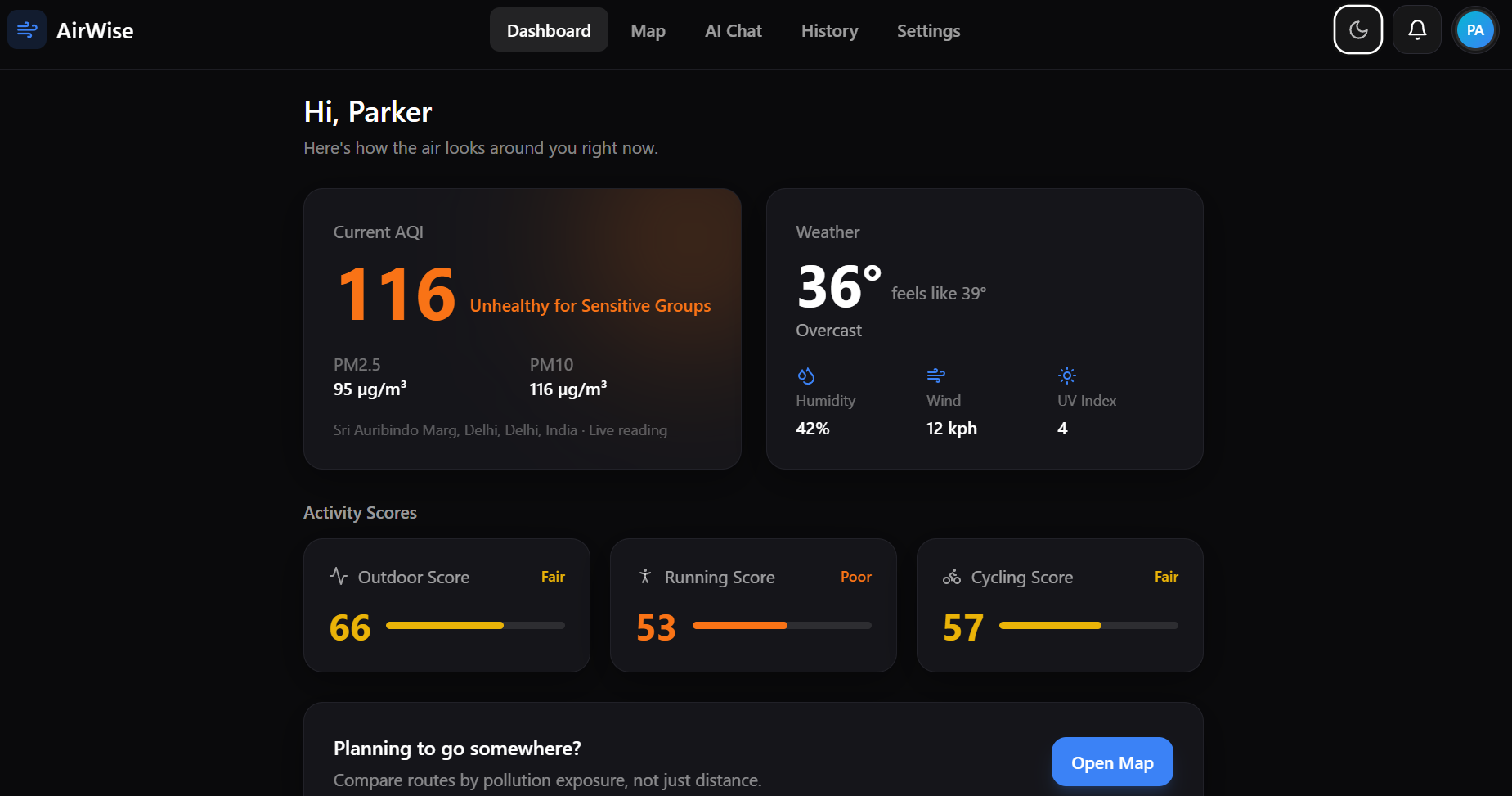
Dashboard
-
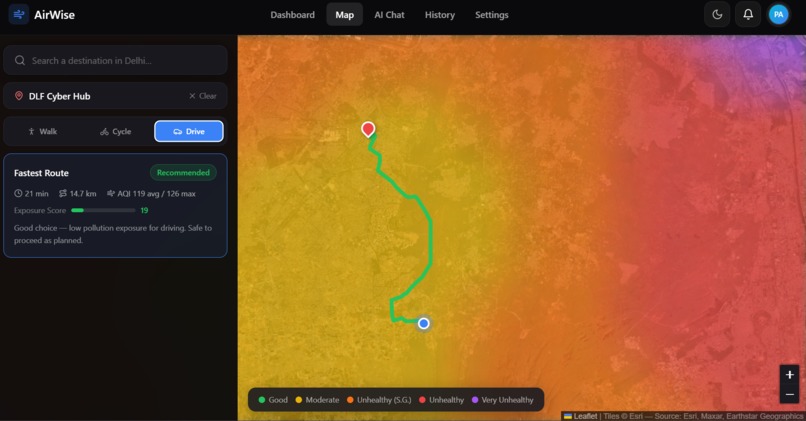
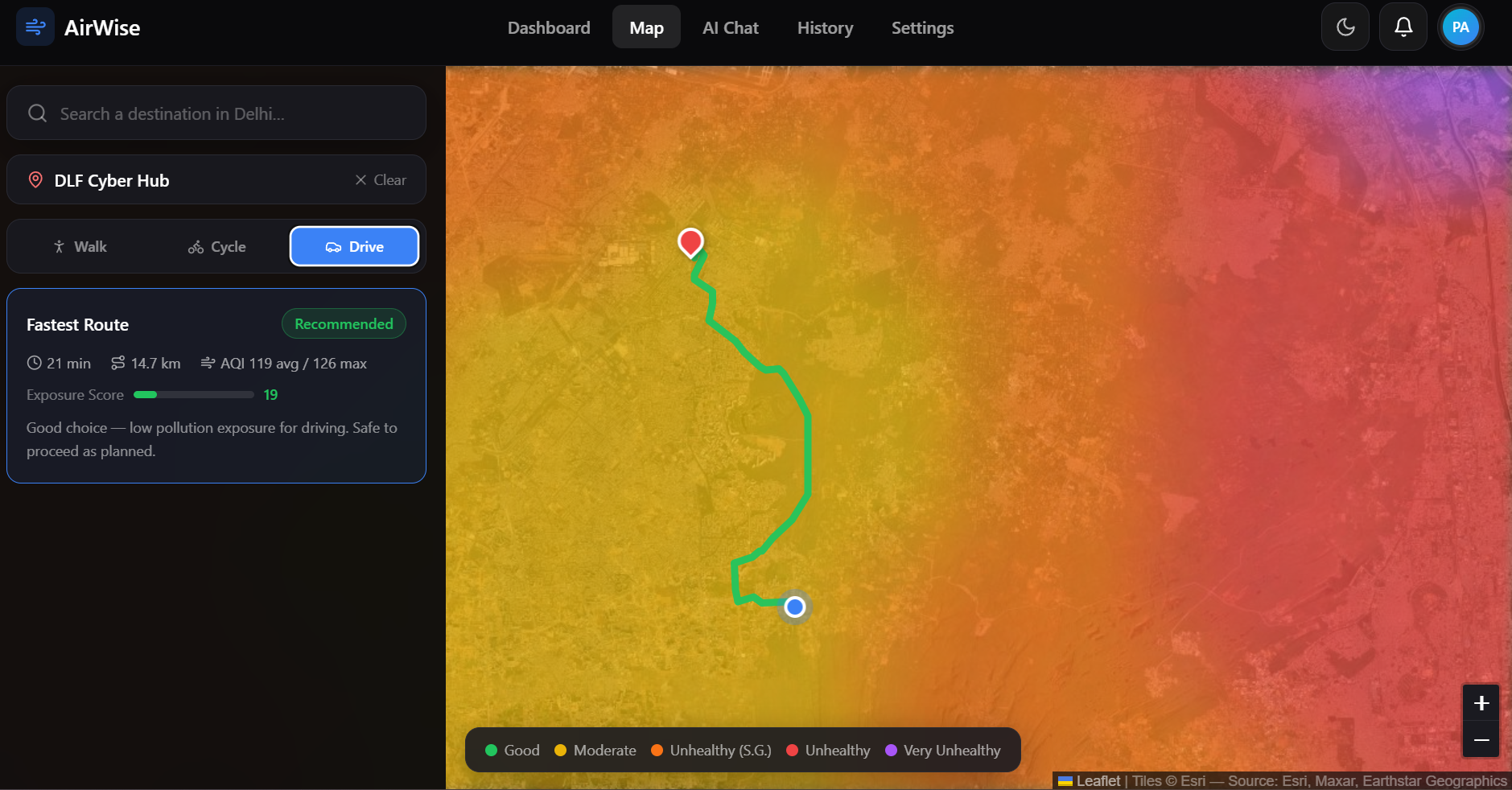
Travel Planner
-
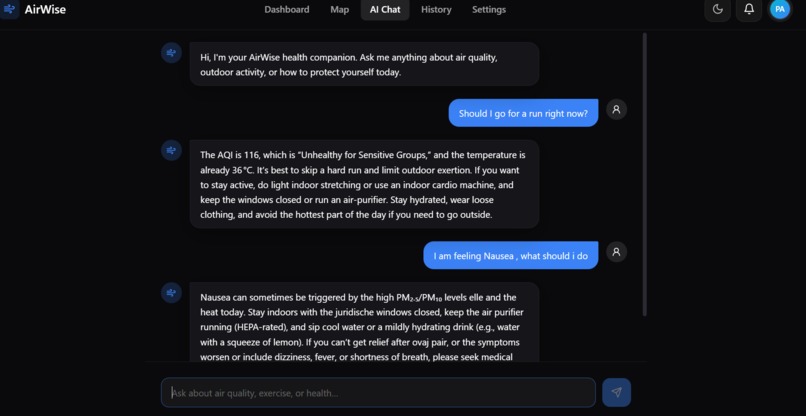
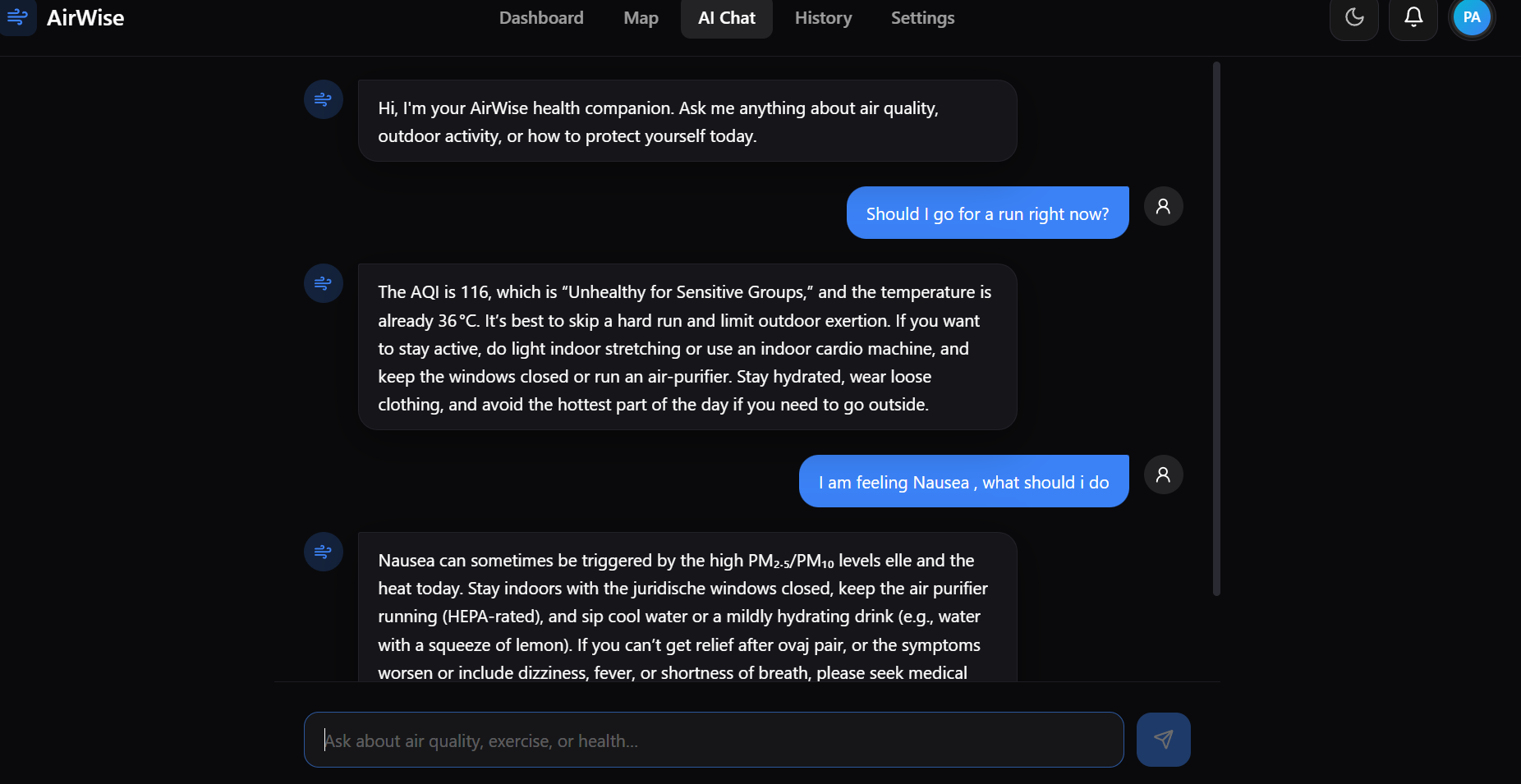
Personalised AI
-
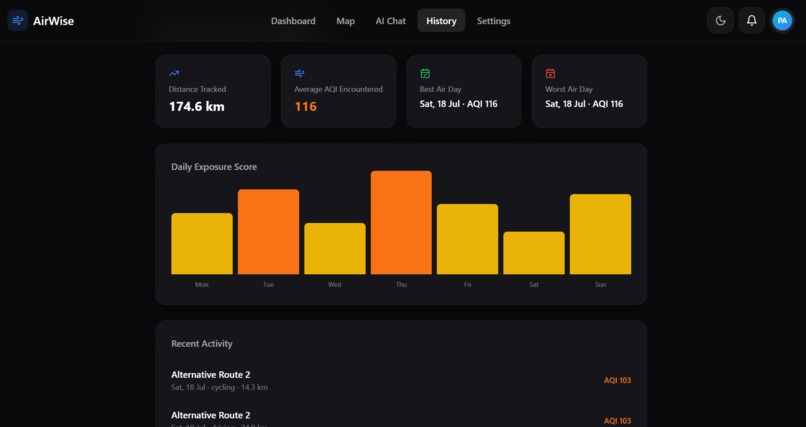
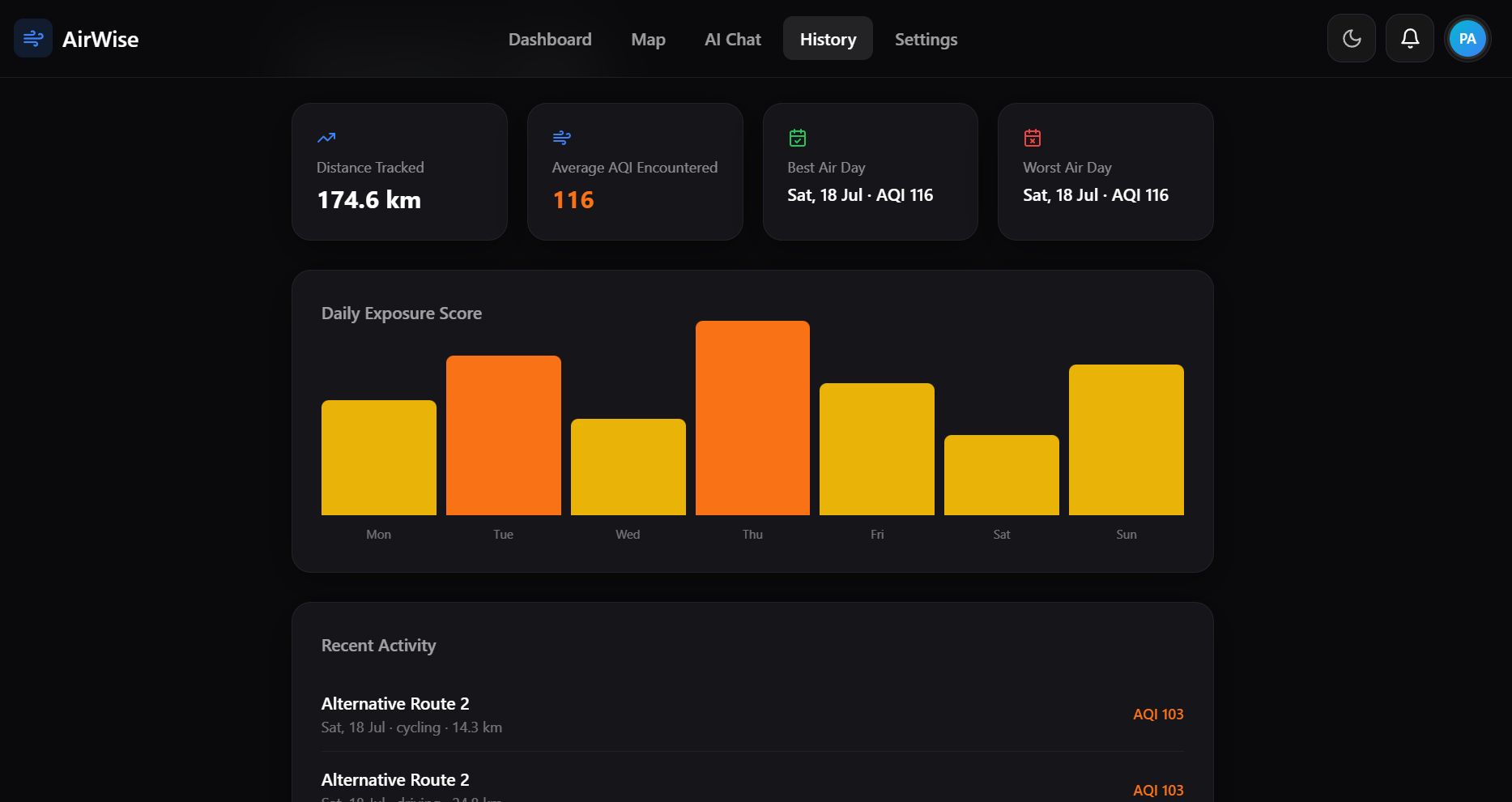
Exposure Timeline
-
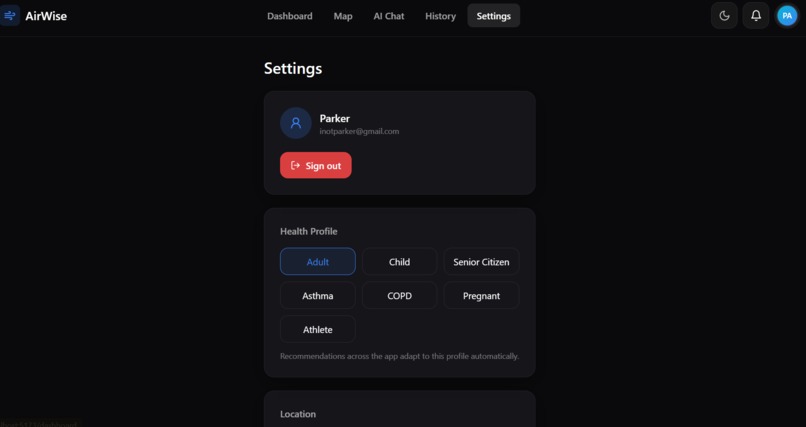
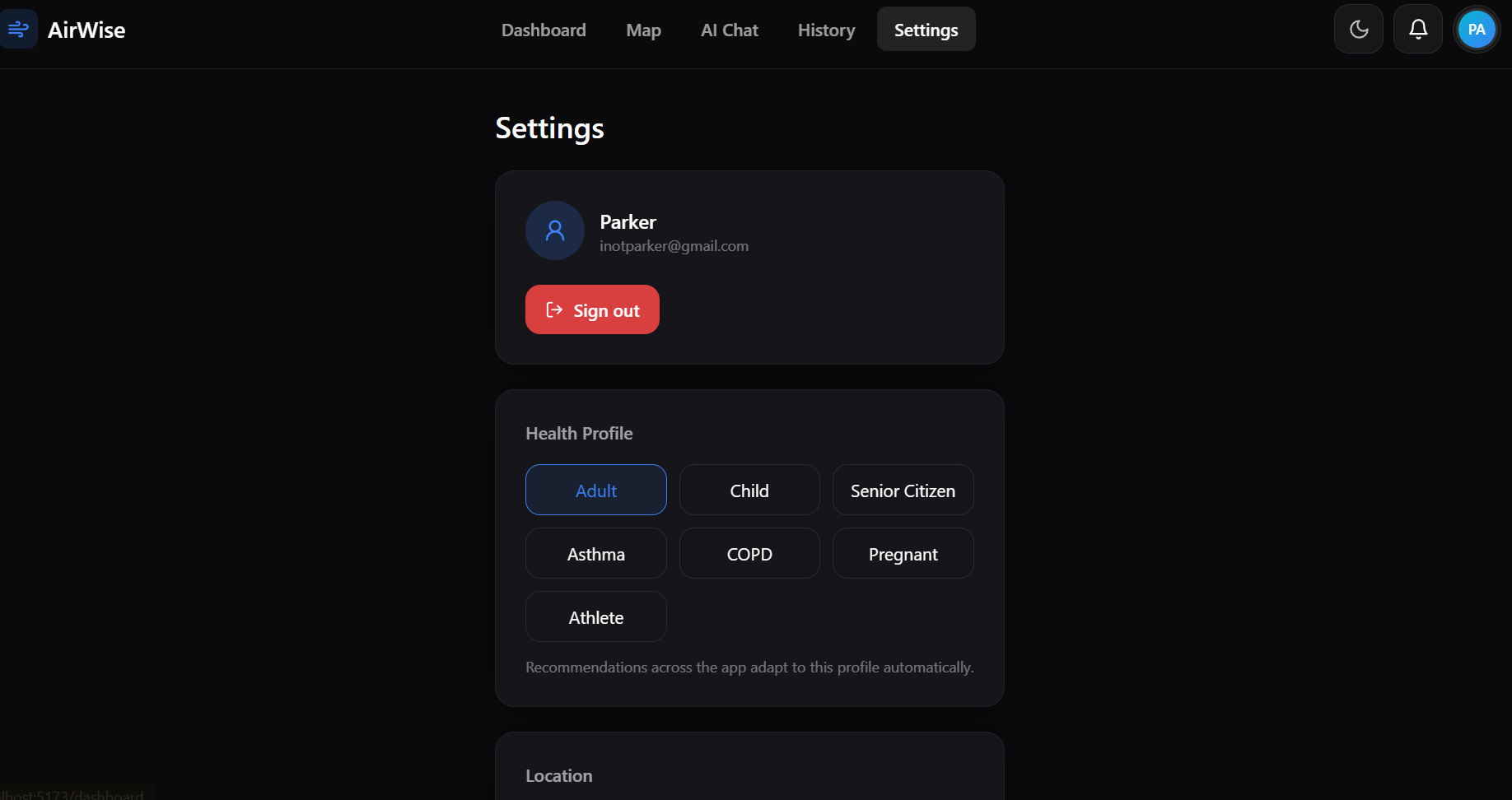
User Profile
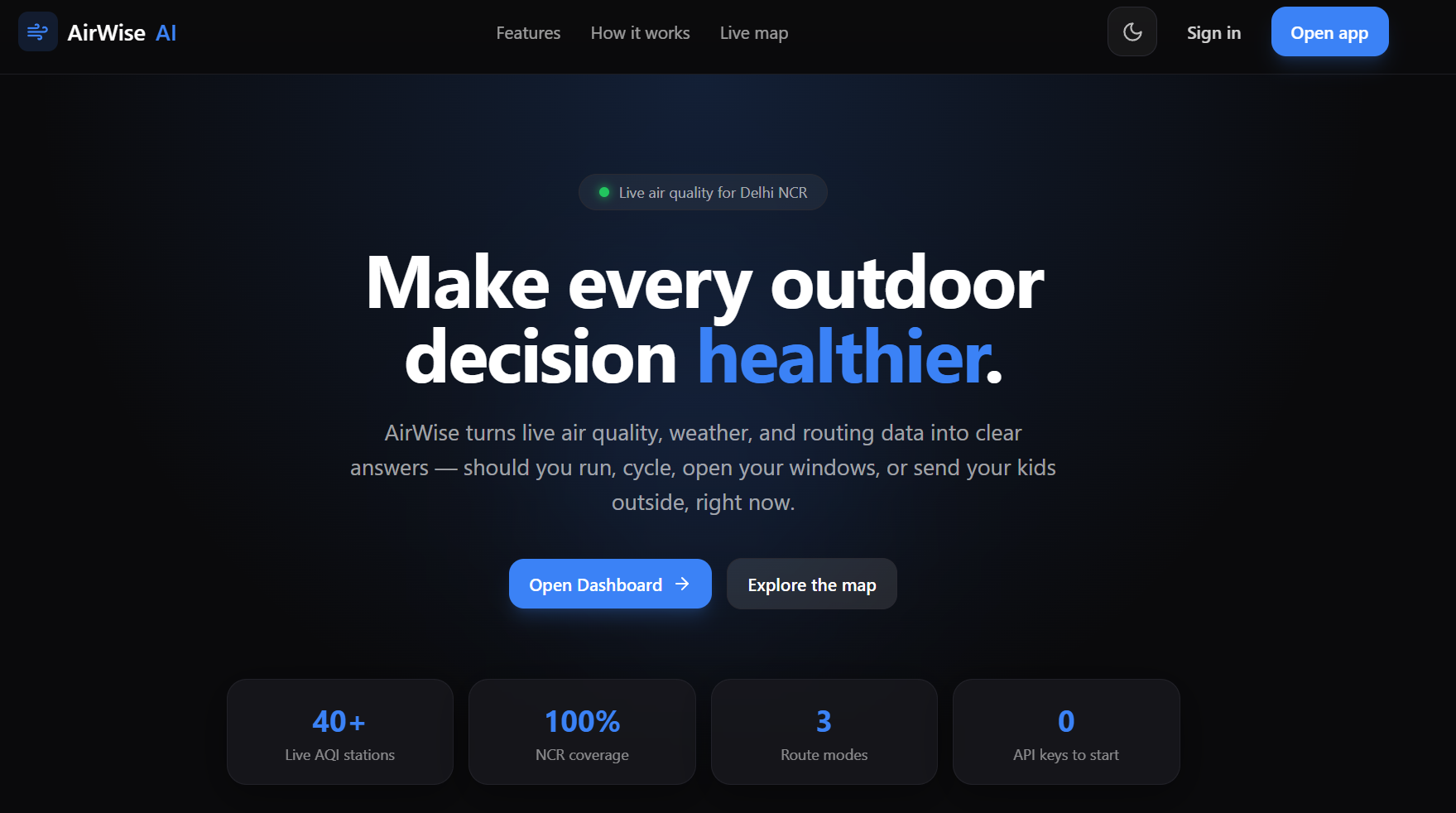
AirWise – Your AI Companion for Cleaner Living
Inspiration
Air pollution is one of the biggest health challenges today, yet most people only see a single AQI number and are left wondering what it actually means for them. We wanted to build something that goes beyond displaying pollution levels. Our goal was to create an intelligent companion that helps people understand air quality, reduce their exposure, and make healthier decisions every day.
Whether it's deciding if it's safe to go for a morning walk, choosing a cleaner route, or understanding how pollution affects someone with asthma, we wanted AirWise to provide personalized, actionable guidance instead of just raw data.
What it does
AirWise is an AI-powered air quality assistant that combines real-time environmental data with personalized health insights.
Users can:
- View real-time Air Quality Index (AQI) for their location.
- Receive personalized health recommendations based on pollution levels.
- Discover nearby parks and cleaner outdoor spaces.
- Track their pollution exposure over time through analytics.
- Chat with an AI assistant that answers air quality and health-related questions using trusted advisory data.
- Access historical exposure trends to better understand their daily habits.
Rather than simply reporting pollution levels, AirWise helps users make informed decisions to reduce long-term exposure.
How we built it
Our application consists of a modern full-stack architecture.
Frontend
- React
- TypeScript
- Tailwind CSS
- Interactive maps and charts
Backend
- Node.js
- Express.js
- REST APIs
- JWT Authentication
- bcrypt password hashing
AI
We integrated an AI assistant that uses Retrieval-Augmented Generation (RAG). Instead of relying only on the language model, relevant health advisories are first retrieved using semantic vector search and then provided as context to generate more accurate and trustworthy responses.
Database
We used Elasticsearch Serverless as our primary database.
Instead of using multiple databases, Elasticsearch handles:
- User accounts
- AQI caching
- Nearby place discovery using geo-search
- Pollution exposure analytics using time-series aggregations
- Vector search for AI-powered health advisory retrieval
This allowed us to leverage one database for storage, geospatial queries, analytics, and semantic search.
Challenges we ran into
One of our biggest challenges was designing a system that combined multiple types of data within a single database.
We had to:
- Implement efficient geospatial queries for nearby cleaner locations.
- Cache AQI responses to reduce unnecessary API requests.
- Design a scalable exposure history model for analytics.
- Generate and index vector embeddings for semantic AI search.
- Build a reliable fallback system so the application continues working even if Elasticsearch becomes temporarily unavailable.
Balancing performance while integrating real-time APIs, AI, and search capabilities required careful architectural decisions.
Accomplishments that we're proud of
- Built a complete AI-powered environmental health platform.
- Successfully integrated Retrieval-Augmented Generation using Elasticsearch vector search.
- Used Elasticsearch as the only database for authentication, analytics, geospatial search, and AI retrieval.
- Created personalized health recommendations instead of generic AQI reports.
- Designed a responsive and intuitive interface focused on usability.
What we learned
Throughout this project we gained hands-on experience with:
- Retrieval-Augmented Generation (RAG)
- Semantic vector search
- Elasticsearch geospatial and time-series capabilities
- Building scalable backend architectures
- Secure authentication using JWT
- Designing AI systems that provide grounded, trustworthy responses instead of hallucinated answers
Most importantly, we learned that AI becomes significantly more useful when combined with reliable, domain-specific knowledge rather than operating in isolation.
What's next for AirWise
We plan to expand AirWise with:
- Hyperlocal pollution forecasting.
- Wearable device integration for personalized health monitoring.
- Smart route recommendations that minimize pollution exposure.
- Push notifications for hazardous air conditions.
- Community-driven air quality reporting.
- Support for additional cities and countries.
Our long-term vision is to make AirWise a daily health companion that empowers people to breathe cleaner, live healthier, and make informed environmental decisions.
Built With
- antigravity
- api
- elastic
- openrouter
- react


Log in or sign up for Devpost to join the conversation.