-
-
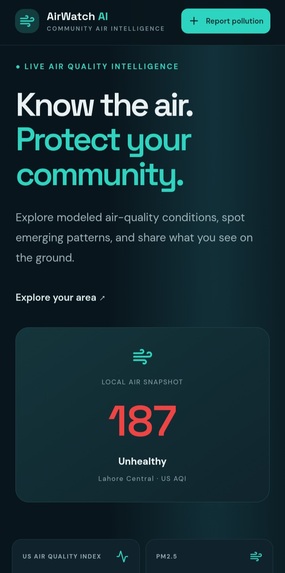
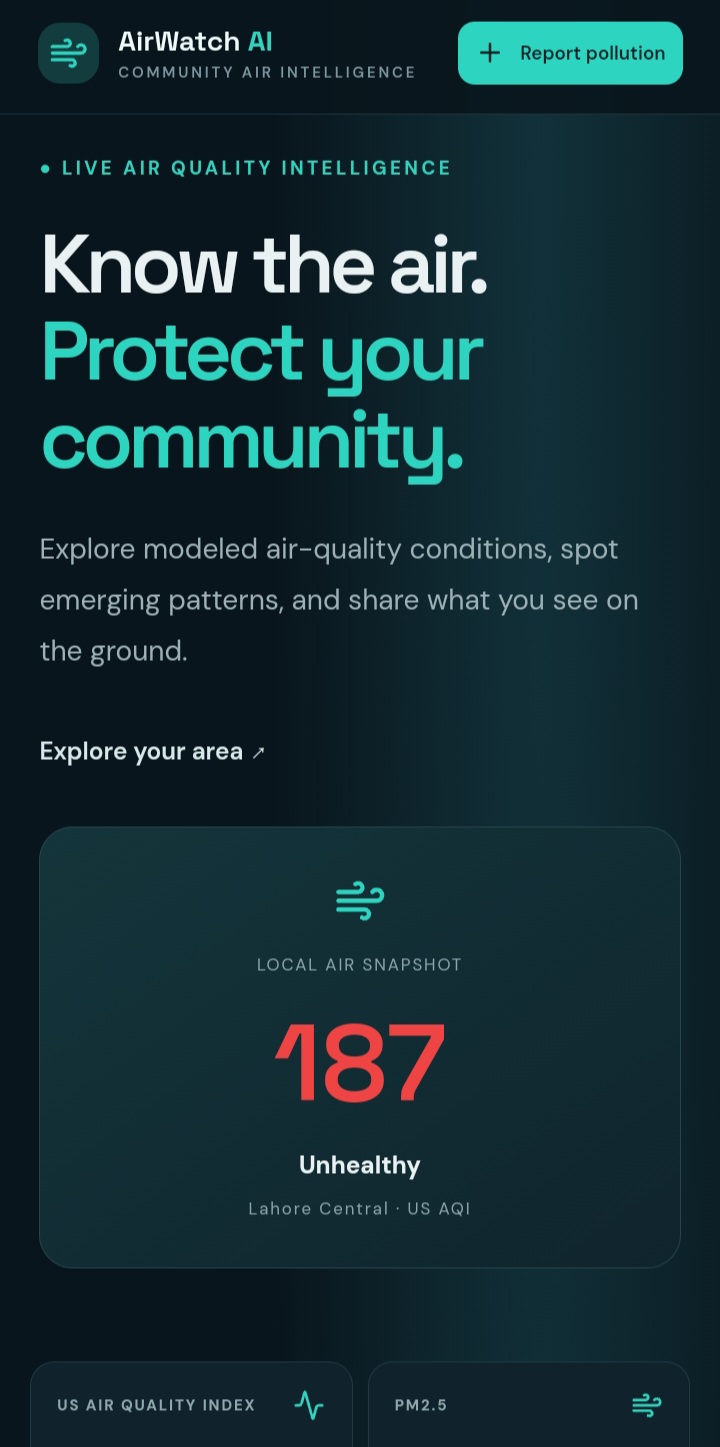
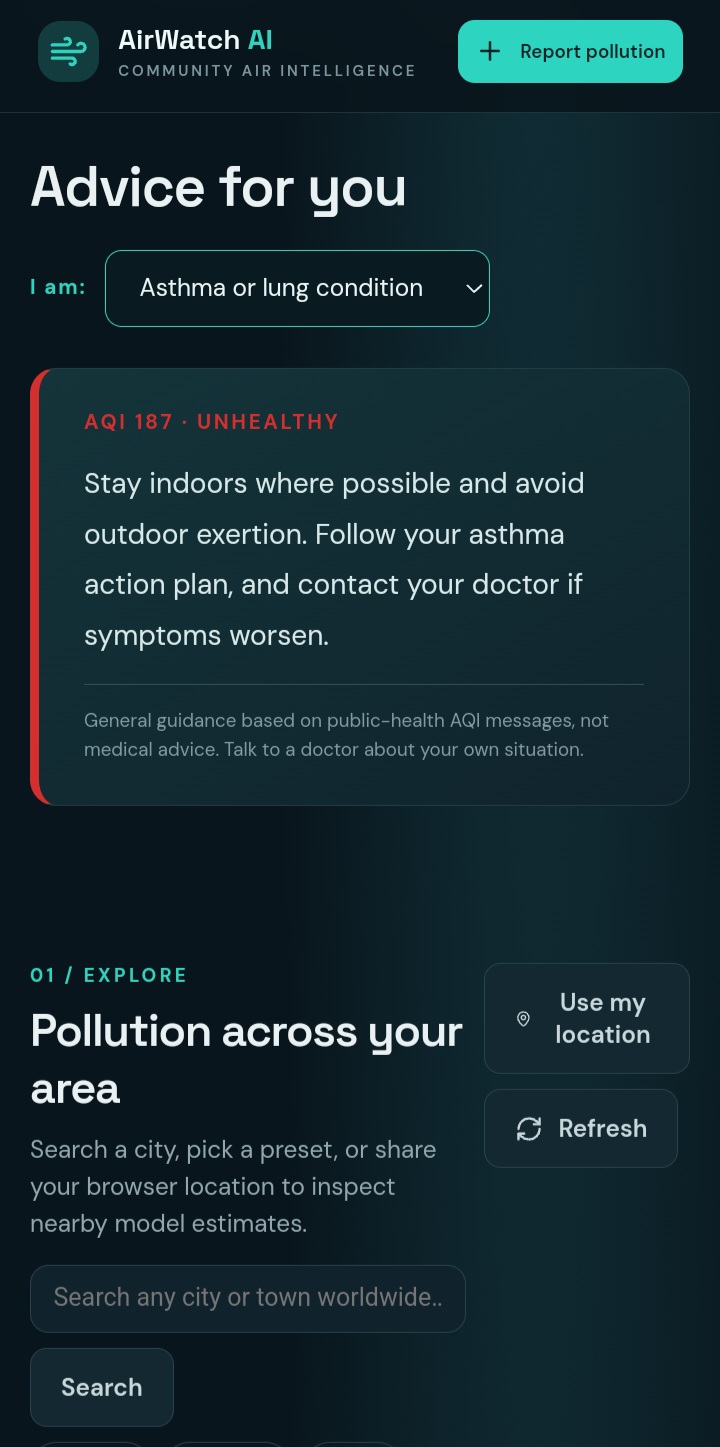
Know the aqi of your location by clicking on use my location
-
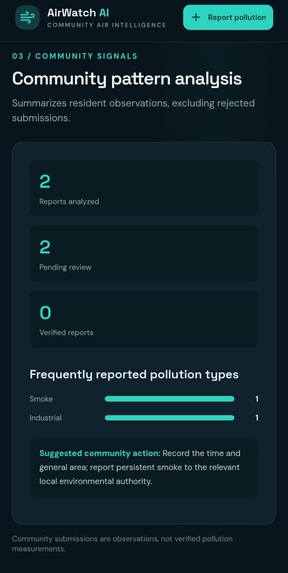
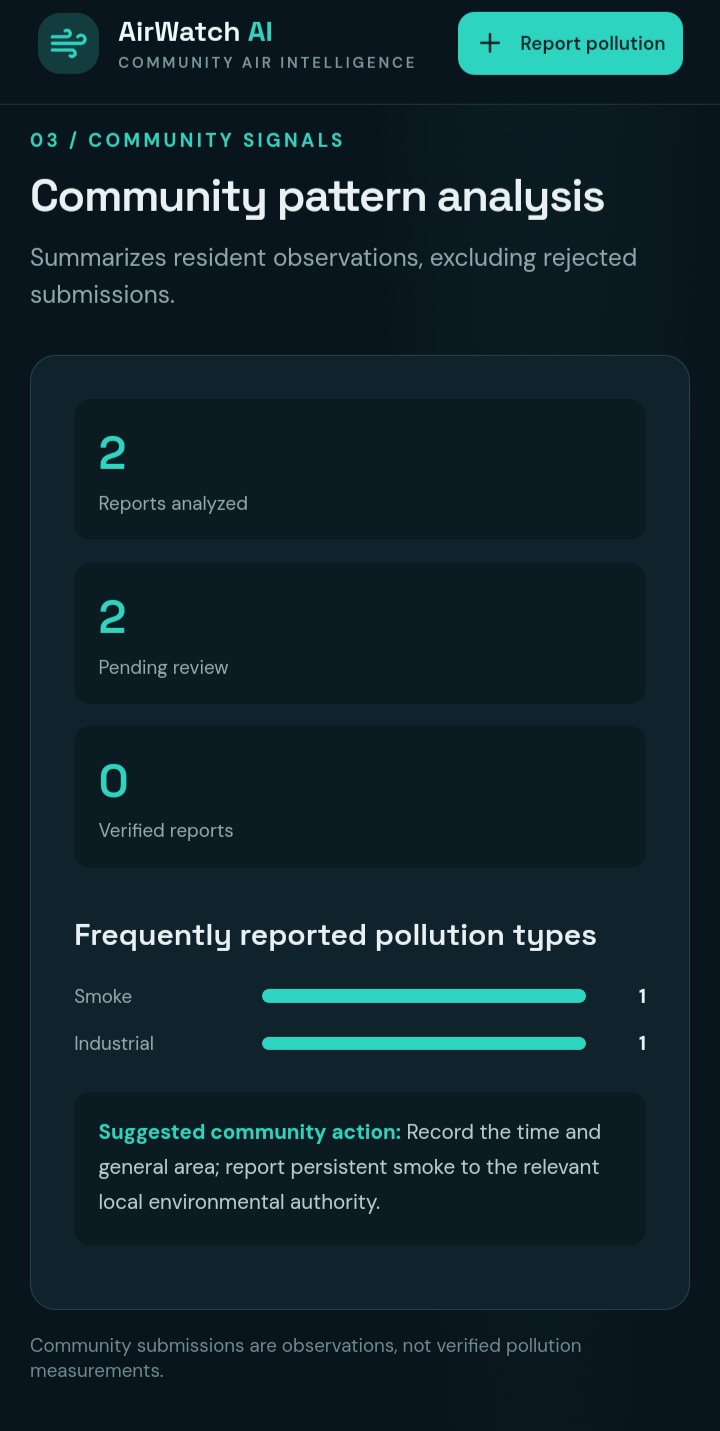
Know about the trending causes in your city
-
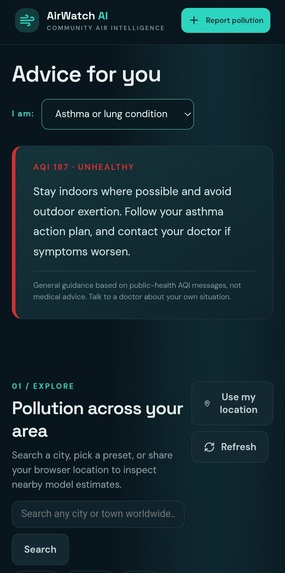
Get advice about how to be cautious according to your medical condition
-
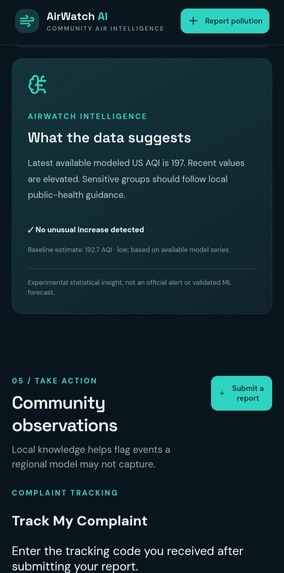
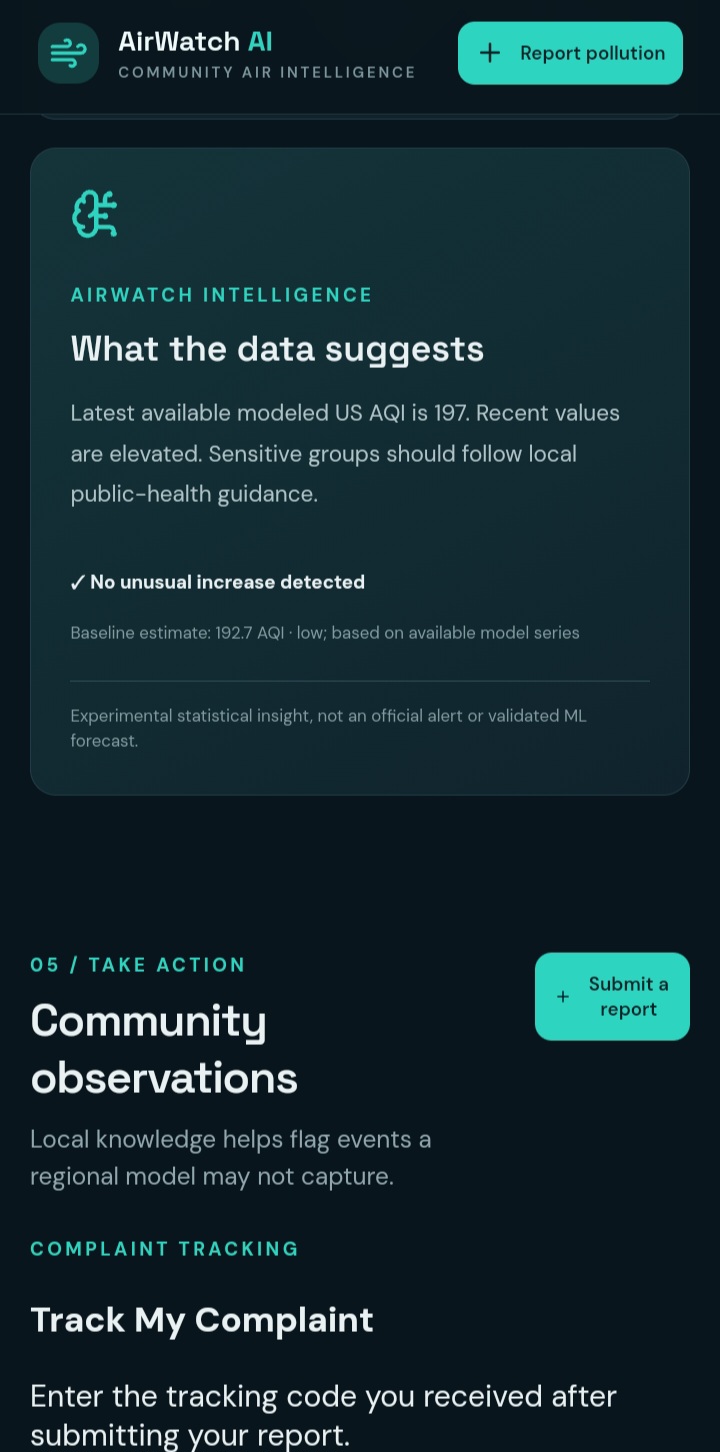
Know about what the data suggests and track your previous complaints whether they have been addressed or not
-
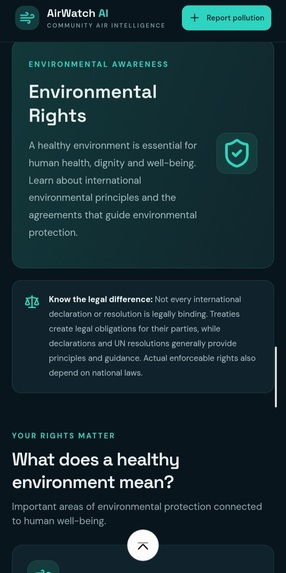
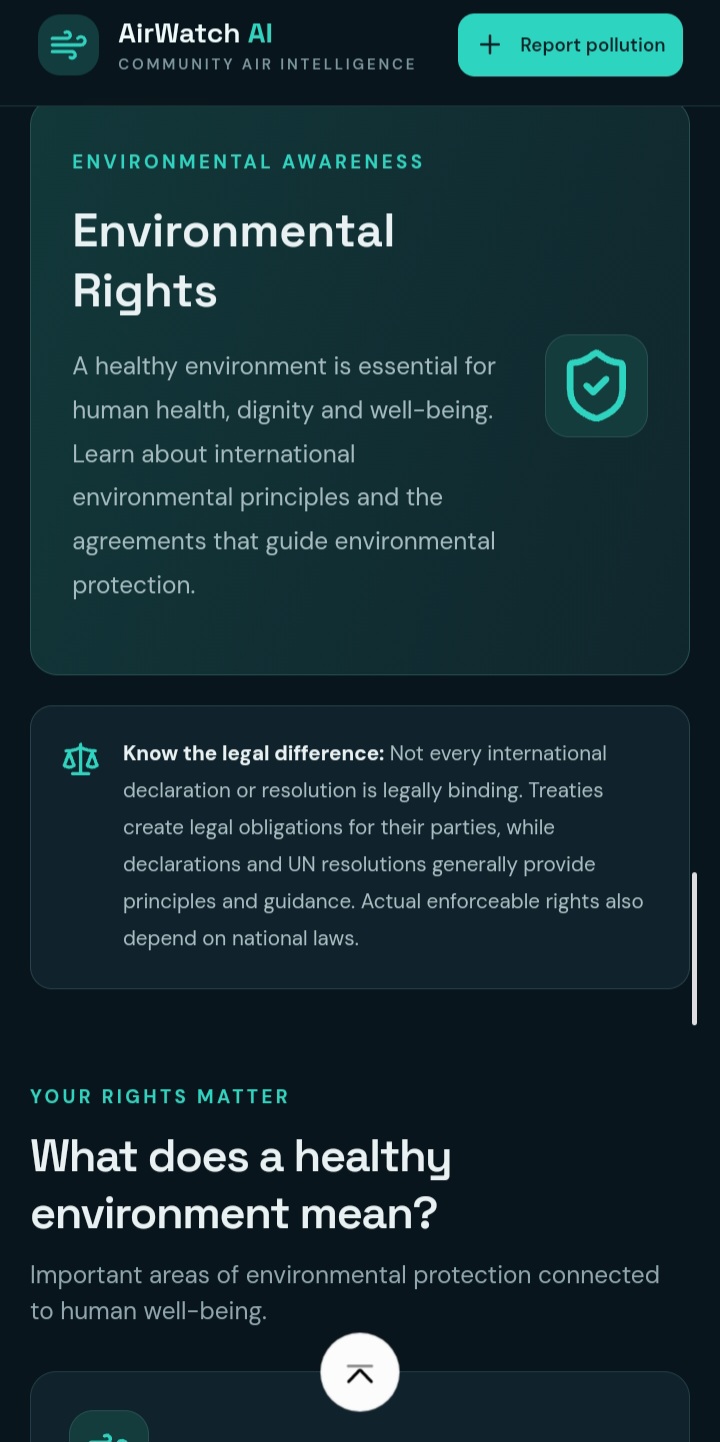
Know about your global environmental rights and you can download the pdf of document by clicking on the
-
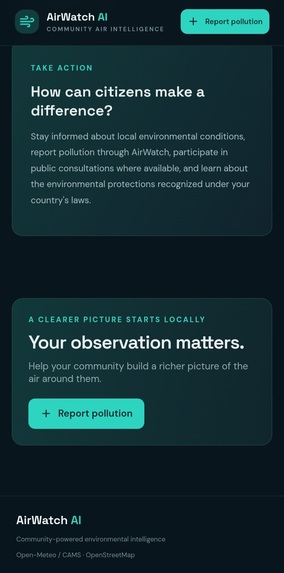
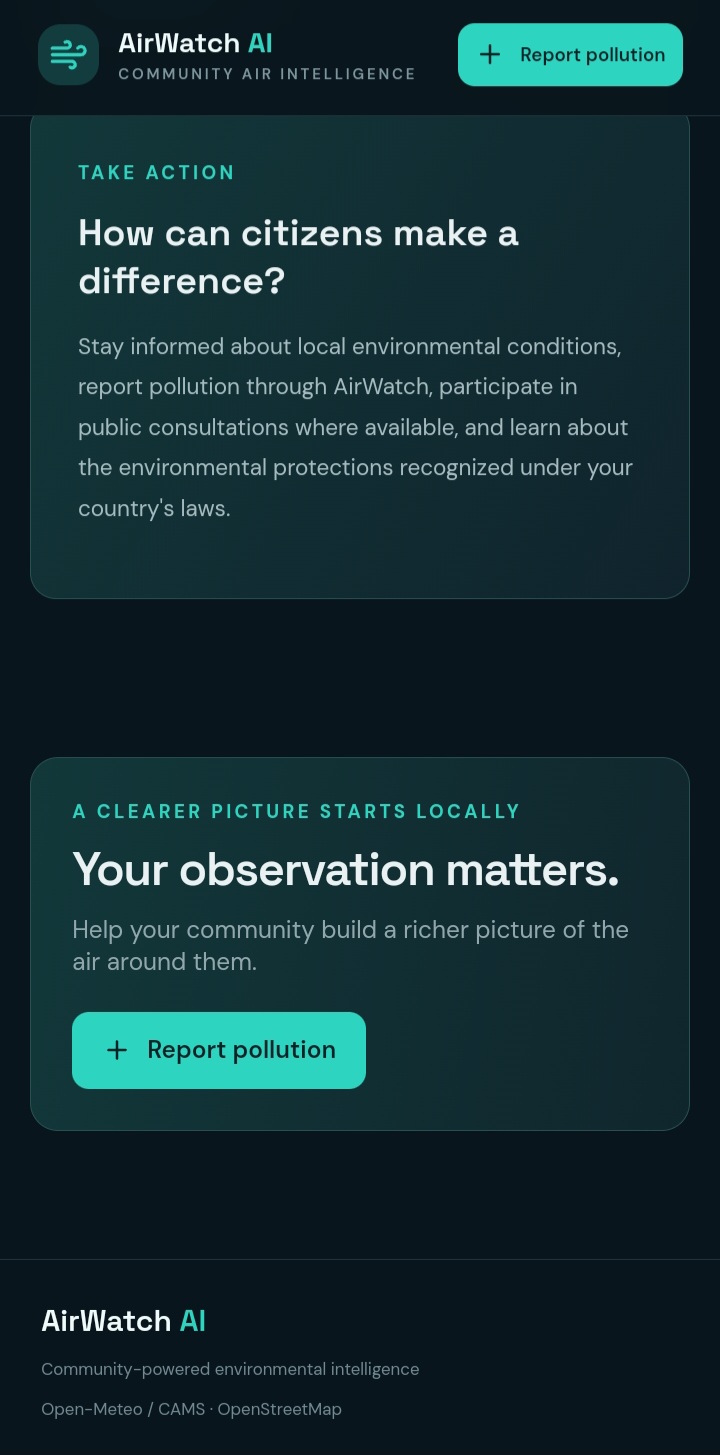
Report the cause of por aqi
Inspiration
Some of us live in cities that regularly rank among the most polluted in the world. For us, bad air isn’t a headline. It’s the haze in the morning, the cough that won’t go away, and the decision every day about whether it’s safe to send the kids to school or let them play outside. Two things always frustrated us. First, air-quality numbers rarely tell you what to do. Second, when we saw smoke, burning or dust in our own neighborhoods, there was nowhere simple to report it, and nobody told us if anything happened afterward. We also thought about parents who are far from their children, whether at work, abroad or in another city. They worry about the air their kids are breathing and have no quick way to check or know what to do. AirWatch AI is our answer: know the air, protect your community, and give citizens a voice that can reach the people who can act.
What it does?
AirWatch AI is a web app that combines air-quality data with community reports:
- Live air quality for anywhere in the world: Search any city, use a preset, or share your location to see the US AQI, PM2.5 and PM10 on a color-coded map, plus an hourly trend.
- Advice that fits the person: Choose a profile (child, asthma or lung condition, older adult, runner, or general public), and the app gives guidance for the current air quality. A parent can search their child’s city and read advice for a child, even from far away.
- Hotspot watch: It compares modeled air quality at six points around an area to show which side is worse.
- Community reports: Anyone can report smoke, dust, burning or industrial pollution, anonymously and without an account. Each report gets a private tracking code, and its status moves through pending, under review, verified, rejected and resolved, with a moderator note.
- Community patterns: The app shows what is reported most in an area and suggests a practical next step.
- Environmental rights: A section explaining the right to a clean and healthy environment, so people know why their report matters.
We’re honest about our data that air values are modeled estimates, not street sensors, and community reports remain unverified until reviewed.
How we built it?
Working: When you pick a place, the React frontend asks our FastAPI backend for air quality. The backend calls the Open-Meteo Air Quality API, cleans up the response, and sends it back. Our insights code compares the latest hours with the hours before them to flag unusual spikes. For hotspots, the backend fetches six nearby points in parallel. For reports, the backend validates the input, saves it in a database, and returns a tracking code. Reports near a location are found with the haversine distance formula.
Stack: React with Vite, Leaflet maps, and Recharts on the frontend. FastAPI, Pydantic, SQLAlchemy and httpx on the backend. Open-Meteo air-quality and geocoding APIs, OpenStreetMap tiles, and PostgreSQL on Neon.
Legal and complaint design: We built the complaint system to resemble a real grievance process: a unique tracking code, clear status stages, a moderator review note, and anonymous submission to protect people who fear retaliation. We added an environmental-rights section based on the international principle that a healthy environment is a basic right. This structure is meant so that an environmental authority could adopt it, review complaints, update statuses and give feedback to citizens.
Deployment: We split it into three free services. The database runs on Neon PostgreSQL. The FastAPI backend runs on Railway, with environment variables for the database address and the allowed frontend address. The frontend runs on Vercel and points at the backend through an environment variable. We also used Claude as an AI coding assistant for code review, the health-advice feature, location-handling improvements, deployment guidance and documentation. The app itself has no machine-learning feature, and says so.
Challenges we ran into
- Honest data: We wanted useful insights without pretending modeled data was sensor data, so we labeled it throughout.
- Location problems: Browser geolocation fails on many devices, so we added clear error messages and an approximate fallback.
- Deployment surprises: Our first hosting choice demanded a card we didn’t have, so we moved the backend to another platform, and fixing the connection between frontend, backend and database took careful debugging.
- Designing for real use: Balancing anonymity, abuse prevention and moderation took more thought than we expected.
Accomplishments that we’re proud of
- A working backend with a database that stores and tracks reports reliably, deployed online.
- A complete complaint flow, from submission to a tracking code to a status update. Worldwide search with personalized advice for children, asthma, older adults and runners.
- A full app delivered by a team under time pressure, with a clean design that matches its purpose.
What we learned?
- How to connect a React frontend, a FastAPI backend and a managed PostgreSQL database, and deploy all three.
- How to work with external APIs, async requests and input validation.
- How to work as a team: dividing frontend, backend, deployment and presentation, and fixing each other’s blockers.
What’s next for AirWatch-AI?
- Ask for location first: Instead of starting on a default city like Lahore, the map will request the user’s location on first visit, then fall back to search.
- Government-level tools: Secure login for moderators and officials, an official dashboard to review complaints by area, assign them, and publish feedback so every citizen can see that their report was addressed.
- Alerts for parents and communities when air quality worsens, including for a child’s location far away.
- Smarter checks: Cross-check community reports against modeled air quality, and add a real forecasting model.
- Reach and trust: photo evidence, local languages, and partnerships with environmental agencies and NGOs.
