Inspiration
After wildfires left my family struggling with poor indoor air quality and my partner’s asthma flaring up, I realized how hard it was to turn raw sensor data into actionable steps. I wanted a tool that spoke plain language—no jargon, just clear guidance for everyday people like parents, allergy sufferers, and homeowners.
What it does
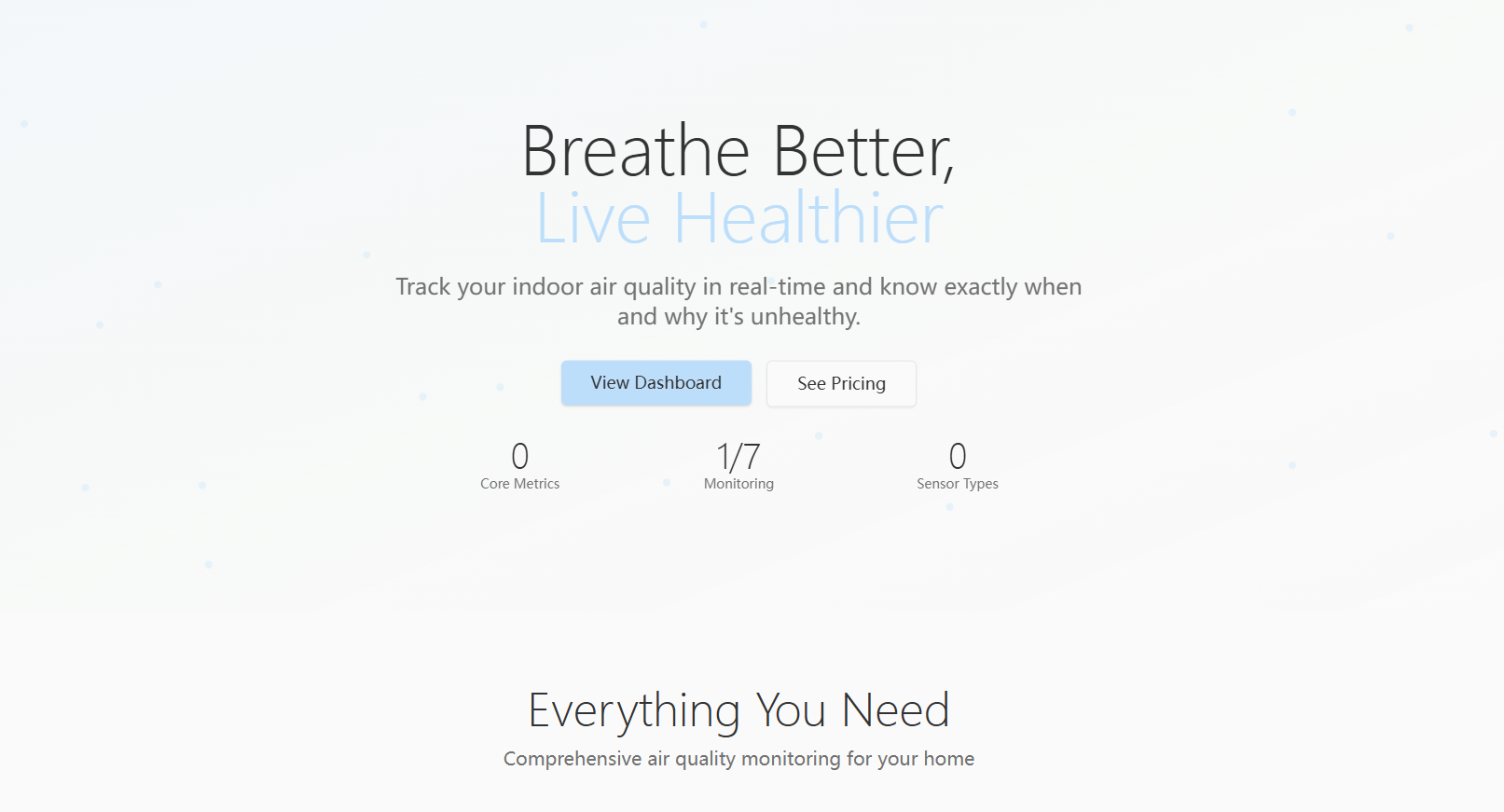
AirQuality Monitor tracks 5 core indoor air metrics (VOCs, PM2.5, CO₂, humidity, temperature) with color-coded statuses, health impact explanations, and one-tap actionable recommendations. Premium features unlock historical trend analysis and root cause identification for persistent air quality issues.
How we built it
I started with wireframing the dashboard and homepage, prioritizing intuitive design and smooth animations to make data less intimidating. I integrated sensor APIs to pull real-time data, built custom animated gauges and glassmorphism UI elements, and optimized animations for 60fps performance across devices. The tiered subscription model was built to balance free access to core tools with premium depth for power users.
Challenges we ran into
The biggest hurdle was balancing visual flair (particle effects, parallax, 3D tilt) with performance—lower-end devices struggled with unoptimized animations. I also had to normalize data across different sensor brands to ensure consistent health insights, and refine the root cause logic to avoid over-simplification while keeping explanations accessible.
Accomplishments that we're proud of
Creating a UI that’s both visually engaging and functional—users don’t just see data, they understand what it means for their health. We hit 60fps performance on all target devices, and early testers (including asthma patients) reported the actionable alerts made a tangible difference in their daily routines.
What we learned
I deepened my understanding of hardware-accelerated animations and accessibility (respecting prefers-reduced-motion settings). I also learned to translate technical air quality metrics into empathetic, plain-language guidance—jargon-free communication was harder than the code itself.
What's next for this project
We’re expanding sensor compatibility, refining root cause algorithms to include more environmental triggers, and adding room-by-room comparison tools. We also plan to integrate with air purifier/humidifier smart devices to auto-suggest or trigger adjustments for better air quality.

Log in or sign up for Devpost to join the conversation.