-
-
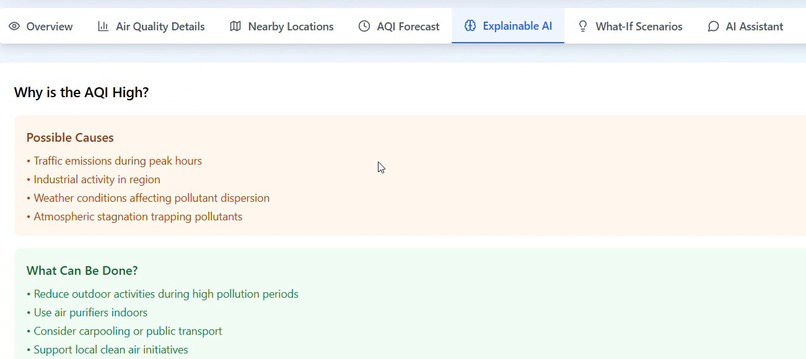
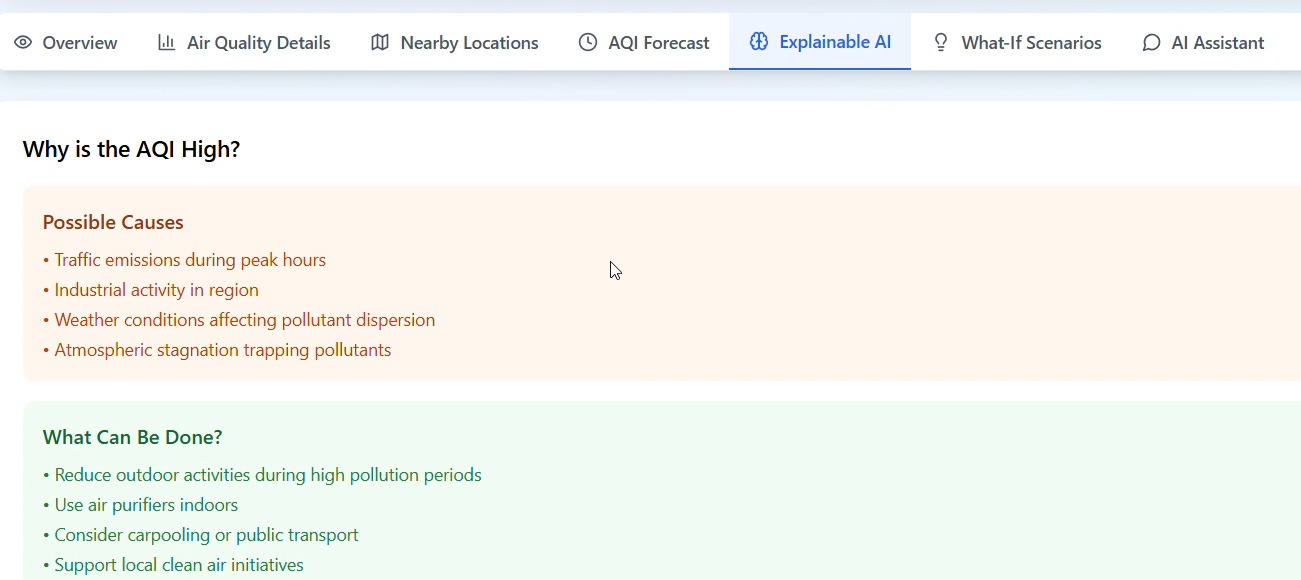
Explainable AI
-
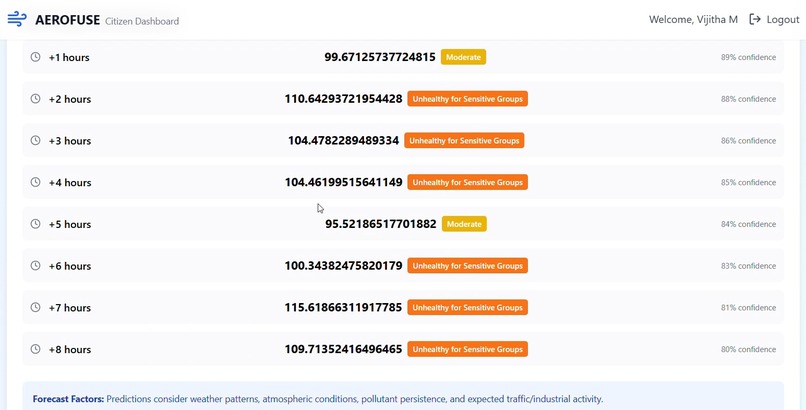
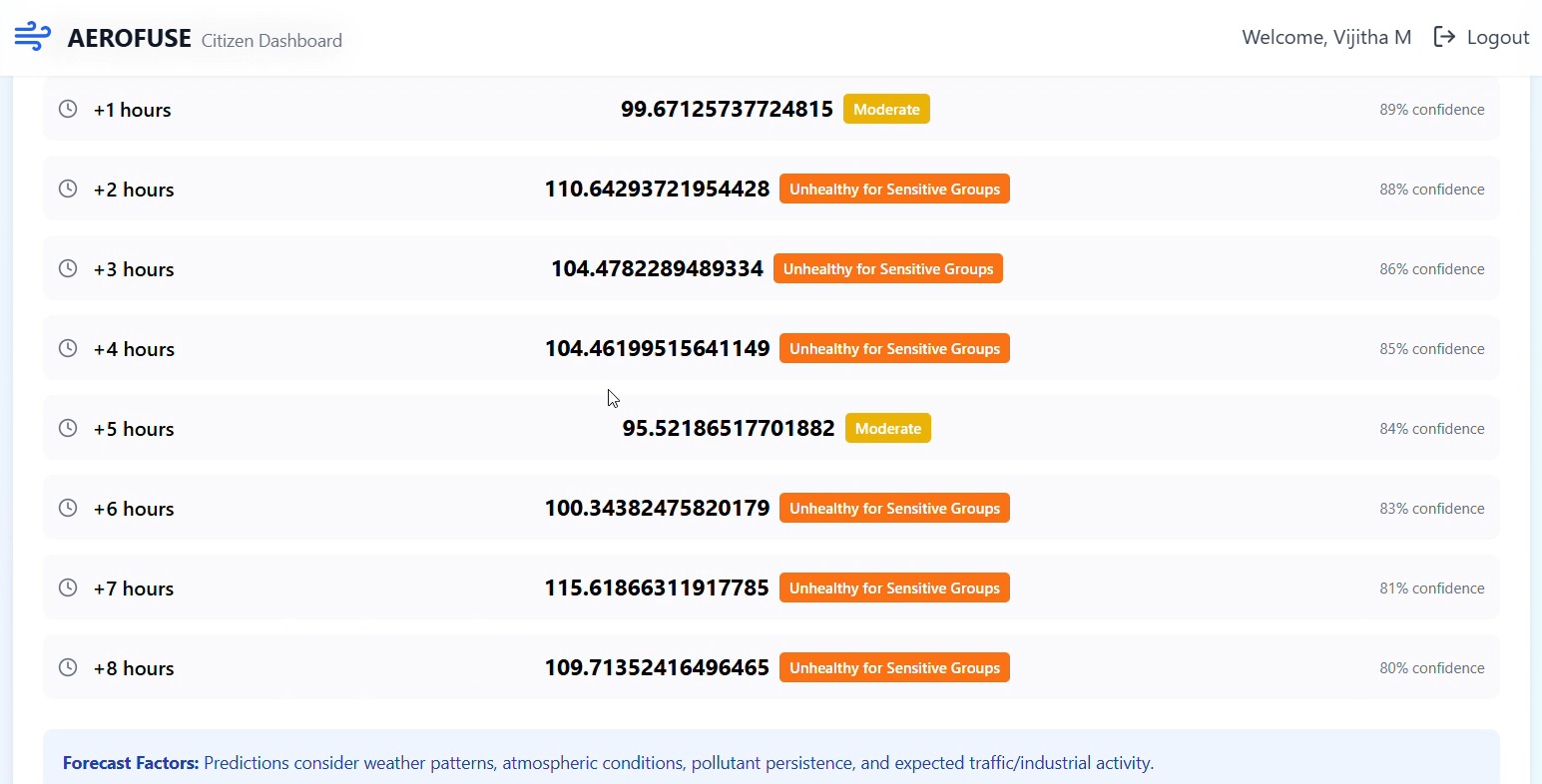
AQI Forecasting
-
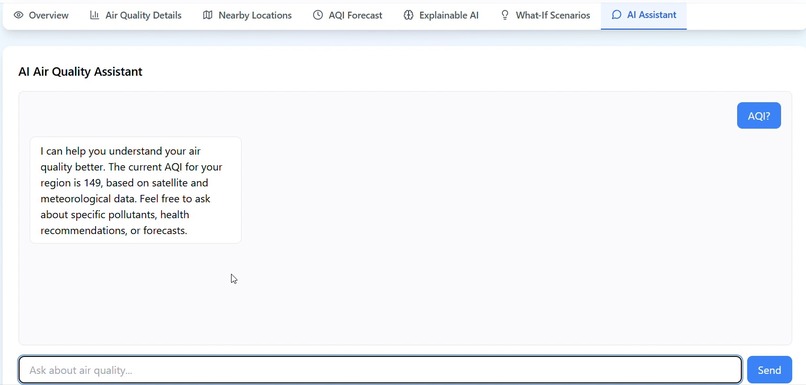
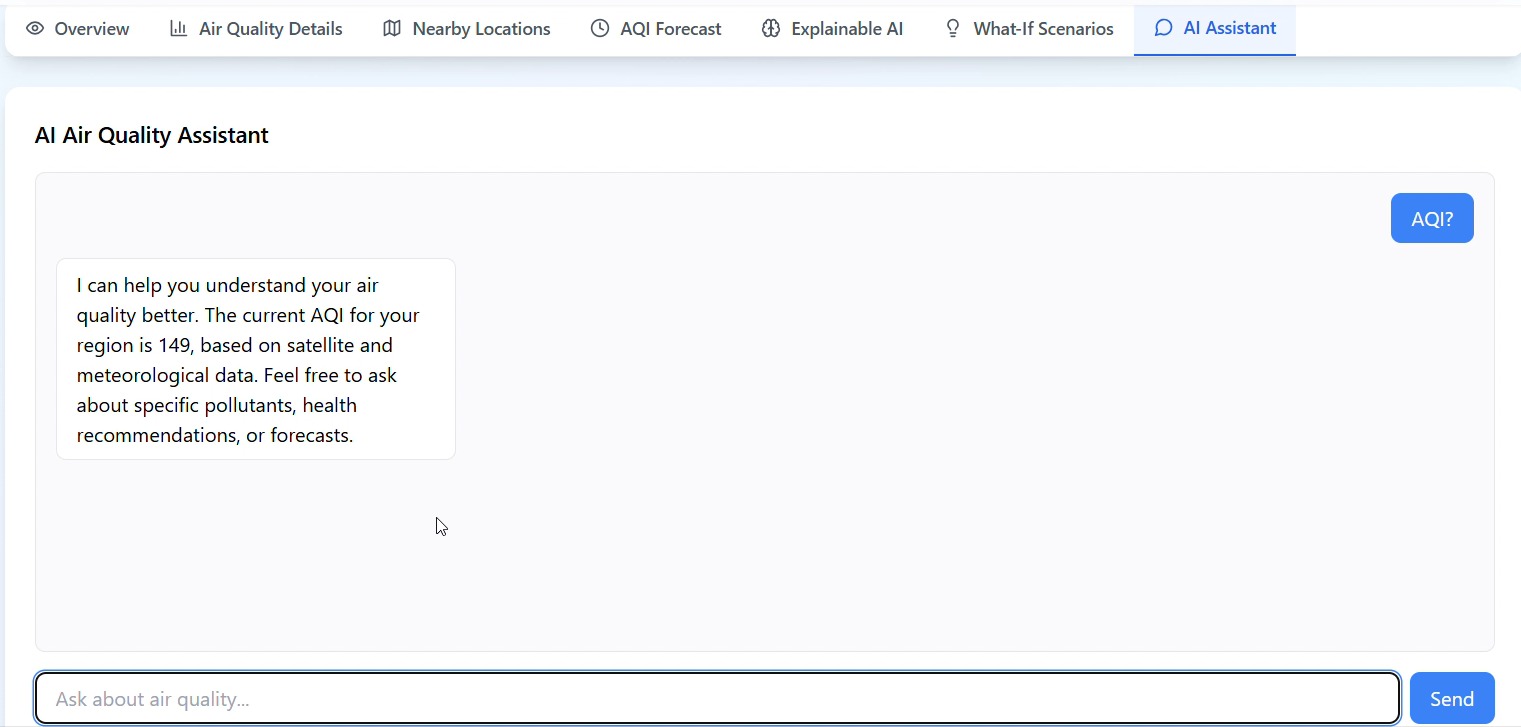
AQI Assistant
-
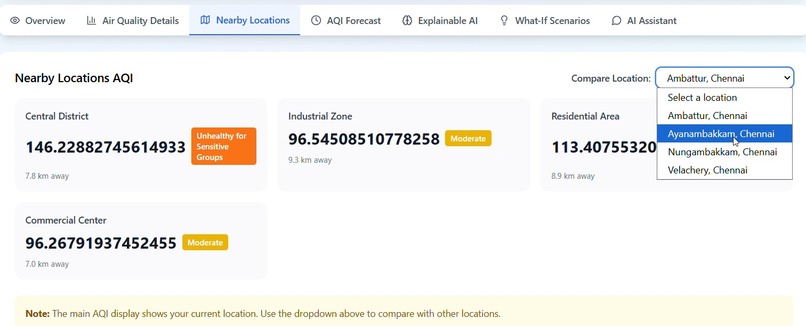
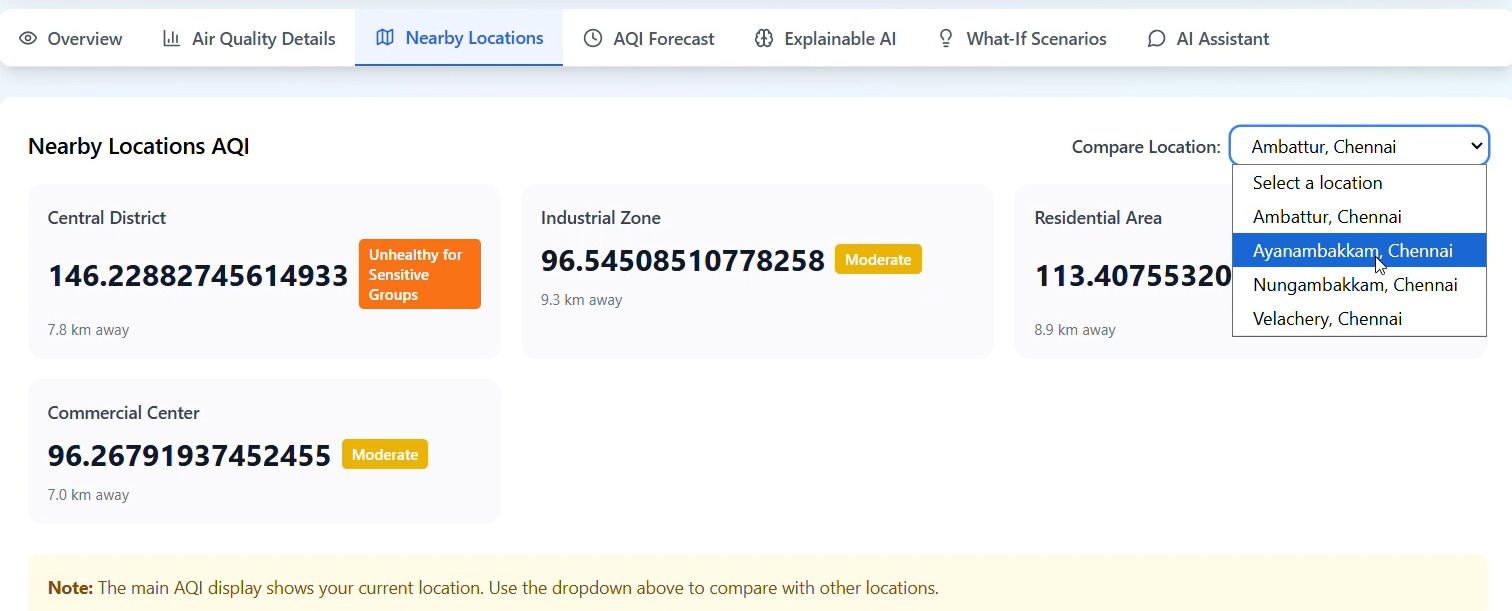
Nearby Location
-
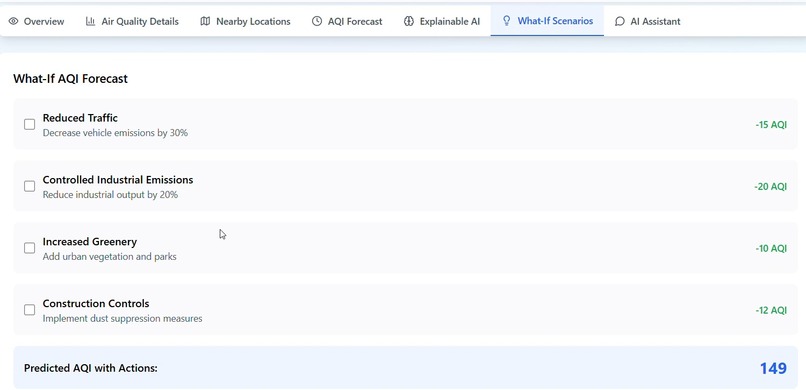
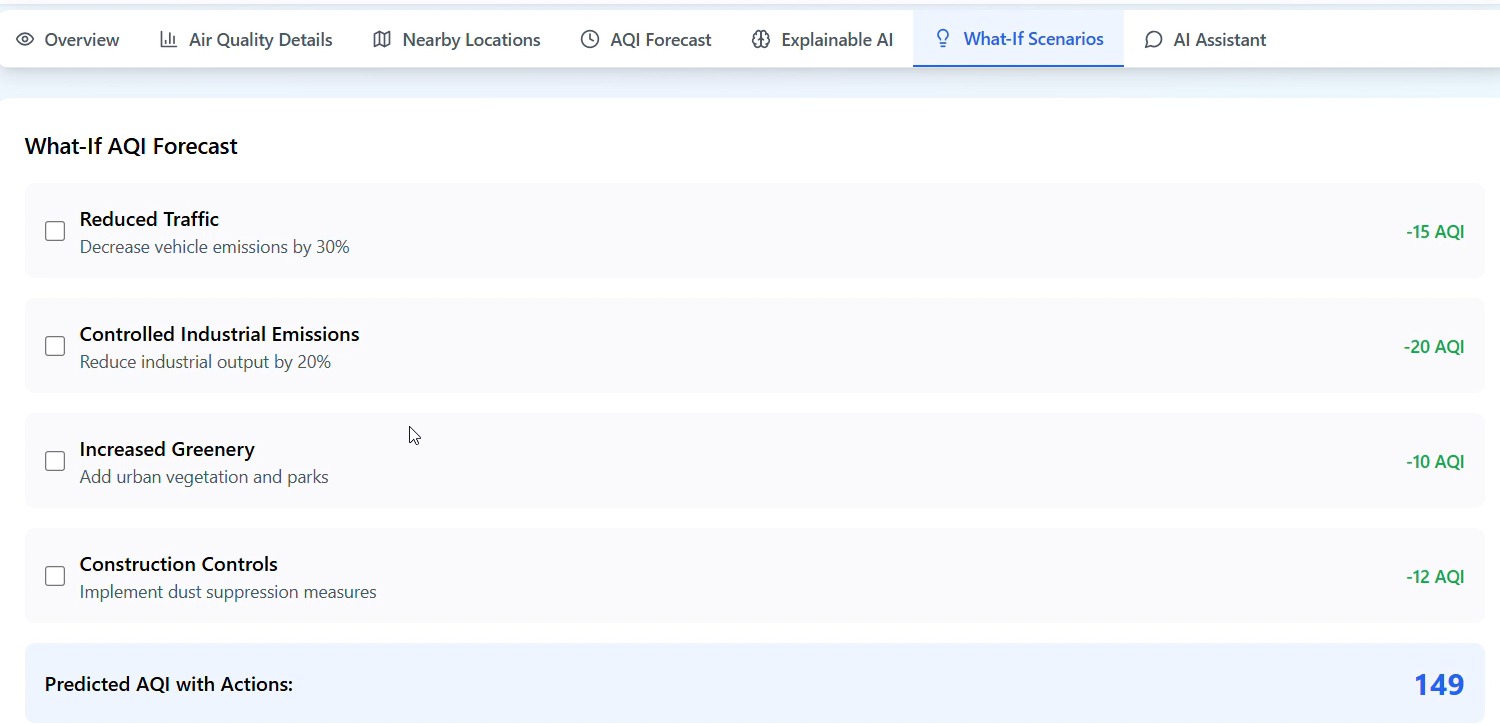
Actionable Insights
-
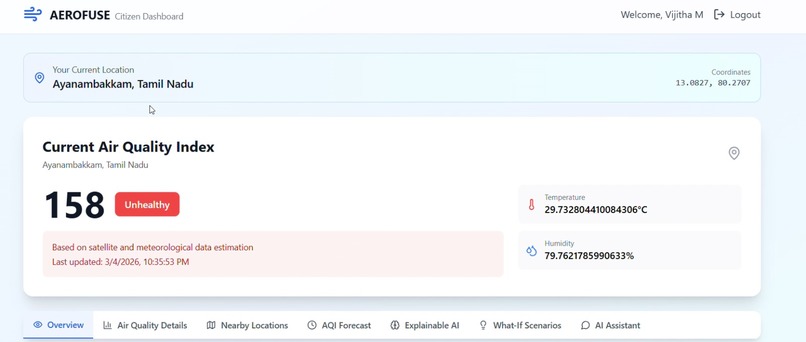
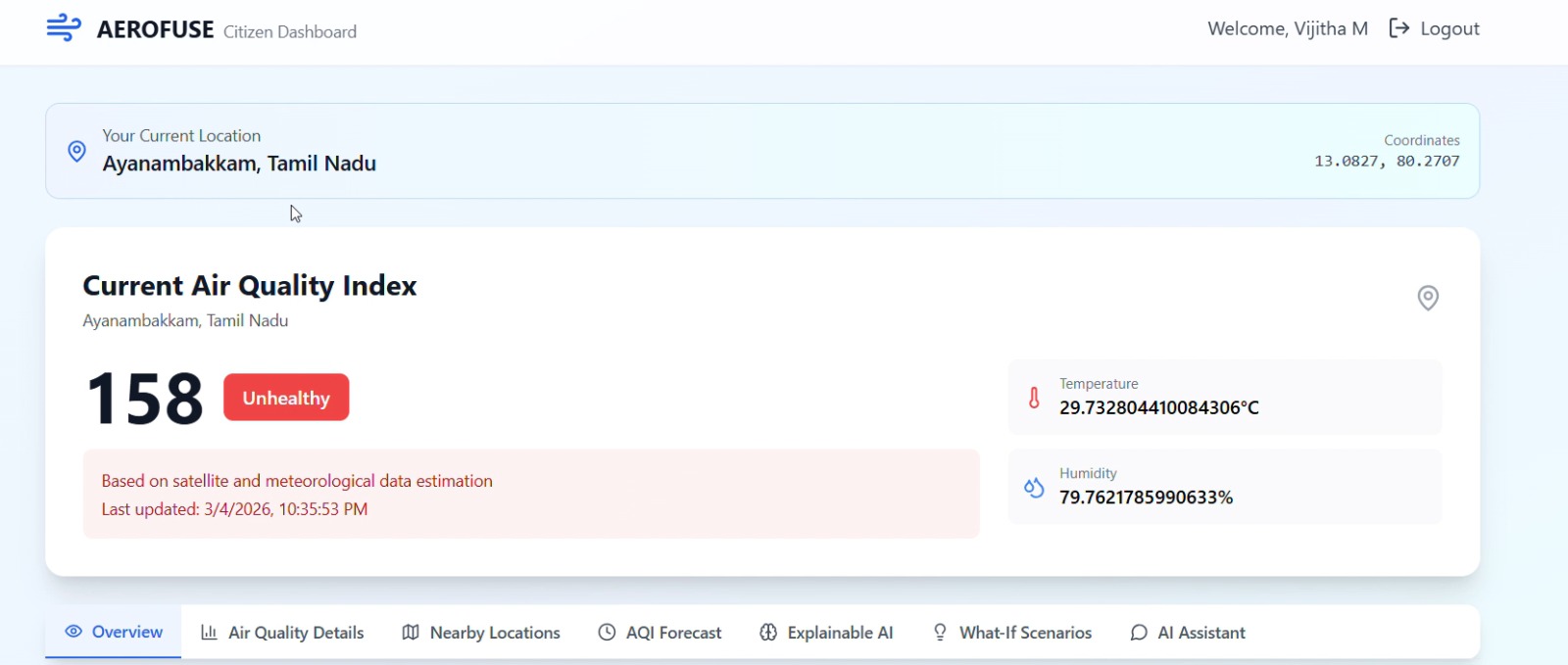
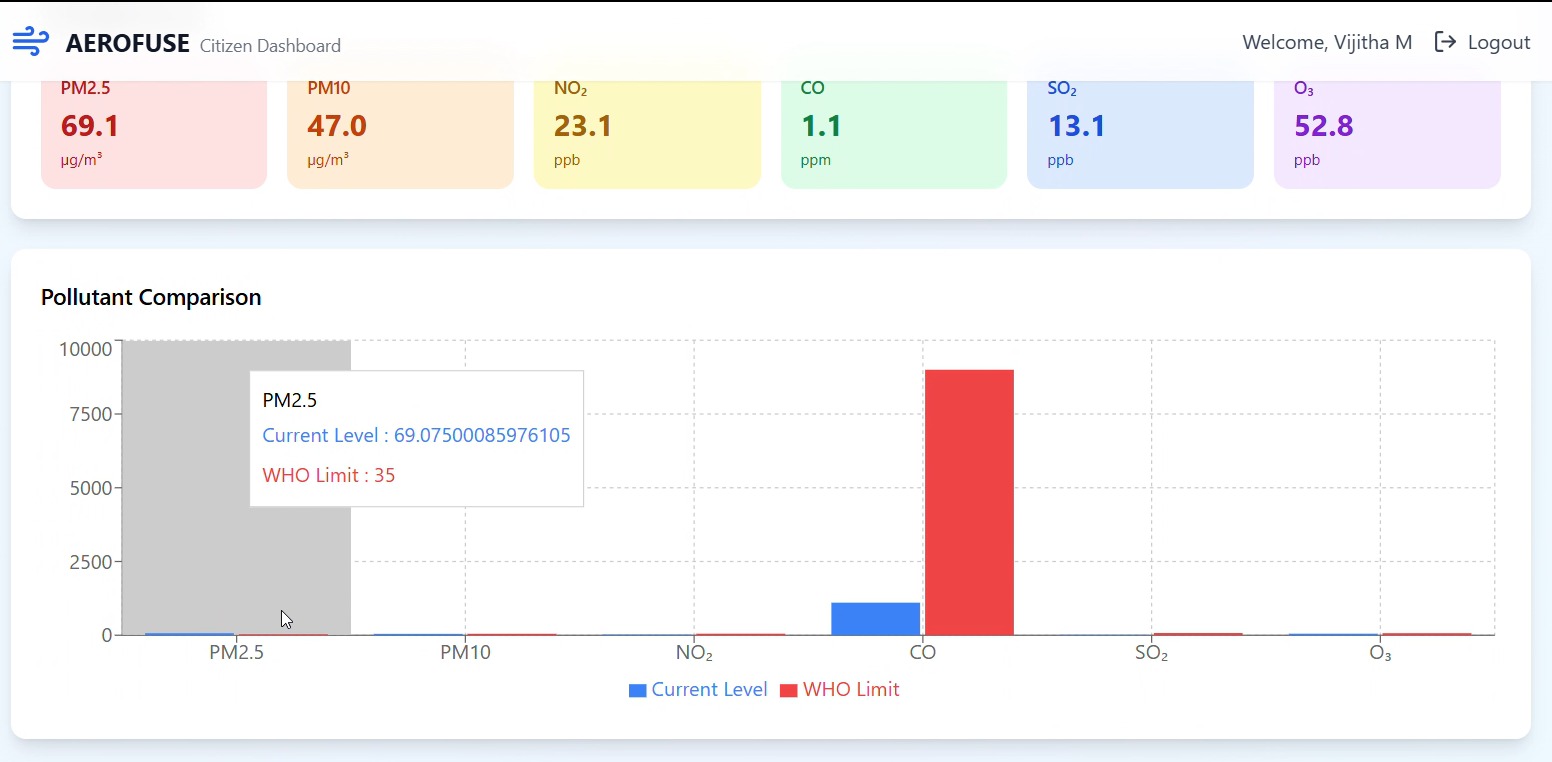
Dashboard
-
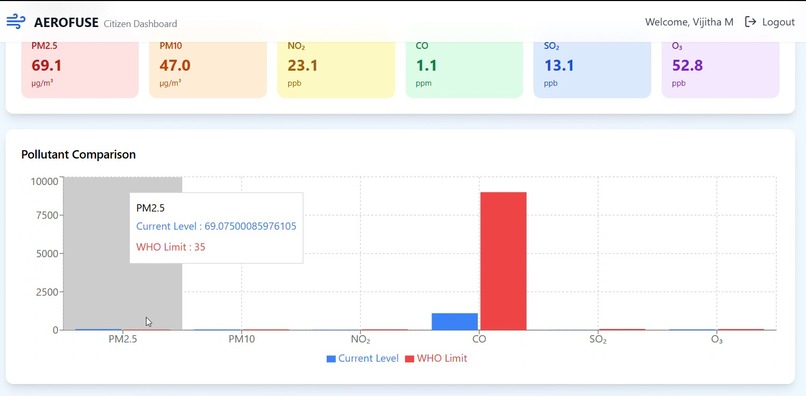
Pollutant Leaks
Inspiration
Air pollution is one of the most pressing environmental challenges facing modern cities. While air quality significantly impacts public health, most monitoring systems rely on sparse and expensive sensor networks, leaving large areas without reliable environmental insights.
We were inspired by a simple question:
What if we could combine data from space and ground-level sensors to create a smarter, more affordable, and more accessible air quality monitoring system?
This idea led to AEROFUSE, a platform that integrates satellite observations, IoT sensors, and Explainable Artificial Intelligence to predict air quality and help communities better understand environmental risks.
What it does
AEROFUSE is an AI-powered environmental intelligence platform that combines:
- Ground-level IoT air quality sensors
- Satellite atmospheric observations
- Machine learning-based AQI prediction
- Explainable AI analytics
The platform continuously collects environmental data from sensors and combines it with satellite-derived pollution indicators such as:
- Nitrogen Dioxide (NO₂)
- Sulfur Dioxide (SO₂)
- Aerosol Optical Depth (AOD)
Using machine learning, AEROFUSE predicts future Air Quality Index (AQI) levels and identifies potential pollution hotspots.
Unlike traditional monitoring systems, AEROFUSE also explains why predictions occur by analyzing the contribution of different environmental factors.
How we built it
1. Data Collection
We integrated low-cost IoT sensors to capture:
- Air Quality
- Temperature
- Humidity
To improve coverage and environmental awareness, we incorporated satellite-based atmospheric observations.
2. Machine Learning
Environmental data from both sources is processed and combined into a unified dataset.
Machine learning models analyze the relationships between:
- Ground pollution measurements
- Atmospheric conditions
- Satellite pollution indicators
The system then predicts future AQI values and identifies environmental trends.
3. Explainable AI
To improve transparency, we implemented Explainable AI techniques that identify the most influential factors behind each prediction.
This enables users to understand:
- Why pollution levels are increasing
- Which environmental variables contribute most
- How atmospheric conditions affect air quality
4. Dashboard
A web-based dashboard provides:
- Live sensor readings
- Satellite pollution data
- AQI forecasts
- Interactive visualizations
- Environmental alerts
Challenges we ran into
One of the biggest challenges was combining data from multiple sources with different formats and update frequencies.
Ground sensors provide highly localized, real-time information, while satellite observations provide large-scale atmospheric insights.
Aligning and processing these datasets required careful data preprocessing and synchronization.
Another challenge was ensuring that AI predictions remained interpretable rather than functioning as a black box. This motivated the integration of Explainable AI techniques into the platform.
Accomplishments that we're proud of
- Successfully integrated ground-based and satellite-derived environmental data.
- Developed a complete air quality prediction pipeline.
- Built an explainable AI framework for environmental analytics.
- Designed a scalable and cost-effective monitoring architecture.
- Created a foundation for smart-city environmental intelligence systems.
What we learned
Through this project, we gained experience in:
- Environmental data analytics
- Satellite data integration
- Machine learning for prediction systems
- Explainable AI
- Full-stack application development
- IoT sensor integration
- Smart-city technology design
We also learned the importance of combining multiple data sources to improve prediction accuracy and environmental awareness.
Impact
AEROFUSE demonstrates how low-cost technology can be combined with space-based observations to create scalable environmental monitoring systems.
Potential benefits include:
- Up to 30% improvement in AQI prediction accuracy through data fusion.
- Up to 70% lower deployment cost compared to dense sensor-only monitoring networks.
- More than 50% increase in monitoring coverage using satellite augmentation.
- Earlier identification of pollution events and environmental risks.
What's next for AEROFUSE
Future development will focus on:
- Hyperlocal pollution forecasting
- City-wide environmental intelligence networks
- Mobile alerts for vulnerable populations
- Smart-city integration
- Industrial emissions monitoring
- Climate and environmental risk analytics
Our long-term vision is to make environmental intelligence as accessible as weather forecasting and help communities make healthier, data-driven decisions.
Built With
- chart.js
- css
- esp32
- express.js
- github
- iot
- mq135
- node.js
- postgresql
- python
- react
- scikit-learn
- shap-ai
- supabase
- tailwind
- tensorflow
- typescript
- vite


Log in or sign up for Devpost to join the conversation.