

Inspiration
What it does
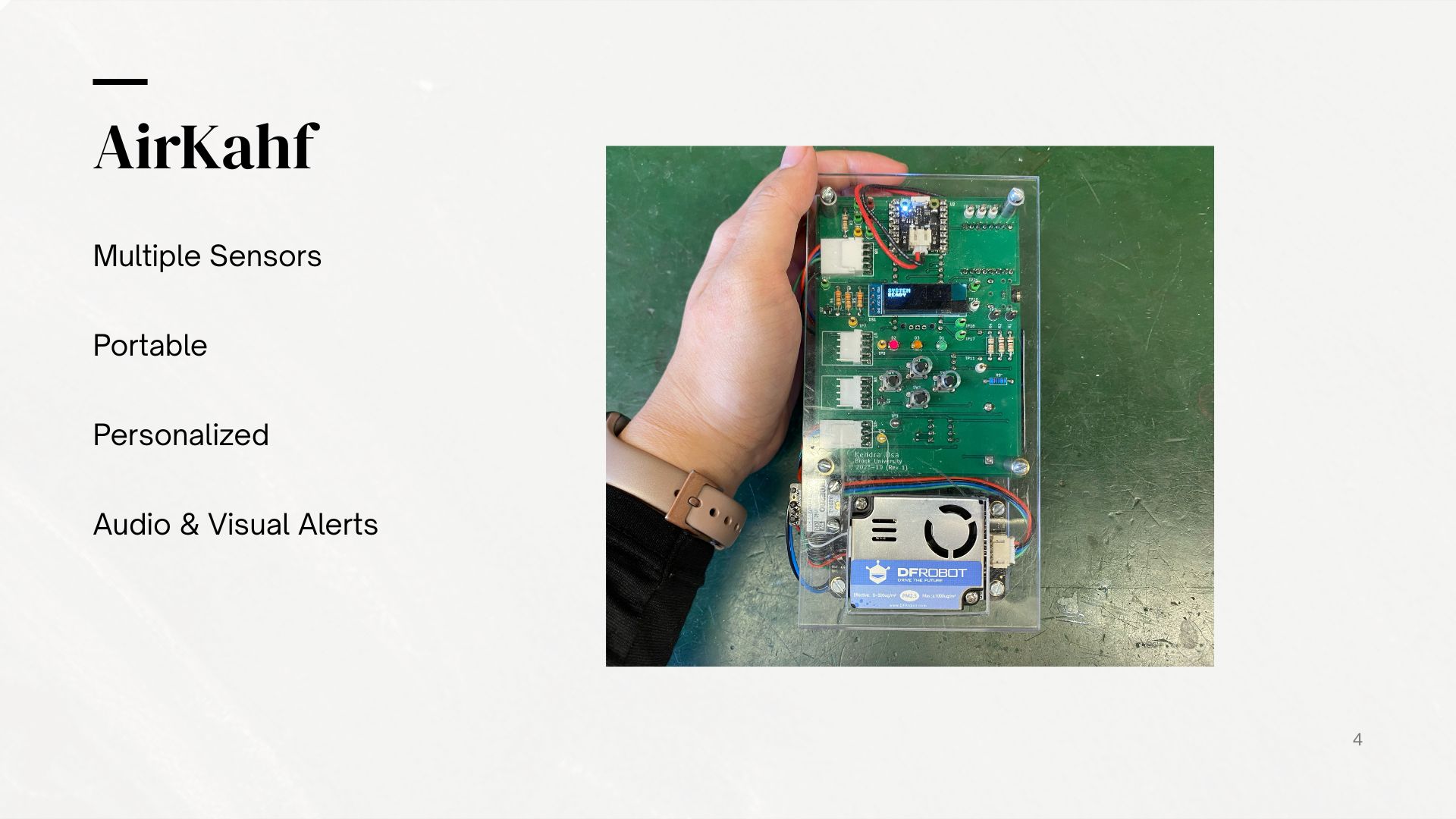
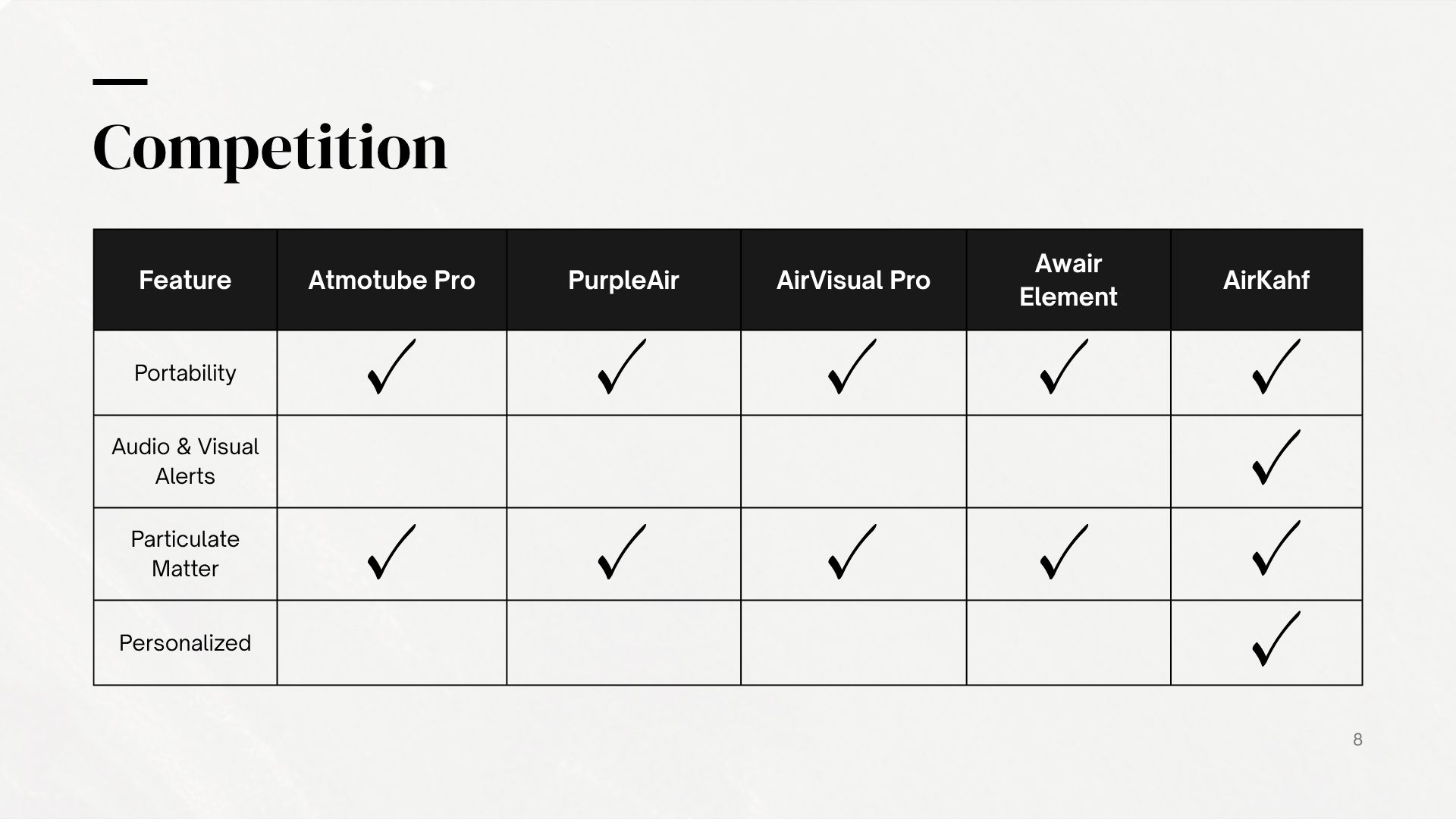
Personalizes air monitoring to the user's tolerance level and location. Giving a more accurate reading of their surroundings.
How we built it
Designed the PCB and soldered on all the components, while software used random forest machine learning model and simplistic dashboard from dash to show the data and prediction.
Challenges we ran into
It was a large learning curve as this is the first time I truly programmed the machine learning model for the device. I was more familiar with hardware, thus learning the back-end side was a challenge.
Accomplishments that we're proud of
An accomplishment would be the slider in the dash as it gives me a good understanding of how the model can predict flagged times. I'm excited to further polish the model.
What we learned
I learned how to use scikit and jupyter to train a model, as well as integrate dash with the jupyter code. I would like to learn more full-stack related concepts to help improve the software even more.
What's next for AirKahf
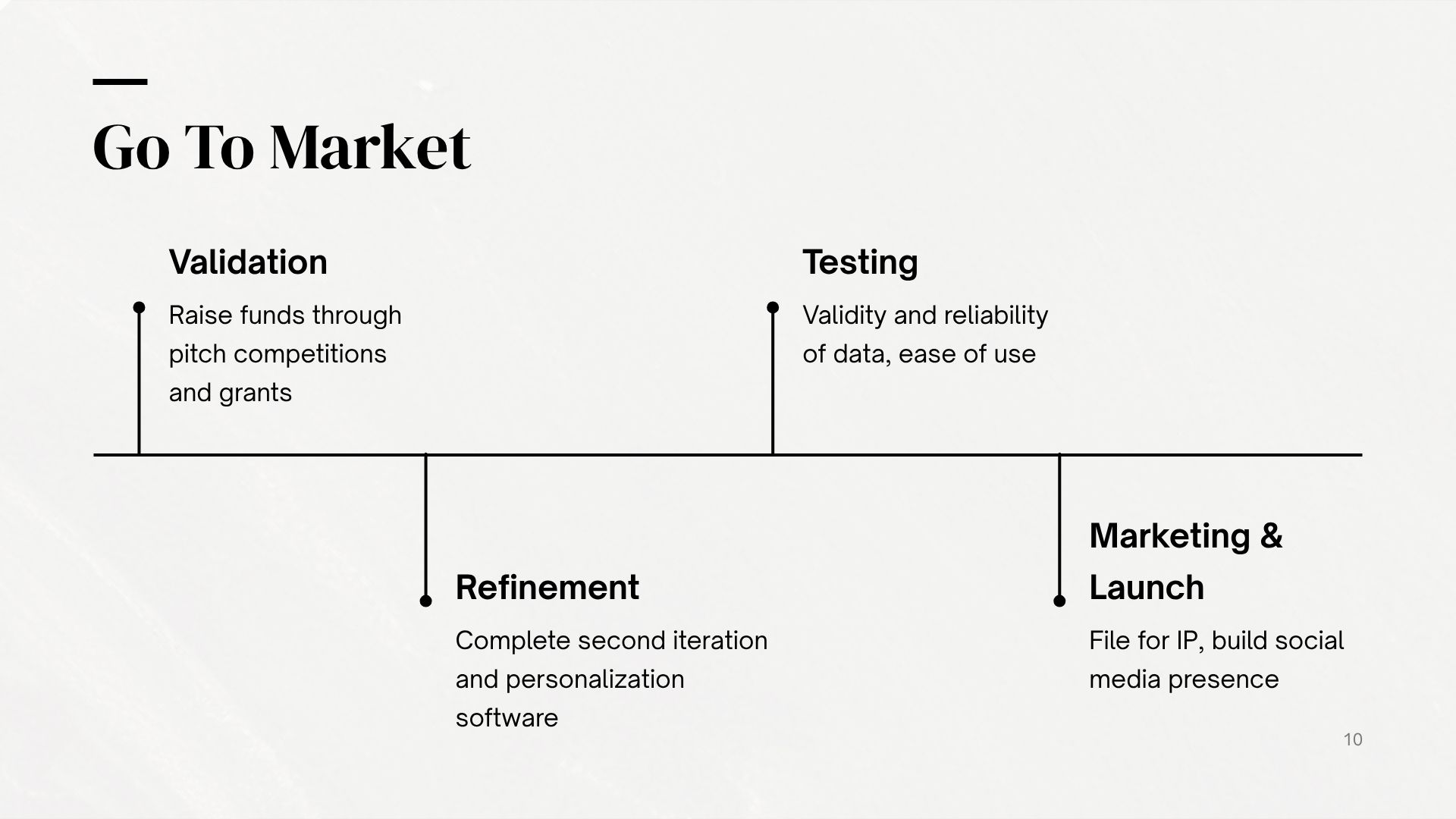
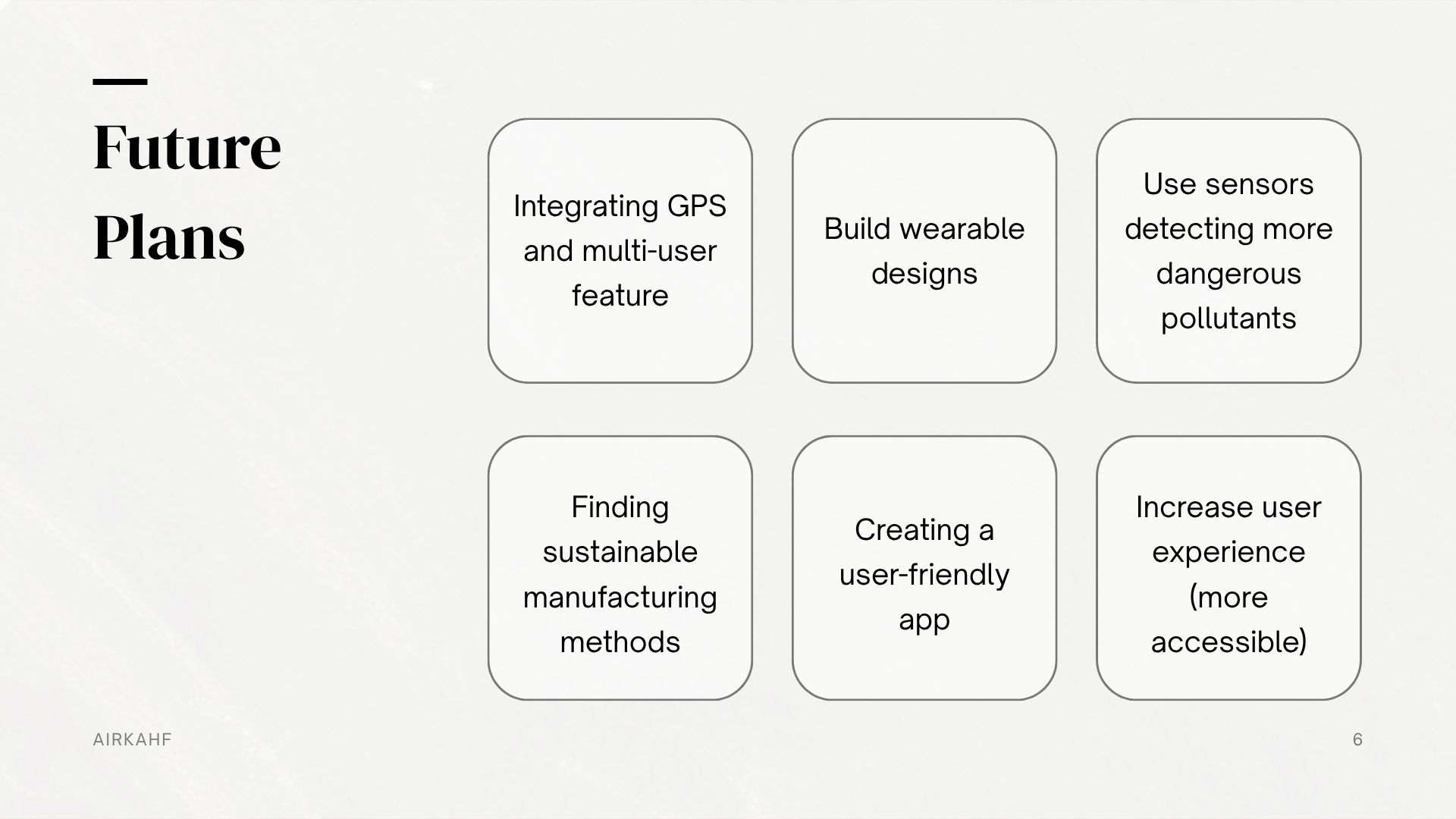
Currently in the process of ordering parts and waiting for them to arrive, refining model and dashboard design to give users a more friendly experience, as well as gain more funding, exposure, and validation through pitch competitions.
Built With
- dash
- electronics
- machine-learning
- pcb
- python

Log in or sign up for Devpost to join the conversation.