-
-
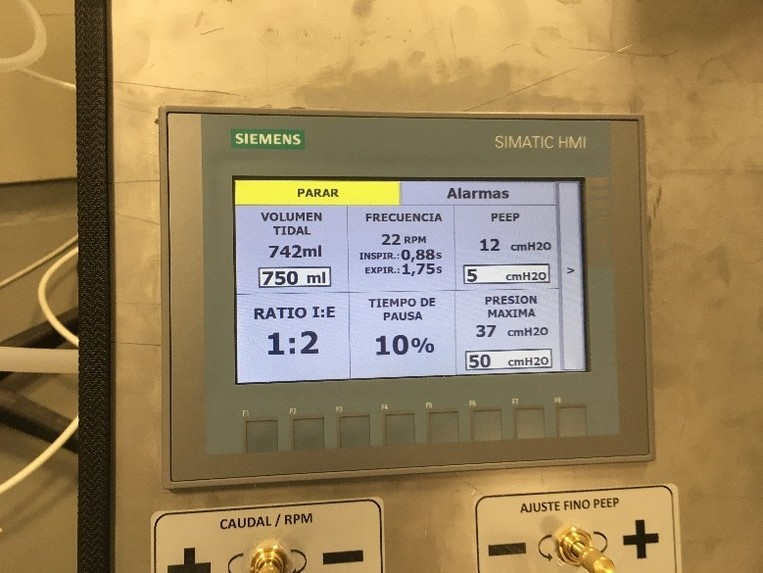
HMI
-
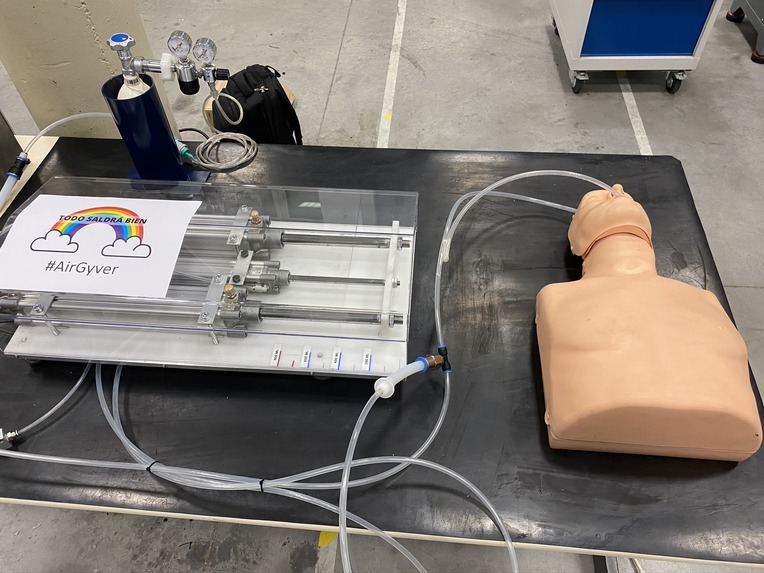
Version Beta
-
-

Inspiration
It was born as an altruistic initiative from a group of friends concerned about the health emergency situation during the COVID-19 crisis in March 2020.
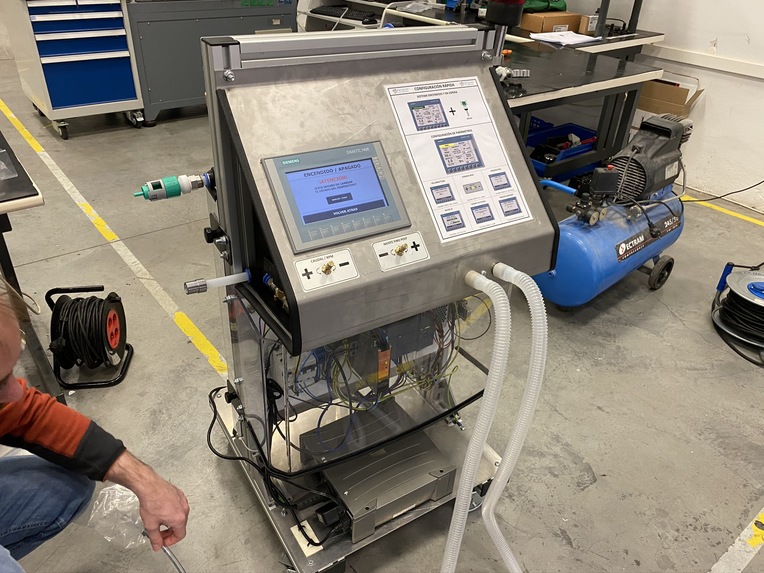
The objective is to industrialize the components of a ICU respirator, and with the aim of using the most usual elements as possible. This design would allow quick production of emergency respirators with industrial elements that have been proproven robustness and reliability
What it does
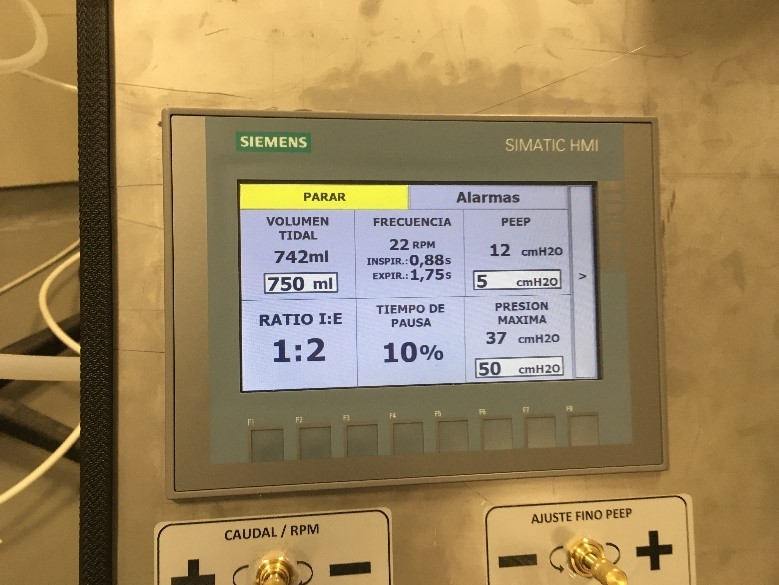
Pressure control mode (PCV): Deliver the set pressure for the duration of the inspiratory phase. Volume control mode (VCV): Deliver the set TV and block exhalation during the inspiratory phase.
Respiratory rate control (RR) between 10-35 bpm. Tidal Volume control (TV) between 250 and 750 ml. Peak Inspiratory Pressure control (PIP) between 10 and 40 cmH2O. Inspiratory/Expiratory ratio (I/E) between 1:2 and 1:3. Fractional O2 control (FIO2) between 10% to 100% (Externally Controlled). Post-End-Expiratory-Pressure (PEEP) control between 0 to 20 cm h20. Mandatory and spontaneous trigger (patient assist) by pressure.
PIP max pressure safety (typically 40 cm h2o). Alarms for PIP, TV, PEEP, disconnect and leak .Battery Backup
How we built it
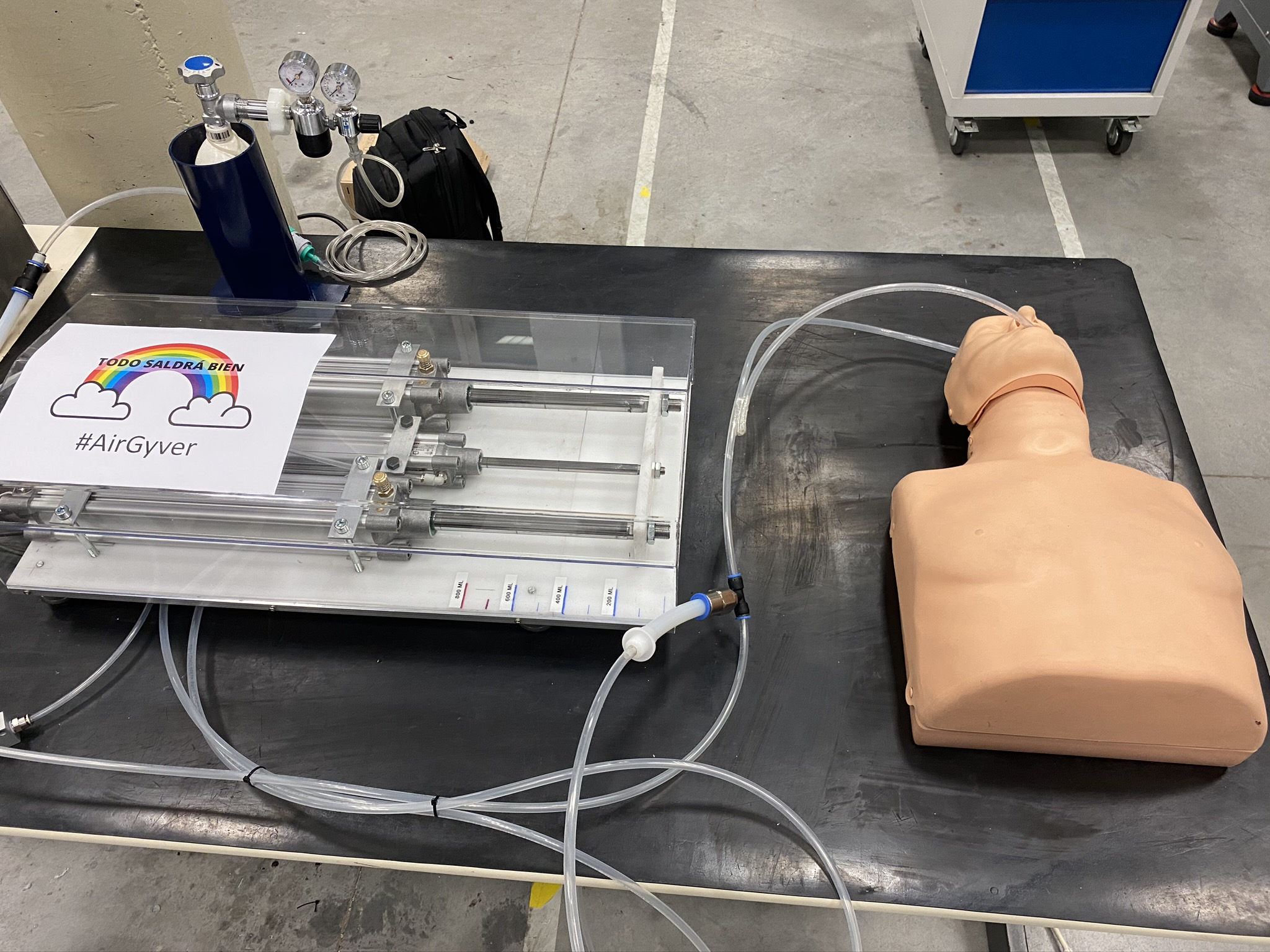
The device is built with the most usual pneumatics elements (cilinders and electrovalves) and Programmable Logic Controllers from industry, in order to have a high availability of them.
Challenges we ran into
Firstly we have validated that the idea could work as we thought in the first brainstorming. After this hypothesis was validated, we try to find the most suitable elements to build a minimum viable prototype, when we achieved all this items, the (MVP) was built. Then the device started to be test on different ways to get its maximum capabilities and improve its weaknesses.
Accomplishments that we're proud of
Make an UCI ventilator only with commercial and usual industrial components
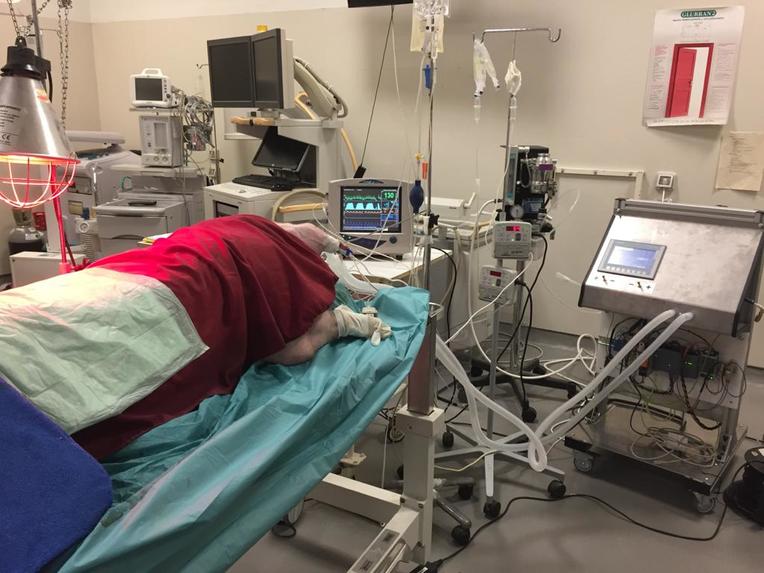
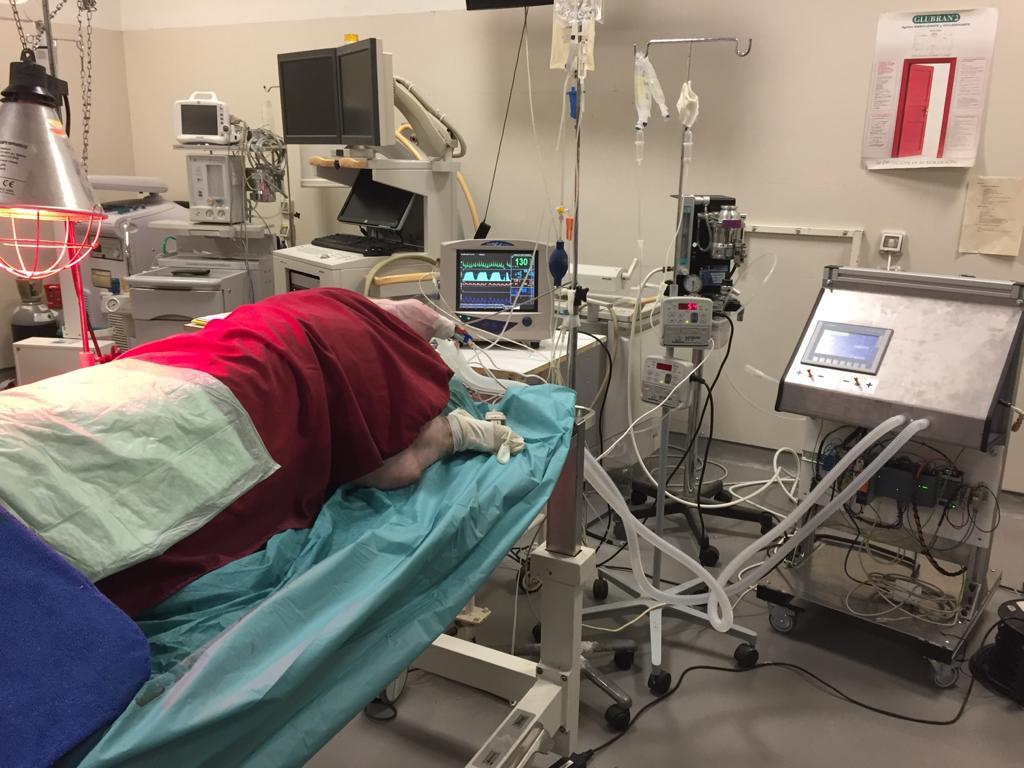
Pass an animal clinic test with GITMI (research group by University of Zaragoza) using our prototype of ventilator in a 86 kg of weight pig
What we learned
The basics of the respirators functioning, the capabilities of our team and the generosity of all the people that have supported us, with materials or helping in our doubts.
What's next for AirGyver
The next steps for AirGyver should be finding economical and human resources to carry out the next tests to have the compliance of different countries standards to be a respirator for health emergency situations.
Also we want companies that allow build a fulfill supply chain for a emergency response plan of massive AirGyver manufacturing in each country.
Built With
- beckhoff
- catia
- plc
- pneumatics
- s1200
- siemens
- step7
- tiaportal
- twincat





Log in or sign up for Devpost to join the conversation.