-
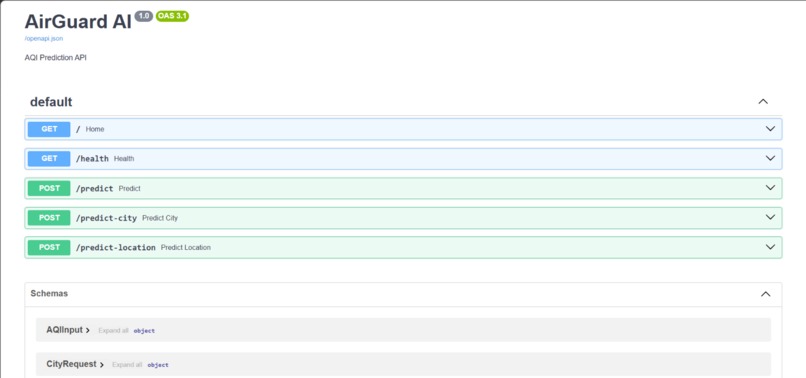
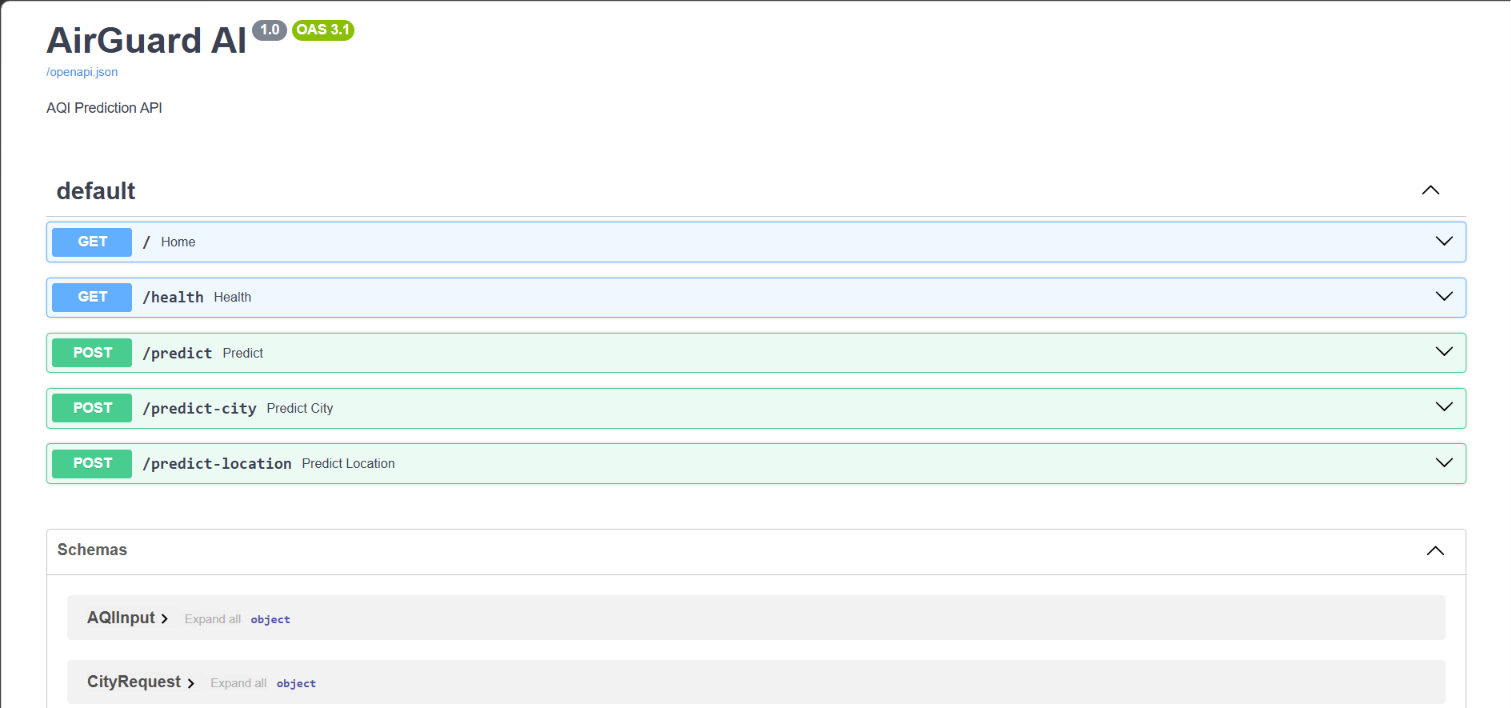
Swagger
-
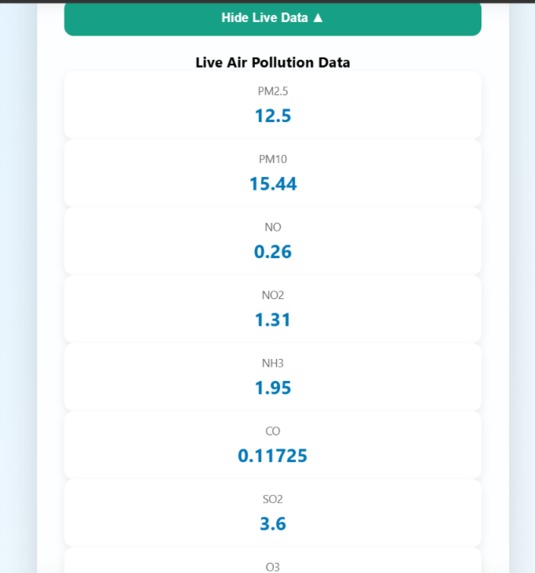
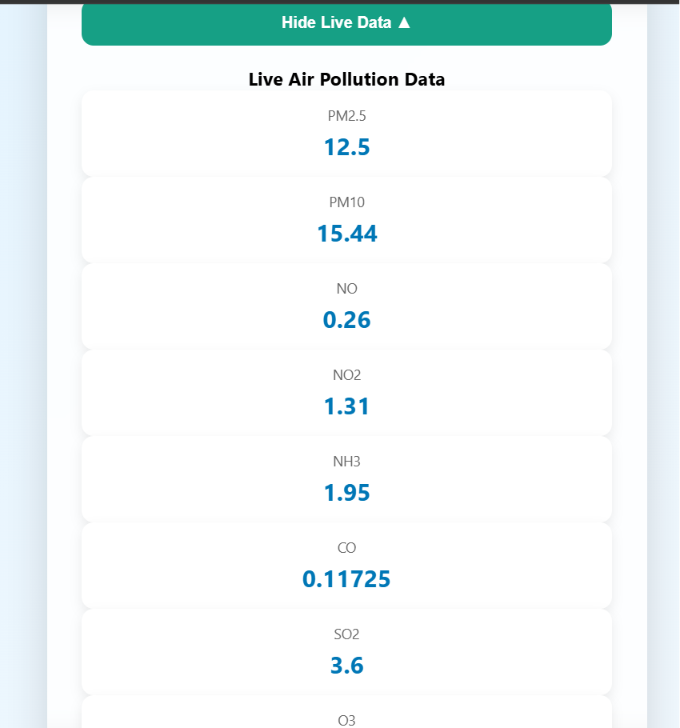
Live Pollutants data expanded
-
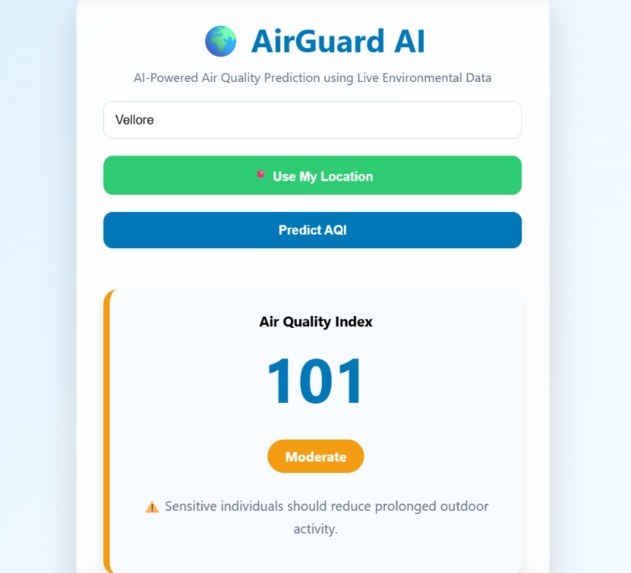
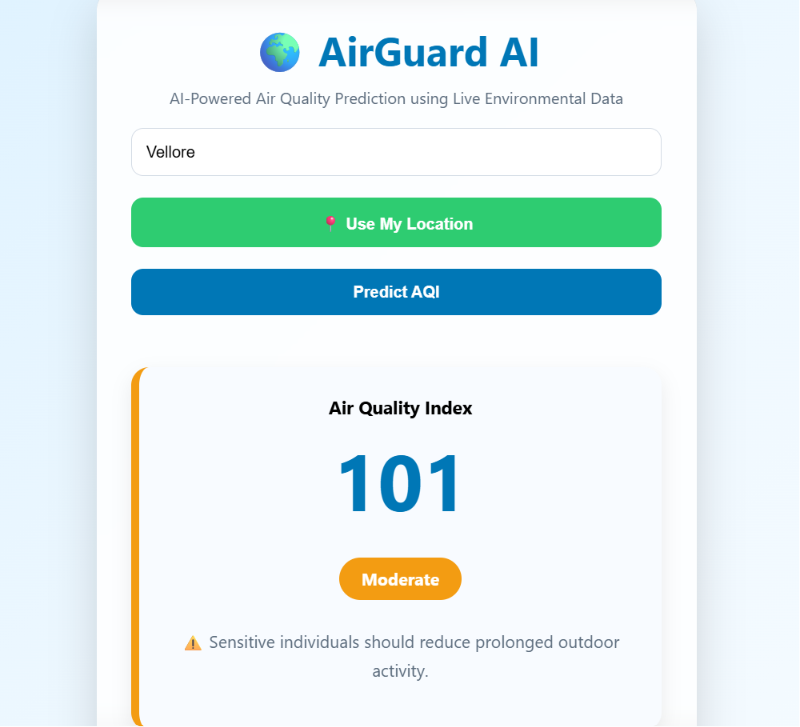
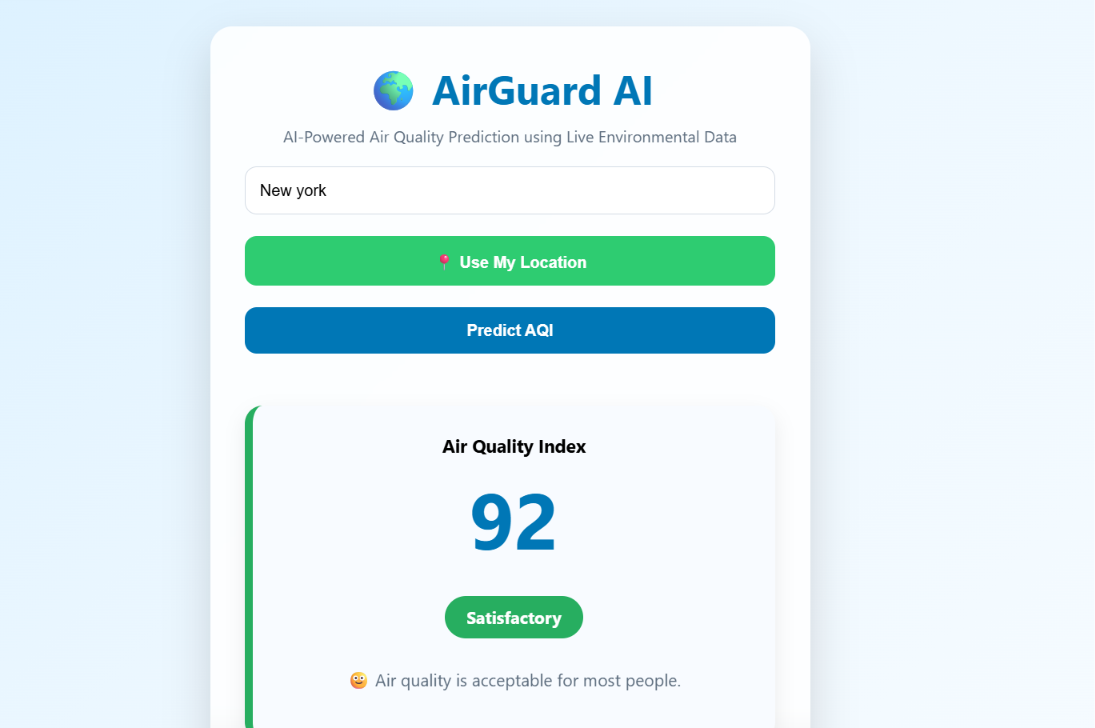
Prediction 2
-
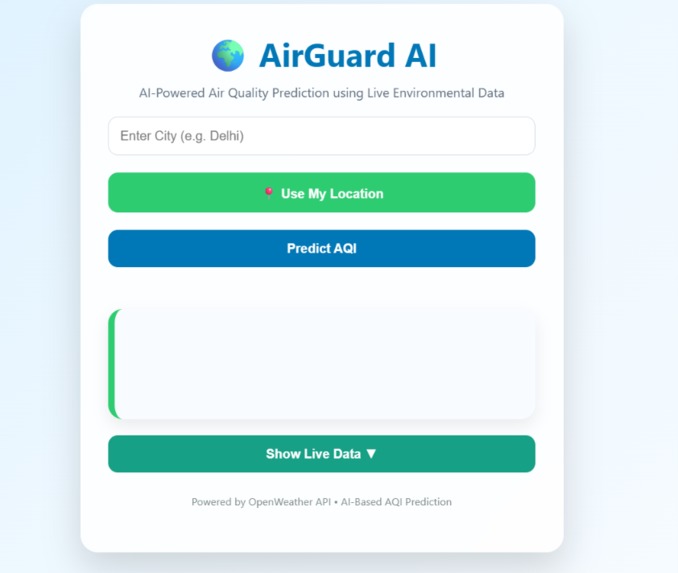
Home Page
-
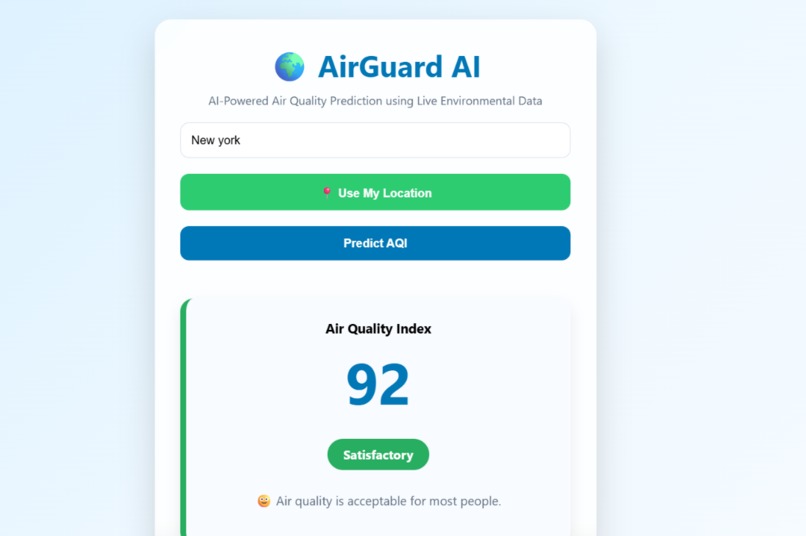
Prediction 1
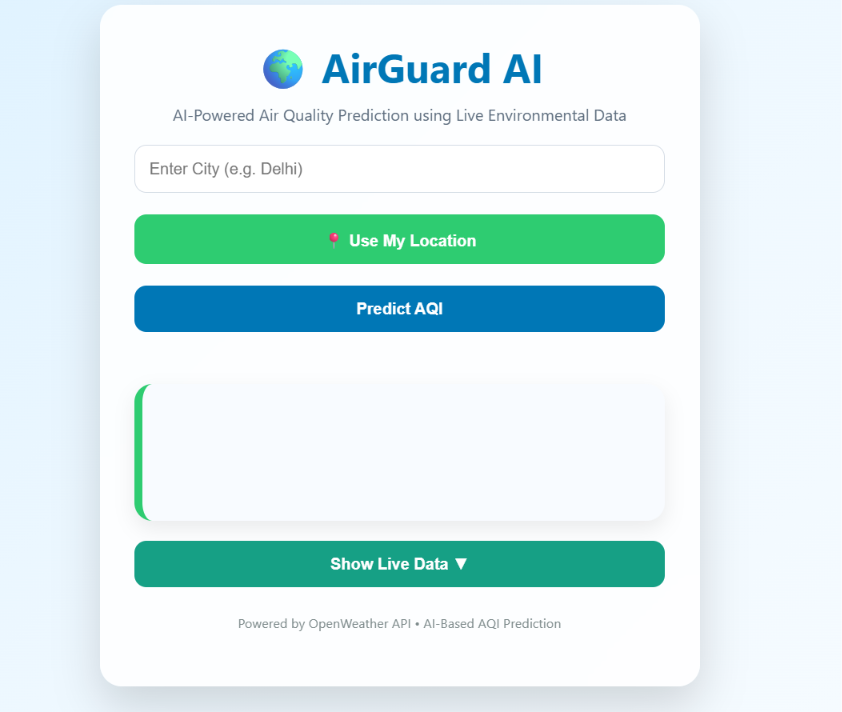
🌍 AirGuard AI
Inspiration
Air pollution affects millions of people every day, yet most platforms only display AQI values without helping users understand their impact. I wanted to build an AI-powered application that combines live environmental data with machine learning to provide meaningful air quality insights and health recommendations.
What it does
AirGuard AI predicts the Air Quality Index (AQI) for any city using live pollution data from the OpenWeather API and a trained Random Forest model. Users can search by city or use their current location to view predicted AQI, pollutant levels, air quality category, and personalized health recommendations.
How I built it
I trained a Random Forest regression model using a historical air quality dataset after performing data cleaning, preprocessing, and exploratory data analysis. The backend was developed using FastAPI, while the frontend was built with HTML, CSS, and JavaScript. Live pollution data is fetched from the OpenWeather API, processed, and passed to the trained model for prediction. The backend is deployed on Render, and the frontend is hosted on Vercel.
Challenges I faced
The biggest challenge was integrating live API data with a machine learning model trained on historical data. I also faced deployment issues, including large model file limits on GitHub and configuring communication between the deployed frontend and backend. Solving these problems gave me practical experience with deploying AI applications.
What I learned
This project strengthened my understanding of machine learning workflows, REST API development, frontend-backend integration, cloud deployment, and working with real-time data. More importantly, I learned that building an AI application requires combining data science with software engineering to create a complete, user-friendly solution.
Built With
- ai
- air
- api
- css
- environmental
- fastapi
- forest
- git
- github
- html
- javascript
- joblib
- learning
- machine
- numpy
- openweather
- pandas
- python
- quality
- random
- render
- rest
- scikit-learn
- vercel
