Inspiration
Insurance adjusters handle IDs, medical records and bank statements at the scene. Company policy often says the raw data may not leave the laptop, while the cloud is the only place that can compare a 40-page policy or spot patterns across other claims. The usual answer, redact before upload, asks the user to trust a black box. We wanted the opposite: the laptop decides what leaves, shows the exact text, and leaves a receipt a third party can check.
What it does
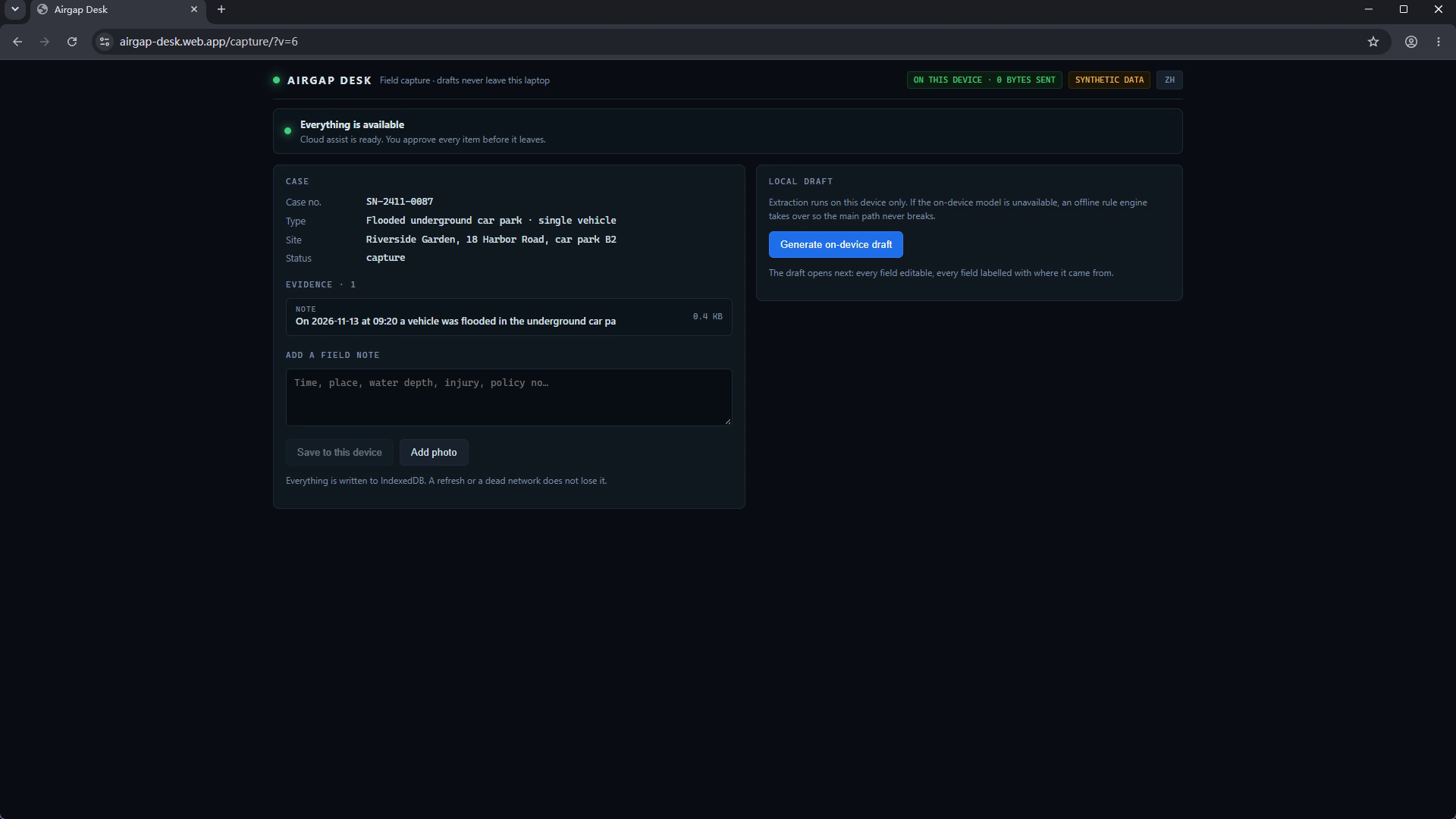
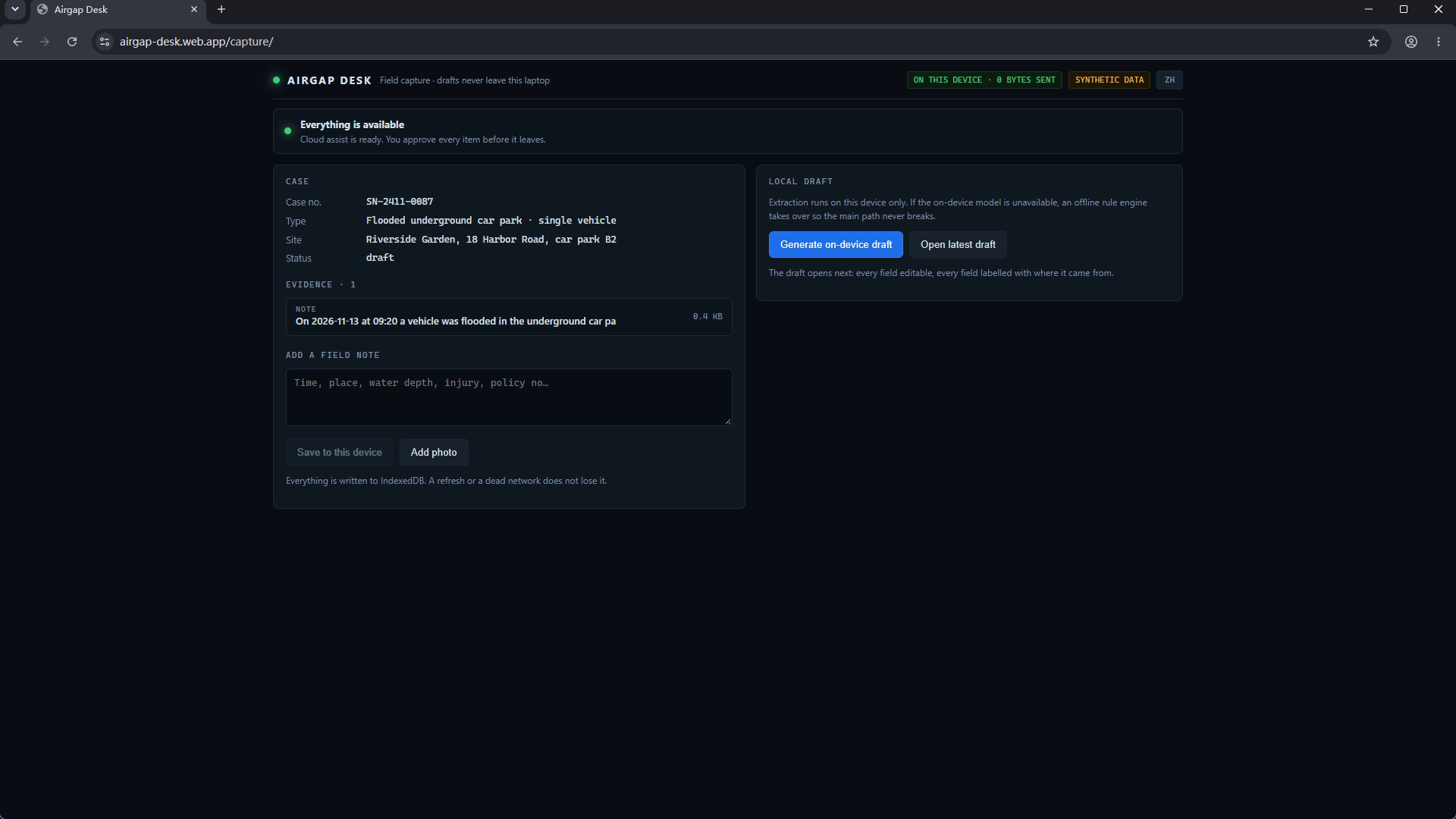
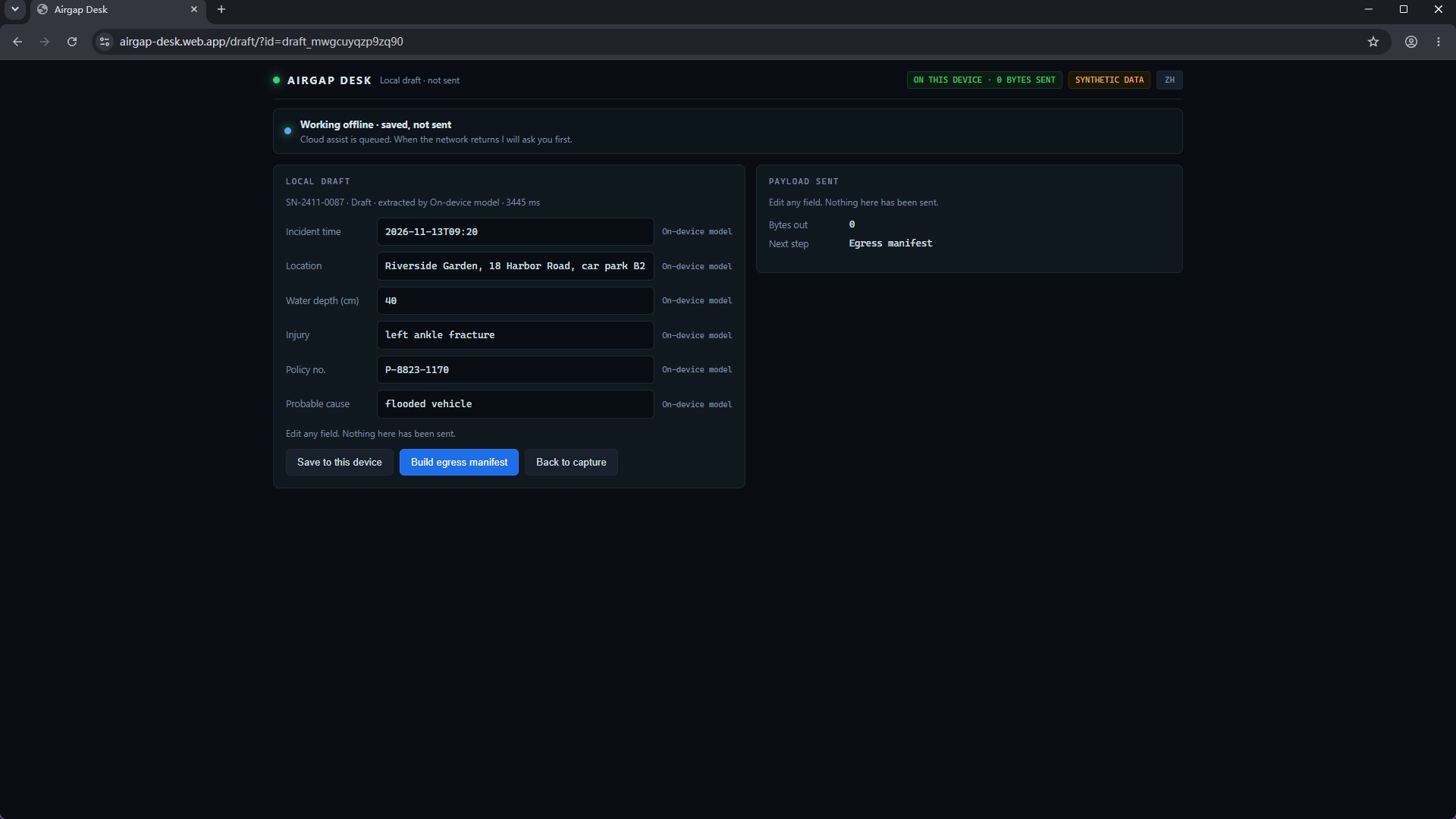
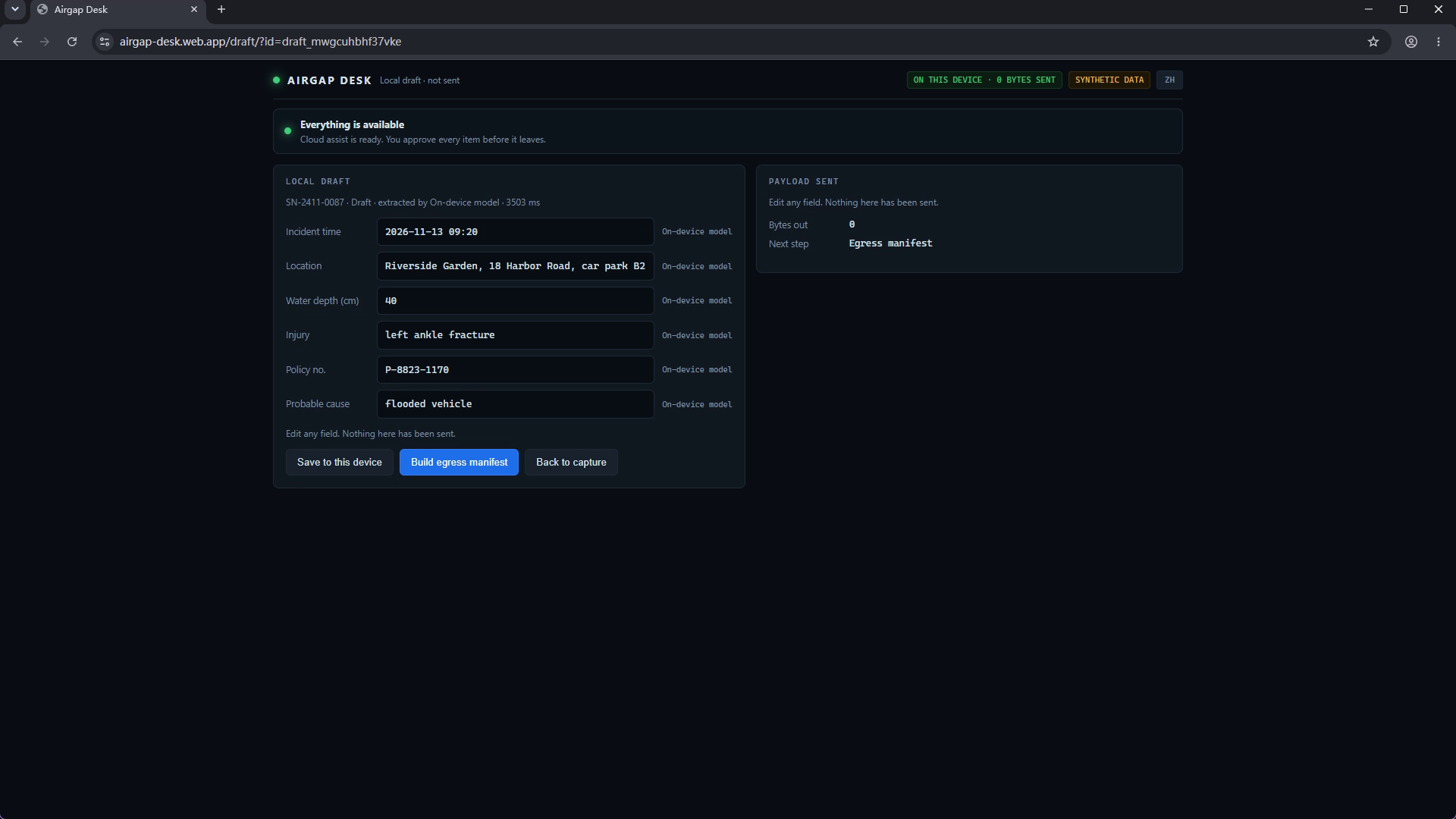
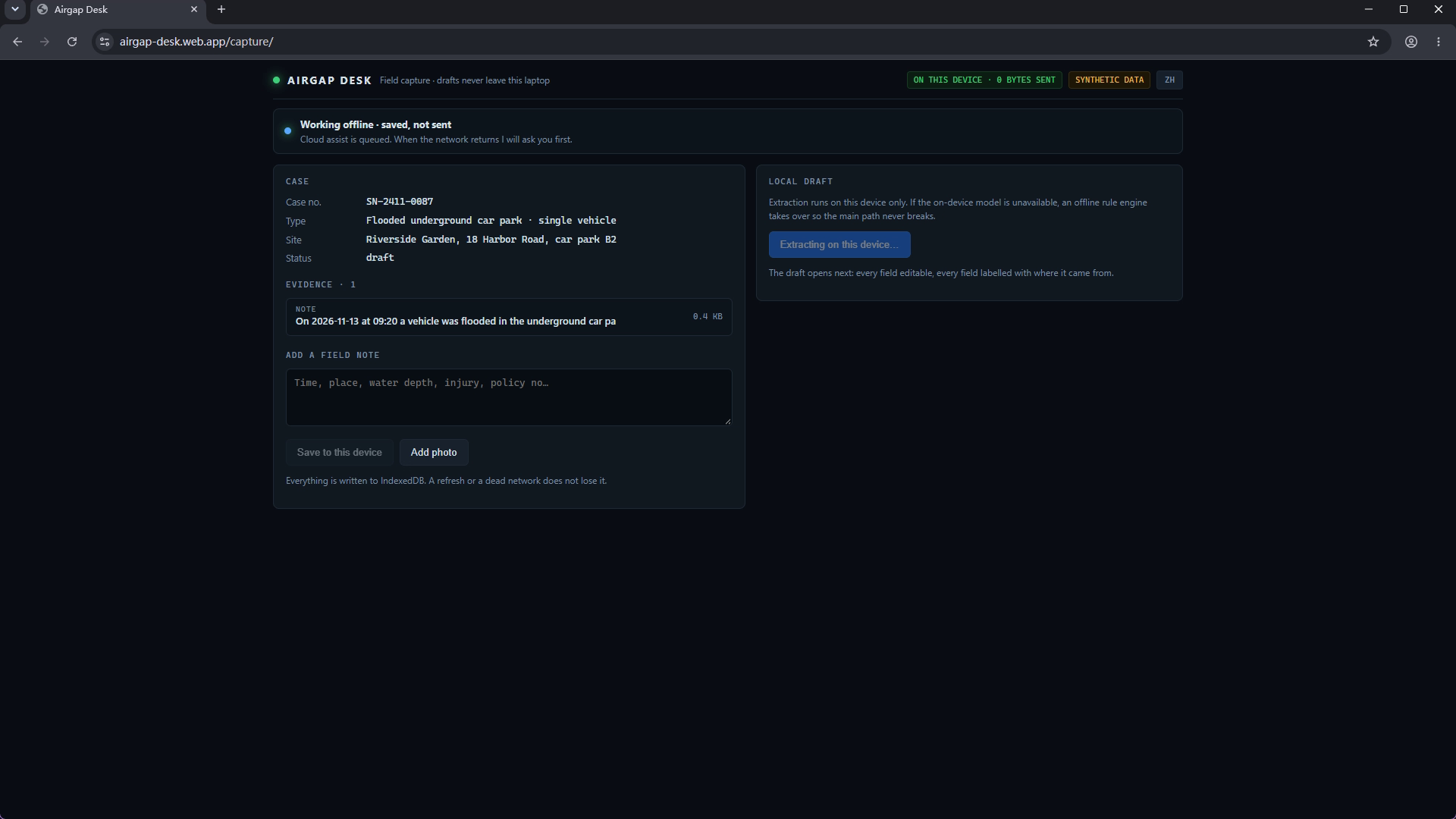
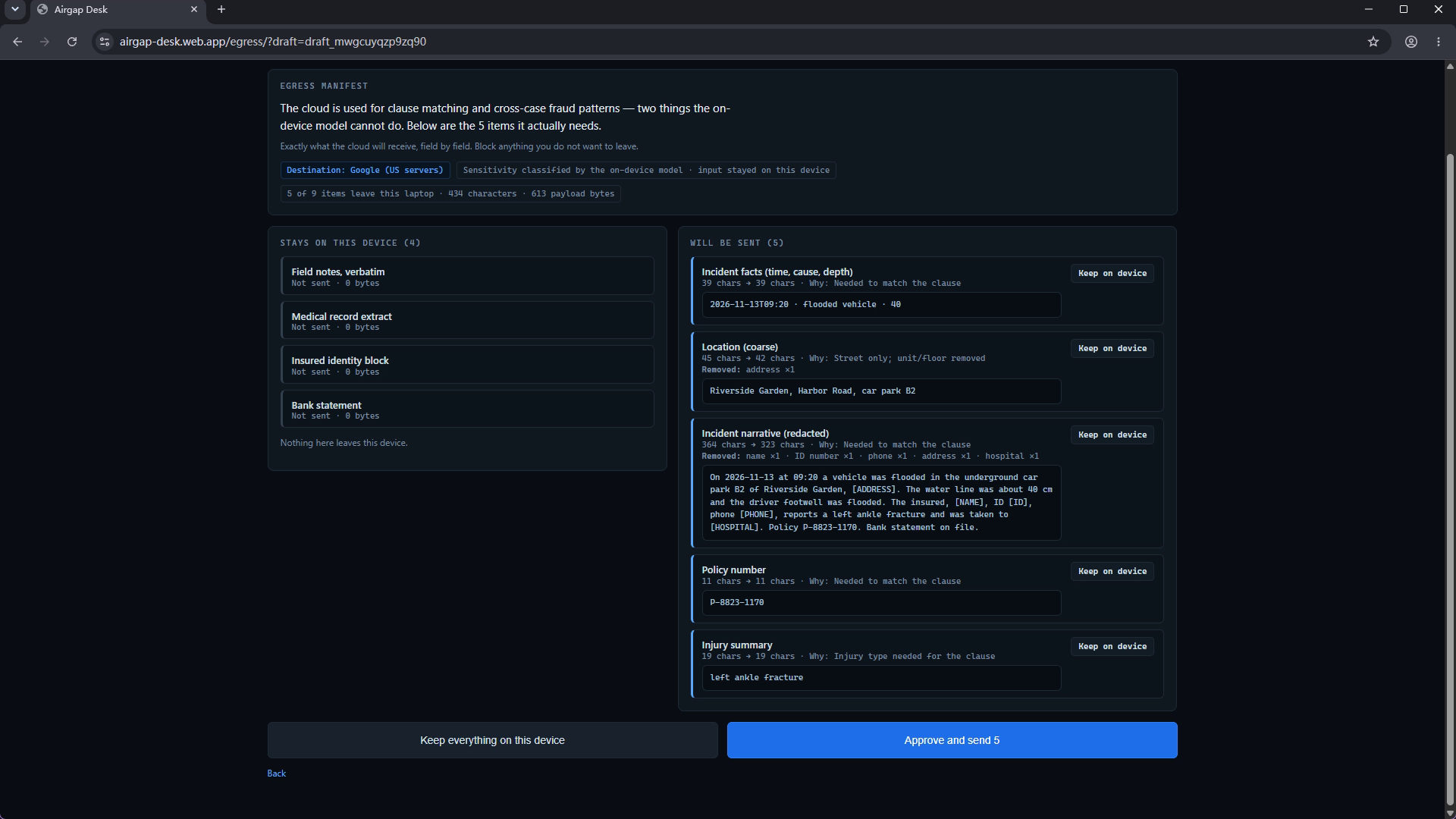
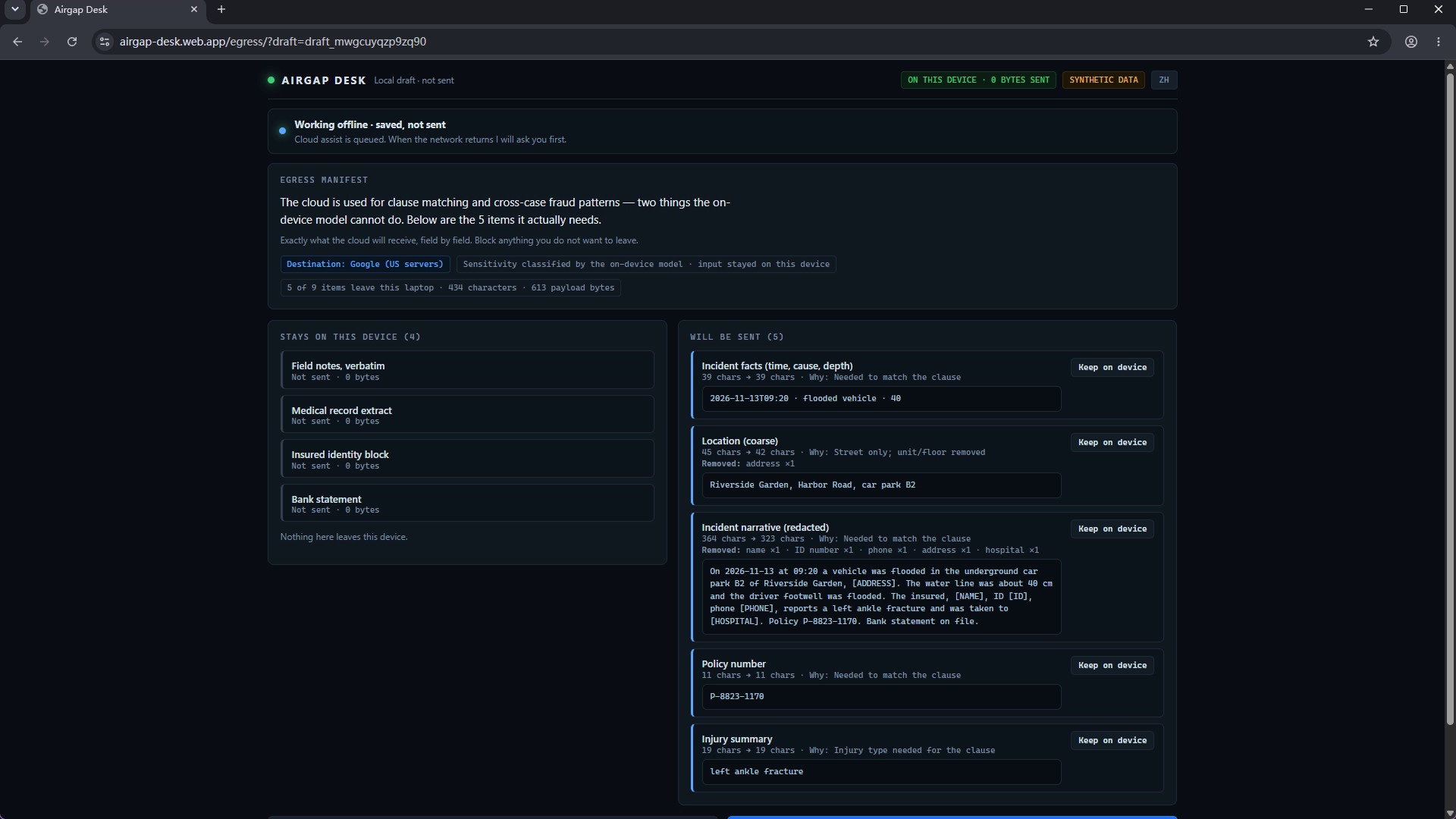
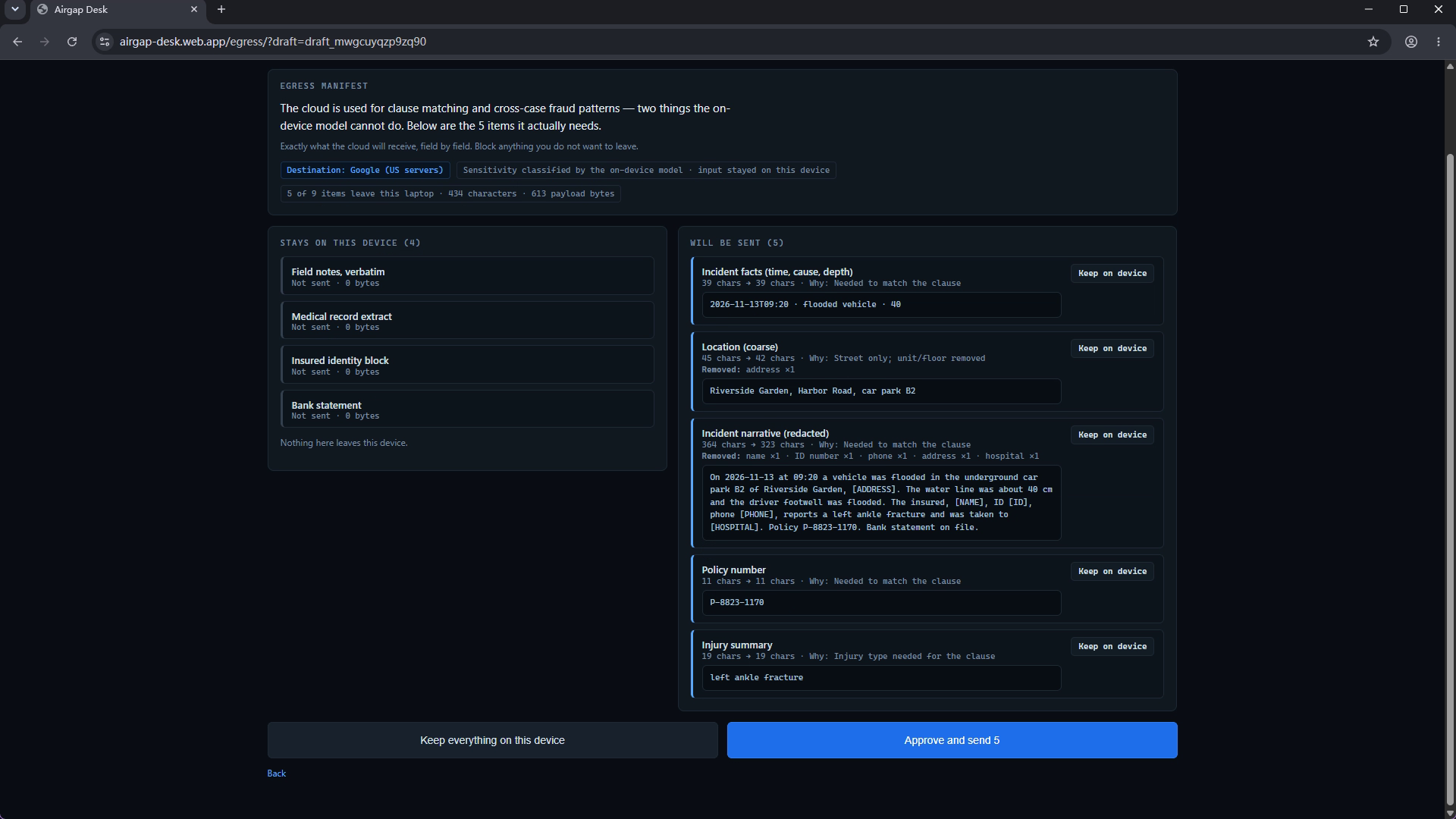
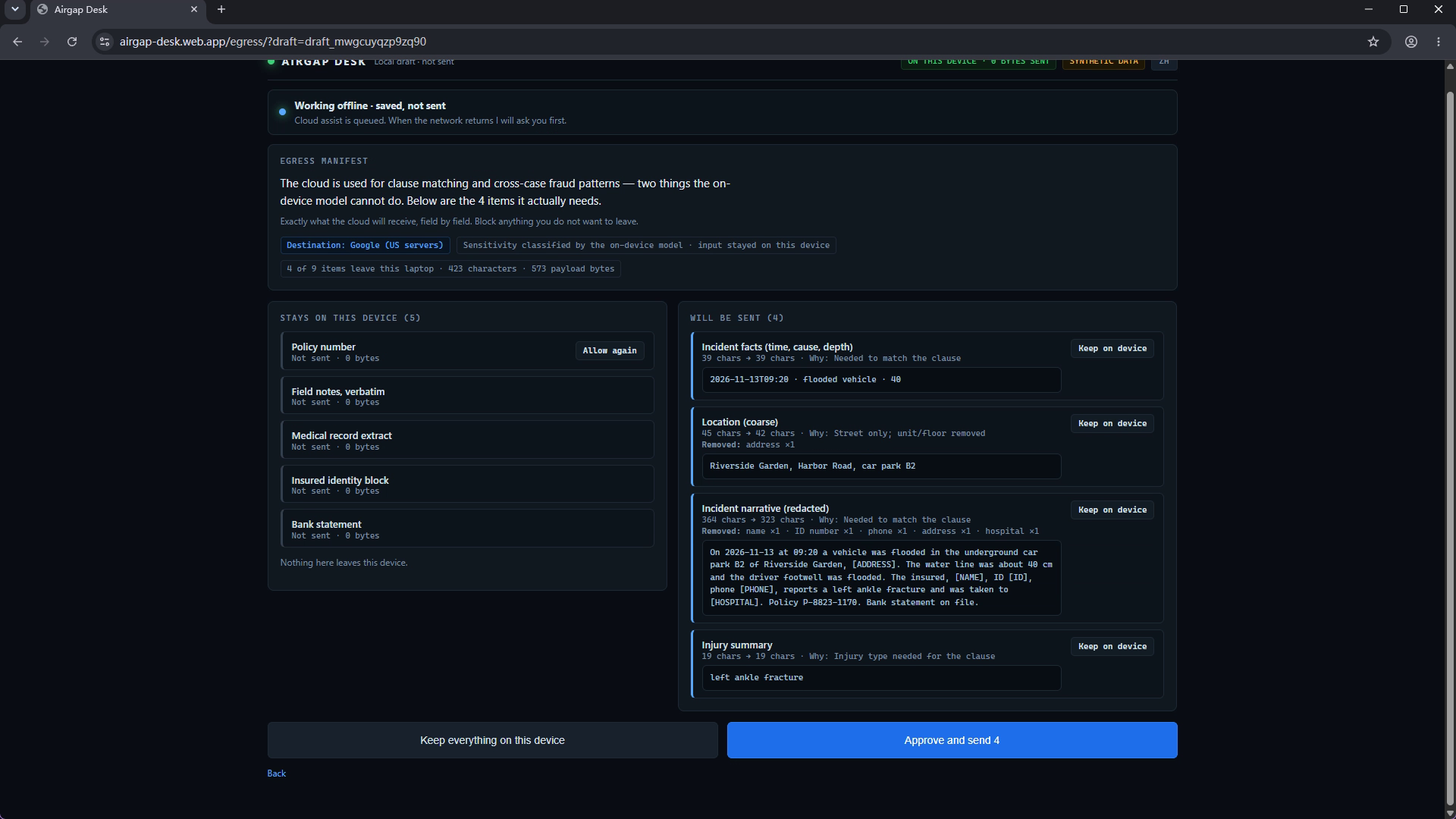
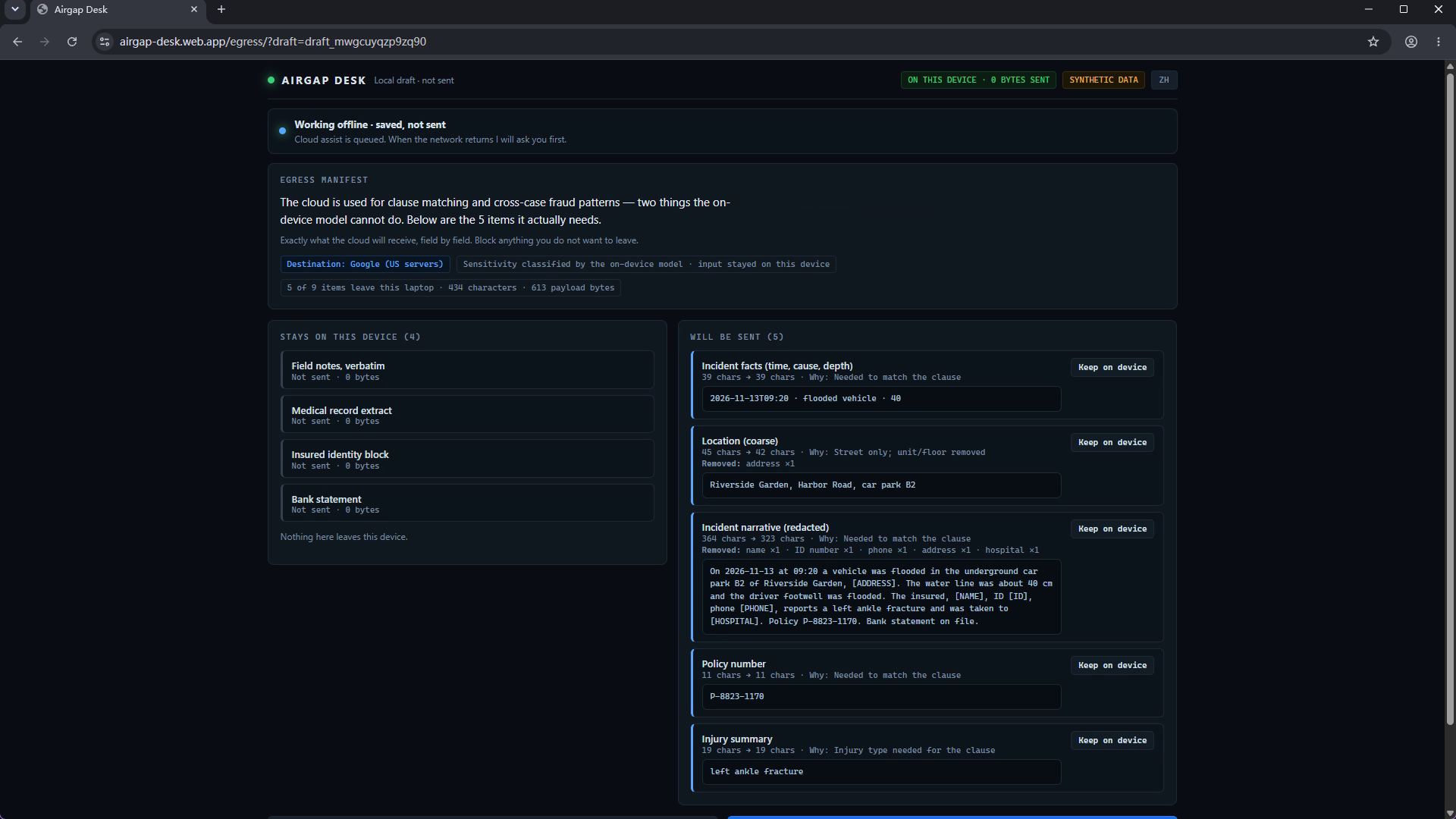
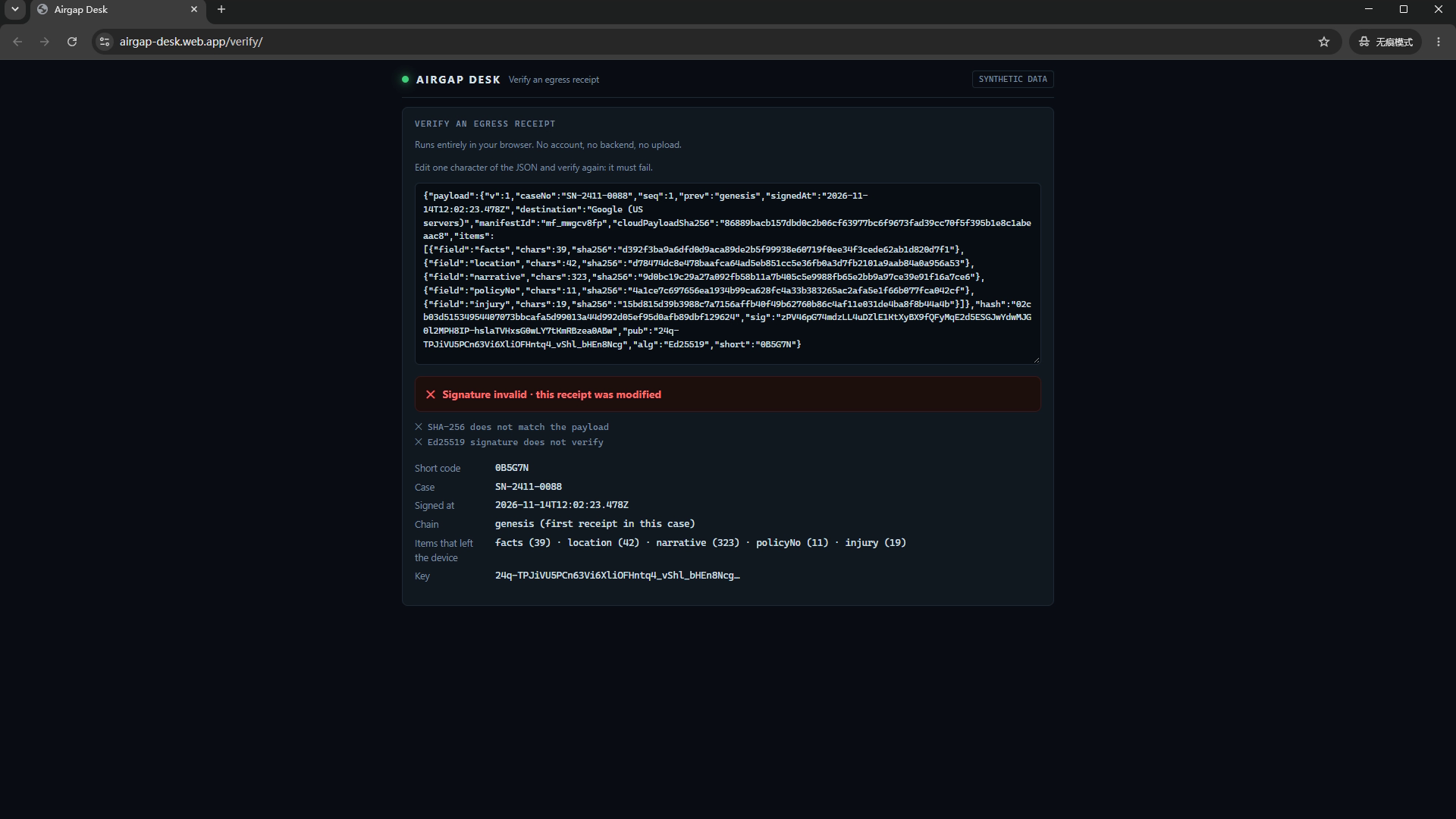
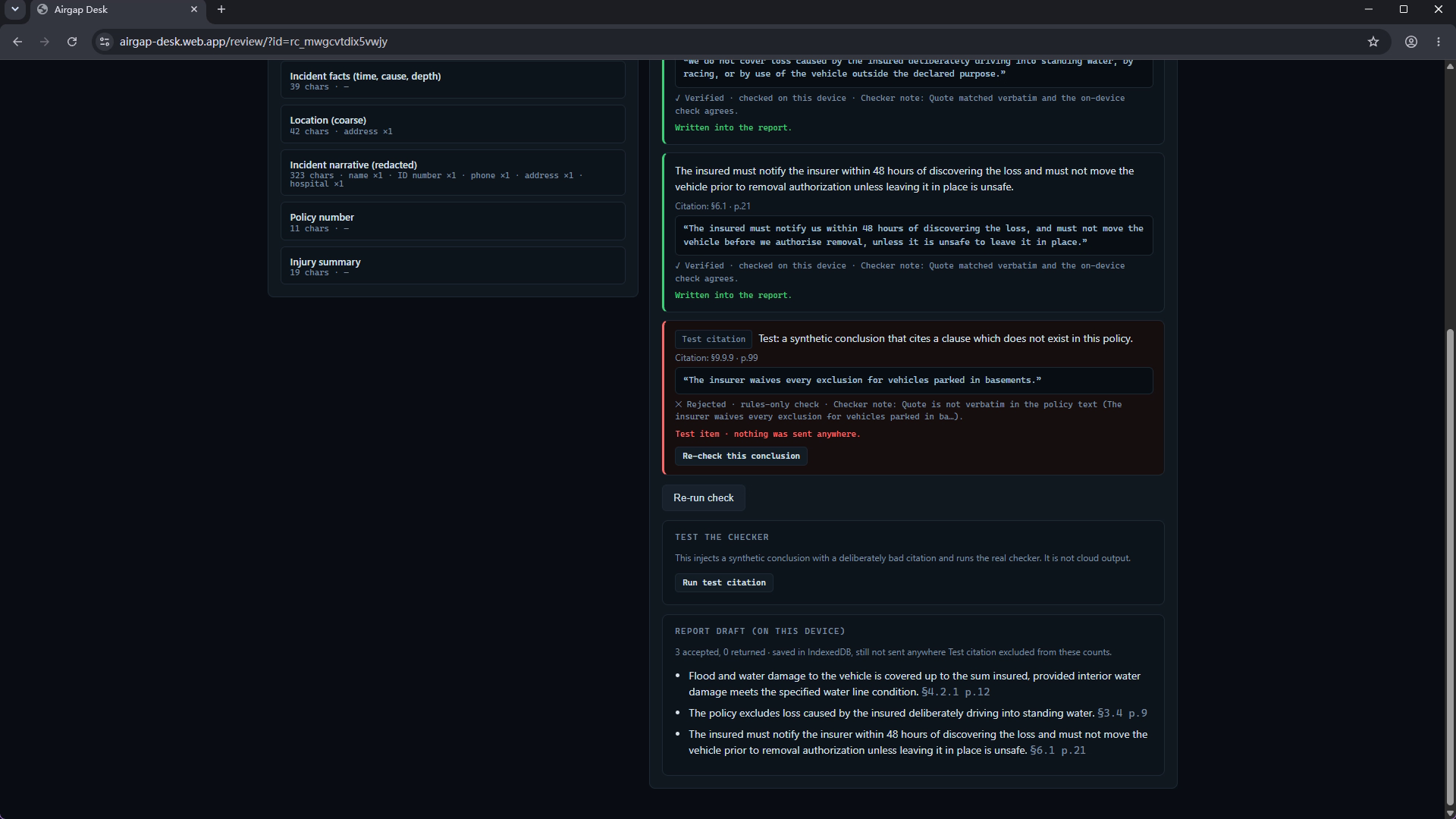
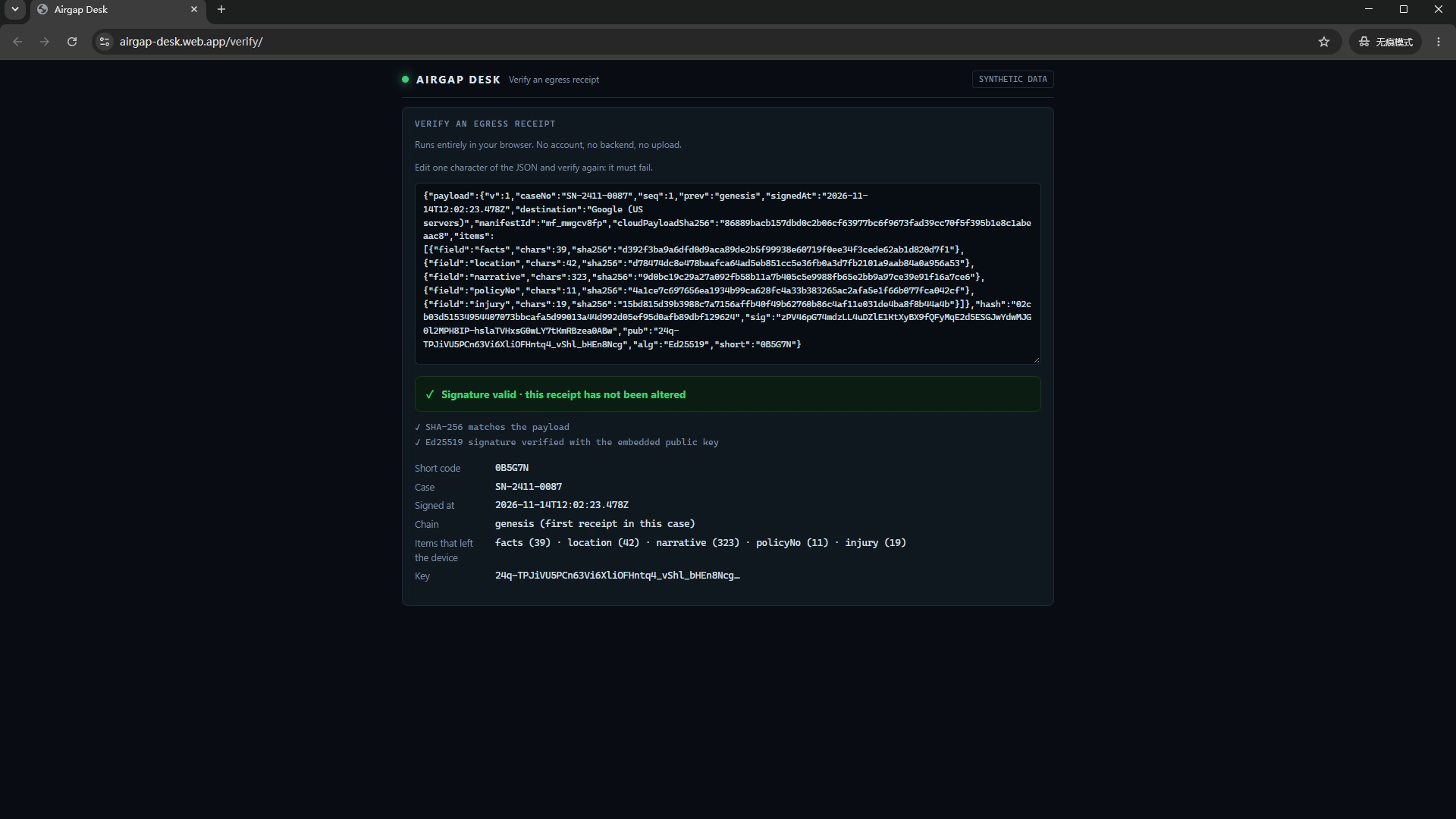
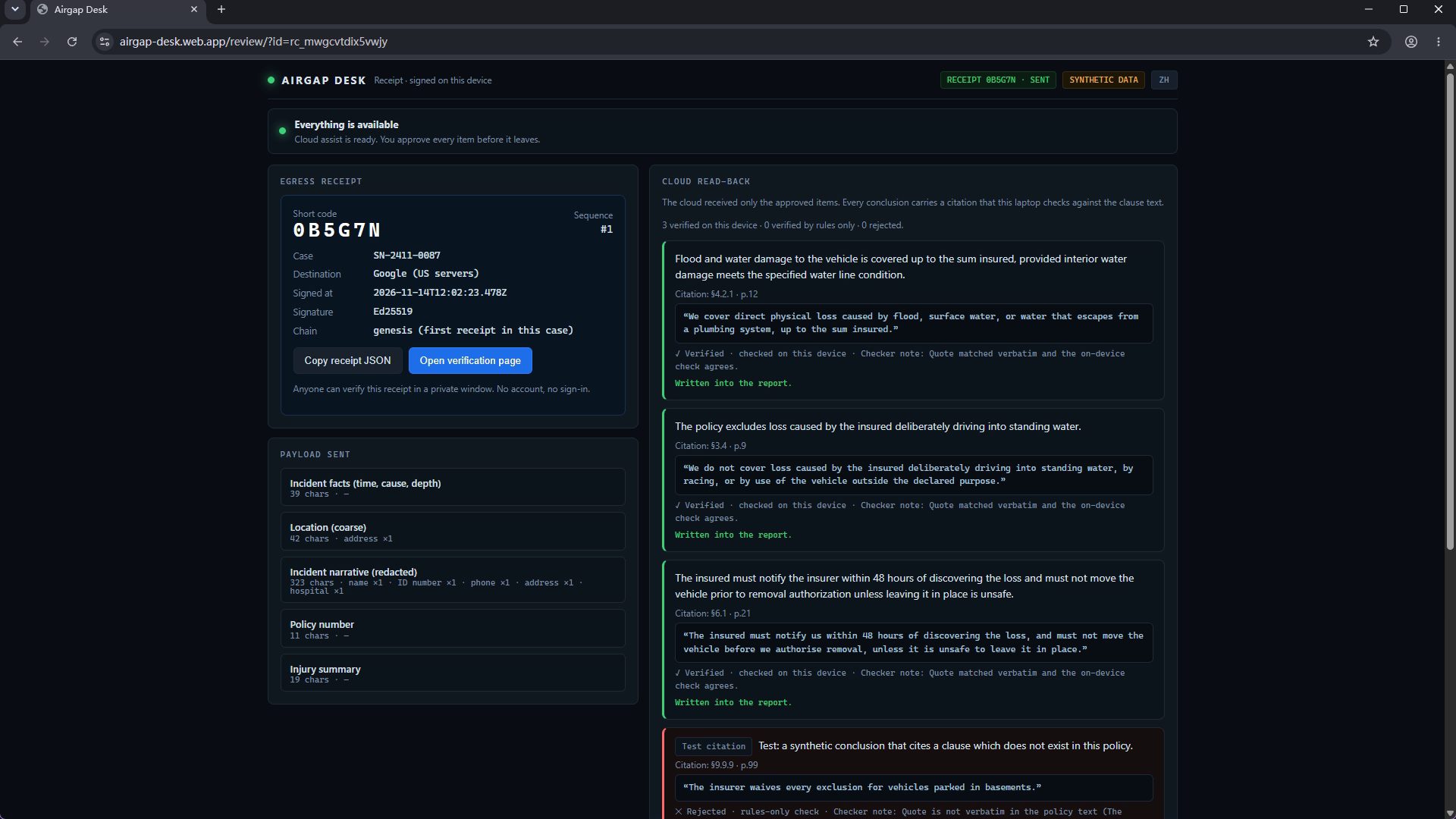
Airgap Desk captures notes and photos locally, drafts the case with Chrome's built-in Gemini Nano through Firebase AI Logic, and builds an egress manifest that lists every field the cloud will receive. Each line shows the exact text, the character delta, what was removed and why. The adjuster can block any line. Sending signs an Ed25519 receipt chained by SHA-256; anyone can verify it in a private window. The cloud only sees the approved, redacted payload, and every conclusion it returns is checked against the clause text on the device before it can enter the report.
How we built it
Next.js 16 static export with React and TypeScript. Firebase AI Logic Web SDK uses ONLY_ON_DEVICE for capture and classification and PREFER_IN_CLOUD for the policy read-back. App Check protects the demo. The egress gate combines deterministic PII rules with an on-device classifier that can only raise sensitivity. Receipts are canonical JSON, SHA-256 chained and signed with Ed25519 via Web Crypto, with the private key kept in IndexedDB. The public demo runs on Firebase Hosting and a service worker keeps the shell after the first load.
Challenges
The on-device model is not always there, so the UI has four honest states and labels rules-only checks instead of hiding them. A first visit with no network cannot load the page; after one online load the local path keeps working. We measured 127 minutes of offline sampling at two-minute intervals and documented the limits instead of claiming 2-4 hours. We also had to make the button, header, payload and receipt use the same definition of an item that leaves, and separate characters from UTF-8 payload bytes.
Accomplishments
A working end-to-end path from capture to signed receipt and verified cloud read-back. A receipt that verifies in a fresh browser context with no account or backend, and fails on a one-character change. An egress manifest that shows the literal redacted text and lets the user block any line. A 127-minute offline soak and a public MIT-licensed repository.
What we learned
Users do not want a promise that data is private; they want to see what left and be able to prove it later. The hard part is not the redaction, it is making the count, the preview, the receipt and the report tell the same story.
What's next
A real attestation provider instead of the demo debug token, PDF export with the receipt chain, a second policy pack, and a cross-case view for supervisors.
Disclosure
All demo data is synthetic. The public demo embeds an App Check debug token so judges can call the cloud; it is not in the repository. The offline segment in the video uses browser-tab-level offline emulation, not a physical cable pull. The video is silent with burned-in English subtitles.
Built With
- ai
- chrome
- ed25519
- firebase
- gemini
- indexeddb
- logic
- nano
- next.js
- sha-256
- typescript

