-
-
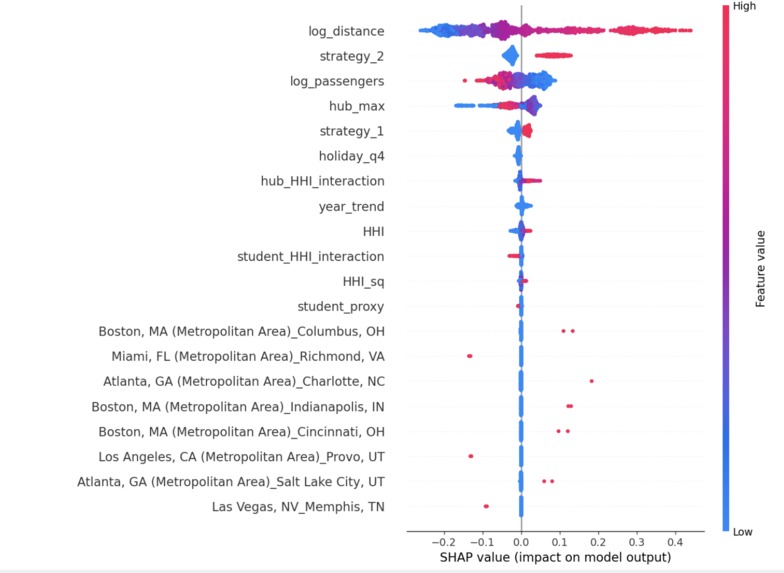
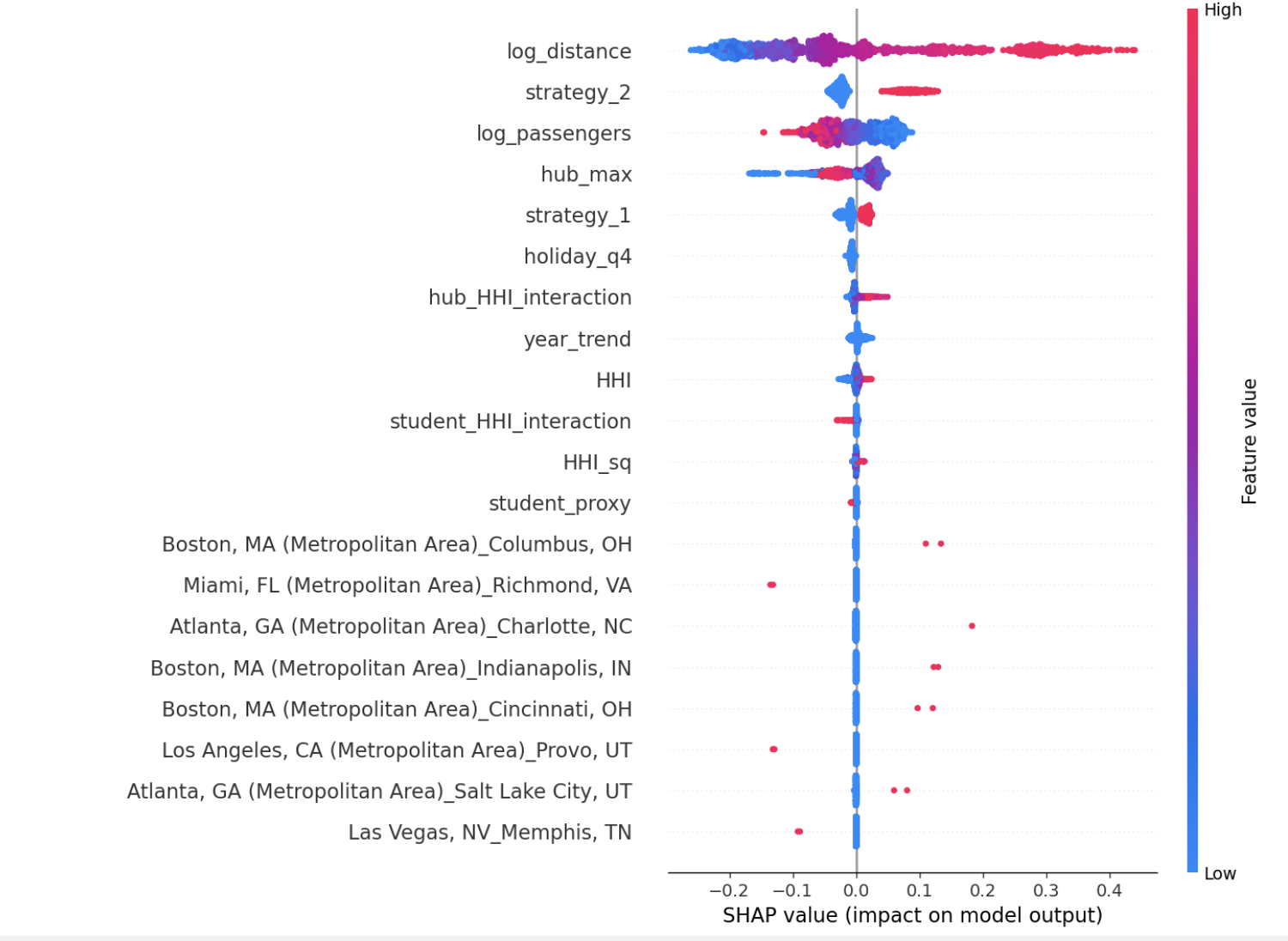
SHAP interpretation of the XGBoost model showing distance as the dominant driver of airfare, alongside demand and market structure effects.
-
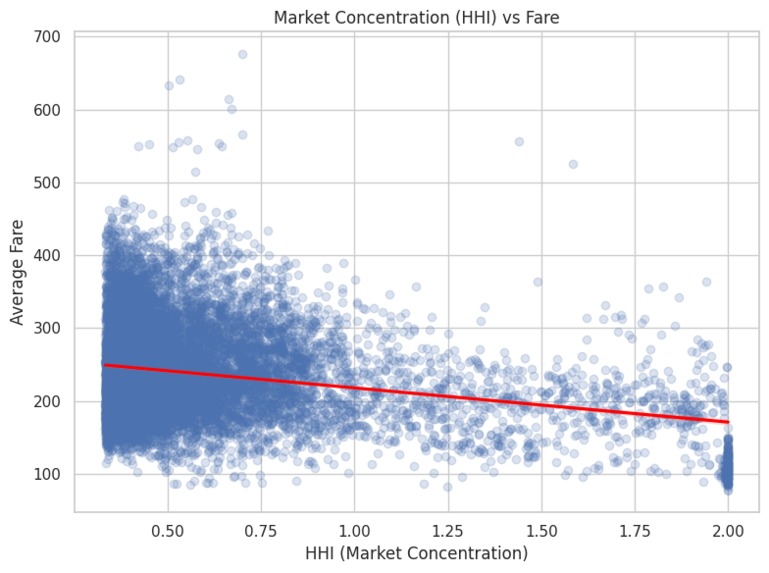
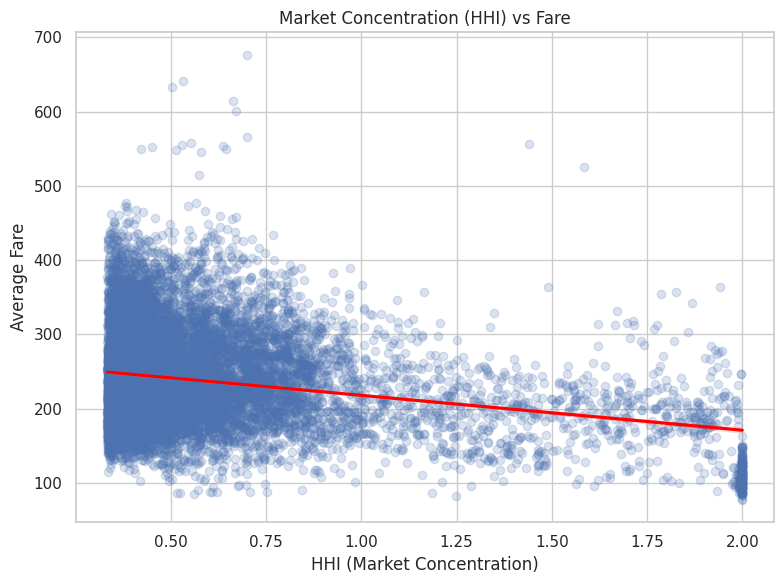
Scatter plot of HHI vs Fare
-
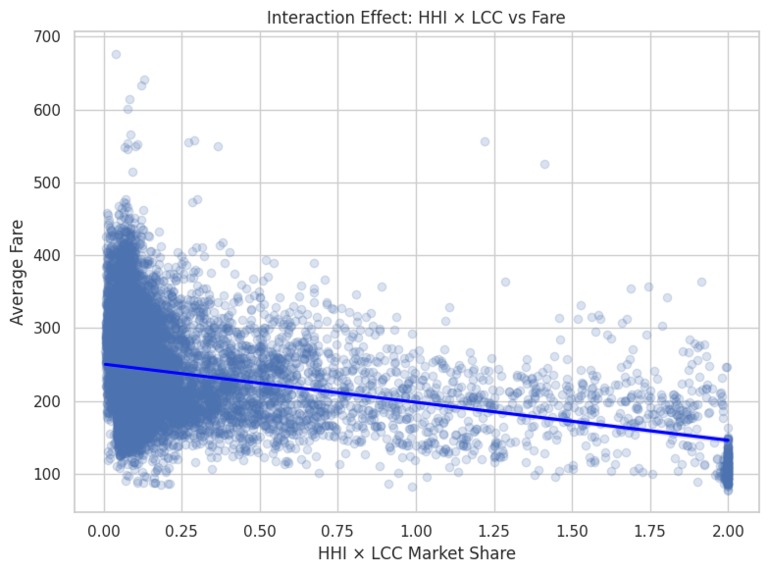
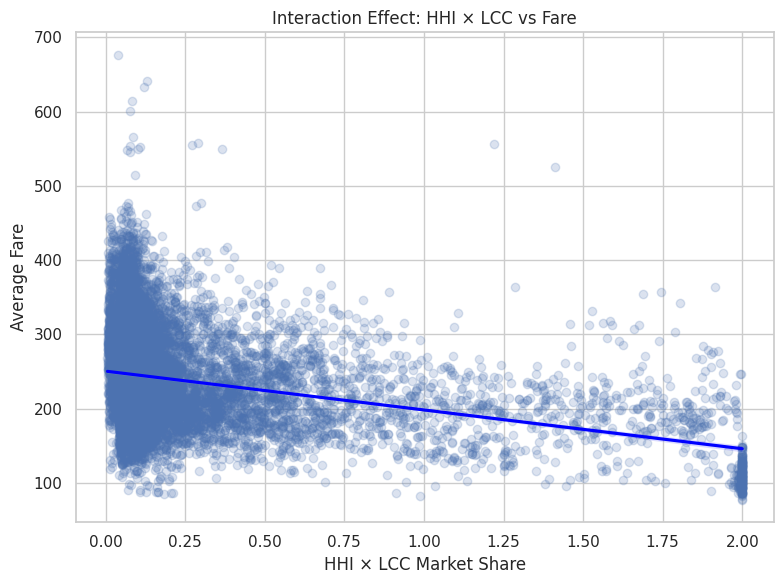
Scatter plot of HHI x LCC vs Fare
-
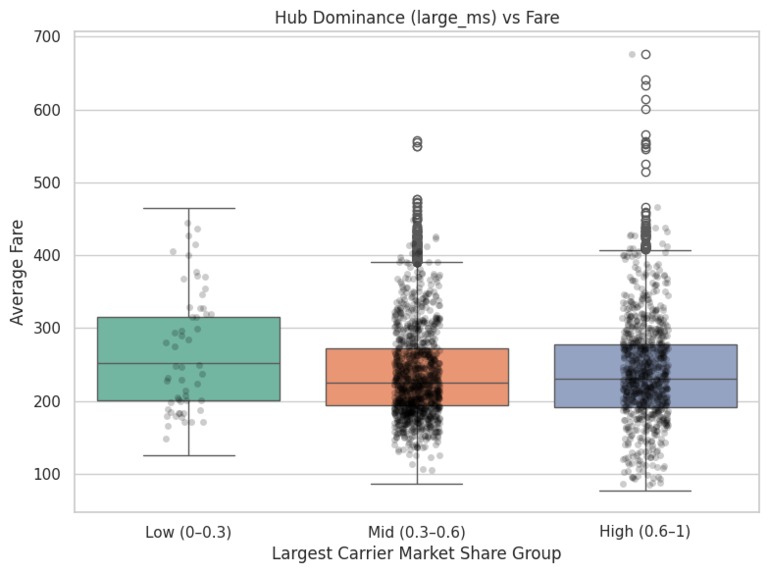
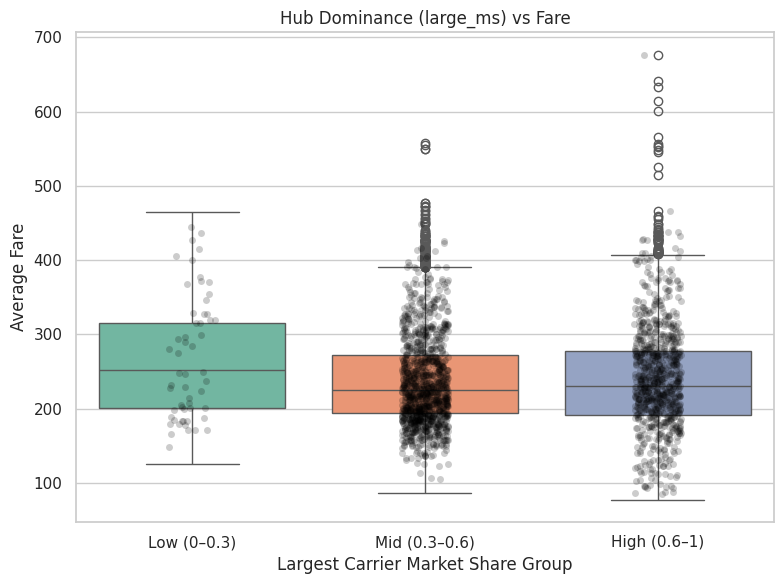
Box plot showing Hub Dominance
-
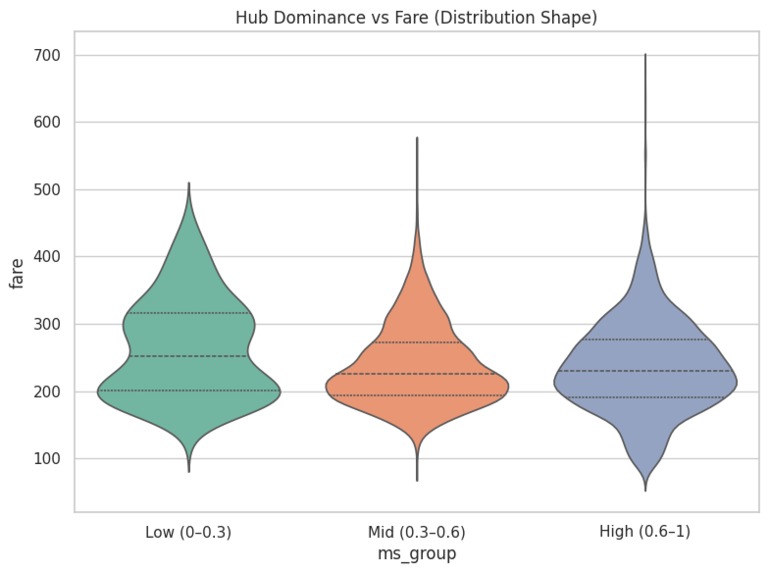
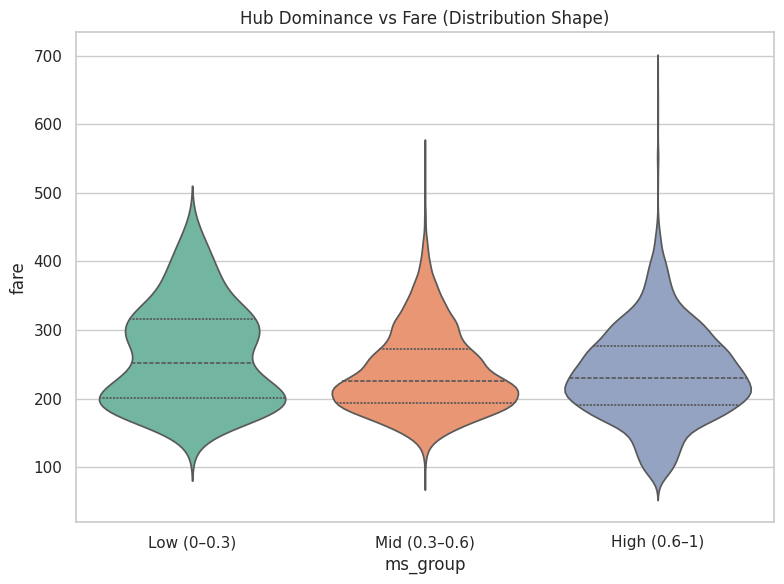
Violin graph showing Hub Dominance
-
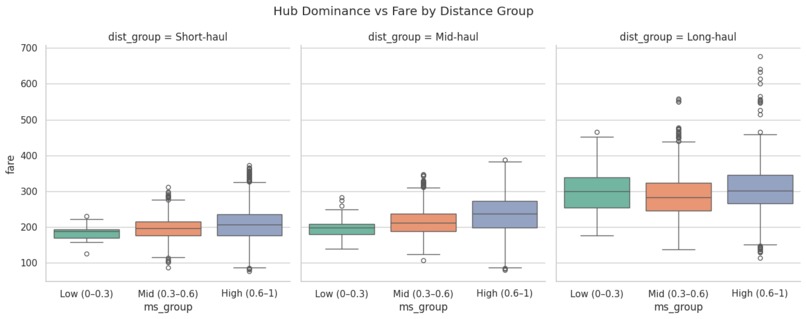
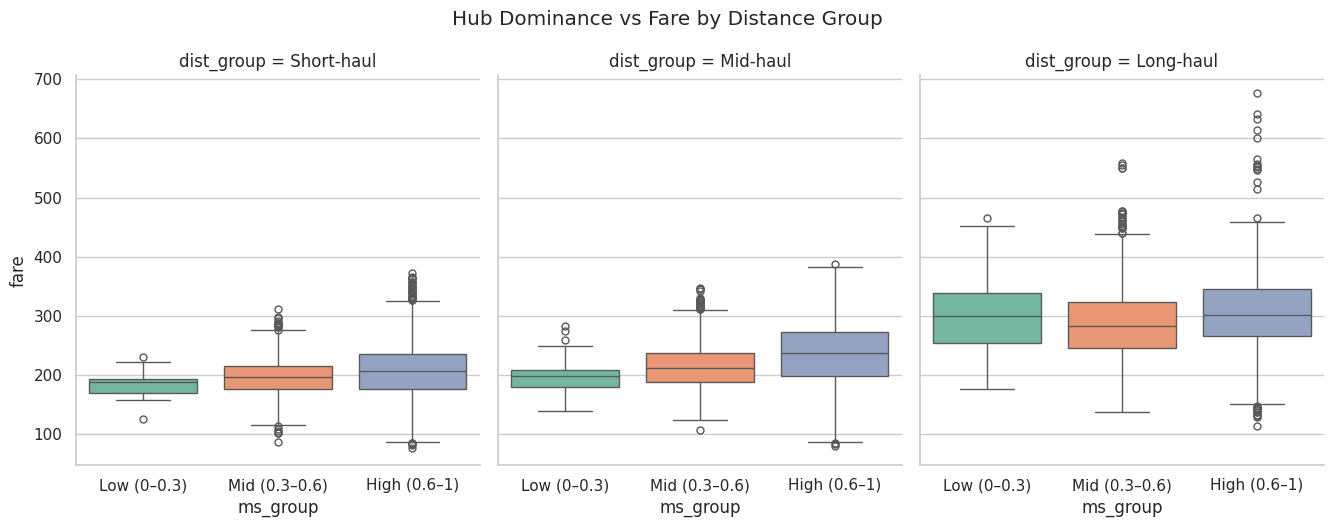
Box plot with grouped distance
-
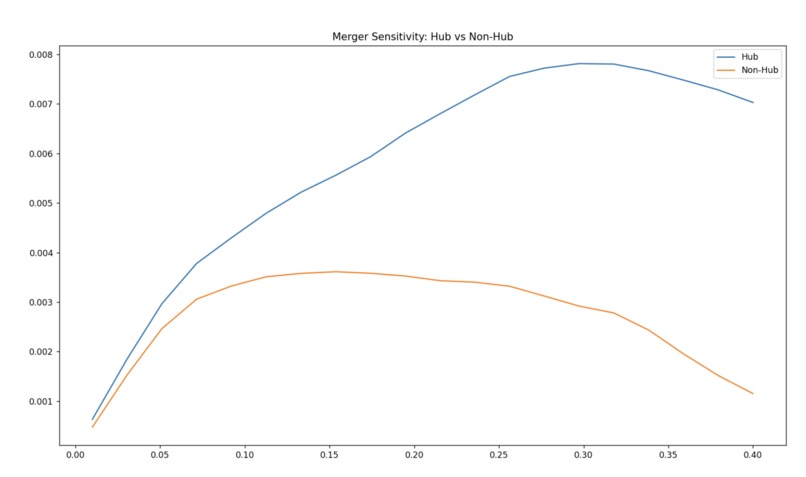
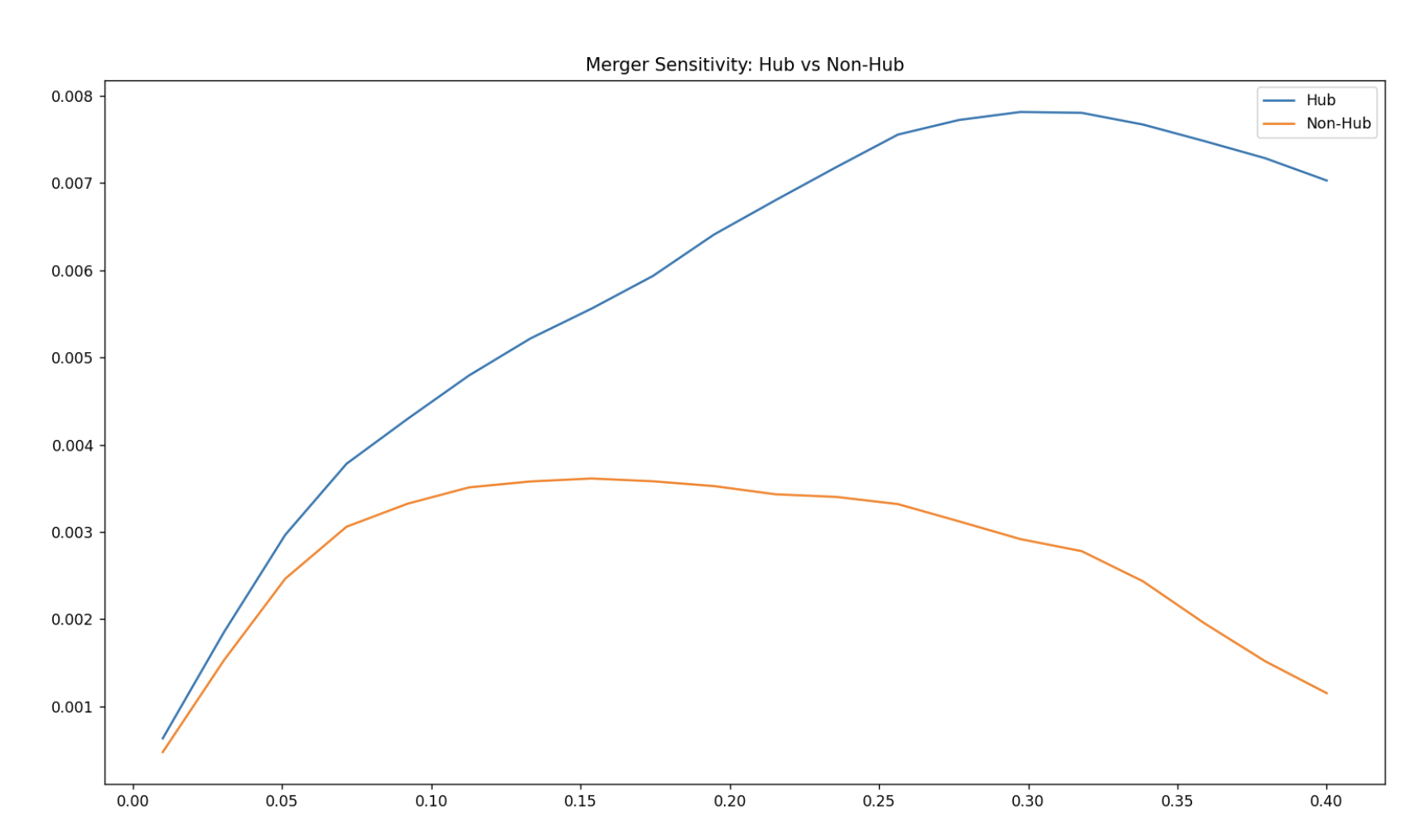
Counterfactual simulation showing airfare sensitivity to increased market concentration, comparing hub routes with non-hub routes.
-
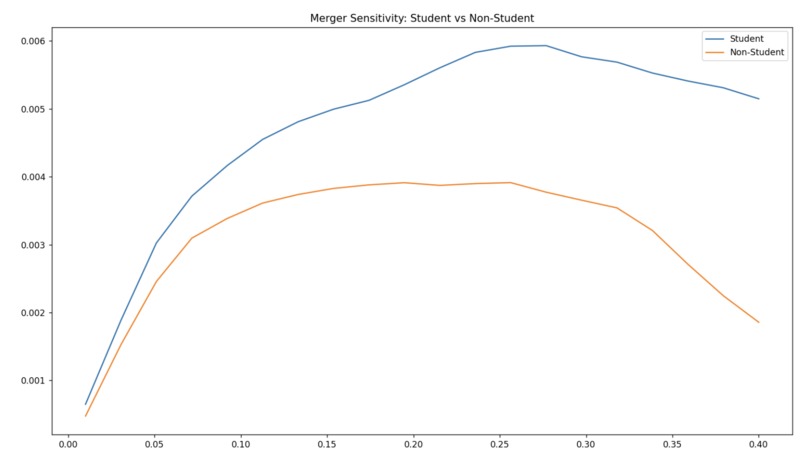
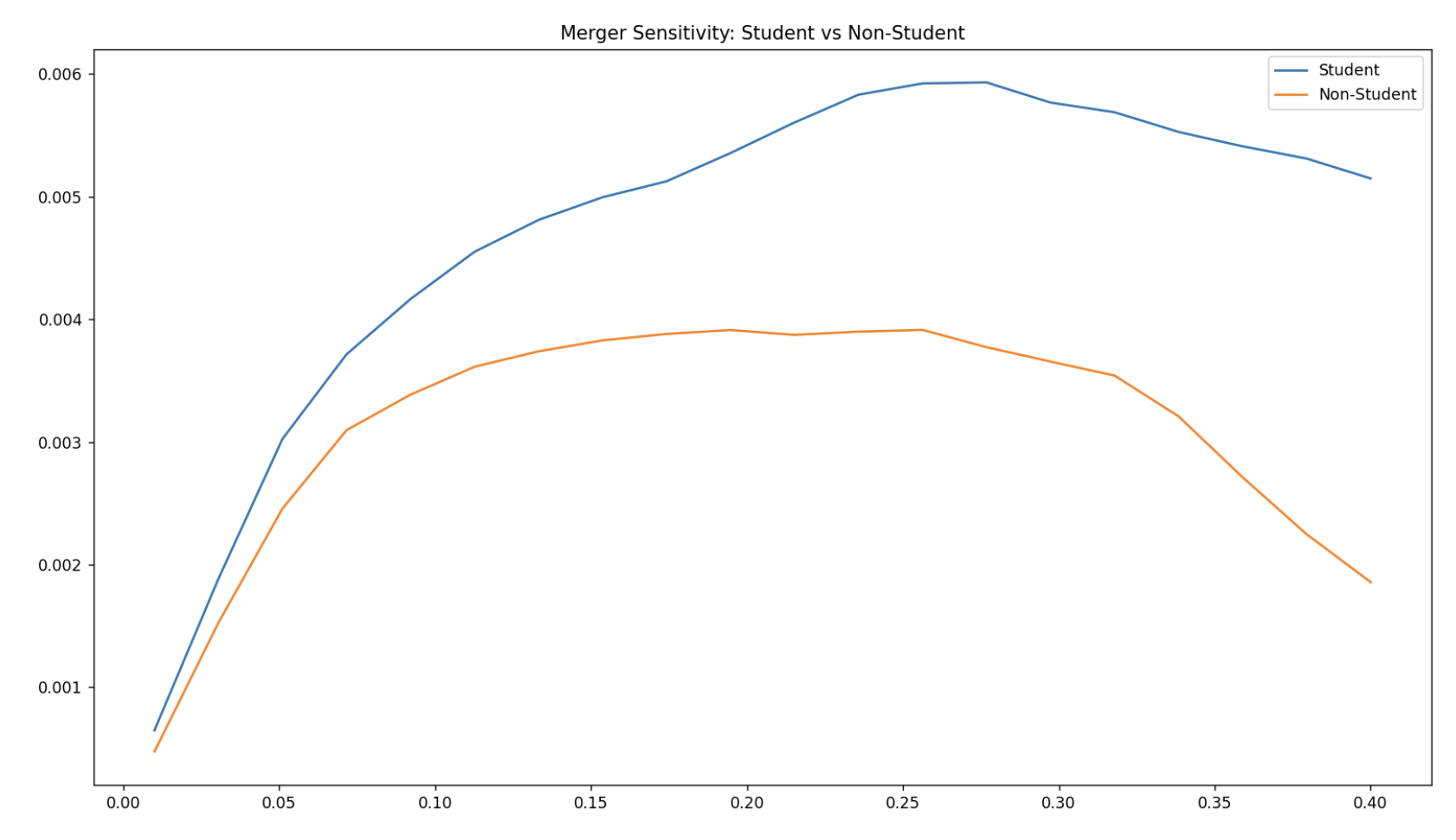
Merger simulations indicate heterogeneous price responses, with student-oriented markets more sensitive to concentration changes.
Inspiration
Airline ticket prices are often perceived as unpredictable and opaque.
We were interested in understanding whether airfare dynamics could be explained using measurable market structure factors such as competition intensity, hub dominance, and passenger demand.
Rather than focusing purely on prediction accuracy, our motivation was to explore whether pricing behaviour reflects underlying economic mechanisms.
What it does
This project analyzes airline fare formation using both econometric and machine learning approaches.
We model how competition structure, route characteristics, and demand indicators relate to airfare levels. The framework allows us to:
- explain pricing patterns using interpretable statistical models,
- capture nonlinear relationships using machine learning,
- and explore how changes in market structure may influence fares.
How we built it
Data Preparation: Cleaned and structured a multi-year airline route dataset, handled missing values, and created time and route identifiers.
Feature Engineering: Constructed economic indicators such as market concentration (HHI), competition measures, hub dominance variables, and log-transformed pricing and demand features.
Modeling: Built an interpretable OLS baseline and applied Random Forest and XGBoost models with time-aware validation for prediction.
Analysis: Used SHAP explanations and counterfactual simulations to study how changes in market concentration affect airfare and consumer welfare.
Challenges we ran into
The main challenge was balancing economic interpretability with predictive performance.
Airline markets exhibit strong variation across routes and time, while heterogeneity arises from market differentiation and price discrimination. This required careful feature engineering and time-aware data splitting to capture structural differences without sacrificing interpretability. Ensuring models remained interpretable while improving predictive accuracy was a central design challenge.
Accomplishments that we're proud of
- Integrating econometric reasoning with modern machine learning models.
- Designing economically meaningful features instead of relying solely on automated prediction.
- Building an interpretable workflow that connects statistical modelling with real-world market structure analysis.
What we learned
We learned that machine learning becomes more informative when combined with domain knowledge. By integrating econometrics with explainable AI techniques, we moved beyond black-box prediction toward interpretable analysis of airline pricing dynamics.
What's next for Airfare Dynamics: Competition and Price Simulation
Future work will focus on validating insights across additional time periods and refining counterfactual simulations to better evaluate how changes in competition or market entry may affect airfare outcomes.

Log in or sign up for Devpost to join the conversation.