Inspiration
We built AirEquityAI because poor indoor air quality is often invisible until people start feeling the effects. Students in dorms, renters in apartments, and low-income tenants may deal with musty rooms, broken HVAC systems, mold, poor ventilation, or ignored maintenance requests without knowing how serious the issue is or how to clearly report it.
We wanted to turn a confusing housing problem into something actionable. Instead of forcing users to research HVAC issues, health symptoms, and complaint language on their own, AirEquityAI helps them understand possible indoor air risks and create a professional action-ready report.
What it does
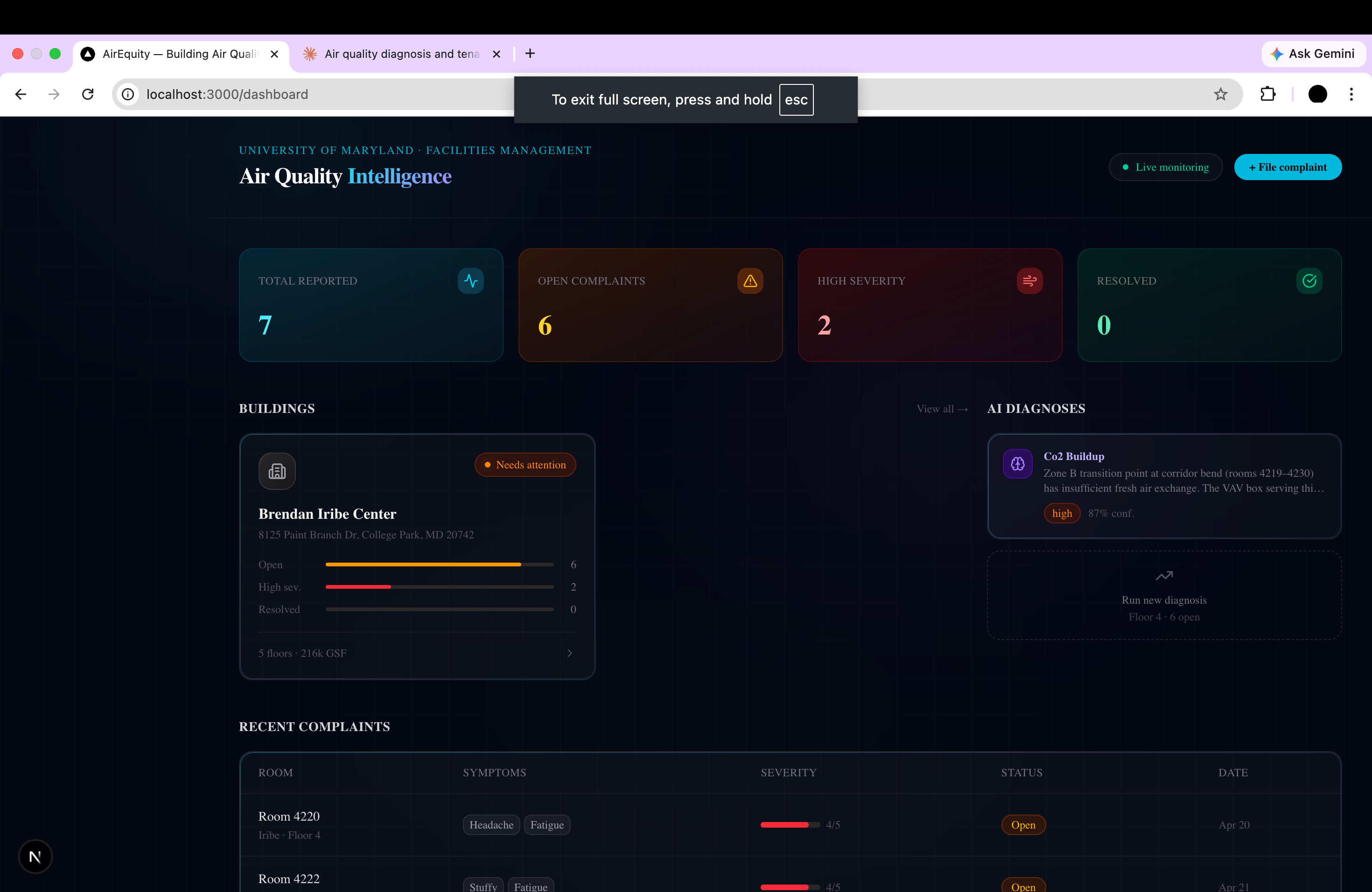
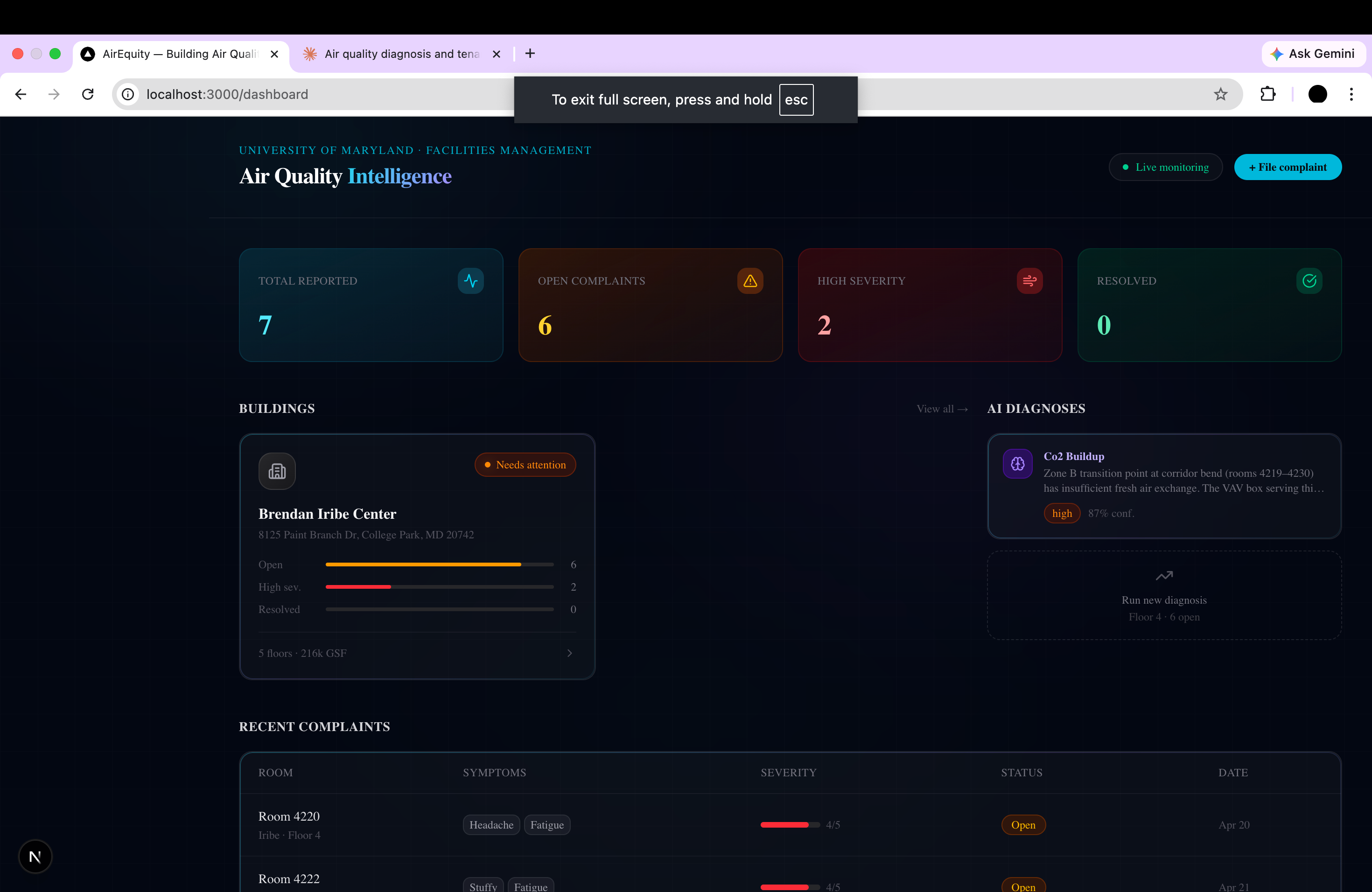
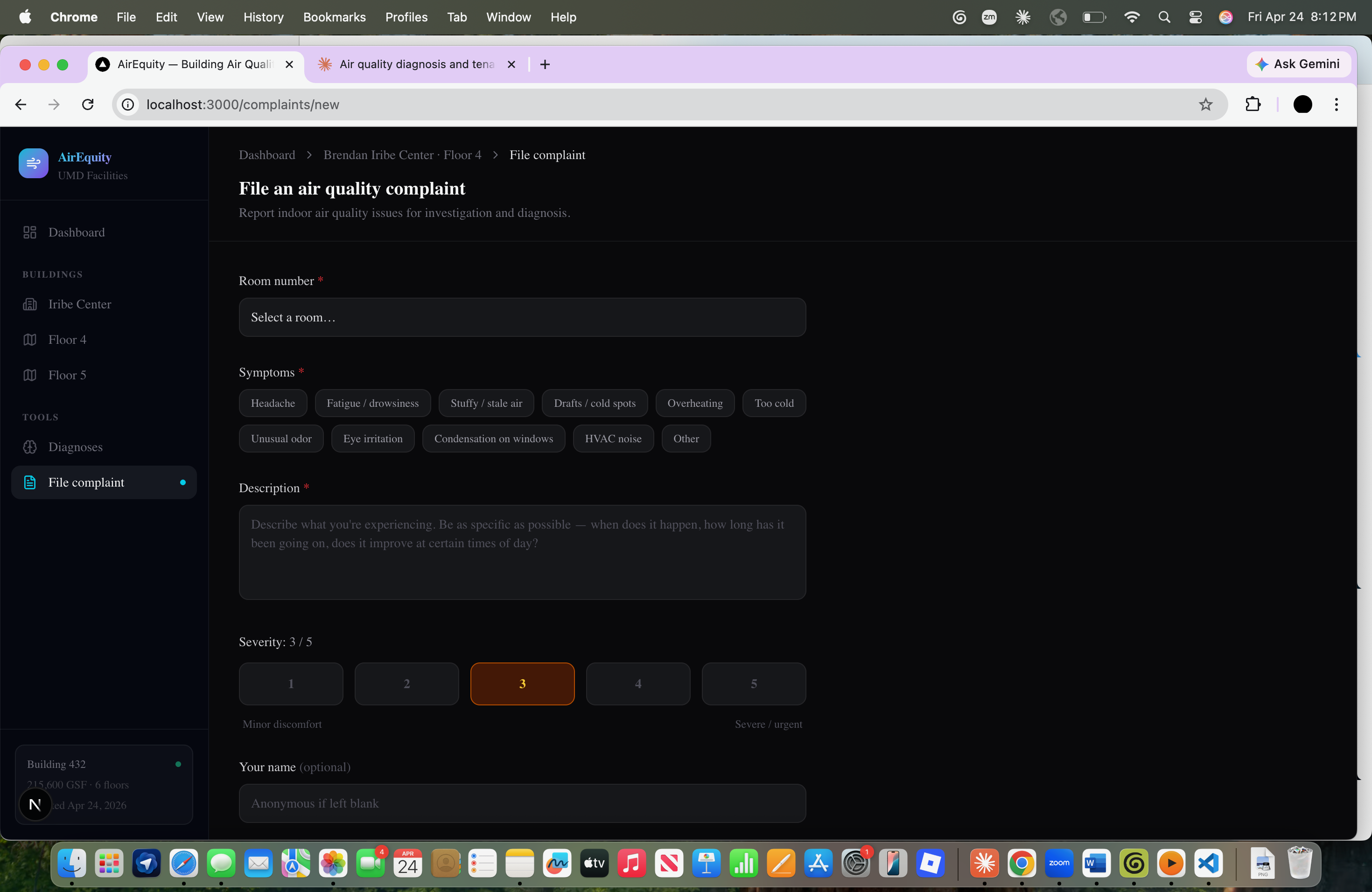
AirEquityAI turns a user’s living conditions, symptoms, and maintenance history into a clear indoor air risk report. Users can describe problems like musty smells, poor airflow, humidity, mold, headaches, congestion, or ignored repair requests.
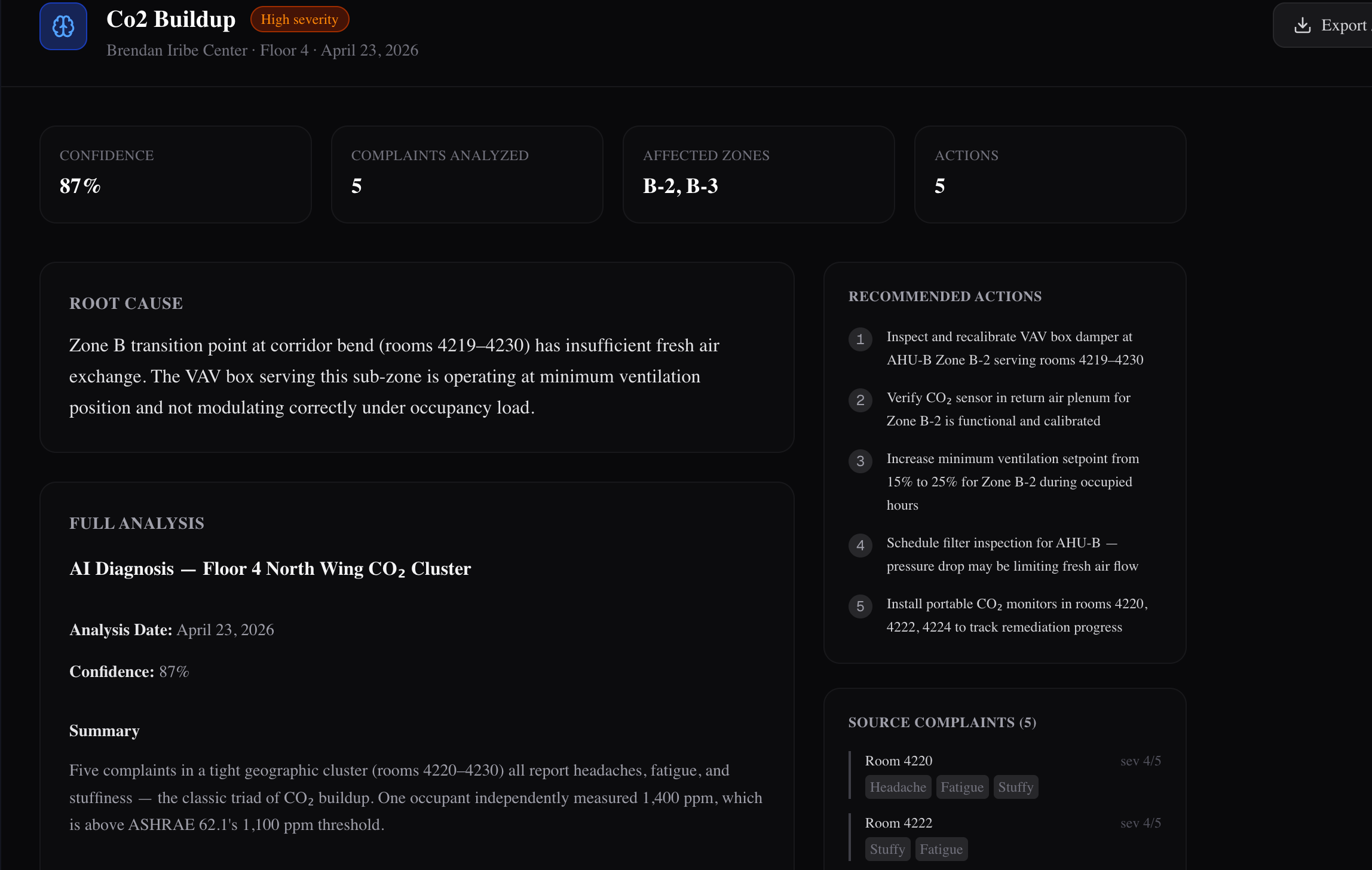
The app then generates:
- A likely HVAC or indoor air quality issue
- A severity level
- A symptom connection summary
- Recommended documentation steps
- An evidence strength score
- A formal maintenance complaint letter ready to copy or download
The goal is not to provide medical or legal advice. The goal is to help users better document potential indoor air quality problems and communicate them clearly to housing staff, landlords, or facilities teams.
How we built it
We built AirEquityAI as a full-stack web app with a clean, guided intake flow. The frontend collects structured information about the user’s living situation, HVAC concerns, symptoms, and maintenance history. The backend sends that information to Claude, which analyzes the situation and returns a structured risk report.
We designed the output to feel more useful than a normal chatbot response. Instead of a plain paragraph, users see severity badges, issue cards, symptom connections, evidence strength, and a formatted complaint letter. This makes the information easier to understand and easier to act on.
Challenges we ran into
One challenge was making the app helpful without overstating what it can do. Indoor air quality can affect health, but we did not want the product to sound like it was diagnosing medical conditions or giving legal advice. We focused the language on possible risks, documentation support, and practical next steps.
Another challenge was making the project stand out from simply pasting a question into an AI chatbot. To solve this, we added a structured intake process, visual risk report, evidence score, and action packet so the user gets a focused workflow rather than a generic answer.
What we learned
We learned that HVAC is not just a building systems problem. It is also a health, accessibility, and housing equity issue. A broken HVAC system or poor ventilation can become much more serious when people do not have the language, evidence, or confidence to report it effectively.
We also learned how important product framing is. The strongest version of this idea is not just “AI explains air quality.” It is “AI helps people turn hidden housing problems into clear documentation and action.”
What’s next
Next, we would add support for photo uploads of vents, mold, condensation, and maintenance records. We would also add multilingual complaint letters, building-specific reporting templates, and optional sensor integrations for humidity, temperature, and air quality data.
Long term, AirEquityAI could help identify repeated HVAC issues across dorms, apartments, and public buildings while still protecting user privacy.
Built With
- claude-api
- css
- fastapi
- html
- javascript
- python
- react-three-fiber
- tailwind-css
- three.js
- typescript
- vite

Log in or sign up for Devpost to join the conversation.