-
-
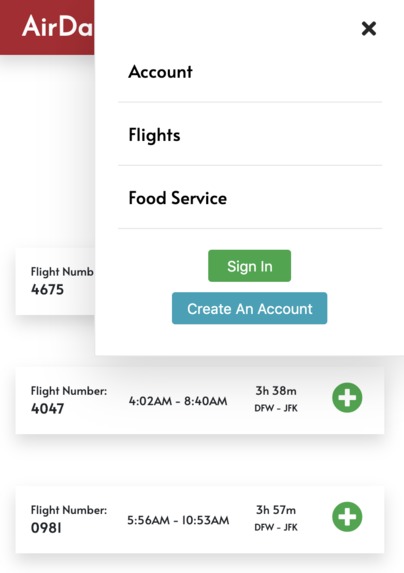
Easily Create and Login to Your Account
-
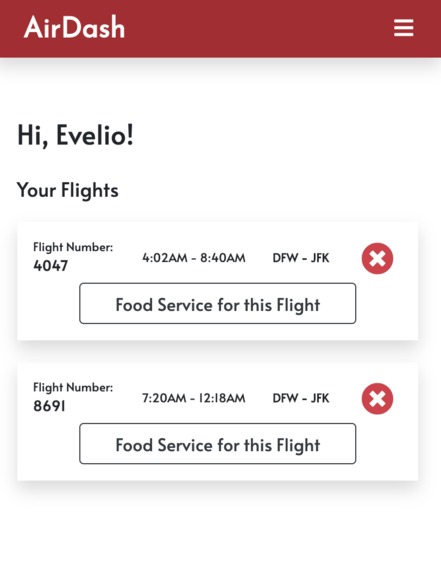
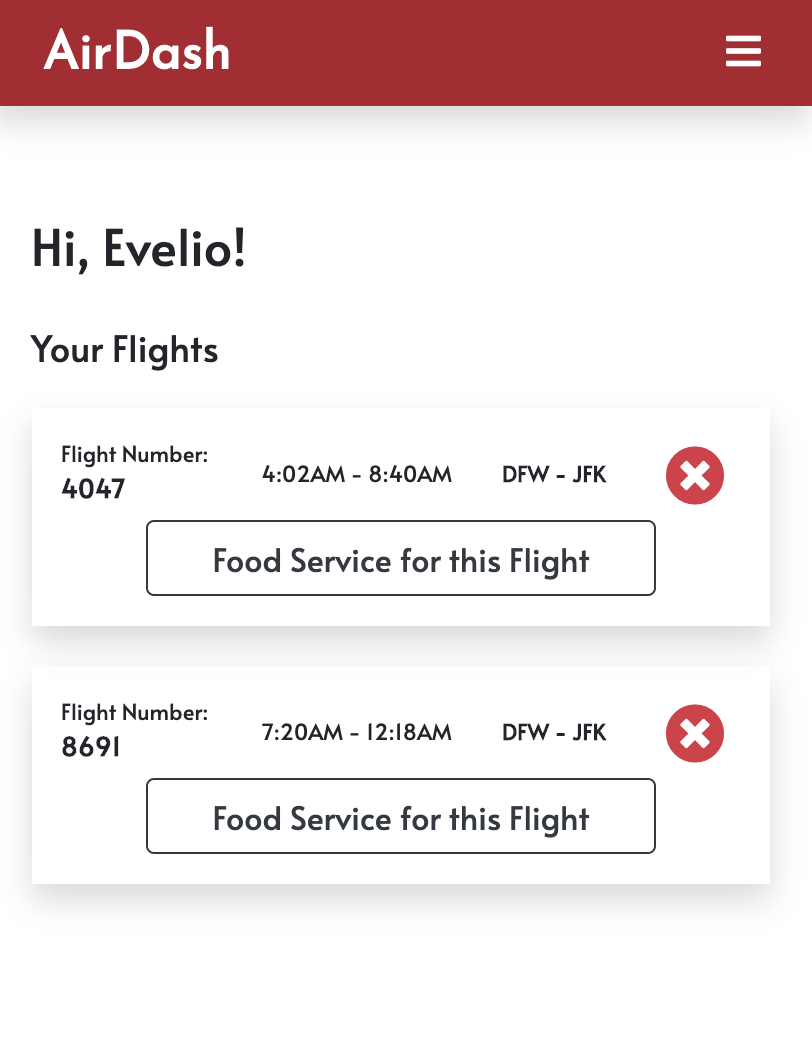
Check on your Flights
-
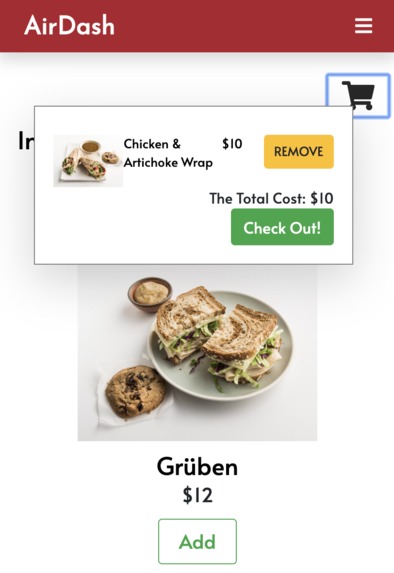
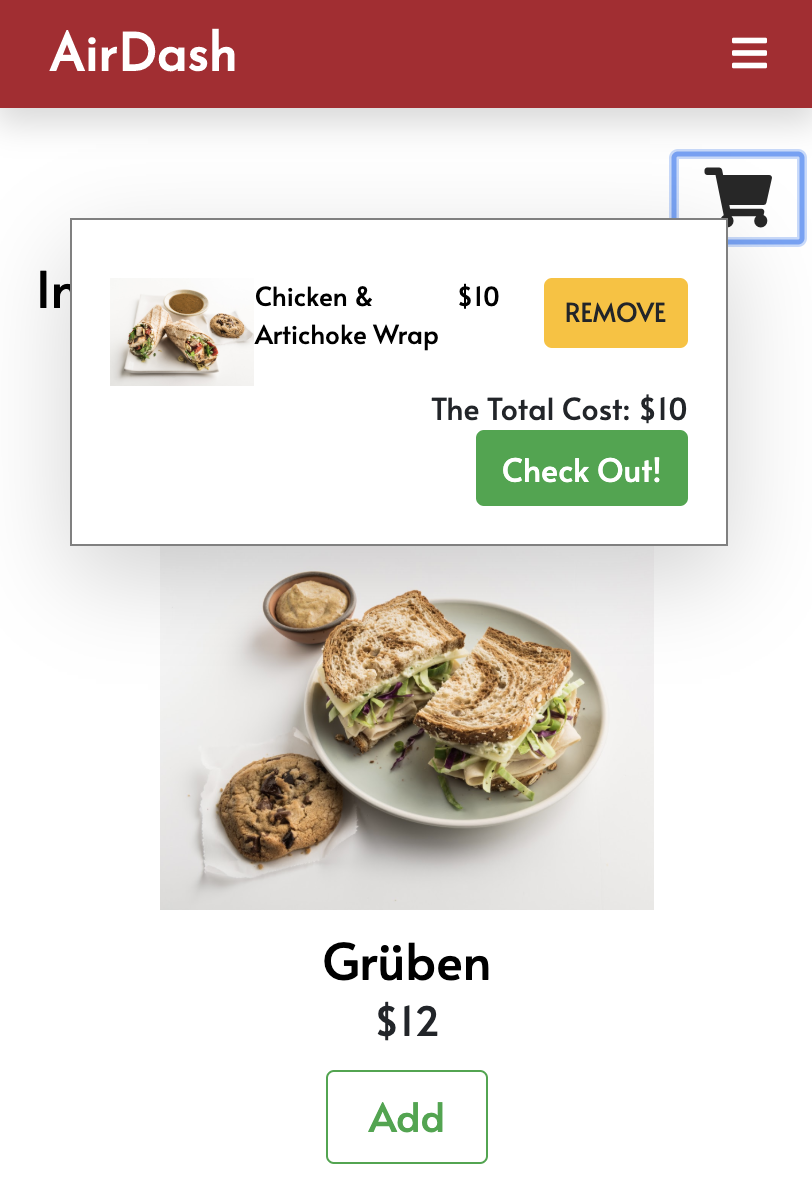
Order some food while in the air!
Inspiration
Time is humanity's most valuable asset, and perhaps one of the biggest time sinks man still faces in 2020 is travel, especially flight. Our goal was to eliminate some of the time inefficiencies still present in the process of flying commercially. So we decided to tackle the issue of slow delivery and lack of transparency in the realm of airplane food, for if we could design something that sped up the process of customers choosing in-flight meals and flight attendants delivering in-flight meals, then both clients and employees of commercial airlines could put that extra time to use in accomplishing more productive and fulfilling tasks.
What it does
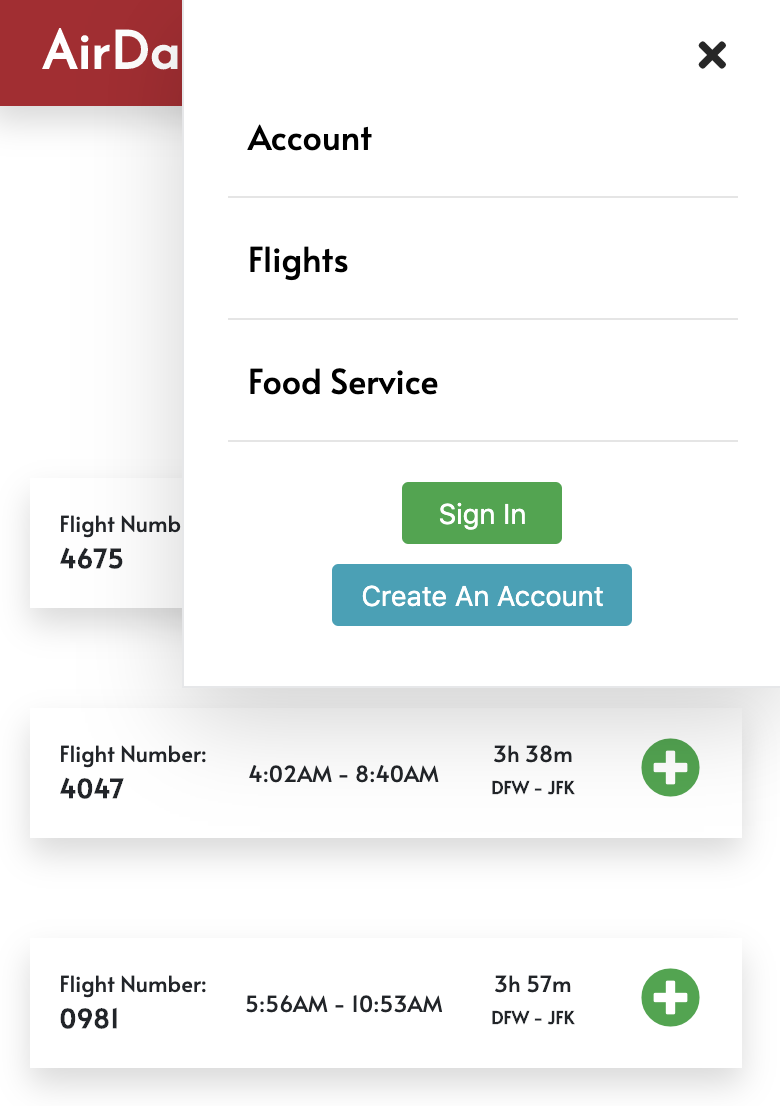
Our mobile web-page, AirDash, enables clients to view and order from the menu of their flights both before takeoff and during flight when connected to in-flight wifi. In addition, users of our service can store their flight information and keep track of their past, upcoming, or potential flights, along with the airline meals either ordered or offered during them.
How we built it
Since the objective of our application was to save time, we wanted to build our project in such a way that users could quickly and conveniently use our service. We decided our application needed to run smoothly on all types of devices: laptops, tablets, smartphones, etc, so we needed to build using something which made adaptation from one device to another run as smoothly and as easily as possible. Hence, we developed our application using the Flask framework and deployed our project with Google Cloud Platform's App Engine, which enabled us to do just that.
As far as aesthetics and user interface were concerned, we aimed to provide as much information in as few clicks for the user as possible without overwhelming users to the point where they could not process all the information given to them at once. Utilizing HTML, CSS, and JavaScript with our web design principle of instantaneous yet appetizing information, we adopted and built our web-page around the idea of scrolling through visuals. We felt that pictures could convey information about a user's flight's cuisine rapidly, and in doing so, we kept our domain's total number of webpages low, making the user experience simple and easy-to-use while still conveying lots of information in a limited amount of time.
Challenges we ran into
At first, the APIs had seemed daunting, since we had very little collective experience in dealing with APIs before. So, initially, their was a steep learning curve when it came to setting up our machines and software to try to even begin tackling the task at hand. Normally, our group goes straight to a divide-and-conquer strategy at hackathons, but for this challenge, we actually all worked in a parallel manner for the initial step of setup and reading the APIs, as we felt that would give us a better footing going forward. Unfortunately, a lot of time passed while we were still struggling through the initial phase, but eventually we got through it, and afterwards, when we finally entered our divide-and-conquer stage, our productivity skyrocketed due to struggling through the initial challenge of the prep-work beforehand.
Accomplishments that we're proud of
First and foremost, we are extremely proud that we were able to completely finish our application in 24 hours, since we hadn't even begun the "proper" development of our application until 6 hours in.
Beyond simply actualizing our idea and seeing it through to fruition, we're proud that we were able to design an aesthetically pleasing and effective web application which serves its intended purpose, especially considering we had next to no experience in developing something like this before.
What we learned
In making our webpages, we learned how to use HTML, CSS, and JavaScript while making an online shopping-style website from scratch. Prior to this hackathon, we had had next to no experience when it came to designing a web-based application, so nearly everything we did required us to learn something completely new. In that sense, we learned _ how _ to learn a large amount of information in a small amount of time.
What's next for AirDash
As with any 24-hour project, our next step is to flesh out what we made. For instance, we would like to add stripe payments to our service. In addition, there are many other time efficiencies in commercial airline travel which we weren't able to address as well such as choosing movies and TV shows to watch in-flight. That inefficiency, for instance, could be easily incorporated into AirDash with a "timeline" service, which would allow users to plan out what movies and TV shows they would watch for the duration of their flight. We also plan on allowing flyers to schedule their meals as well to their liking. The beauty of AirDash is in its ability to seamlessly induct more time-saving features into its repertoire, a quintessential trait for a service whose goal is to allow us to use our time more effectively.



Log in or sign up for Devpost to join the conversation.