-
-
Example
As someone with a background in environmental engineering, I have seen firsthand how air quality data exists but is not accessible to the people who need it most. Generic air quality apps show numbers like "AQI 145" but don't explain what that means. This gap between data and actionable health advice inspired AirSafe.
According to the WHO, 4.2 million people die annually from air pollution. In the US alone, 40+ million people live with respiratory conditions like asthma and COPD. These vulnerable populations need more than numbers; they need personalized health guidance.
AirSafe is a web-based tool that provides personalized air quality alerts based on specific health conditions:
- Users select their location and health condition (Asthma, COPD, Heart Disease, Elderly, Children)
- The system analyzes current air quality levels
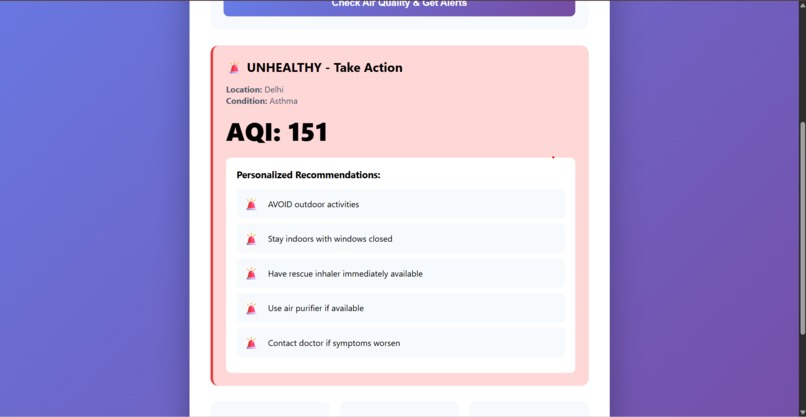
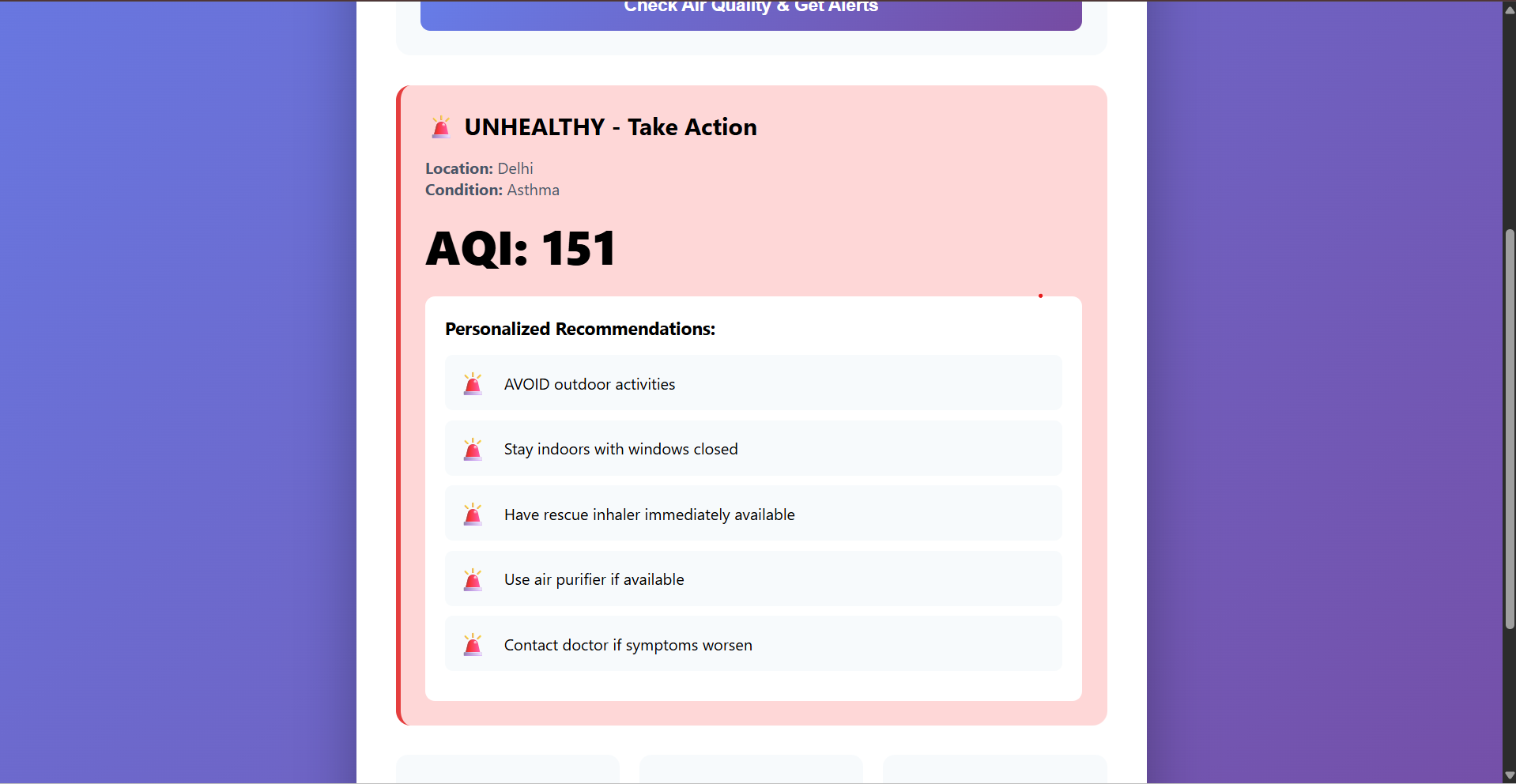
- AirSafe delivers condition-specific recommendations rather than generic warnings
- Each alert includes actionable steps: "Keep rescue inhaler ready," "Avoid outdoor exercise," "Stay indoors with windows closed."
How I built it: I built AirSafe as a responsive single-page web application using:
- HTML5 for structure
- CSS3 with gradient animations and responsive design
- JavaScript for dynamic alert generation and personalized recommendations
When a user checks their air quality, the system:
- Retrieves current AQI data
- Compares it against condition-specific thresholds
- Generates personalized recommendations from a curated database
- Displays color-coded alerts (green/yellow/red) with specific action items
I designed the interface to be accessible and clear—vulnerable populations include elderly users who need large fonts and simple navigation.
Challenges I faced
Time constraint: With limited development time, I had to prioritize features that maximized impact. I focused on the core functionality, delivering personalized health alerts rather than adding complexity.
Medical accuracy: I researched EPA guidelines, WHO recommendations, and medical literature on respiratory conditions to ensure the thresholds and recommendations were medically sound. Each condition has different sensitivity levels to air pollution.
User experience: Making health data understandable without medical jargon was challenging. I iterated on the recommendation phrasing to be both accurate and actionable for non-medical users.
Accessibility: Designing for vulnerable populations meant considering users who might have vision issues, limited tech literacy, or urgent health needs. Every design choice prioritized clarity and speed.
What's next for AirSafe:
- Real-time API integration: Connect to live air quality data sources (OpenWeatherMap, AirNow) for actual location-based readings
- SMS/Email alerts: Proactive notifications when air quality becomes dangerous for user's condition
- Historical tracking: Allow users to log symptoms and correlate them with air quality patterns
- Medication reminders: Integrate with user's treatment plan ("Take preventive inhaler when AQI exceeds X")
- Partnership with healthcare providers: Allow doctors to recommend specific thresholds for individual patients
Impact Potential: AirSafe addresses a critical gap in public health infrastructure. If adopted by even 1% of the 40+ million Americans with respiratory conditions, that's 400,000 people making better-informed health decisions daily. By preventing even a small fraction of air-quality-related ER visits (which cost $1,500-$3,000 each), AirSafe could save millions in healthcare costs while, more importantly, preventing suffering and saving lives.

Log in or sign up for Devpost to join the conversation.