-
-

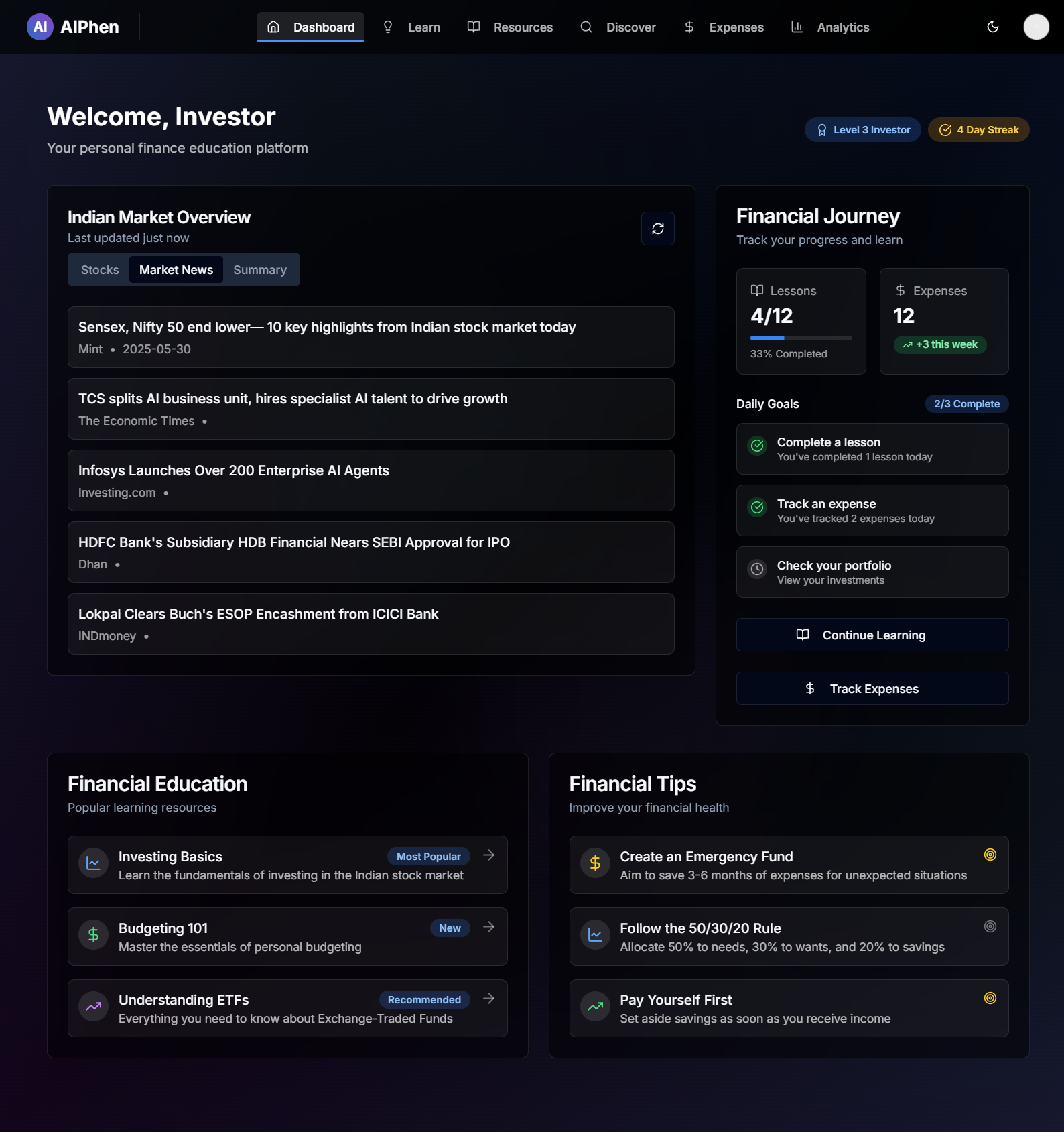
Landing page
-
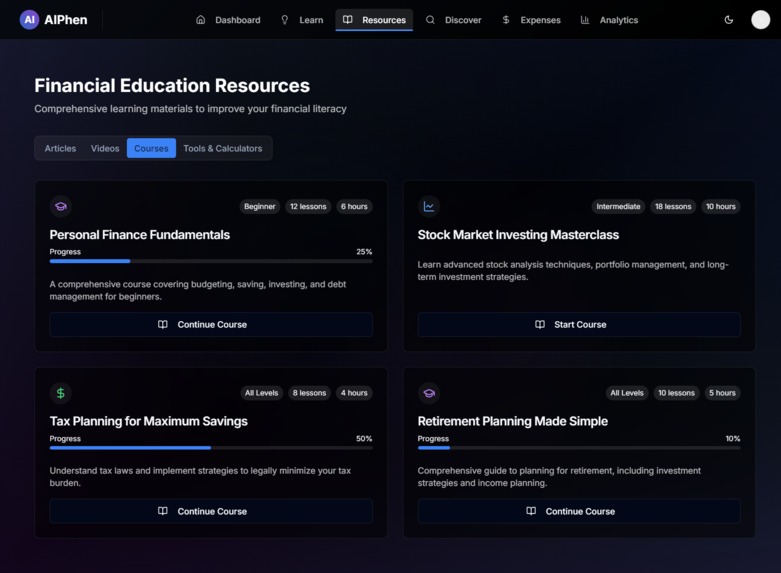
-
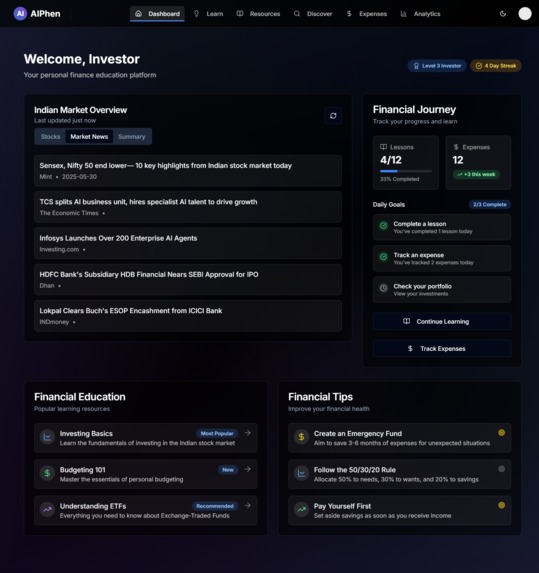
Das
-

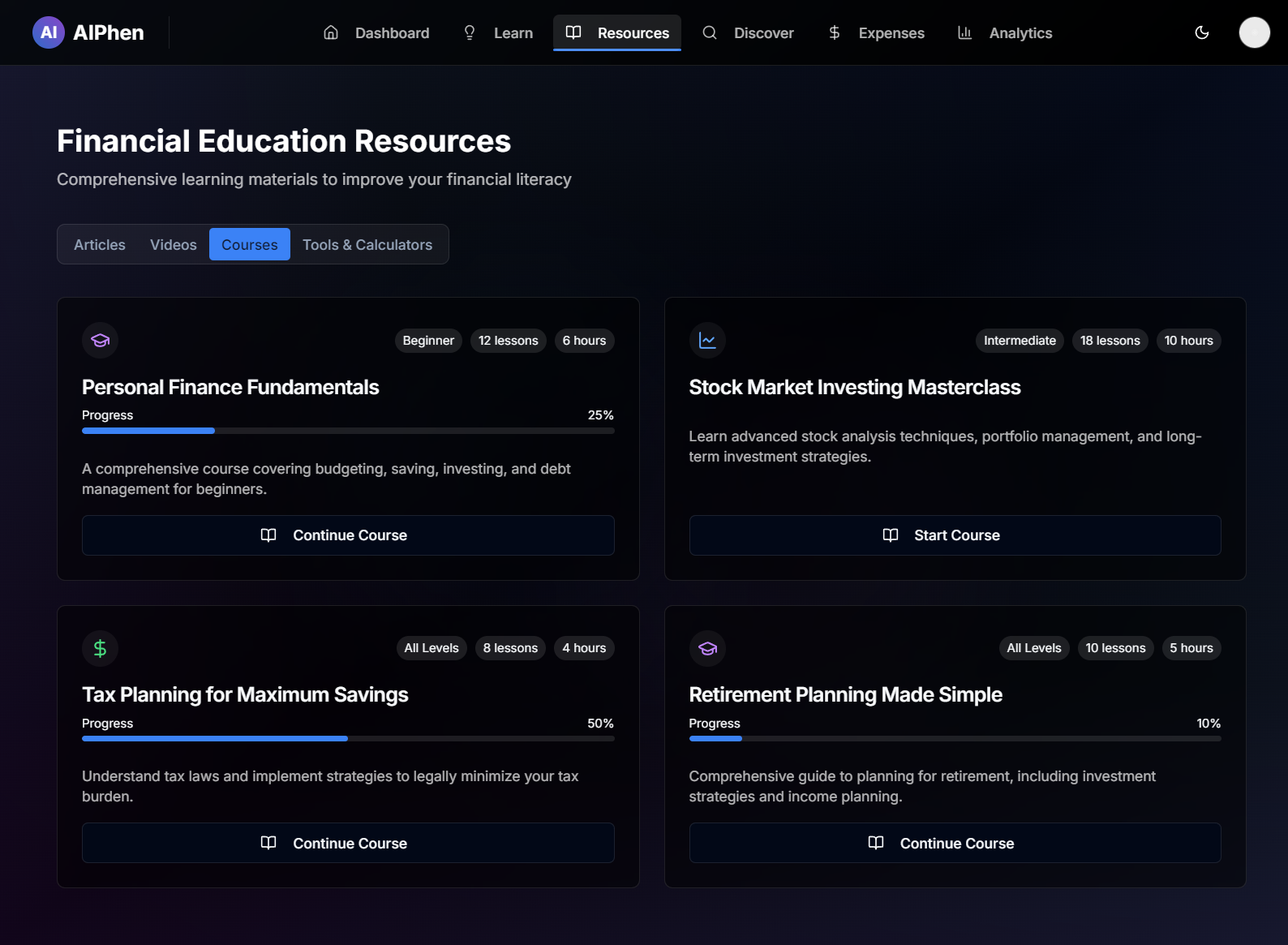
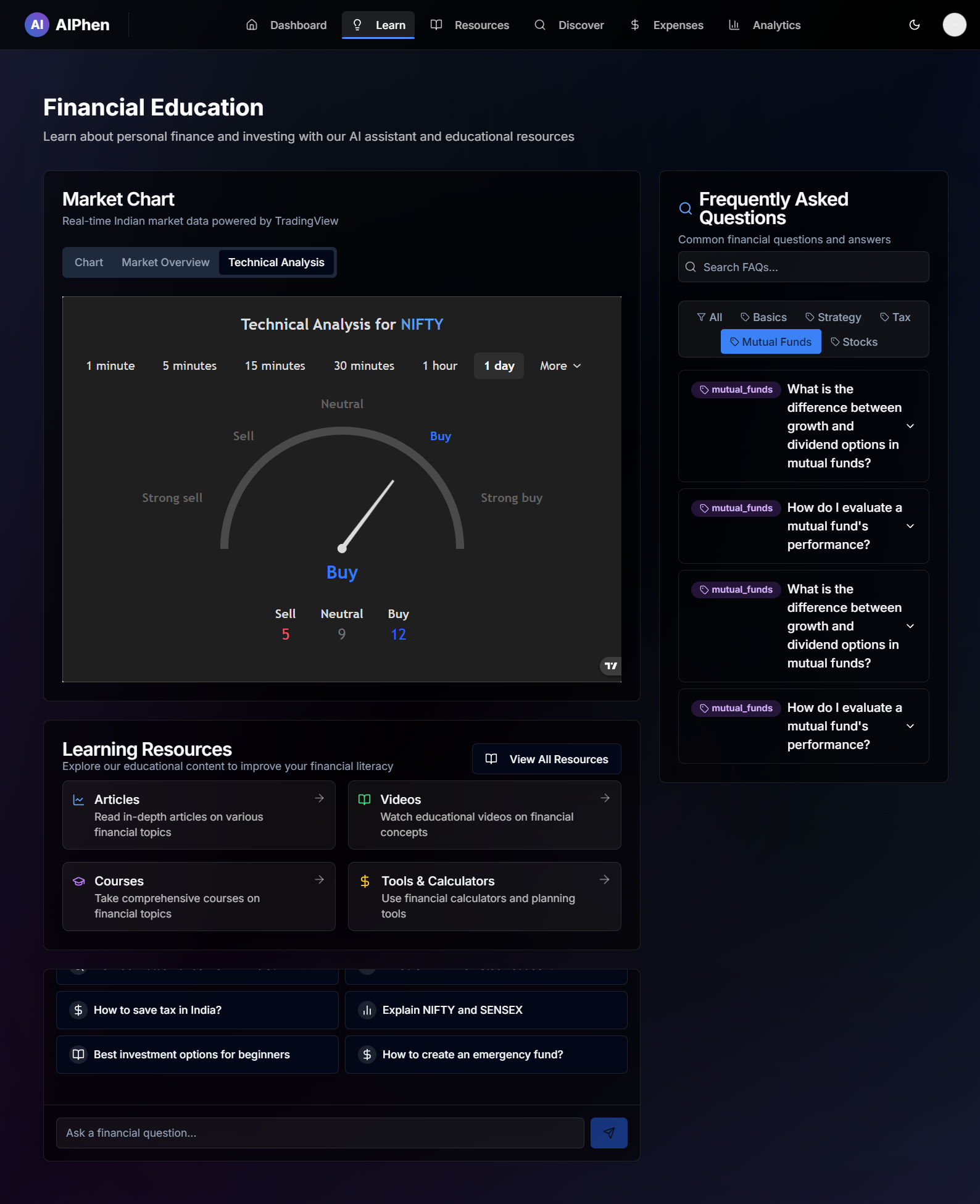
Learning resources
-
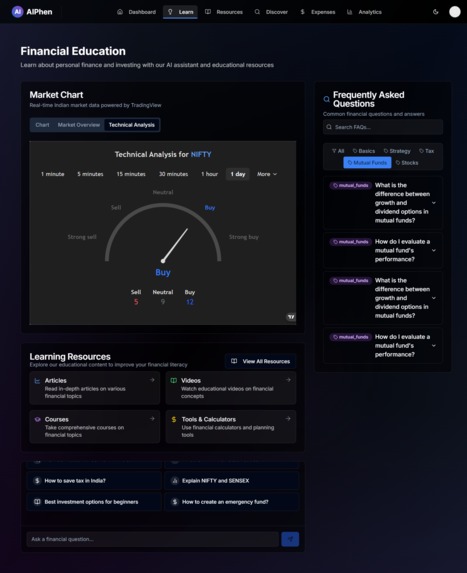
Analysis and learning resources
-
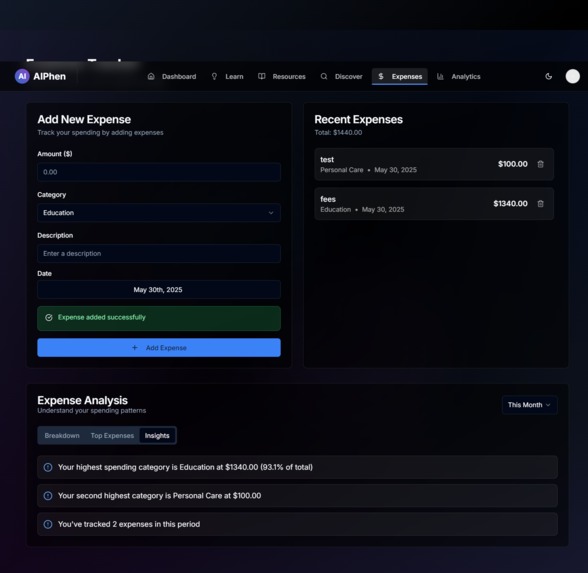
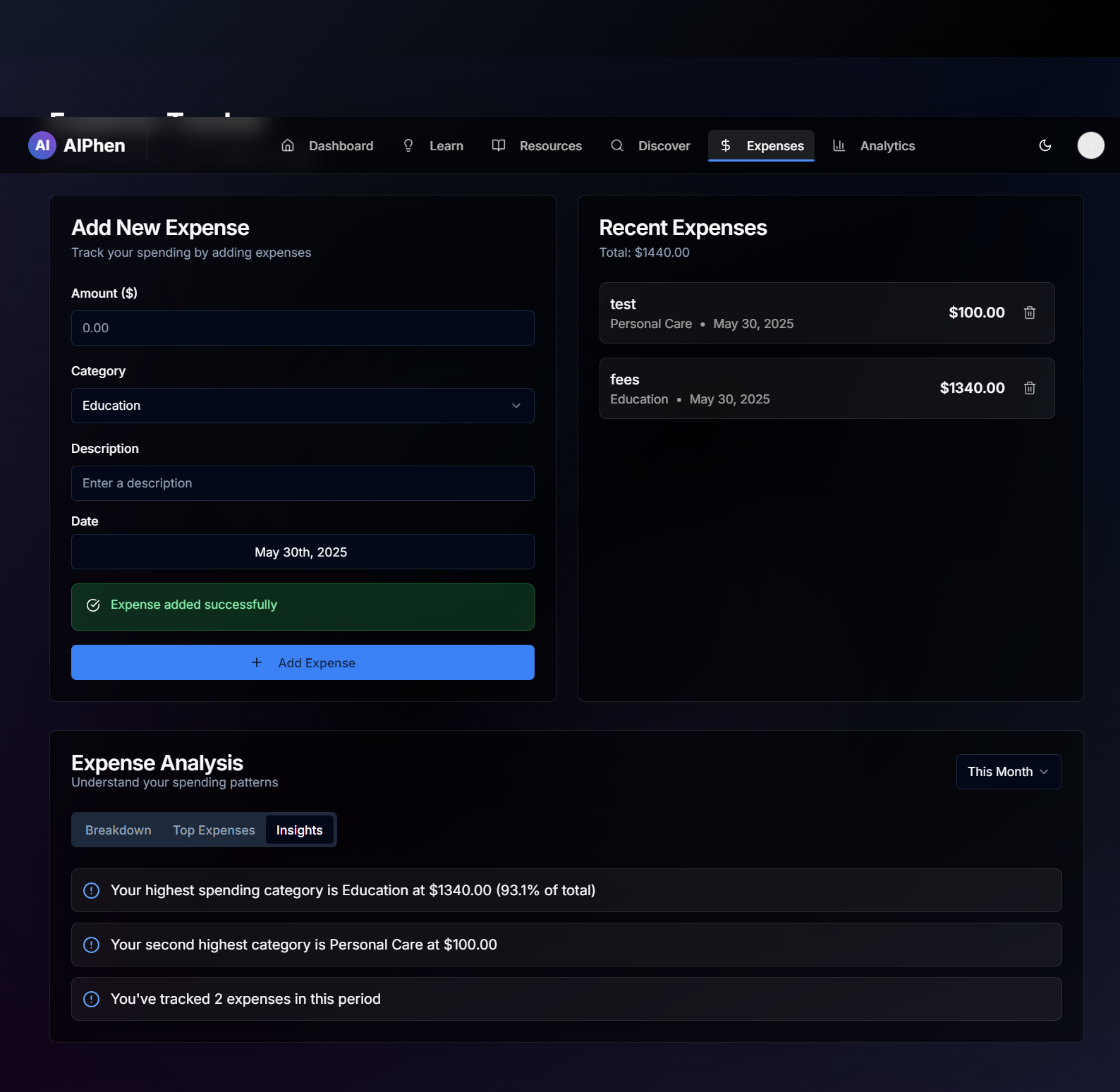
Expence tracking
-
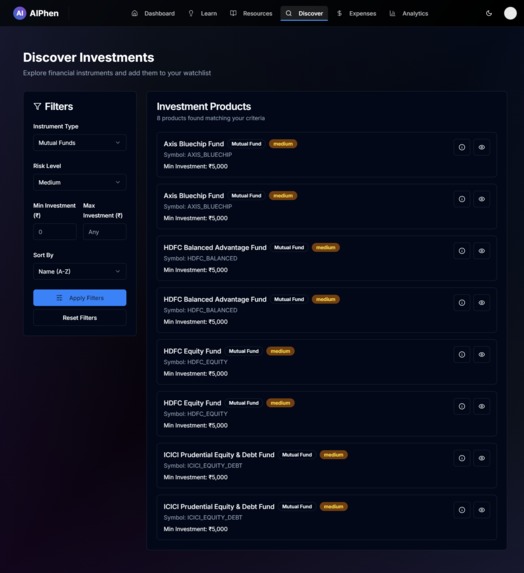
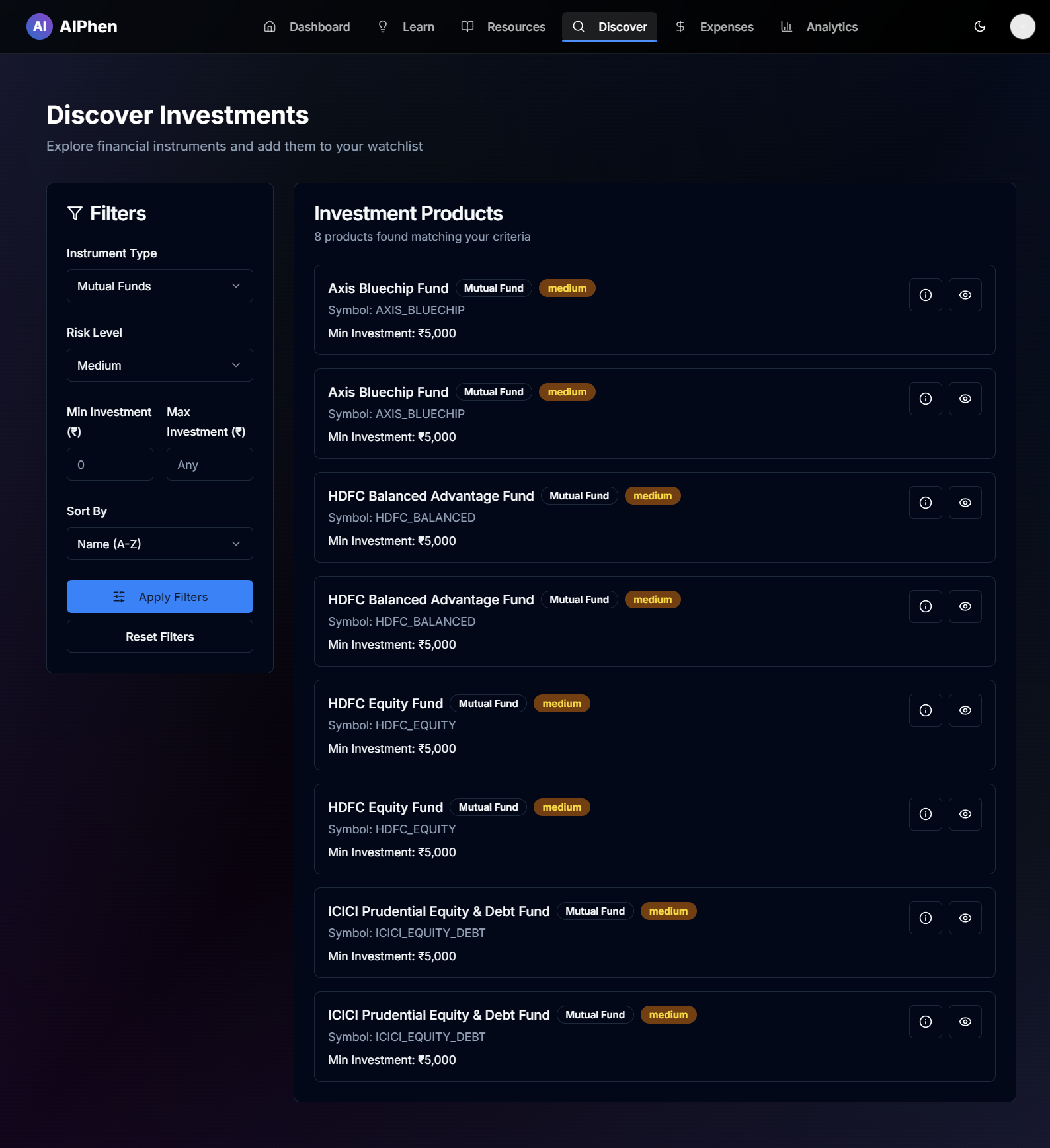
Investment Products
-
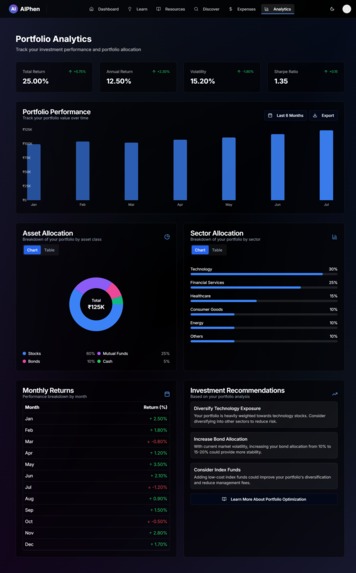
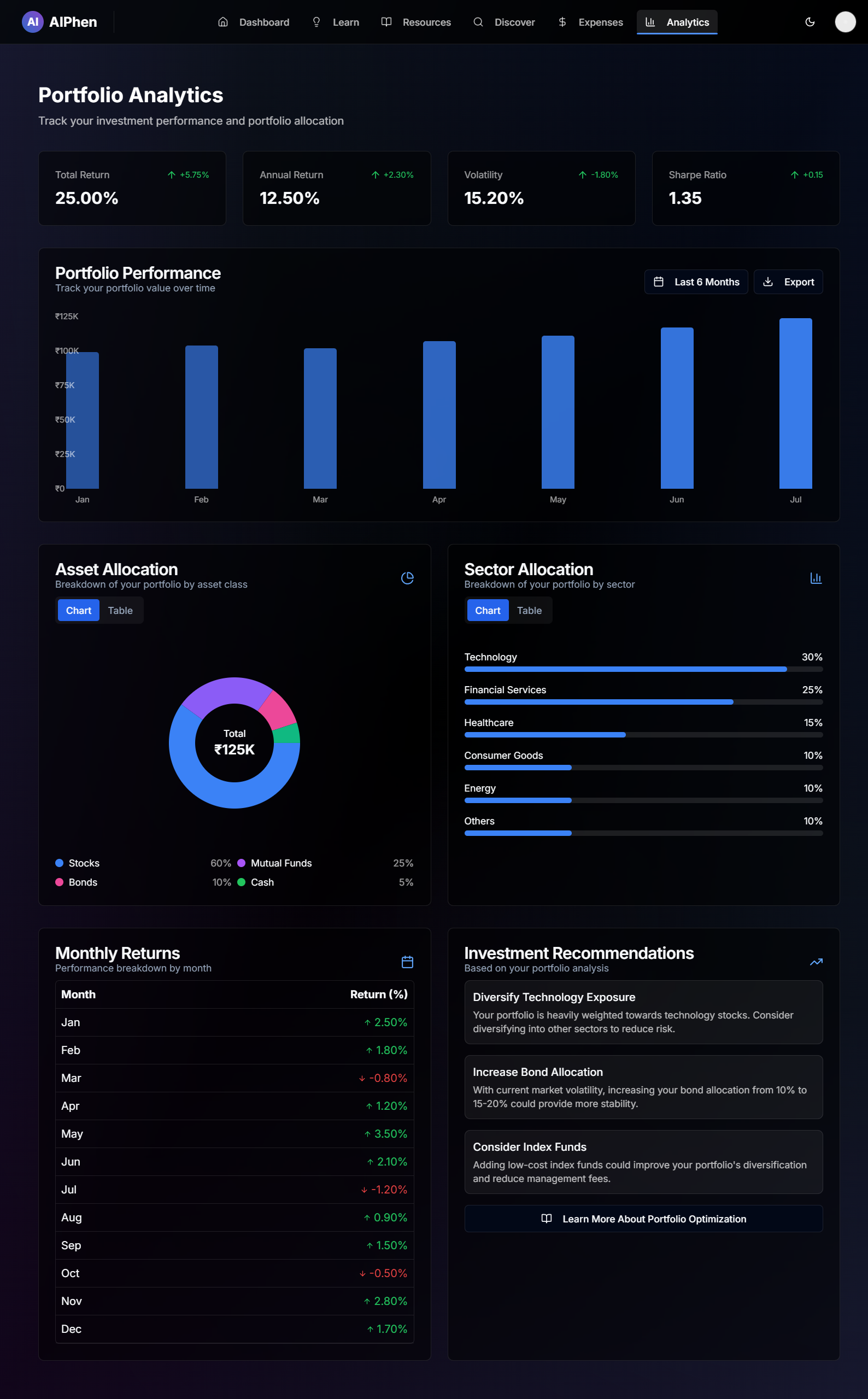
Portfolio analysis


Inspiration
The idea for AIPhen originated from observing how difficult financial decision-making can be for individuals without a formal background in finance especially students and early-career professionals. Many available tools are either too technical or lack contextual guidance. We were inspired to build something more intuitive, personalized, and accessible.
The emergence of Generative AI gave us the confidence to imagine a solution that could function like a financial advisor available 24/7, adaptive to user queries, and capable of explaining financial concepts in simple language. That’s how AIPhen was born.
What It Does
AIPhen is a GenAI-powered financial assistant designed to help users make smarter investing and money-management decisions. Key capabilities include:
- Natural language Q&A on financial topics using GenAI
- Real-time market data through Google Finance API integration
- Personalized financial insights based on user data
- Educational modules to improve financial literacy
- Expense tracking, savings analysis, and user-specific dashboards
All interactions are designed to be conversational, contextual, and actionable.
How We Built It
We structured AIPhen using a modular and scalable architecture with the following tech stack:
- Frontend: React, hosted on Vercel, with components for onboarding, dashboard, education, expense tracking, and more.
- Backend: Node.js and Express, responsible for routing, business logic, authentication, and API handling.
- AI Layer: GenAI integration to interpret user queries and return financial guidance in a conversational format.
- Data Layer: PostgreSQL via Supabase for structured storage of user data, preferences, and AI interaction logs.
- External Services: Google Finance API for real-time data integration.
All communication between components is handled securely using HTTPS and JWT-based authentication.
Challenges We Ran Into
- Accuracy of AI Responses: Financial guidance must be accurate. We had to fine-tune prompt engineering and build guardrails to ensure quality and consistency.
- Security and Privacy: Handling financial data meant implementing strong data protection protocols, including user-level access control and encrypted storage.
- User Experience Design: Creating a UI that is both engaging and educational required multiple iterations and feedback cycles.
- Time Constraints: Coordinating the development process alongside academic responsibilities was challenging but rewarding.
Accomplishments That We're Proud Of
- We successfully integrated a Generative AI model into a real-world financial use case.
- We created a modular system capable of scaling to support various user personas and features.
- We developed a clean, user-friendly interface that simplifies complex financial topics.
- We validated the usability of our platform with initial user testing and iterative improvements.
What We Learned
- Technical: Advanced integration of AI, secure backend communication, API consumption, and modular frontend development.
- Collaboration: Managing roles, deadlines, and sprint planning across a distributed team.
- Product Thinking: Designing with the end user in mind and continuously improving based on feedback.
- AI Ethics: Understanding the importance of responsible AI use when providing financial advice.
What's Next for AIPhen
Our next steps include:
- Implementing multilingual support to increase accessibility.
- Enhancing personalization with deeper analytics and machine learning.
- Partnering with verified financial content sources to enrich the assistant's knowledge base.
- Expanding the educational module with certified micro-courses on financial literacy.
- Launching beta testing to gather real user feedback at scale.
We aim to evolve AIPhen into a reliable financial companion that empowers individuals with confidence and clarity in their financial journeys.
Built With
- bolt
- gemini
- javascript
- next
- react
- supabase
- typescript
- vercel


Log in or sign up for Devpost to join the conversation.