-
-
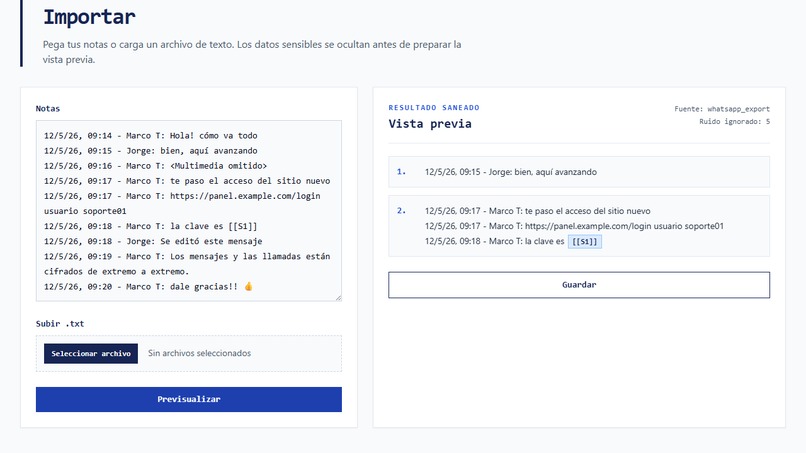
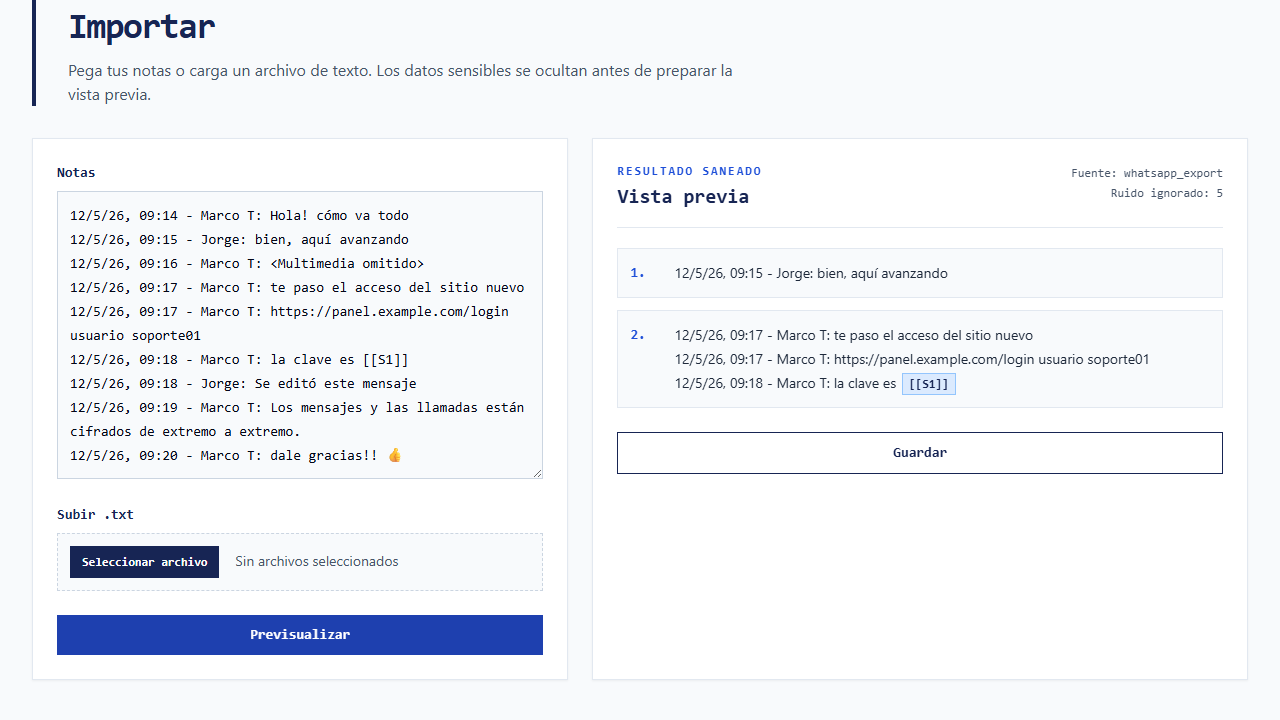
Local redaction: secrets become [[S1]] tokens in the browser and never reach the AI or the network.
-
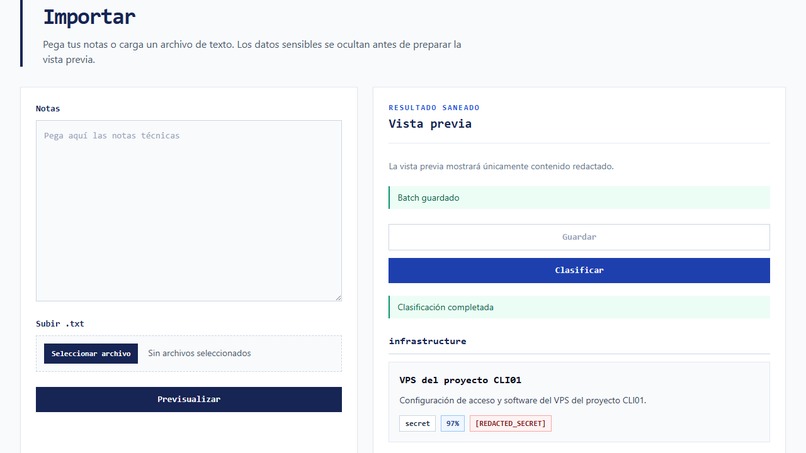
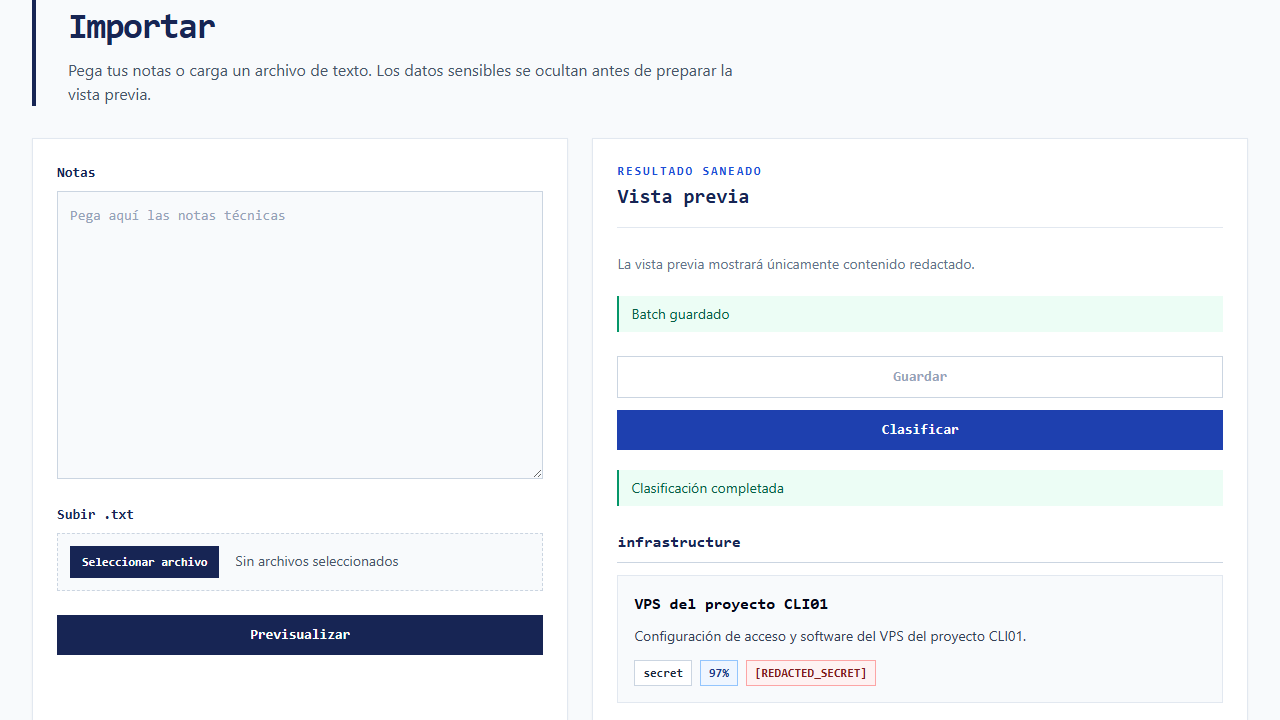
GPT-5.6 classification: a chaotic note becomes a structured record; the credential shows only as [REDACTED_SECRET].
-
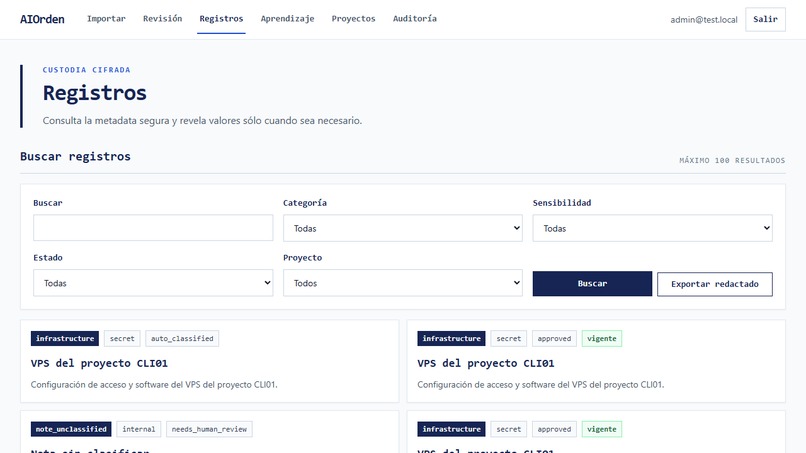
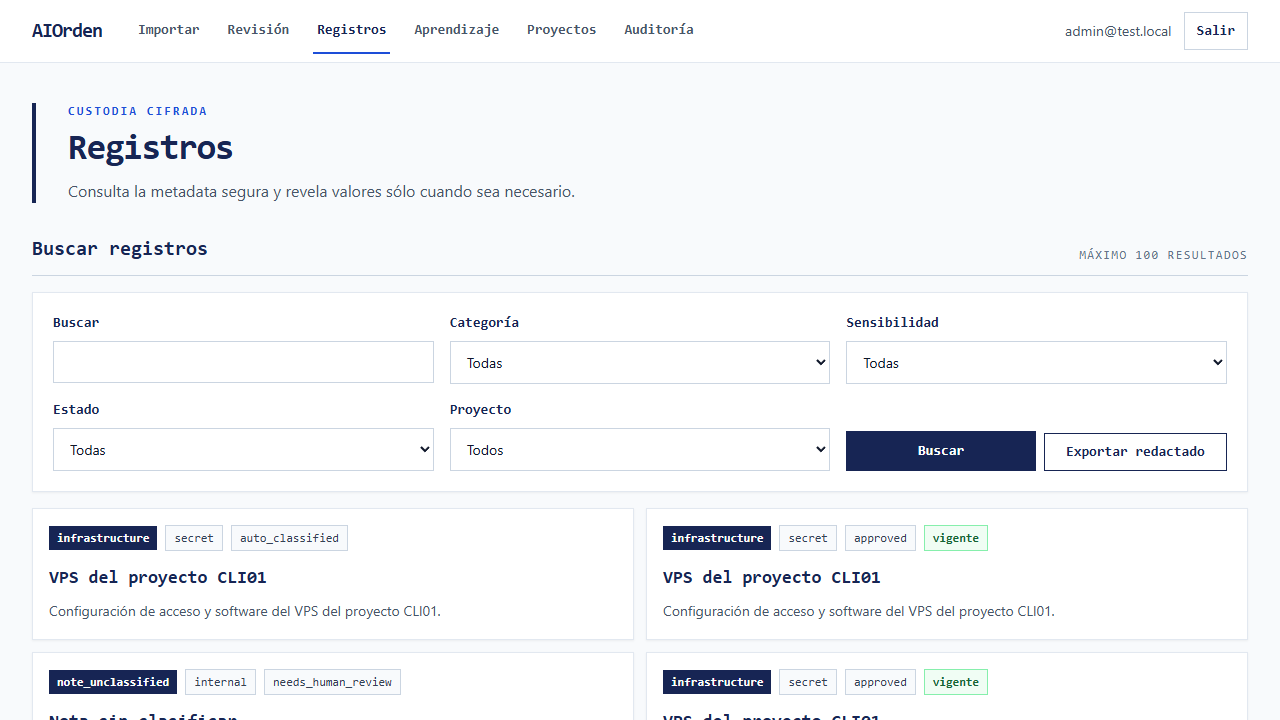
Records with an encrypted vault: credentials are stored with AES-256-GCM and masked as •••• until revealed.
-
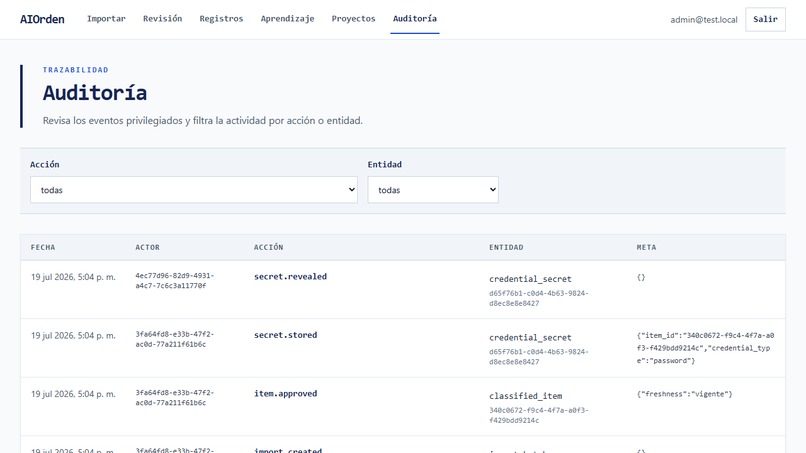
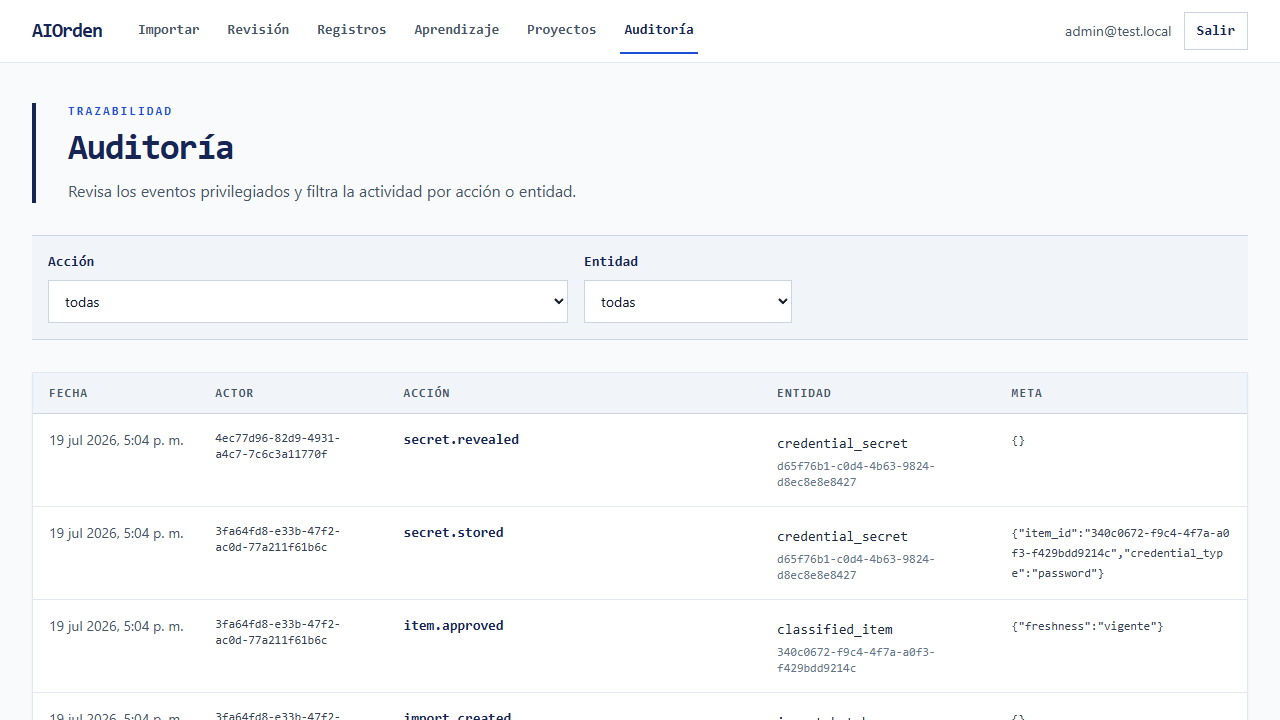
Append-only audit trail: every secret reveal is logged as a secret.revealed event that can't be edited or deleted.
-
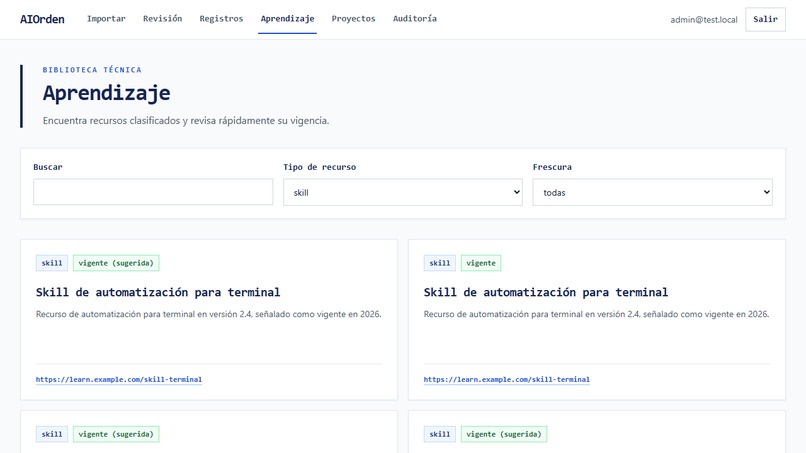
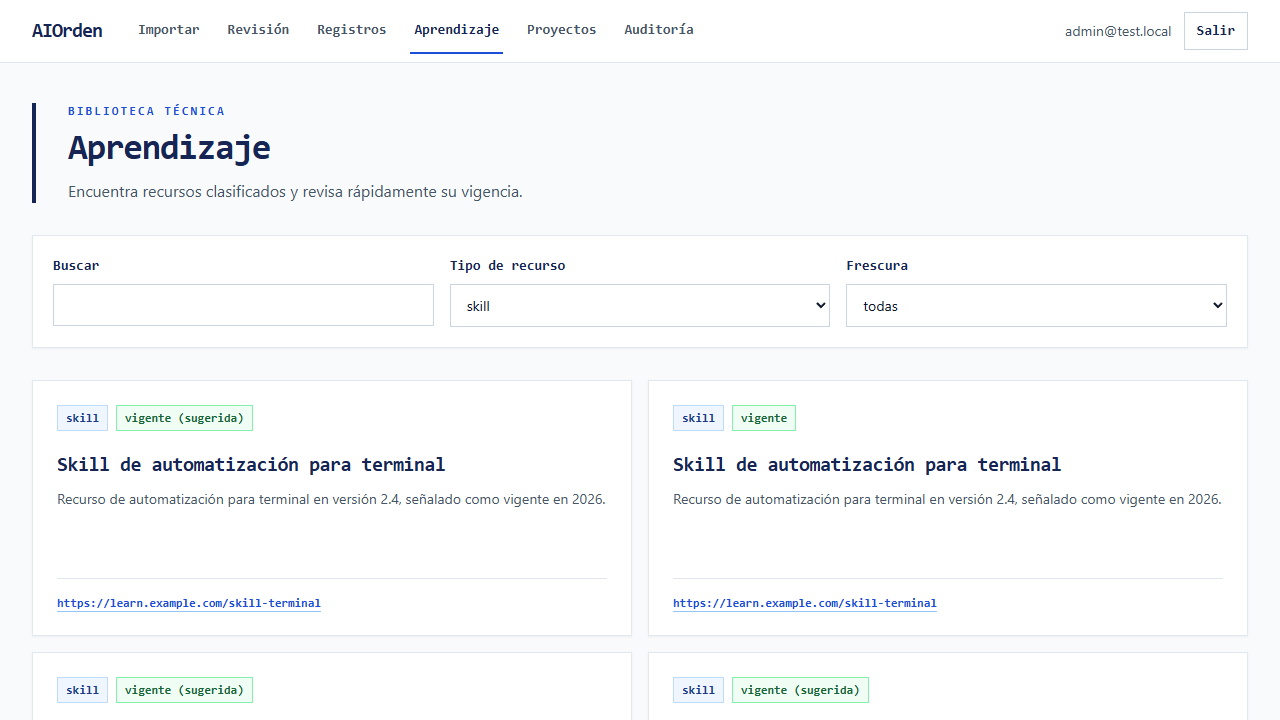
Learning library: resources and links classified with freshness tracking (current / review / outdated).
-
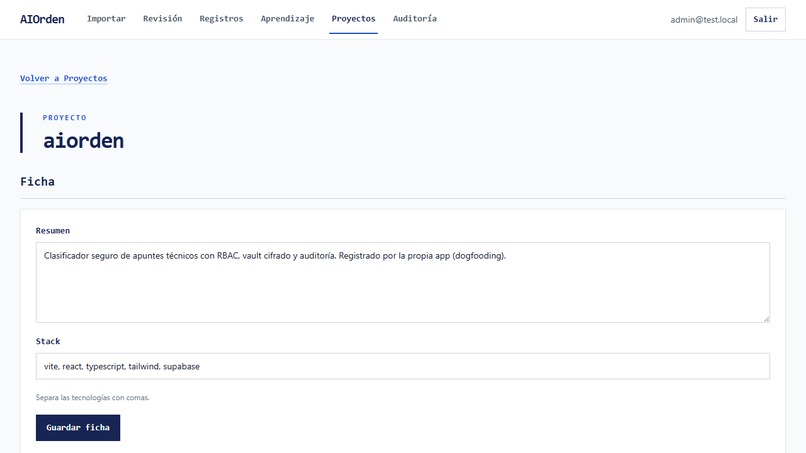
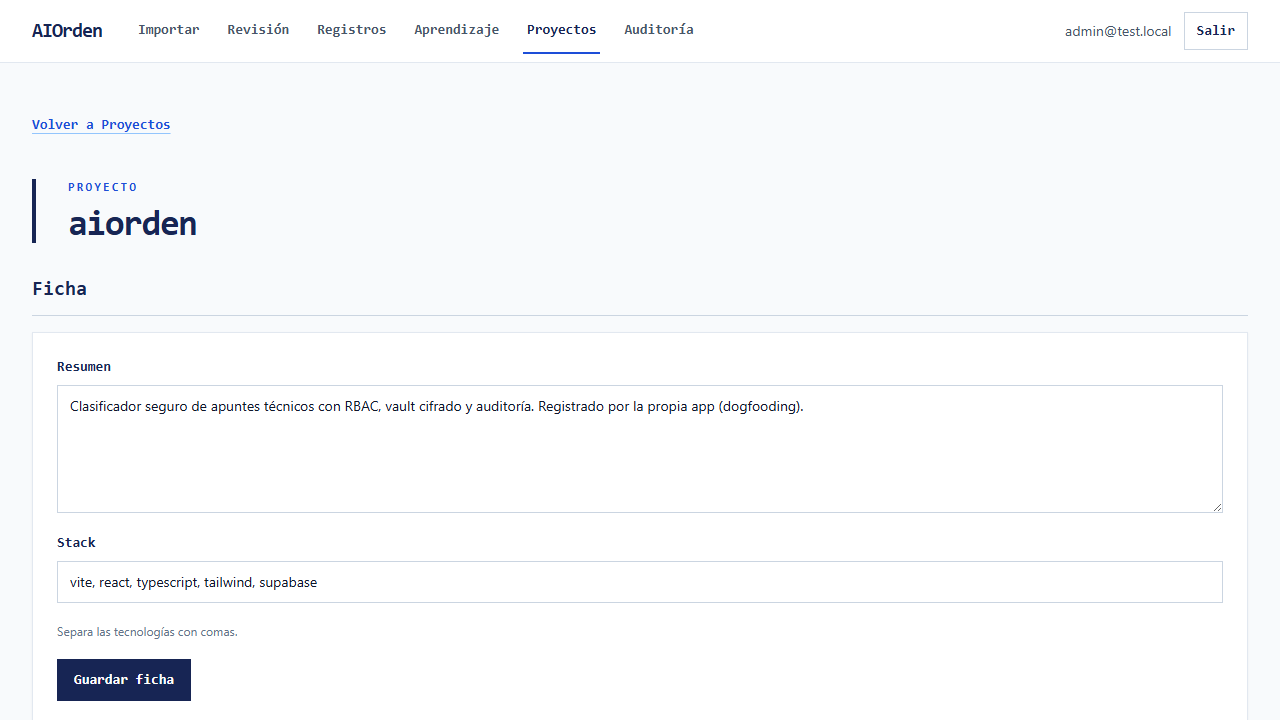
Project view: knowledge grouped by client. AIOrden documents itself as its very first project.
Inspiration
As a full-stack developer and IT freelancer, I accumulate technical knowledge everywhere: WhatsApp threads, loose notes, X and Grok, YouTube courses, bookmarks, RustDesk/AnyDesk sessions, client DVR configs, emails. When a client calls, I can rarely remember where I saved that remote-access setup or that credential. Searching wastes time — and pasting a secret into the wrong place is a real risk. I wanted one place that turns that chaos into structured, searchable knowledge without ever leaking a secret.
What it does
AIOrden is a privacy-first, installable PWA. You paste chaotic notes (or upload a .txt / WhatsApp export) and GPT-5.6 classifies them into clean, categorized records under a strict JSON contract — while every secret is stripped out in your browser before anything reaches the AI.
- AI classification of technical notes into a versioned JSON contract (infrastructure, credentials, commands, links, and more)
- Local secret redaction — credentials and keys become
[[S#]]tokens client-side; the real values never touch the network - Server-side leak scanner — if the model ever tries to return a secret, the entire output is rejected
- Human review with clarification questions before anything becomes a record
- Encrypted credential vault (AES-256-GCM) with an append-only audit trail
- Granular RBAC enforced in Postgres with row-level security
- Learning library & project registry — links and resources get freshness tracking; the app even documents itself as its own first project
- Installable PWA with an offline-ready app shell
How I built it — Codex + GPT-5.6
The part I'm proudest of: I didn't hand-write the code — Codex did. I acted as the orchestrator. For every task in my plan I wrote a bounded prompt and handed it to Codex CLI (running GPT-5.6, gpt-5.6-sol) as the sole implementer; I ran the quality gates and committed. AIOrden was built across ~59 gated Codex sessions — one per task — producing 318 passing tests (222 unit, 80 integration against the live cloud, 16 end-to-end).
The stack: a React + Vite + TypeScript frontend and a Supabase backend (Auth, Postgres with RLS, Deno Edge Functions). The classifier is an Edge Function that calls GPT-5.6 against a master prompt, and its output is validated by mirrored Ajv (client) and Zod (edge) schemas so malformed AI output can never reach the database.
My favorite detail: the same GPT-5.6 model that wrote the app also runs inside it as the live classifier.
Challenges I ran into
- Privacy vs. AI quality. The model needs context to classify well but must never see raw secrets. I solved it with client-side redaction (
[[S#]]tokens kept only in React state) plus a server-side leak scanner — GPT-5.6 works on redacted text and is blocked from ever emitting a secret. - Making an LLM reliable enough for a database. Free-form model output can't be trusted as a record. A strict, versioned JSON contract, mirror-validated on both client and server, turns GPT-5.6 into a dependable structured engine.
- Orchestrating an AI to build software. Driving Codex task-by-task — gated commits, fix rounds fed the exact failing test output, and a strict scope per session — was a new way of working, and it held quality across 300+ tests.
What I learned
That an agentic model can genuinely build a complete, secure, tested product when it's given tight scope, real gates, and honest feedback — and that "privacy-first AI" is an architecture decision, not a slogan: you design where the secret lives.
This isn't just a hackathon project — it's a tool I need every day.
Built with Codex + GPT-5.6 (gpt-5.6-sol): Codex wrote the code, GPT-5.6 classifies inside it.
Built With
- aes-256-gcm
- claude
- codex
- deno
- edge-functions
- gpt-5.6
- openai
- playwright
- postgresql
- pwa
- react
- supabase
- tailwindcss
- tanstack-query
- typescript
- vite
- vitest
- zod

Log in or sign up for Devpost to join the conversation.