Inspiration
AI agents are increasingly asked to help with consequential financial and compliance work, but a fluent answer is not enough. A user, reviewer, or auditor needs to be able to inspect the inputs, reproduce the calculation, and verify the result independently.
AINumbers brings that standard to browser-native fintech tooling. It makes deterministic tools usable by people in a web page and by agents through the same underlying computation.
What it does
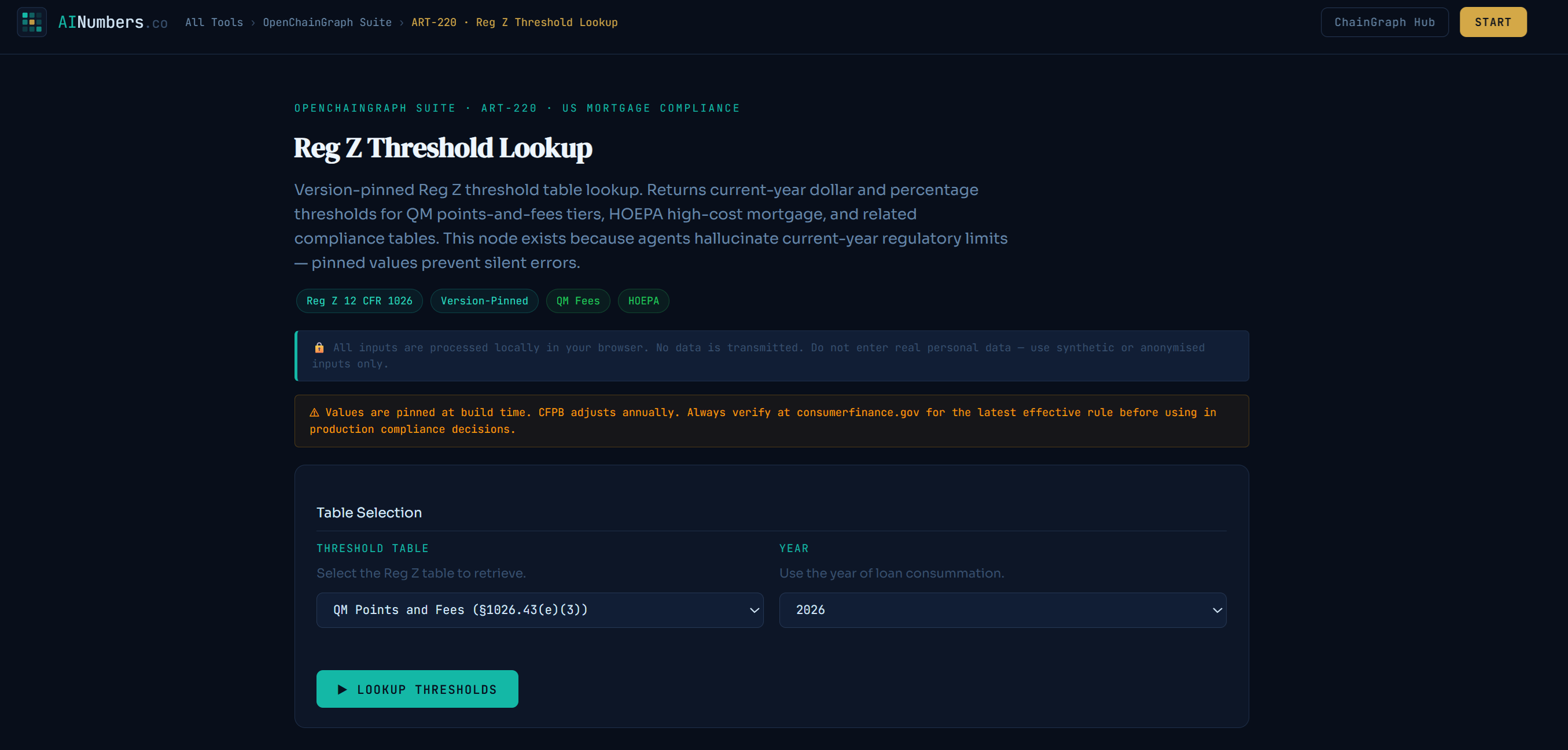
AINumbers is an open-source suite of browser-native fintech tools and OpenChainGraph workflows. The tools cover payments, AML/KYC, risk, regulatory compliance, tokenization, and more.
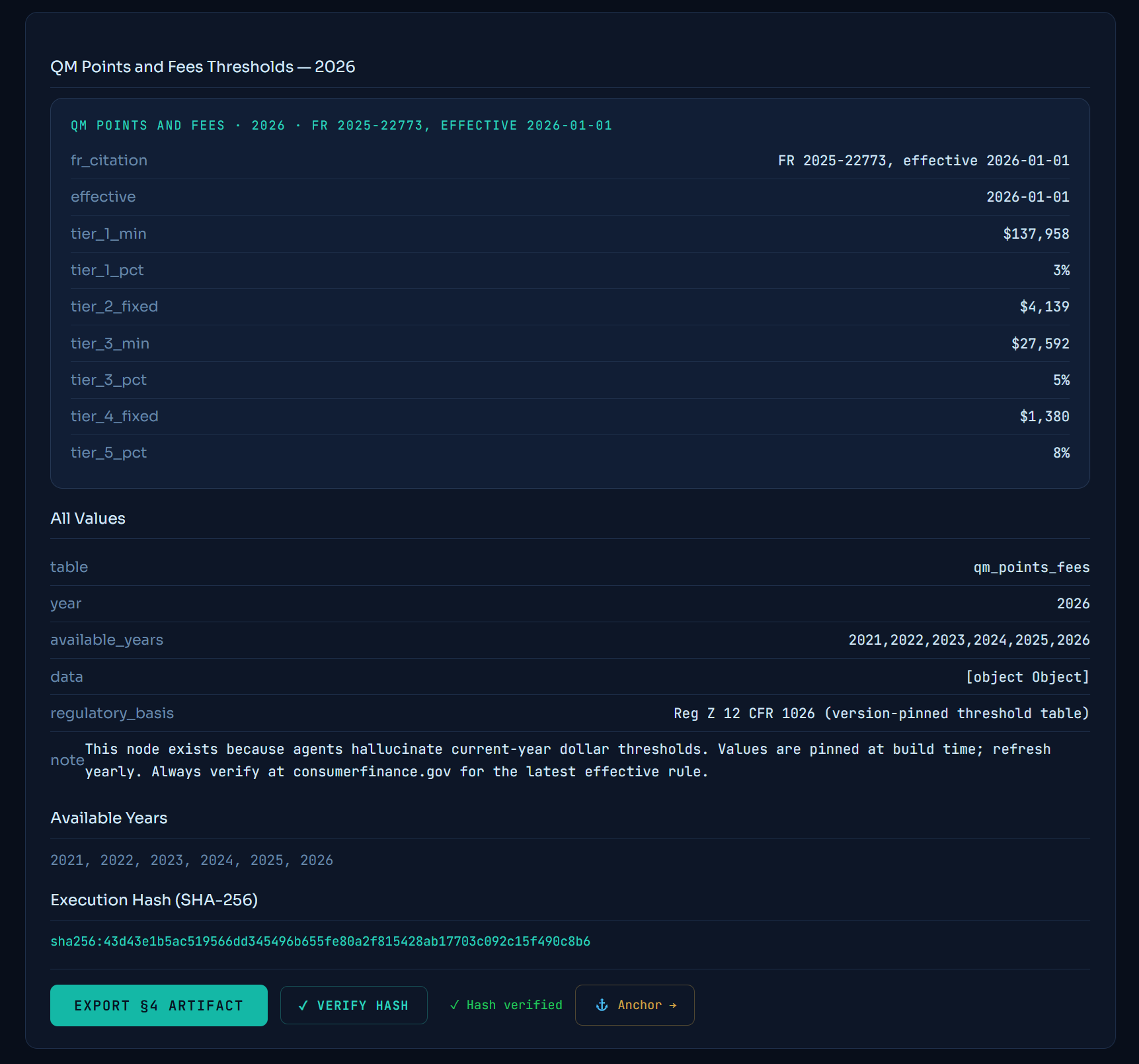
Each OpenChainGraph workflow produces a reproducible SHA-256 execution hash over canonical inputs and outputs. That gives an agent's result a verifiable receipt rather than asking users to trust a black box.
For this WebMCP submission, AINumbers exposes browser tools to agents through WebMCP while preserving the ordinary human-facing form. The same computation powers both paths, so a person and an agent receive the same structured result and the same receipt.
How we built it
The site is built as self-contained HTML and JavaScript tools with no account requirement and no data transmission after page load. Calculations run locally in the browser using deterministic logic and WebCrypto hashing.
We added WebMCP registration using the current document.modelContext API, with a fallback to the earlier navigator.modelContext surface. Browsers without WebMCP retain the same normal web experience.
The project also offers an MCP server for agent integrations and publishes its source code, manifests, schemas, and OpenChainGraph specification publicly.
Challenges we ran into
WebMCP is a draft browser API, and its surface moved during implementation. A registration pattern that had previously worked through navigator.modelContext no longer registered tools in current Chrome.
We diagnosed the issue with a small probe tool, updated registration to prefer document.modelContext, preserved a compatibility fallback, and documented the complete debugging session so others can reproduce it.
What we learned
Agent tooling is more trustworthy when it is not a separate, opaque path. A shared human-and-agent computation path, structured output, and independently verifiable receipt make it easier to test, inspect, and rely on agent-assisted work.
What's next
We will continue expanding WebMCP coverage across AINumbers tools, keep compatibility checks current as the draft API evolves, and make verifiable browser-native tools easier for agents and humans to use together.
Built With
- cloudflare-workers
- github
- html5
- javascript
- json-schema
- model-context-protocol
- openchaingraph
- rfc-8785
- sha-256
- webcrypto-api
- webmcp


Log in or sign up for Devpost to join the conversation.