-
-
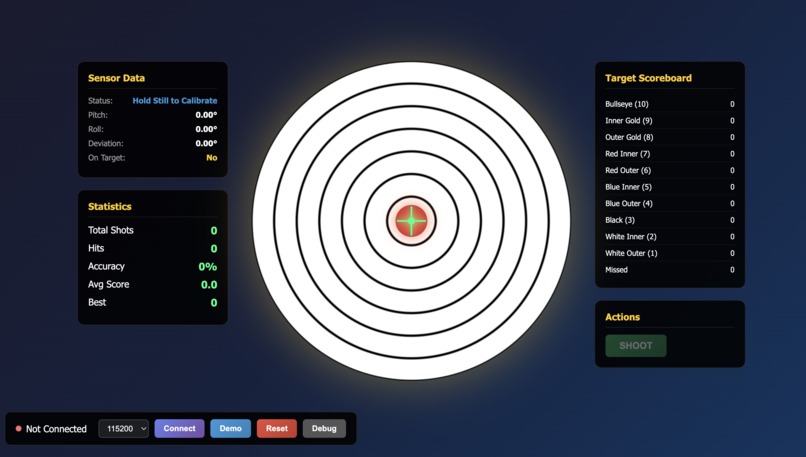
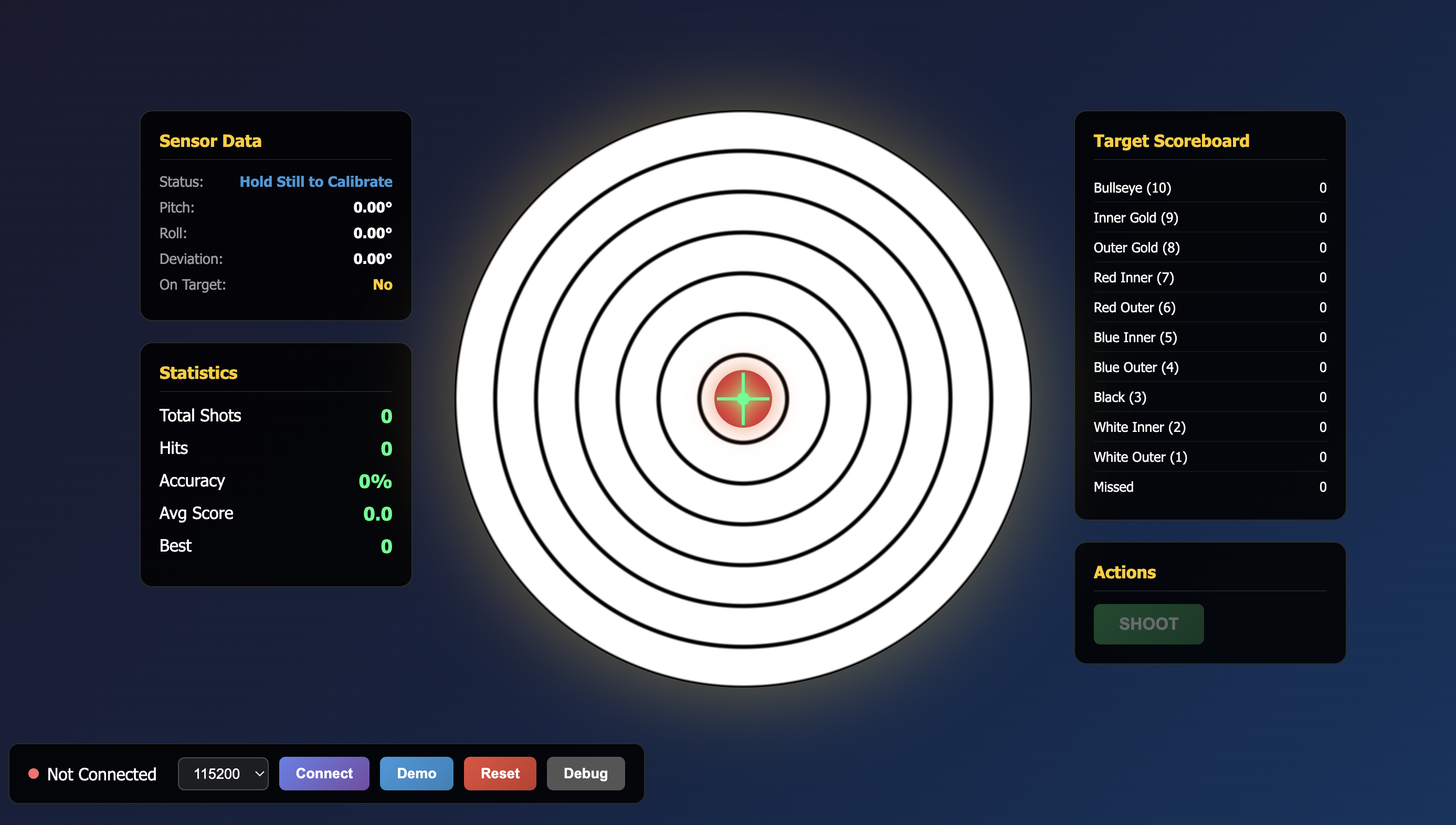
Screen of our Website
Inspiration
There is an increase in awareness for underrepresented communities in sports (women, people of color, disabled, etc), and it creates an increase in participation. However, what happens if there is no “easy” way to participate? There are companies around the area trying to start programs to increase accessibility to these users. Therefore, we were inspired to help this community out through wearables.
Our vision is to improve accessibility of certain athletic activities and enhance overall user and staff experience. Through researching the community and paralympics we were excited to design a product that provides tactile feedback to increase the participation of visually impaired athletes.
What it does
The system we create: archery simulation, and (ideally) wearable sensor and sound outlet allows the archer to independently create a point of reference.
The current system of the paralympics uses physical tripods that are expensive or difficult to transport, and oftentimes unstable on the unevenness of outdoor ranges.
Our system is made up of a wearable that utilizes a sensor and has a sound outlet that allows the archer to independently create a point of reference. Now, given that we currently cannot access these users or try blind archery ourselves, the archery simulation created allows us to test our logic.
On the wearable, the sensor provides real-time data of where the user may be tilting towards on two different axes which is then translated onto the website to provide a real-time simulation of what the sensor is providing.
In the simulation, the user is provided with:
Coordinates of where they are currently at Allows users to create a point of reference by staying still at a certain point. With the marking, based on where they shot at, they can make an informed decision on where they would like to go next based on the point of reference that they marked. Everytime they go over the point of reference saved, a sound output is heard. Users can make multiple points of reference as long as they stay still for 5 seconds Additionally to keep the fun and competitiveness of the sport, there are sports statistics and scoreboards displayed
How we built it
We first started with getting some data from the sensor (MMA8451) via the Arduino IDE Ideated on what exactly we wanted to do with this data (e.g what feedback we wanted based on the real life time data) Started playing with OpenCode to allows us to create a simulation Created our own website with the archery simulation Iterated multiple times on what we wanted from the simulation so that archers got the feedback that can help them most.
Challenges we ran into
Most of the challenges came from creating the simulation and embedding it with the hardware, oftentimes the sensor came loose and made the simulation go crazy. However, this helped us realize and implement failure modes to ensure that everything is connected before we iterate again.
Accomplishments that we're proud of
We were most proud of being able to play around with hardware, and for the first time being able to use tools like OpenCode to help us develop a front-end that will allow us to verify our logic with the hardware.
What we learned
Learned about a variety of different sensors (pros, cons) Used new tools to create front-ends as an add-on to verify our back-end/data Failure modes
What's next for AimWear
Collecting user input is highly important for creating a product catering to any group. Therefore, we would prioritize collecting input, as well as idea generation based on their input. Perhaps a vibration component instead of auditory, would be a viable next step. Additionally, real-life testing (archery range and/or blind archer) and use of high fidelity components would be considered as well.
