-
-
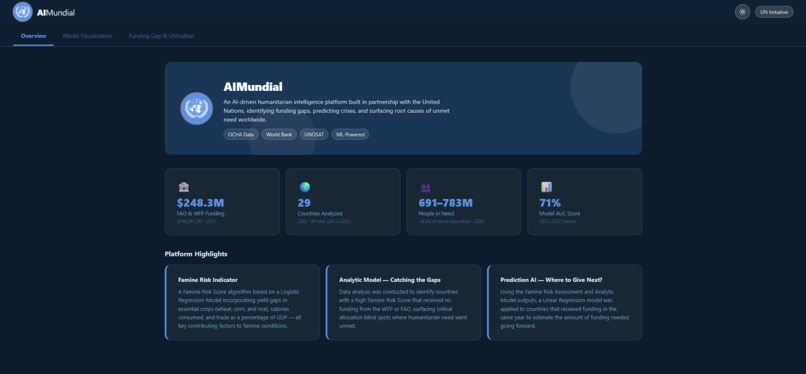
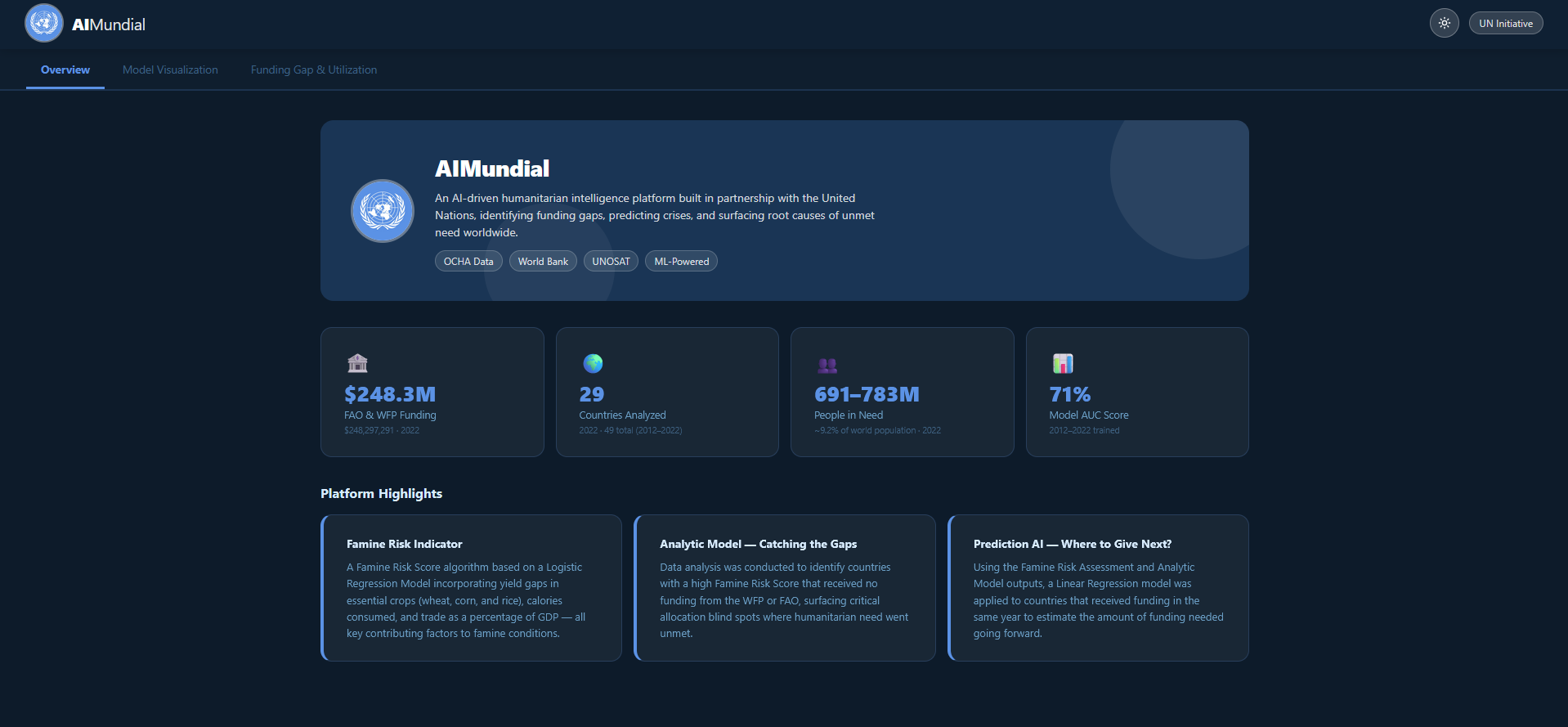
homepage
-
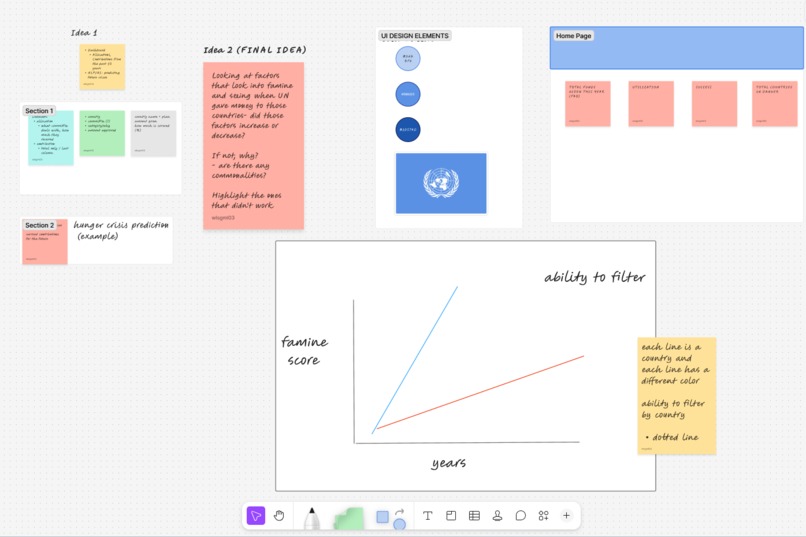
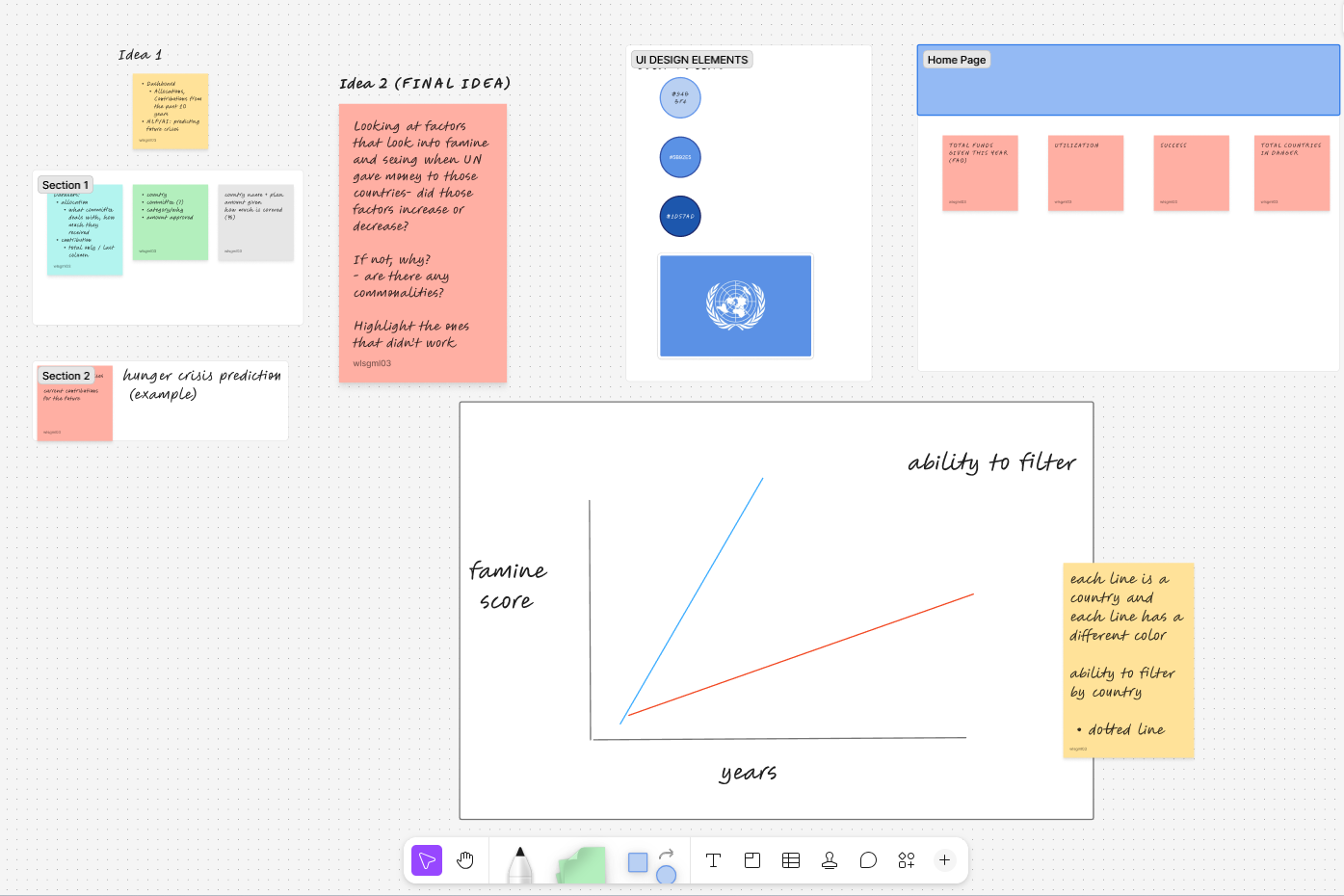
figjam board/ ideation!
-
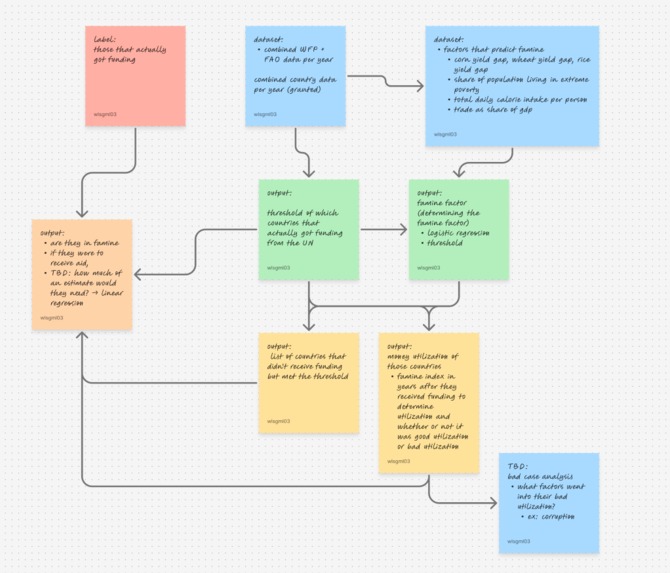
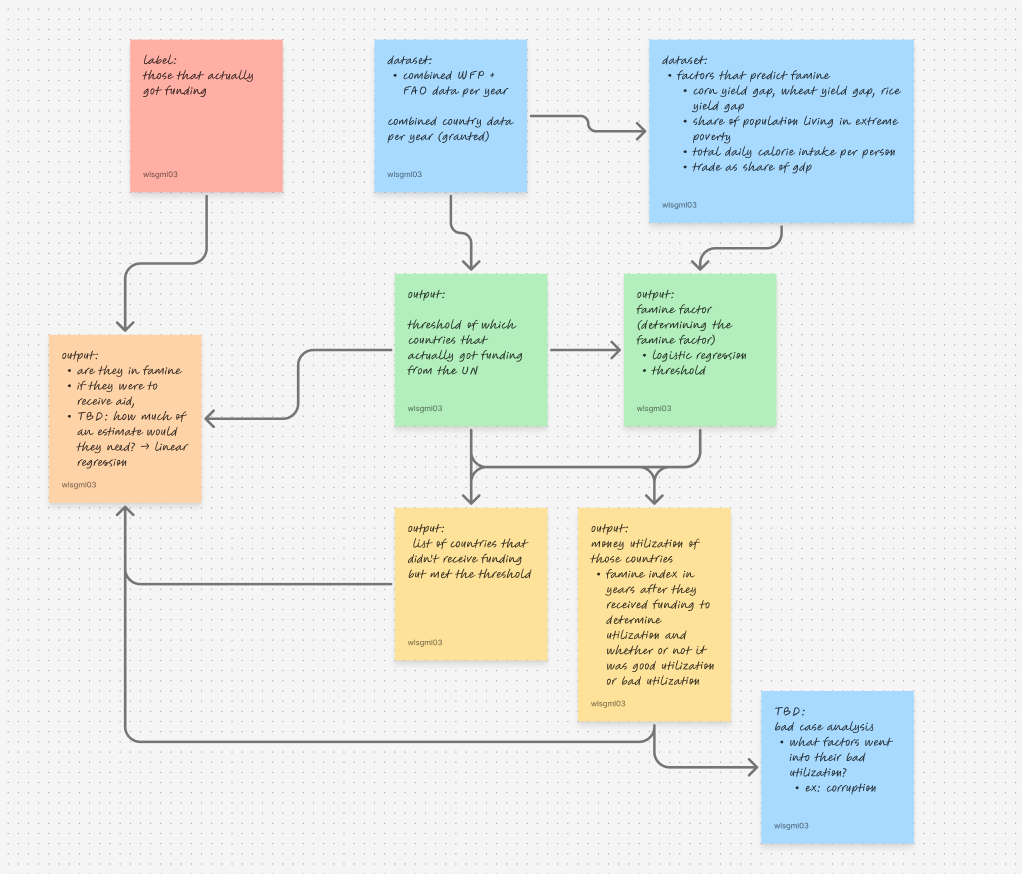
finalized flow
-
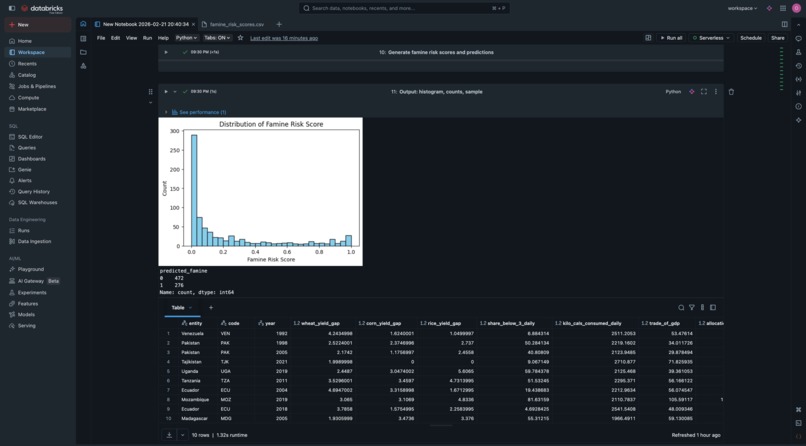
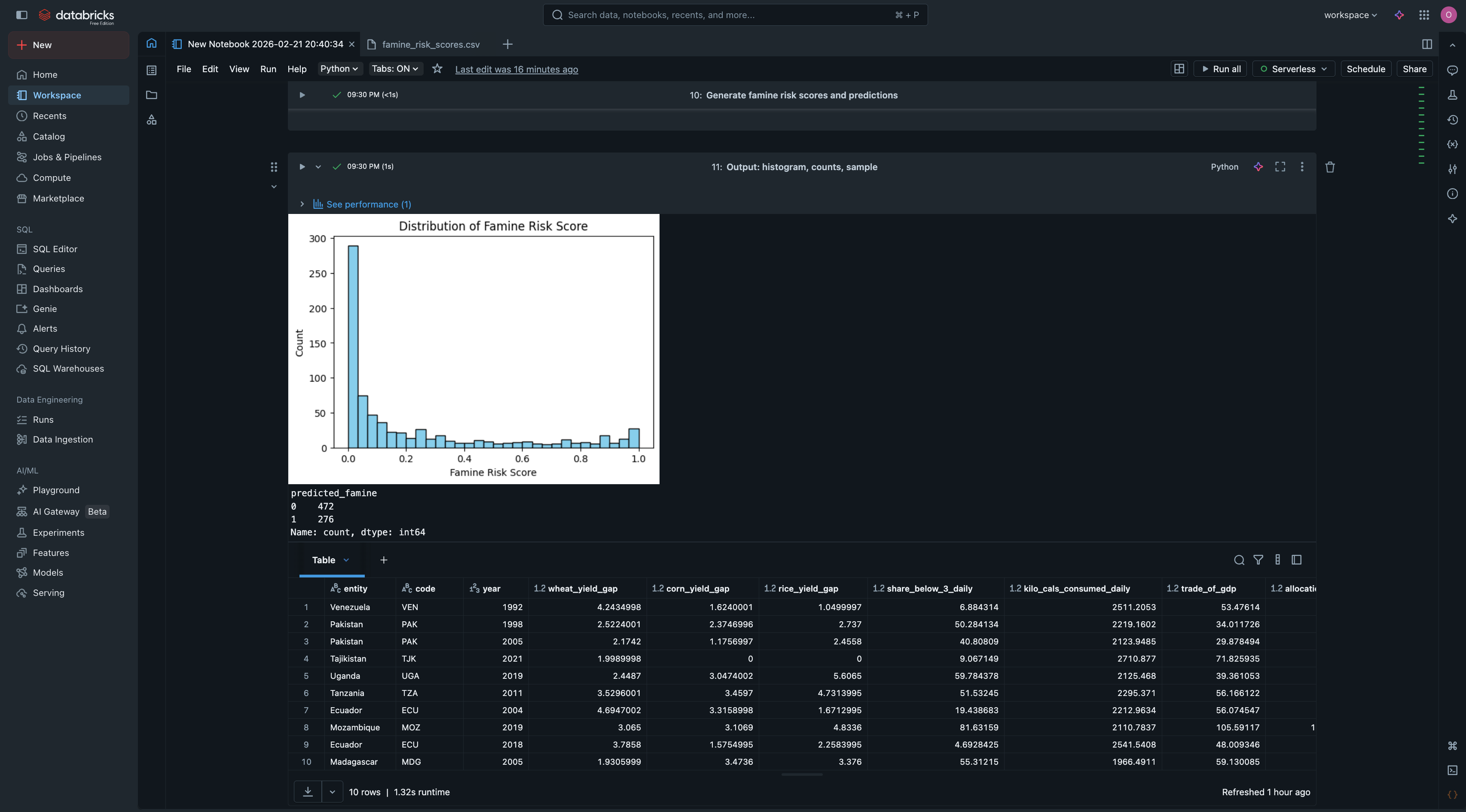
databricks
Inspiration
We were inspired by a culinary ingredients and where they might have migrated from, as trade routes led to the introduction of many ingredients. However, that led to us to trail down the path into hunger, as well as what data was accessible in order to see what could be addressed about the world hunger crisis.
This lead us to our question: Is there a possibility that those in need of food getting the aid they need?
What it does
Our project, AIMundial takes data from 2016-2022 in order to see funding discrepancies, and if there were any areas that were in a famine, but received no funding. Additionally, we use AI to predict if a famine were to happen in a certain country based off of the previous 4 years of data, and how much they would need based off of similar indices.
How we built it
- Ideation and Research on Notion: link
- Gathering Datasets and cleaning it using Python, Pandas. We then used DataBricks in order to come up with a Famine Risk Assessment Score. We also used DataBricks in order to compare the allocation the WFP and the FAO have received by country and year against the Famine Risk Assessment data in order to see whether or not countries had received aid.
Link to our github containing data and computations are here: link - We then used Streamlit to prototype all of our data together, before finishing it in Figma Make. Please make sure to try out the link in our link section!
Datasets regarding UN funds allocation was provided by the UN website.
Challenges we ran into
The first challenge that we ran into was the scope of our project and picking which area that we wanted to focus on the most as the UN deals with many different crises. In the end we decided to pick on Hunger/Famine.
Another challenge we ran into was the dataset being limited to 2022, and not having been updated after then in terms of factors that go into famine and food scarcity. However, our findings in our data show that famine is not just based off of food and trade, but with corruption as well.
Accomplishments that we're proud of
We are very proud that we were able to accomplish this in a short amount of time with a group of 2! We also learned many thing and got to interact with a lot of cool people during the duration of this hackathon.
What we learned
We learned that there is a lot of data that goes into something the scope that the UN operates with, and that surprsingly, there were countries that did not receive funding from the UN, despite having a high famine index. We also learned tools such as DataBricks and Figma Make, tools we had never previously learned before!
What's next for AIMundial
The next thing to go into after looking at the gaps: How much funding would they need based off of similar situations, and what factors go into it? There are other external factors to famine such as corruption, politics and war. The next step for AIMundial would be to dive into the data and analyze what goes into extending a famine.
Built With
- databricks
- figjam
- figma
- figmake
- jupyter
- python
- streamlit

Log in or sign up for Devpost to join the conversation.