Inspiration
We all make plans, but real life doesn't always follow them. Deadlines change, unexpected tasks appear, and sometimes we have less time than we expected. I wanted to build a productivity assistant that does more than maintain a to-do list — one that helps people rethink their priorities and adapt their plans when circumstances change.
This idea led to AimFlow AI, built around the belief: "Plans That Bend. Dreams That Don’t."
What it does
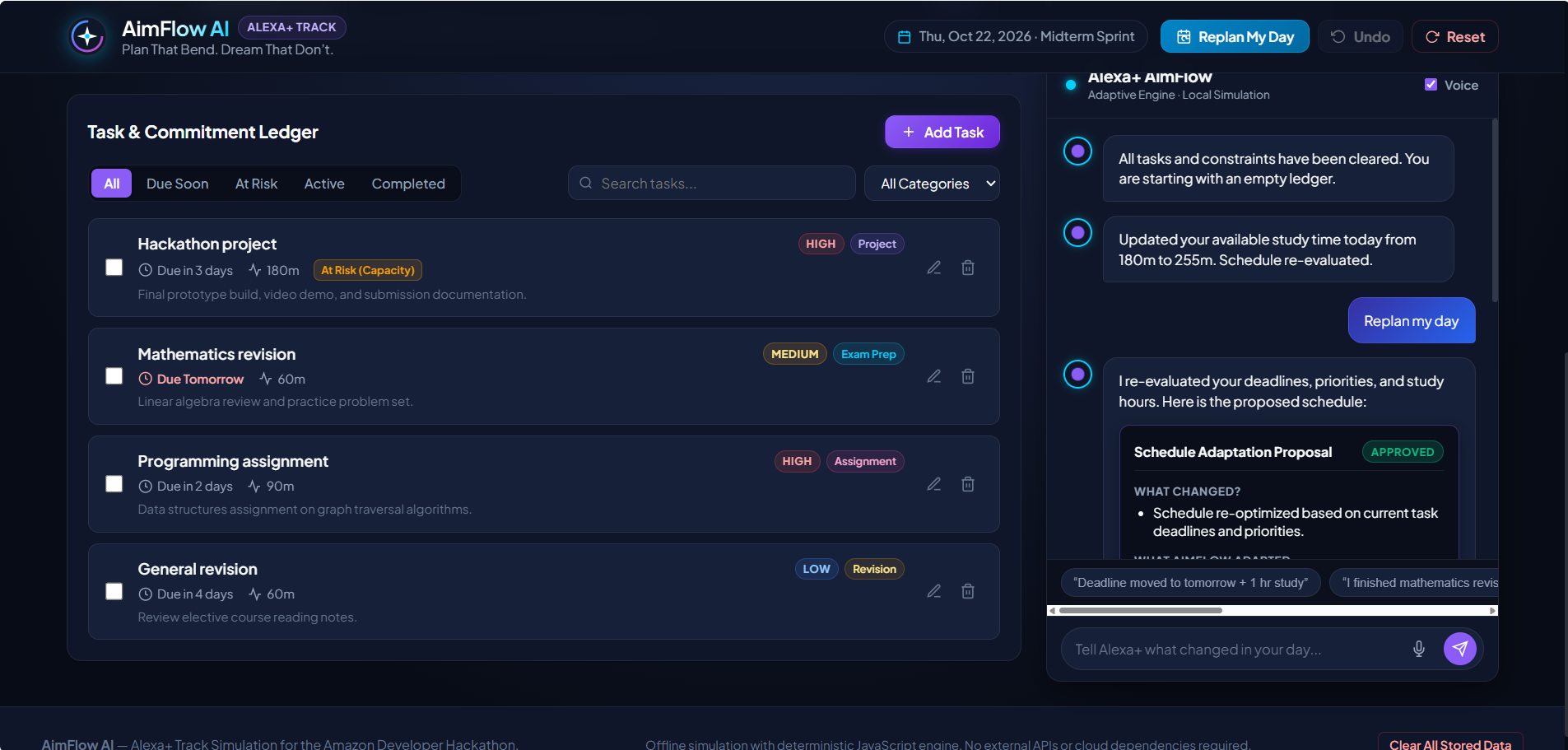
AimFlow AI is a productivity assistant concept focused on smarter, more realistic daily planning.
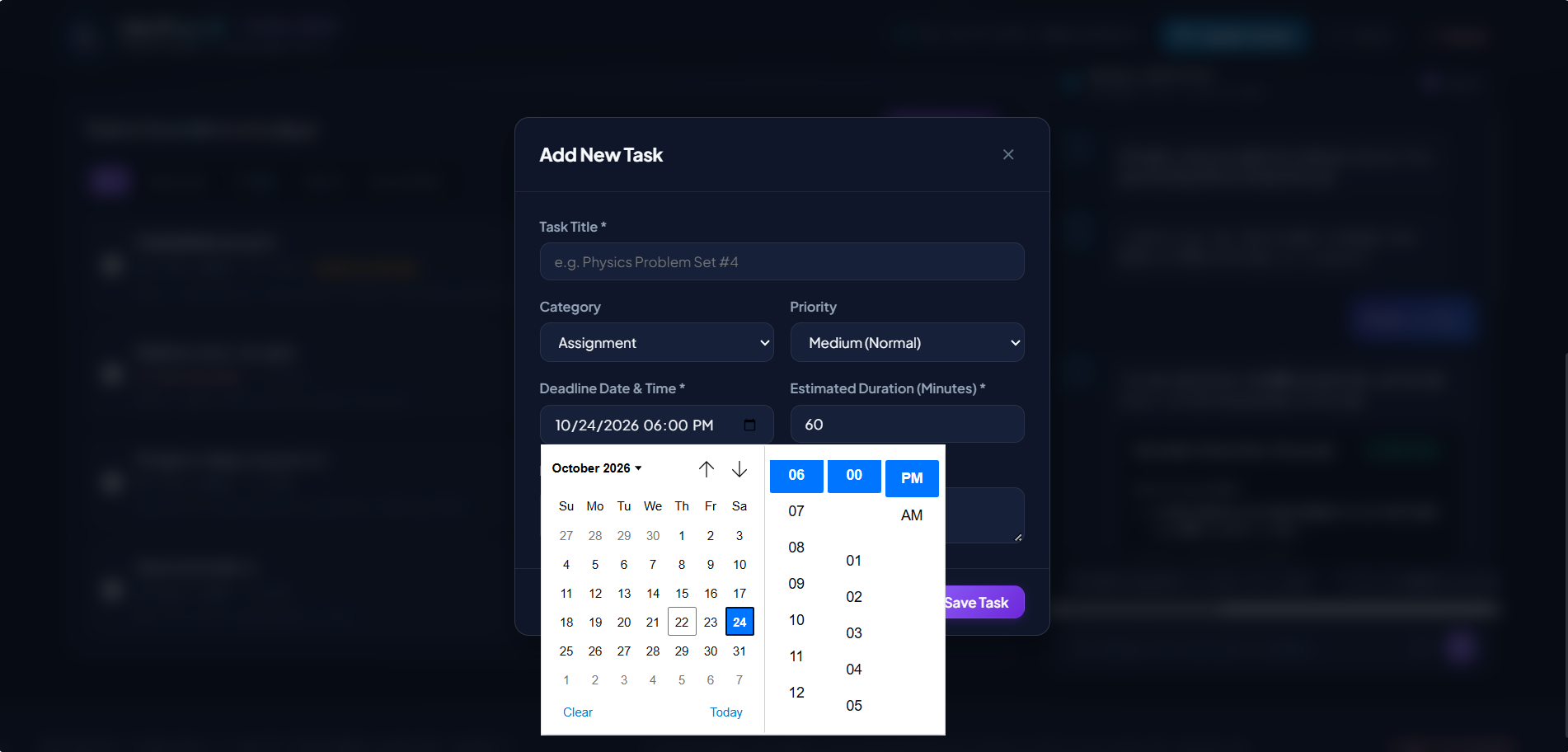
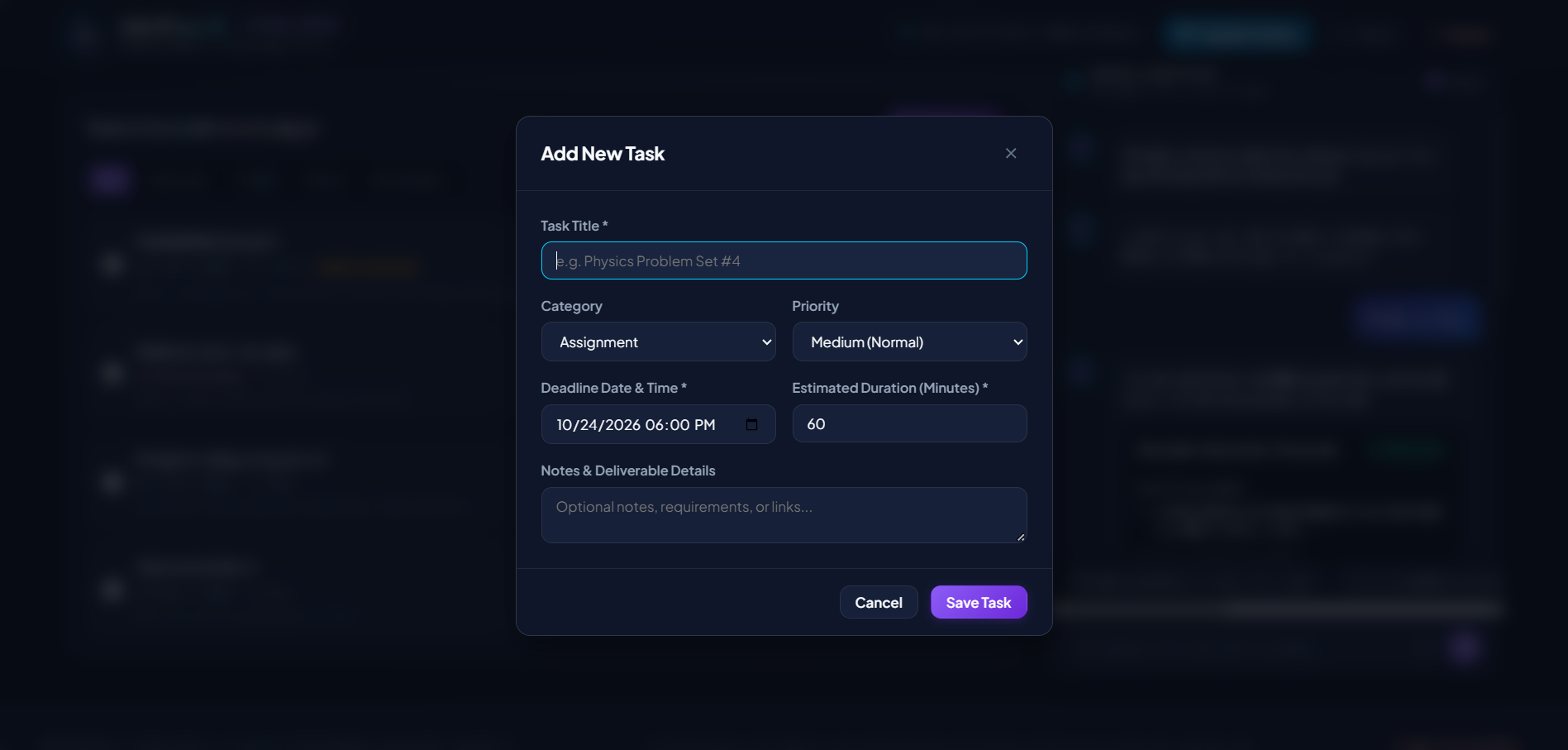
- Smart Task Prioritization: Helps organize tasks according to urgency and deadlines.
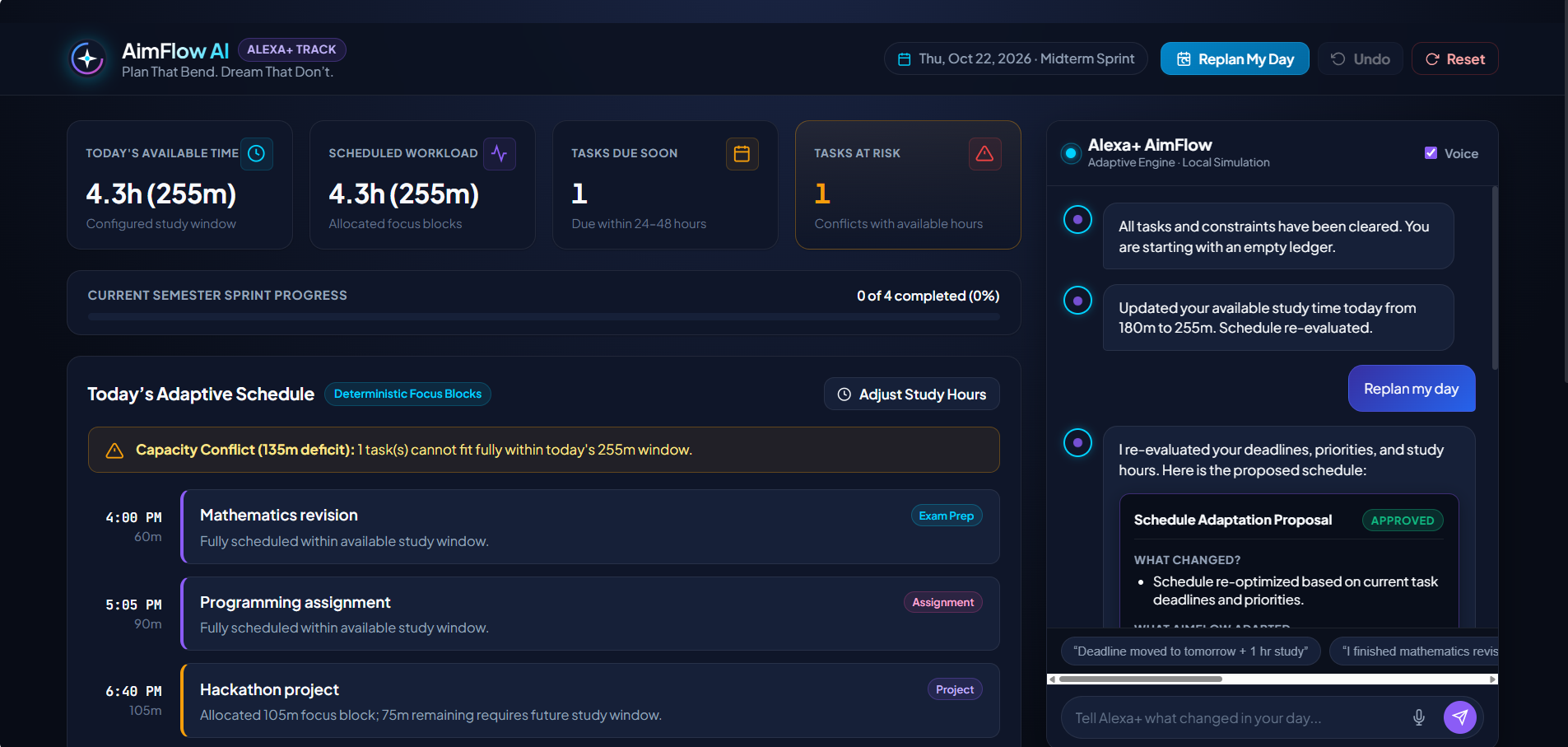
- Adaptive Planning: Reworks a schedule when available time or priorities change.
- Reality Check: Identifies when the workload may exceed the available time.
- Life Shock Simulator: Explores unexpected situations and compares possible plans.
- Explainable Changes: Helps users understand what changed and why a task may need to move.
The goal is to turn overwhelming task lists into practical next steps.
How we built it
We chose a lightweight web-based approach using HTML, CSS, and vanilla JavaScript. HTML provides the structure, CSS creates the interface, and JavaScript handles interactions and planning logic. Browser LocalStorage can preserve tasks and planning data between visits.
We used Antigravity as an AI-assisted development tool to help build and refine the project. The focus is on creating a simple, accessible experience that can be tested directly in a web browser.
Challenges we ran into
One of the biggest challenges was designing a planner that responds realistically to changing circumstances instead of simply moving tasks around. A useful planner must consider deadlines, task durations, and available time without pretending every task can always fit.
Another challenge was keeping the interface simple while presenting useful planning information and explaining schedule changes clearly.
Accomplishments that we're proud of
We developed a clear product direction for AimFlow AI: planning should be flexible, realistic, and centered on the user's goals. We are especially proud of the concept of simulating unexpected changes before applying a new plan, helping users understand their options rather than blindly accepting a schedule.
We also focused on a lightweight web stack that is easy to run, test, and improve.
What we learned
This project helped us think beyond a conventional to-do list and consider how software can support decisions, not just store information. We learned the importance of handling constraints, explaining recommendations, designing useful interactions, and testing different scenarios.
We also explored how AI-assisted development can help turn an idea into a working web prototype.
What's next for AimFlow AI
Our next steps are to improve the adaptive scheduling engine, test it against more realistic scenarios, and make its recommendations more transparent. We also want to explore genuine AI integration and a more natural conversational experience, while continuing to prioritize privacy, usability, and realistic planning.
Our vision is simple: help people adapt their plans without losing sight of their goals.
AimFlow AI — Plans That Bend. Dreams That Don’t.
Built With
- css3
- html5
- javascript
- localstorage
- python

Log in or sign up for Devpost to join the conversation.