-
-
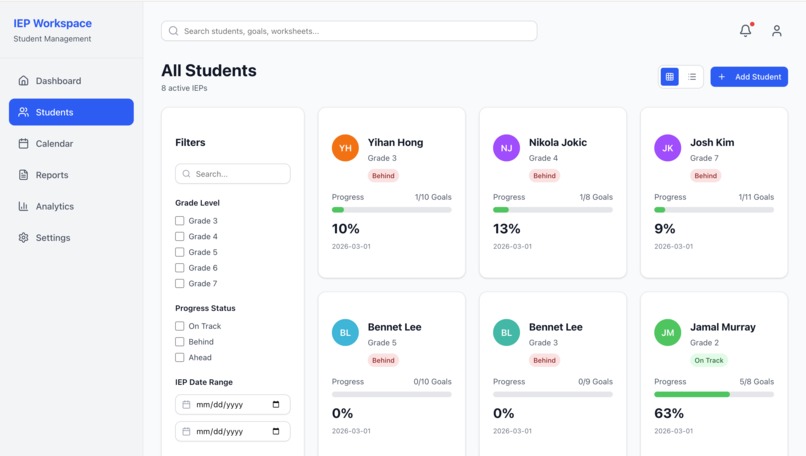
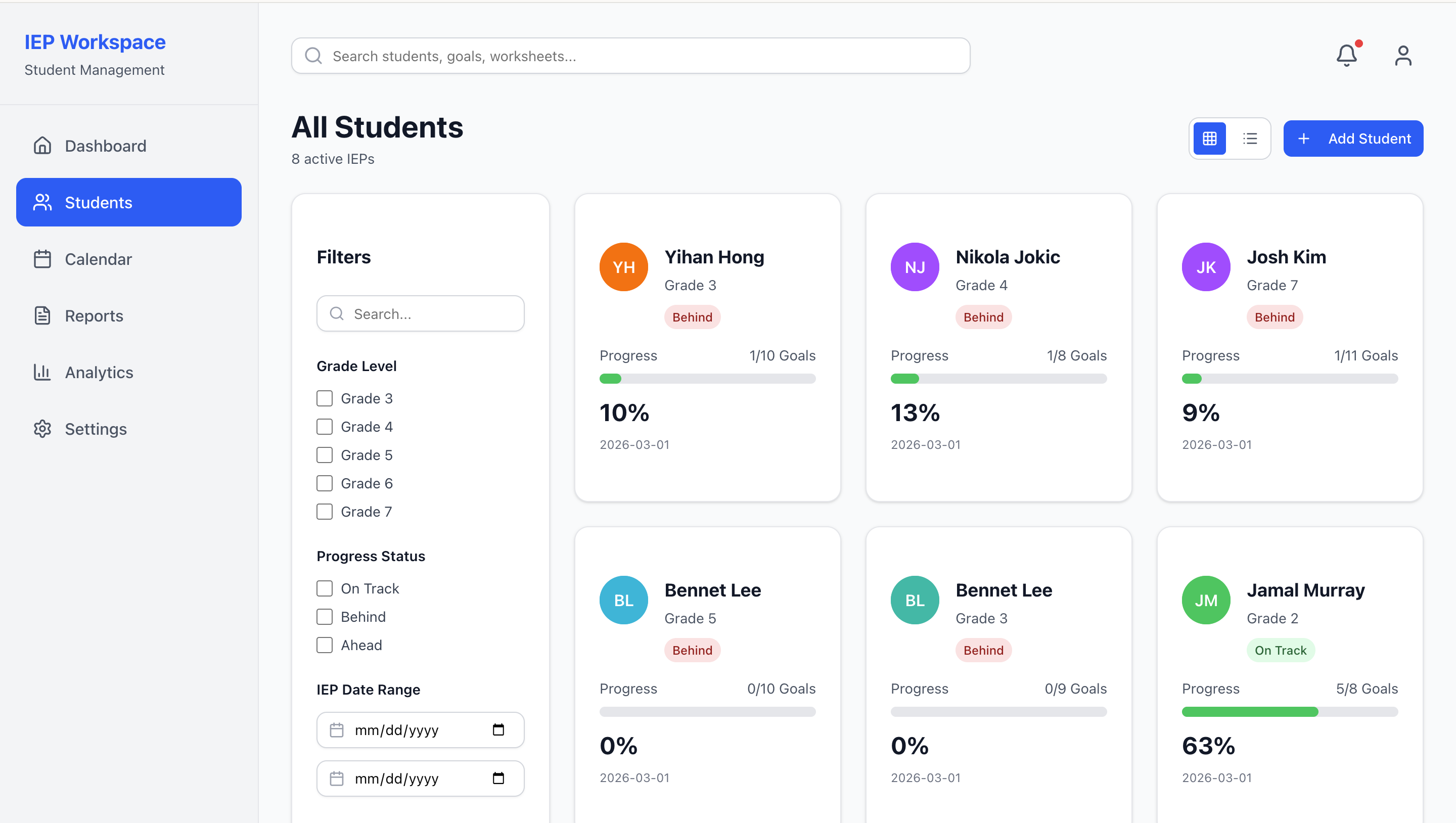
Students page
-
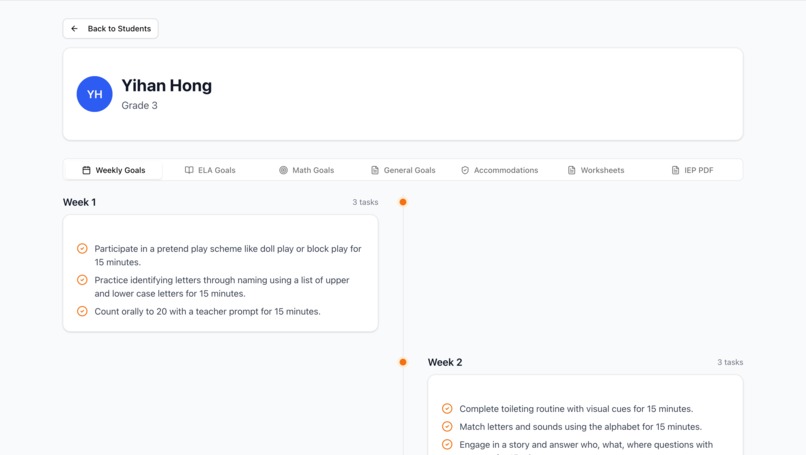
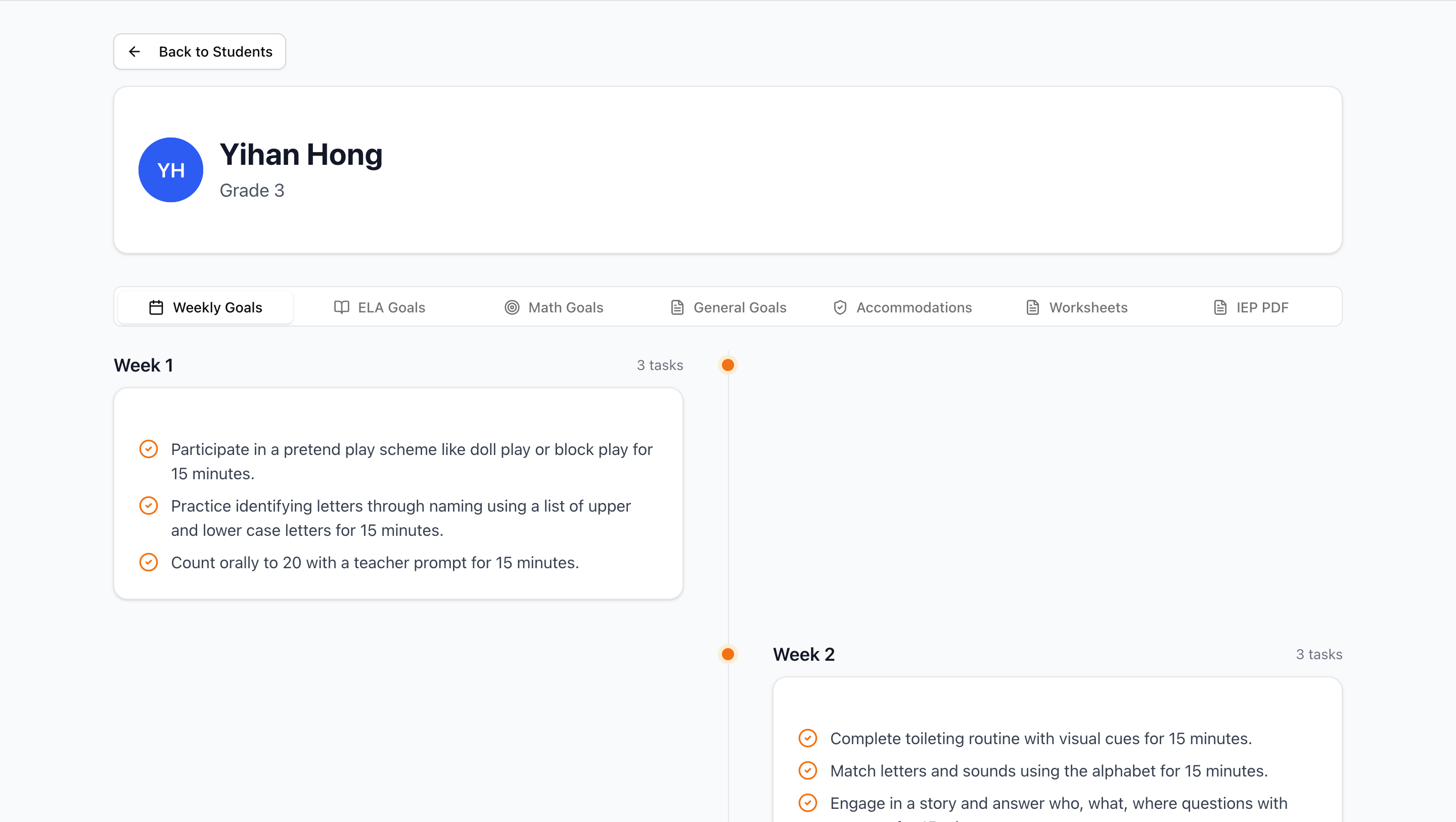
Details for a specific student
-
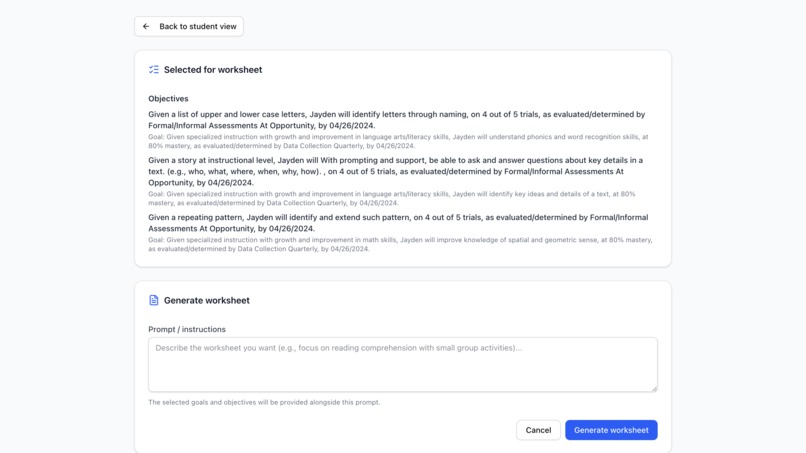
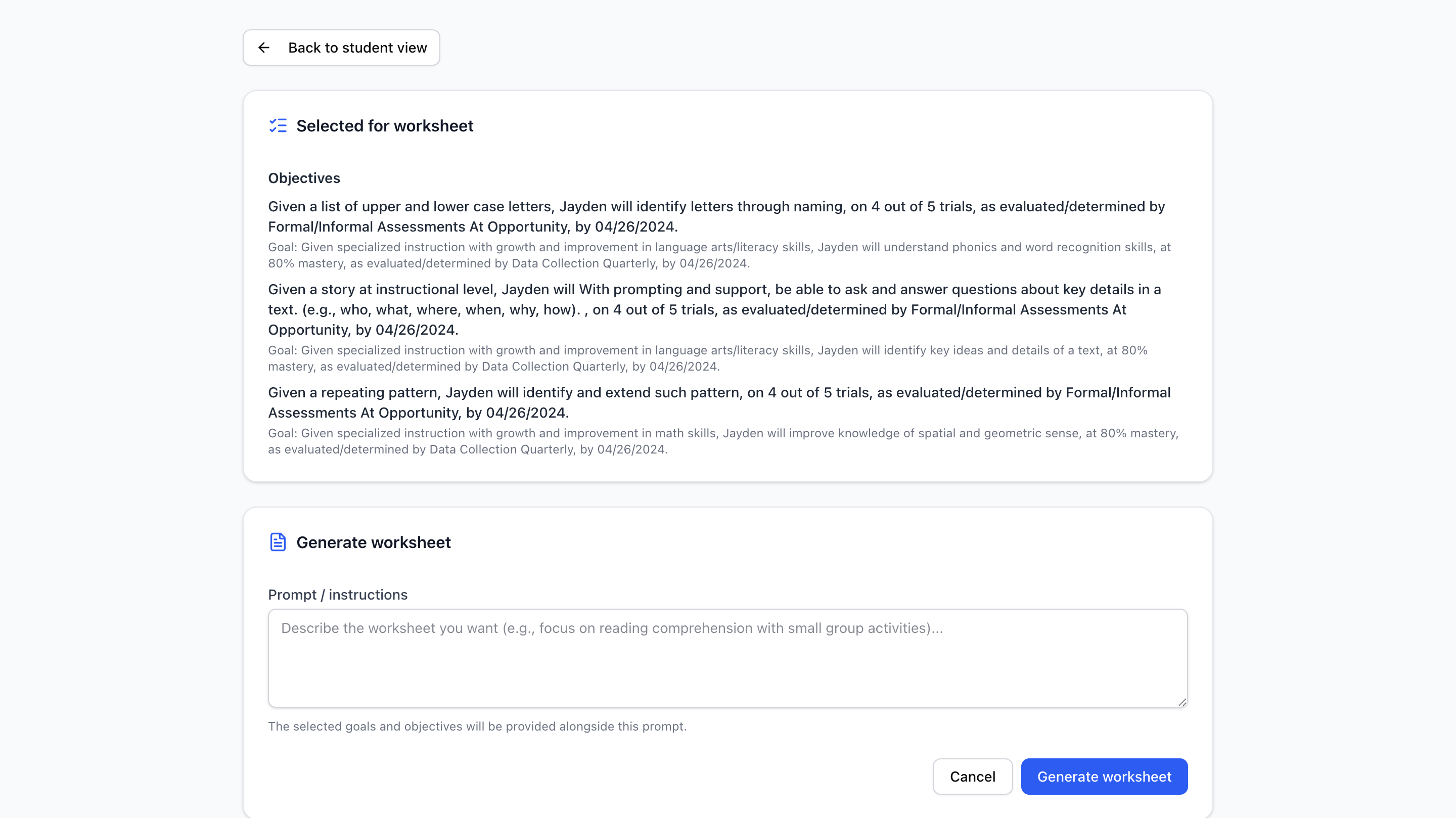
Worksheet generation page
-
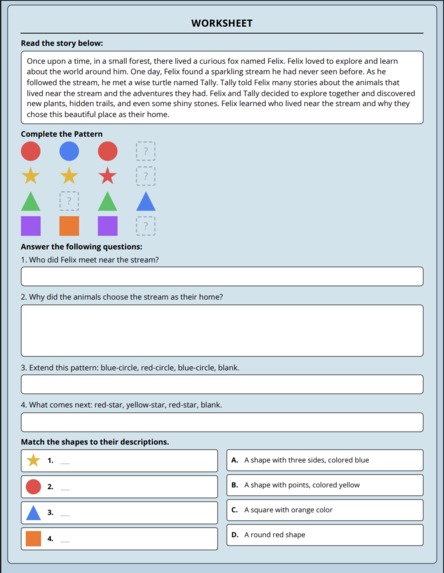
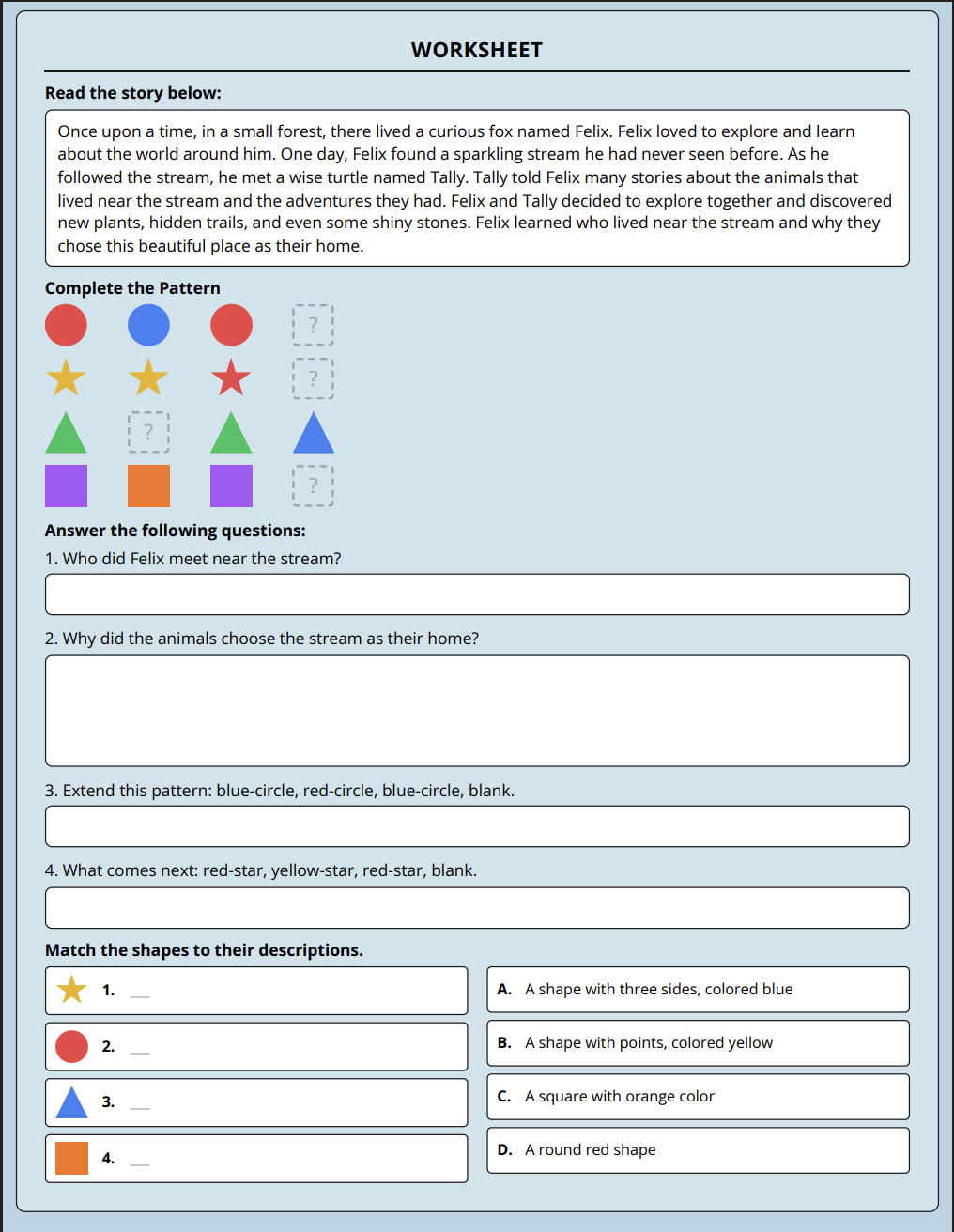
Worksheet sample
Inspiration
Special Education teachers spend countless hours adapting lesson plans, creating worksheets, and aligning instruction with each student’s Individualized Education Plan (IEP). The paperwork alone can be overwhelming, but this personalization is critical for student success. AiEP was inspired by the need to reduce teacher workload while improving individualized instruction. We wanted to build an AI agent that could read and understand an IEP, then instantly generate classroom-ready materials tailored to each student’s goals, objectives, accommodations, and teacher insights.
What it does
AiEP is an AI-powered agent designed specifically for Special Education teachers. It:
- Ingests a student’s IEP
- Extracts goals, objectives, accommodations, modifications, and teacher comments
- Generates personalized worksheets aligned to learning goals
- Creates differentiated lesson plans tailored to student needs
- Adjusts reading level, scaffolding, and supports based on accommodations
- Saves teachers hours of planning and document review
Instead of manually rewriting materials for each student, teachers can upload an IEP and receive customized, ready-to-use instructional content in minutes.
How we built it
We designed AiEP as an AI agent by structured tool-calling so that our LLMs' context window wouldn’t be overloaded. Instead of producing generic outputs, the agent plans and assembles lesson materials step-by-step. At a high level, building a lesson plan involves several coordinated decisions:
- IEP Parsing: The agent first ingests the IEP and extracts goals, objectives, and accommodations. This step only happens once per student, not per worksheet.
- Accommodation Selection: It determines which accommodations are instructionally relevant for the specific lesson (e.g., simplified language, chunked directions, visual supports, extended practice).
- Grade-Level Alignment: The agent analyzes the student’s grade level and academic targets to choose appropriate activity types and instructional strategies.
- Activity Planning: It selects the most suitable learning activities (guided practice, independent work, visual matching, scaffolded writing, etc.) to support the stated objectives.
- HTML Block Assembly: Rather than generating a flat document, the agent chooses from modular HTML components (instruction blocks, problem sets, graphic organizers, visual supports, etc.) and assembles them into a structured worksheet or lesson plan layout.
- Content Generation: Finally, it generates the actual academic content, ensuring alignment with the student’s measurable goals and objectives.
This tool-based architecture allows the agent to reason about structure, compliance, differentiation, and instructional design before generating content. The result is a more consistent, customizable, and classroom-ready output. By combining structured decision-making with generative AI, we created a system that behaves less like a chatbot and more like an instructional co-pilot for Special Education teachers.
Challenges we ran into
The agent often fails to accomplish what it’s supposed to do because of various issues. We had to constantly tailor the prompt to have explicit instructions on what it should do, edit the workflow logic and clearly explaining the tools that are available to the agent. It required a lot of testing and observation to improve the agent’s performance. Over time, we were able to successfully fine tune the model to execute the task of worksheet generation.
Accomplishments that we're proud of
We’re proud that AiEP doesn’t just summarize an IEP—it reliably turns it into materials a teacher could actually hand out. Using an agentic workflow with structured tool-calling, we built a system that can extract goals, objectives, and accommodations, then make the right instructional decisions (reading level, scaffolding, chunked directions, visual supports) before generating content. The result is seamless worksheet generation that consistently covers the selected objectives and includes aligned visual aids with corresponding text, packaged in a clean, modular layout. Just as importantly, we pushed past early reliability issues through repeated testing, prompt/workflow refinement, and fine-tuning, until the agent could execute the worksheet-generation task with far more consistency than a generic chatbot approach.
What we learned
Building AiEP taught us that getting an AI agent to produce reliable, classroom-ready special education materials depends far more on structure than on “better prompting.” We learned to break the task into clear stages—parsing the IEP once, selecting only the accommodations that actually matter for a given lesson, aligning activities to grade-level targets, and then assembling the worksheet from modular HTML components—because this step-by-step workflow reduces generic output and keeps the model focused on compliance and differentiation. We also learned that tool and workflow design is basically product design: if the available tools, components, and instructions aren’t explicit, the agent will fail in predictable ways, and no amount of vague prompting will fix it. Most importantly, we learned that improving performance is an iterative loop of testing, observing failure modes, refining prompts and logic, and only then using fine-tuning to lock in consistent behavior—resulting in worksheets that consistently cover selected objectives with matching visual supports and text in a format teachers can actually use.
What's next for AiEP
Next for AiEP is moving from a strong prototype to a real classroom product. Our immediate focus is talking directly with Special Education teachers to understand their day-to-day workflow, validate which features save the most time, and learn what “usable” actually means in a school setting. From there, we want to expand beyond individual users to school and district adoption by piloting AiEP in real classrooms, integrating it into existing processes, and iterating based on feedback until implementation is smooth and dependable. In parallel, we’ll finalize the product experience by strengthening the login system for secure, role-based access and improving the UI so teachers can upload an IEP, review extracted goals/accommodations, and generate materials with as few clicks as possible.

Log in or sign up for Devpost to join the conversation.