Inspiration
The inspiration for AIEA Clinical Intelligence came from a personal experience. My girlfriend was unwell and was diagnosed with PCOS, a condition that affects 15-20% of women globally and can have genetic links. During one hospital visit, she had to wait for more than four hours because the hospital system was down.
That experience made me think deeply about how fragile healthcare systems can be, especially when they depend entirely on internet connectivity or centralized infrastructure. In healthcare, downtime is not just an inconvenience. It can delay care, increase human error, and put lives at risk.
I wanted to build a system that helps hospitals keep running even when the internet is unavailable, while also using AI to support safer, more personalized medical decisions.
What it does
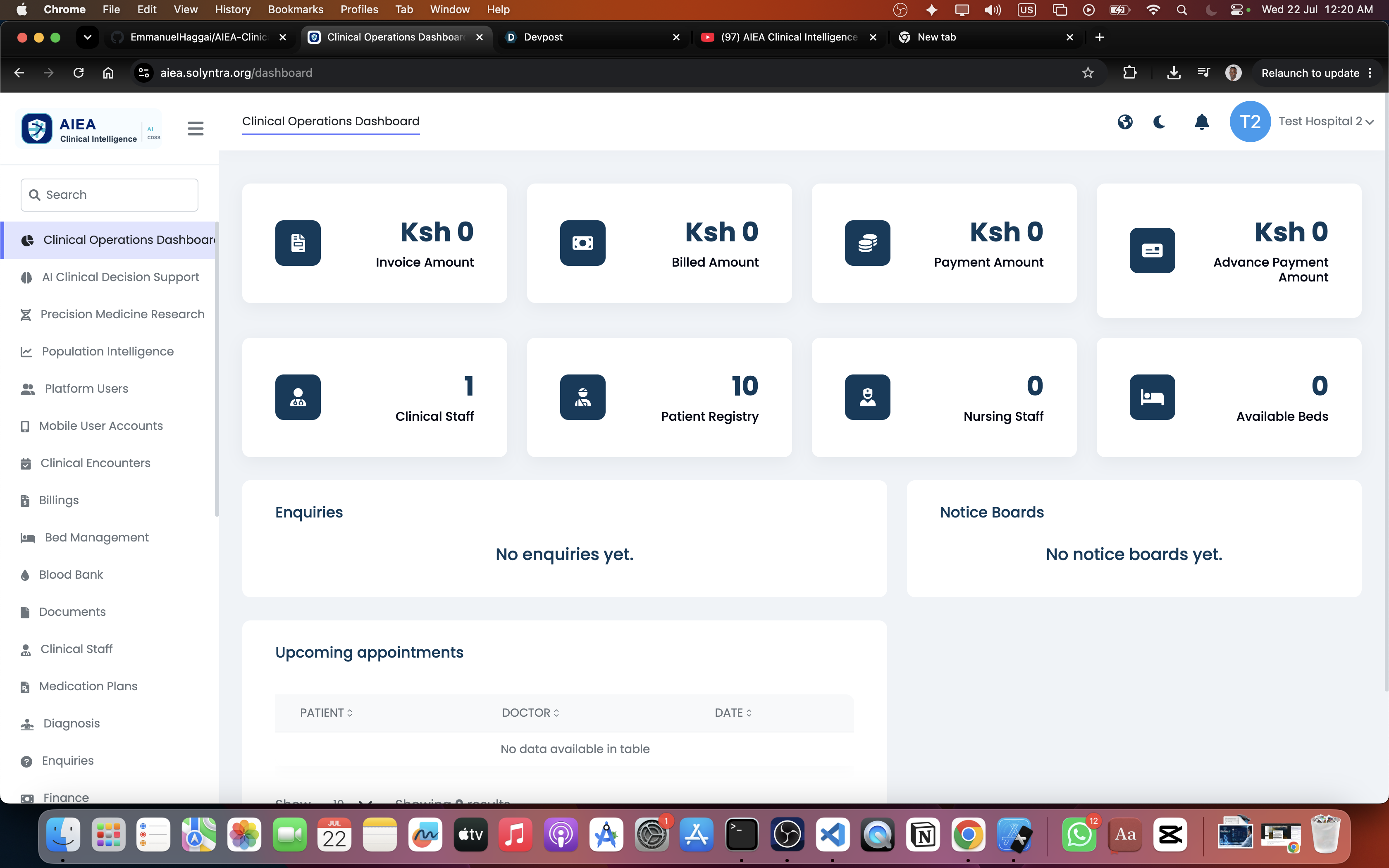
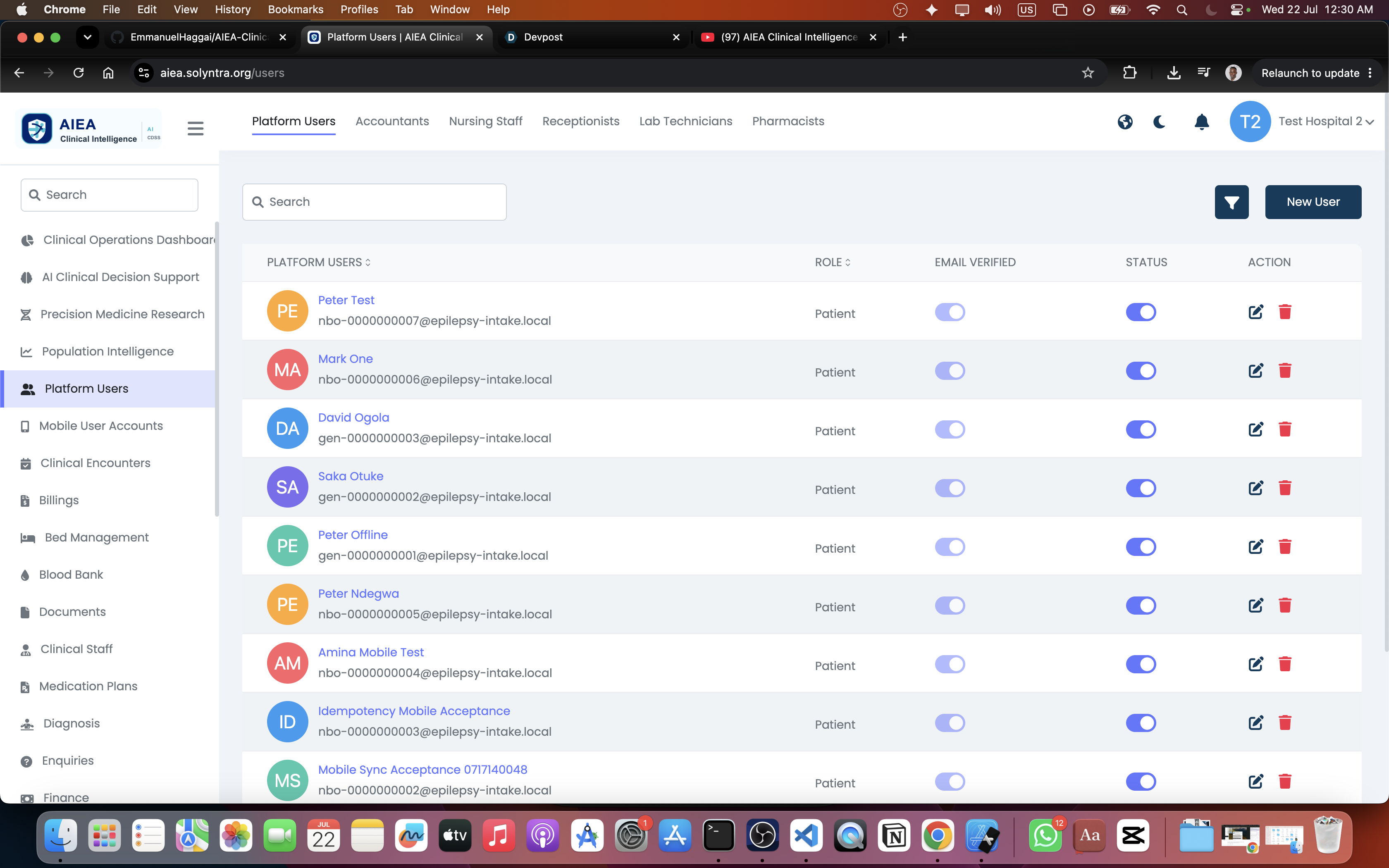
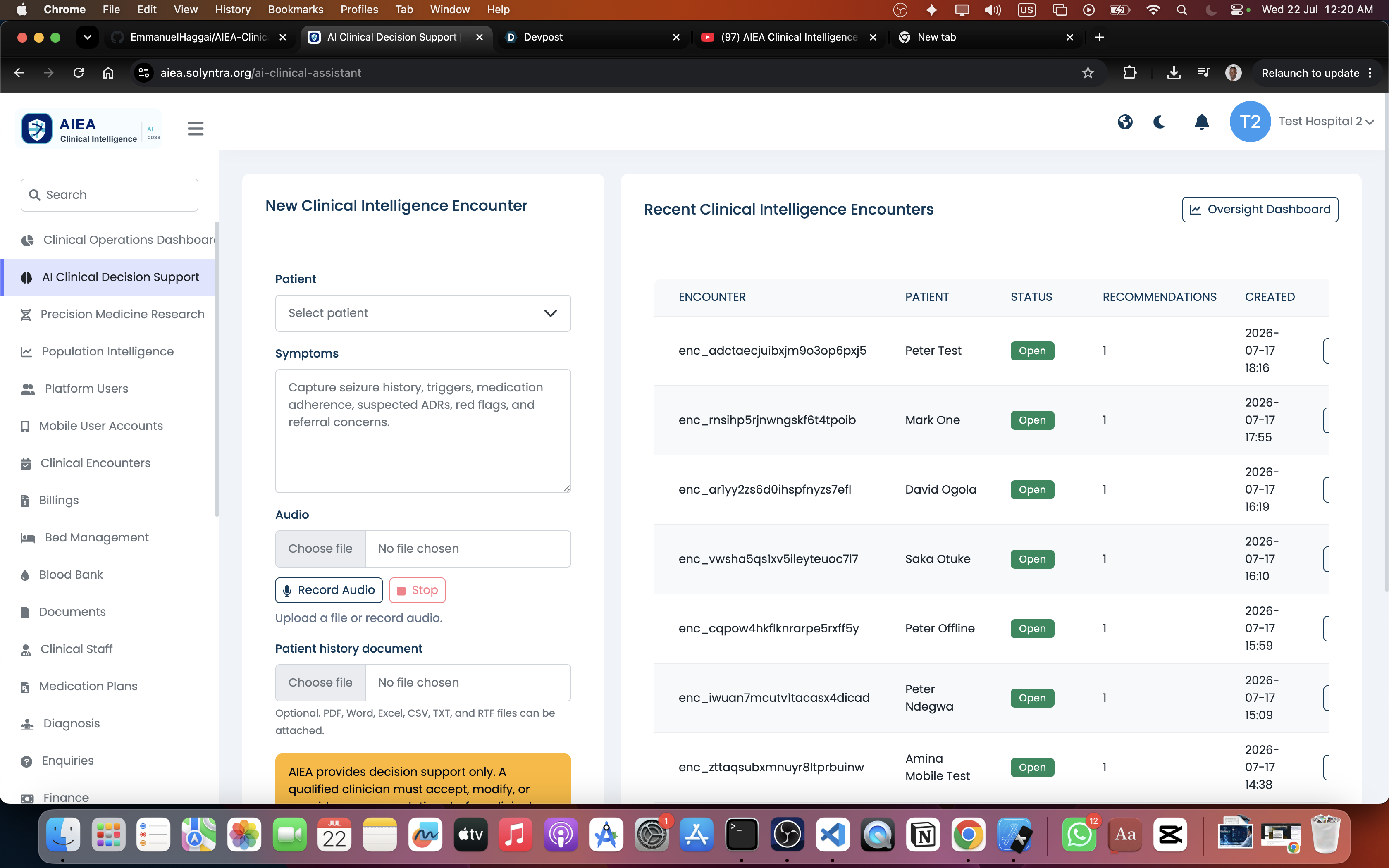
AIEA Clinical Intelligence is a healthcare platform designed to support hospitals, clinicians, and patients through reliable clinical workflows and AI-powered medical intelligence.
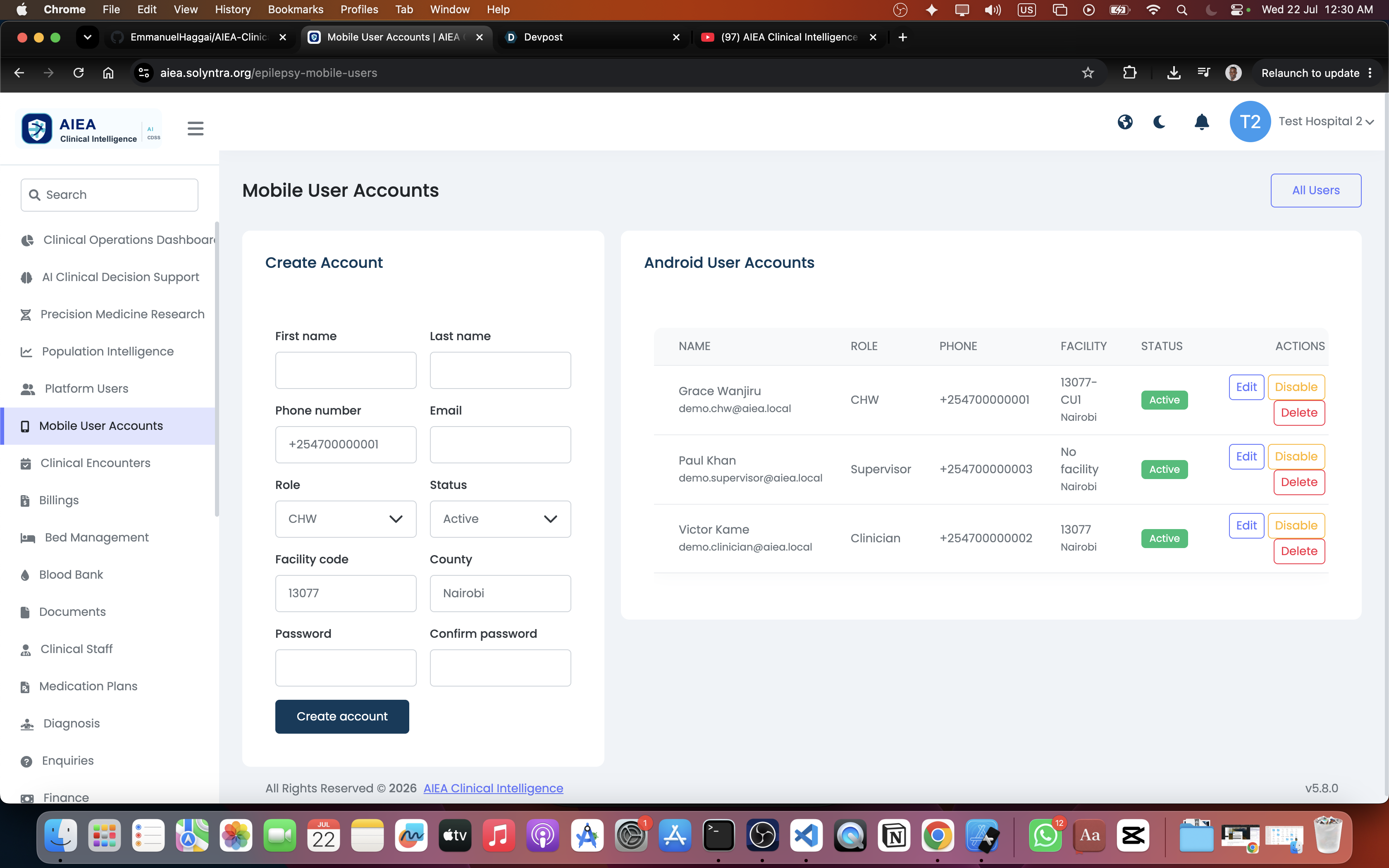
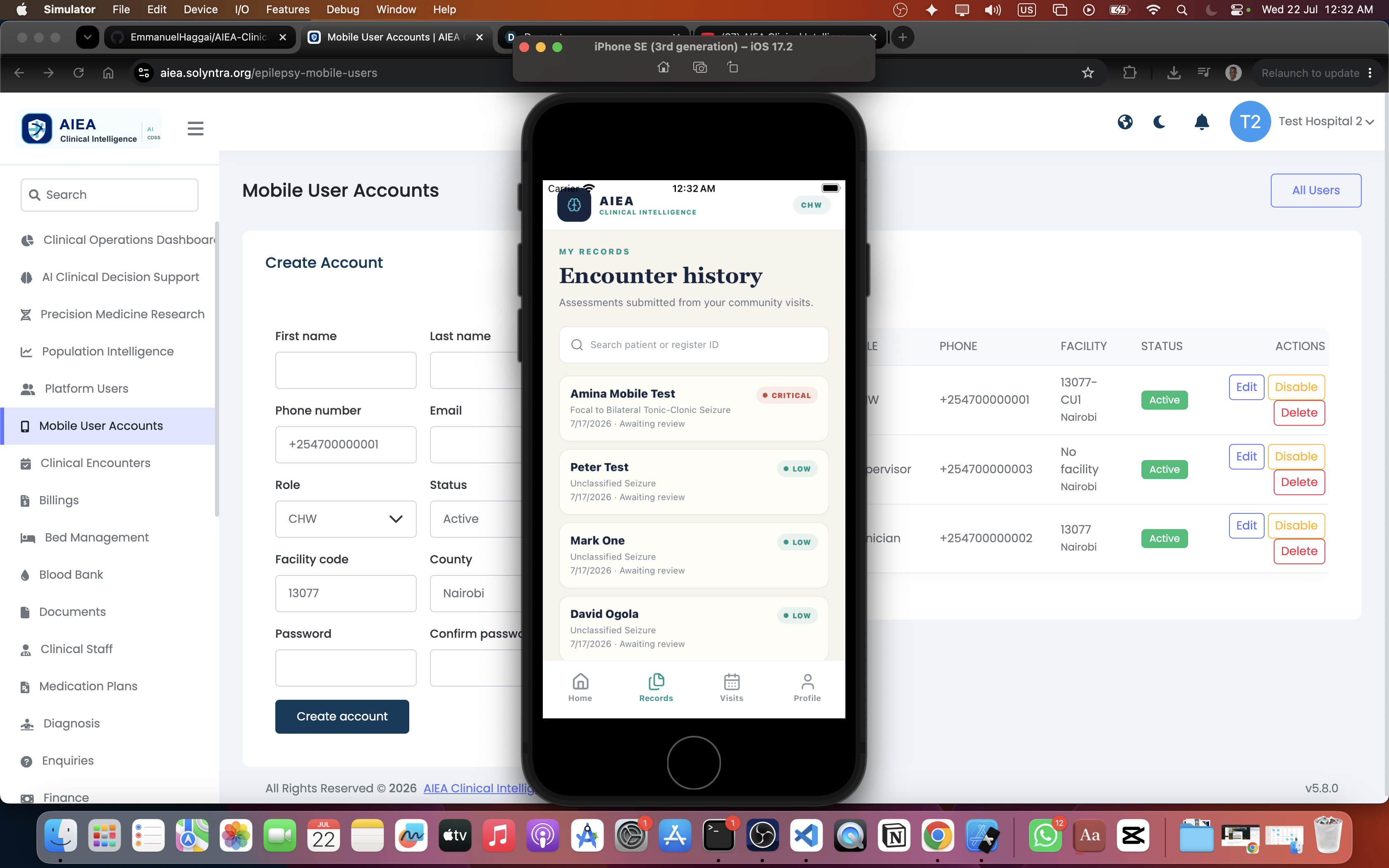
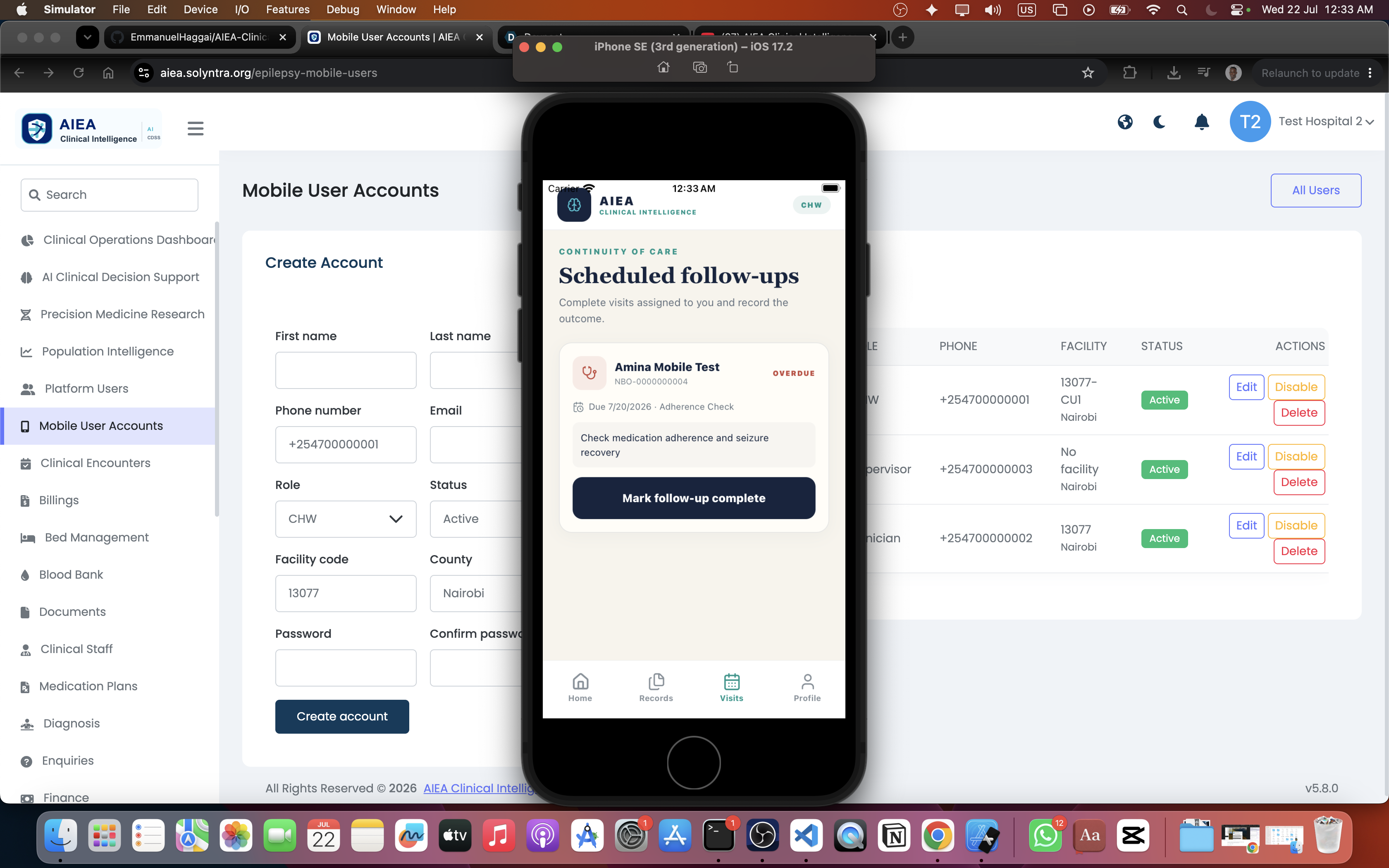
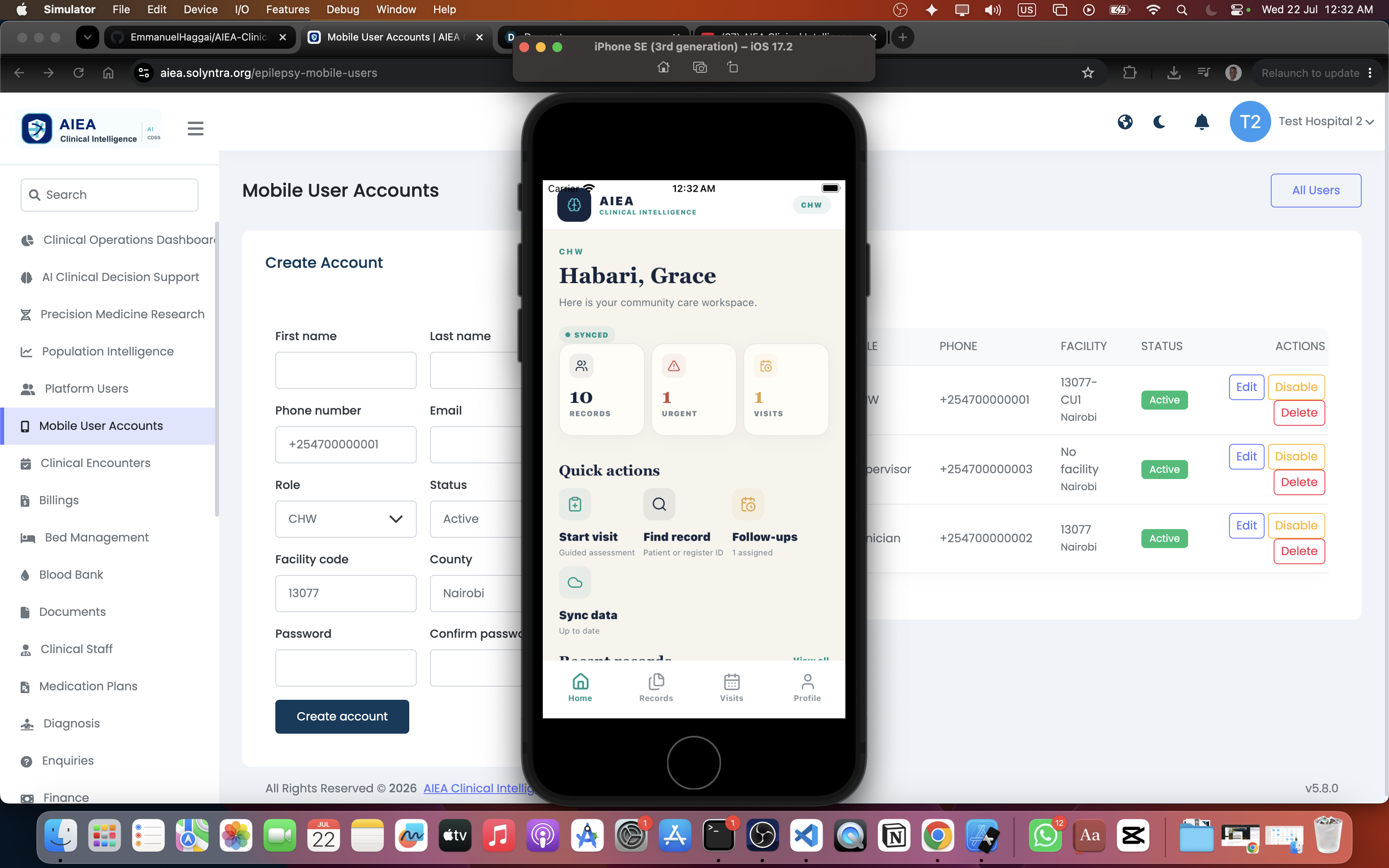
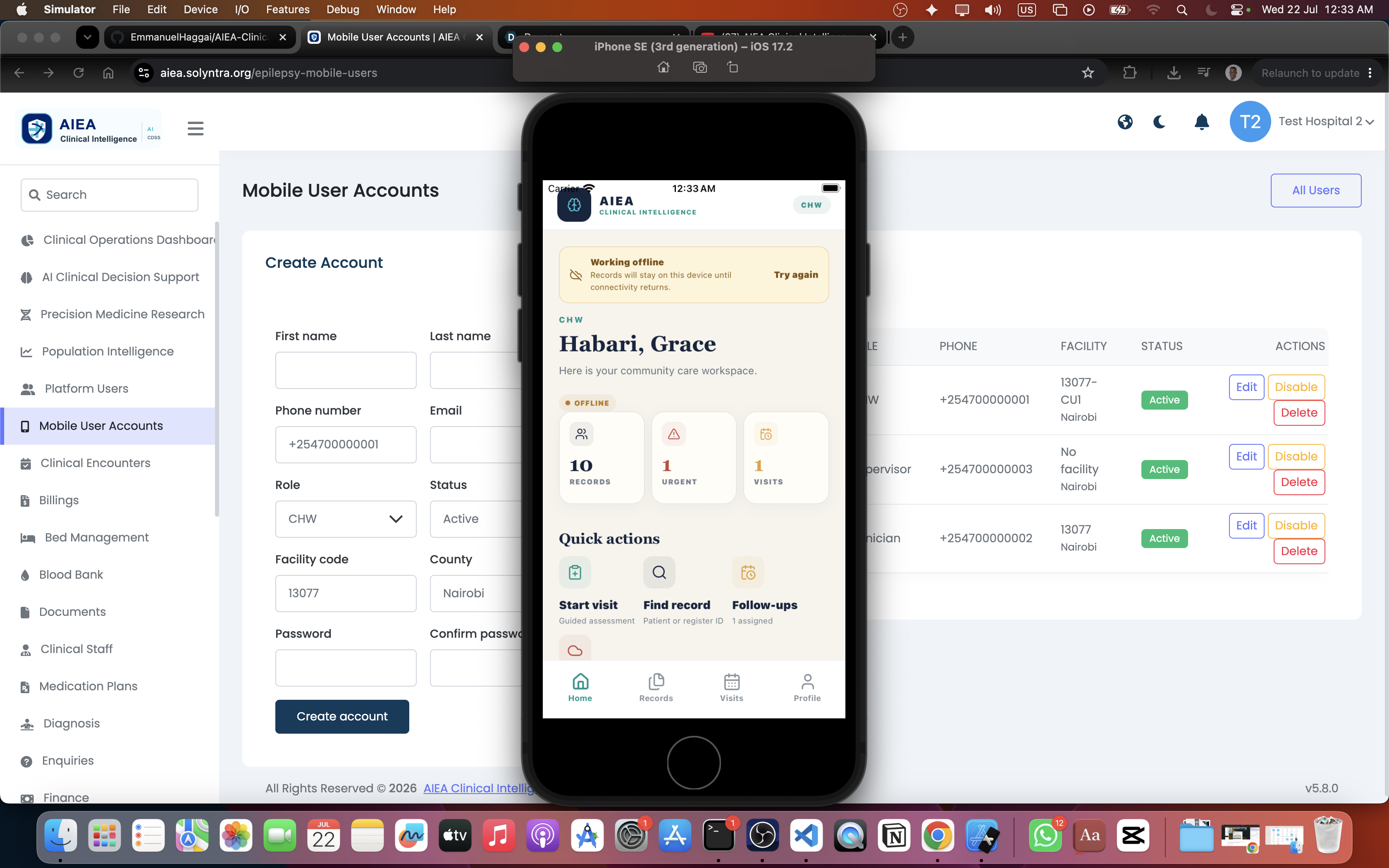
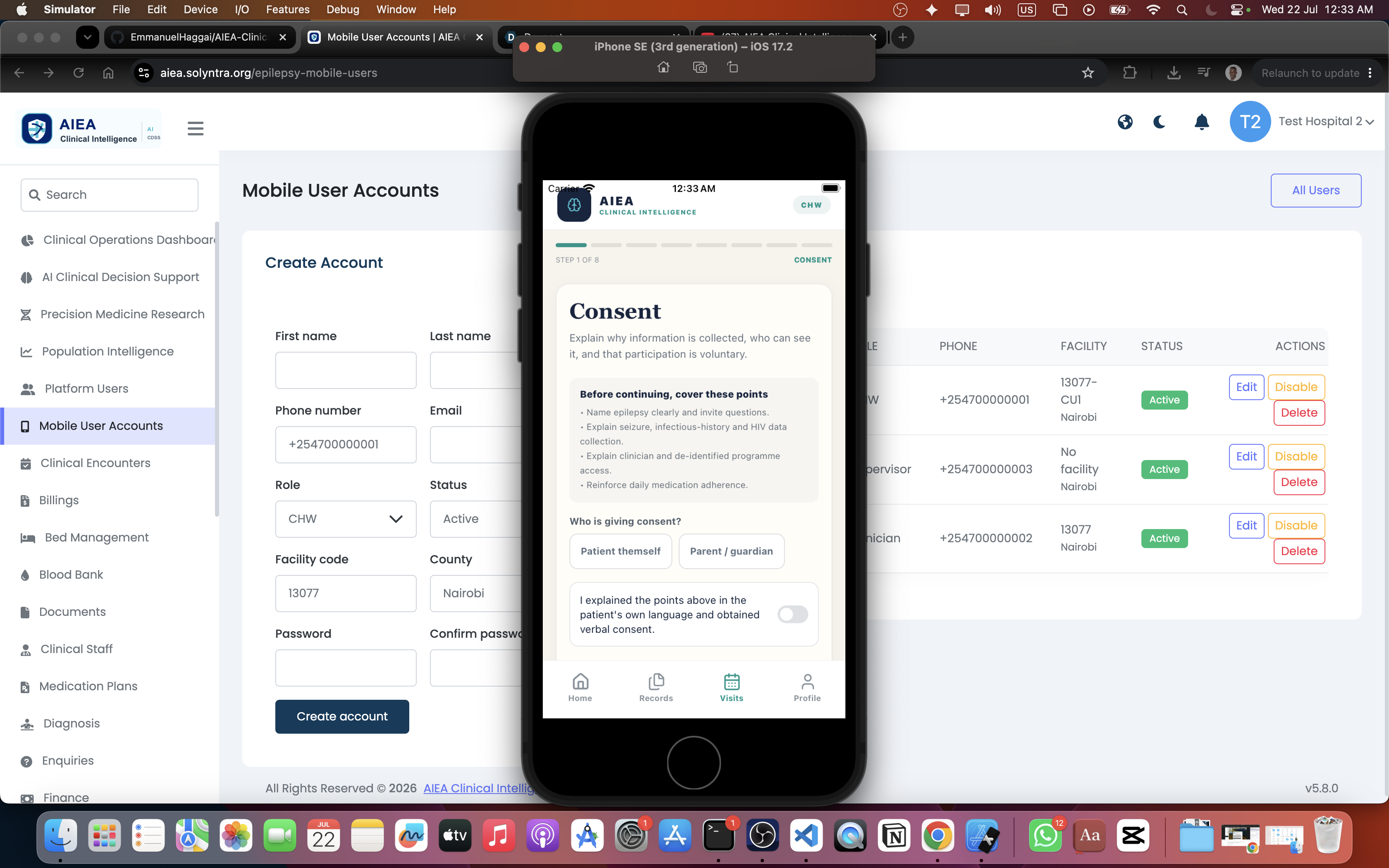
The system allows hospital operations to continue even during internet outages by supporting localized workflows that can later sync with the online system when connectivity is restored. It also connects with a mobile application to help collect patient data in rural or low-connectivity areas.
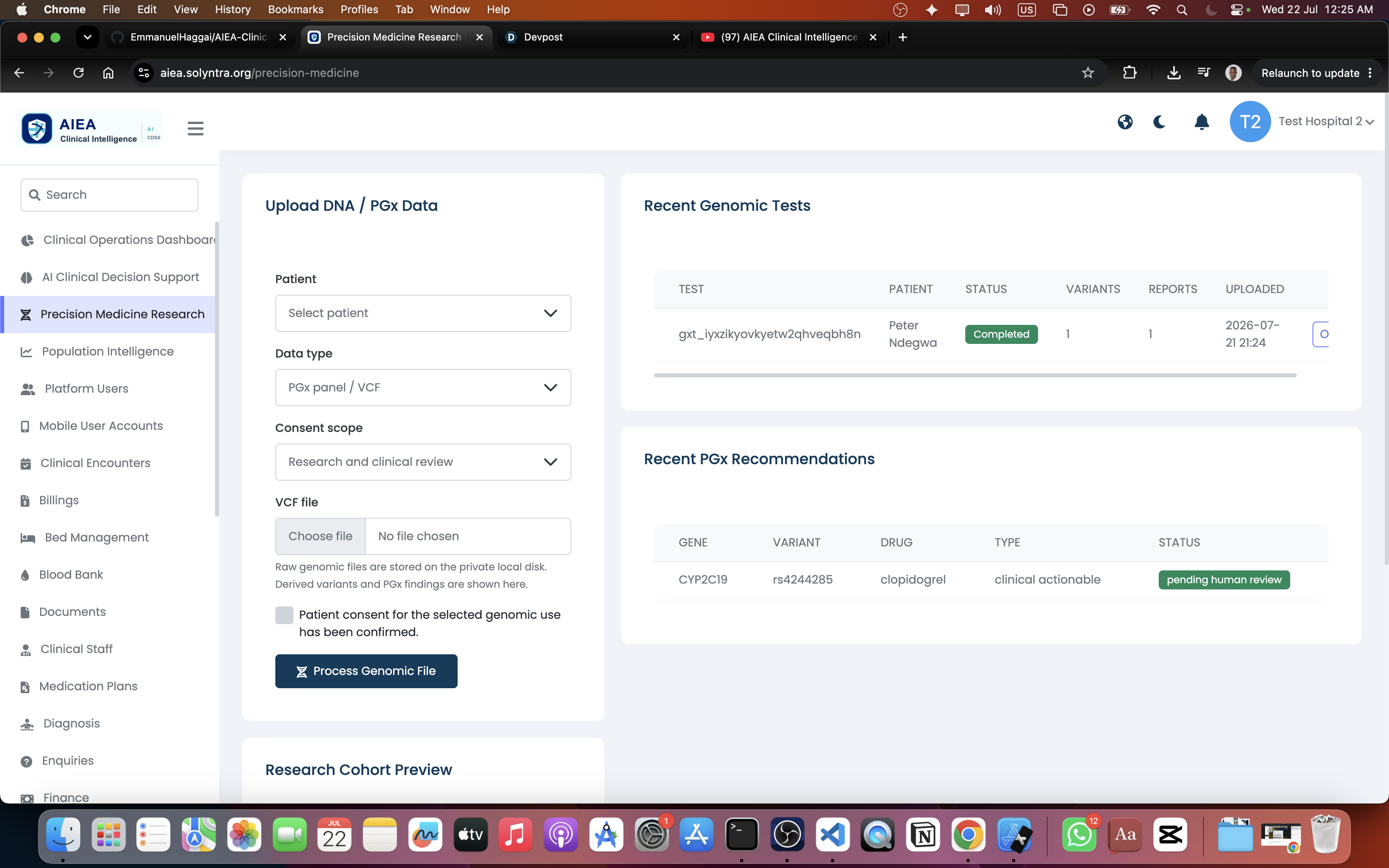
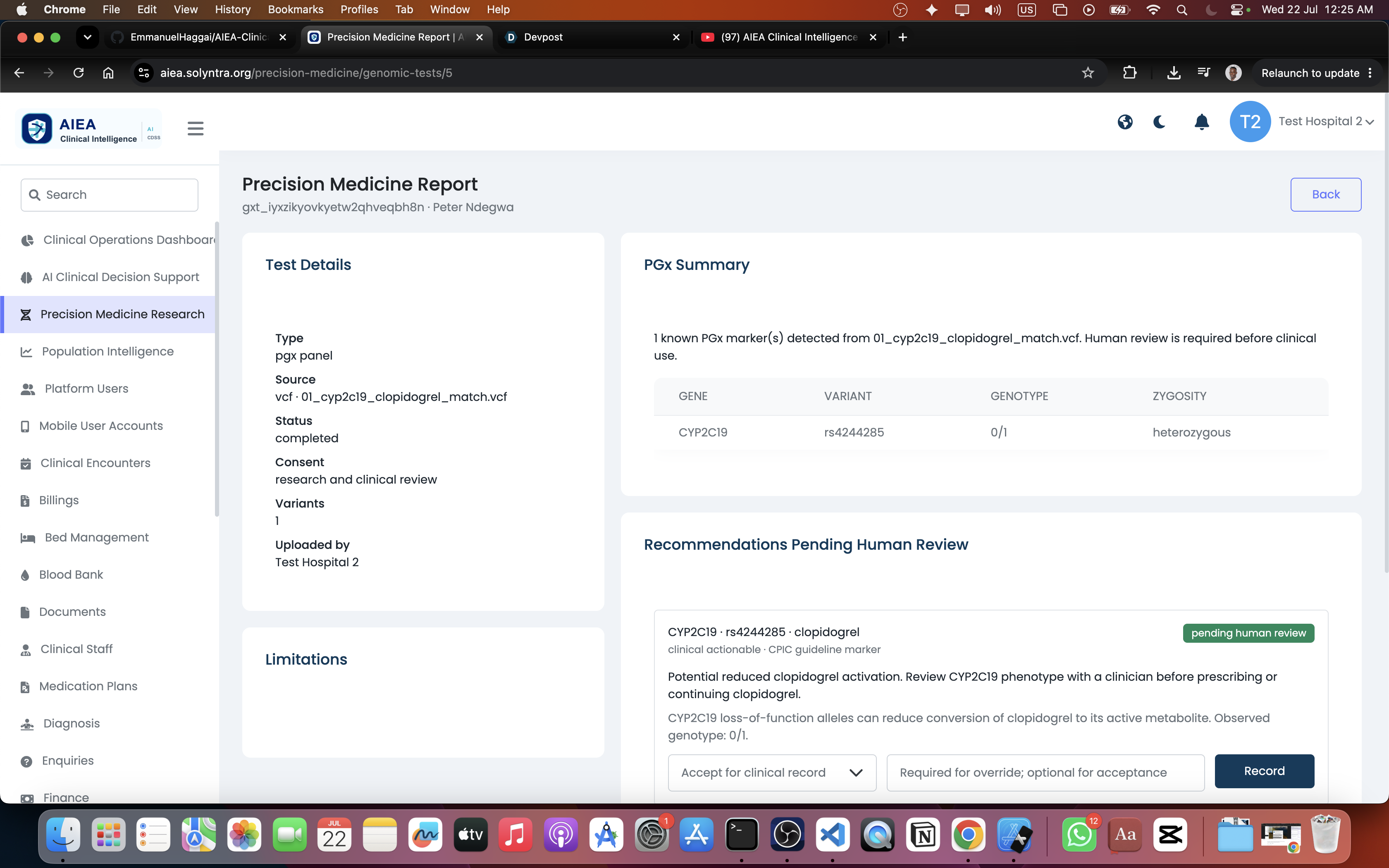
The long-term vision is to use clinical, genomic, and drug interaction data to help predict adverse drug reactions, support personalized medication recommendations, and assist medical professionals in making safer decisions.
How we built it
We built the web platform using PHP and Laravel because it provides a fast, scalable foundation for building hospital management and clinical workflow systems.
The mobile application was built with React Native so that one codebase can support both Android and iOS. This was important because the platform is intended to work across different healthcare environments, including rural regions where mobile access may be more practical than desktop access.
The system was designed with reliability in mind, especially for situations where internet connectivity is unstable or unavailable.
Challenges we ran into
One of the biggest challenges was designing for real-world healthcare environments, where systems must remain dependable even when infrastructure fails.
Some situations, such as network outages, offline data collection, and later synchronization, were difficult to simulate perfectly during development. We had to test repeatedly, try different approaches, and keep improving the system until the workflows became more reliable.
Another challenge was balancing an ambitious AI vision with practical healthcare needs. We had to focus on building a working foundation first while keeping the future research and intelligence layer in mind.
Accomplishments that we're proud of
We are proud that the product works as a foundation for a more resilient healthcare system.
The project brings together hospital workflow management, offline-first thinking, mobile data collection, and AI-assisted clinical intelligence into one vision. It shows how technology can reduce downtime, support clinicians, and eventually help make treatment more personalized and safer.
What we learned
We learned that building healthcare technology requires persistence, empathy, and reliability. It is not enough for a system to work in ideal conditions. It must also work when the internet is unstable, when staff are under pressure, and when patients are waiting for urgent care.
We also learned the importance of iteration. When something did not work, we tested another approach, learned from the failure, and improved the system step by step.
What's next for AIEA clinical inteligence
The next step is to pilot the system in real healthcare environments and continue improving its offline-first hospital workflows.
We also plan to expand the AI capabilities by integrating clinical data, drug interaction data, and eventually genomic data to support personalized medicine and safer prescribing decisions.
In the future, AIEA Clinical Intelligence could help hospitals reduce downtime, support rural healthcare data collection, assist medicalprofessionals, and contribute to research that saves lives.
Built With
- css
- html
- javascript
- mysql
- openai
- php-laravel
- react-native

Log in or sign up for Devpost to join the conversation.