-
-

Landing Page
-
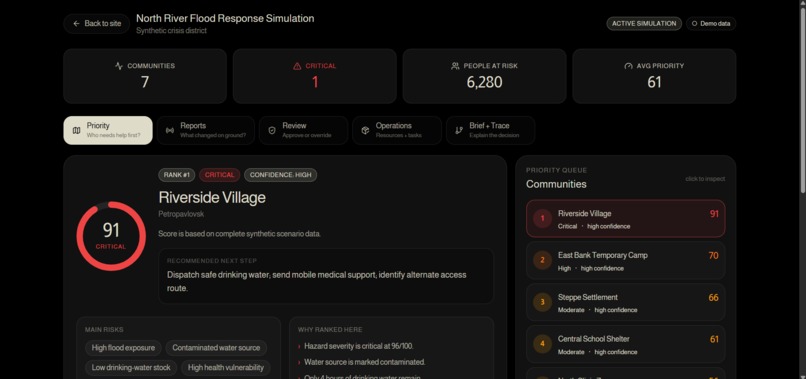
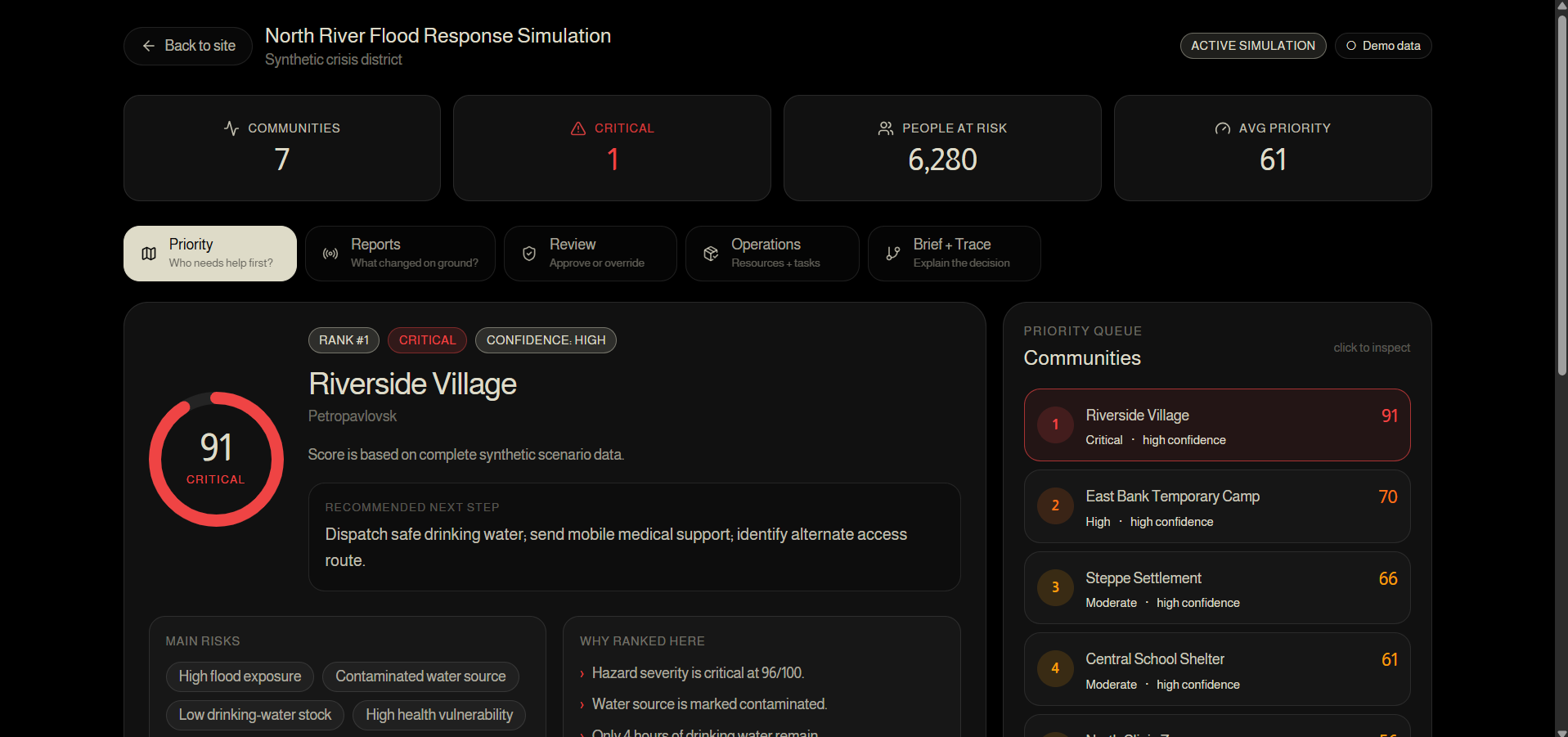
Priority Panel - Who needs help first?
-
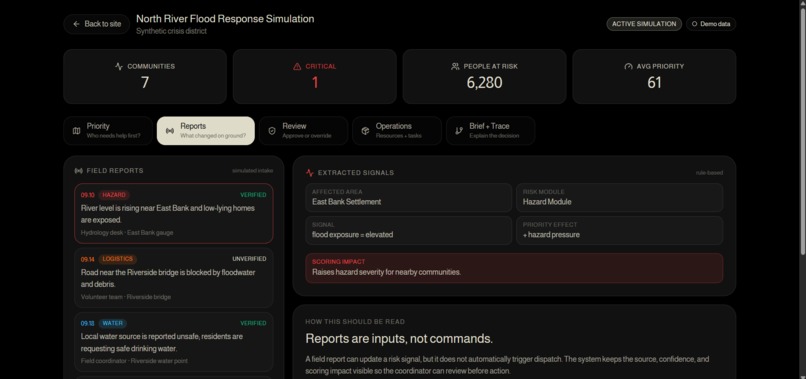
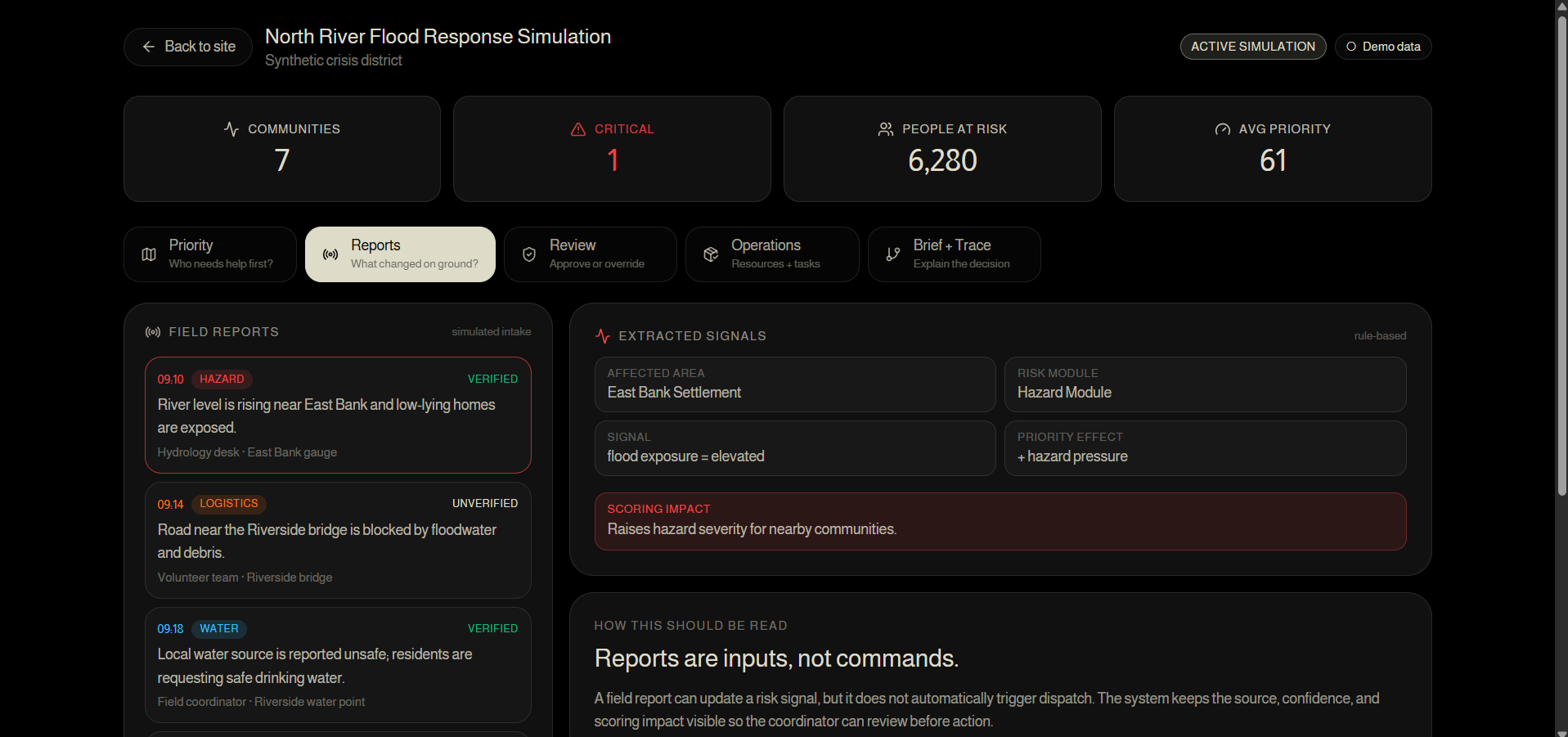
Reports Panel - What changed on ground?
-
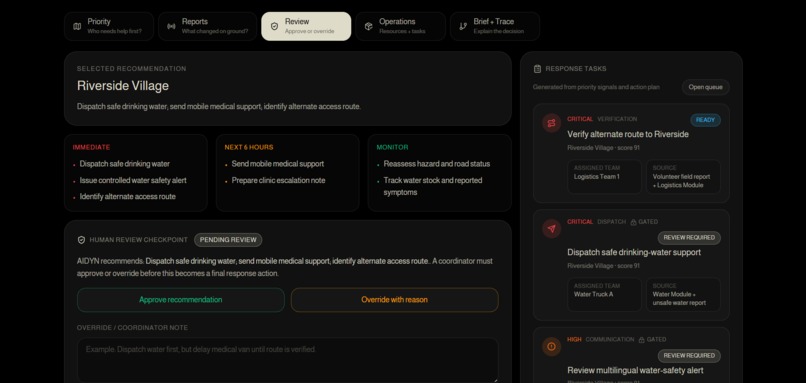
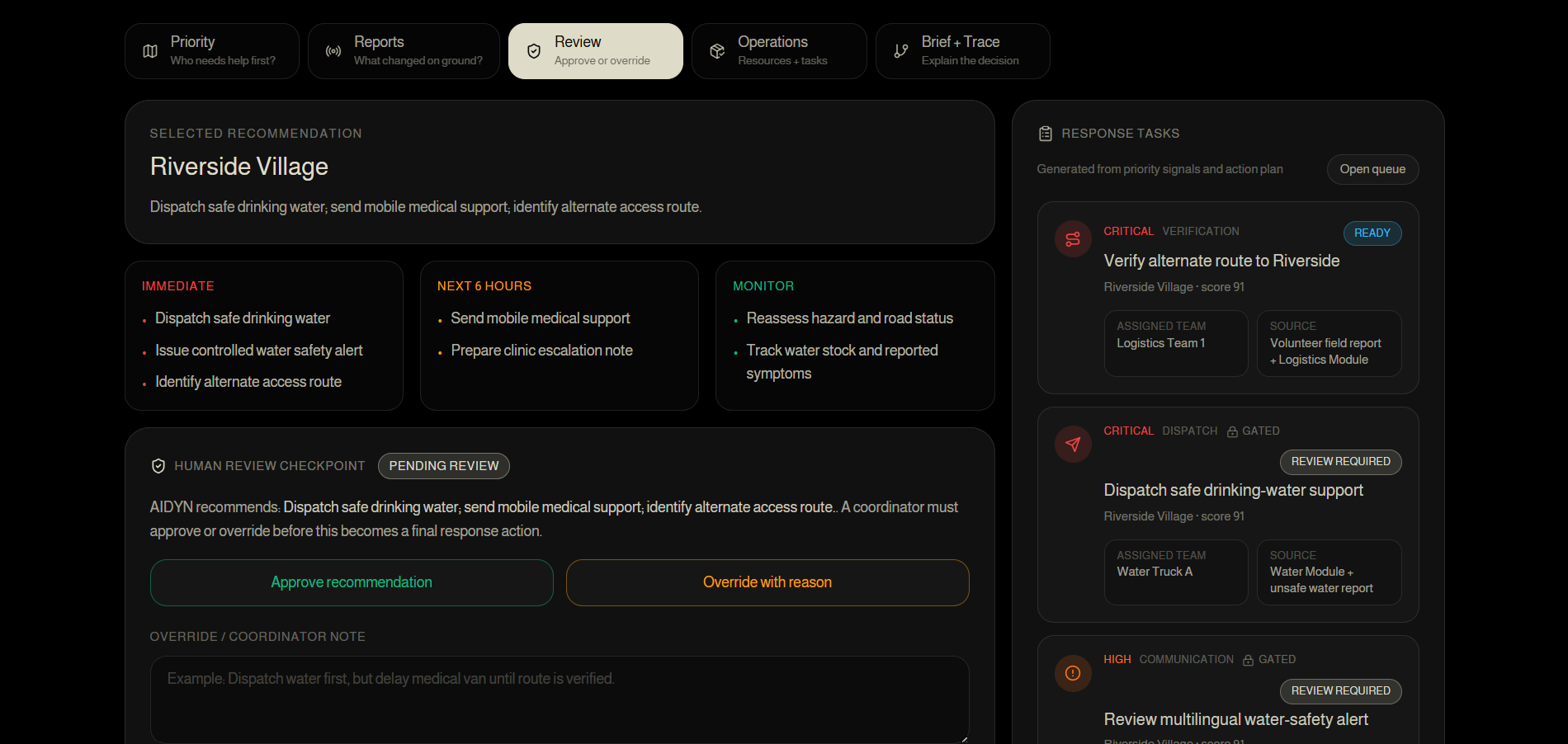
Review Panel - Approve or Override
-
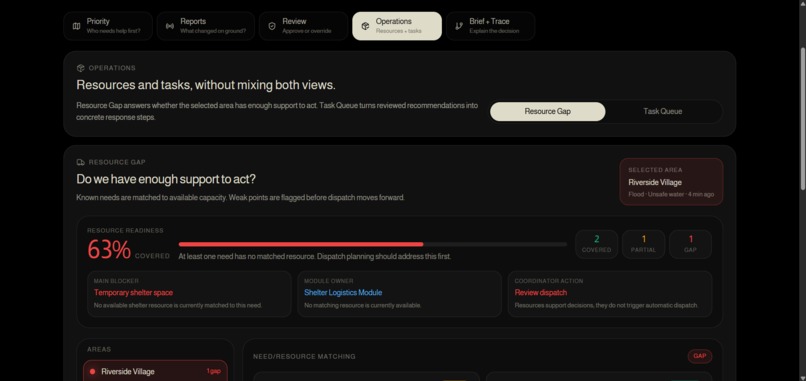
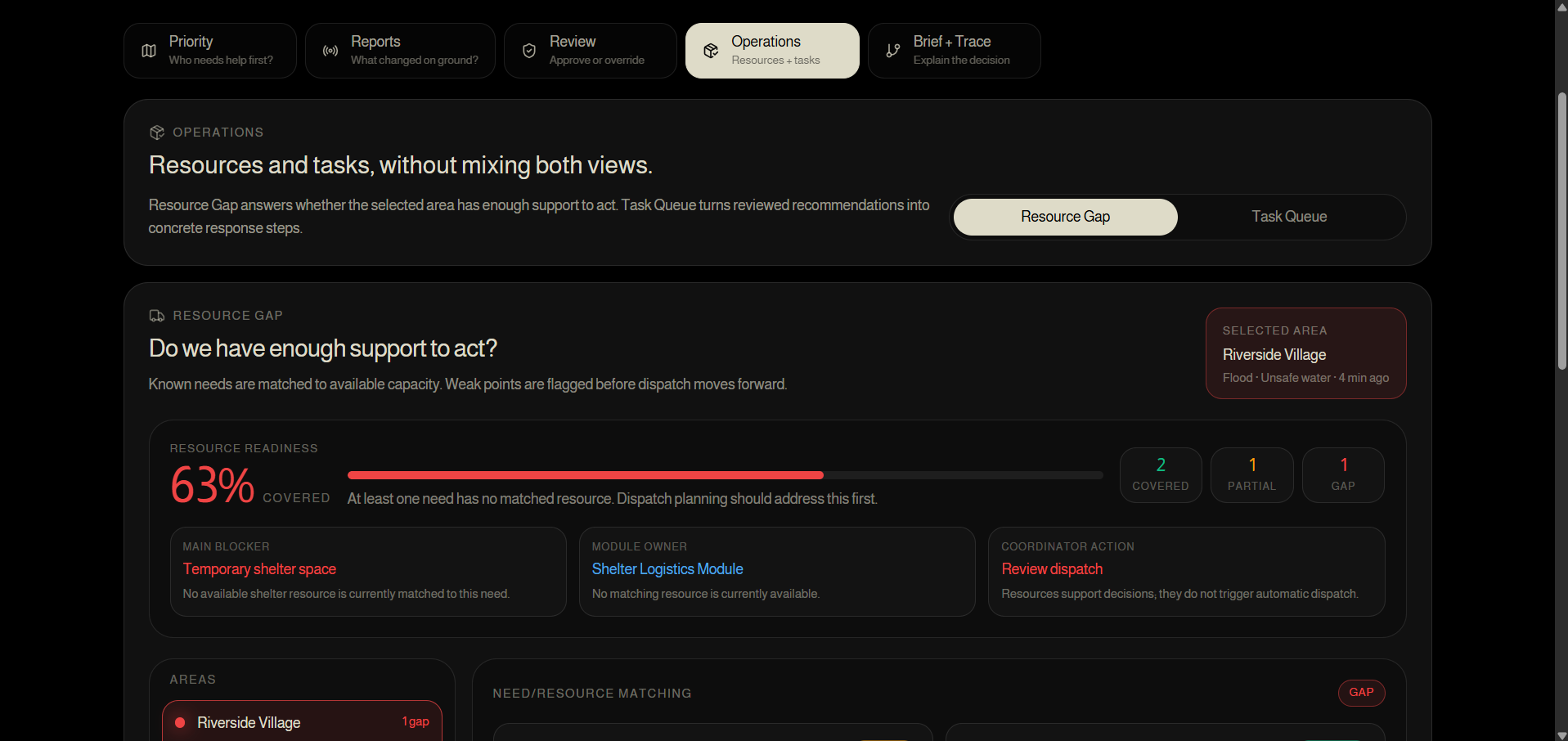
Operations Panel - Resources & Tasks
-
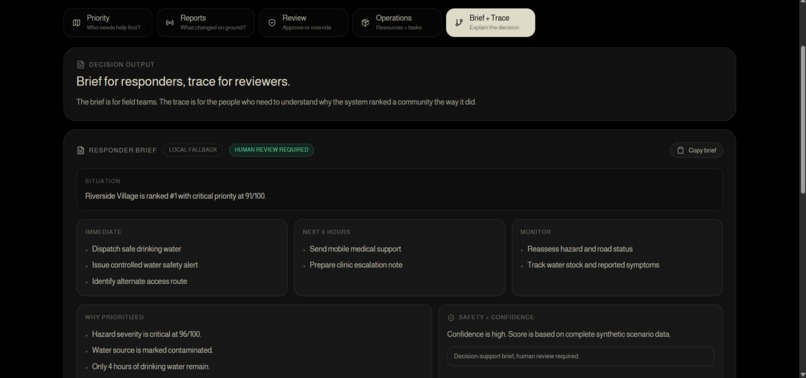
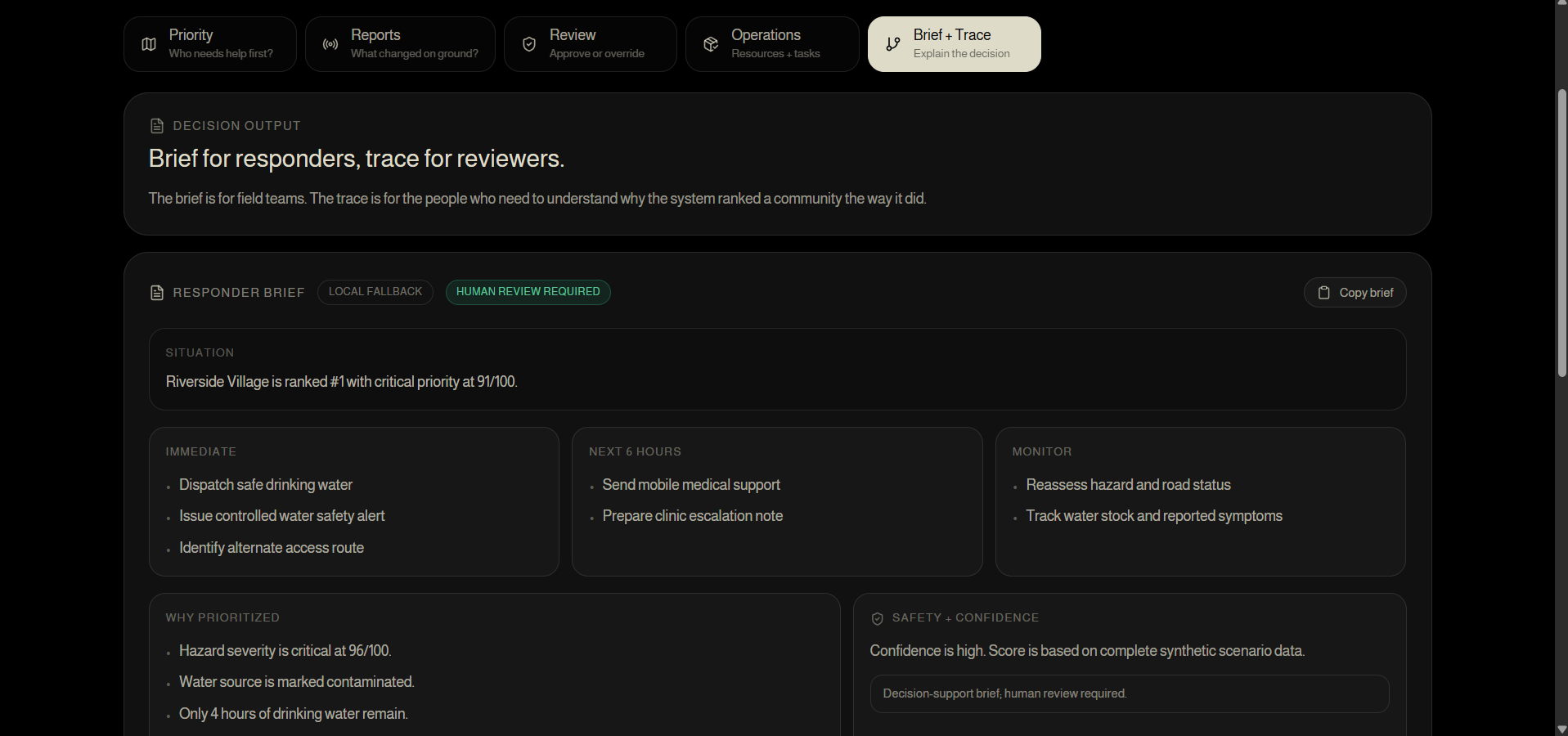
Brief & Trace Panel - Explain the decision

Inspiration
AIDYN was inspired by the way crisis-response teams are often forced to make decisions with too much information and too little time. During floods, storms, heatwaves, or infrastructure failures, the challenge is not only knowing that danger exists. The real challenge is deciding which community needs help first, why that decision was made, what resources are missing, and what should be reviewed before action is taken.
We wanted to build something that feels closer to a real crisis cockpit: fast, explainable, and human-controlled.
What it does
AIDYN is an AI-backed crisis response cockpit that helps teams prioritize at-risk communities and coordinate response decisions.
It ranks affected communities using a transparent deterministic scoring model, then shows the evidence behind every priority. Teams can inspect field reports, extracted risk signals, resource gaps, response tasks, human review status, responder briefs, audit traces, and AI safety checks.
The AI agent does not control the priority score or dispatch decisions. Instead, it reads a locked evidence packet and generates a short responder brief using Gemini 2.5 Flash. The backend then validates the output and enforces guardrails such as locked score, locked rank, human review, no medical diagnosis, and no dispatch authority.
The core priority model is:
[ Priority = 0.25H + 0.25W + 0.20M + 0.15L + 0.15R ]
where (H) is hazard exposure, (W) is water and shelter risk, (M) is health risk, (L) is logistics difficulty, and (R) is resource deficit.
How we built it
We built AIDYN as a full-stack application with a React, TypeScript, Vite, and Tailwind CSS frontend, and a FastAPI backend in Python.
The backend handles scenario data, priority scoring, community details, field reports, task workflows, review states, resource gaps, agent contracts, evidence packets, Gemini integration, guardrails, and test coverage.
The frontend is designed as a response dashboard with separate sections for priority ranking, incoming reports, human review, operations, resource gaps, task queues, responder briefs, AI agent run trace, and audit trace.
We built the AI layer carefully. First, we created deterministic packet contracts and locked decision fields. Then we added the responder brief agent. Finally, we added Gemini 2.5 Flash support with fallback behavior, debug logging, guardrail checks, and a visible agent assurance panel in the UI.
Challenges we ran into
The biggest challenge was keeping the AI useful without letting it become unsafe or vague. We did not want the LLM to secretly decide priority, invent facts, or produce unreviewed emergency instructions.
Another challenge was getting Gemini to return reliable structured output. We had to debug raw model responses, handle JSON formatting issues, control thinking-token behavior, and enforce backend-owned safety text instead of trusting the model to always include it.
On the product side, the challenge was avoiding a cluttered dashboard. Crisis-response tools can become overwhelming quickly, so we had to keep refining the layout until the workflow felt clear: review risk, inspect evidence, check resources, generate brief, verify safety.
Accomplishments that we're proud of
We are proud that AIDYN is not just an AI wrapper. The project has a real decision workflow behind it: scoring, evidence, human review, task coordination, resource matching, audit trace, and controlled AI generation.
We are also proud of the safety architecture. The AI agent is useful, but bounded. It cannot change score, rank, community identity, review state, or dispatch authority. The system shows whether Gemini was used, whether fallback was triggered, and whether guardrails passed.
The final result feels like a practical crisis-response prototype rather than a generic chatbot.
What we learned
We learned that adding AI to a serious workflow is less about calling a model and more about designing boundaries around it.
The most important lesson was separating deterministic decisions from AI-generated explanation. Scores and rankings should be traceable. AI should help summarize and communicate, not silently control critical decisions.
We also learned how important fallback behavior, logging, schema validation, and human review are when building AI systems that people may trust under pressure.
What's next for AIDYN
Next, we would expand AIDYN from a simulated crisis scenario into a more realistic response platform.
The next steps would include live map layers, real incident ingestion, role-based access, persistent databases, stronger resource allocation logic, notification workflows, and more agent tools for evidence summarization, route-risk checks, and response planning.
We would also add deeper evaluation: hallucination checks, regression tests for agent outputs, scenario-based stress testing, and clearer audit logs for every AI-assisted decision.
The long-term vision is to make AIDYN a reliable decision-support layer for emergency teams: fast enough for crisis response, transparent enough for review, and controlled enough to keep humans responsible for final action.
Built With
- ai
- api
- fastapi
- framer
- gemini
- github
- lucide
- pydantic
- pytest
- python
- react
- render
- rest
- tailwind
- typescript
- vite


Log in or sign up for Devpost to join the conversation.