-
-
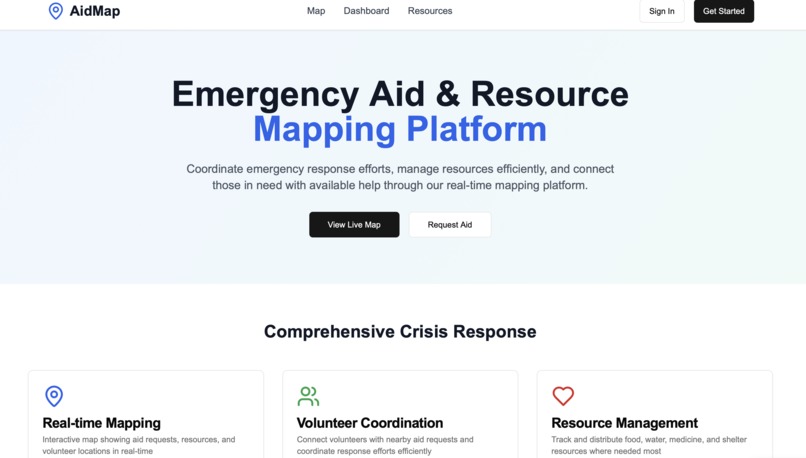
home page
-
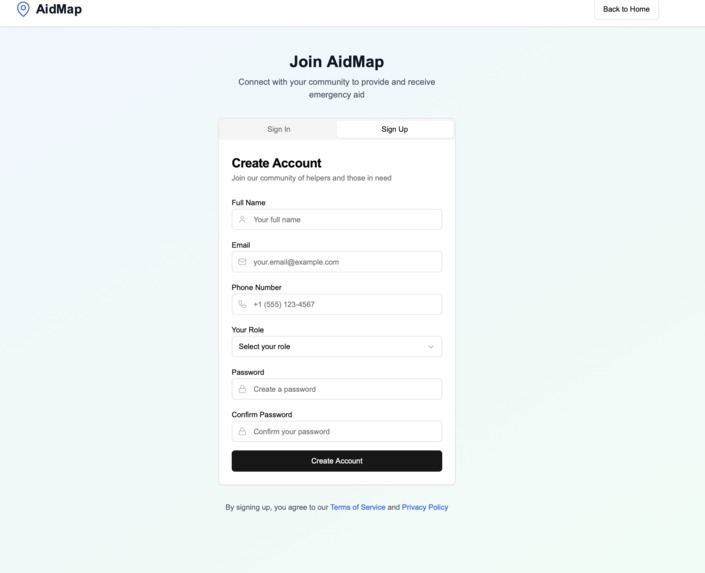
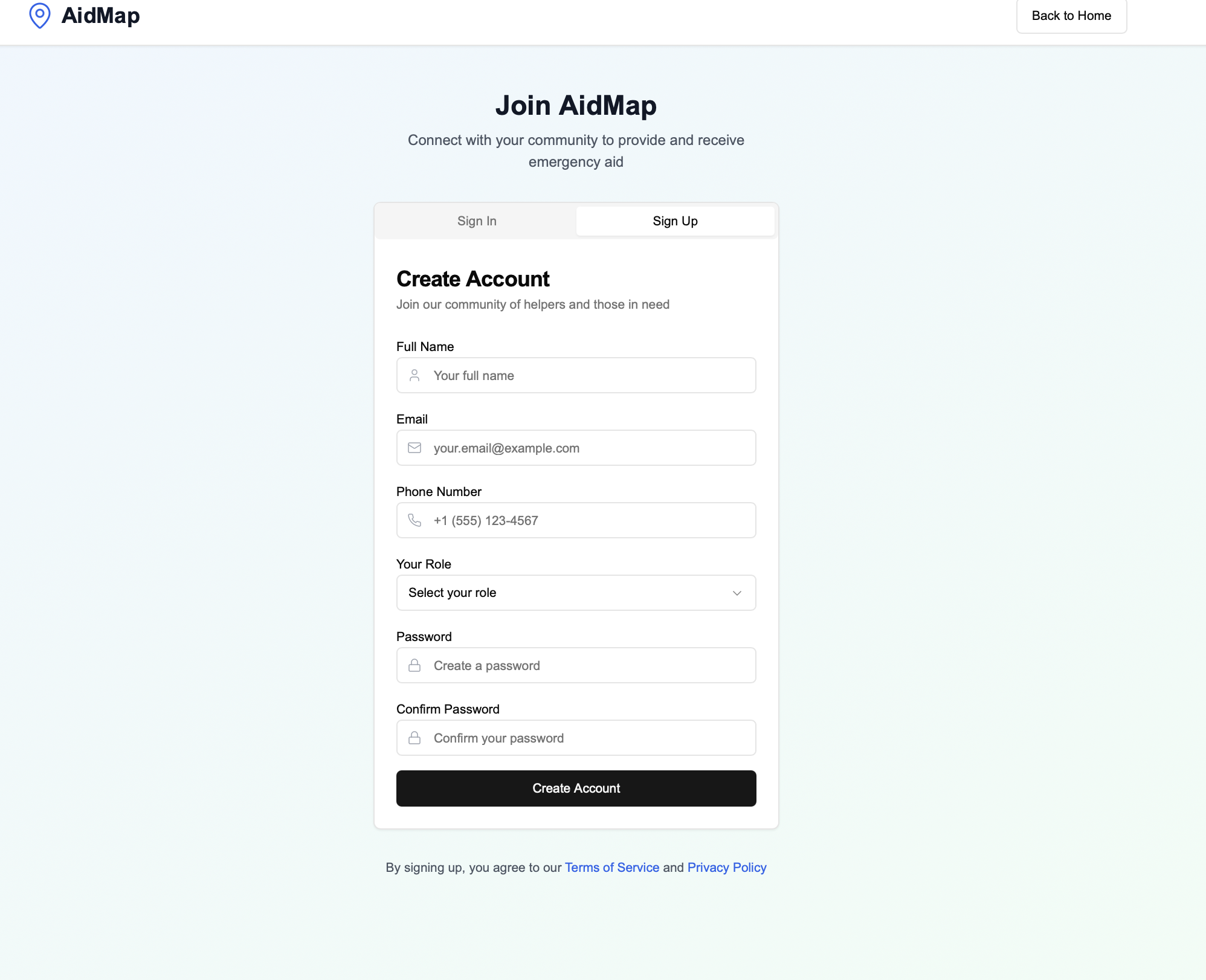
sign-up page
-
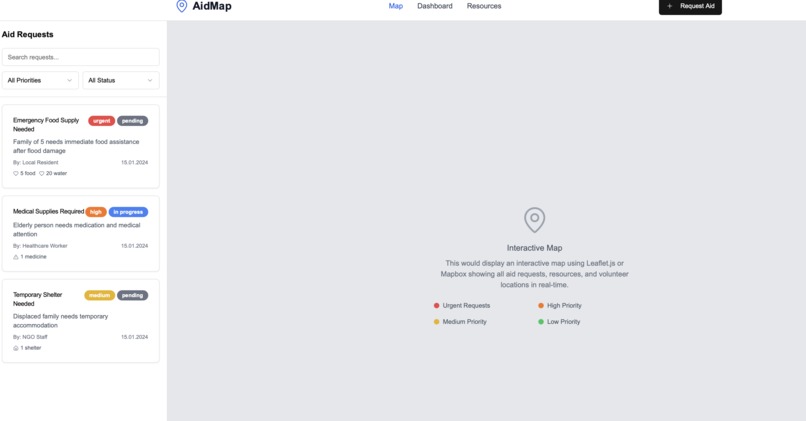
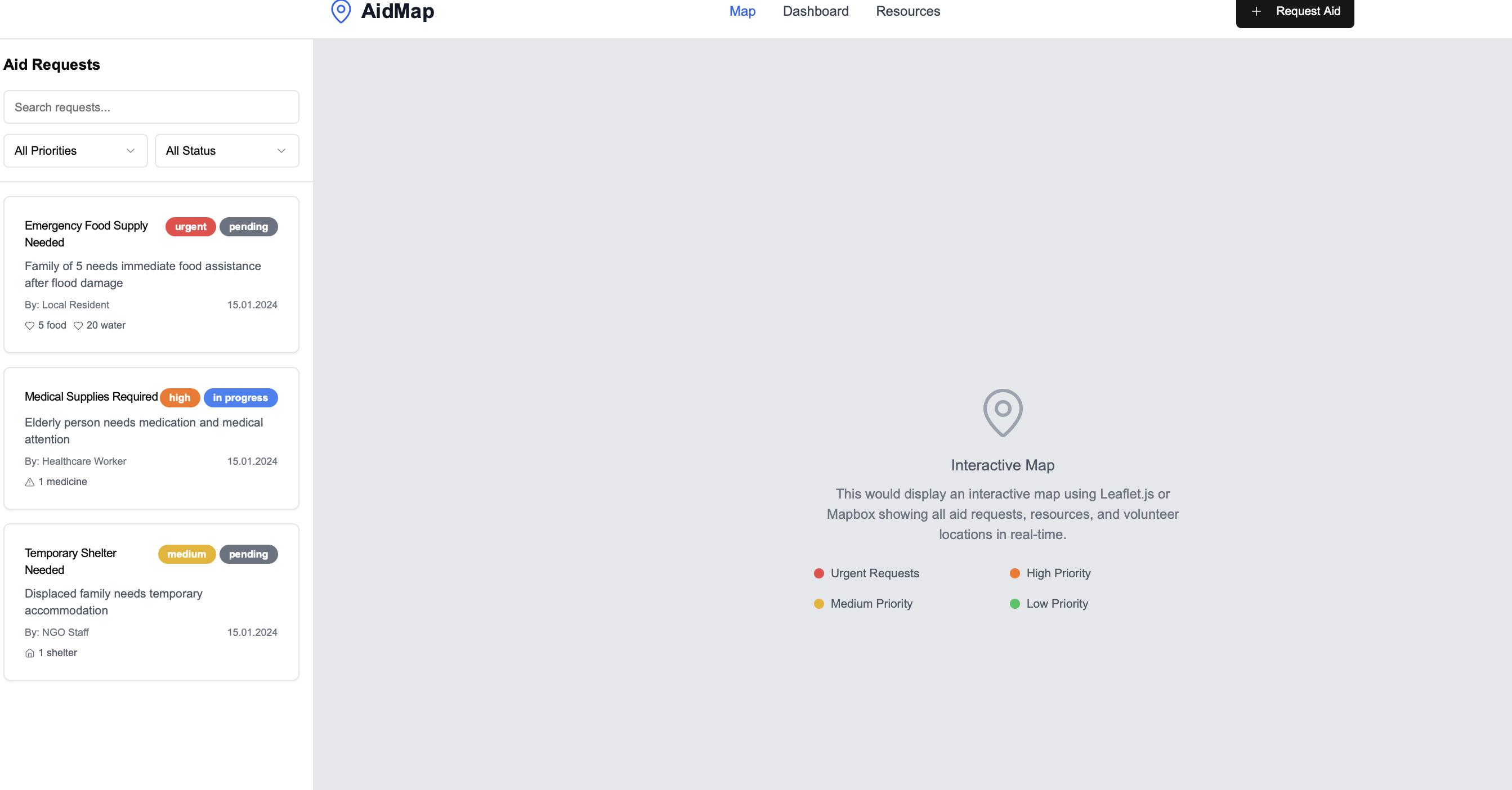
Aid Requests Page
-
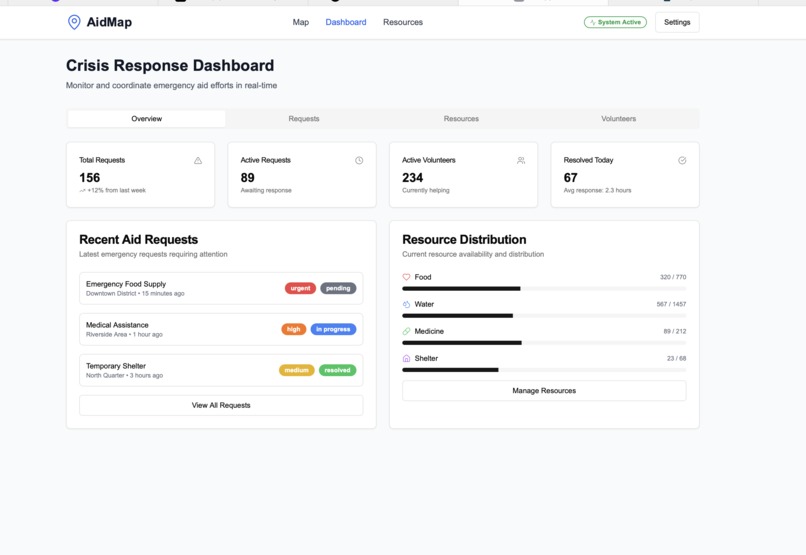
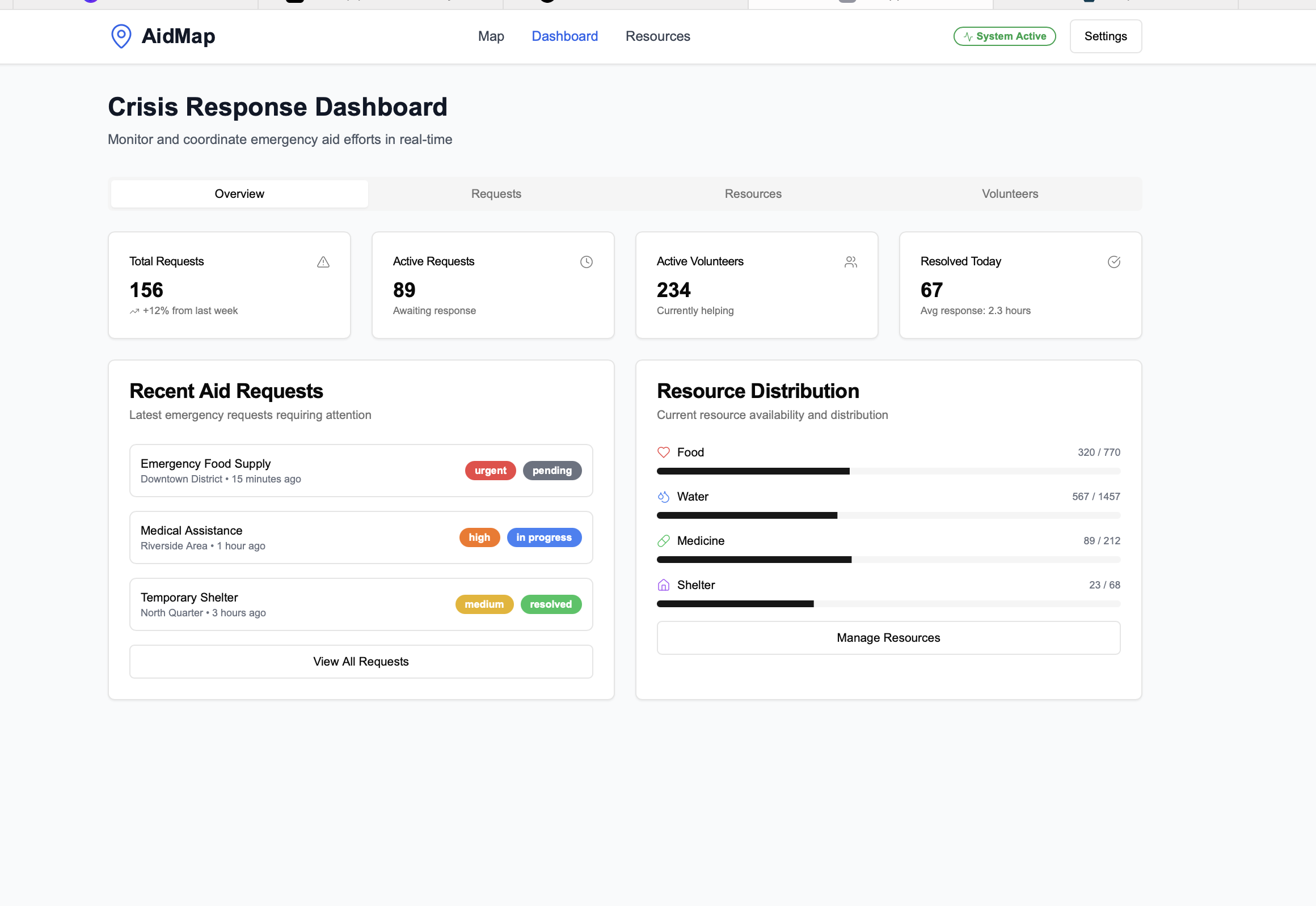
Crisis Response Dashboard
-
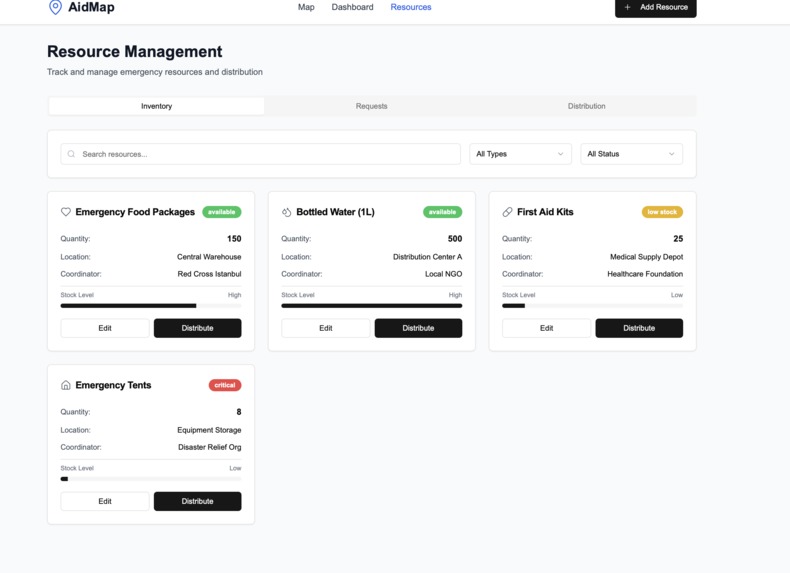
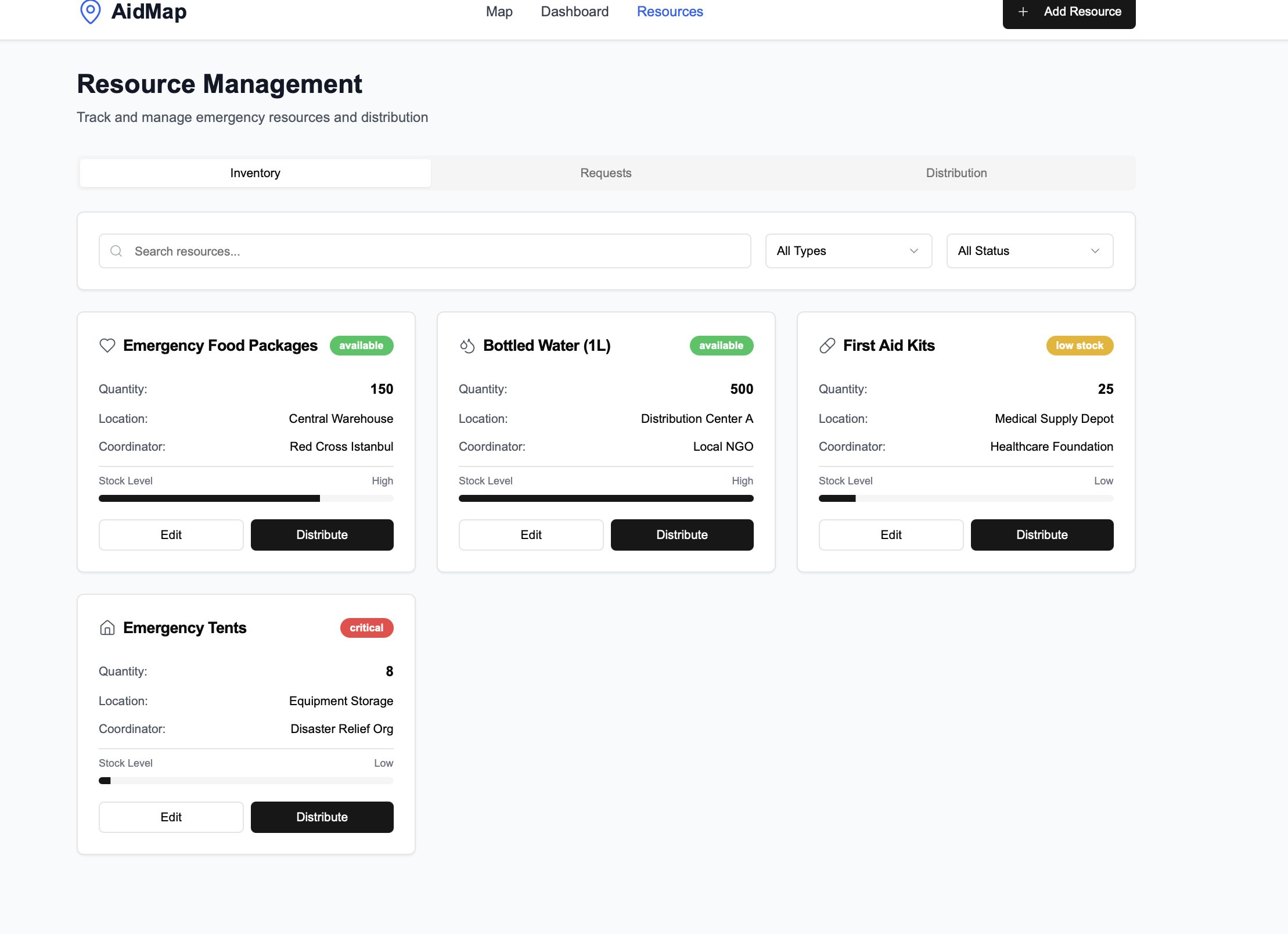
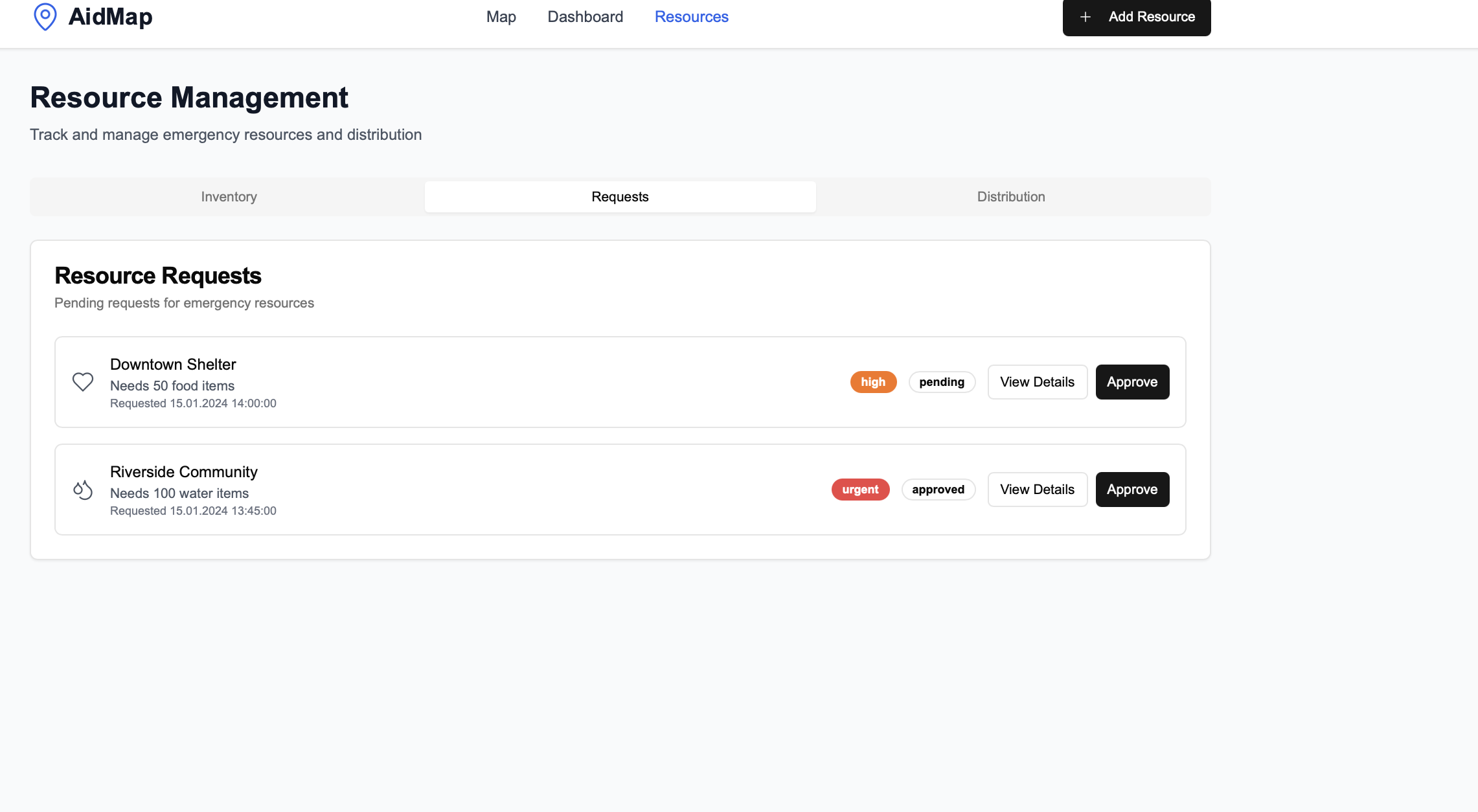
Resource Management
-
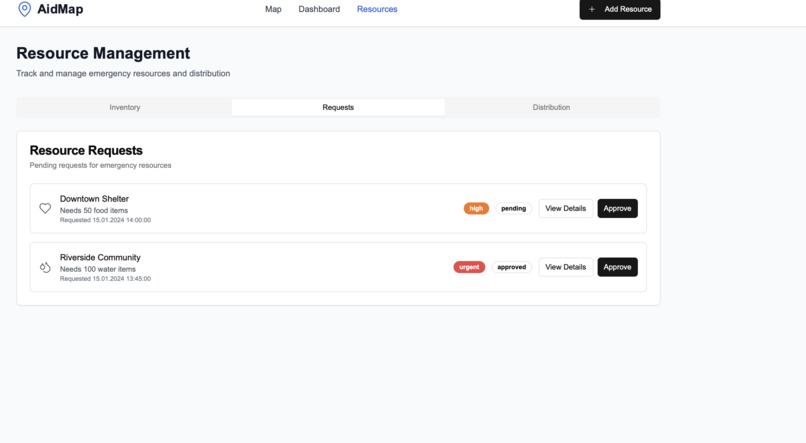
Resource Management
-
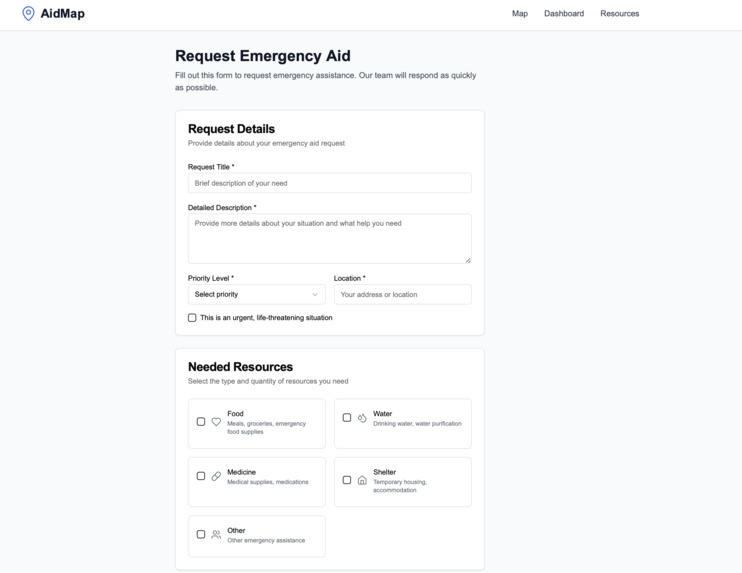
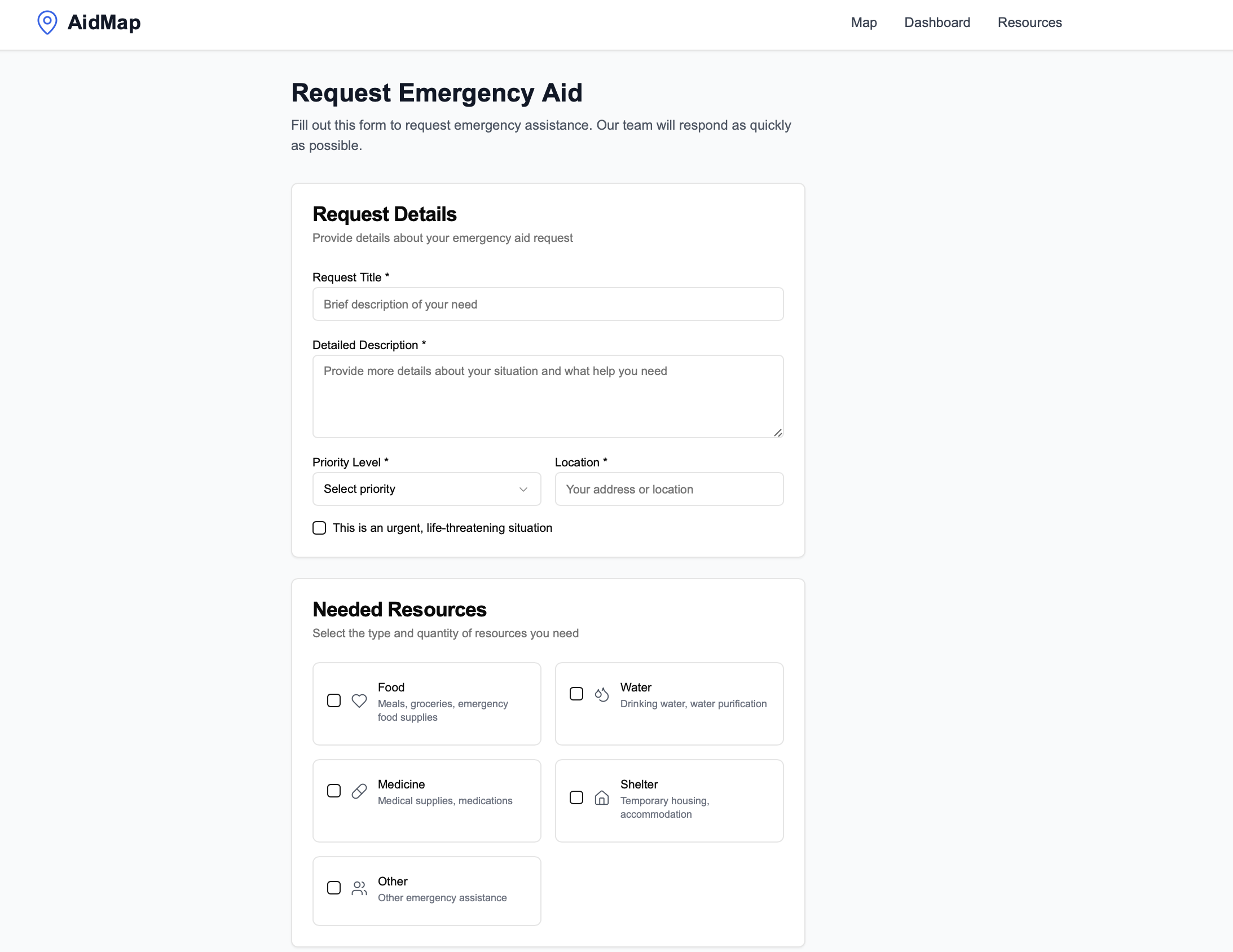
Request Emergency Aid
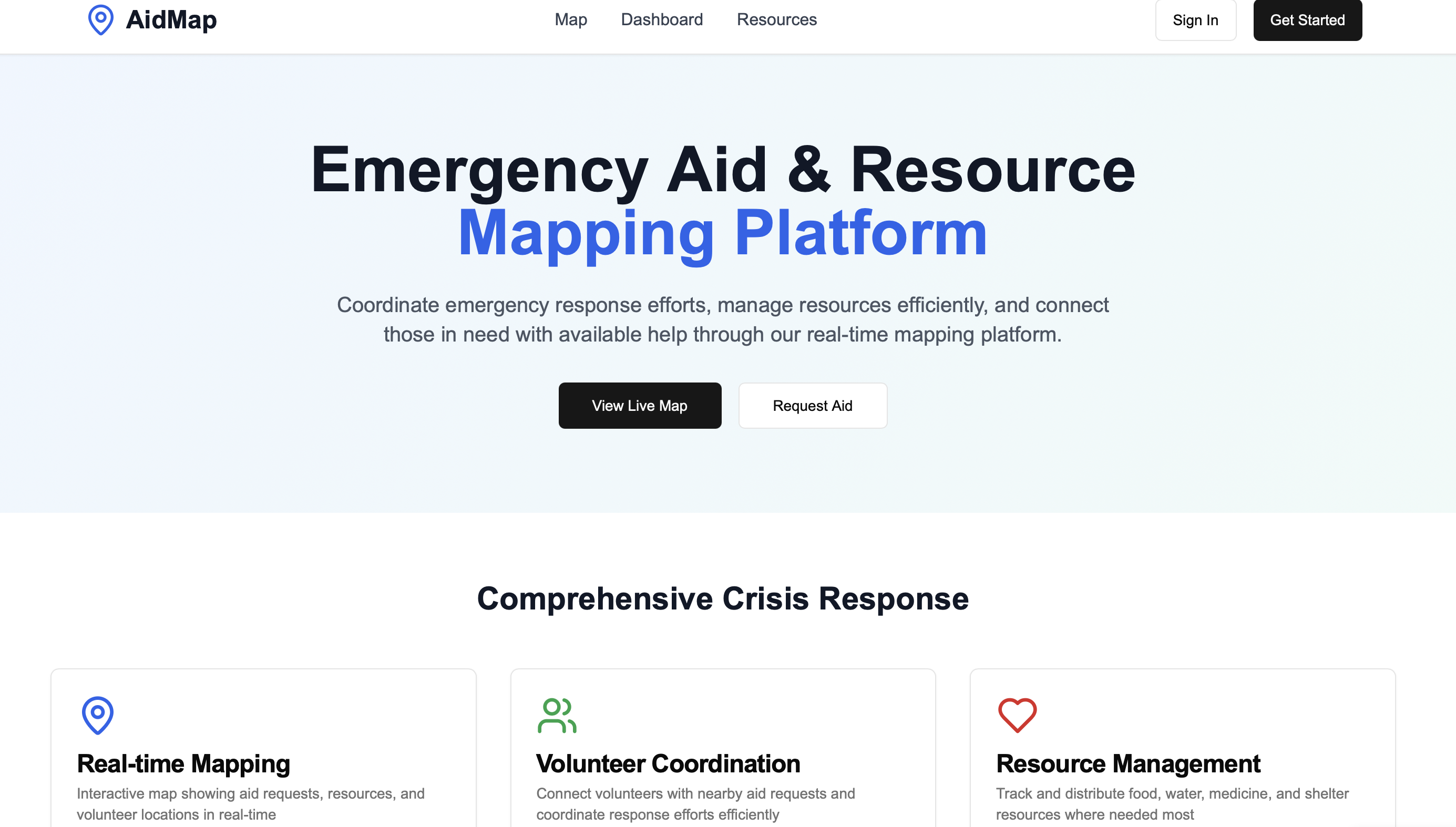
AidMap – Emergency Aid & Resource Mapping Platform
Inspiration
The idea for AidMap came from witnessing the difficulties nonprofit organizations face in coordinating emergency aid during crises. During natural disasters and humanitarian emergencies, we observed how lack of real-time communication and visibility often leads to critical delays in delivering life-saving resources. Stories of duplicate aid deliveries to some areas while others remained underserved, along with the frustration of volunteers unable to find where help was most needed, inspired us to create a solution that bridges these coordination gaps and helps save lives through improved collaboration and transparency.
What it does
AidMap is a comprehensive real-time emergency aid coordination platform designed for the entire humanitarian response ecosystem. It serves multiple stakeholders including NGOs, volunteers, crisis coordinators, and affected communities by providing:
- Interactive Crisis Mapping: Real-time visualization of aid requests, available resources, and volunteer locations on dynamic maps with priority-based color coding
- Multi-Stakeholder Coordination: Seamless collaboration between NGOs, volunteers, coordinators, and community members to eliminate duplication and optimize response efforts
- Resource Management System: Complete inventory tracking, distribution planning, and supply chain coordination with automated low-stock alerts
- Emergency Request Portal: Simple, mobile-friendly interface for affected communities to request immediate assistance with priority classification
- Transparency Dashboard: Public-facing analytics and reporting for donors, stakeholders, and the general public to track aid distribution and impact
- Role-Based Access Control: Tailored interfaces and permissions for different user types from field volunteers to crisis managers
- Mobile-First Design: Optimized for smartphones and tablets to support field operations in challenging environments
How we built it
Our technical architecture was designed for scalability, reliability, and ease of use in crisis situations:
- Frontend: Built with Next.js 14 and React for a responsive, server-side rendered application that performs well on low-bandwidth connections
- UI/UX: Implemented with Tailwind CSS and shadcn/ui components for consistent, accessible design that works across all device types
- Backend APIs: Developed with Node.js and Express to handle real-time data processing, user authentication, and external integrations
- Database: MongoDB chosen for flexible schema design to accommodate diverse aid request types and rapid scaling during emergencies
- Mapping Integration: Leaflet.js and Mapbox integrated for interactive, mobile-optimized mapping with offline tile caching capabilities
- Authentication: Firebase Authentication implemented for secure, scalable user management with social login options
- Real-time Updates: WebSocket integration for live updates of aid requests, resource availability, and volunteer assignments
- External APIs: Integration framework built for UN OCHA, Red Cross, and other humanitarian data sources
Challenges we ran into
Building AidMap presented several unique challenges that required innovative solutions:
Technical Challenges:
- Ensuring reliable performance under low-bandwidth conditions common in disaster areas required extensive optimization of data transfer and caching strategies
- Implementing real-time updates while maintaining data consistency across multiple concurrent users and organizations
- Creating a mapping system that works offline and syncs when connectivity is restored
User Experience Challenges:
- Balancing powerful coordination features with simplicity for users with varying technical skills and high-stress situations
- Designing intuitive interfaces that work equally well for field volunteers using smartphones and crisis managers using desktop dashboards
- Creating clear visual hierarchies for urgent vs. non-urgent requests without overwhelming users
Coordination Challenges:
- Managing development across team members in different time zones while incorporating feedback from humanitarian sector mentors
- Ensuring the platform meets real-world needs of diverse stakeholders from local volunteers to international NGOs
Accomplishments that we're proud of
- Complete MVP Delivery: Built a fully functional platform that nonprofits can immediately deploy and use in real crisis situations
- Multi-Platform Success: Created seamless experiences across desktop, tablet, and mobile devices with responsive design
- Real-Time Coordination: Successfully implemented live mapping and updates that enable true real-time collaboration between multiple organizations
- Scalable Architecture: Established a robust backend that can handle sudden spikes in usage during emergency situations
- User-Centric Design: Developed role-specific interfaces that serve the unique needs of each stakeholder type
- Integration Ready: Built a flexible framework that can easily connect with existing humanitarian databases and systems
- Accessibility Compliance: Ensured the platform works for users with disabilities and in challenging field conditions
What we learned
This project provided invaluable insights into both technical development and humanitarian technology:
Technical Skills:
- Advanced experience with full-stack development using modern React, Node.js, and database technologies
- Deep understanding of mapping APIs, geospatial data management, and real-time synchronization challenges
- Expertise in building responsive, mobile-first applications optimized for low-bandwidth environments
Domain Knowledge:
- Understanding of humanitarian response workflows and the critical importance of coordination during emergencies
- Appreciation for the unique constraints and requirements of nonprofit technology adoption
- Insights into designing for high-stress, time-critical situations where user experience can literally save lives
Collaboration and Impact:
- Experience building technology for social good and the responsibility that comes with creating tools for emergency response
- Skills in user research and stakeholder engagement within the humanitarian sector
- Understanding of how to balance feature richness with simplicity for diverse user bases
What's next for AidMap – Emergency Aid & Resource Mapping Platform
Immediate Enhancements (Next 3 months):
- Offline Capabilities: Implement progressive web app features with offline data sync for field operations without internet access
- Advanced Analytics: Develop predictive modeling to help organizations anticipate resource needs and optimize allocation strategies
- Mobile App: Create native iOS and Android applications with push notifications for urgent requests
Integration Expansion (Next 6 months):
- External Data Sources: Complete integration with UN OCHA, Red Cross, and other major humanitarian databases for comprehensive situational awareness
- Communication Tools: Add in-app messaging, voice notes, and photo sharing for better field communication
- Supply Chain Integration: Connect with logistics providers and supply chain management systems for end-to-end resource tracking
Platform Evolution (Next 12 months):
- AI-Powered Insights: Implement machine learning for resource optimization, volunteer matching, and crisis prediction
- Multi-Language Support: Expand to support major languages used in humanitarian operations globally
- Training and Certification: Develop integrated training modules for effective platform usage during emergencies
Partnership and Deployment:
- Pilot Programs: Partner with established NGOs to pilot AidMap in real crisis situations and gather feedback for continuous improvement
- Open Source Initiative: Release core components as open source to encourage broader adoption and community contribution
- Global Expansion: Scale infrastructure to support worldwide deployment with regional data centers for optimal performance
Our ultimate goal is to make AidMap the standard platform for humanitarian coordination, helping save lives through better technology and collaboration.

Log in or sign up for Devpost to join the conversation.