-
-
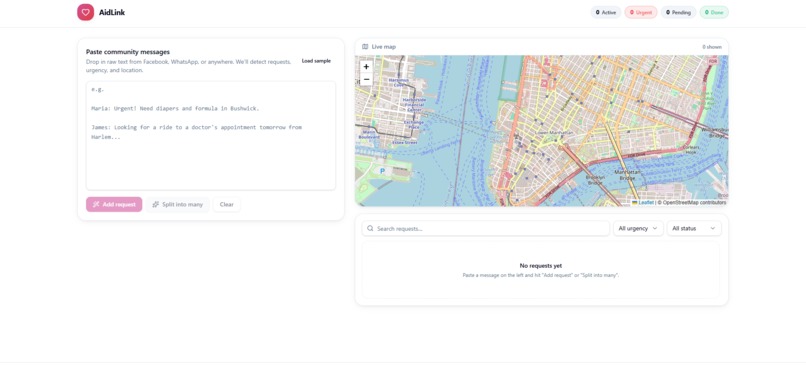
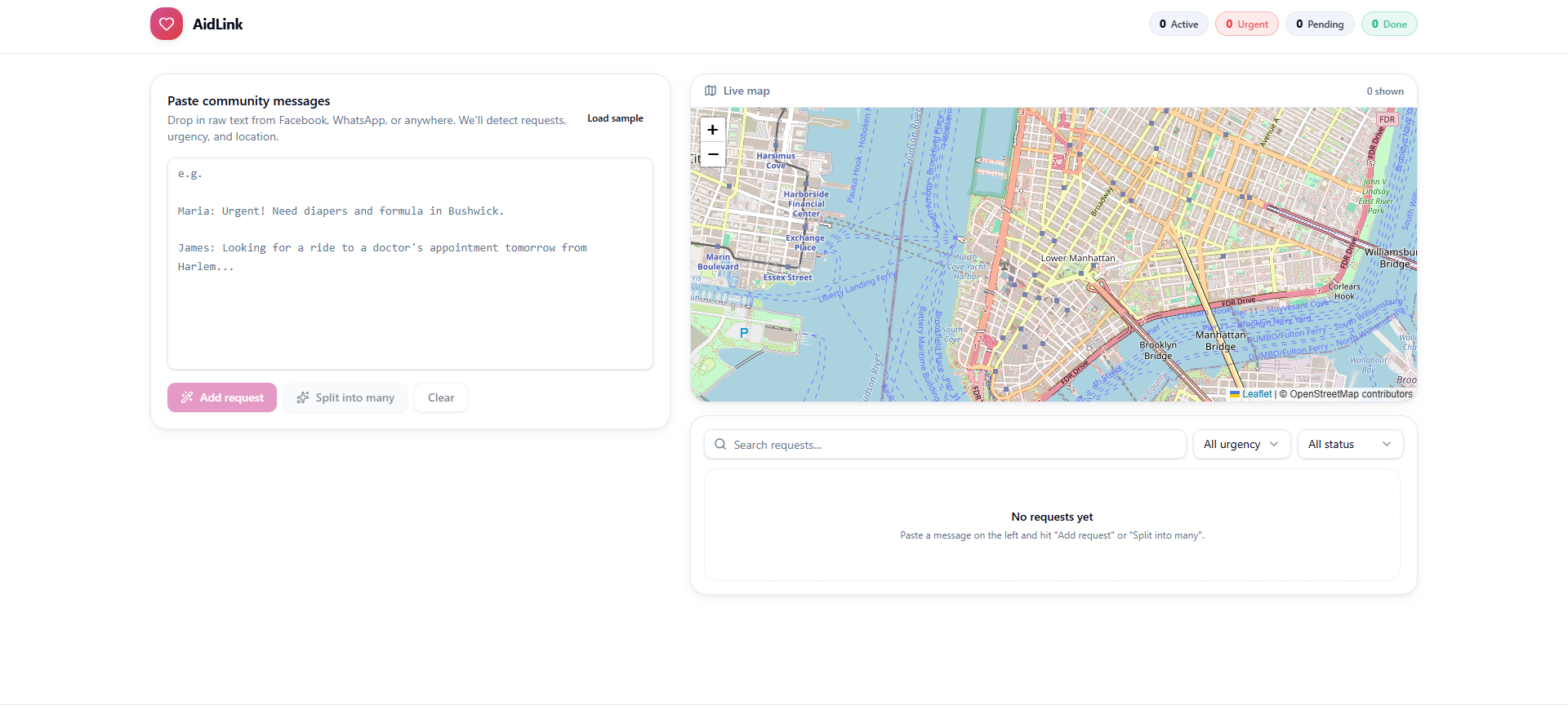
Aidlink Screenshot
Inspiration:
Whenever a big storm hits, a power outage happens, or a neighbor falls on hard times, everyone floods local WhatsApp groups or Facebook threads to ask for help. But these chats move way too fast. A message about an elderly neighbor needing clean water quickly gets buried under a hundred other texts. We wanted to build a simple tool that pulls those critical requests out of the noise and puts them right where volunteers can see them.
What it does:
AidLink is a simple dashboard that turns chaotic community text messages into organized pins on a local map. A community coordinator can take a messy, unformatted paragraph from a WhatsApp group and paste it right into the app. The system instantly scans the text for keywords (like "grandma," "water," or "urgent"), figures out what the person needs, sets a priority level, and assigns a location. Volunteers see a clean live map with color-coded pins. They can click on a pin to see what is needed, claim the task, and go help.
How we built it
We used Lovable to generate our entire frontend layout, setup our React components, and style the app using Tailwind CSS.We embedded Leaflet.js for a 100% free, interactive mapping layout, and connected everything to a real-time Supabase backend to store and update help requests instantly.
Challenges we ran into
Time and budget were our biggest hurdles. We didn’t want to use paid AI keys that might hit rate limits or break when multiple judges review our app online at the same time. To fix this, we spent a lot of time writing a smart keyword-matching script. It handles synonyms and typos perfectly for the demo, making it feel like a real AI backend while keeping the project 100% free and reliable.
Accomplishments that we're proud of
We built a fully functional web app with a live database and a map engine without spending a single penny. The app looks great and is super easy to understand.
What we learned
We realized it is much better to build one single feature that works flawlessly than a massive app with ten broken pages. When building community tools, big text, clear colors, and simple buttons are just as important as the backend code.
What's next for AidLink
Connecting our keyword logic to a live, free AI model like Llama 3 via Groq so it can read absolutely any message a user types.Setting up a phone number so people without internet or smartphones can text their requests straight to the map.Adding a secure login screen using Supabase so community leaders can verify volunteers and keep the neighborhood safe.
Built With
- ai
- javascript
- leaflet.js
- lovable
- react
- supabase
- tailwind-css


Log in or sign up for Devpost to join the conversation.