Inspiration
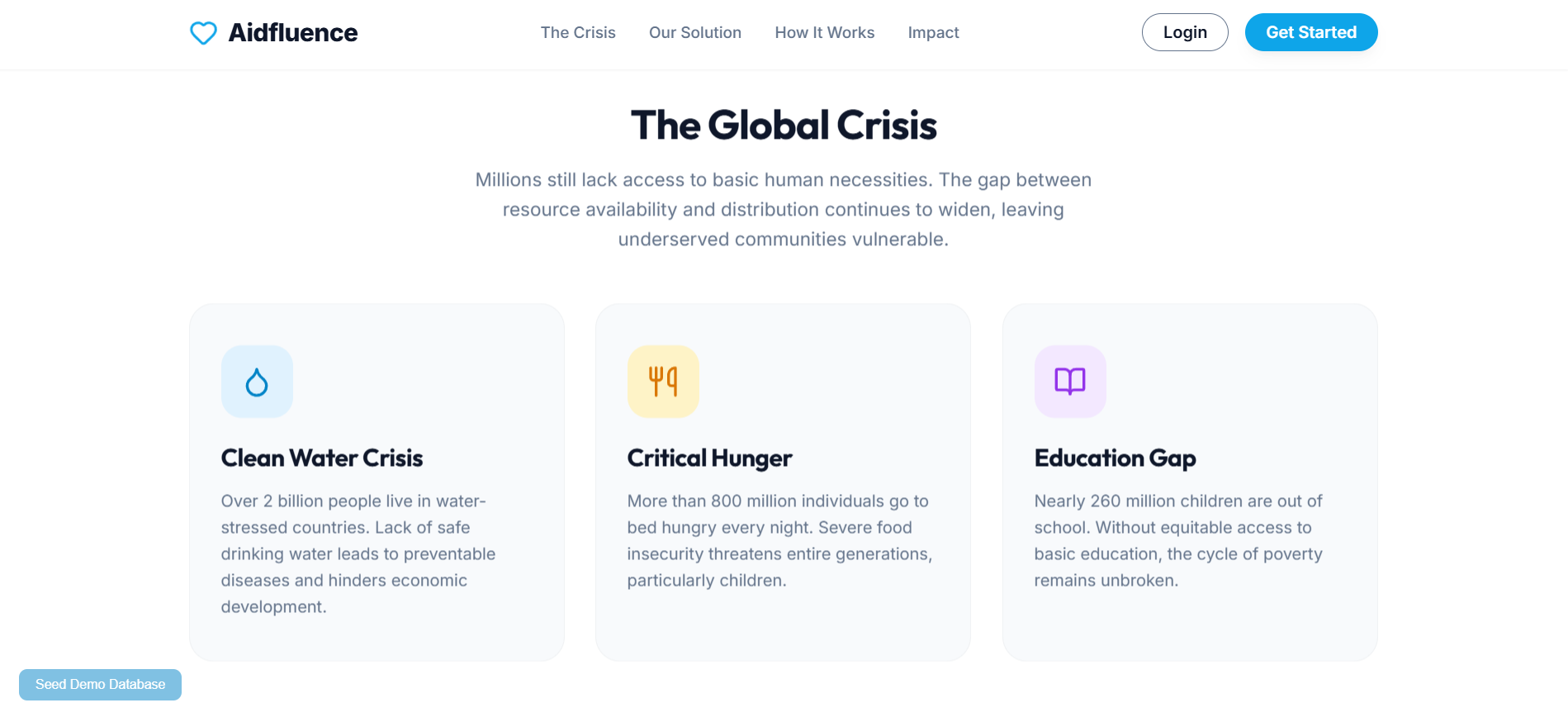
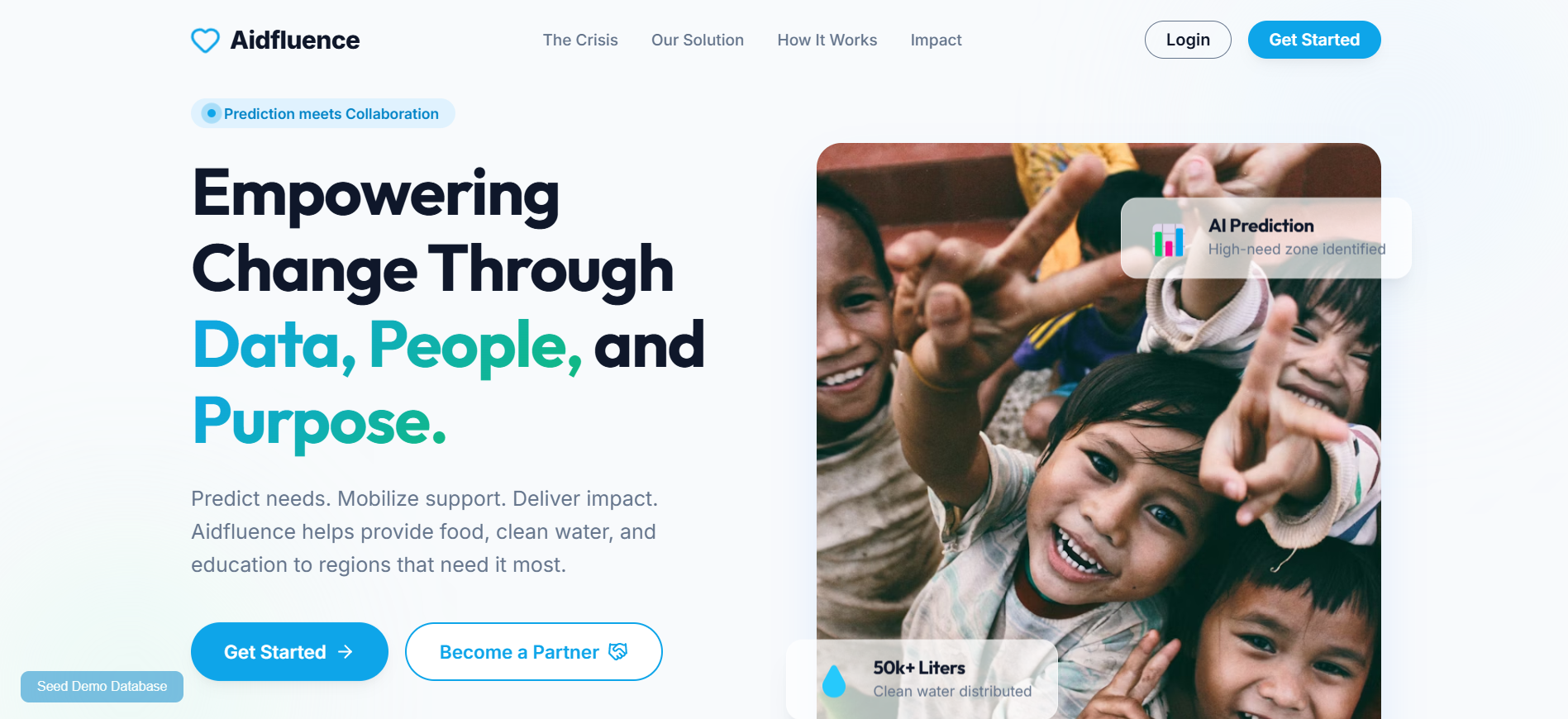
Aidfluence was inspired by a simple but urgent reality: millions of people around the world lack access to basic necessities like clean water, food, and education. While resources exist, they’re often misallocated due to lack of real-time data and coordination. We wanted to bridge that gap by combining technology and human collaboration—using data not just to understand problems, but to actively solve them where it matters most.
What it does
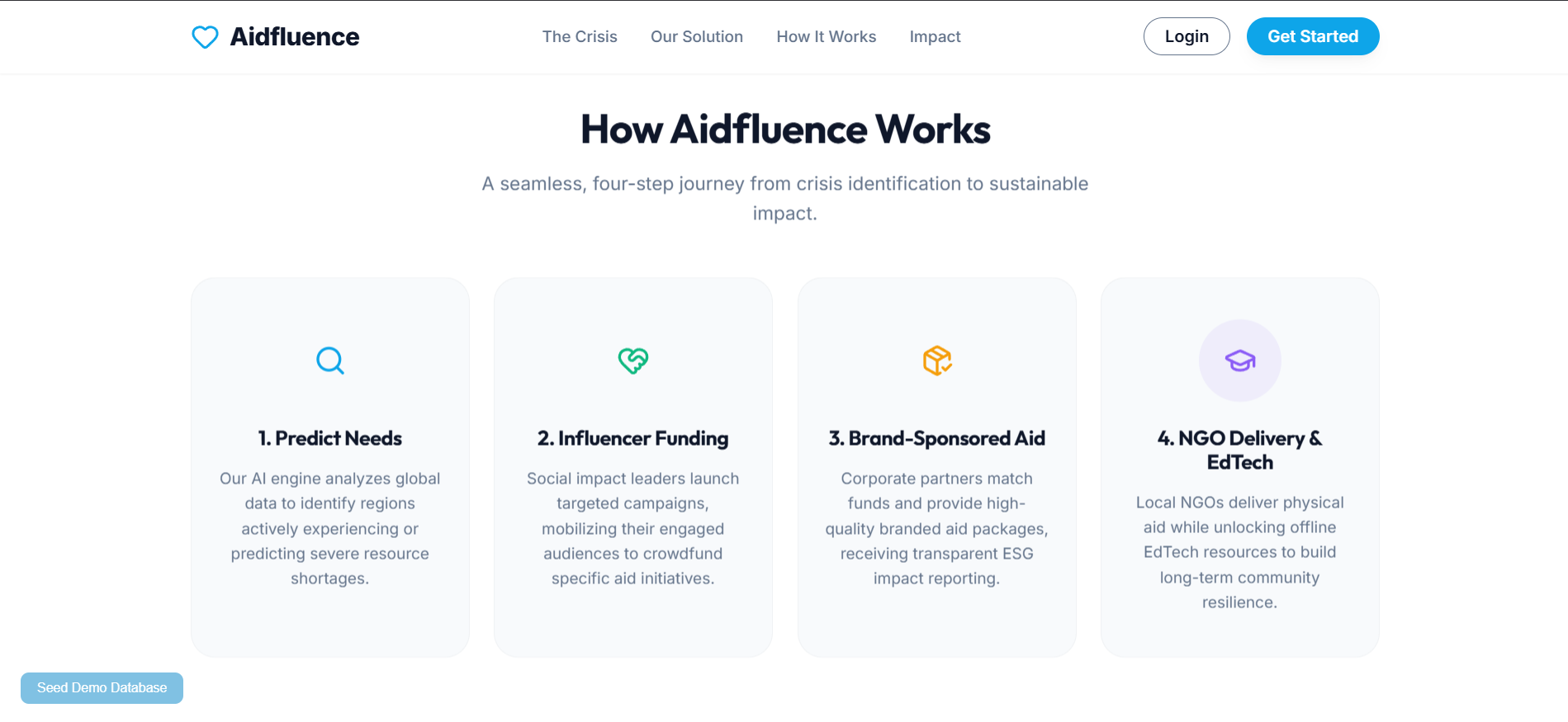
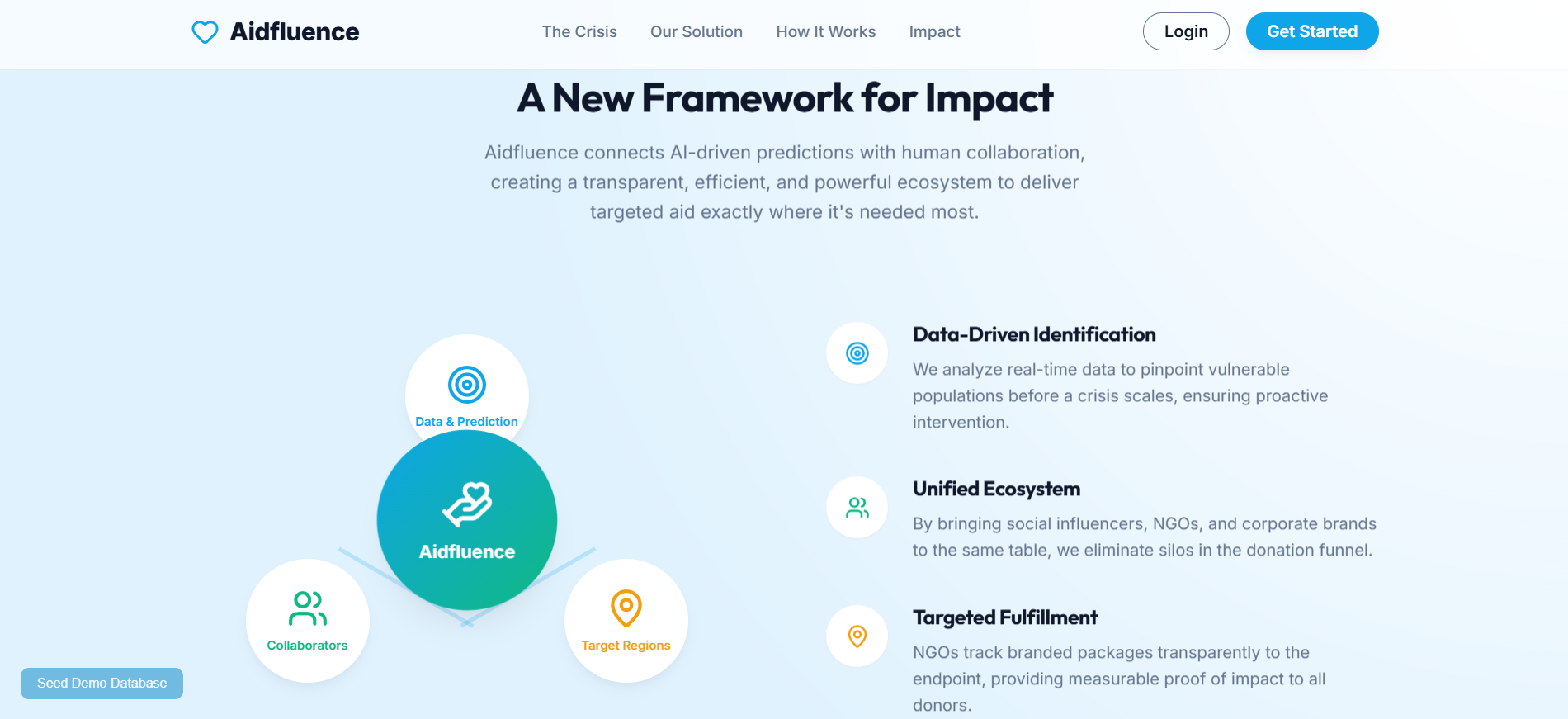
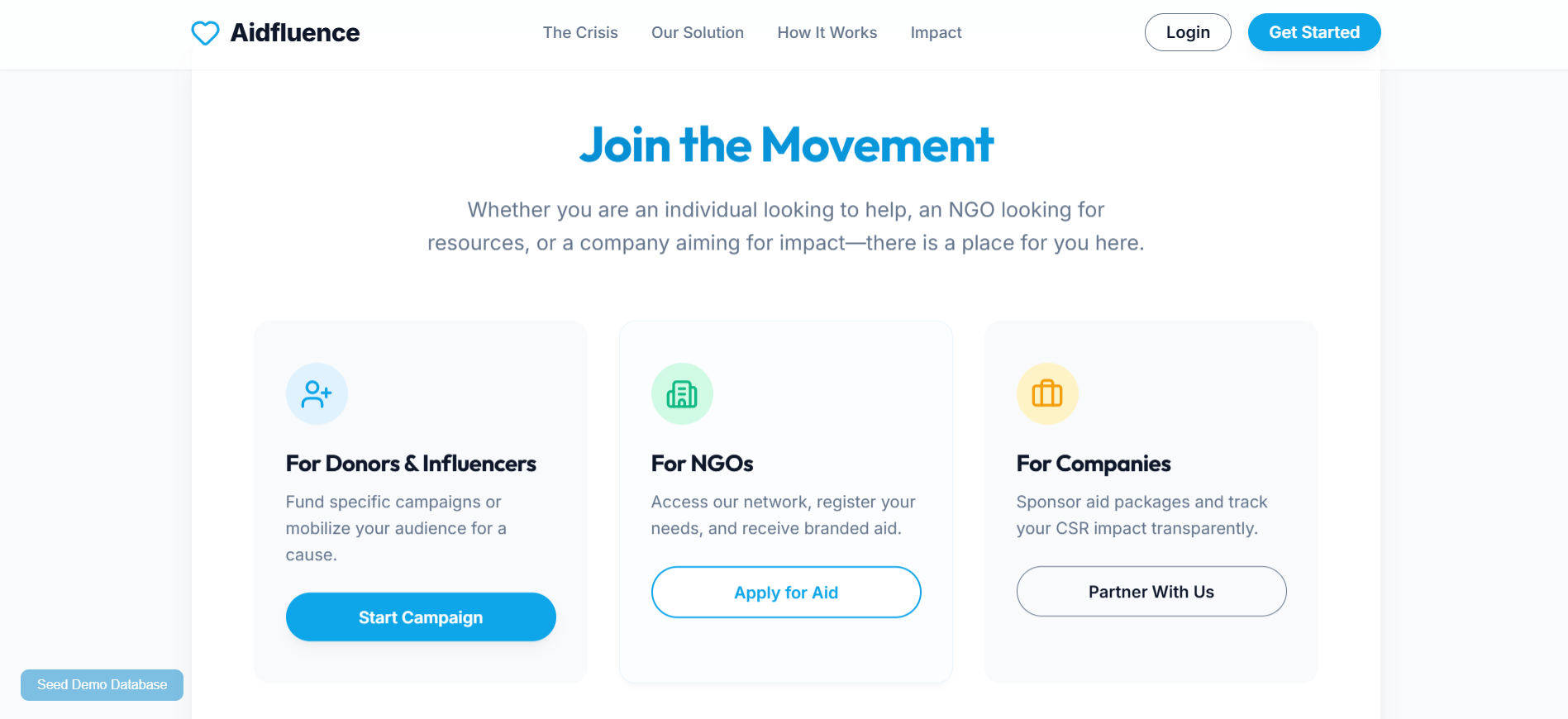
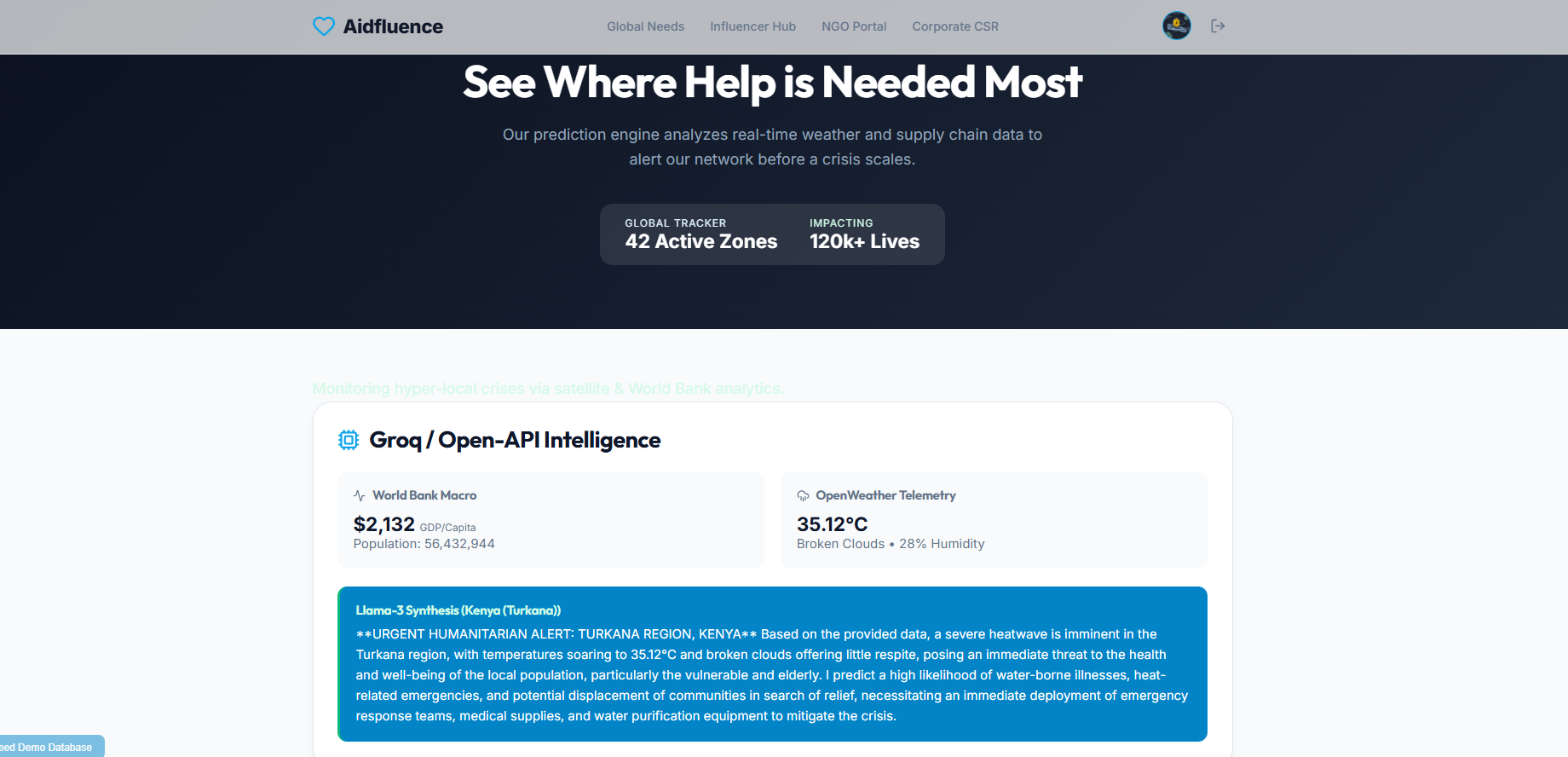
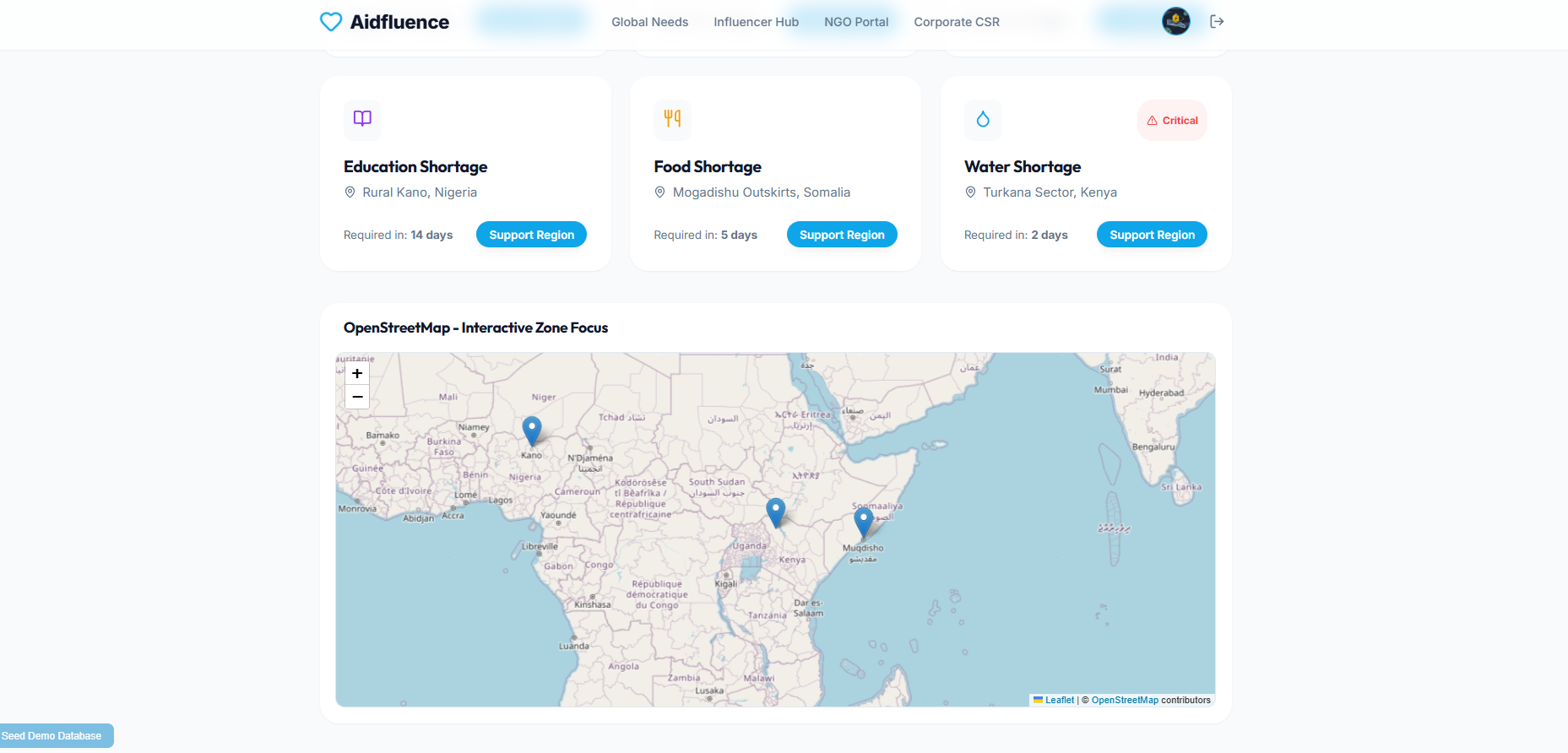
Aidfluence is a platform that predicts areas of highest need and mobilizes support efficiently. By leveraging AI-driven insights, it identifies high-need zones and connects them with organizations, donors, and partners who can help. The goal is to ensure that aid—whether it’s clean water, food, or education—reaches the right people at the right time, maximizing impact.
How we built it
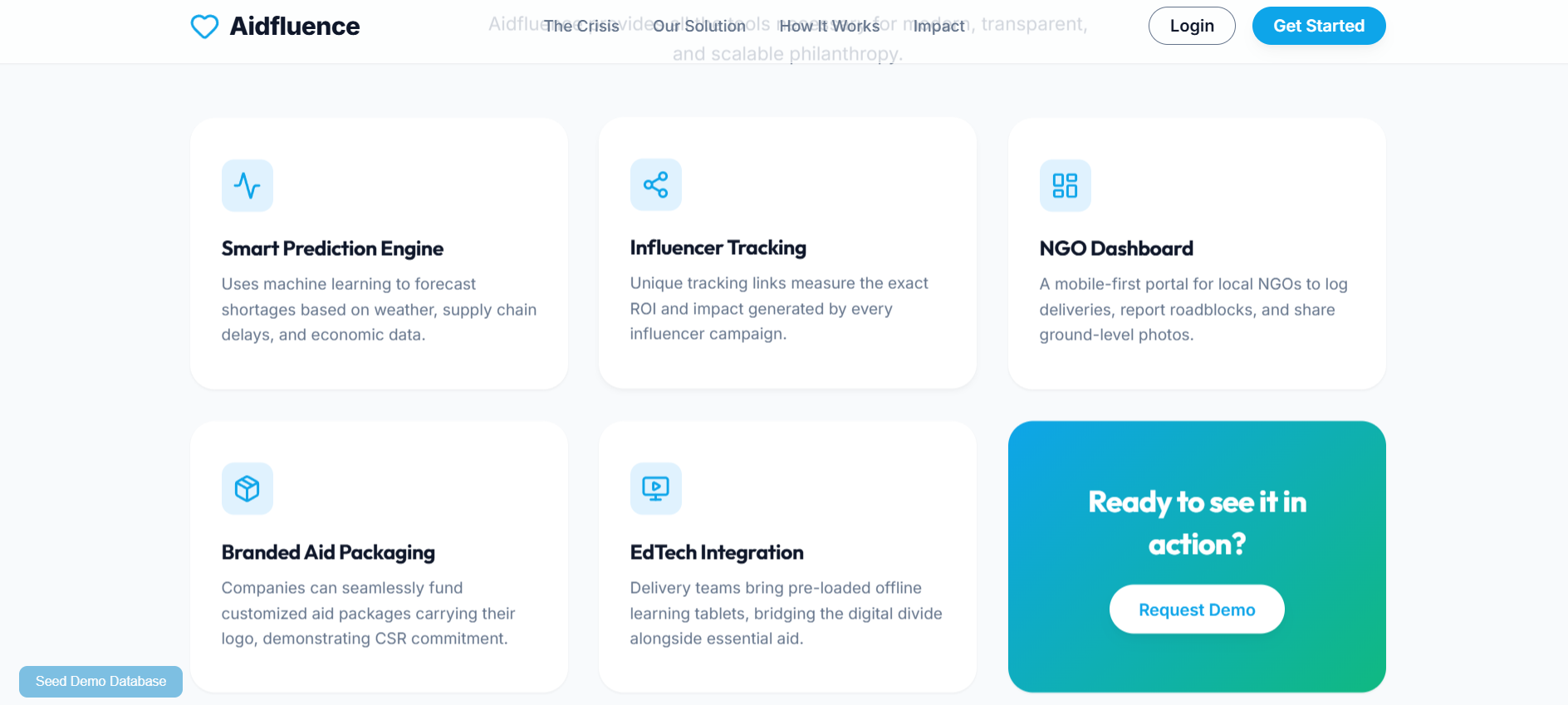
We built Aidfluence using a combination of data analytics, machine learning models, and a user-friendly web interface. The platform integrates datasets related to population needs, resource availability, and regional challenges. On top of that, we developed predictive models to identify priority zones. The frontend was designed to clearly communicate insights and encourage user action, while the backend handles data processing and scalable infrastructure.
Challenges we ran into
One of the biggest challenges was sourcing reliable and up-to-date data. In many high-need regions, data can be incomplete or inconsistent. Another challenge was building accurate prediction models without introducing bias. We also had to balance powerful analytics with a simple, intuitive user experience so that both technical and non-technical users could engage with the platform.
Accomplishments that we're proud of
We’re especially proud of creating a system that translates complex data into actionable insights. The ability to highlight high-need zones and simulate impact is a huge step toward smarter aid distribution. We also built a platform that emphasizes collaboration—bringing together people, organizations, and data in one place.
What we learned
We learned that data alone isn’t enough—it needs to be accessible, understandable, and actionable. We also gained a deeper appreciation for ethical AI and the importance of minimizing bias in decision-making systems. Most importantly, we learned that meaningful impact comes from combining technology with human empathy and collaboration.
What's next for Aidfluence
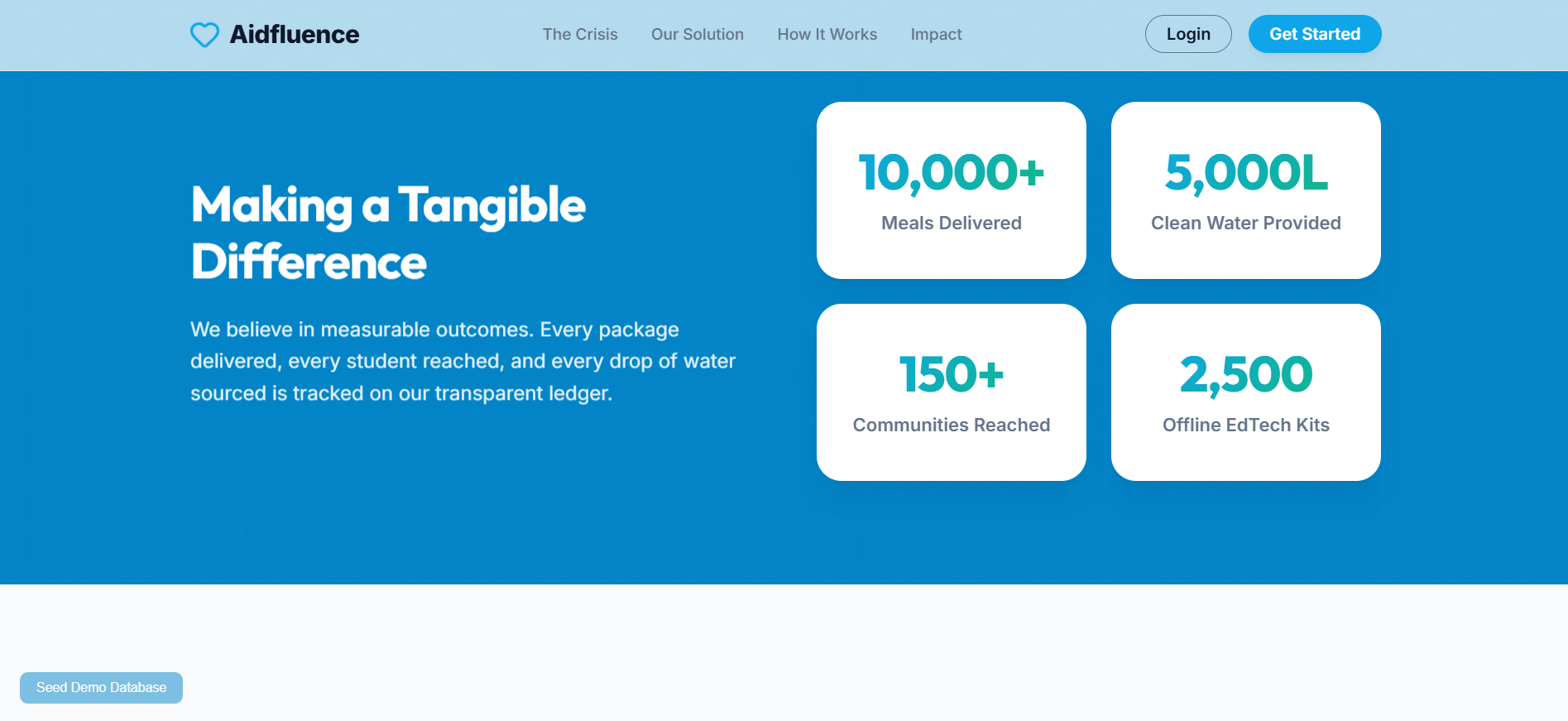
Next, we plan to improve our predictive models with more real-time data and expand our partnerships with NGOs and global organizations. We also want to introduce features like impact tracking dashboards and localized insights for communities. Ultimately, Aidfluence aims to scale globally—becoming a trusted platform that empowers change through data, people, and purpose.

Log in or sign up for Devpost to join the conversation.