-
-
-
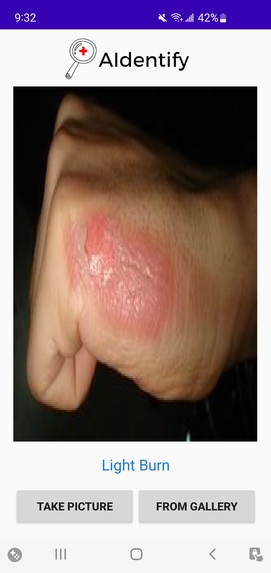
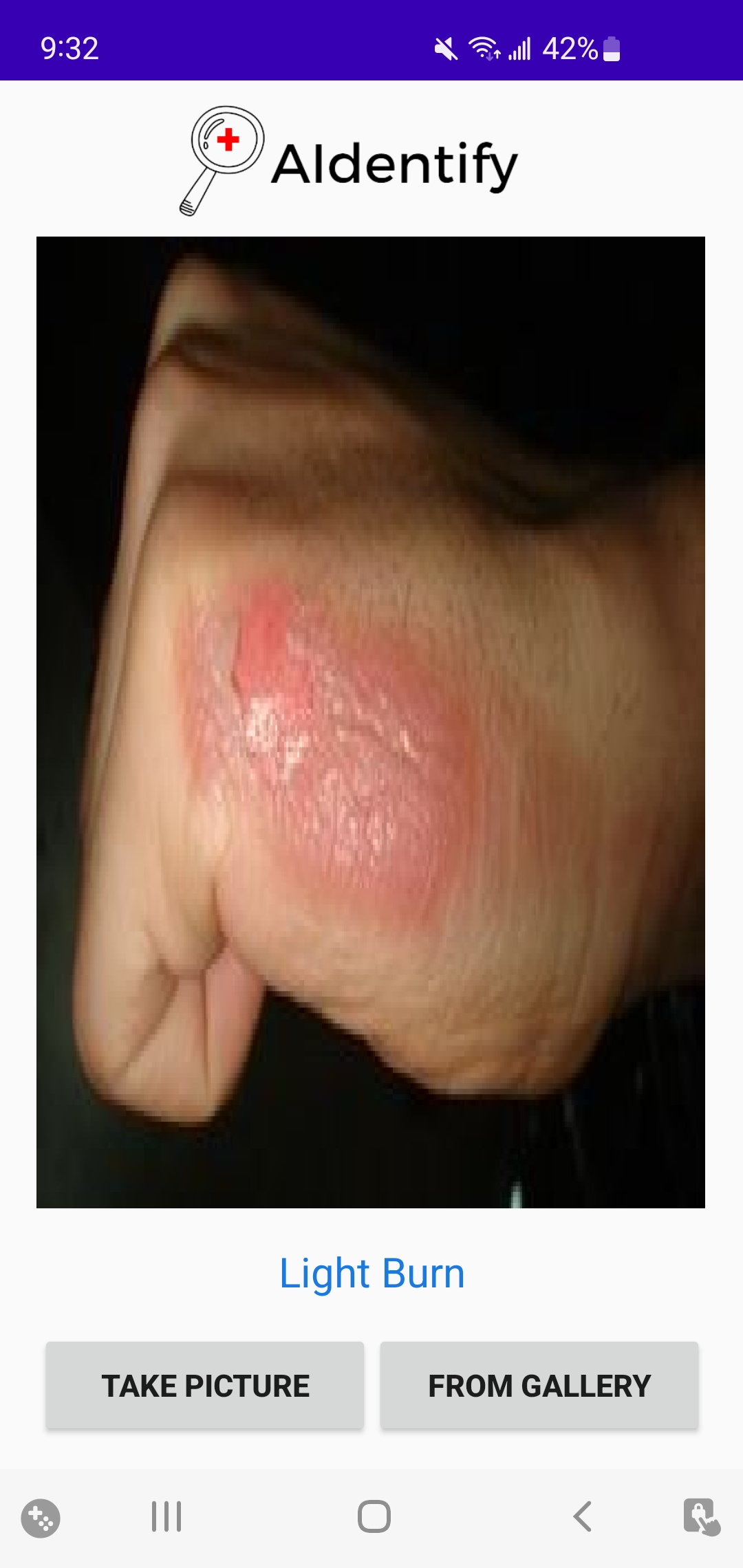
Light burn detected.
-
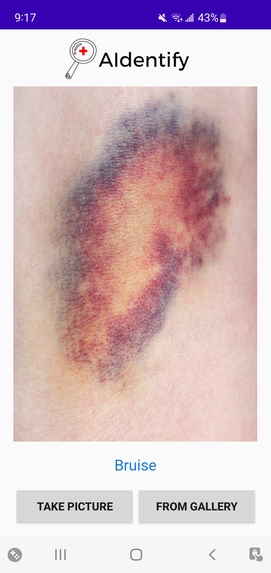
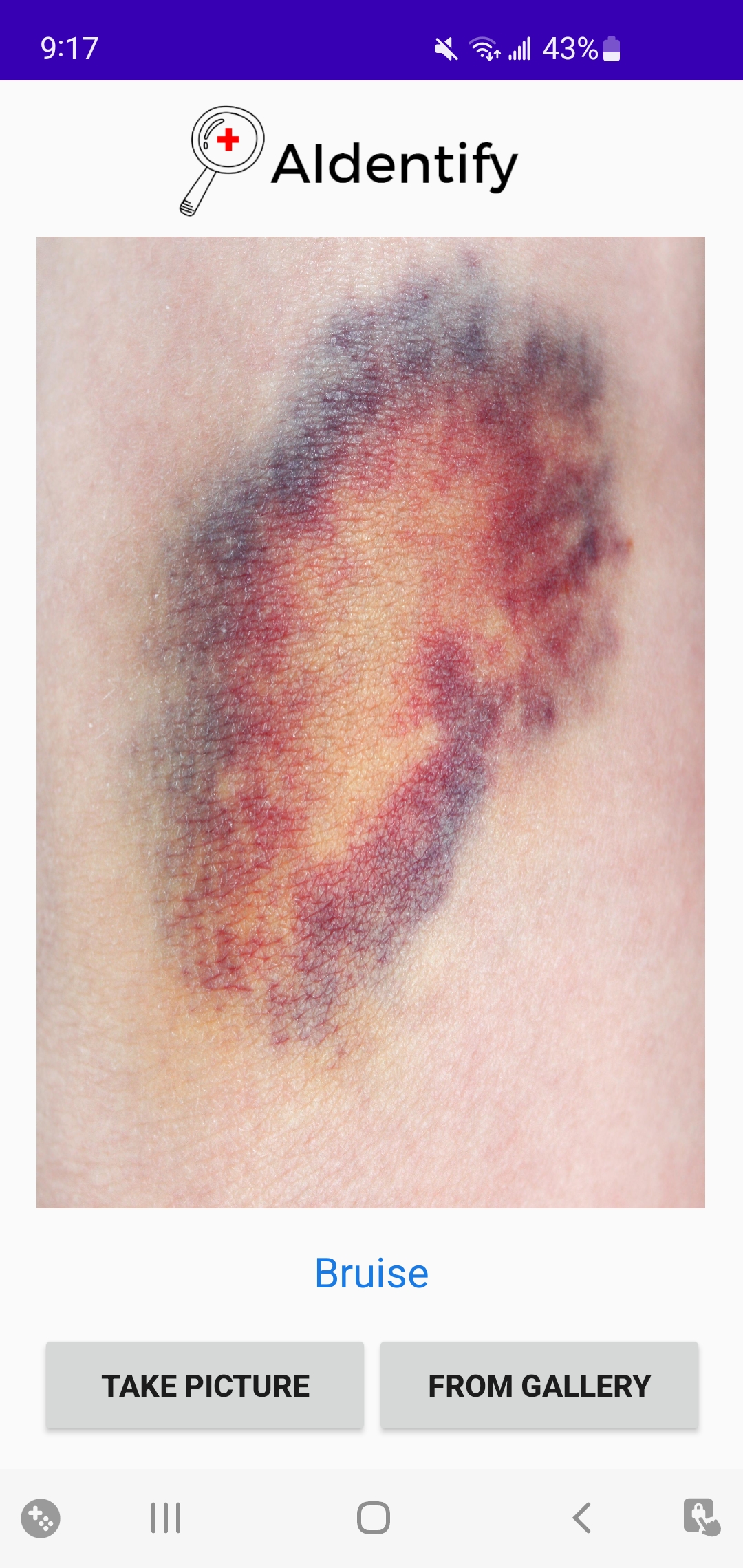
Bruise detected.
-
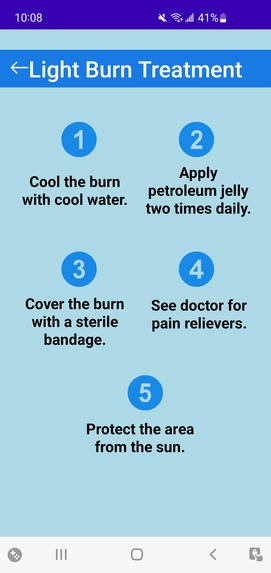
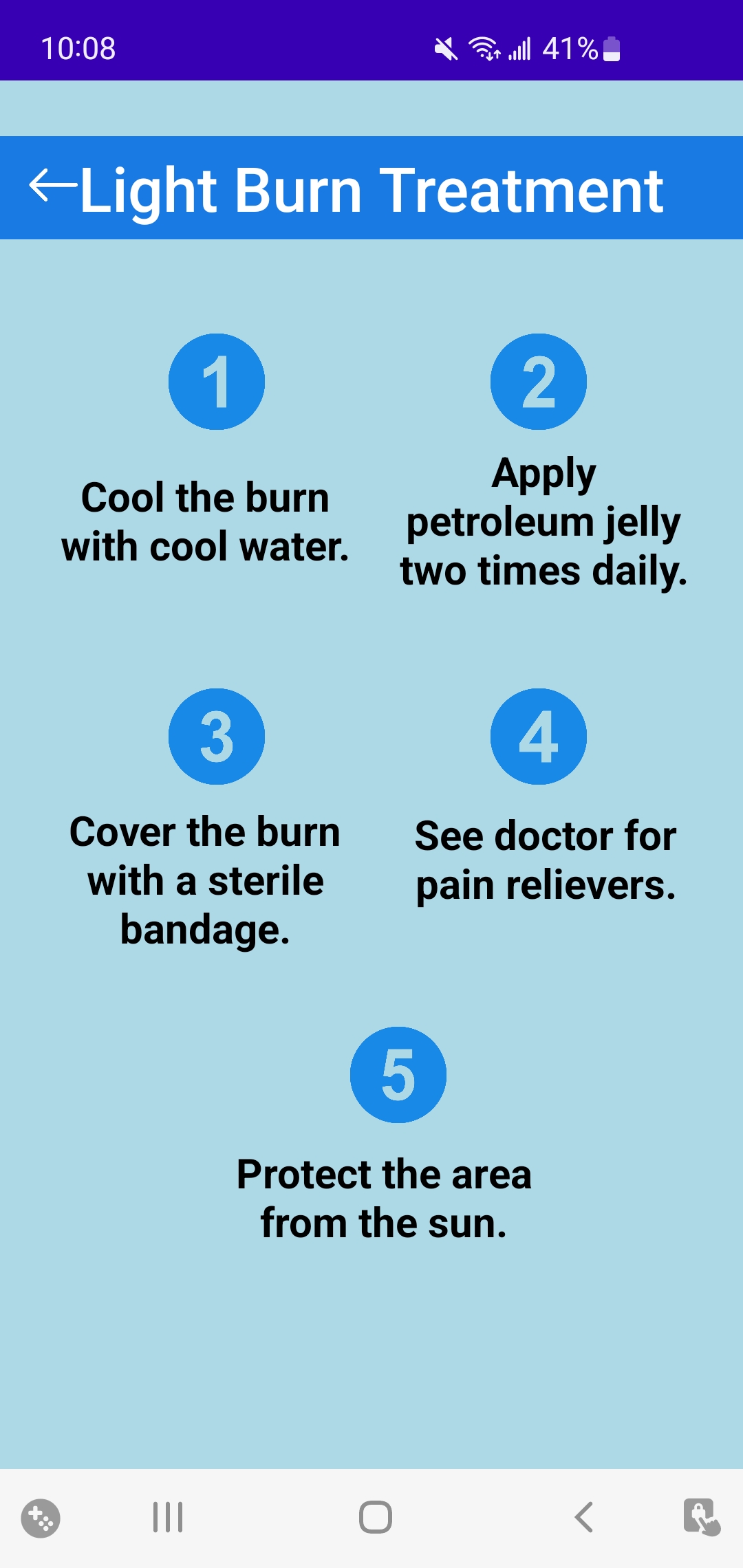
Treatment page for a light burn.
-
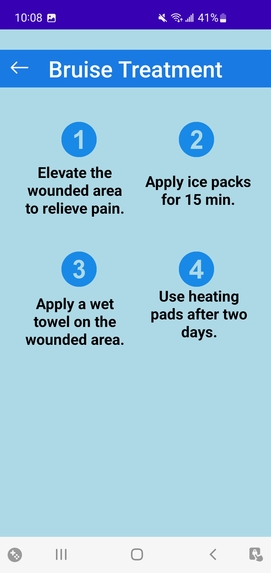
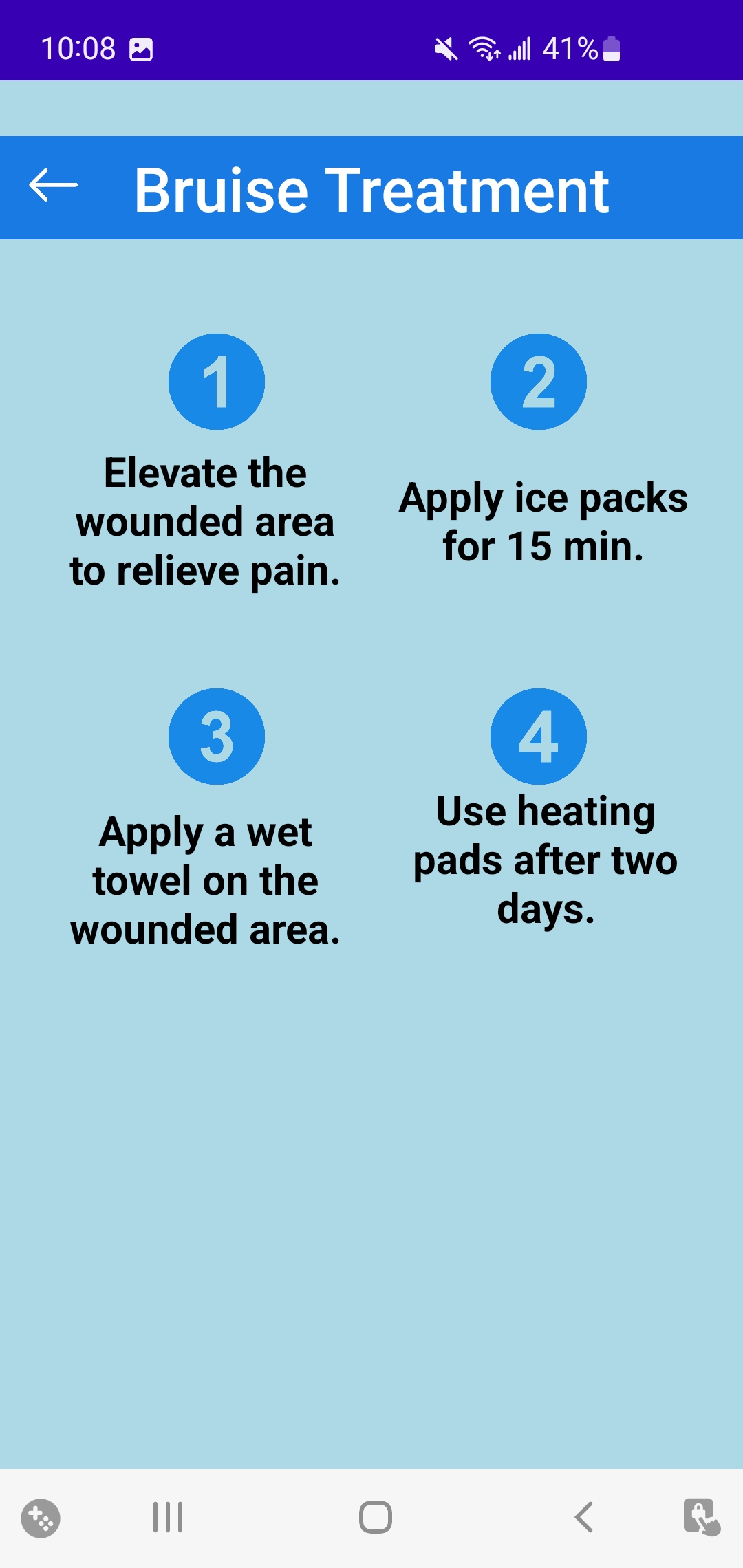
Treatment page for a bruise.

Inspiration
In a hockey game last month, I hurt my hand and was in a lot of pain. As a result, I went to the hospital and waited almost seven hours to learn that my injury could have been treated at home. I realized that a lot of people are forced to wait long periods of time to receive treatment, even though in some cases the delay is unnecessary since the injury can be treated at home if the patient is aware of what it is.
What it does
To fix this issue, I created an android application which uses a machine-learning image classification model to identify the user’s injury and tell them the appropriate treatment. The app allows the user to take a picture of their wound or upload an image from their gallery. Using the image, the machine-learning model predicts the wound type, whether it is a cut, a light burn, a severe burn, or a bruise. Then, the application displays a page for the steps to treat the injury based on the wound type and severity.
How I built it
Building the application was a multi-step process. First, I gathered a dataset, which included images of skin cuts, light burns, severe burns, and bruises. Using this dataset, I created a convolutional neural network model and trained it in Python. I also tested the model using a separate dataset of images to see its accuracy. Then, I downloaded it as a Tensorflow Lite model and imported it into the Android application, which was built in Kotlin. I designed the app so that the machine learning model received the user-inputted image as a bitmap. When the model made the prediction, I got the wound type that had the highest confidence and displayed it on the screen with steps for its treatment.
Challenges I ran into
A major issue that I ran into was finding a dataset with the specific images that I wanted. I spent hours looking for it on websites related to medicine and data science, such as Kaggle. In the end, I decided to create my own dataset, which had challenges of its own. Some images that I downloaded were low quality, so I had to manually go through the dataset and delete them.
Accomplishments that I'm proud of
I am proud of many things that I accomplished during this hackathon. Firstly, I am proud that I was able to create a project that solves a real-life issue and has the potential to make a significant impact in the healthcare industry. In addition, I am proud of my time management skills as I was able to create a functional application that has many components in less than a week. I am also proud of the 85.7% accuracy of the machine-learning model that I trained. Finally, I am proud that learned and developed skills that are essential in the real world.
What I learned
During PoweringSTEMHacks, I learned how to create my own image classification model and use it in a Kotlin Android application. Additionally, I discovered how to use the camera and gallery in the application, which I had never done previously. Even though it seems easy, I learned how to collect a dataset for the purpose of machine learning.
What's next for AIdentify
In the future, I will add more wound/injury types that the model can predict, including bites, skin scrapes, and punctures. Furthermore, I would like to improve the accuracy of the model by gathering more images in the dataset. After these changes, I want to publish the application in the Google Play Store so it could positively impact the healthcare industry and other individuals.
Built With
- android-app
- android-studio
- image-classification
- jupyter
- kotlin
- machine-learning
- pycharm
- python
- tensorflow


Log in or sign up for Devpost to join the conversation.