-
-
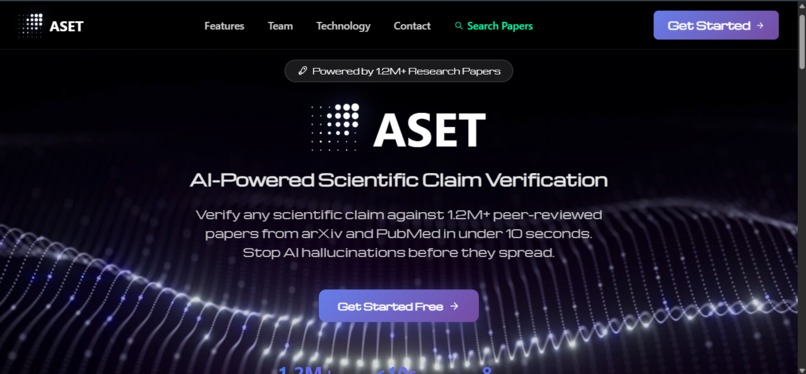
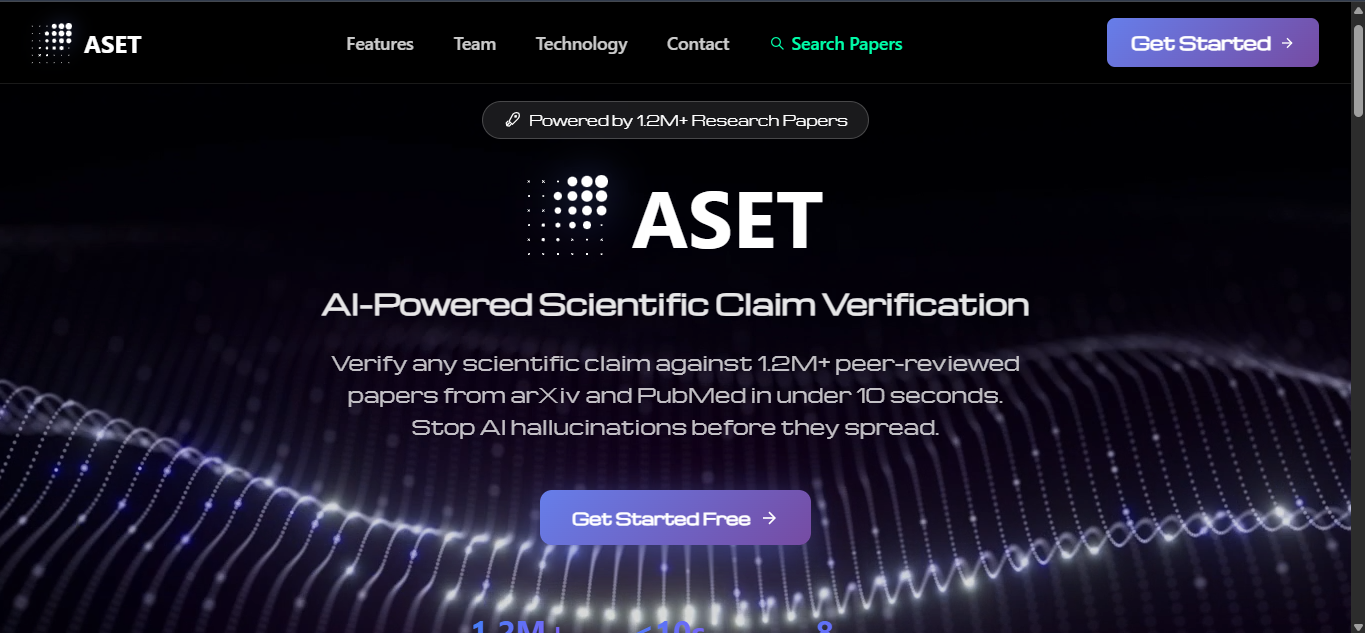
Landing Page
-
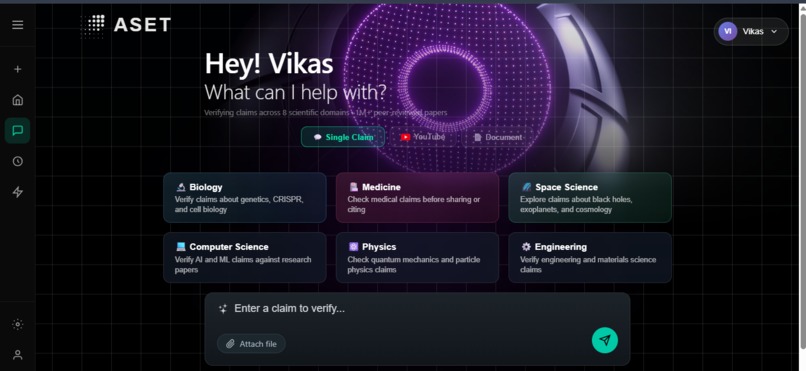
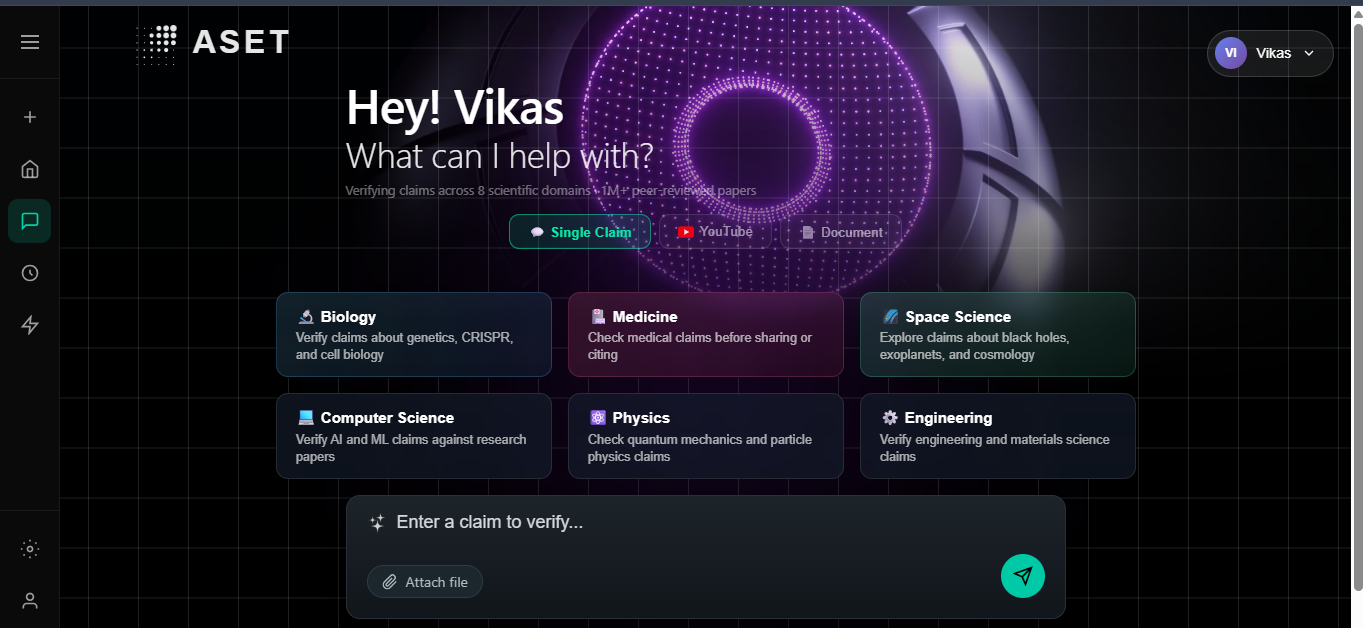
Main Dashboard
-
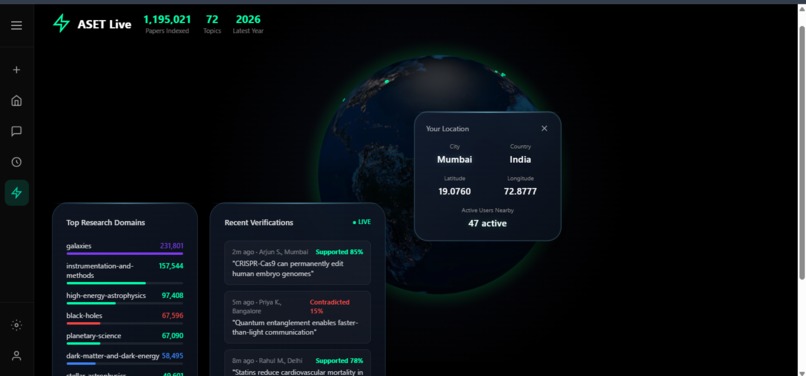
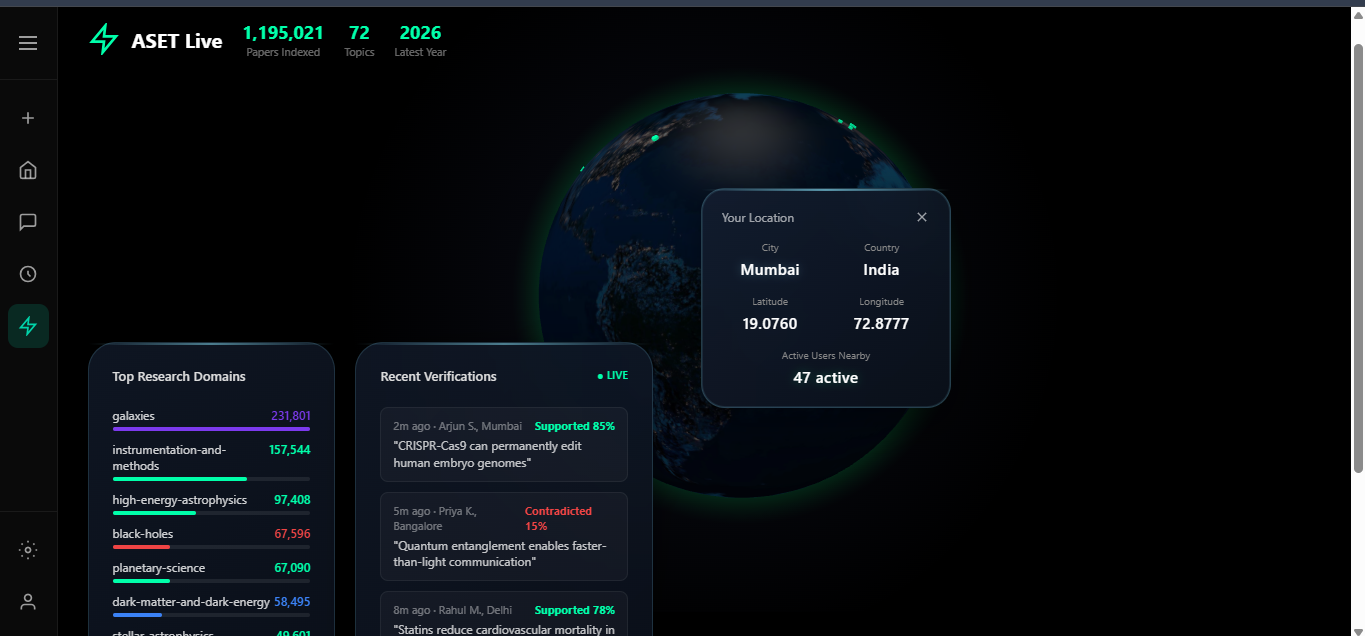
Trending Page
-
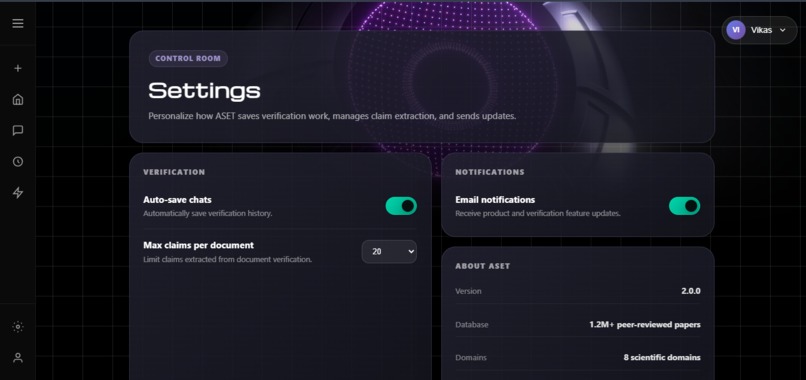
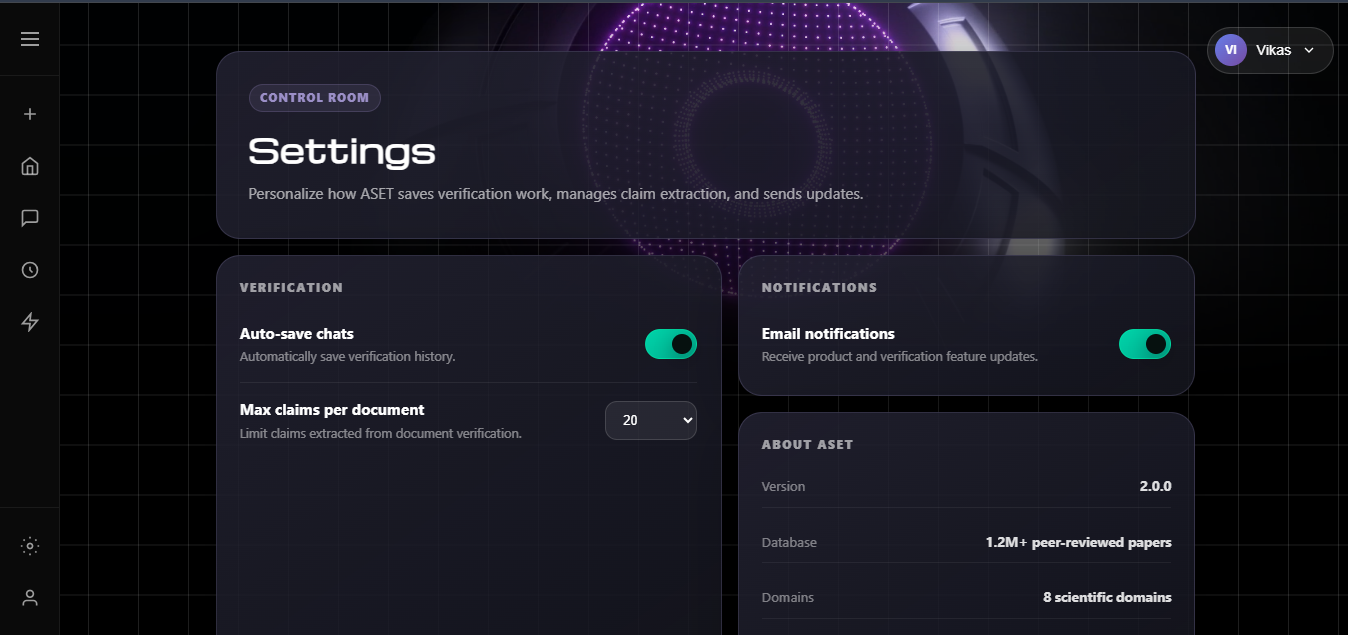
Setting Page
Inspiration
Artificial intelligence has transformed how people access and consume information. Students use AI to assist with assignments, researchers use it to accelerate literature reviews, and content creators rely on it to generate educational content at scale. However, the same systems that increase productivity can also generate fabricated citations, unsupported claims, and scientifically inaccurate information that appears highly convincing.
We were inspired by a simple but important question: How can users trust the information they receive in an AI-driven world?
Existing academic tools are excellent at helping researchers discover papers, but they are not designed to verify the information people are already consuming. A student watching a YouTube lecture, a journalist reviewing a report, or an educator grading assignments does not want to manually search through hundreds of research papers. They simply want to know whether a claim is supported by credible scientific evidence.
This challenge motivated us to build ASET (Academic Safety and Evidencing Truth), a platform that bridges the gap between information consumption and scientific verification. Our goal is to make evidence-based verification accessible, transparent, and practical for everyone.
What it Does
ASET is an AI-powered scientific claim verification engine that evaluates the credibility of information using evidence from over 1.2 million indexed peer-reviewed research papers.
The platform accepts information from multiple sources, including direct text input, PDF documents, DOCX files, images, webpages, and YouTube videos. Once content is submitted, ASET automatically extracts factual claims, identifies the relevant scientific domain, retrieves supporting research, and generates a detailed verification report.
Instead of simply providing search results, ASET analyzes the available evidence and produces a trust score, confidence assessment, supporting references, contradicting evidence, and a concise explanation of its findings.
The platform is designed for students, educators, researchers, journalists, content creators, and everyday users who need a reliable way to verify scientific information before trusting or sharing it.
ASET also includes a browser extension that allows users to verify claims directly from webpages without leaving their existing workflow. This transforms ASET from a standalone application into a browser-native trust layer for online information.
How We Built It
ASET was developed as a full-stack AI application that combines large-scale research retrieval with AI-powered reasoning.
The frontend was built using React and Vite to create a responsive and intuitive user experience. The backend was developed using Node.js and Express and serves as the central orchestration layer for claim extraction, verification, retrieval, and report generation.
To support large-scale scientific verification, we constructed a research corpus containing more than 1.2 million papers collected from trusted academic sources. These papers span multiple scientific disciplines including medicine, biology, chemistry, physics, engineering, computer science, and space science.
The verification workflow consists of several stages: Claim Extraction Domain Identification Research Retrieval Evidence Analysis Trust Score Generation Verification Report Creation
Large Language Models are used to analyze the retrieved evidence and determine whether a claim is supported, contradicted, or lacks sufficient evidence. The final result is presented in a transparent format that allows users to understand both the verdict and the reasoning behind it.
To improve accessibility and usability, we also developed a browser extension that integrates directly with webpages, enabling real-time verification without disrupting the user's browsing experience.
Challenges We Ran Into
One of the most significant challenges was designing a system that could differentiate itself from traditional academic search engines and research discovery platforms.
Many existing tools focus on helping researchers locate papers. Our challenge was fundamentally different: helping users verify information they are already consuming. This required us to rethink the user journey and build workflows centered around verification rather than discovery.
Another challenge involved scaling retrieval across a research corpus exceeding one million papers while maintaining fast response times. Verification systems must provide results quickly enough to remain useful, particularly when processing documents containing multiple claims.
Handling multiple content formats also presented technical difficulties. Text, PDFs, images, webpages, and videos all require different extraction and preprocessing techniques before claims can be analyzed consistently.
Finally, one of our most important design considerations was transparency. We wanted users to trust the platform's conclusions, which meant presenting supporting evidence, confidence scores, and citations rather than producing opaque AI-generated answers.
Accomplishments That We're Proud Of
We are proud that ASET evolved from a simple scientific verification concept into a comprehensive evidence-based trust platform.
Some of our key accomplishments include:
Building a verification system powered by over 1.2 million indexed research papers. Supporting verification across multiple input formats including text, PDFs, images, webpages, and YouTube videos. Developing a browser extension that enables real-time verification directly within a user's workflow. Creating a scalable retrieval and verification pipeline capable of handling large scientific datasets. Designing transparent trust scores supported by evidence and citations. Expanding beyond a single scientific domain into a multidisciplinary verification platform. Achieving recognition as a Top 50 Finalist in the AWS AIdeas Competition.
Most importantly, we built a platform that empowers users to make informed decisions in an era where information can be generated instantly but trust must still be earned.
What We Learned
Throughout the development of ASET, we learned that misinformation is not merely a technical challenge; it is fundamentally a challenge of trust.
Users do not necessarily want access to more information. Instead, they want confidence that the information they already have is accurate and supported by credible evidence.
We also learned that transparency is critical for AI systems operating in high-trust environments. Users are more likely to trust conclusions when they can see the evidence, sources, and reasoning process behind them.
From a technical perspective, we gained valuable experience in large-scale information retrieval, AI-assisted reasoning, claim extraction, evidence synthesis, and designing systems that combine retrieval and generation in meaningful ways.
Most importantly, we learned that building useful AI products requires focusing on real user workflows rather than simply showcasing advanced technology.
What's Next for ASET
Our long-term vision is to establish ASET as a universal trust layer for scientific information.
Future development will focus on expanding our research corpus, improving verification accuracy, supporting additional languages, and introducing more advanced multi-agent reasoning workflows. We also plan to enhance browser-based verification capabilities and develop dedicated tools for educational institutions, researchers, and media organizations.
As AI-generated content continues to grow across every industry, the need for trustworthy verification systems will become increasingly important. We believe ASET can play a significant role in ensuring that evidence remains at the center of how people consume, evaluate, and share information.
Our mission is simple: transform scientific evidence into accessible trust for everyone.

Log in or sign up for Devpost to join the conversation.