AidBridge – Unified Social Care Verification Platform
Inspiration
Access to essential social support should never depend on where a person lives, whom they know, or how easily they can navigate complex systems.
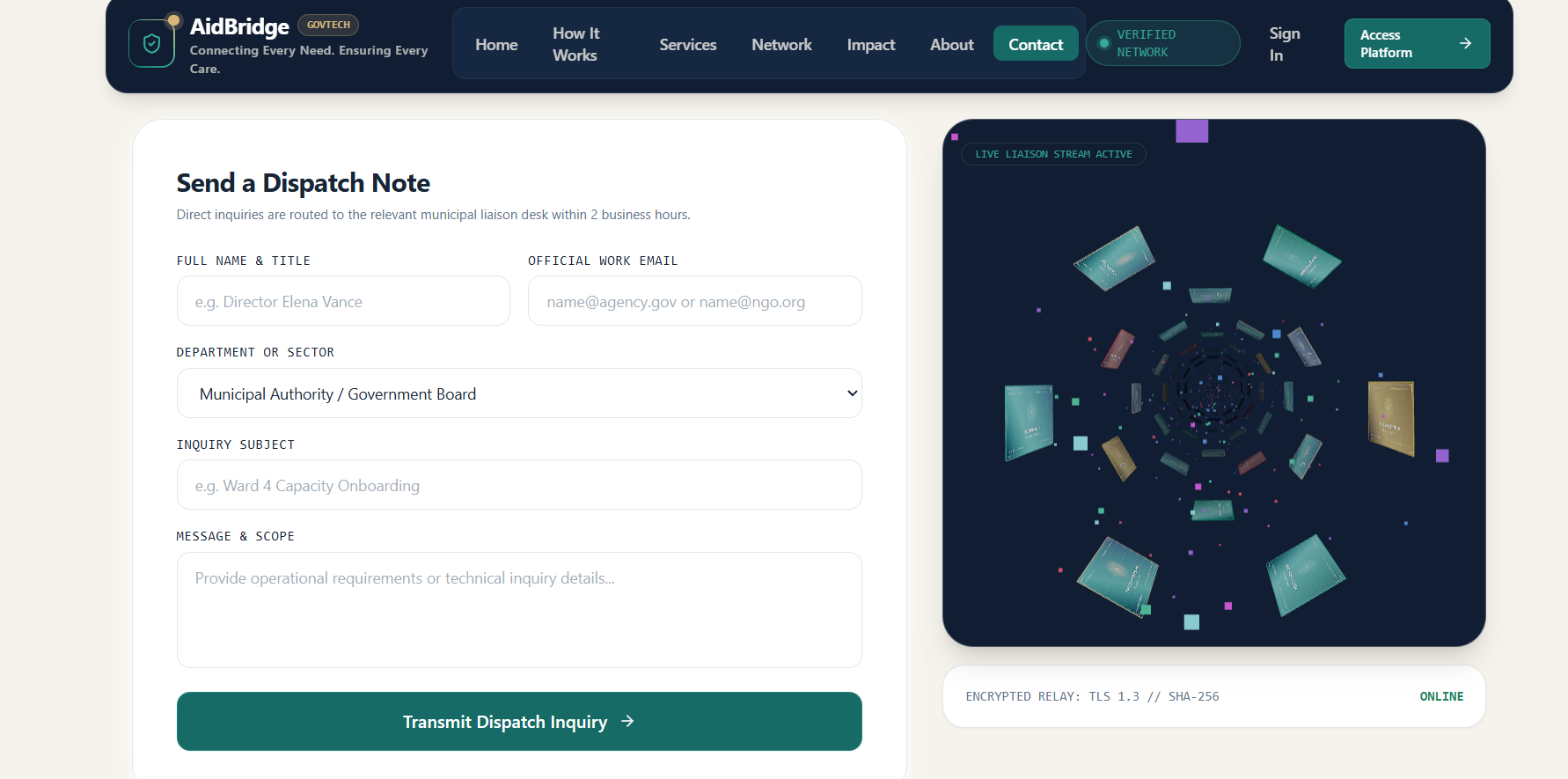
We were inspired by the challenges faced by vulnerable children and elderly individuals who need assistance but often encounter fragmented support systems. Government departments, NGOs, shelters, hospitals, and outreach workers may all be willing to help, yet coordination gaps can make it difficult to ensure that assistance actually reaches the person who needs it.
We wanted to address a fundamental question: How can we make sure that help does not stop at a referral, but reaches the person who needs it?
That question led us to build AidBridge.
What it does
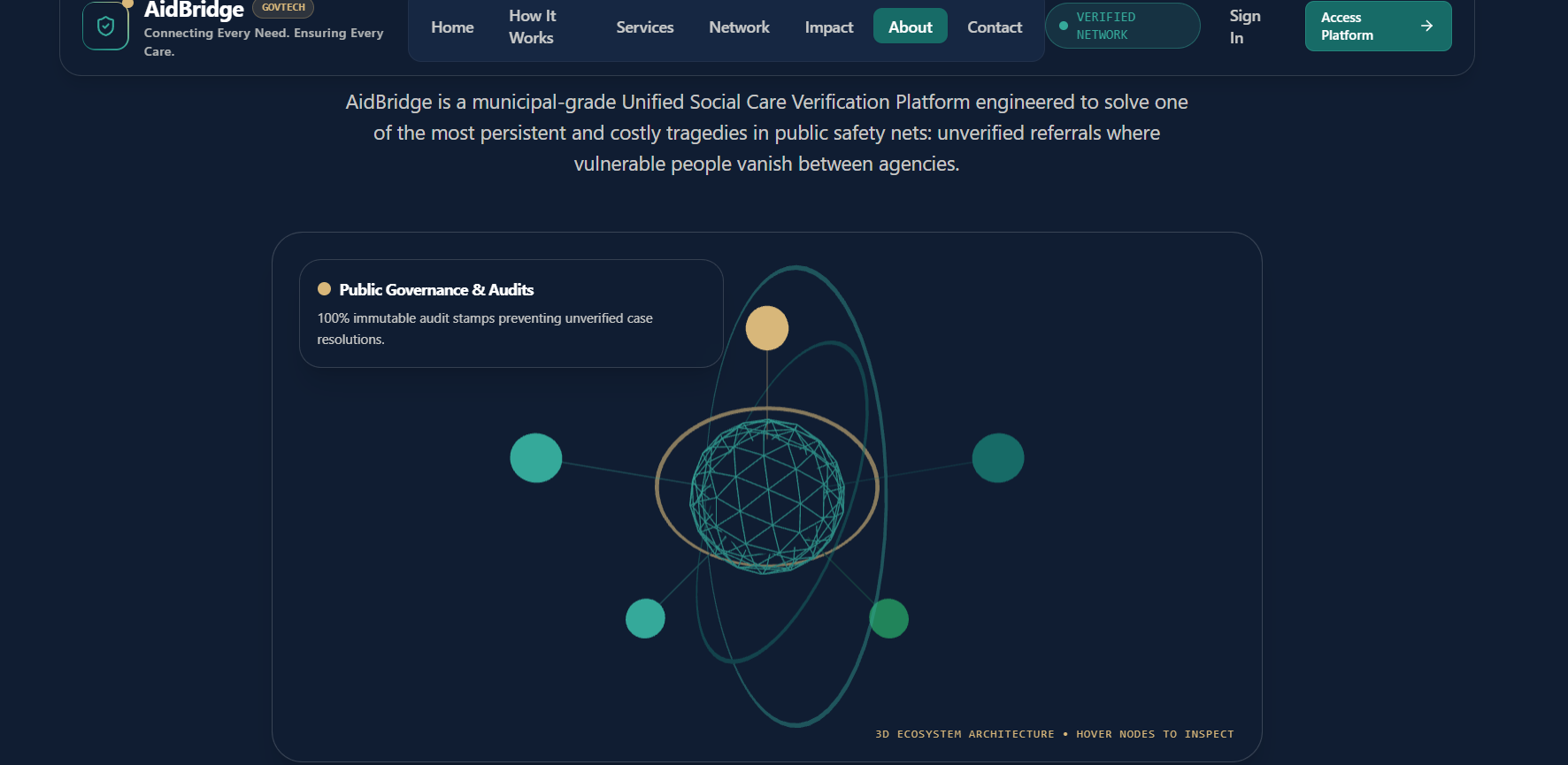
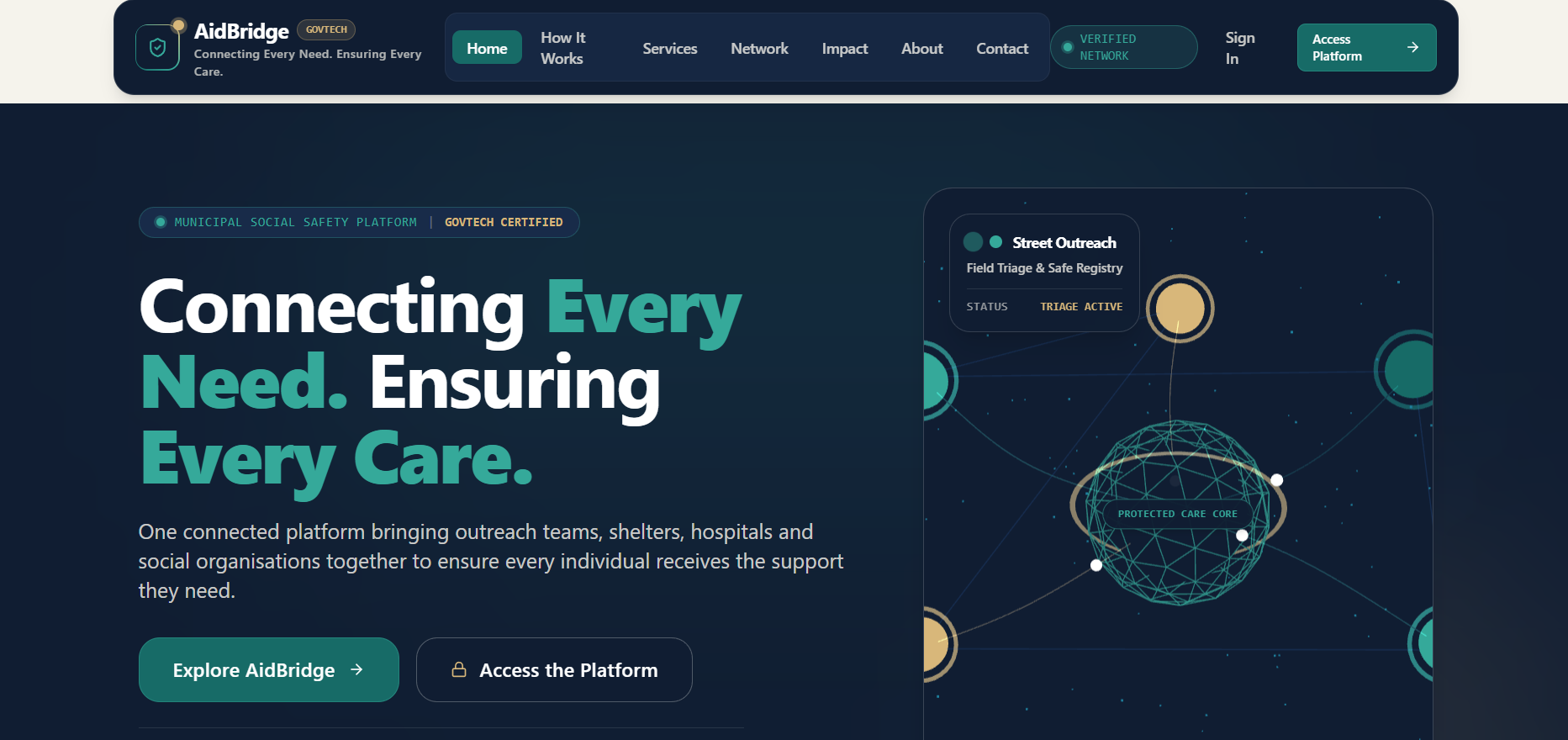
AidBridge is a unified social care and assistance verification platform designed to connect vulnerable individuals with the organisations and people responsible for supporting them.
The platform brings multiple stakeholders together through a coordinated case-management workflow.
Its key capabilities include:
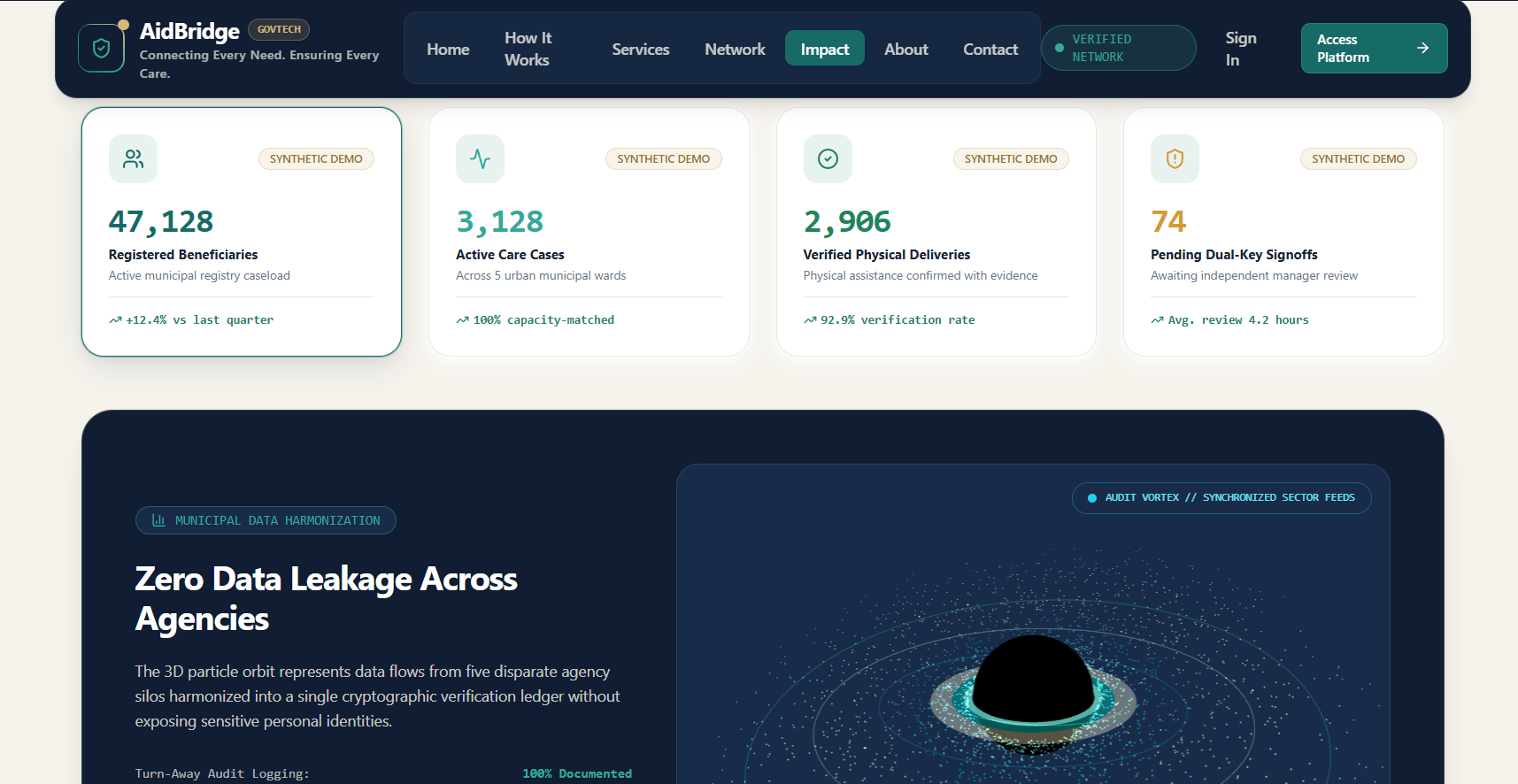
- Centralised Case Management: Register and manage cases involving vulnerable children and elderly individuals.
- Needs Assessment: Record individual requirements and identify urgent cases.
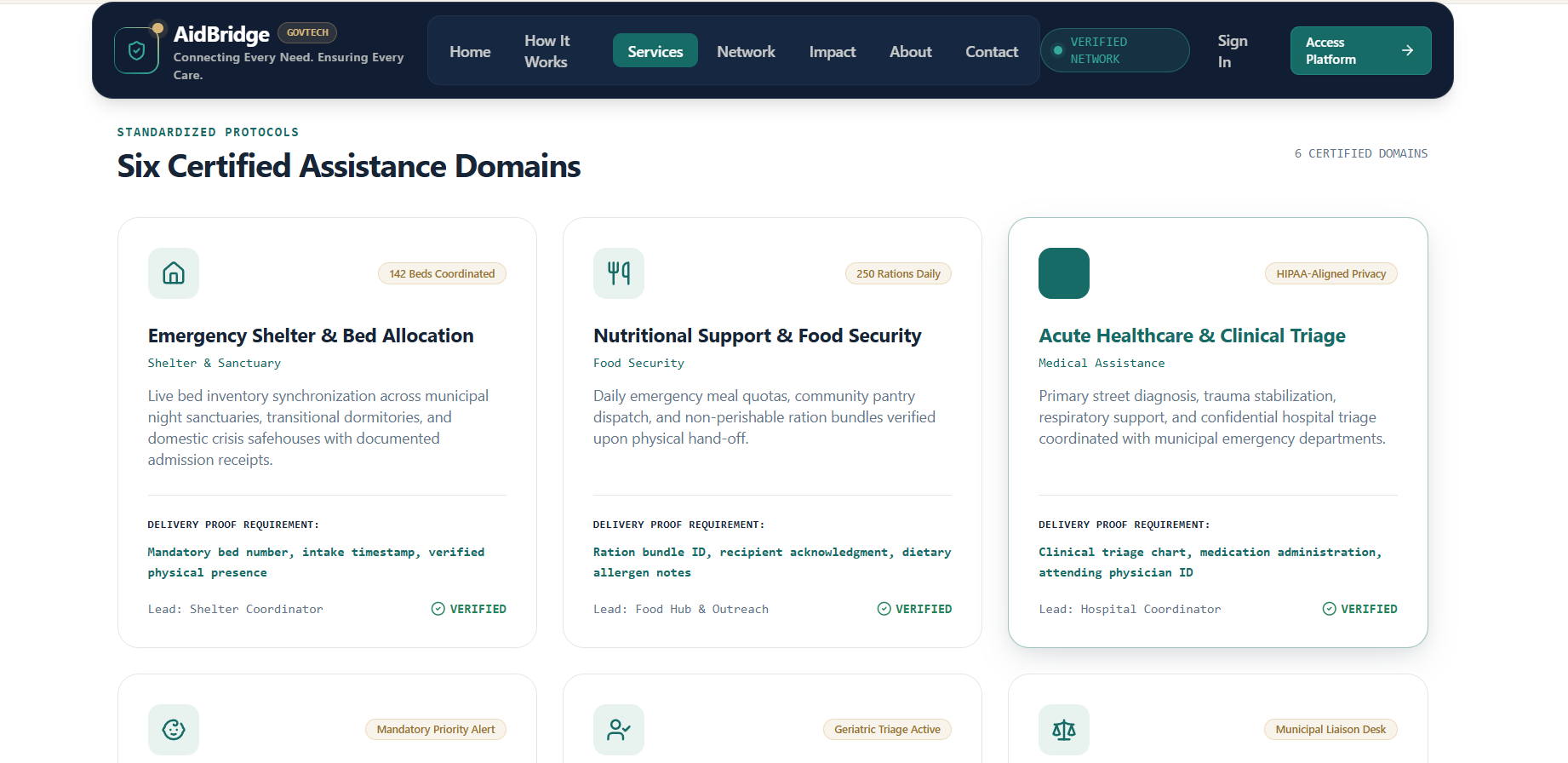
- Smart Referral Coordination: Connect individuals with relevant shelters, hospitals, NGOs, and support services.
- End-to-End Case Tracking: Monitor progress from initial registration through referral and service delivery.
- Service Delivery Verification: Record and verify whether the requested assistance was actually provided.
- Follow-up and Escalation: Identify pending cases and support timely follow-up.
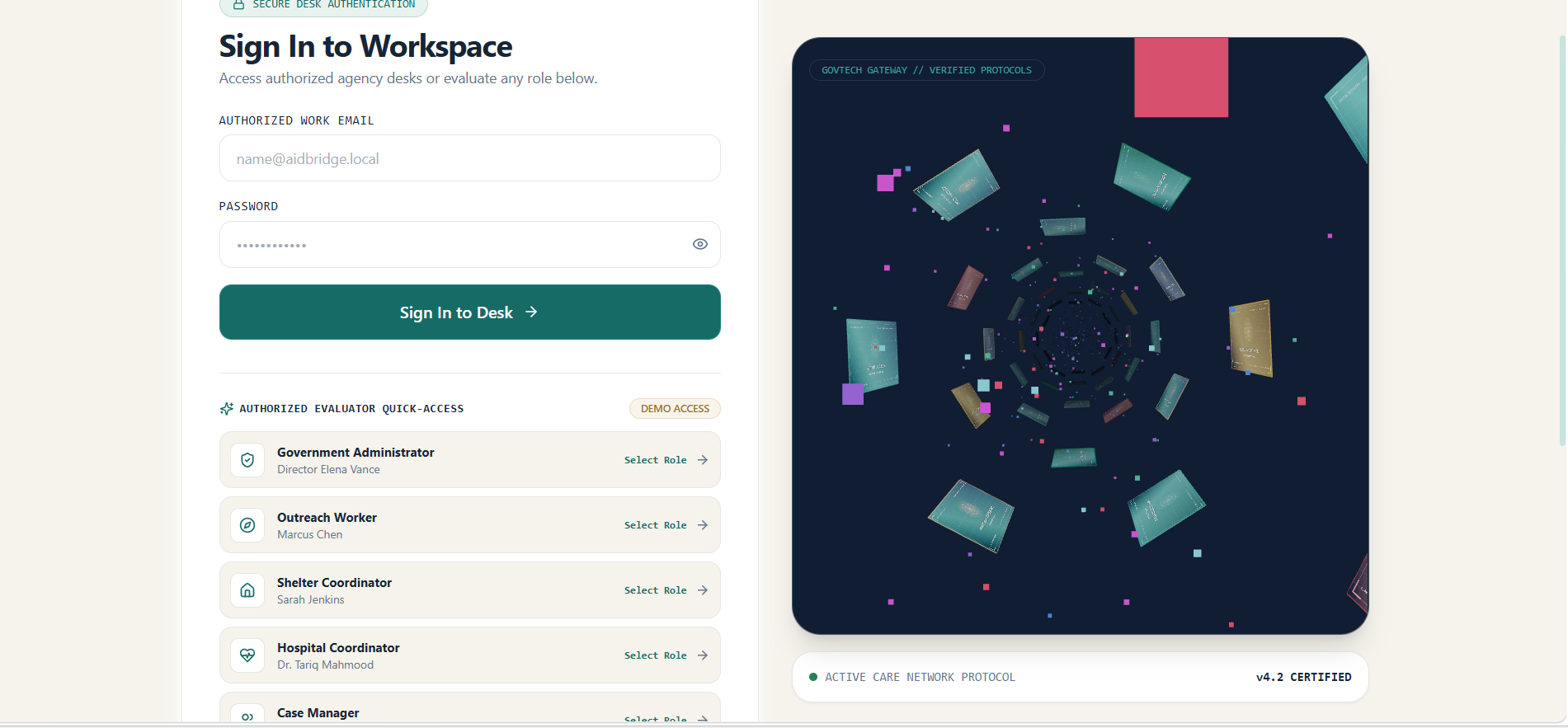
- Role-Based Dashboards: Provide relevant information and workflows for administrators, outreach workers, shelter coordinators, hospital coordinators, and case managers.
- Impact and Resource Insights: Help administrators understand case progress, service requirements, and resource utilisation.
Our central principle is simple: A referral is not the same as assistance received. AidBridge focuses on accountability throughout the support journey.
How we built it
We approached AidBridge as a multi-stakeholder digital platform rather than a simple registration website.
We designed the system around the complete social assistance lifecycle:
- Register an individual and create a case.
- Assess their needs and determine the level of urgency.
- Identify suitable service providers and initiate referrals.
- Coordinate with the relevant stakeholders.
- Record service delivery and its verification.
- Schedule follow-ups and maintain a complete case history.
Our planned technical architecture uses modern web technologies:
- Frontend: React, Next.js, TypeScript, and Tailwind CSS.
- User Interface: Responsive dashboards, interactive components, and role-specific workflows.
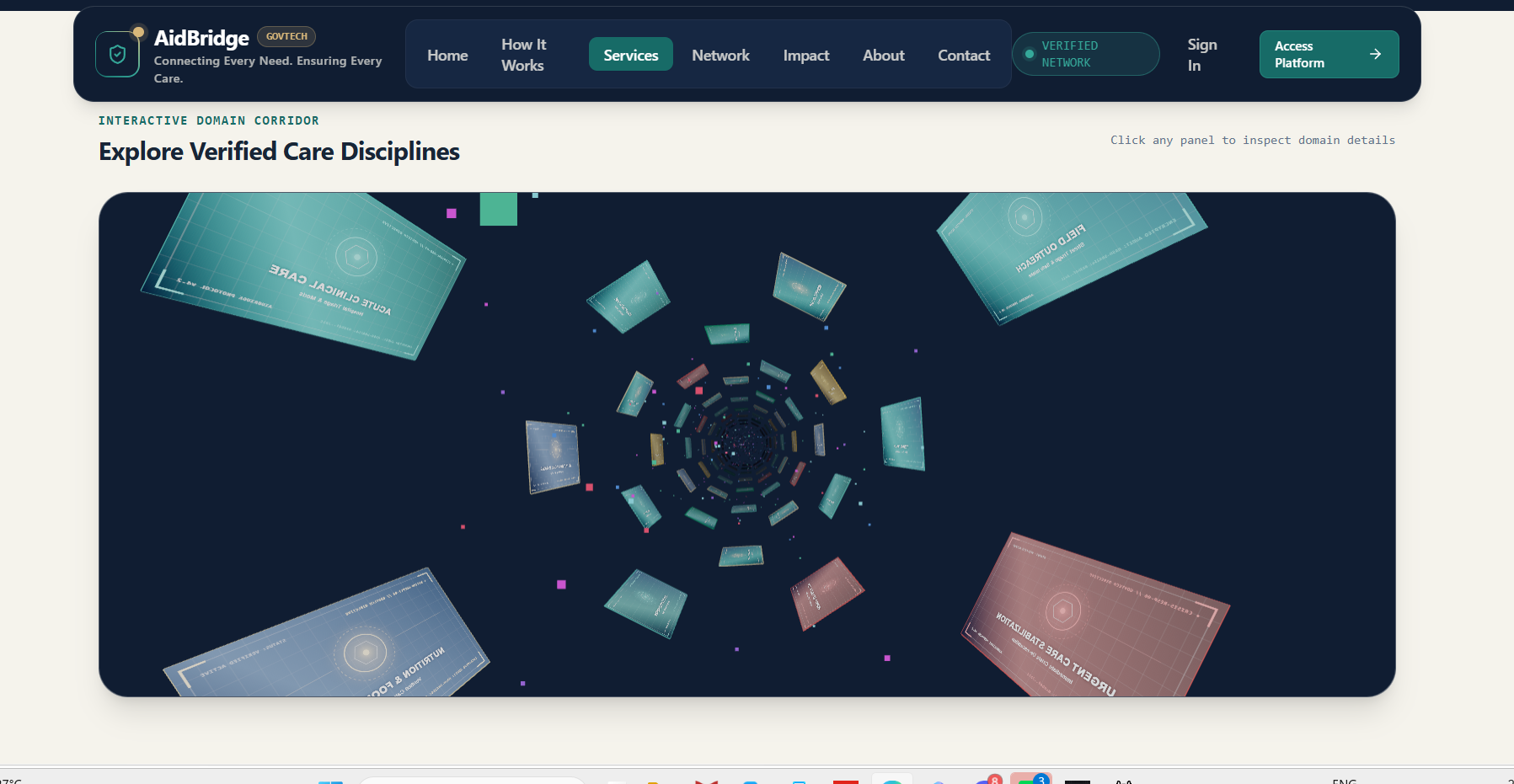
- Visual Experience: Three.js and React Three Fiber for interactive 3D elements and visual storytelling.
- Backend: Next.js API routes / Node.js for application logic.
- Database: PostgreSQL with Prisma ORM for structured data management.
- Visual Analytics: Recharts for presenting case and service-delivery insights.
- Security: Role-based access control, authentication, audit logs, and safeguards for sensitive information.
We also designed the platform with the needs of field workers in mind, including a focus on accessible interfaces and the potential for offline-friendly workflows.
Challenges we ran into
Building a platform that involves multiple organisations and sensitive cases presented several challenges.
1. Coordinating multiple stakeholders
Each stakeholder has different responsibilities and information requirements. We needed to design workflows that allow everyone to collaborate without giving every user unrestricted access.
2. Ensuring genuine service delivery
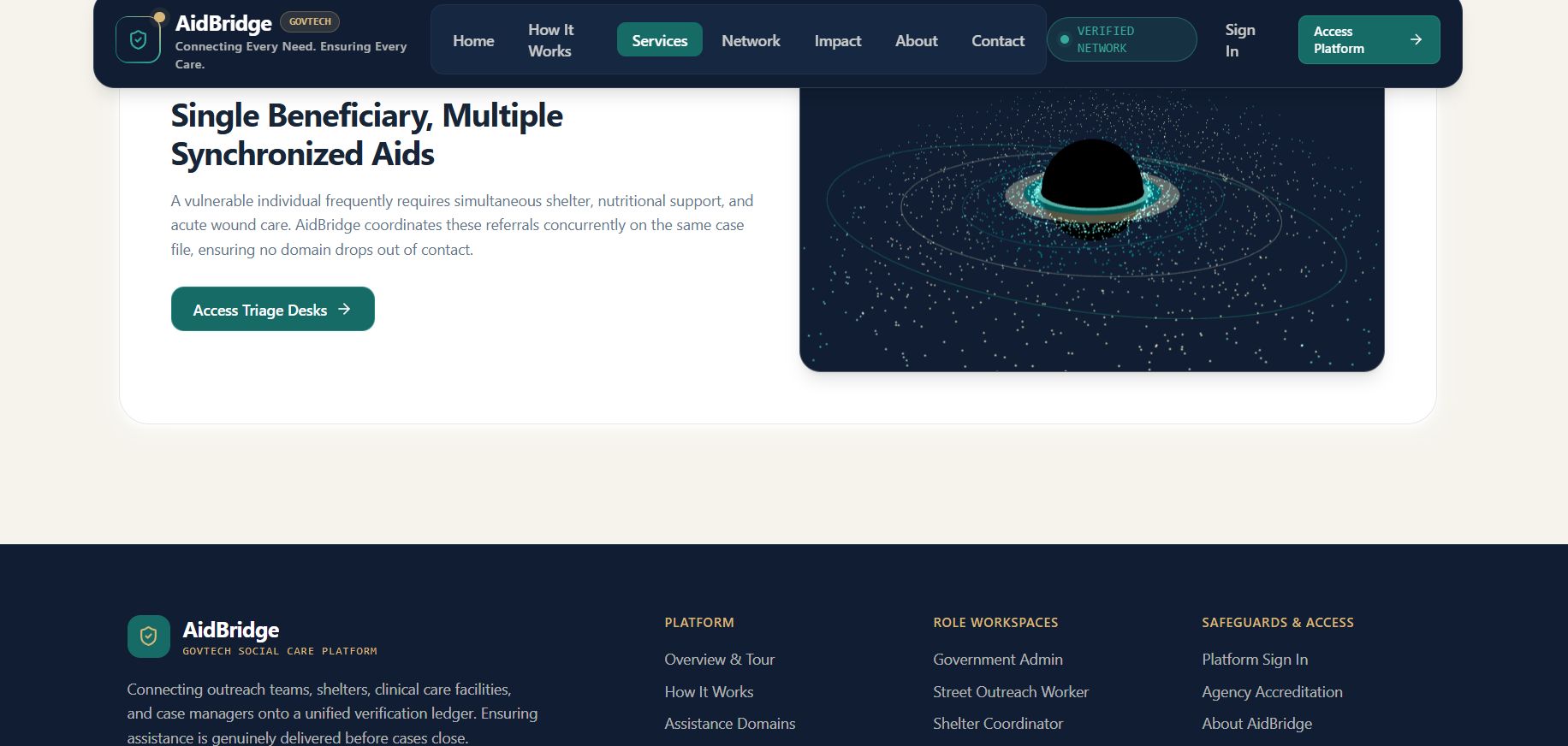
One of our biggest design challenges was distinguishing between a referral being created and assistance actually being delivered. We addressed this through a dedicated service-delivery and verification stage in the case lifecycle.
3. Managing sensitive information
Cases involving children, elderly individuals, and healthcare-related support require careful handling. This made secure access, data protection, and auditability important architectural considerations.
4. Designing a clear user experience
A platform with multiple roles and complex workflows can quickly become difficult to navigate. We focused on making the interface understandable, structured, and responsive.
5. Building a scalable system
We had to consider how the platform could support multiple organisations, growing case records, and different types of social assistance without becoming difficult to maintain.
Accomplishments that we're proud of
We are proud of developing a concept that approaches social assistance as an accountable, end-to-end process rather than a disconnected collection of referrals.
Our key accomplishments include:
- Designing a unified workflow connecting vulnerable individuals with multiple support organisations.
- Establishing service-delivery verification as a core part of case management.
- Defining distinct stakeholder roles and their responsibilities.
- Creating a structured approach to needs assessment, prioritisation, referrals, and follow-ups.
- Focusing on transparency, accountability, and responsible handling of sensitive information.
- Envisioning a modern, accessible digital experience for both administrators and field workers.
Most importantly, AidBridge represents our belief that technology should not merely record that help was requested—it should help make assistance more accountable.
What we learned
Through this project, we learned that building meaningful technology requires understanding the real-world problem before choosing the technology.
We gained a deeper understanding of multi-role application architecture, database design, workflow management, authentication, data security, and user-centred interface design.
We also learned that a successful social-impact platform must consider more than functionality. Accessibility, privacy, accountability, reliability, and ease of adoption are equally important.
One of our biggest takeaways was that the real measure of a support system is not how many referrals it creates, but how effectively it helps people receive the assistance they need.
What's next for AidBridge – Unified Social Care Verification Platform
We envision AidBridge growing into a connected social-care ecosystem that can support organisations across different regions.
Our future roadmap includes:
- AI-assisted case prioritisation and early identification of urgent needs, with human oversight.
- Offline-first mobile capabilities for outreach workers operating in low-connectivity areas.
- Secure document and evidence management for service verification.
- Geospatial insights to identify service gaps and improve resource allocation.
- Multilingual support to make the platform accessible to more communities.
- Automated follow-up reminders and escalation workflows.
- Integration capabilities for authorised NGOs, hospitals, shelters, and government systems.
- More comprehensive analytics to measure service-delivery outcomes and identify unresolved cases.
Our long-term vision is to help build a more connected, transparent, and accountable social support ecosystem.
AidBridge — Connecting Every Need. Ensuring Every Care.
Built With
- next.js
- node.js
- postgresql
- prisma
- react
- react-three-fiber
- tailwind-css
- three.js
- typescript
