-
-
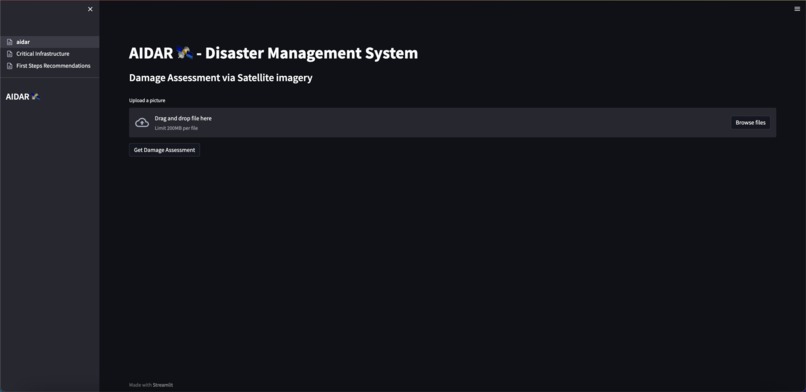
Home
-
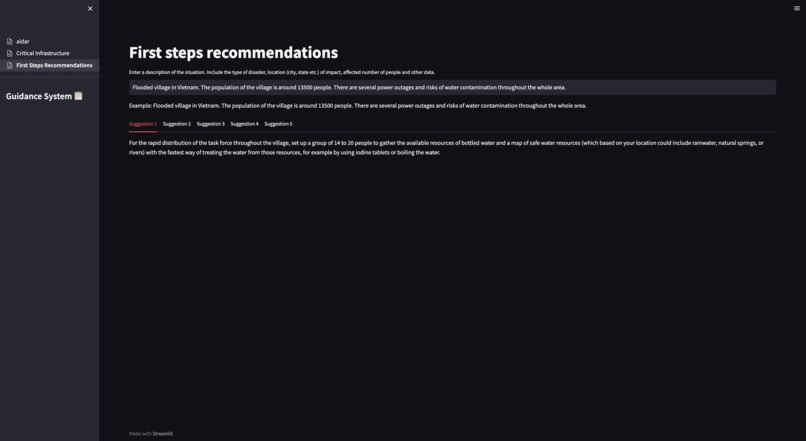
Recommendations
-
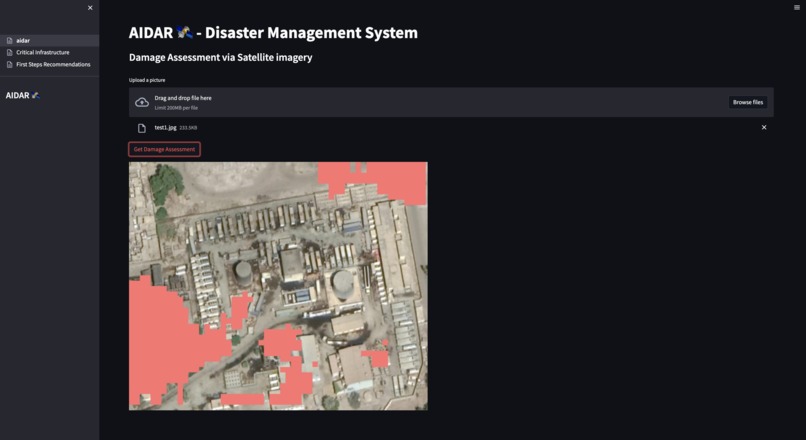
Disaster Assessment
-
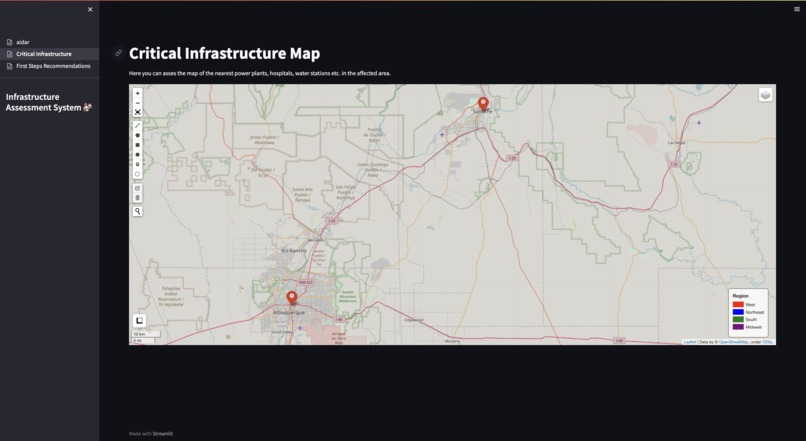
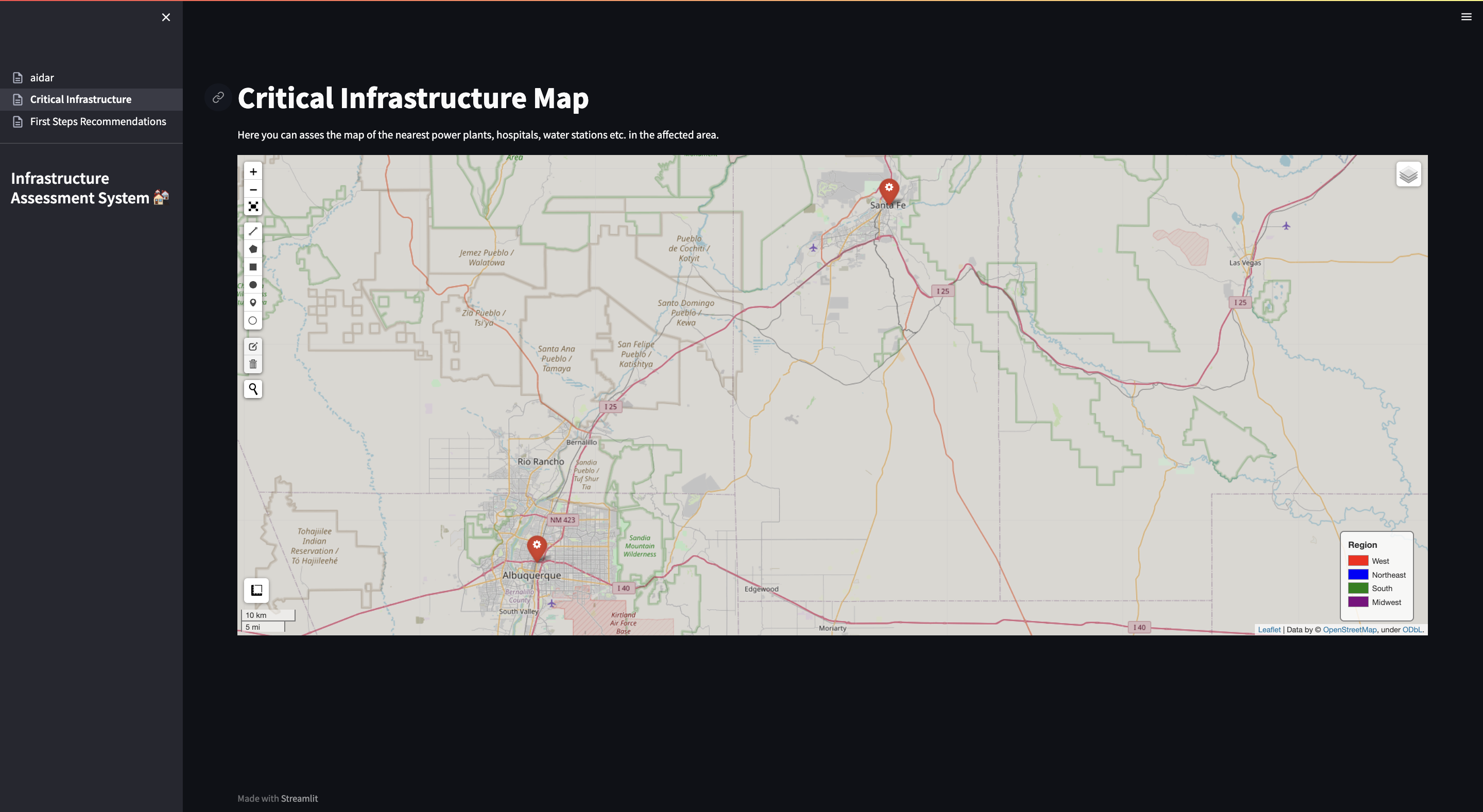
Map of critical infrastructure
Inspiration
Current aid management frameworks/patterns do not allow for a quick and efficient (especially during the first 72 hours) response to natural and man-made disasters, which leads to a lack of necessary actions in both urban and rural areas and unawareness about logistic damages such as blocked roads as well as unreachability of critical infrastructure.
What it does
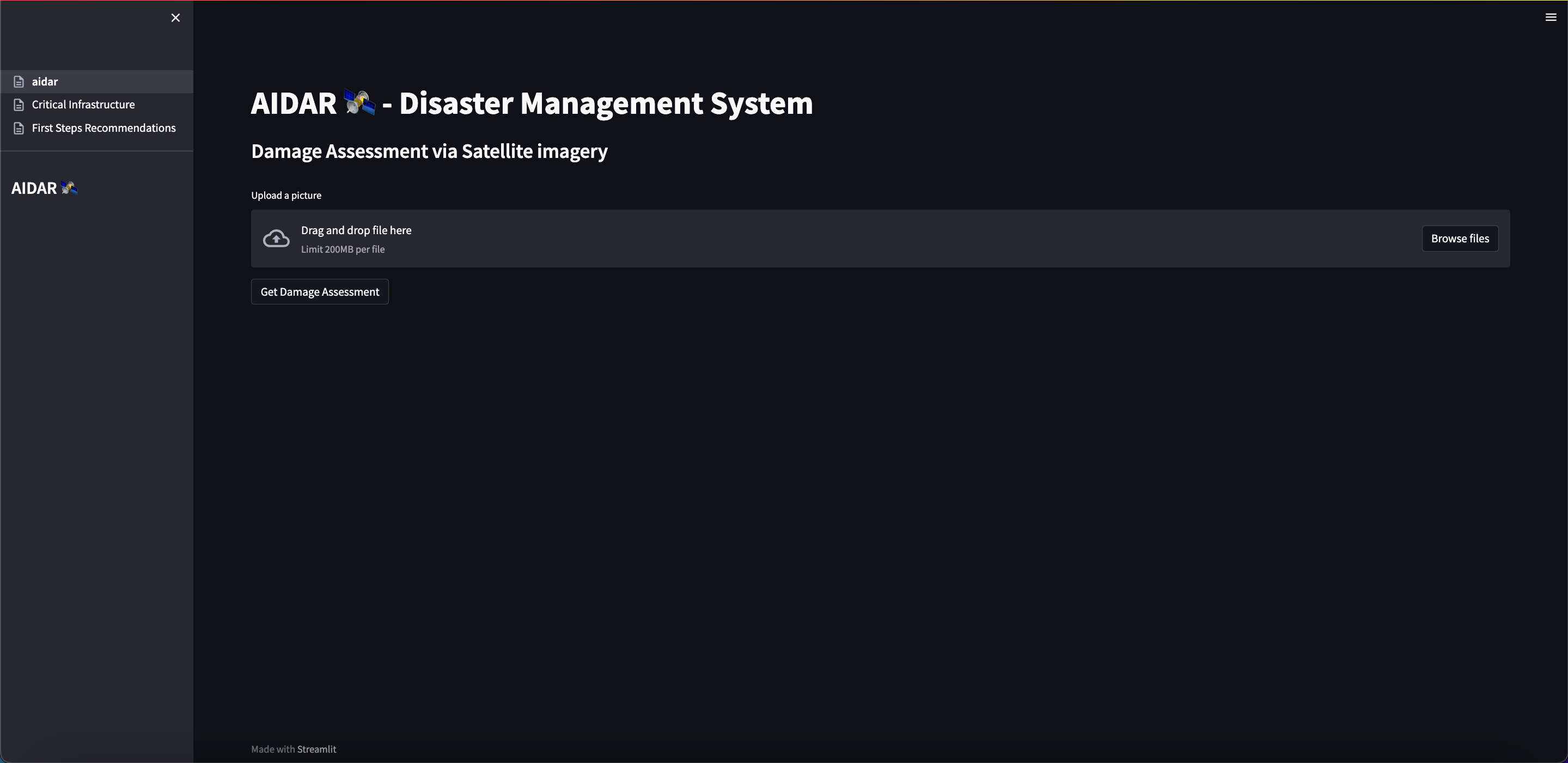
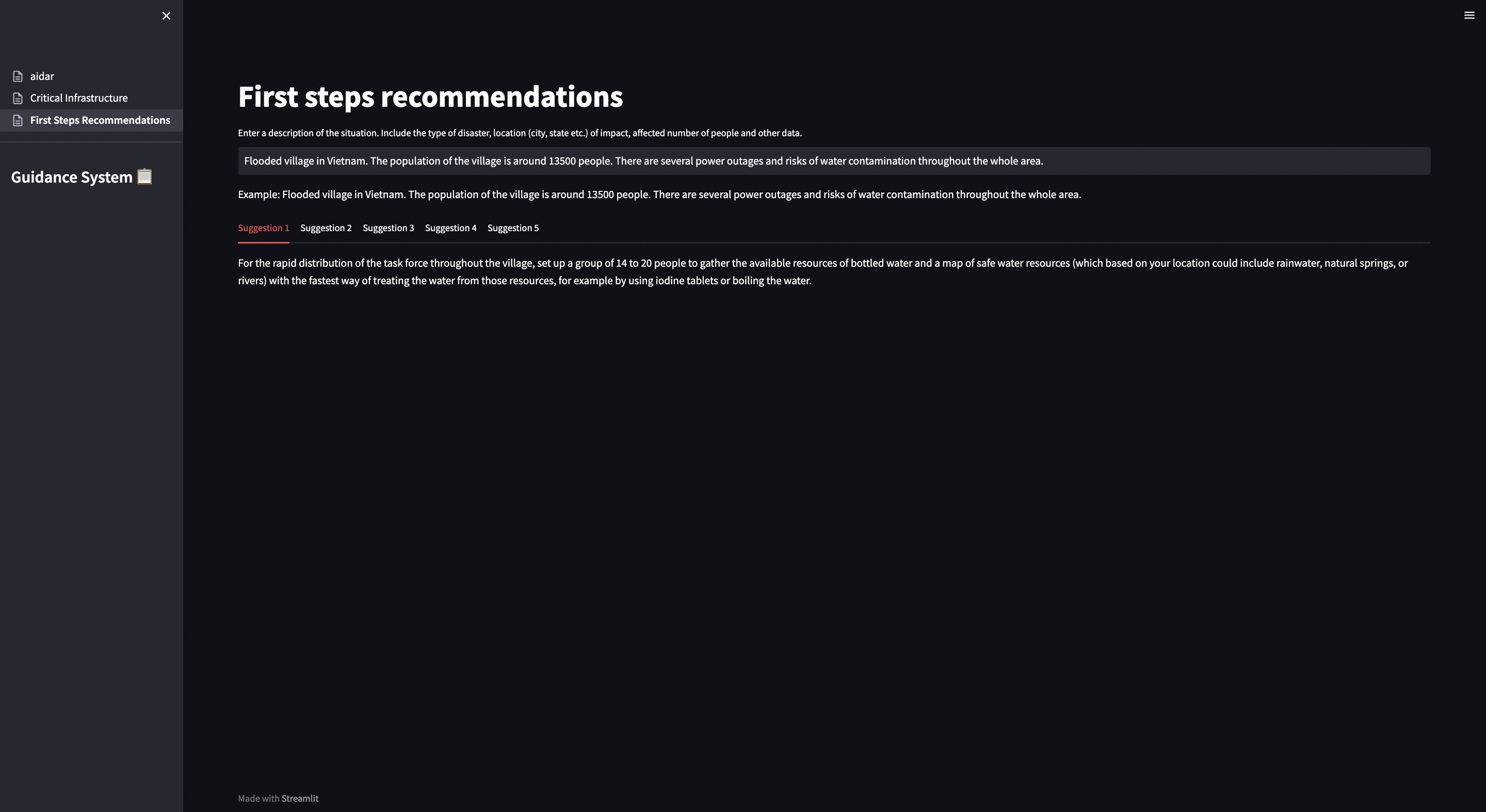
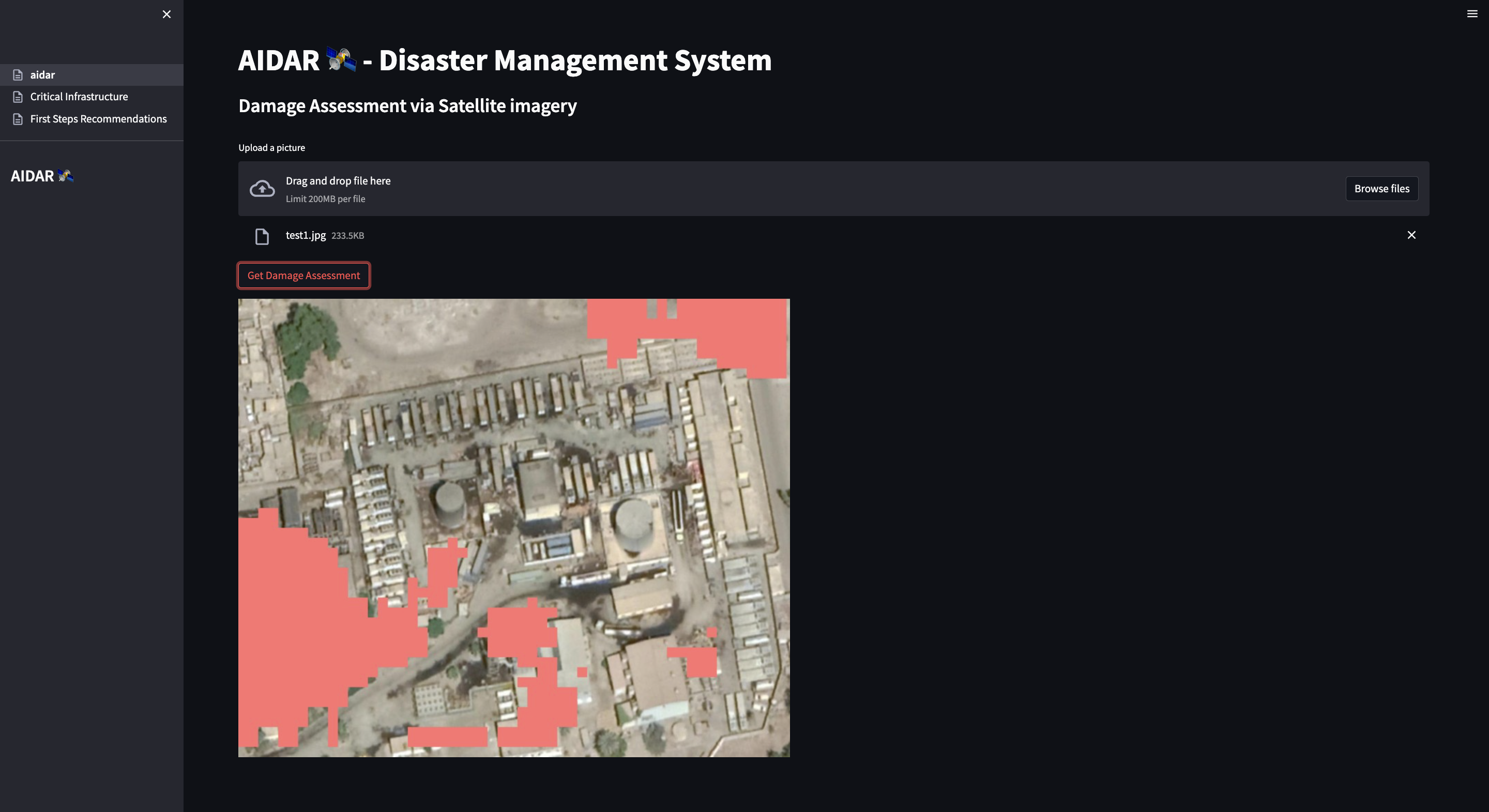
The first prototype is able to screen satellite images to determine what part of the infrastructure is broken and what is intact. This helps Disaster managers to assess the damage and to allocate the aid resources efficiently in the first hours. We also used an NLP model to provide recommendations based on simple descriptions of the disaster.
How we built it
The first prototype of AIDAR was created during the spring 2022 Makeathon organized by the largest student initiative around AI called TUM.ai. At the Makeathon we created a working prototype of one crucial key component of our product. We created a UI with streamlit which accesses multiple apis. We built our own fastAPI server which segments destructed areas on satellite images. For the NLP we use the openAI-API.
Challenges we ran into
During the development, we had difficulties finding pre-trained models for this problem. As the problem is quite complex, training often took a long time and delayed our progress. We also had some trouble updating one the models to tensorflow2 in order to improve the performance.
Accomplishments that we're proud of
First of all, it was complicated to assess what exactly goes wrong in the first 72 hours after a disaster. Every single case is different from the others, so there was a need to identify common issues and solve them in a decent amount of time. Secondly, there are many regional specialities that also play an important role for the decision-making processes. In order for our model to not be regionally biased, we had to abstract from being EU or US-centered and use satellite images form all over the world. In addition, we used social media and news coverage from both developing and developed countries.
What we learned
While there may be no real substitute -- at this time -- to human experience and the ability to make decisions in an emergency, it may be valuable to have additional insights from AI-supported systems.
What's next for AIDAR - Disaster Management System
Future improvement of the product will increase the amount of input data flowing into our Machine learning models, like the location of critical infrastructure and population estimates. This will help to create the best basis for efficient disaster management, which saves thousands of lives all around the globe. This will be especially important with an increasing amount of natural disasters due to climate change and armed conflicts like the current conflict in Ukraine.
Built With
- fastapi
- python
- streamlit
- tensorflow

Log in or sign up for Devpost to join the conversation.