AidAlert - A Disaster Relief Assistant
About the Project
In an era where natural disasters are increasing in frequency and intensity, timely access to accurate information is crucial for survival and safety. AidAlert is our response to this pressing need—a mobile application powered by artificial intelligence designed to provide immediate, personalized assistance during natural disasters like hurricanes, floods, tornadoes, and wildfires. Through an intuitive chat interface, users can receive expert guidance tailored to their specific situation and location. AidAlert aims to empower individuals by transforming complex emergency protocols into accessible, actionable advice, helping users prepare for, respond to, and recover from natural disasters effectively.
Inspiration
AidAlert was inspired by the struggles we observed during Hurricane Helene, where many minority communities found it difficult to access shelter locations and emergency services. The experience was especially challenging for individuals who didn't speak English fluently or lacked reliable internet connectivity. Witnessing these communities being left behind in times of need motivated us to build a solution that breaks down barriers and empowers vulnerable populations with the information they need to stay safe.
What We Built
We developed AidAlert, an AI-driven mobile application that serves as a personal emergency assistant. The app features:
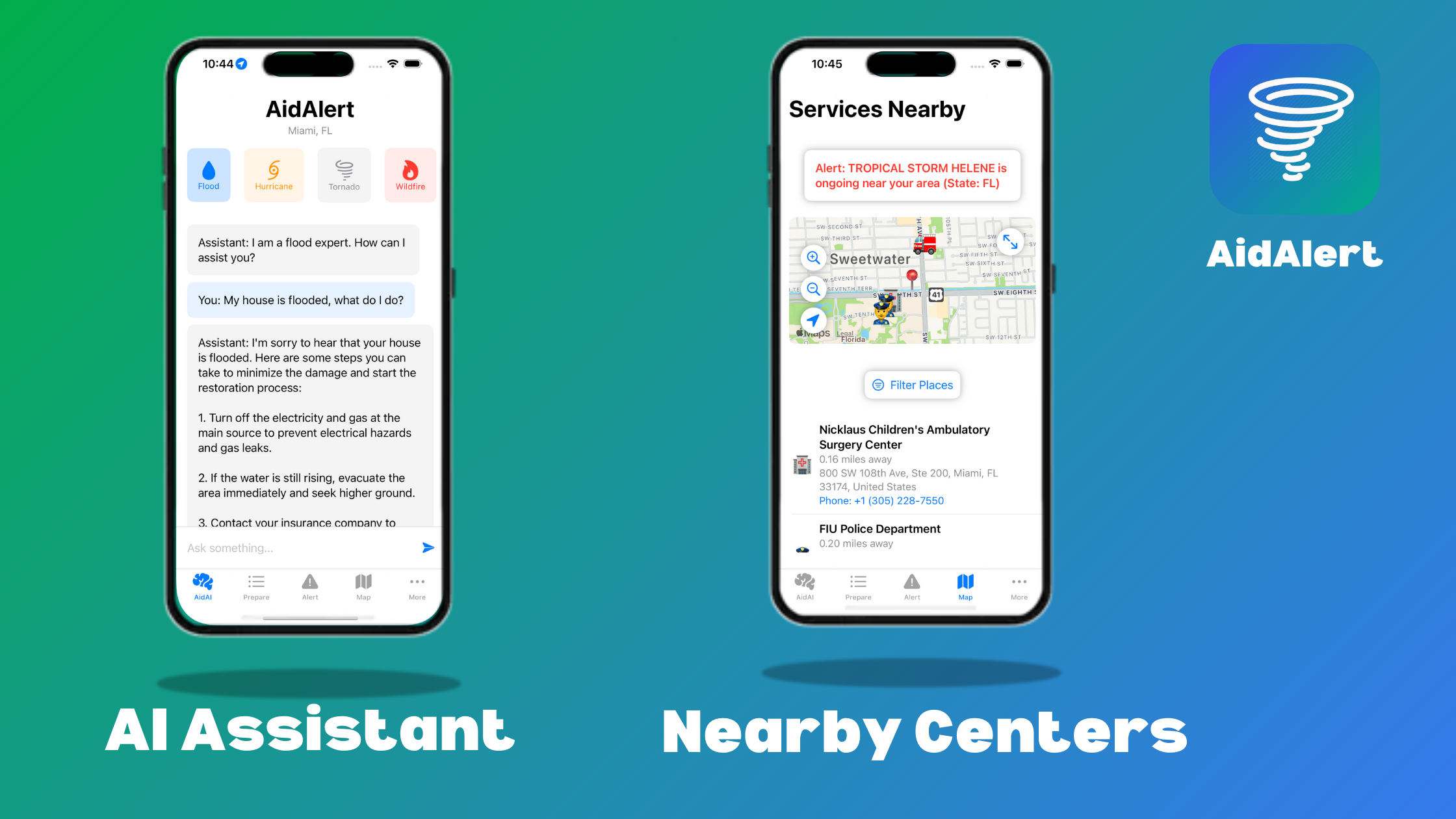
- Interactive Chat Interface: Users can engage in real-time conversations with an AI assistant, receiving advice and answers to their specific questions.
- Disaster-Specific Expertise: With shortcut icons for floods, hurricanes, tornadoes, and wildfires, users can quickly select the type of disaster they are facing, and the AI adapts its guidance accordingly.
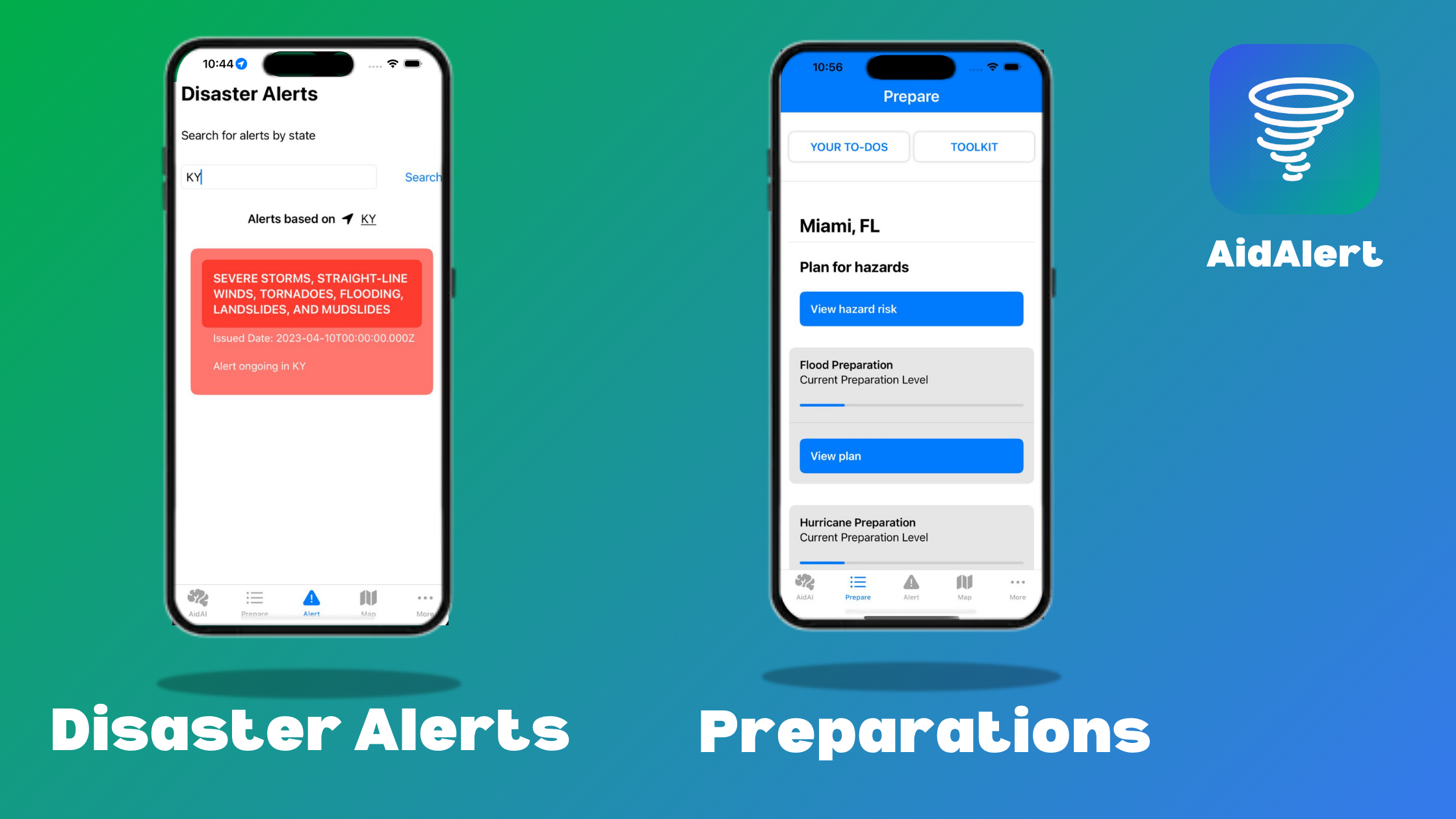
- Location Awareness: By integrating geolocation data, AidAlert provides region-specific alerts, evacuation routes, and information on nearby shelters.
- Resource Hub: Beyond immediate assistance, the app offers preparation checklists, safety tips, and access to official updates from emergency services.
How We Built It
We began by outlining the core challenges faced by minority communities during disasters and how our app could address these issues. The development of AidAlert included:
- SwiftUI: Leveraging SwiftUI allowed us to build a fluid and responsive iOS application with a modern user interface inspired by platforms like Google Gemini.
- APIs for Real-Time Data: We integrated various APIs to fetch up-to-date information on weather conditions, alerts, and evacuation procedures.
- Backend and API Integration: We integrated the OpenAI API for multilingual support and Maps API for geolocation-based shelter information. These APIs enable users to ask questions in their native language and receive real-time responses about nearby shelters and services.
- UI/UX Design: AidAlert was designed with a mobile-first approach to ensure seamless usability on smartphones, which are often the primary mode of internet access in underserved communities.
- Low-Bandwidth Functionality: Recognizing the connectivity challenges during disasters, we focused on creating a lightweight and responsive application that would perform well even under limited bandwidth conditions.
Challenges We Faced
Building AidAlert was a rewarding but challenging process. Some of the key hurdles we faced include:
- Ensuring Language Accessibility: Implementing the multilingual chatbot was challenging, especially in terms of accurately translating technical disaster-related terms across various languages.
- User Interface Design: Crafting an interface that is both informative and non-overwhelming was a delicate balance, especially considering users may be in high-stress situations.
- Integration of Real-Time Data: Synchronizing live updates from multiple sources and ensuring they are accurately reflected in the app required complex API handling and error management.
- Technical Constraints: Implementing advanced features like location-aware services and AI interactions without compromising app performance demanded optimization and extensive testing.
- Trust and Safety Concerns: We wanted to make AidAlert as inclusive as possible, especially for undocumented individuals and those hesitant to use government-run resources. Creating a reliable and secure platform that these communities could trust was an important aspect of our development process.
What We Learned
Throughout the development of AidAlert, we gained valuable insights into the intersection of technology and humanitarian efforts:
- Importance of Digital Equity: We learned that providing digital access to underserved communities is more than just about technology—it’s about creating inclusive systems that work for everyone, especially those with limited resources.
- The Power of Real-Time Data: Integrating real-time data from various sources such as shelter databases and disaster alerts showed us how vital up-to-date information is for disaster preparedness and response.
- Multidisciplinary Collaboration: Building AidAlert required collaboration between various domains including software development, UX design, and emergency management. We learned how to combine these disciplines to create a comprehensive solution that addresses real-world challenges.
Future Directions
With Apple's support, we hope to expand AidAlert further by:
- Platform Expansion: Developing an Android version to make AidAlert accessible to a wider audience.
- Adding More Languages: We plan to support additional languages, making AidAlert accessible to an even broader audience worldwide.
- Community Features: Enabling users to share information, offer assistance, and build supportive networks during crises.
- Integrating Local Resources: We aim to incorporate local, community-based shelters and services to provide a more inclusive and culturally sensitive approach to disaster response.
- Enhanced AI Capabilities: Integrating machine learning to personalize assistance further, learning from user interactions to provide more precise guidance.
By providing equal access to life-saving information, AidAlert aims to ensure that no one is left behind during a disaster. Our mission is simple: to empower vulnerable communities with the tools they need to stay safe and recover faster when the unexpected happens.

Log in or sign up for Devpost to join the conversation.