-
-
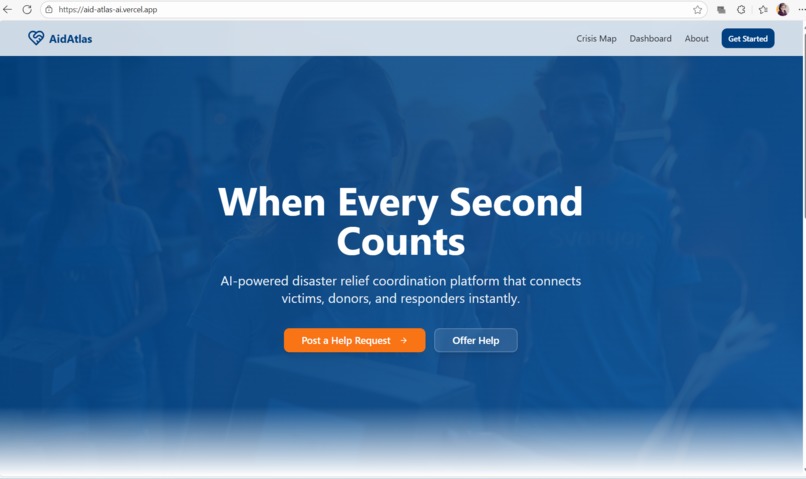
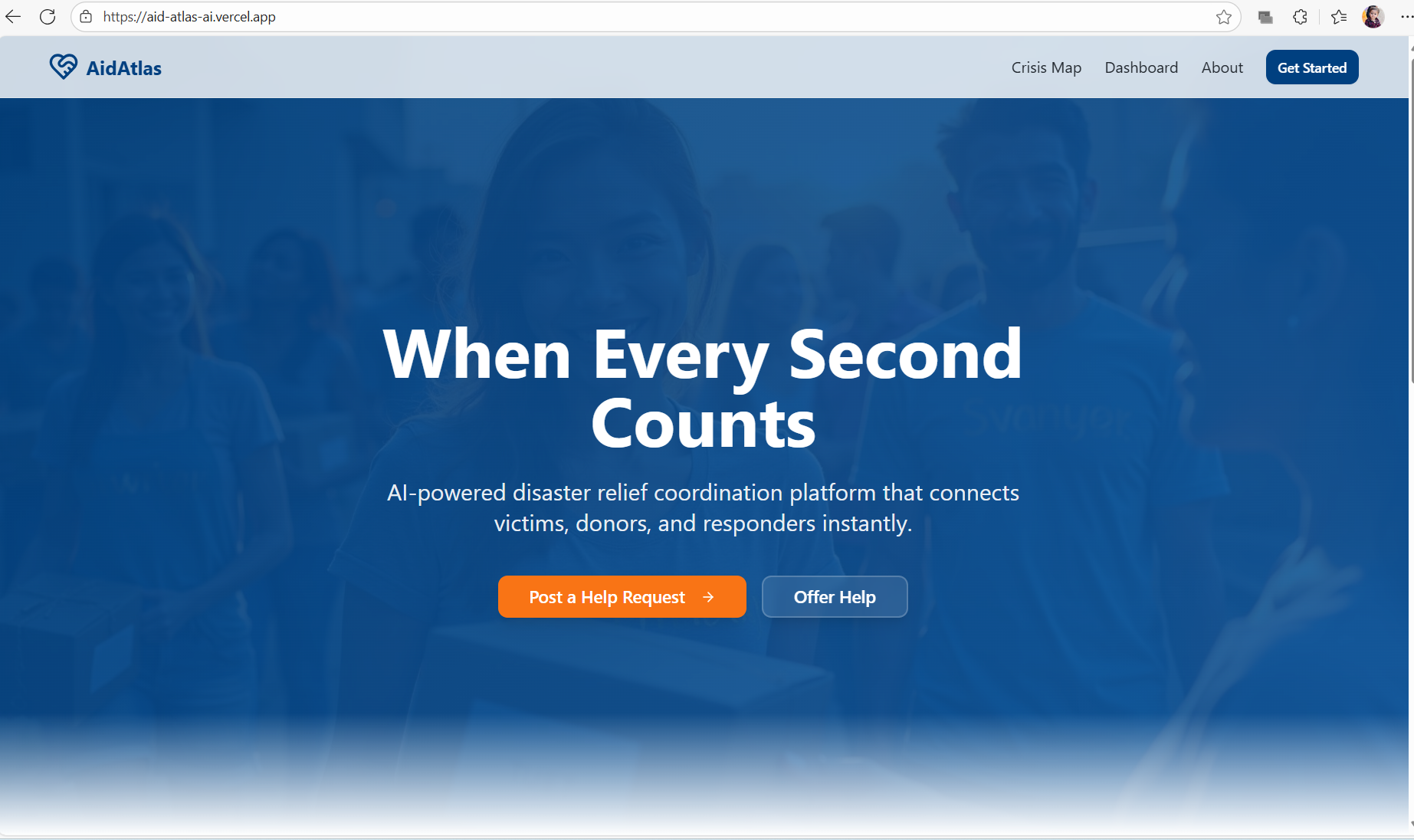
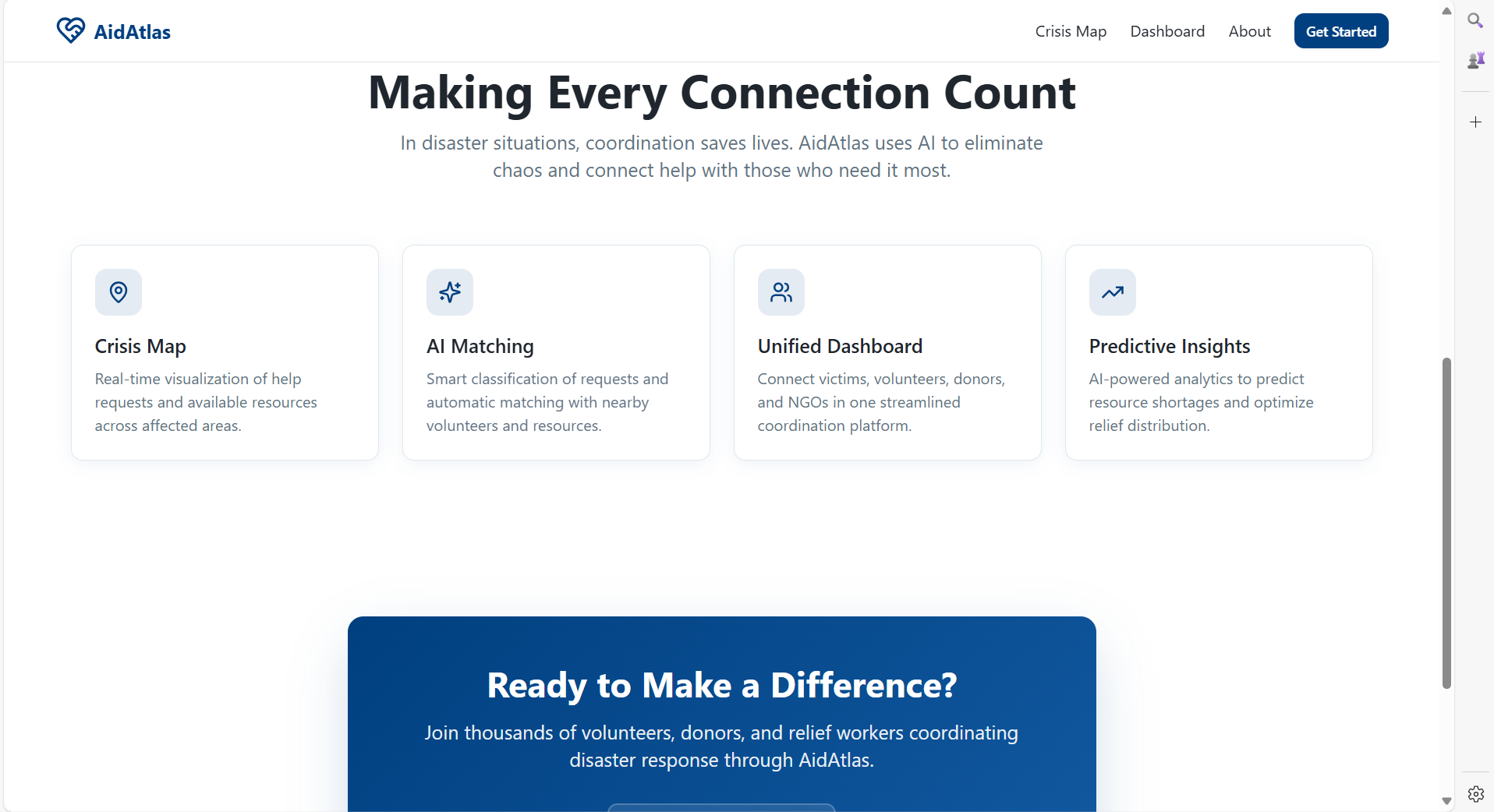
home page
-
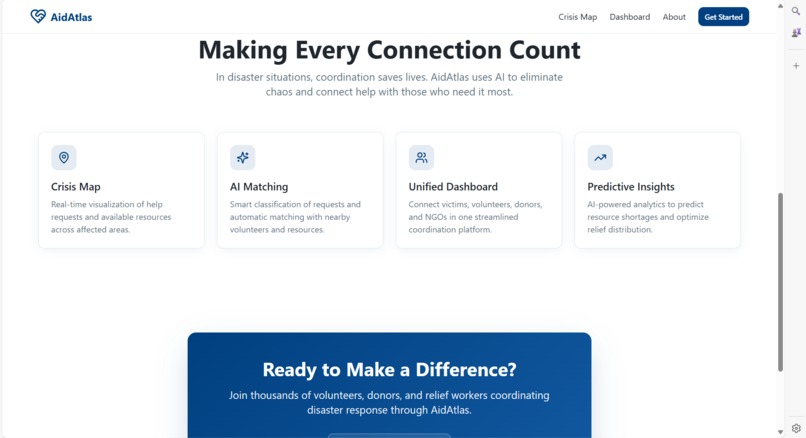
-
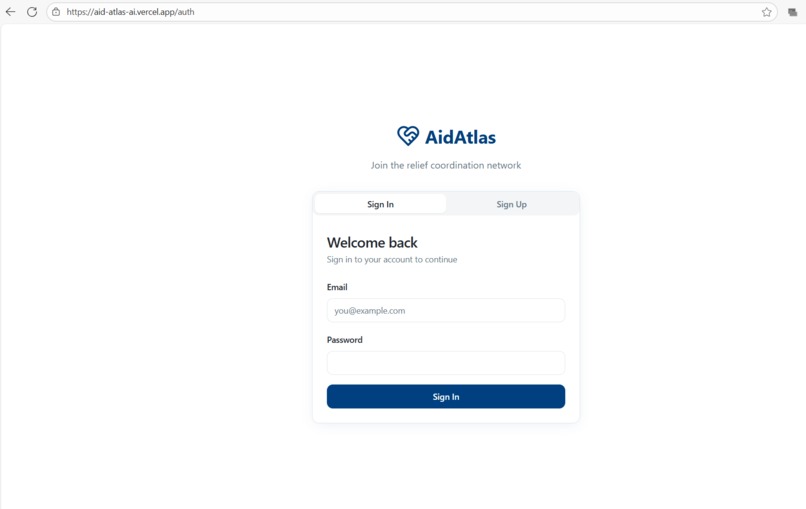
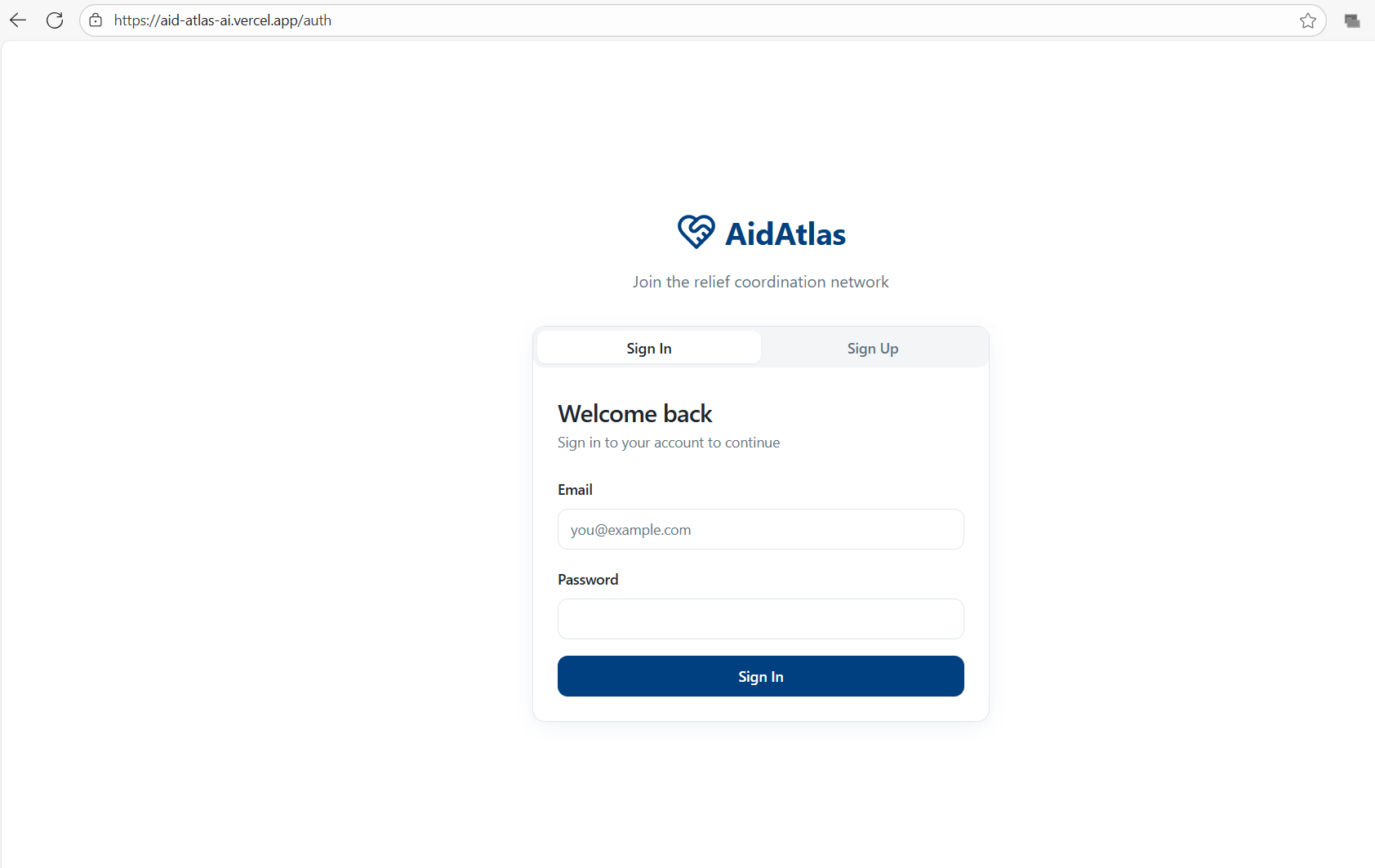
login page
-
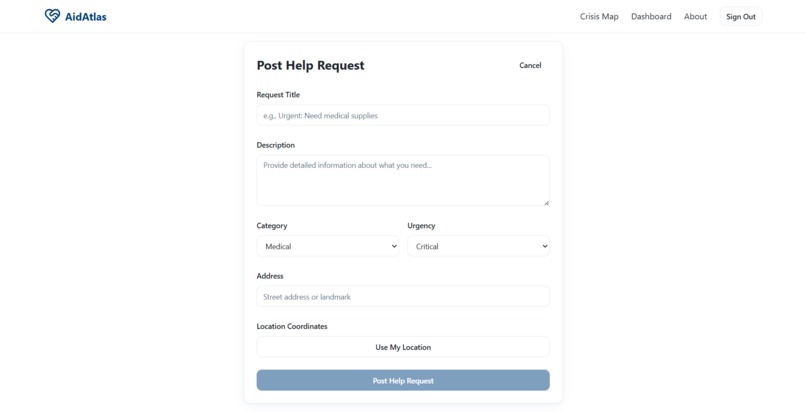
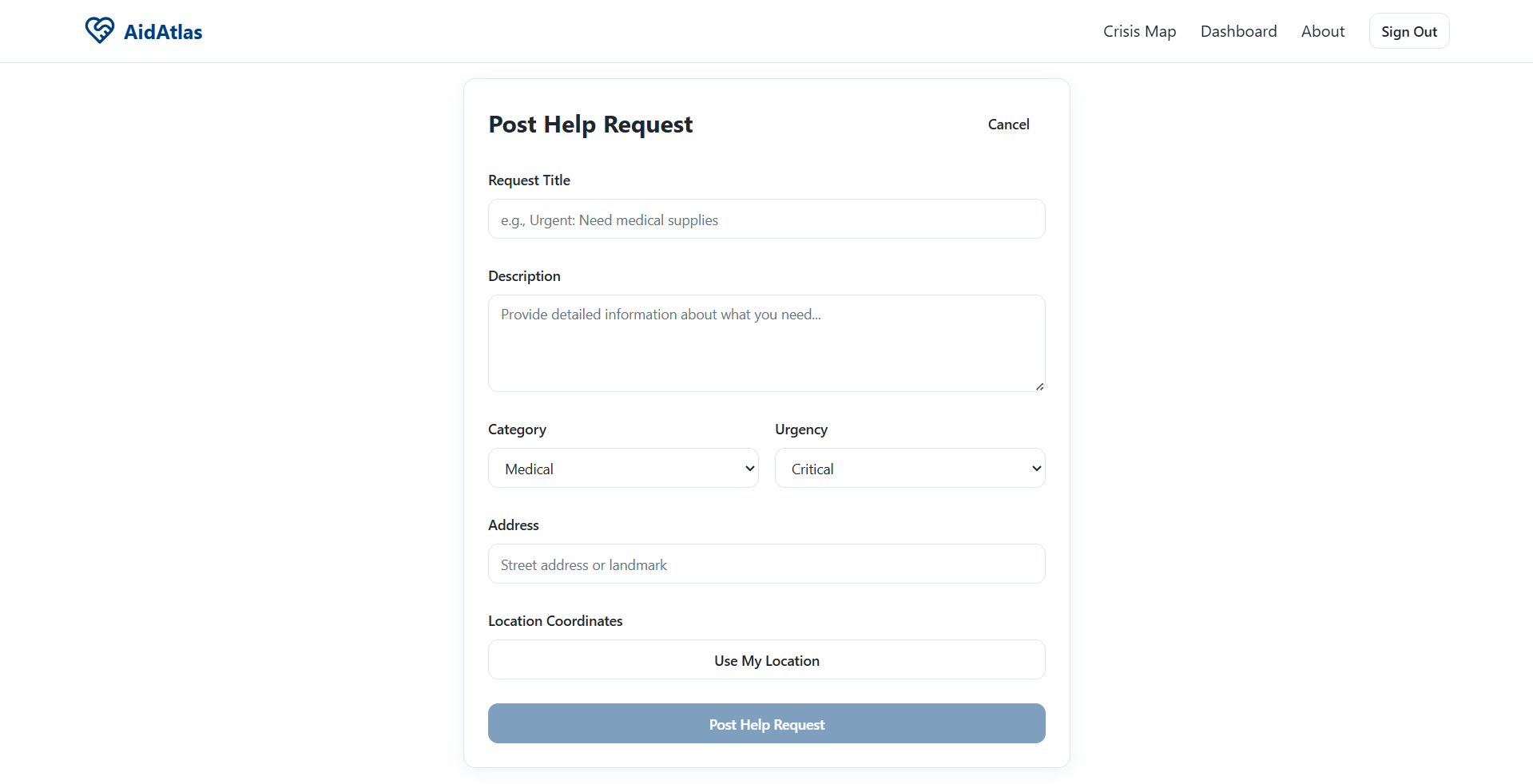
request page
-
-
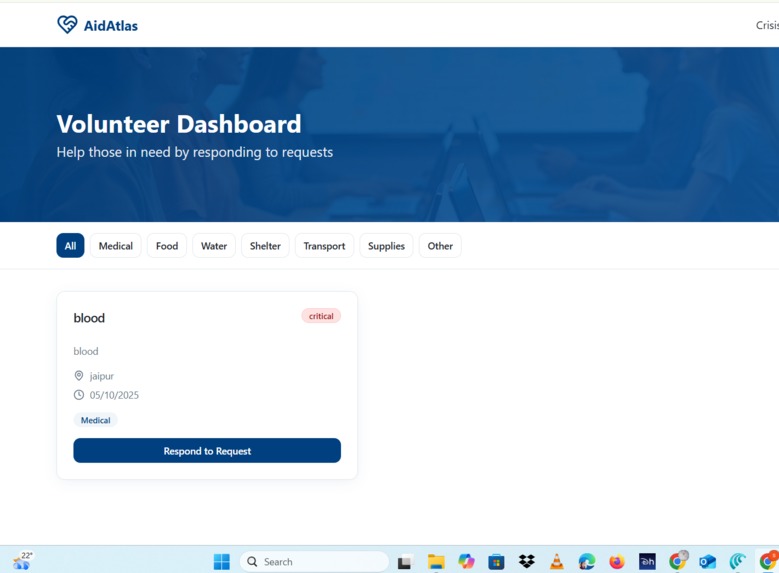
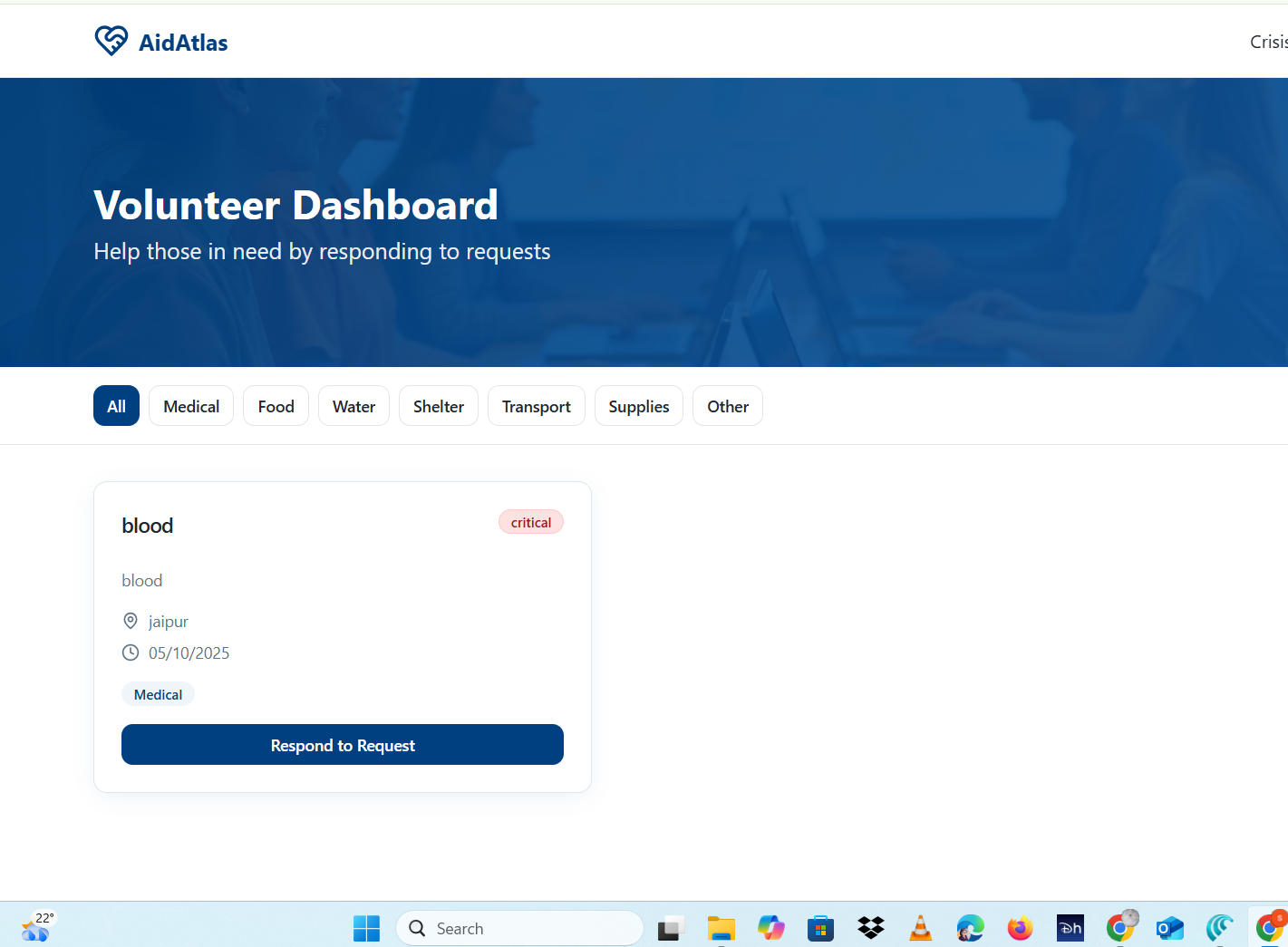
dashboard
-
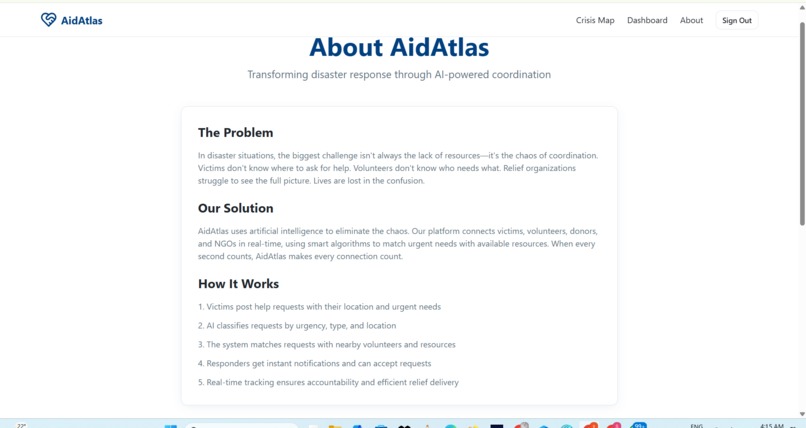
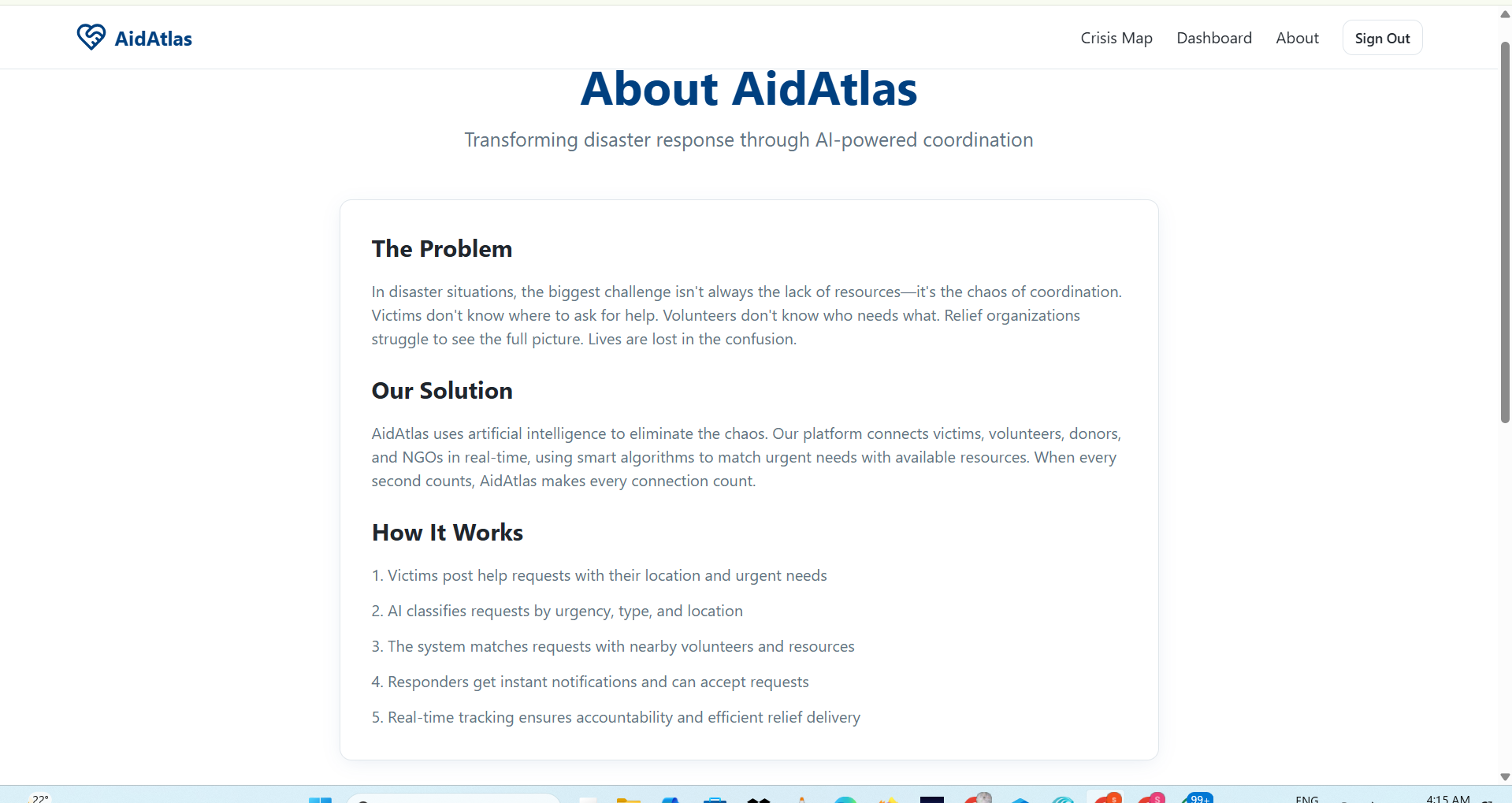
about
Inspiration
When disaster strikes, chaos follows. Floods, earthquakes, and wildfires leave people stranded, their pleas for help often unheard. Aid arrives too late or gets misallocated, while lives hang in the balance. We asked ourselves a simple question: what if technology could cut through the chaos and connect every cry for help to someone who can act immediately?
That question inspired AidAtlas AI — a platform built to transform desperation into real-time coordination.
What it does
AidAtlas AI is an AI-powered disaster relief coordination platform that bridges victims, volunteers, and donors.
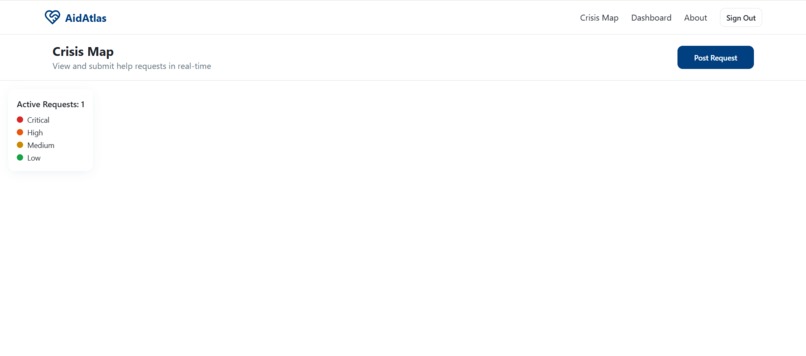
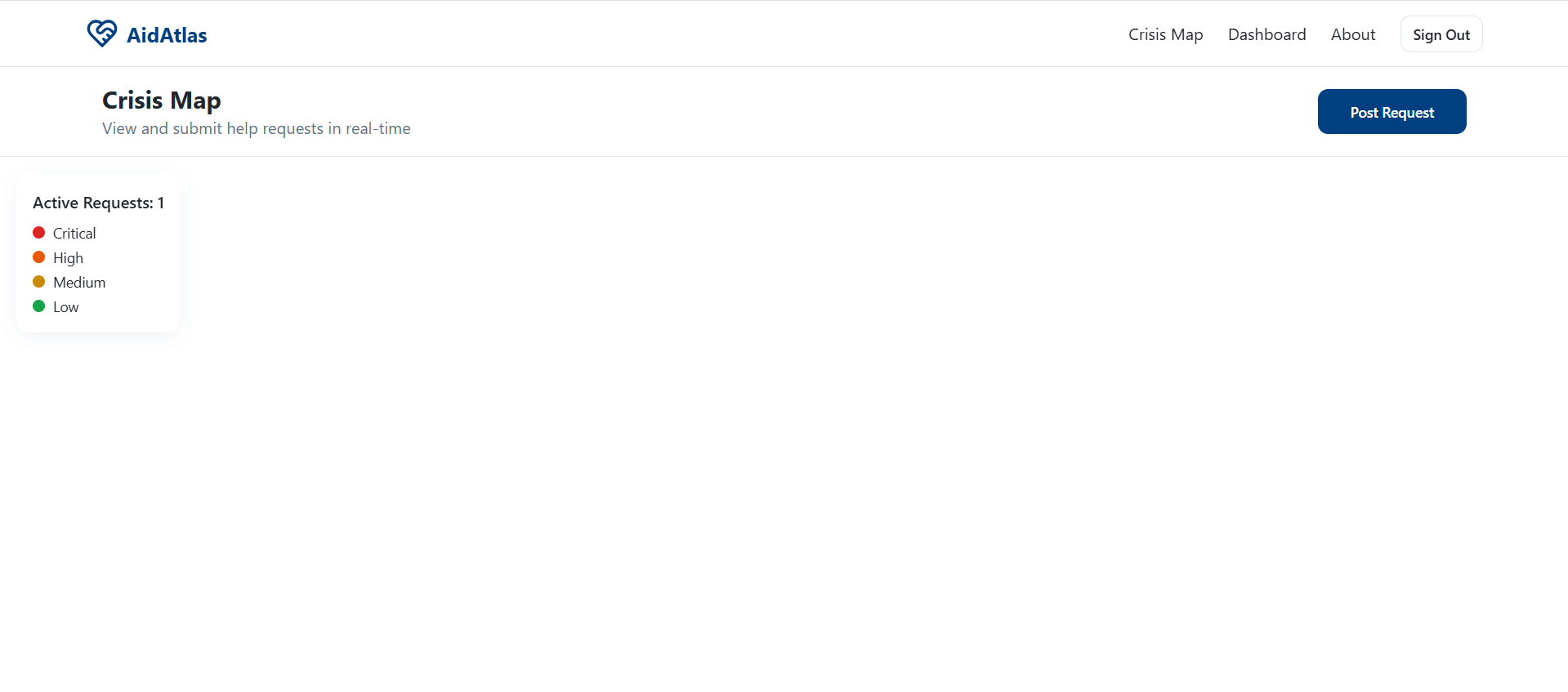
Victims can drop a request pin on an interactive crisis map.
Our AI instantly classifies the request (e.g., urgent medical, food, shelter, or transport).
Volunteers and donors see a real-time dashboard of nearby needs and can respond quickly.
A lightweight prediction engine highlights future shortage zones, giving relief agencies an early edge.
In short: AidAtlas AI maps the needs, matches the help, and saves time — because every second counts.
How we built it
We combined design thinking with a robust tech stack to deliver an MVP that feels both functional and polished:
Frontend: React (Vite) + TailwindCSS + shadcn/ui for a clean, Apple-style UI.
Map: Leaflet.js integration for real-time disaster mapping.
Backend: Supabase for authentication, data storage, and real-time sync.
AI Layer: Natural Language Processing (OpenAI API) to classify help requests.
Design: Minimalist aesthetics, smooth animations, and high-impact imagery to make the experience emotional as well as practical.
Challenges we ran into
Data complexity: Training a meaningful request classifier within hackathon constraints required careful simplification.
Real-time coordination: Synchronizing map pins, requests, and volunteer responses was technically challenging.
Balancing speed vs design: We wanted not just a functional prototype, but an experience that felt premium and inspired trust.
Accomplishments that we're proud of
Built a full-stack application that connects victims and responders in real time.
Created a visually impactful landing page that tells a powerful story.
Integrated AI + maps + real-time backend into a single seamless platform.
Most importantly, we built something that can make a real difference in saving lives.
What we learned
The art of blending AI with geospatial data for social good.
How UI/UX design amplifies impact by making complex tools intuitive.
The importance of storytelling: judges and users connect deeply with solutions that are both technically strong and human-centered.
How to ship fast under pressure while maintaining quality.
What's next for AID ATLAS AI
AidAtlas AI is just a beginning. Next steps include:
Adding SMS and WhatsApp support for offline victims.
Expanding multilingual AI models so requests can be understood across regions.
Supporting image-based classification (victims upload a photo of damage or need).
Partnering with NGOs and disaster relief agencies for real-world pilots.
Implementing logistics optimization to guide volunteers and transport aid faster.
Our vision is bold yet simple: a world where no cry for help goes unheard, and no relief effort is wasted.


Log in or sign up for Devpost to join the conversation.