-
-
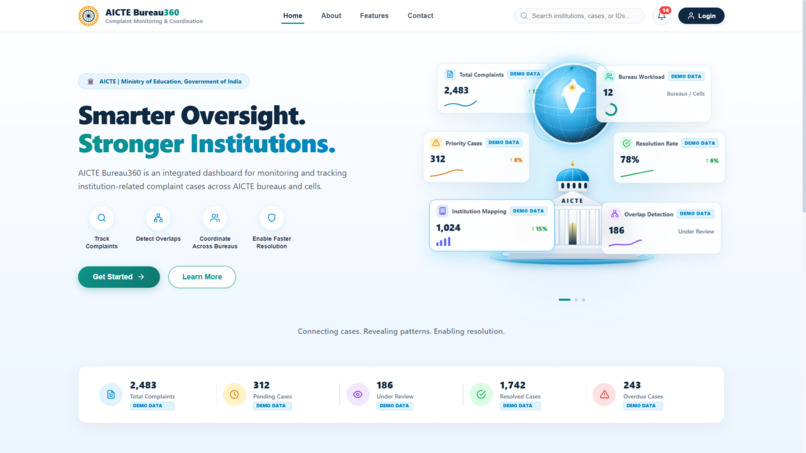
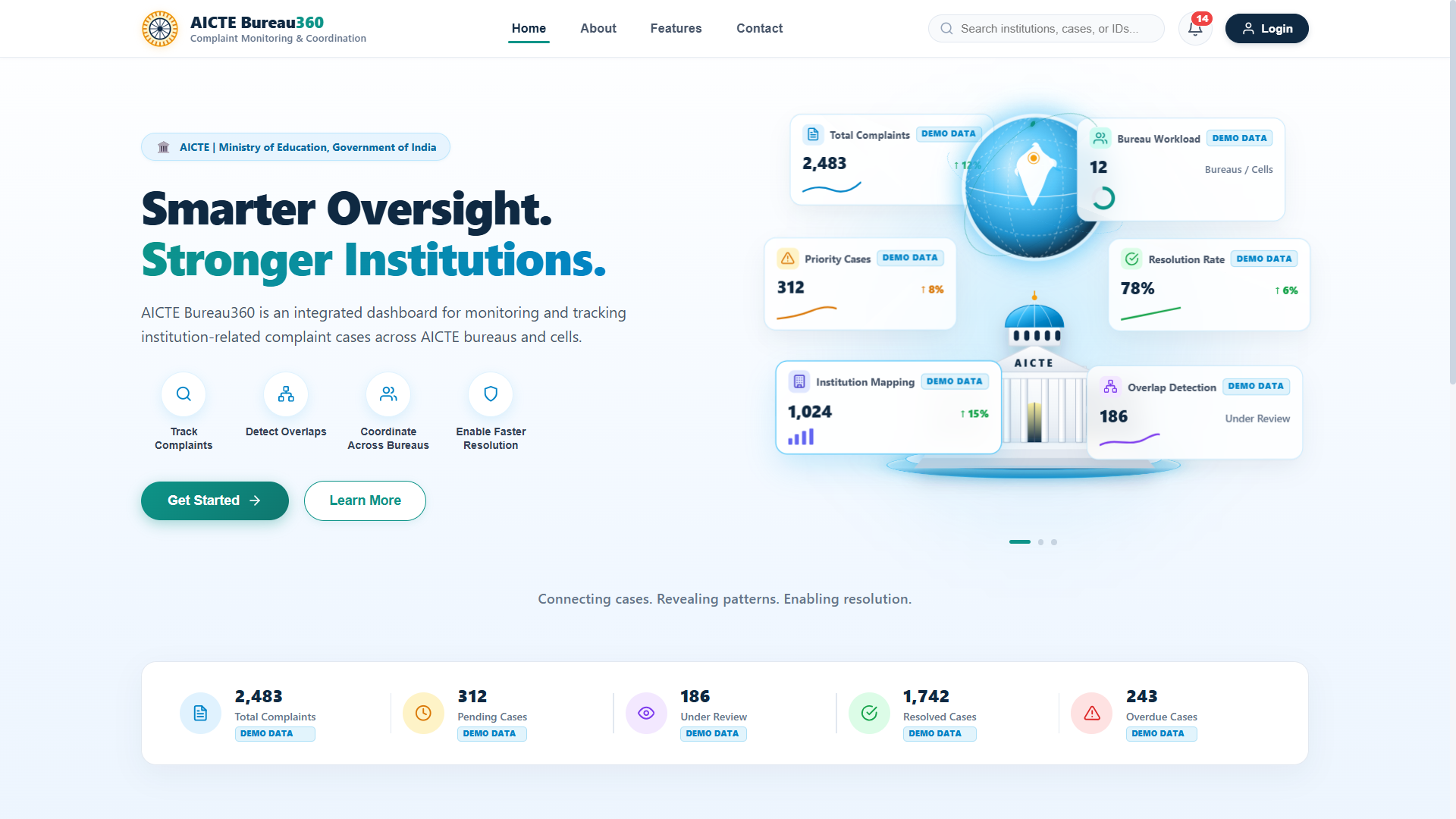
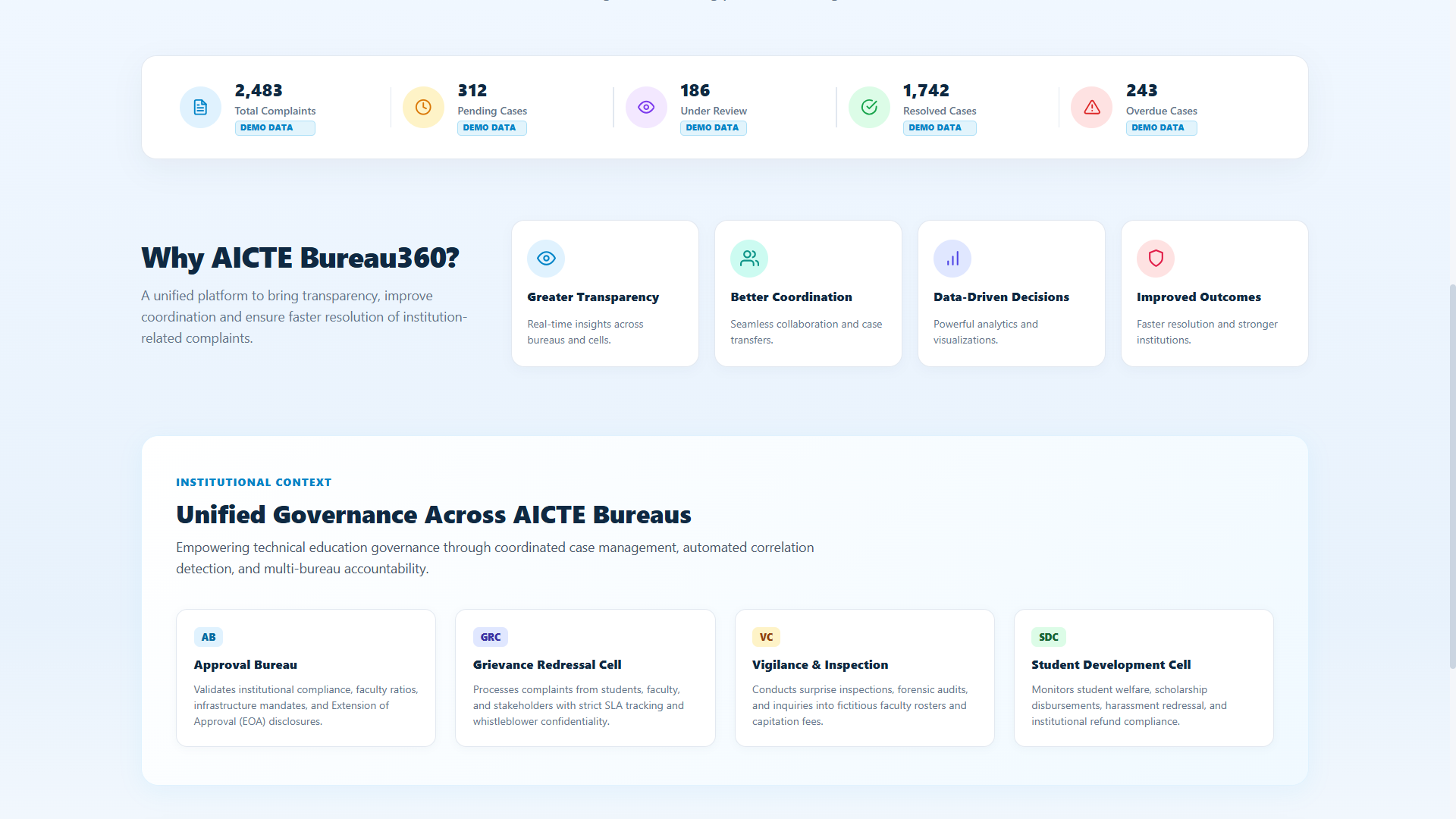
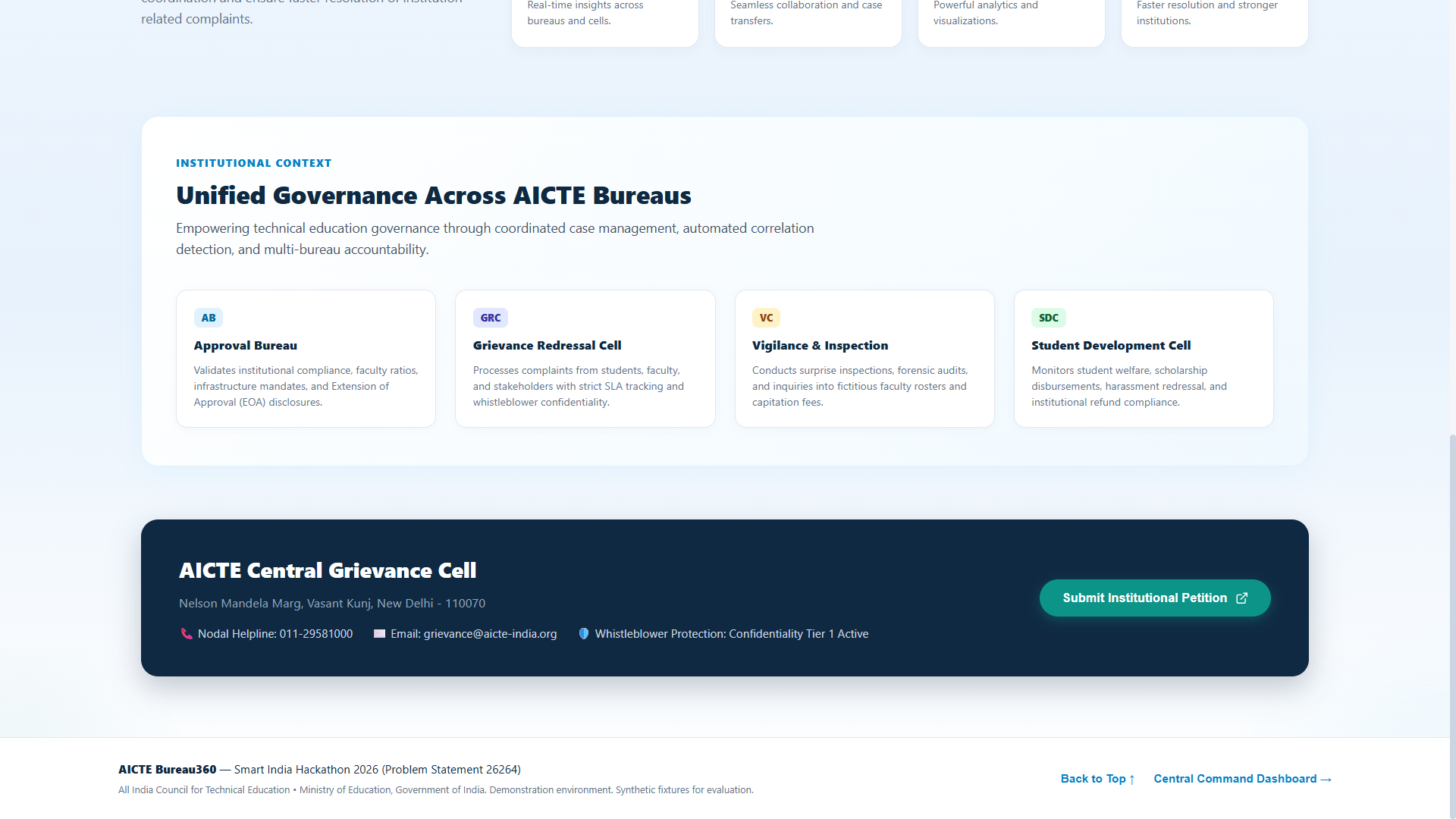
Landing Page of AICTE_Bureau_360
-
-
-
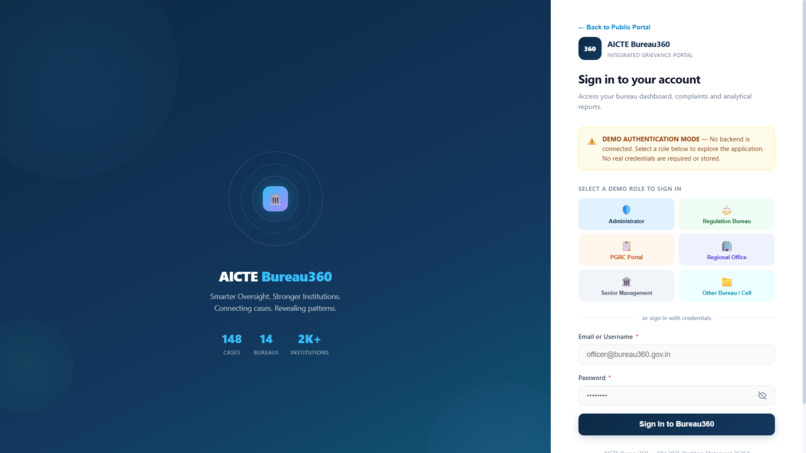
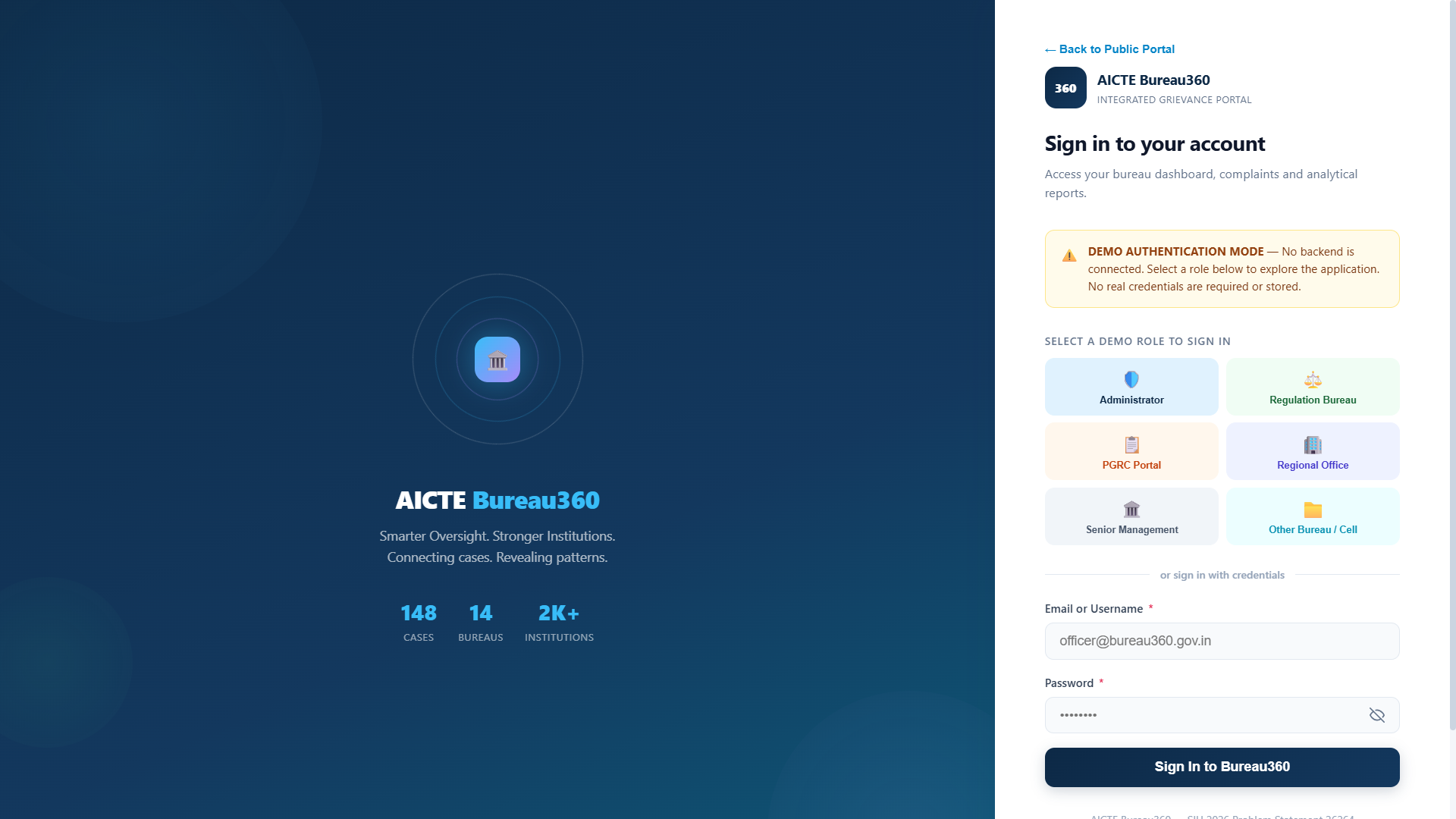
Centralized Login Portal
-
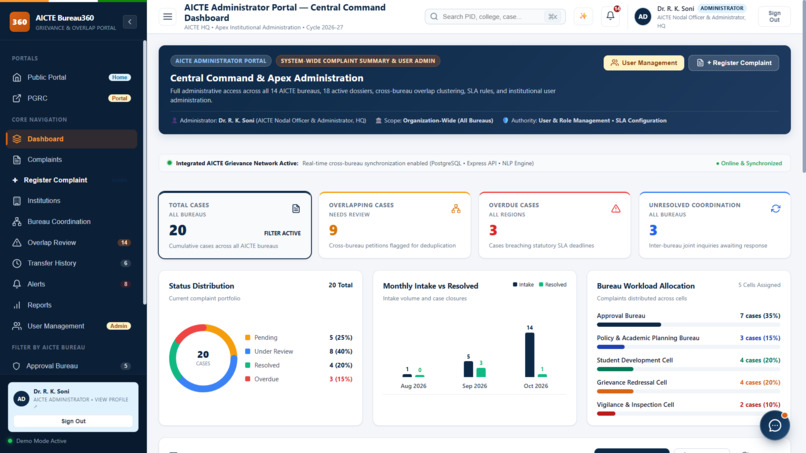
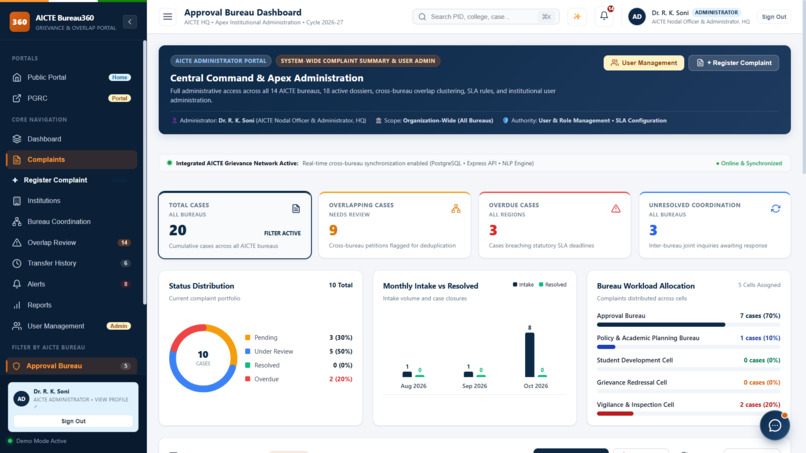
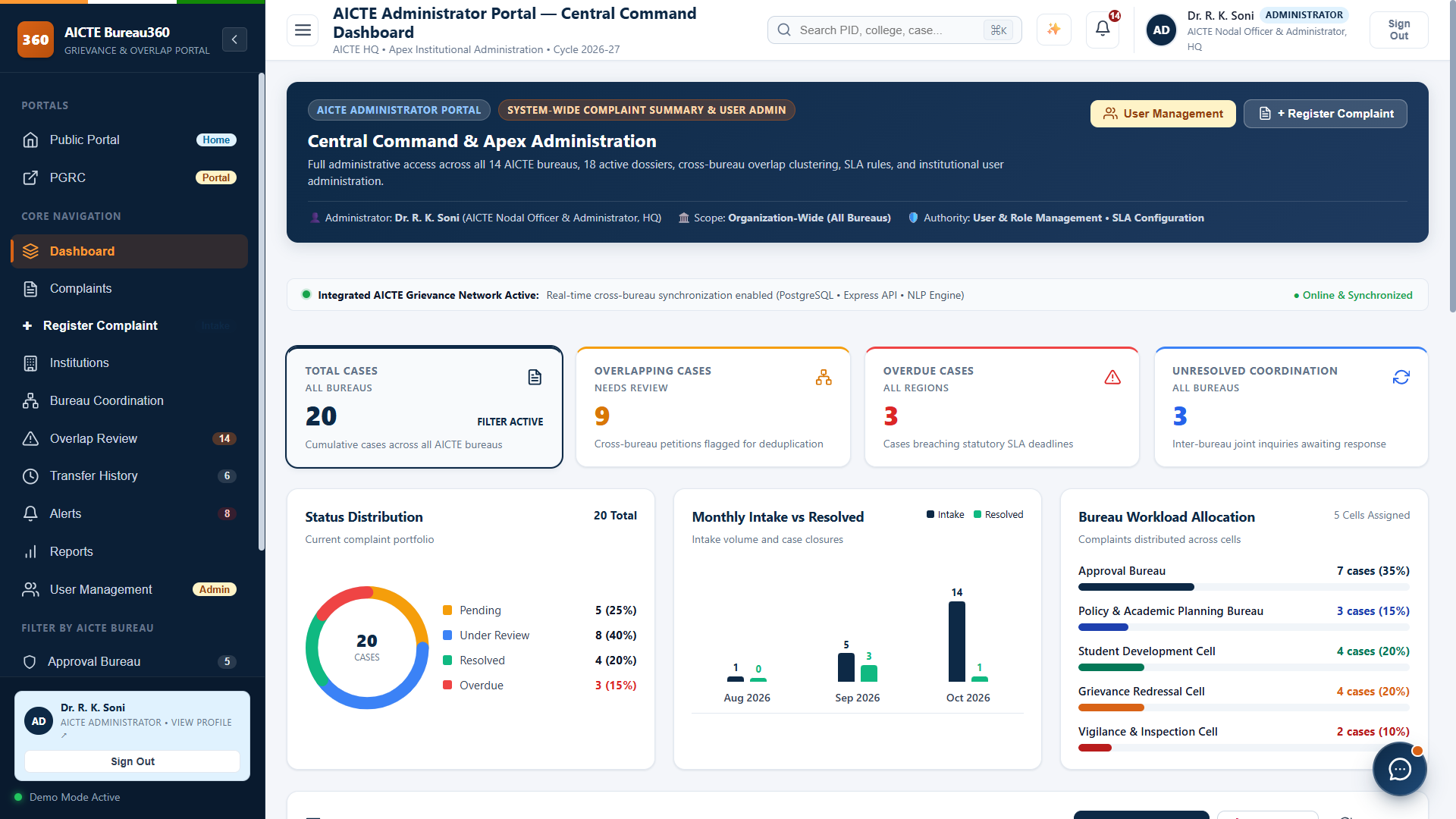
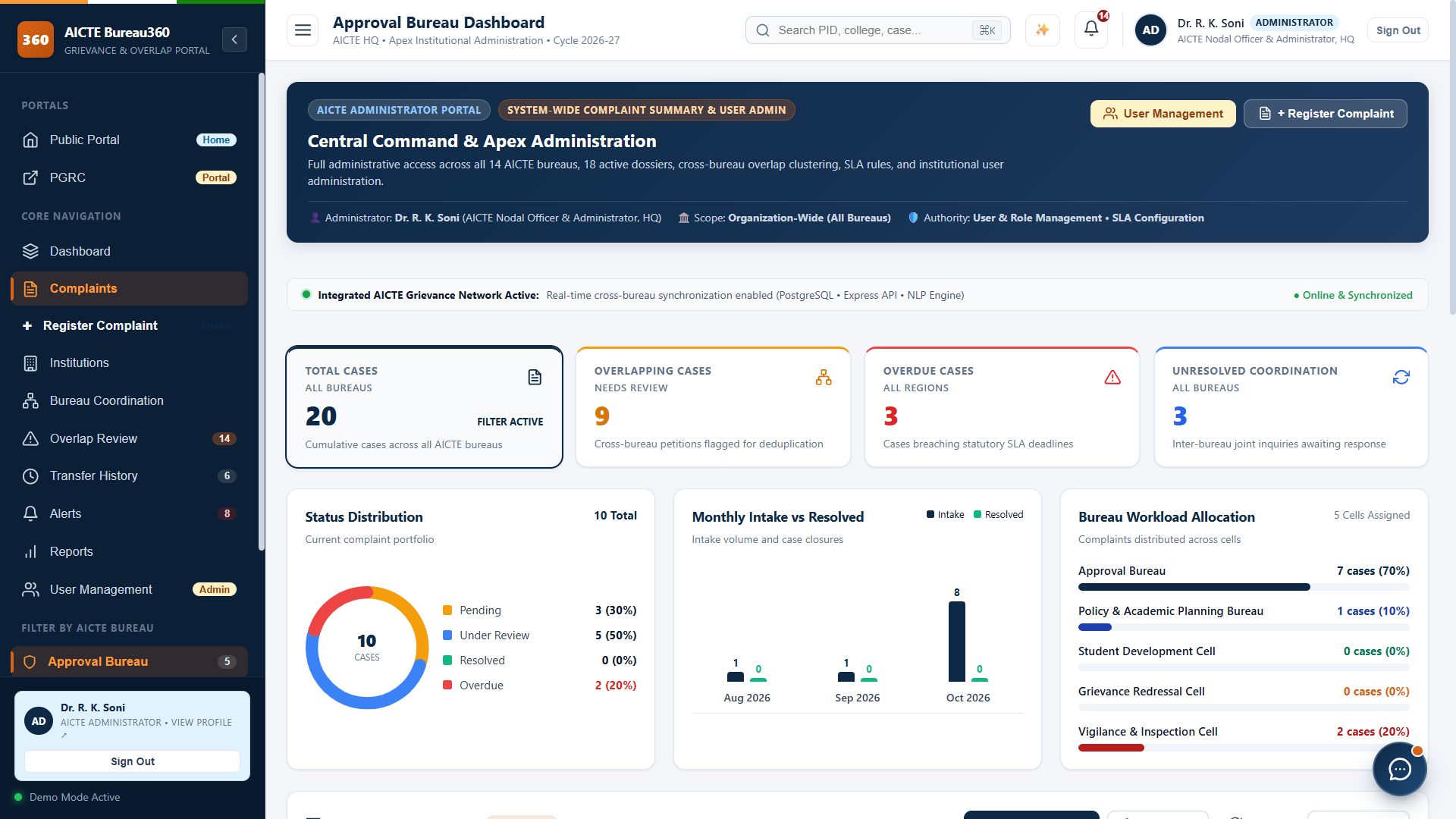
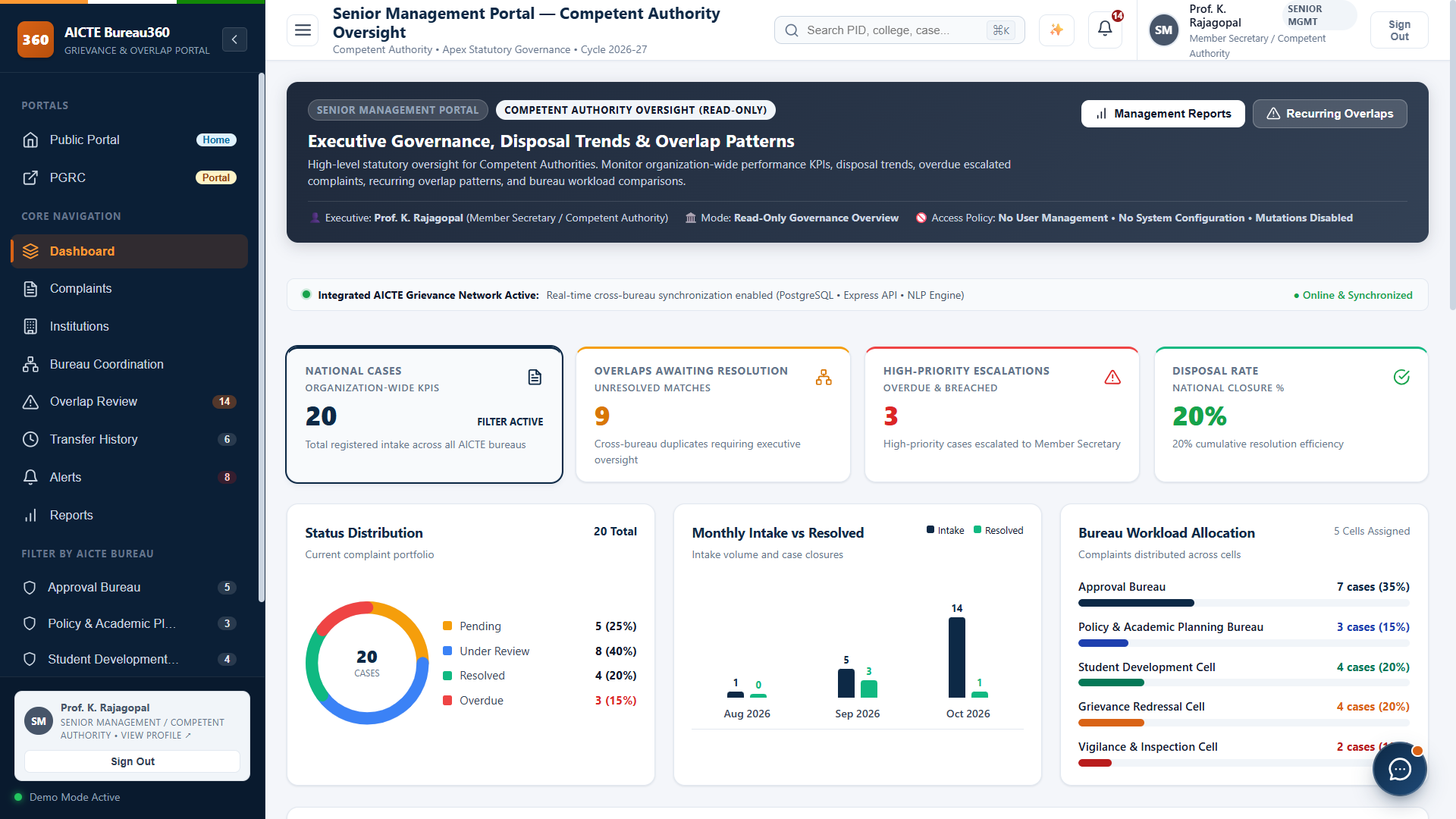
Admin Portal
-
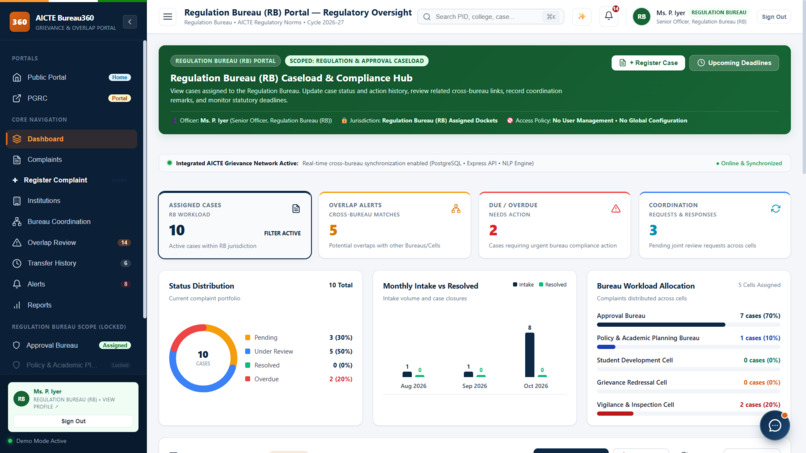
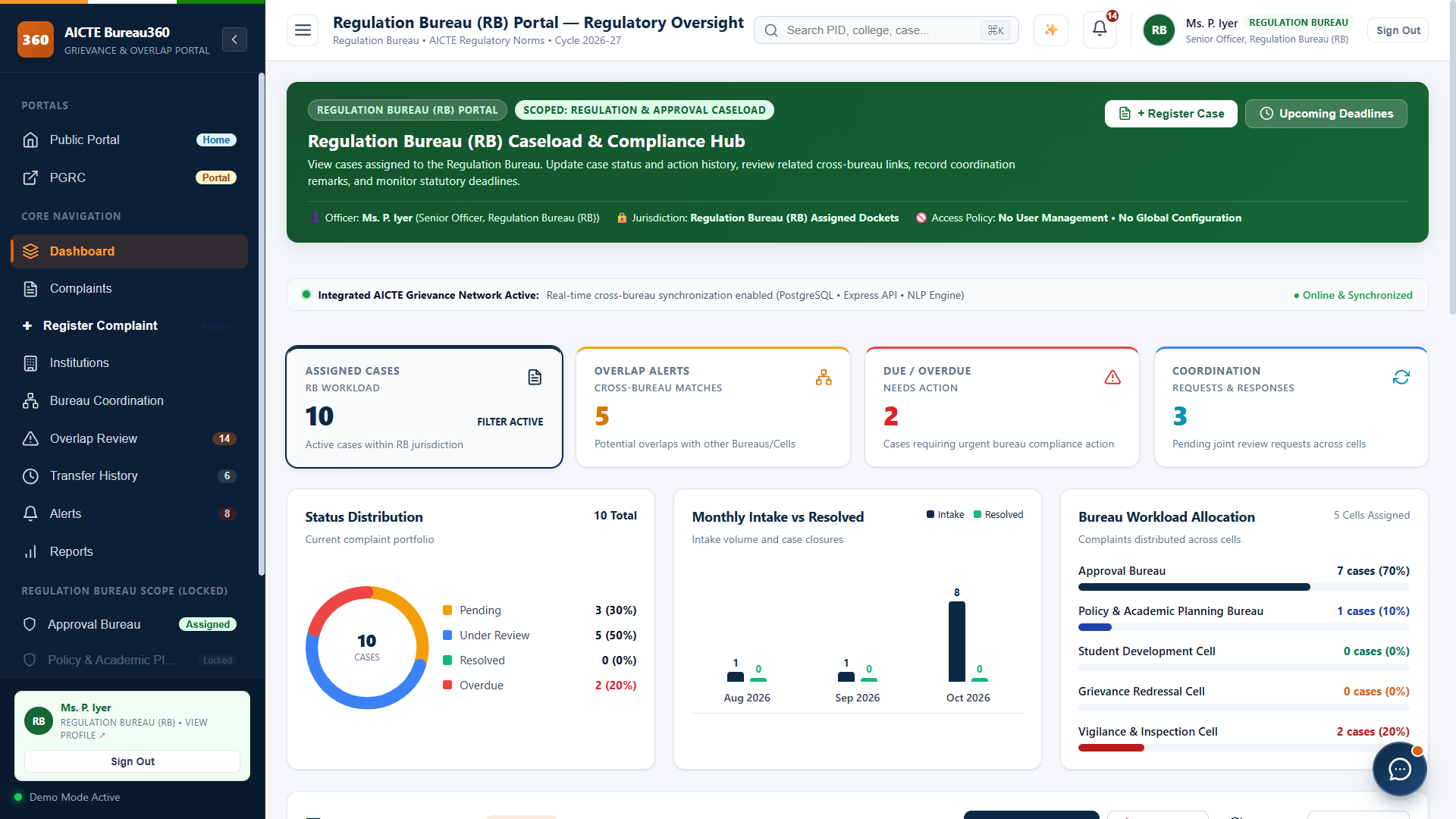
Regulation Bureau Portal
-
Regional Officer Portal
-
Public Grievence REdressal Cell Portal
-
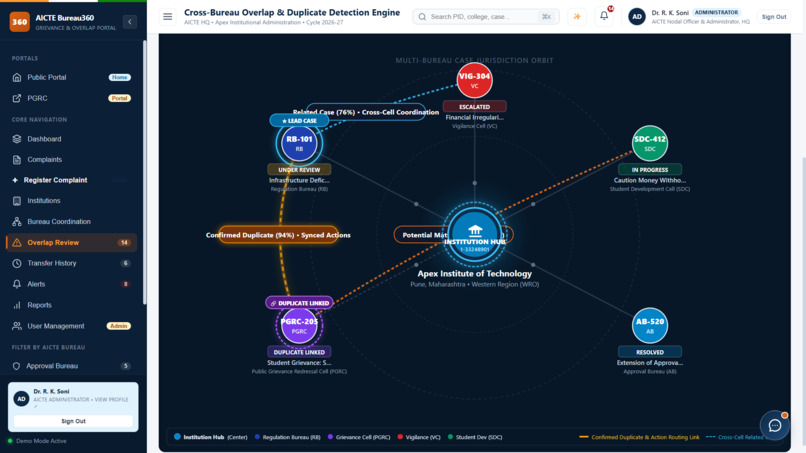
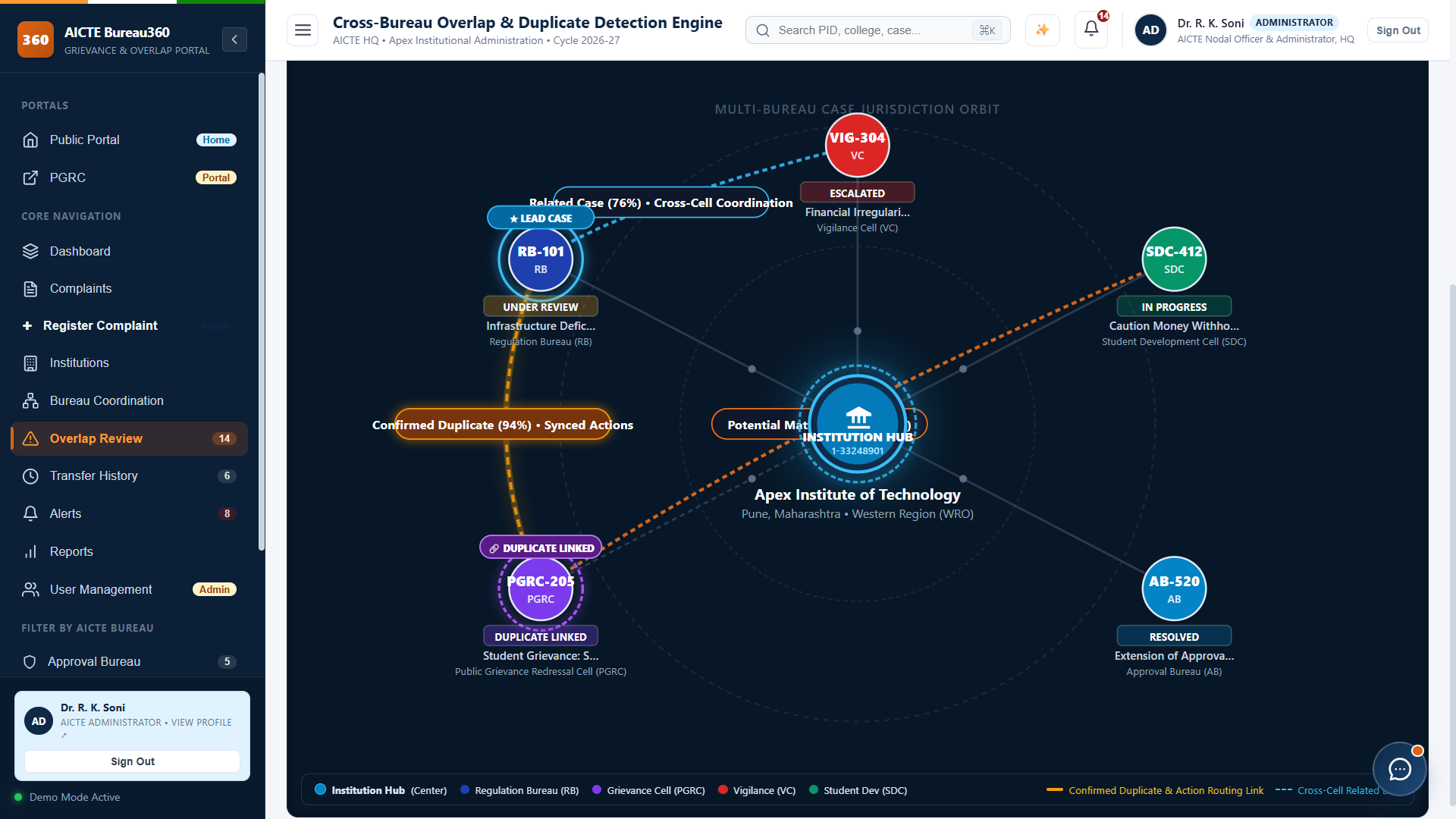
Centralized Intitute Complaint Monitoring Graph
About AICTE Bureau360
Inspiration
Imagine two different AICTE bureaus investigating complaints against the same technical institution, without knowing about each other's actions. This can result in duplicate investigations, repeated inspections, disconnected information, and delays in grievance resolution.
This scenario inspired us to develop AICTE Bureau360 — a centralized platform designed to connect institution-related complaint records and improve coordination across AICTE bureaus and cells.
Our vision was to go beyond a conventional complaint management dashboard and create a system where authorized officials can identify overlapping cases, share relevant information, monitor progress, and make better-informed decisions.
What We Built
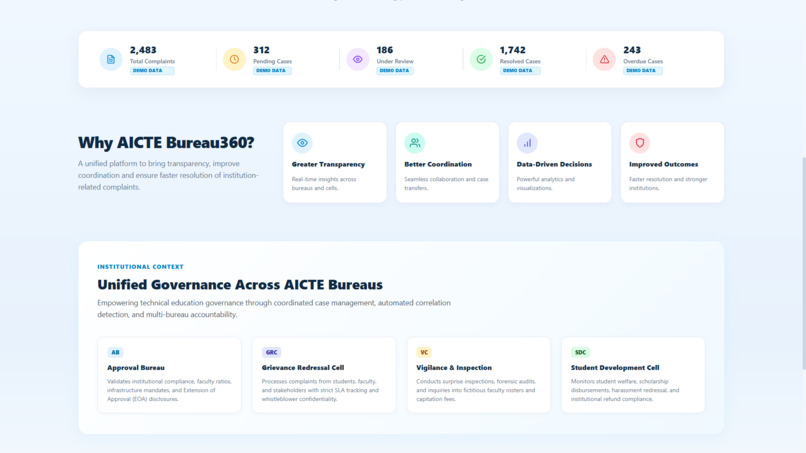
AICTE Bureau360 is an integrated dashboard for monitoring and tracking institution-related complaint cases across AICTE bureaus and cells.
Our platform focuses on:
Centralized Institution Profiles: Maintains institution-wise records and consolidated complaint histories using unique AICTE Permanent IDs.
Multi-Bureau Complaint Tracking: Monitors complaints across the Regulation Bureau (RB), Public Grievance Redressal Cell (PGRC), Regional Offices, and other bureaus.
AI-Assisted Overlap Detection: Identifies potentially duplicate or related complaints using institution identity, category matching, references, and text similarity.
Cross-Bureau Coordination: Helps authorized officers review linked cases and coordinate investigations.
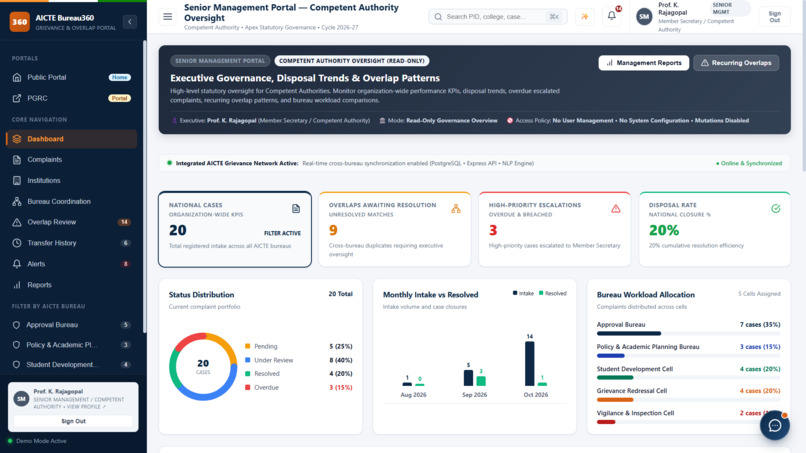
Role-Based Dashboards: Provides dedicated interfaces for administrators, bureau officers, regional officers, and senior management.
Alerts and SLA Monitoring: Highlights pending complaints, approaching deadlines, overdue cases, and escalation requirements.
Analytics and Reporting: Provides insights into complaint trends, bureau workload, case ageing, and disposal performance.
AICTE Grievance & Overlap Copilot: Supports natural-language case inquiries, overlap explanations, and dashboard navigation.
How We Built It
We designed Bureau360 around a centralized architecture with role-based access and connected complaint workflows.
Our development approach includes:
Frontend: React.js and Vite for interactive, role-specific dashboards and complaint management interfaces.
Backend: Node.js and Express.js for REST APIs, authentication, authorization, and complaint workflow management.
Database: PostgreSQL for centralized institution records, complaint details, action histories, and overlap relationships.
Overlap Detection: Rule-based matching combined with machine learning techniques such as TF-IDF and Logistic Regression to identify potentially related complaints.
Notifications: Automated alerts and SLA monitoring to support timely follow-ups and escalation.
AI Integration: Gemini API for natural-language assistance, case summaries, and explainable responses based on authorized system data.
The system is designed to preserve individual complaint records and bureau responsibilities while enabling information sharing through controlled access.
Challenges We Faced
Developing Bureau360 involved several technical and design challenges:
Identifying Overlapping Complaints: Complaints may describe the same issue using different words, references, or formats. Designing a reliable matching approach while minimizing false positives was a major challenge.
Cross-Bureau Data Coordination: Ensuring that updates made by one authorized officer are reflected in relevant views without compromising case ownership or permissions required careful workflow design.
Role-Based Access Control: Defining different responsibilities and access permissions for administrators, RB officers, PGRC officers, regional offices, and senior management was essential.
Data Consistency: Designing a centralized database structure to maintain institution profiles, multiple complaints, linked cases, and chronological action histories required careful planning.
AI Reliability: Ensuring that AI-generated explanations are grounded in actual case information rather than fabricated responses was another important consideration.
We approached these challenges by prioritizing structured data, explainable matching, controlled access, and human verification of potential overlaps.
What We Learned
Working on Bureau360 strengthened our understanding of full-stack development, database architecture, REST API integration, role-based authorization, and AI-assisted application design.
We also learned that integrating AI into an administrative system requires more than generating intelligent responses. Accuracy, explainability, data security, and human oversight are equally important.
Most importantly, we learned how to approach a real-world administrative problem by translating its requirements into a practical, scalable technology solution.
Our Vision
With AICTE Bureau360, we aim to reduce duplicated efforts, strengthen coordination, improve accountability, and support faster and more transparent grievance resolution.
One Institution. One Connected View. Smarter Coordination.
Built With
- ai-dashboard
- artificial-intelligence
- cloud-deployment
- complaint-management
- css3
- data-analytics
- express.js
- full-stack-development
- gemini-api
- git
- github
- html5
- javascript
- logistic-regression
- machine-learning
- natural-language-processing
- node.js
- postgresql
- python
- react.js
- restapi
- role-bassed-access-control
- scikit-learn
- tf-idf
- vite


Log in or sign up for Devpost to join the conversation.