-
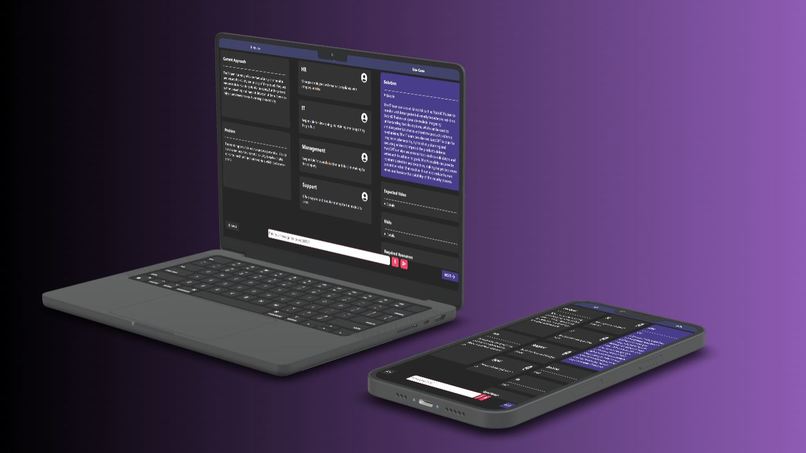
Design
-
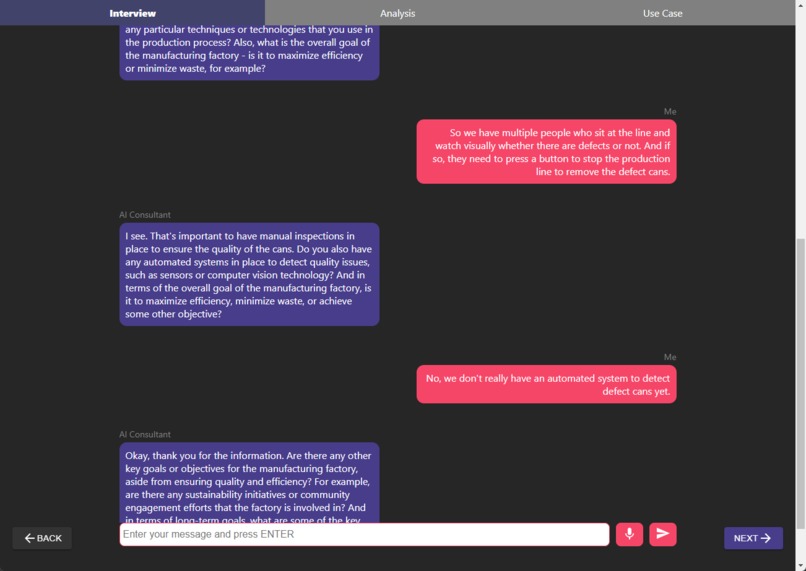
Interview
-
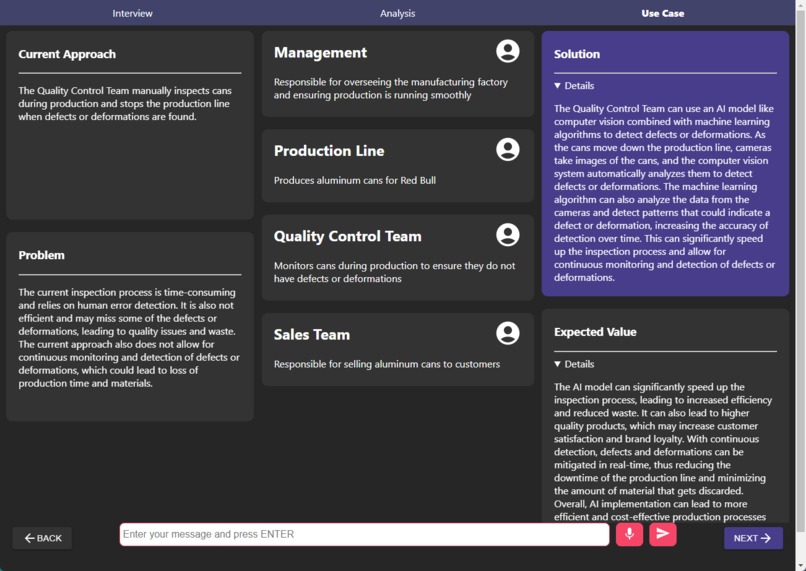
Solution for a given Business case
-
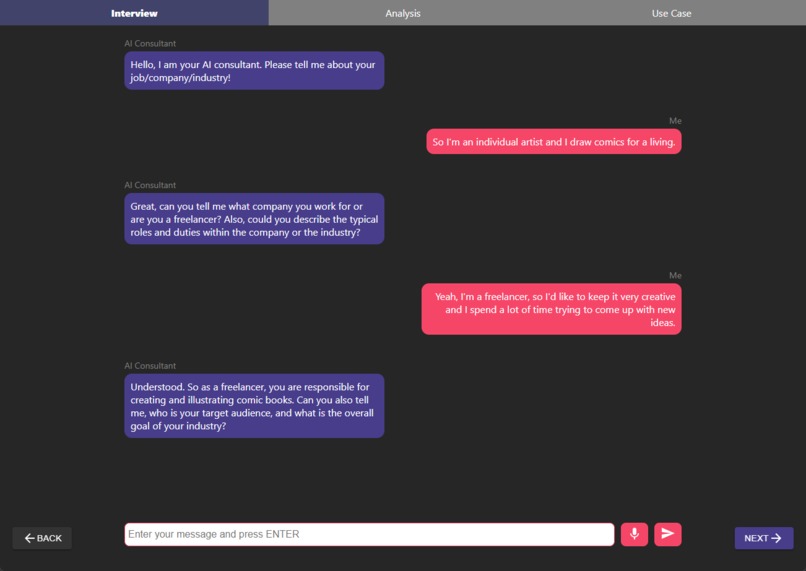
-
-
-
Claire
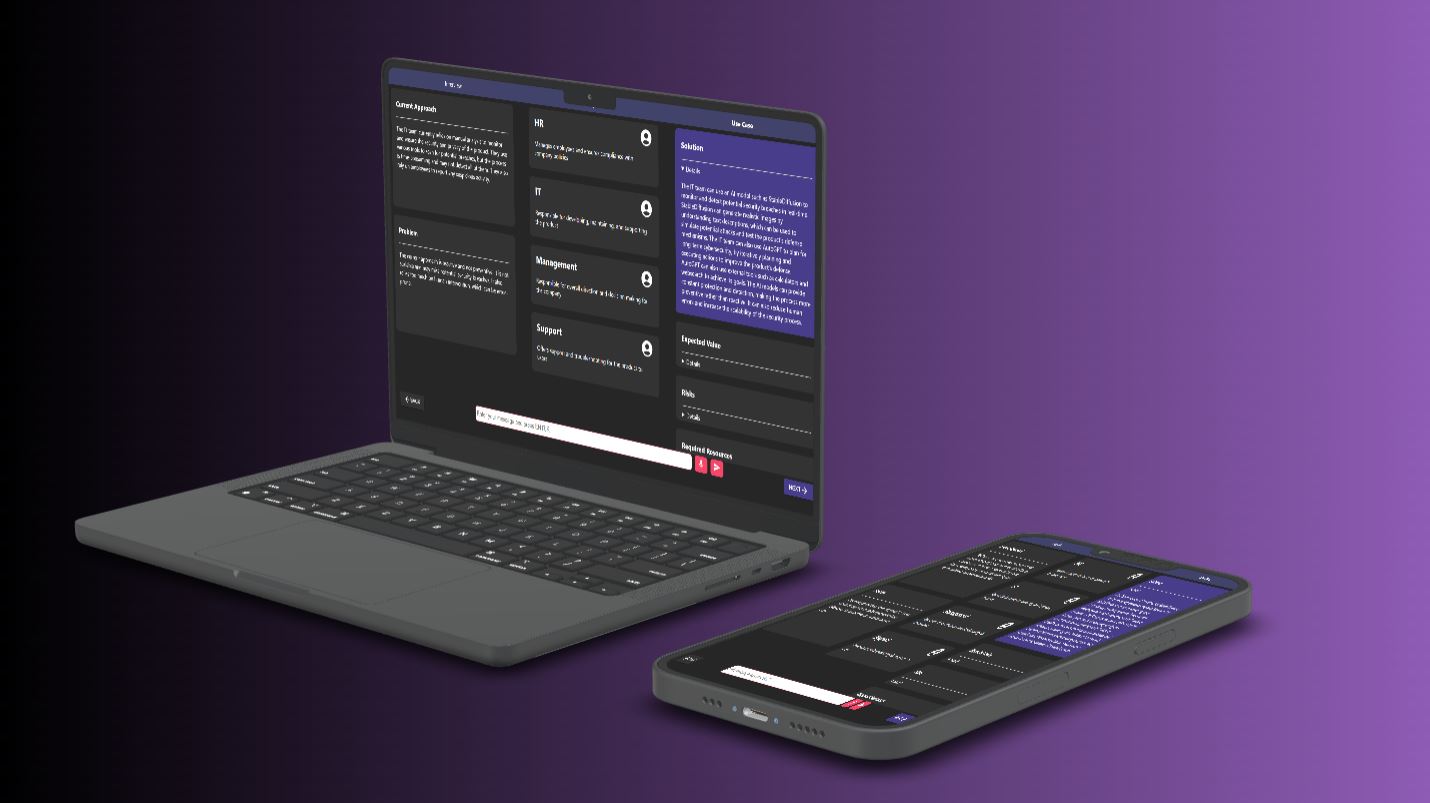
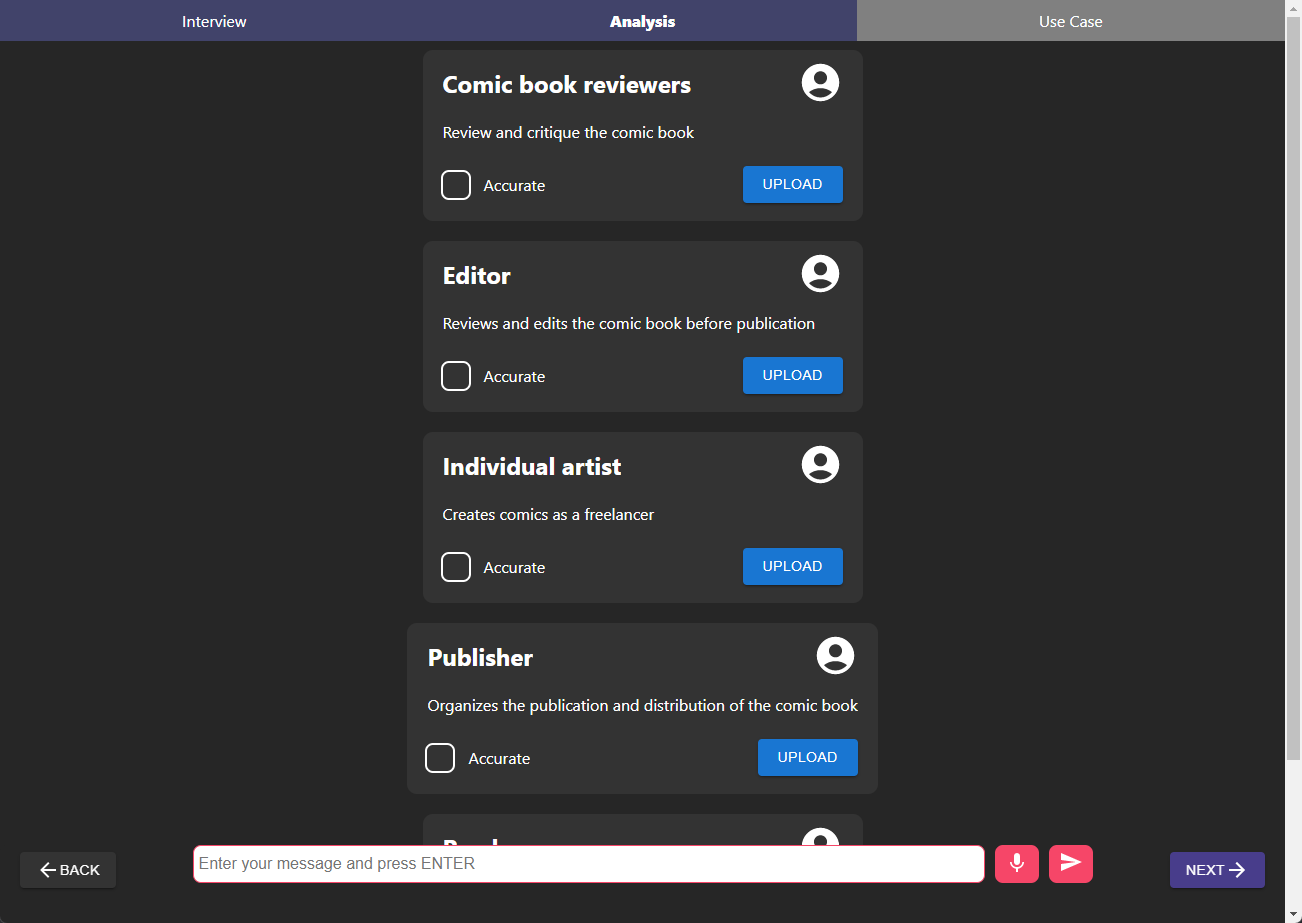
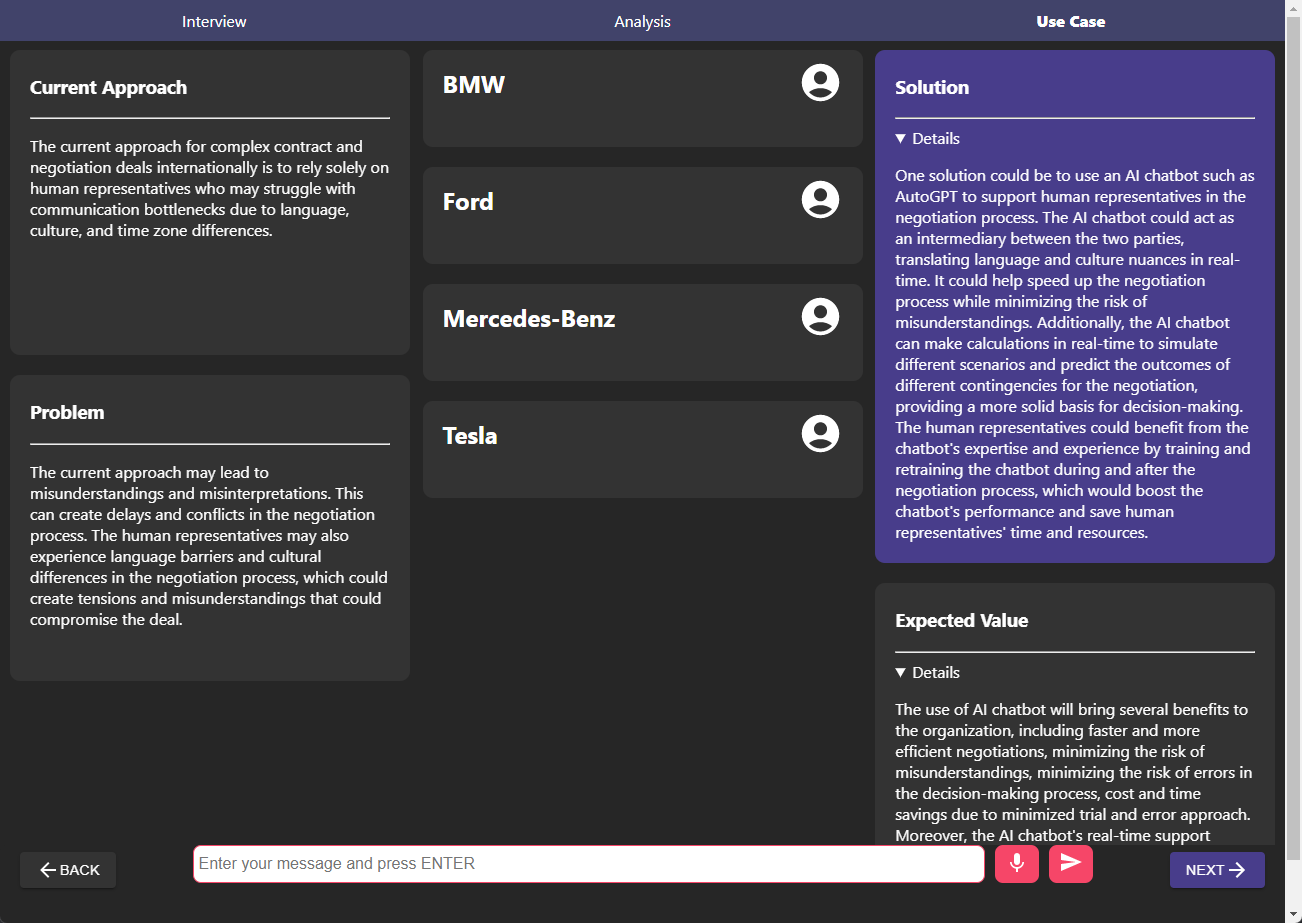
Claire was inspired by the desire to democratize access to AI by developing a framework to find valuable AI use cases for both on individual level, business level, up to industry-scale settings. Our AI consultant analyzes existing business workflows and relations to provide customized recommendations for integrating AI solutions to improve the efficiency and quality-of-life. We built Claire using LLMs to enable intuitive and accessible, yet powerful and flexible interaction with the AI consultant. It allows the user to give any type of feedback or ask questions in an iterative manner, while also visualizing the AI consultant's analysis of the described situation in an intuitive manner.
We faced several challenges in developing Claire, including ensuring accurate, yet helpful and detailed use case suggestions, and visualizing the AI's understanding of the user's description in a fast and intuitive manner. We also took great care into balancing broad applicability and target demographic, while also maximizing the usefulness to each.
Through this project, we learned about the importance of domain expertise, data quality, and effective communication in AI development.
Next, we plan to expand Clire's capabilities by incorporating agent-based natural language processing with tool access and long-horizon planning, web queries, self-prompting, etc. We also aim to partner with businesses to gather feedback and improve the tool's functionality.
Example Use Cases Suggested by Claire
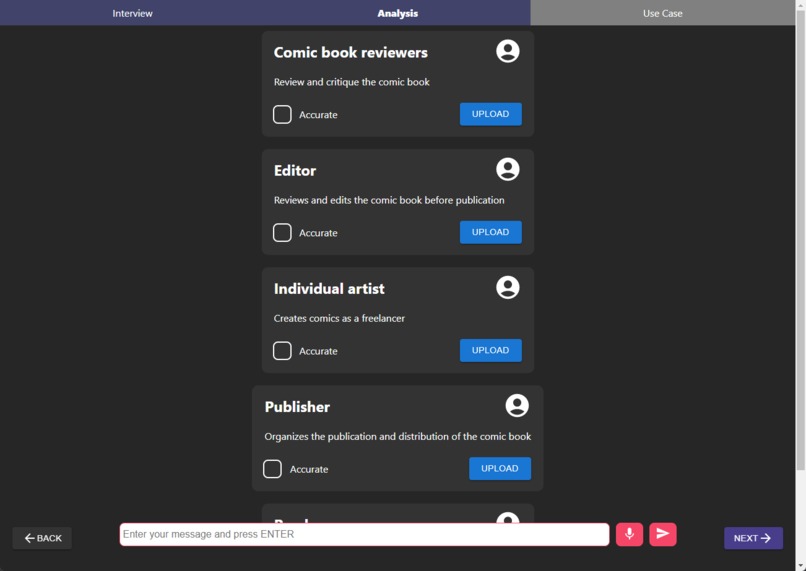
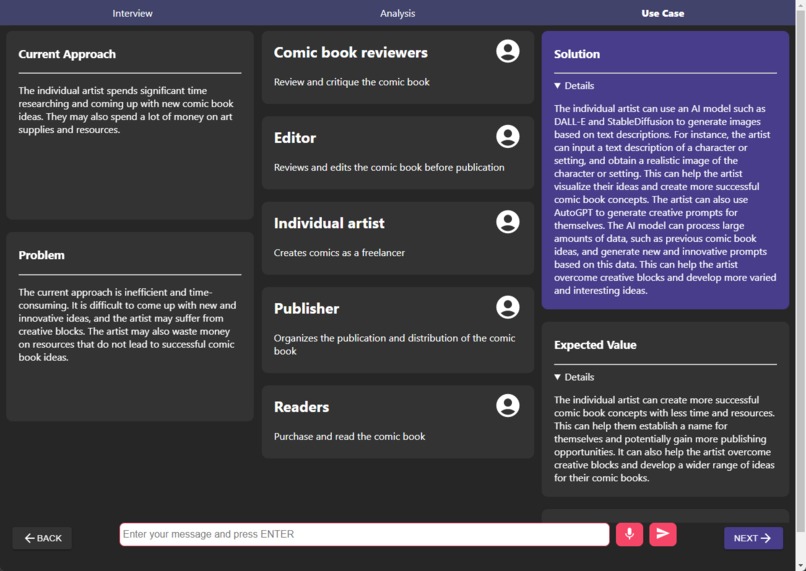
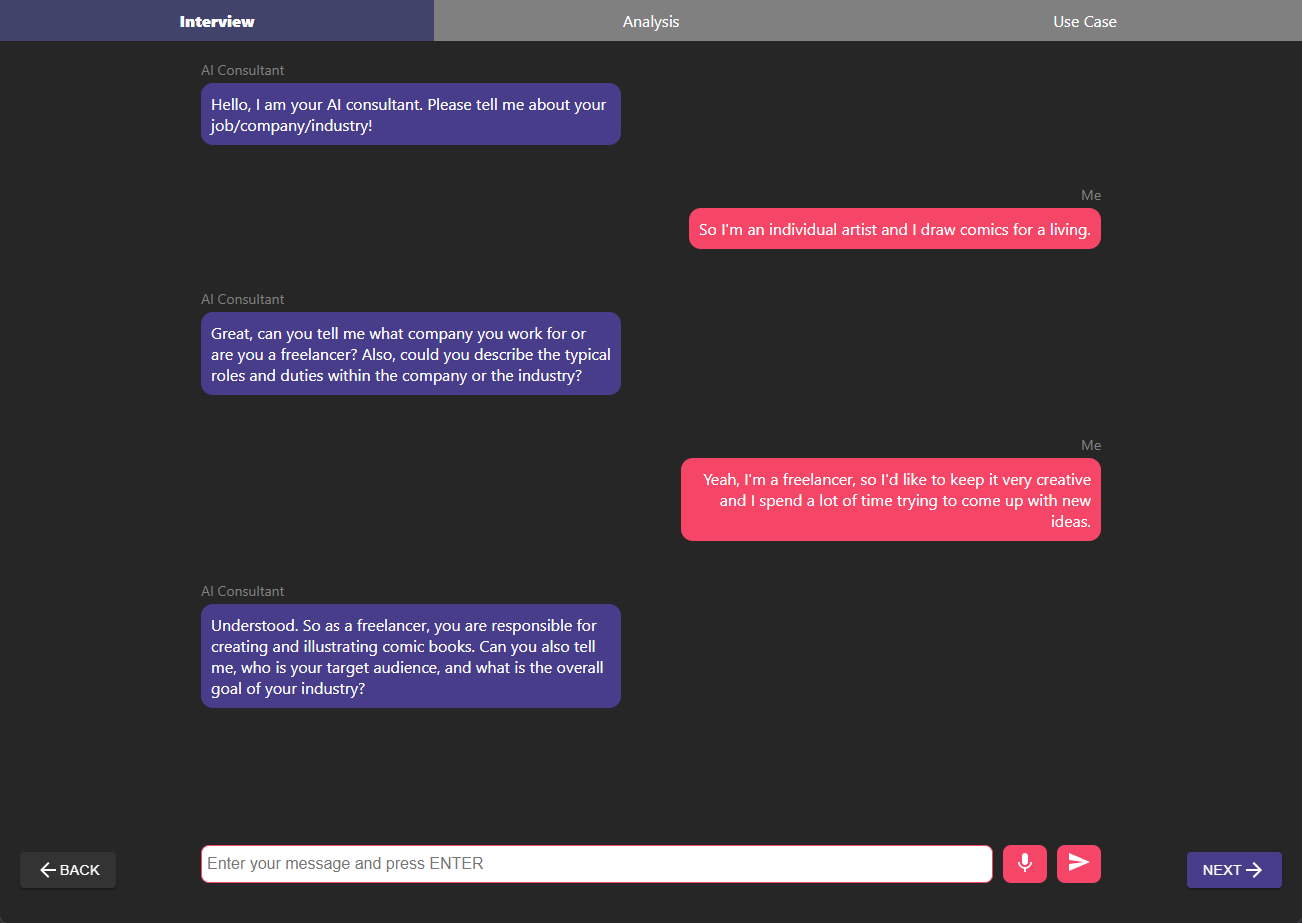
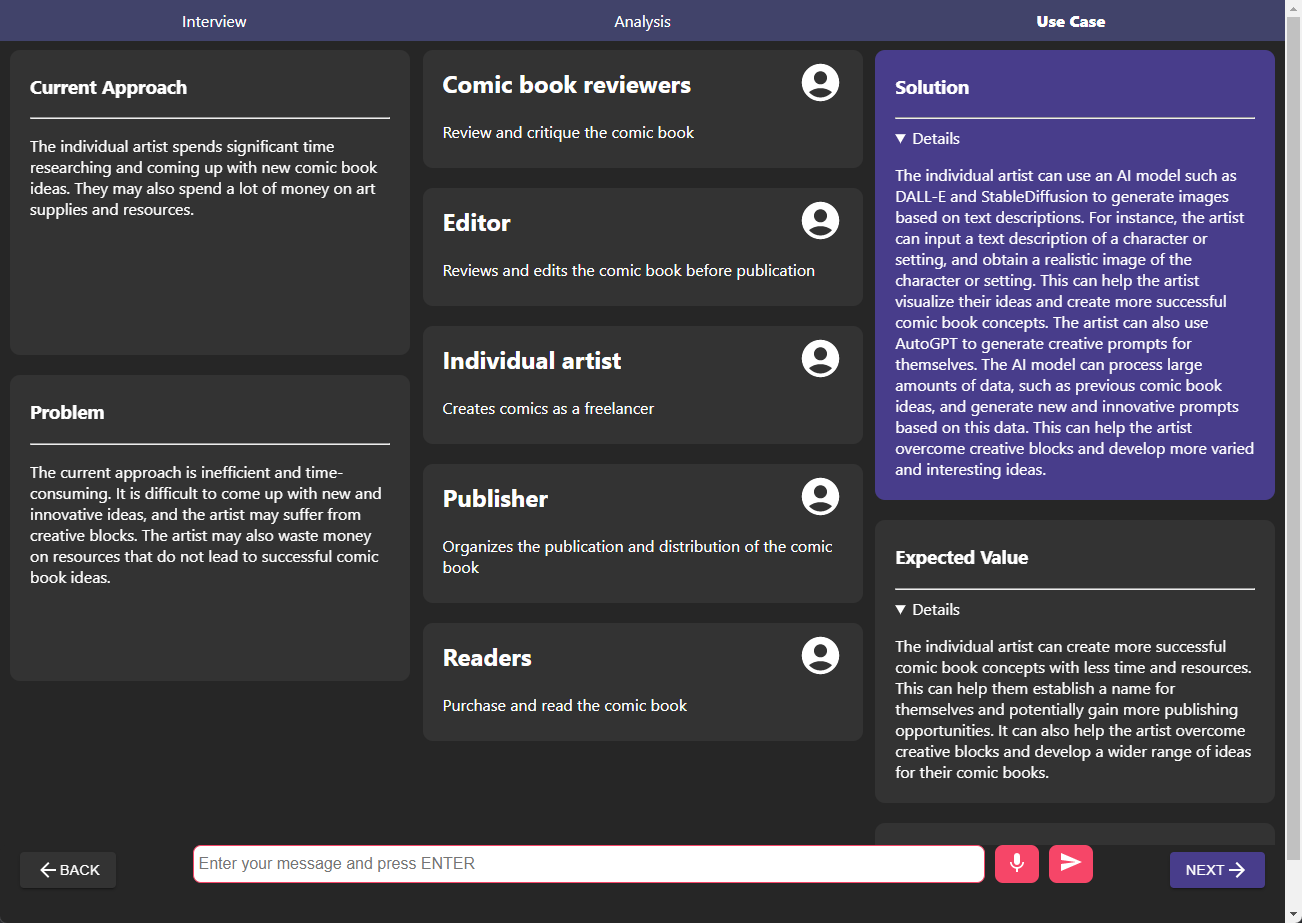
Individual Level: Freelancer Comic Artist
Current Approach
The individual artist spends significant time researching and coming up with new comic book ideas. They may also spend a lot of money on art supplies and resources.
Problem
The current approach is inefficient and time-consuming. It is difficult to come up with new and innovative ideas, and the artist may suffer from creative blocks. The artist may also waste money on resources that do not lead to successful comic book ideas.
Solution
The individual artist can use an AI model such as DALL-E and StableDiffusion to generate images based on text descriptions. For instance, the artist can input a text description of a character or setting, and obtain a realistic image of the character or setting. This can help the artist visualize their ideas and create more successful comic book concepts. The artist can also use AutoGPT to generate creative prompts for themselves. The AI model can process large amounts of data, such as previous comic book ideas, and generate new and innovative prompts based on this data. This can help the artist overcome creative blocks and develop more varied and interesting ideas.
Expected Value
The individual artist can create more successful comic book concepts with less time and resources. This can help them establish a name for themselves and potentially gain more publishing opportunities. It can also help the artist overcome creative blocks and develop a wider range of ideas for their comic books.
Risks
The AI model may not be able to fully understand the artist's creative vision or style. The artist may become too reliant on the AI model and lose their own creative touch. There may also be potential ethical concerns with using AI to generate artwork.
Required Resources
- Large amounts of data, such as previous comic book ideas and images. 2. Computing power to train and deploy the AI model. 3. Possibly an IT team to provide the necessary infrastructure and support.
Company Level: Factory
Current Approach
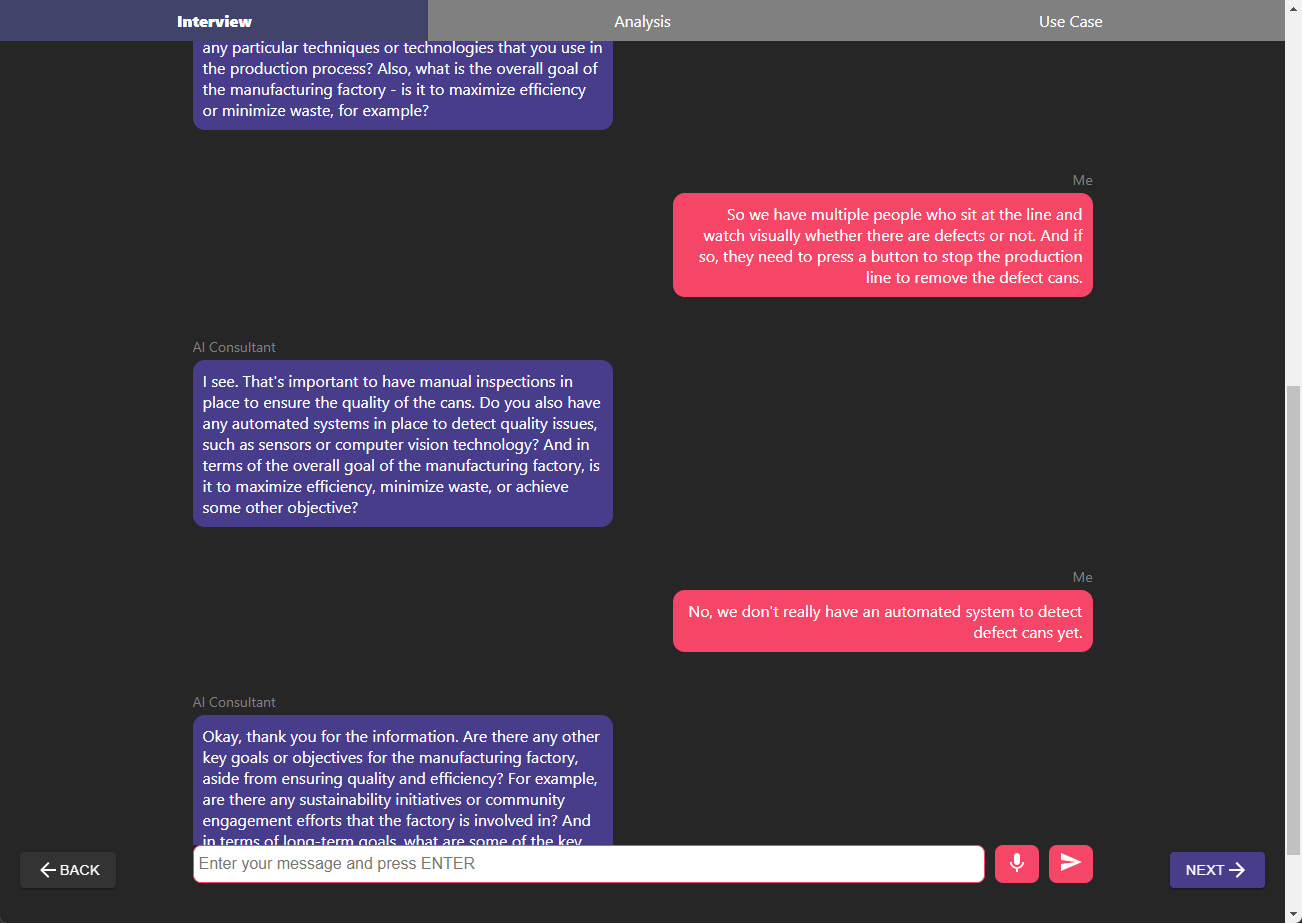
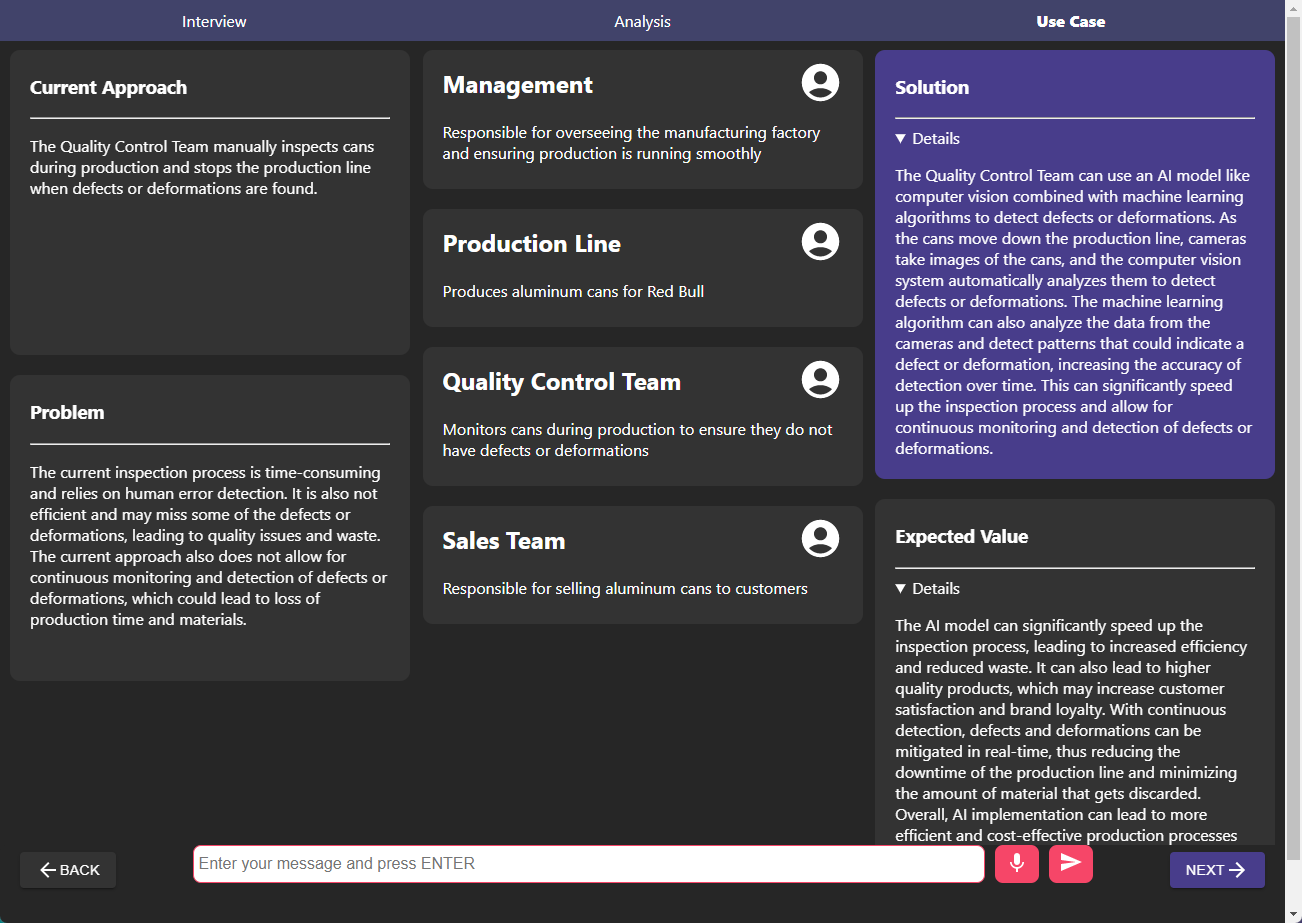
The Quality Control Team manually inspects cans during production and stops the production line when defects or deformations are found.
Problem
The current inspection process is time-consuming and relies on human error detection. It is also not efficient and may miss some of the defects or deformations, leading to quality issues and waste. The current approach also does not allow for continuous monitoring and detection of defects or deformations, which could lead to loss of production time and materials.
Solution
The Quality Control Team can use an AI model like computer vision combined with machine learning algorithms to detect defects or deformations. As the cans move down the production line, cameras take images of the cans, and the computer vision system automatically analyzes them to detect defects or deformations. The machine learning algorithm can also analyze the data from the cameras and detect patterns that could indicate a defect or deformation, increasing the accuracy of detection over time. This can significantly speed up the inspection process and allow for continuous monitoring and detection of defects or deformations.
Expected Value
The AI model can significantly speed up the inspection process, leading to increased efficiency and reduced waste. It can also lead to higher quality products, which may increase customer satisfaction and brand loyalty. With continuous detection, defects and deformations can be mitigated in real-time, thus reducing the downtime of the production line and minimizing the amount of material that gets discarded. Overall, AI implementation can lead to more efficient and cost-effective production processes with less human error.
Risk
There is a possibility of error in the AI system, which could lead to mislabeling of defective cans leading to rejection of good cans or non-detection of defective ones. It can lead to production delays or image processing failure instances requiring immediate human interventions. This AI model depends on the availability of high-quality labeled datasets and computer vision models trained on them. Finally, there is a cost required for the adoption of computer vision-based systems, needing investments in cameras, sensors, and infrastructure.
Required Resources
- A high-quality labeled dataset for computer vision to develop and train the model. 2. Considerable investments in hardware, such as cameras and infrastructure, to support the implementation of the AI-based platform. 3. Synergies between the quality control team and IT team to facilitate training and deployment of the AI model.

Log in or sign up for Devpost to join the conversation.