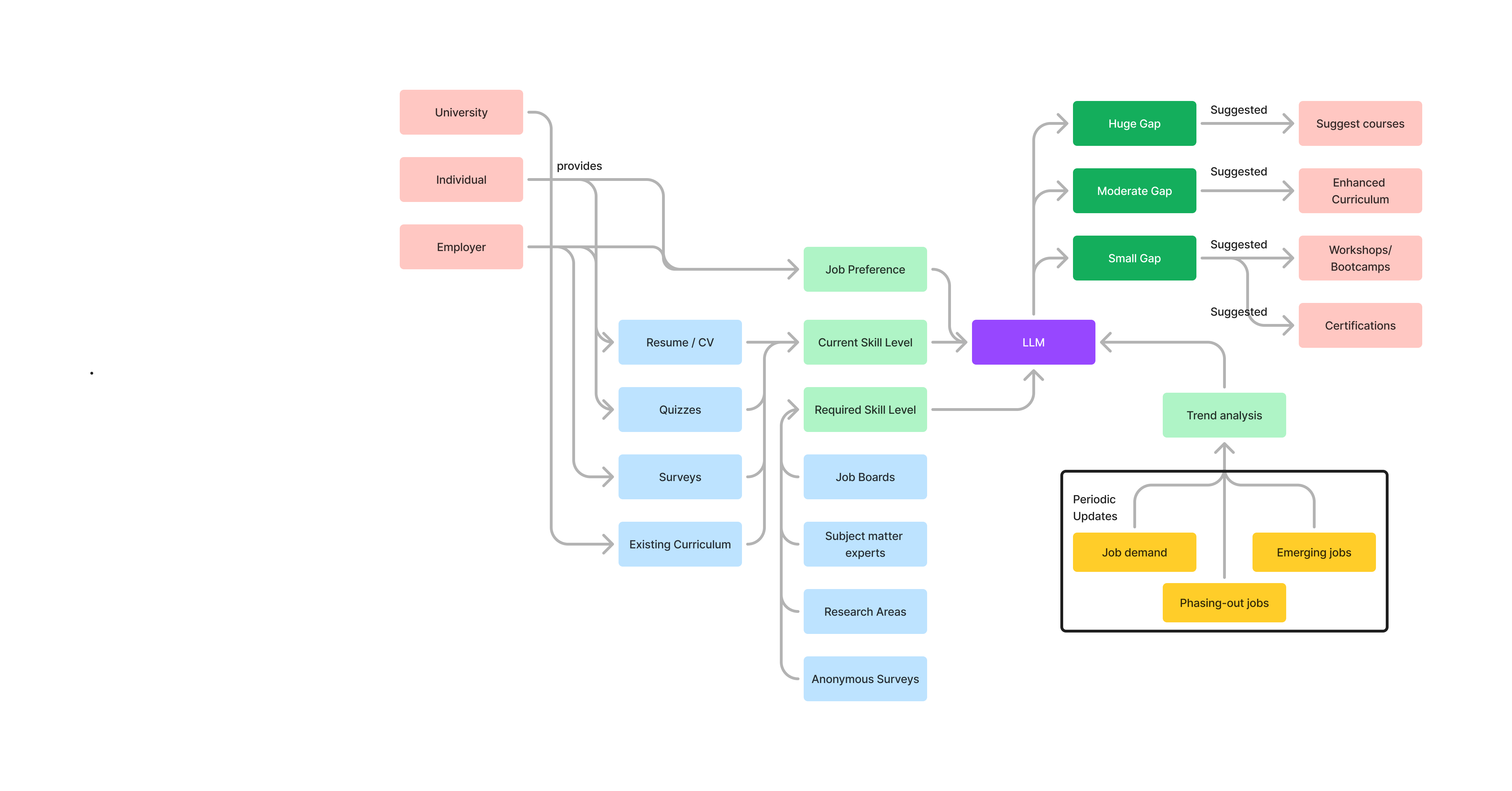
Nexus Skill Gap Process
The "Nexus Skill Gap" process is designed to help your clients—universities, individuals, and employers—identify and address skill gaps using a data-driven and automated approach, powered by a large language model (LLM). This system works by analyzing inputs from each type of client and recommending appropriate upskilling or training solutions to close gaps between current and required skills.
Clients:
- Universities: Provide data on curricula, student performance, and job market alignment, helping to tailor educational programs to industry needs.
- Individuals: Supply their resumes, skill assessments, and job preferences to the system, seeking personalized recommendations for improving their skill sets and career prospects.
- Employers: Contribute information on job roles, required skills, and workforce development needs, ensuring that their teams have the necessary capabilities to meet organizational goals.
Inputs:
- Resume/CV: Individuals and employees provide their resumes to capture their education, work experience, and skills. This helps the system assess their current skill level.
- Quizzes & Surveys: Knowledge assessments (quizzes) and structured feedback (surveys) are used to further evaluate skill levels.
- Existing Curriculum: Universities submit their course offerings and training programs to identify how well these align with job market needs and industry trends.
Key Elements:
- Job Preference: The system takes into account the individual's career aspirations, identifying what roles or fields they are aiming for.
- Current Skill Level: Using data from resumes, quizzes, and surveys, the system evaluates the individual's present abilities.
- Required Skill Level: By referencing job boards, expert opinions, research areas, and anonymous surveys, the system identifies the skill level required for the desired roles.
Skill Gap Analysis:
The system compares the Current Skill Level to the Required Skill Level and determines the size of the gap:
- Huge Gap: Major upskilling is needed, leading to recommendations like comprehensive courses.
- Moderate Gap: A more focused enhancement, suggesting enriched curriculum or specialized training.
- Small Gap: Minor skills adjustment, for which bootcamps, workshops, or certifications are recommended.
LLM’s Role:
The LLM (Large Language Model) is central to processing the provided data, conducting the gap analysis, and generating tailored suggestions based on the identified gaps. It integrates various data points, such as:
- Job preferences.
- Skills assessments.
- Market demand, leveraging trend analysis. This helps ensure that the suggestions are aligned with both the individual's goals and market demands.
Trend Analysis:
A key feature is the system’s ability to adapt to changing market conditions through Trend Analysis. The system continuously monitors:
- Job Demand: High-demand skills and roles.
- Emerging Jobs: Newly evolving roles that are gaining prominence.
- Phasing-Out Jobs: Roles that are becoming obsolete, ensuring users are upskilled for future job markets. These trends feed back into the gap analysis, keeping recommendations relevant.
Output Suggestions:
Based on the gap size and trend analysis, the system makes various recommendations:
- Suggest Courses: Tailored for large gaps in foundational knowledge.
- Enhanced Curriculum: For moderate gaps, advising deeper or more specialized learning.
- Workshops/Bootcamps: Short, intensive programs designed to quickly fill smaller skill gaps.
- Certifications: Recommended when a small but significant gap remains, providing formal validation of skills.
Benefits for Clients:
- Universities: Can refine their curriculum to better align with the evolving demands of the job market, ensuring students are prepared for emerging roles.
- Individuals: Receive personalized career guidance and upskilling pathways, enhancing their employability and career growth.
- Employers: Gain insights into workforce development needs and can offer targeted training to employees, ensuring their teams are equipped with the necessary skills for the future.
The Nexus Skill Gap process thus serves as a dynamic tool for both assessing and addressing the skills needed for future success, benefiting all client types through tailored, actionable insights.
Built With
- figma
- llm

Log in or sign up for Devpost to join the conversation.