-
-
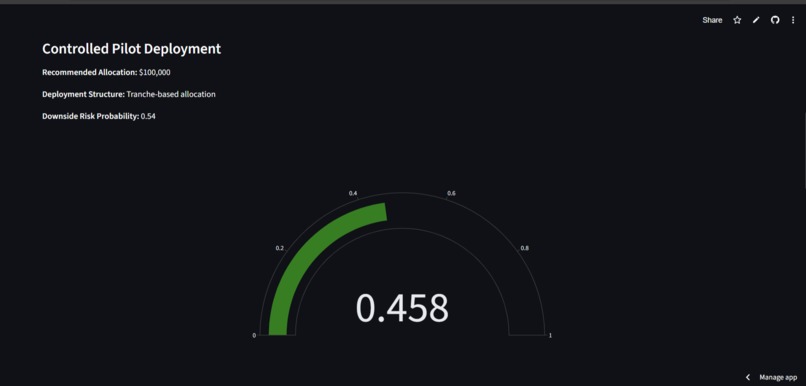
Live demo of AIC-DAO generating structured capital allocation decisions based on financial inputs.
Inspiration
Early-stage capital allocation is often subjective, inconsistent, and dependent on human bias. Investment committees rely on fragmented metrics, intuition, and static spreadsheets. We wanted to explore a simple but powerful question: What if capital decisions could be structured, transparent, and mathematically grounded — while still preserving strategic reasoning? AIC-DAO was built to simulate an autonomous investment committee that converts operational metrics into structured capital deployment outcomes.
What it does
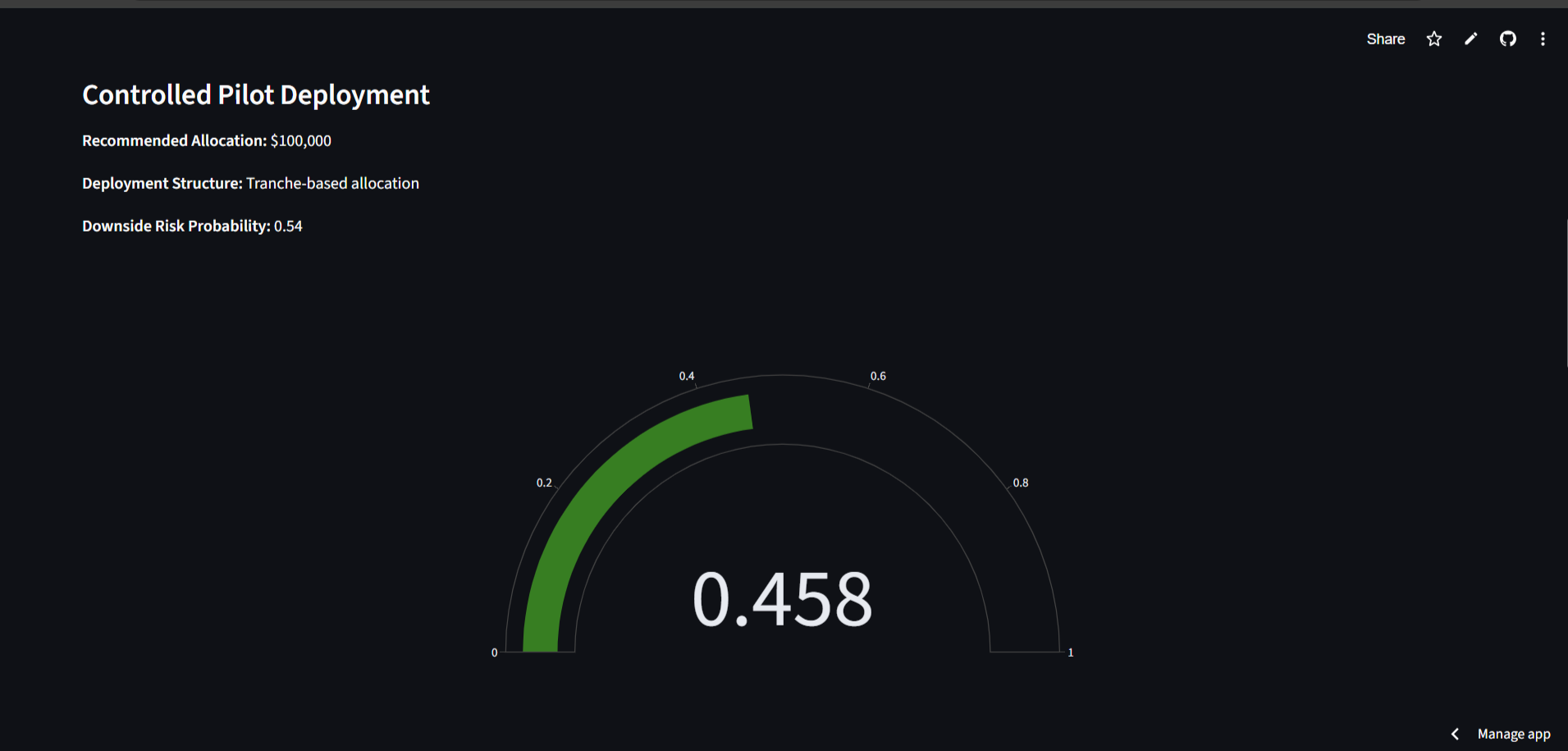
AIC-DAO is an AI-driven autonomous investment committee engine. It evaluates: Burn rate Runway Revenue stage Market growth signals Capital structure dynamics The system then: Computes quantitative risk and market scores Aggregates them into a weighted confidence metric Generates a structured capital allocation recommendation Simulates a committee-style deliberation transcript Outputs a final resolution with downside risk probability The allocation dynamically changes based on financial inputs — making decisions transparent and repeatable.
How we built it
The system is structured into three layers:
- Quantitative Engine Mathematical scoring tied to burn, runway, and revenue stage Weighted confidence aggregation Allocation logic derived from confidence bands
- Multi-Agent Simulation Risk Analyst Market Analyst Capital Structure Analyst Each agent evaluates different dimensions before producing a structured exchange.
- Institutional UI Built with Streamlit Visual confidence gauge using Plotly Clean capital committee resolution format The architecture keeps logic modular and transparent. ## Challenges we ran into Converting financial intuition into deterministic scoring logic Preventing static outputs by making scores truly dynamic Balancing clarity with institutional sophistication Designing a UI that feels like a boardroom report rather than a toy demo We iterated on both scoring mechanics and presentation structure to ensure the system responds meaningfully to input changes. ## Accomplishments that we're proud of Building a fully functional autonomous capital evaluation framework Making allocation dynamically respond to financial inputs Creating a clean institutional interface under hackathon time constraints Designing a transparent aggregation formula instead of black-box logic ## What we learned We learned that: Financial decision systems must balance quantitative rigor with explainability Even simple weighted models can create powerful decision frameworks Presentation clarity is as important as algorithmic sophistication Most importantly, we learned how to convert subjective committee discussions into structured, reproducible logic. ## What's next for AIC-DAO : Autonomous Investment Committee Future iterations could include: Historical data ingestion Monte Carlo scenario simulation Portfolio-level capital allocation optimization Credit-style rating layers Integration with real financial APIs The long-term vision is an autonomous capital infrastructure layer for startups and investment funds

Log in or sign up for Devpost to join the conversation.